Geophysicist to lead geologic tour of Hope Valley

There will be two opportunities this summer to learn about the geologic history of Sierra Nevada range.

Former NASA Apollo geophysicist Al Graf will explain the region’s geology and how it impacts the natural history and more. The event starts with an evening video and slide show presentation, followed the next morning by an auto tour to geologic sites near Hope Valley.

Dates are July 26-27 and Aug. 23-24. The evening show is from 7-8:30pm, with the tour the next day from 9am-noon.


Cost is $60 for guest of Sorensen’s, $95 for others. It includes lunch. Call 530.694.2203 to make a reservation.


Cave Rock boat launch to close for upgrades

Between July 11-31 the southern half of the Cave Rock parking lot will be closed while improvements are made to the boat launch.

Boats may be launched, but parking will be limited.

Improvements include sidewalks, an upgraded restroom and enhancements to ease traffic congestion.

On Aug. 1, the entire Cave Rock facility will close for two months to complete the project.

Alternative launch facilities are available at Lake Forest, Obexers, and the Tahoe Keys Marina.


Chautauqua at LTCC benefits historical society

In honor of the 100th anniversary of the National Park Service, Lake Tahoe Historical Society’s Chautauqua at Lake Tahoe 2016 will feature Theodore Roosevelt played by Doug Mishler.

In addition, Etta Farme, El Dorado’s first woman doctor, will be personified by Ellen Osborn; Sierra Nevada Vade Phillips, woman entrepreneur in the 1800s, by Mary Jo Sonntag; Laura Fair, fatal mistress, by Kim Harris Copél;  and Tahoe traveler, Agnes Diamond, created by Marilyn Long, will share their stories.

The Aug. 13 event will take place at the Lake Tahoe Community College’s Duke Theater at 5:15pm.

Before the main event there will be socializing, hearty appetizers, wine, and raffle items.

Tickets are $45 for historical society members, $50 for others. Purchase them at the museum, 3058 Lake Tahoe Blvd., South Lake Tahoe. For more information, call 530.541.5458.


What Calif. can learn from how the South manages wildfires

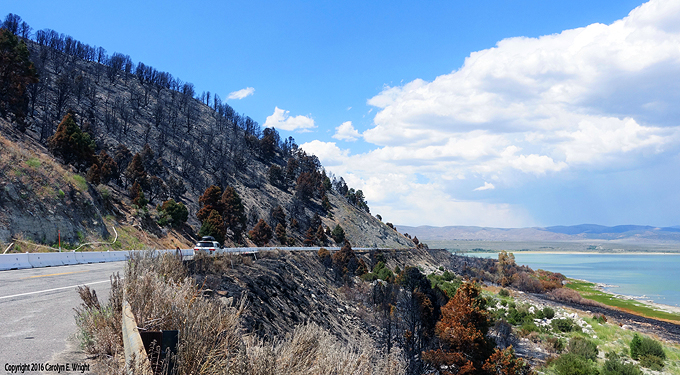
The Marina Fire near Mono Lake is one of several currently burning in California. Photo Copyright 2016 Carolyn E. Wright

The Marina Fire near Mono Lake is one of several currently burning in California. Photo Copyright 2016 Carolyn E. Wright

By Laura Bliss, CityLab

There are three things that give him joy in life, says Johnny Stowe: “Beer, my grandkids, and fire.”

Not a campsite fire, or a house fire, but fire that Stowe prescribes and manages across the wild lands of South Carolina. As a heritage-preserve manager for the state’s department of natural resources, Stowe works with crews to set ablaze predetermined swathes of land around the state, carefully burning off undergrowth with low-intensity flames along carefully planned control lines. Every year, in winter and spring, on days when the weather and wind are just right, Stowe lights up thousands of acres this way. He loves every minute of it.

Each year, according to the U.S. Forest Service, roughly 8 million acres of land are treated with prescribed fire in the Southeast—more than in all other U.S. regions combined.

A chorus of ecologists is calling on more of the U.S. to emulate the Southeast’s fire-friendly ways—especially California, where catastrophic wildfires over recent summers have captured national attention. This year, the state’s wildfire season arrived earlier than ever, and with a vengeance.

Read the whole story


K’s Kitchen: Making pizza the easy way

By Kathryn Reed

I’m lazy when it comes to making pizza. I never make my own dough and I want as few ingredients as possible, but lots of flavor.

A homemade crust is going to make any pizza taste better. This is one of those occasions where my time is more important.

The tomatoes, squash, basil and garlic are at farmers’ markets.

I grated the squash just enough to use the color of both.

This left the flesh part. I ended up getting two recipes out of all of these ingredients. I chopped up the squash, threw in the extra tomatoes, tossed them lightly with olive oil in a pan, then added garlic, the left over ricotta, some chopped basil and put all of that over pasta with feta.

pizzaZucchini-Ricotta Pizza

1 pint cherry tomatoes, halved

1 T canola oil

¾ C part-skim ricotta cheese

3 T basil, chopped (or more)

2 T 1% milk

4 garlic gloves, minced

1 medium zucchini, grated

1 yellow crookneck squash, grated

½ C feta, crumbled

Pizza dough

Combine tomatoes and oil, then place on foil-lined baking sheet. Bake at 500 degrees for 7 minutes.

Combine ricotta, basil, milk and garlic. Spread on dough. Put tomatoes on cheese, then add grated squash. Top with feta. Bake at 500 degrees for 10-15 minutes.


Outside groups to unleash political ads in Nev.

By Megan Messerly, Las Vegas Sun

The primary election is barely in the rearview mirror, yet outside groups are already ramping up spending in Nevada with their sights on November’s general election.

The groups — a mixture of super PACs and nonprofit “dark money” outfits that don’t have to disclose their donors — have started carving out sizable chunks of airtime.

The official campaign arms on both the Republican and Democratic sides for the House and the Senate are doing so, too.

Read the whole story


Snippets about Lake Tahoe

Fireworks light up the night sky on the South Shore of Lake Tahoe on July 4. Photo/Howie Nave

Fireworks light up the night sky on the South Shore of Lake Tahoe on July 4. Photo/Howie Nave

·       Meet the dogs used in the Nevada Department of Wildlife’s Bear Management Program on July 15 at 6pm at the pavilion at Mormon Station State Historic Park in Genoa.

·       Board of Equalization member George Runner in hosting a free small business tax seminar on July 19 from 8-11:30am at the Truckee Tahoe Airport. Topics include common sales and use tax problems, employee or independent contractor, forms of ownership and recordkeeping. To register, call 888.847.9652.

·       The Douglas County Public Library’s July 9 Summer Saturday Family Movie is  “The Lego Movie” (rated PG). It will be shown at 2pm in the Minden Library meeting room. The movie and popcorn are free.

·       Here are the El Dorado-Tahoe and Sierra roadwork schedules from Caltrans for the week.


LTBMU sets course for next 15 years

By Kathryn Reed

While most people won’t notice any changes to the forest in the Lake Tahoe Basin, those who are responsible for the care of its resources have a keener eye on the impacts of climate change and are considering stronger oversight of its waterways.

It had been 28 years since the Lake Tahoe Basin Management Unit last updated its Land Management Plan. Litigation at the federal level that was not related to Tahoe stalled the plan that was started 12 years ago and was just approved in late June.
tahoe wilderness

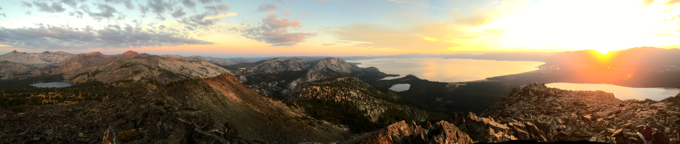
Lake Tahoe Basin Management Unit contains 155,000 acres. Photo/Kathryn Reed

The bulk of the current plan has been in the process since 2012, with multiple meetings surrounding it, and the public’s ability to give input and direct the outcome throughout the last four years. This document is intended to be valid for 15 years.

“The average visitor or resident won’t see much difference. Partially that is because the 1988 plan set the LTBMU on a good course of restoration, forest health and balanced and diverse recreation offerings,” Mike LeFevre, planning staff officer with LTBMU, told Lake Tahoe News. “However, the new plan incorporates a lot of new science around things that really did not exist in 1988 such as climate change and invasive species. For example with climate change, drought and the severity of wildfires we now know we have to increase the pace and scale of our forest management. The new plan describes desired conditions that lead to forests that are resilient to drought, insects and fire.”

Most people in the basin are now accustomed to summer thinning and winter pile burning. That process started in earnest after the destructive 2007 Angora Fire that leveled 254 houses and charred more than 3,000 acres, most of which was U.S. Forest Service land.

Fuels reduction on the 155,000 acres in LTBUM is a big part of the new forest plan.
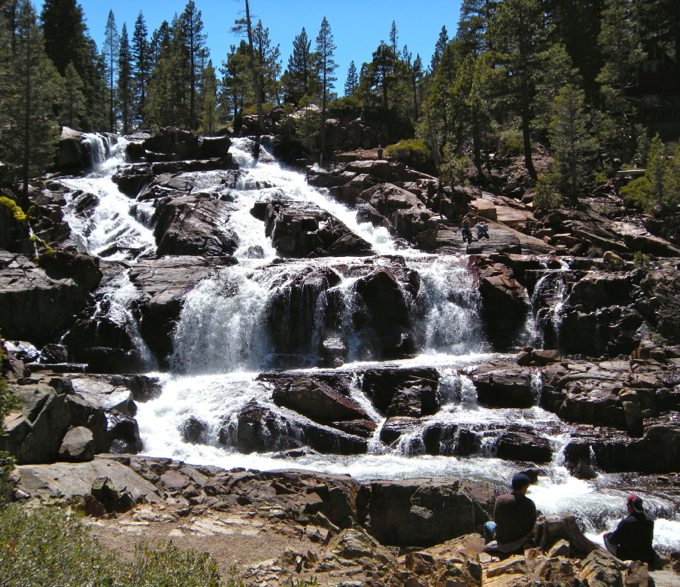
Glen Alpine waterfall on the South Shore is part of the LTBMU's responsibility. Photo/LTN file

Glen Alpine waterfall on the South Shore is part of the LTBMU’s responsibility. Photo/LTN file

The plan divides the region into four management areas — general conservation, backcountry (50,084 acres), wilderness (Desolation, Granite Chief and Mt. Rose) and Santini-Burton/urban forest parcels. The 1988 plan had 21 management areas.

“This plan includes a 3,600-acre area surrounding Stanford Rock on the West Shore in the backcountry management plan,” LeFevre explained. “All of the backcountry management plan will emphasize natural ecological processes, dispersed recreation and limited management. Overall these areas are already managed for a less developed character, but importantly this plan affirms that approach for the life of the plan.”

This plan allows for less developed recreation than the 1988 rules. However, it still calls for an increase. Campgrounds and day-use parking can increase by about 10 percent.

This will help give the already 5.7 million annual visitors more options.

Road and trail systems, and uses remain similar to their current existence.

While the Upper Truckee River does not have the federal Wild and Scenic River System designation, since 1999 seven miles of it has been managed as though it is. This is so if Congress were to consider the designation, the river would have a good chance of making the cut.

The process for the USFS to recommend rivers-streams be included in the Wild and Scenic River System has two steps.

“First step is to determine if the stream is eligible. After reviewing the outstanding attributes of all streams in the LTBMU, the plan identifies three tributaries of the Upper Truckee River and three creeks — Taylor, Glen Alpine, Eagle — as eligible,” LeFevre said. “The second step is to determine if an eligible stream is suitable. The plan does not include an analysis of suitability for the streams found eligible. A suitability study includes a substantial amount of public input and analysis. The LTBMU has no plans at the present to initiate the suitability analysis. However, the plan does direct that the streams found eligible be managed to ensure they remain eligible.”



Opinion: Retiree health care could cost Calif. $6.6B a year

By Dan Walters, Sacramento Bee

California is spending more than $2 billion a year on health care for retired state employees – up more than 80 percent in the last decade, according to Gov. Jerry Brown’s latest budget.

Dan Walters

Dan Walters

However, the state would have to spend over three times as much – $6.6 billion a year – to fully cover current health care costs and whittle down its $80.3 billion unfunded liability for future health care obligations, according to a new report from Pew Charitable Trusts.

California isn’t alone in facing a big retiree health care tab. California’s $80.3 billion liability may be the nation’s largest, but it’s just 12.8 percent of the $627 billion total for all states. Until recently, however, it was one of just 18 states that have set aside nothing to cover those future obligations.

Read the whole story


Growing concern: Crops raised with oil field water

By Julie Cart, Los Angeles Times

Here in California’s thirsty farm belt, where pumpjacks nod amid neat rows of crops, it’s a proposition that seems to make sense: using treated oil field wastewater to irrigate crops.

Oil giant Chevron recycles 21 million gallons of that water each day and sells it to farmers who use it on about 45,000 acres of crops, about 10 percent of Kern County’s farmland.

State and local officials praise the 2-decade-old program as a national model for coping with the region’s water shortages. As California’s four-year drought lingers and authorities scramble to conserve every drop, agricultural officials have said that more companies are seeking permits to begin similar programs. The heightened interest in recycling oil field wastewater has raised concern over the adequacy of safety measures in place to prevent contamination from toxic oil production chemicals.

Read the whole story