Money matters: Exit strategies for entrepreneurs

By Nic Abelow

If you are like many of your peers, the road into your business was more clearly laid out than your exit route from involvement. However, a well-drawn roadmap for the endgame can be the difference between achieving success and missing the target on important life goals. As a result, preparing an effective exit plan should be a central part of your overall game plan.

Nic Abelow

Nic Abelow

Laying the groundwork

A viable entrepreneurial exit strategy must take account of where you are today or where you would like to be in the future and provide for contingencies in the event of unforeseen circumstances. As a result, your exit planning should start with a comprehensive appraisal of your business and personal finances. Many entrepreneurs have found it valuable to start by developing a comprehensive net-worth assessment with their financial advisor. This not only helps to identify all available resources, but also to help match those resources against specific goals.

Perhaps less objective but no less key to a successful exit strategy is values clarification. For example, if some or all of your children are involved in the business, do you want them to continue in their current roles or expect that all will move on when the business is sold? You might have a clear choice for successor, and so might wish to consider how that choice will impact other family relationships. Keep in mind that many exit plans have foundered because of internecine conflicts. A related area of concern that will form a backdrop for the exit strategy is your vision for life after the event. Are you planning to retire? To remain involved as a consultant or part-time executive? To start a new venture in another field? Also, what might happen to your business if you were to suffer an untimely disability or even death? How each of these questions is addressed will direct the practical thrust of the nascent exit strategy.

Finally, a successful exit process should be based on a sound understanding of existing business relationships and provisions. You should identify the key professional and executive talent in your firm and then formulate appropriate reward and retention strategies for them.

Potential deal forms to consider

The various choices of deal structure each offer unique cost/benefit trade-offs. Here is an overview of the options:

Buy-sell agreement — This arrangement is designed to permit business co-owners to terminate their business relationship by setting the parameters for some participants to buy out others. It enables one or more associates to maintain involvement in a business when others might wish to sever their ties to it. It can also provide funding for a buyout in the event of the disability or death of a co-owner. A buy-sell agreement requires careful design to ensure that its execution does not work at cross-purposes with other estate and succession planning tools.

Cash sale to a third party — A pure cash transaction may create the greatest immediate liquidity for the seller, but other financing structures may have the potential to generate greater net yield over time. A cash sale may also be the simplest means to execute a complete and immediate separation from the business. However, keep in mind that one of the challenges of seeking a third-party buyer is that quite often there is no ready market to sell a small business. Simply put, it can take time and money to find the most profitable deal.

Buyout or recapitalization — In leveraged transactions partners, managers, or the business as a corporate entity borrow the funds to purchase the stock of the exiting entrepreneur. These deals may be especially useful for dissolving a multiple ownership arrangement while otherwise maintaining the business as a going concern. They are also often used for transferring business responsibility to children or other heirs while creating financial independence from them. Recapitalizations can also be used to finance an annuity for a business owner who might wish to combine financial independence with limited business involvement.

Employee stock ownership plan — An ESOP is a form of leveraged buyout designed specifically to give control of the business to a broad base of its current employees. ESOPs may have higher transaction costs than ordinary cash sales, but in many cases these costs are not out of line with the costs of other more complex deals. There are also specific tax benefits for ESOP transactions that may improve their net value significantly.

Managing the proceeds

A key part of any exit strategy is the financial plan for managing the proceeds of the deal in a manner consistent with the client’s post-sale goals. Such plans typically include a blueprint for investing sale proceeds in a diversified portfolio. They also typically include an estate plan crafted to take advantage of the trust structures and tax-code features that allow you to preserve wealth and protect the future interests of heirs. Among the favored devices may be family limited partnerships and grantor retained annuity trusts, which can reduce the estate value of shares passed on to heirs. In addition, many entrepreneurs are interested in charitable remainder trusts. These may be used to fund philanthropic programs that realize specific charitable goals while maximizing tax benefits, minimizing costs, and creating an income stream.

Professional guidance a must

Just as you likely rely on key advisors when making significant business decisions, you’ll need to assemble a team of legal, tax and finance professionals to help you analyze your current and future objectives and planning needs.

Points to remember

The sale of a business is only one small transaction at the center of a larger plan often referred to as an exit strategy.
The most successful exit strategies are those that give the business owners the greatest probability of comfort with the results as seen in their financial security, family dynamics and long-range goals.

There are many options for structuring the sale of the business, and each had different implications for other elements of the broader strategy. Buy-sell agreements can help maintain continuity for remaining owners in a wide range of circumstances. Pure cash transactions typically yield the greatest immediate liquidity. Leveraged transactions may enable managers, partners or family to take over and maintain continuity for the business. ESOPs can provide tax benefits and empower employees.

Trusts can be valuable tools for managing the income tax and estate planning implications of the wealth derived from a business sale.

This information is not intended to be a substitute for specific individualized tax or legal advice. We suggest that you discuss your specific situation with a qualified tax or legal advisor. Please note that the LPL financial advisor providing this article does not provide business valuation services.

Nic Abelow is a LPL financial advisor with Abelow, Pratt & Associates Financial Advisors and Wealth Management in Lake Tahoe.
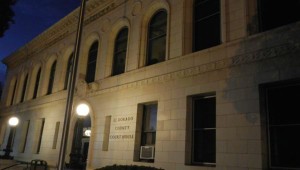


Challenge to Placerville courthouse project fails

Many say the courthouse in downtown Placerville has outlived its usefulness. Photo/LTN file

Many say the courthouse in downtown Placerville has outlived its usefulness. Photo/LTN file

By Joann Eisenbrandt

It took a year for Placerville Historic Preservation League to be told it lost the challenge to stop the El Dorado County courthouse project in Placerville from proceeding.

San Francisco County Superior Court Judge Garrett L. Wong on July 1 denied the writ that was submitted by the group in July 2015 that challenged the Judicial Council’s approval of the New Placerville Courthouse Project.

The project will relocate Superior Court functions on the West Slope into one new three-story, six-courtroom, 88,000-square-foot facility next to the existing county jail off Forni Road in Placerville. Currently, court services are split between downstairs in Building C at the county Government Center on Fair Lane and the historic courthouse on Main Street in downtown Placerville.

Since 2002, all California courts have been under the management of the state, overseen by the Judicial Council.

The Judicial Council chose not to comment.

This council is the lead agency on the Placerville courthouse project and is responsible under the California Environmental Quality Act (CEQA) for preparing an environmental impact report (EIR) outlining any potentially significant environmental impacts of the project and proposing mitigations for those impacts.

A list of “immediate and critical need” projects was created by the state once funding became available for renovations of existing court facilities or relocation and consolidation. This project is on that list.

It made that list, the EIR states, because Building C and the Main Street Courthouse fail to meet current standards for security and other court services. The Main Street Courthouse, built in 1913, has issues with its water system, asbestos, mold, limited handicapped access, an aging elevator, the lack of secure holding areas for in-custody defendants and no secure parking for visiting judges. Consolidating services in a location next to the exiting jail would allow for secure and more efficient transfer of those in custody for judicial proceedings and provide an overall cost reduction, the EIR explains.

The Placerville Historic Preservation League does not agree with the EIR’s conclusions that consolidating court services in a new Forni Road facility is the best or even the most cost-effective alternative, but it focused its challenge to the EIR on one main point. “The EIR failed to adequately disclose, analyze and/or mitigate the project’s economic impacts to the businesses in historic Placerville on Main Street,” their request for a writ of mandate states. “That will lead to urban decay and blight.”

The Main Street Courthouse, the Preservation League contends, is an essential component of the downtown Placerville economy and brings significant financial benefits to Main Street businesses from the steady stream of courthouse visitors and jurors, and from the courthouse staff and the staff of other court-related entities on Main Street such as the District Attorney’s Office and private attorneys’ offices. If court services leave Main Street, so will the money they bring to downtown, is their contention.

In his July 1 decision denying the writ, Judge Wong wrote, “Petitioner has not met its burden in this case. Substantial evidence supports the Judicial Council’s conclusion that moving the courthouse operations from Main Street to their new location less than two miles away would not cause downtown Placerville to fall into urban decay.”

Depending on how a writ challenges a public agency’s CEQA document, the court uses different standards of review. In this case, since the Placerville Historic Preservation League challenged the Judicial Council’s factual determinations, such as the methodology employed, the significance of the conclusions reached and the amount and type of analysis in their final EIR, the “substantial evidence” standard of review of the writ’s allegations was applied.

Under this standard “the Judicial Council’s determinations are given substantial deference and are presumed correct. Petitioner bears the burden of proving otherwise.” The court assumes that the Judicial Council followed the law and did not “prejudicially abuse its discretion.”

CEQA is focused on significant physical impacts to the environment, not economic ones. Economic or social changes are evaluated by CEQA only if they result in physical changes as well, such as the “urban blight” and physical deterioration of an area filled with unsightly, abandoned, boarded-up buildings left behind after a large number of business failures.

Wong determined that this would not happen to downtown Placerville, stating, “Even assuming downtown businesses rely on the courthouse for 5 to 20 percent, or up to 30 percent of their income, absent from the records is any evidence that such a loss in income would cause long-term vacancies leading to physical deterioration of the downtown and urban decay.”

The Placerville City Council had several meetings on this issue and eventually wrote a letter to the Administrative Office of the Courts (AOC) supporting the Forni Road location. Wong’s decision mentioned this letter from then-Placerville Mayor Patty Borelli, quoting from the document that there was “overwhelming support for the current proposal to relocate the court operations and repurpose the historic courthouse in downtown.”

Wong also pointed to the creation of a Blue Ribbon Committee by the city of Placerville and El Dorado County to find ways to “repurpose” the courthouse for other uses. The Judicial Council put out a request for proposals for a consulting firm to work with the Blue Ribbon Committee to analyze what would be realistic new uses for the historic courthouse building. According to Placerville City Manager Cleve Morris, the Blue Ribbon Committee last met in November 2015 and no future meetings are scheduled.

Kirk Smith, spokesperson for the Placerville Historic Preservation League, told Lake Tahoe News he has “serious problems with the (court’s) decision.” Smith pointed to what he sees as deficiencies in the administrative record provided by the Judicial Council to the court which prevented the Preservation League from submitting additional evidence on the economic impacts of removing court services from the Main Street building. Smith also noted that the Blue Ribbon Committee has rarely met and expressed doubts that an economically-viable suitable re-use for the courthouse could easily be found. “No adequate replacement could ever be built in time to take up the loss created by closing it.”

Smith challenged the accuracy of the “overwhelming support” for the project in the letter from Borelli to the AOC, noting that more than 60 Main Street merchants submitted a petition to the Judicial Council expressing their desire to retain some court services on Main Street and outlining the negative impacts removing them would have on the continued viability of their businesses.

Of the denial of the writ, Smith said, “It will be appealed.”

According to Placerville Historic Preservation League Attorney Don Mooney, if an appeal were filed, it would be to the First Appellate District Court of Appeals in San Francisco. The last day to file an appeal is Aug. 30.


Opinion: Ride the bus and you ride with big data

By Lisa Margonelli

When I first arrived in San Francisco in 1988 I often took a bus called the 22 Fillmore, which ran from Potrero Hill, around a hairpin corner above the Castro, out to the tony Marina. On one end dwelled ancient socialites in little hats, on the other old longshoremen, with so much wackiness in between that the route was rightly called the “22 Fellini.” It was like the old canard about nudist camps: Everyone on the bus was an equal—especially because none of us knew when the next one would arrive.

Now San Franciscans are, on average, younger and more prosperous, and when they ride the bus they are looking at their phones, where they can track the 22 Fillmore in real time. They can also probably see a digital readout of arriving buses at a stop, or receive texts and social media updates from San Francisco’s municipal transit agency. Any traveler can also open up all sorts of other smartphone and desktop apps to navigate the system, like Google Maps, Moovit, Rover, and Routesy. These days, when you ride the bus, you ride with Big Data.

The world of apps for transit started with a great deal of promise. Evidence from Seattle suggested that merely letting riders know when the next bus would arrive could actually make people happier with their bus and more likely to take another trip. Fully integrated apps now let people plan trips that move from trains to buses and private cars or bicycles at the ends. Eventually, this data-rich universe may encourage city dwellers to give up their cars, reducing traffic congestion, pollution, and greenhouse-gas emissions. So on a recent trip back to San Francisco, I tried using some of the local apps to see how they changed my experience.

I was taking part in a big civic—and economic—experiment. Though there aren’t yet any studies showing whether apps increase transit ridership, apps themselves are much cheaper than buses and trains and tracks and drivers. When apps are used to pay for fares (as they are in San Francisco, Washington, D.C., and Dallas, among other cities) they shift the cost of fare machines from the transit company to the riders. These complex changes in investment, risk, and time will continue as 10 percent of the world moves into cities in the next 15 years, and as self-driving cars start to prowl the streets. Uber has raised $15 billion in venture capital to move into the space between public and private transit around the world. And in the long run, these changes could create a richer transit universe for everyone, or a poorer one accessible mainly to the rich.

I first pulled out my $29 Android smartphone along the T line on Third Street. The app produced by Muni, the local transit system, required that I give it my email and create a password. Even though I’d given up my anonymity, the app didn’t seem to know exactly where I was. So I walked toward where I thought the stop was, only to find a digital readout saying that the next trains were coming in 12 and 14 minutes. Aha! Poorly spaced trains are a problem no app can fix.

That problem is important. As nice as information is, what riders really want is service. Candace Breakwood, assistant professor of engineering at CUNY, did research across three boroughs of New York from 2011 through 2013 and found that lines giving riders accurate information on arrival times increased ridership by as much as 2 percent on an average day. “When you aggregate that across NYC it’s very significant,” she told me. But she also looked at the impact of the weather, the economy, service changes, and multiple other factors and found what really increased ridership was more-frequent buses and shorter trip times. This is hardly a “Moneyball”-type revelation from the crunching of Big Data. “Yeah. Commonsense,” Breakwood said.

Once the T arrived it was pleasantly crowded, with a mix of ages and ethnicities, and the ride on the tracks was mostly smooth. Some older black folks in suits were still enjoying Juneteenth, singing a song from another era. A younger woman with pink hair was drinking from a can. And a guy with long arms was waving them exuberantly as he talked on the phone. As we rolled past the ballpark it occurred to me that the city had spent a lot of money establishing itself as a party town, and the crowd of us here on the train was a truer reflection of that happy civic spirit—the 22 Fellini of it all—than many of the recent expensive infrastructure investments. An Asian grandmother with two little children boarded. The train lurched, they all nearly fell over, and then started giggling. The arm-waving man shot out of his seat and offered it to them. Our civic project rolled along.

What does this all have to do with apps? SF Muni plans to release a new app component this summer that allows passengers to comment on the etiquette of fellow riders, along with train cleanliness, trip time, crowding, and comfort. Rate My Ride encourages readers to swipe right or left—in homage to Tinder, I guess. Muni employees will monitor these swipes and “target specific train routes and bus lines” for improvements, according to Paul Rose, spokesperson for Muni. “It’s one way to make it easier for riders to let us know how we can improve their transportation experience and further engage our riders,” he explained.

I tried to imagine myself swiping my fellow passengers on my phone, but to me the beauty of the bus is enjoying the way everyone gets along and ignoring the ways that we don’t. The singing was nice. I had no problem with a quiet drink. The seat hog at 23rd Street was an angel by Fourth and King.

So how do people rate other passengers’ etiquette, and how should the transit agency react to them? “There’s an idea that because apps are software they’re non-discriminatory and egalitarian. And if you put them in the hands of people they’ll naturally lead to good,” said David King, an assistant professor of urban planning at Arizona State University. But, King worries, it’s likely that the app will be hijacked by racist, sexist, or anti-poor opinions—just like platforms including Nextdoor.com, AirBnB, and Microsoft’s chatbot Tay, which became a raving fountain of hate-talk within hours.

What’s more, in the world of public services, some voices—particularly those perceived as white and middle class—are more powerful than others, attracting more sympathetic policing, more funding for potholes, more municipal love. Muni’s app will be available only in English to start, even though bus announcements are often in English, Spanish, and Chinese. The agency says they expect to release the app in other languages. It could be harmful to only collect complaints from English speakers, but wouldn’t the very idea of the city itself be challenged if we all secretly complain about each other in multiple languages?

Perhaps more important, if the core issue with increasing transit ridership is train frequency and travel time, should Muni spend its precious resources tracking and responding to passenger etiquette? Transit needs to be more rider-focused, but the meaningful difference comes when public transit is more plentiful and convenient. And citizens change that through engagement in the budgeting and planning process, not by writing bad Yelp reviews. At the moment, apps offer riders an illusion of control. In the long push-pull over transit service, though, the apps aren’t automatically a force for good.

On a trip back from the East Bay I used Moovit to calculate my route. Taking BART and bus, the app said, would take 86 minutes, while an ad offered a button to call an Uber that would cost $21 and take 56 minutes. As it turned out, the app was wrong, and between BART and the 5 Fulton bus I got back home in 72 minutes for about $6. And of course, I got the whole Fellini too.

Lisa Margonelli writes the Small Science column for Zócalo Public Square, where she is the science and humanities editor.


May a good water conservation month in Calif.

By Kurtis Alexander, San Francisco Chronicle

Californians are saving an extraordinary amount of water, records show, even after winter rains prompted state regulators to begin easing drought-driven restrictions on cities and towns.

The State Water Resources Control Board reported July 6 that urban water use dropped 28.2 percent in May compared with the same period in 2013 — the second-biggest monthly reduction since the state’s water rationing program began last year. May’s savings followed an impressive 26.1 percent reduction in April.

With state regulators relaxing water rules, however, some are doubting whether such high levels of savings will continue — and whether they even need to. Already, many water agencies have passed the state’s new “stress test” and are no longer required to save water under a policy being praised by suppliers and criticized by conservationists.

Read the whole story


U.S. traffic deaths rise almost 8%

By Joan Lowy, AP

WASHINGTON — Traffic deaths surged last year as drivers racked up more miles behind the wheel than ever before, a result of an improved economy and lower gas prices, according to preliminary government data released last week.

Fatalities rose 7.7 percent to 35,200 in 2015, the National Highway Traffic Safety Administration said. That overall rate was significantly outpaced by non-motorist traffic deaths: Bicycle fatalities were up 13 percent; pedestrian deaths rose 10 percent, and motorcyclist deaths rose by 9 percent.

Last year was the deadliest driving year since 2008, when 37,423 people were killed. It was also the year in which American drove 3.1 trillion miles, more than ever before.

The fatality rate for 2015 increased to 1.12 deaths per 100 million vehicle miles traveled (VMT), up from 1.08 deaths in 2014.

The information comes as tens of millions of Americans were hitting the road for the Fourth of July holiday, one of the busiest and deadliest days on the year on the nation’s roadways.

Historical data show that, after peaking in the 1970s, traffic deaths have fluctuated quite a bit while generally trending downward, according to the Insurance Institute for Highway Safety. Large dips in deaths have corresponded to shocks to the economy: the oil embargo of the mid-1970s, the recessions of the early 1980s and early 1990s and the more recent downturn that began with the subprime mortgage crisis.

“It’s not just that Americans drive more miles when the economy improves; it’s the kind of miles they drive,” said Russ Rader, a spokesman for the insurance institute. “What comes back after a recession is the optional driving that’s riskier, like going out on the weekends or taking long trips — different driving than the daily commute.”

The national average price of gas in 2015 was $2.40 per gallon, which was the second-cheapest annual average of the past decade, according to AAA. It was about 94 cents per gallon less than the annual average in 2014, which also saw the lowest number of traffic deaths — 32,675 — since Harry Truman was president.

“The upticks (in deaths) we’re seeing correlate to lower fuel prices, but we don’t want to give ourselves that excuse so we are digging into different areas where we can have an impact on this,” Transportation Secretary Anthony Foxx told journalists. The department, which includes NHTSA, is looking at how advances in automotive technology can reduce the death toll, he said. NHTSA’s revamping last year of its safety rating system for new cars to include automated emergency braking technologies may help, he said.

Motorcycle deaths have risen in part because of weak state laws on wearing helmets, said Jonathan Adkins, executive director of the Governors Highway Safety Association, which represents state highway safety offices. A majority of states no longer require riders to wear helmets, he said.

“Motorcyclists are a bigger and bigger percentage of deaths each year,” Adkins said.

Just because the state of the economy is a significant factor in the rise and fall of traffic deaths, “it doesn’t mean that policymakers are powerless,” Rader said. If people followed a few simple measures like driving more slowly, buckling up and wearing a helmet when riding a motorcycle, he said, “the increases we’re seeing now wouldn’t be as large.”


Divers look for answers beneath Fallen Leaf Lake

By Chris Constantine, California Diver

At 6,300 feet in elevation, Fallen Leaf Lake was carved out of granite by two massive glaciers that traveled northward down the Glen Alpine Valley, leaving behind a lake that is now 3 miles long, just under a mile wide, and 410 feet deep at its deepest point.

Protected from runoff and commercial development, its clear, cold water is home to dozens of ancient trees, many still standing upright. There are 96 trees found so far, standing up to 77 feet tall, with some fallen trees measuring over 100 feet in length. Carbon dating tests have shown that some of these trees lived between the 9th and 12th centuries, and at least three older trees have been dated to between 18 and 35 centuries ago. Like nearby Lake Tahoe, much of the deep lake bed still remains unseen by any humans.

In 1997, some researchers who studied the trees came to the conclusion that the submerged ancient mature conifer trees grew during a medieval megadrought that lasted 150-200 years. Once the drought was over, the lake level quickly rose 150-200 feet, they theorized, quickly submerged the trees and preserved them in the frigid water that hovers just above freezing.

That theory doesn’t seem right according to some, including Tom Loomis, a third-generation resident and avid outdoorsman. Based on evidence seen in the local terrain and found underwater during hundreds of dives on the ancient trees, he believes there’s a completely different answer. Loomis is out to prove what he believes really happened, with the help of citizen scientists and the Undersea Voyager Project, a nonprofit organization located in Napa.

Read the whole story


Bills lining up for next Nev. legislative session

By Sandra Chereb, Las Vegas Review-Journal

CARSON CITY — Allowing terminally ill patients to end their lives, lowering Nevada’s gambling age and authorizing public marijuana venues are among the 108 early bill draft requests submitted by legislators for possible consideration by the 2017 Nevada Legislature.

The list released Friday offers a snapshot of some of the issues lawmakers will debate when they convene Feb. 6 in Carson City for a 120-day session held every two years. The list provides just snippet descriptions of what the proposals entail. Written details are not revealed until bills are actually introduced in the Senate or Assembly.

More than 1,000 bills are typically introduced during a session, but not all of them are heard in committees or voted upon.

Read the whole story


Nev. ending segregation of HIV-positive inmates

By Cy Ryan, Las Vegas Sun

CARSON CITY — Faced with the threat of a federal lawsuit, the Nevada prison system will no longer apply segregation policies that deny inmates with HIV access to work programs where other prisoners earn credits to reduce the length of their sentences.

The state Department of Corrections “will not support denying an inmate a job or housing an inmate differently from the general population based on the reasoning that they have HIV or other blood-borne disease,” prisons chief James Dzurenda said.

Dzurenda instructed prison officials not to disclose the condition of HIV-infected inmates to correctional officers or those who assign work details. He also said medical records that identify HIV inmates must be kept confidential.

Read the whole story


Forest thinning resumes on North Shore

Thinning of trees for fuels reduction and forest health will resume July 7, on approximately 178 acres of National Forest System lands on the northeast side of Highway 267, north of Lake Vista Road above Kings Beach and Tahoe Vista.

Mechanical whole tree removal will take place off Forest Road 16N52 for the next several months. The area will be closed for public safety from 7am-6pm through Oct. 1.

Mechanical whole tree removal involves cutting the entire tree and moving it to the landing area to remove the limbs and cut it into sections.

Hazards may be present even when operations have ceased for the day and the closure is not in effect.

The forest thinning is part of the Carnelian Hazardous Fuels Reduction and Healthy Forest Restoration Project, which will treat approximately 3,300 acres on the North Shore.

For more information about the project and to view the closure order and map, go online.


Hard Rock settles lawsuits with contractors

Update July 11, 2016, 4:20pm:

By Kathryn Reed

An infusion of cash from new owners of the Hard Rock Lake Tahoe has made the lawsuits go away that involved contractors who renovated the public areas of the Stateline property.

The Nevada Gaming Control Board has approved brothers Jon and David Park’s request to sell half of the assets to an affiliate of Paragon. Las Vegas-based Paragon HRLT is managing the property. The proposal was brought the Gaming Board in February.

The trial date with the general contractor who did the casino and lobby area is no longer on the court docket.

Neva One, the company the Carson Valley brothers formed as the umbrella of the Hard Rock, has been under fire almost since it was announced the former Horizon would undergo a $60 million facelift.

The hotel-casino reopened as the Hard Rock on Jan. 28, 2015. By many accounts it was a rush job. Finishing touches were being made as the media was getting a tour before the doors opened to the public later that day.

Soon thereafter the lawsuits started to be filed and employees began jumping ship. General contract SMC Contracting out of Reno said it was owed $10 million. That figure was later reduced to $6.4 million. The Park brothers balked at this, saying they had no idea the project costs were escalating to that amount. SMC said they let the owners know each step of the way, and the overruns were to make the deadline and add things the brothers wanted.

Savage & Sons in Reno, which did the plumbing at the property, filed a lawsuit trying to recover $820,000 from Neva One. Tahoe Specialty Flooring & Window Design of Tahoe City alleged it was owed $68,000.

No one from the three firms returned calls.

In all, 16 subcontractors who did work for SMC filed liens against Neva One.

The specifics of the settlement agreements have not been disclosed.

What hasn’t been resolved is the issue with the contractor and subs who did the work on the hotel rooms.

The Park brothers also did not return calls.

Since the Parks got rid of the initial management firm the exodus of employees has lessened. The duo’s lawsuit against Warner Hospitality alleging mismanagement and breach of contract has been resolved, but the details are unknown. The trial date was taken off the court calendar in June.

The pool, which has been off-limits almost since the get-go, is expected to be open in August. The 200,000-gallon pool was losing 5,000 gallons a day before it was drained. It was refilled this spring. To maintain their permit from Tahoe Douglas Fire Protection District the Hard Rock has to have the pool filled – it’s a source of water in the event of a fire.