Ex-pitcher, tennis pro favored to win ACC

Mark Mulder, the defending champion and former MLB all-star pitcher, and newly-retired pro tennis champion Mardy Fish are co-favorites to win the American Century Championship celebrity golf tournament.

Harrah’s and Harveys Race & Sports Book have Mulder and Fish at 3-1 to win the 27th annual competition at Edgewood Tahoe Golf Course in Stateline.

The tournament is July 22-24.

Steph Curry, the NBA 2015-16 MVP, has entered the tournament and was placed near the top of the board at 6-1, with two-time champion Mark Rypien next at 9-2.

Among the other prominent players and their odds are: Marshall Faulk (15-1), Jerry Rice (25-1), Aaron Rodgers (25-1), Andre Iguodala and Roger Clemens (30-1), Justin Timberlake and Jerome Bettis (40-1), Dell Curry (50-1), Emmitt Smith (1,000-1) and Ray Romano (1,000-1) and Kevin Nealon (2,000-1). Perennial longshot Charles Barkley is 6,000-1. Among the other favorites are former MLB pitcher Eric Gagne at 5-1, two-time champ Jack Wagner and longtime contender Jeremy Roenick, both 7-1.


Weekly ‘Mark Twain’ performances in Incline

Mark Twain can be spotted every Monday in Incline Village.

McAvoy Layne, who has been channeling Twain for years, is putting on The Ghost of Mark Twain at Tahoe on behalf of the local historical society. It is part humor, part historical.

Performances are at 7pm in the Mark Twain Room of the Starbucks Building (899 Tahoe Blvd.). Doors open at 6:3pm. Beverages are allowed, but not food.

Tickets are $20. For reservations, call 800.468.2463.


Researchers on brink of stopping tree-eating beetles

By Abby Hobbs, Deseret News

SALT LAKE CITY — Emerald ash borers are infesting states across the country, and they’re on their way to Utah, officials said.

But researchers at BYU study may have found a way to eliminate the problematic pests.

The emerald ash borer was originally discovered in Michigan in 2002 and since has killed more than 50 million ash trees. Since entering Colorado in 2013, threats for the beetles moving to Utah have increased.

BYU researchers looked at beetle visual systems and found that the emerald ash borer and its relatives are unique in that they can detect blue light. The researchers say the findings could help insect prevention specialists find solutions to slowing the spread of emerald ash borers and even eliminating them altogether.

Read the whole story


Money matters: Brexit and your investments

By Rick Gross

The United Kingdom’s decision to leave the European Union following a referendum known as Brexit was the latest test for investment markets worldwide. The immediate market reaction was decidedly negative, but soon after markets started to rebound, more so in the U.S. than overseas. Investors should be prepared for continued uncertainty related to the Brexit vote, which could contribute to volatility in the days, weeks and even months to come.

Rick Gross

Rick Gross

Volatility is nothing new

Significant price swings in the market, both up-and-down, are nothing new. A number of notable events, many arising without much warning, have occurred in recent years causing markets to react. Among them are the 2011 Japan earthquake and tsunami, a temporary shutdown of the U.S. federal government in 2013 and the dramatic drop in oil prices that began in 2014. These events had an impact on stock markets in the short run, but over time, stocks recovered.

There has been plenty of speculation on what the anticipated exit of the United Kingdom from the EU will mean for the global economy and the financial markets. Yet nobody can predict with certainty what the future holds. It’s important to keep in mind that volatility is a reality for stock investors.

How should you respond to Brexit?

Geo-political events can act as a reminder to review your financial position. At the same time, remember that portfolio decisions should not be based on emotion or speculation about events that have occurred or may happen in the future. Here are steps you can take to stay calm during the next wave of volatility:

•     Assess your risk tolerance. How did you feel during the most recent downturn? Feeling especially uncomfortable could be a sign that you’re taking on too much risk. Make sure you are honest about the level of risk you are willing to accept and position your portfolio accordingly.

•     Diversify your portfolio. Don’t be overly dependent on a single investment or asset class. Owning a properly diversified mix of assets can help you withstand the rough periods in the market.

•     Align your portfolio with your goals. If you have a longer time horizon to let your money work, it may make sense for you to have more aggressive investments in your portfolio. However, if you’re retiring soon or need to tap some of the money you have invested, you may want to shift some assets into less volatile investments.

•     Don’t be overly influenced by the headlines. It’s easy to find reports in the media that can scare you away from your long-term investment strategy but put the pundits’ opinions into perspective. One thing is for sure – they won’t know your personal financial goals and situation.

The most important drivers of your investment success are your long-term goals, the time you have to invest and your commitment to save as much as you can. You can be certain that there will be more events like Brexit in the future. When they happen, avoid making irrational decisions and stay focused on your long-term strategy.

Rick Gross is a financial advisor and private wealth advisor with Ameriprise Financial Services in South Lake Tahoe.


Snippets about Lake Tahoe

·       Three corridor options on roadway and path improvements will be the subject of a July 21 meeting in Meyers. There will be a visual presentation of the concepts provided by El Dorado County staff and opportunities for questions and comments. The meeting will be from 6-8pm at the CCC building.

·       Auditions for “Dorothy in Wonderland, The Musical” are Aug. 11-13 from 11am to 3pm at the Reno Little Theater, 147 East Pueblo St., Reno. Performances will be at Cargo inside Whitney Peak in December. For more info, go online.

·       Award-winning winemaker Tom Jones has launched Iron Hub winery in Plymouth.

·       Vacation Bible school will be offered at St. Theresa Catholic Church in South Lake Tahoe from Aug. 1-5, 6-9pm for pre-K to seventh grade. For more information and registration, contact Danette Winslow at 530.544.4788 or sttheresare@gmail.com.

·       Squaw Valley Ski Holdings has launched Squaw Tomorrow in an effort to bring forward additional supporters of the Village at Squaw Valley redevelopment project and educate Placer County residents about the project.


Proven leader takes reins of Kirkwood

By Susan Wood

A ski area executive with deep roots in the industry was groomed by Vail to take the helm of the resort known for deep snow.

Doug Pierini returned to the Lake Tahoe region, coming on board Kirkwood Mountain Resort as vice president and general manager this summer. At 46, the former vice president of skier services at Breckenridge Mountain Resort in Colorado has a long history with ski resorts. Both resorts fall under the Vail Resorts’ umbrella.

His parents were part-time ski instructors in upstate New York. Skiing the Catskills was a part of everyday life for Pierini (which means knowing how to ski on ice). He raced as a youngster, and after graduating from Rutgers University in New Jersey with a degree in economics, he headed west in search of the perfect turn.

He started in Jackson Hole, Wyo., where for a decade he worked in ski school and management. From there, he’s worked stints at Alpine Meadows and Sierra-at-Tahoe, locally. Globally, he’s also manned posts in the famed Portillo area of Chile, in addition to Mt. Buller in Australia. He’s had jobs at Steamboat Mountain Resort in Colorado and Plattekill Mountain in New York.
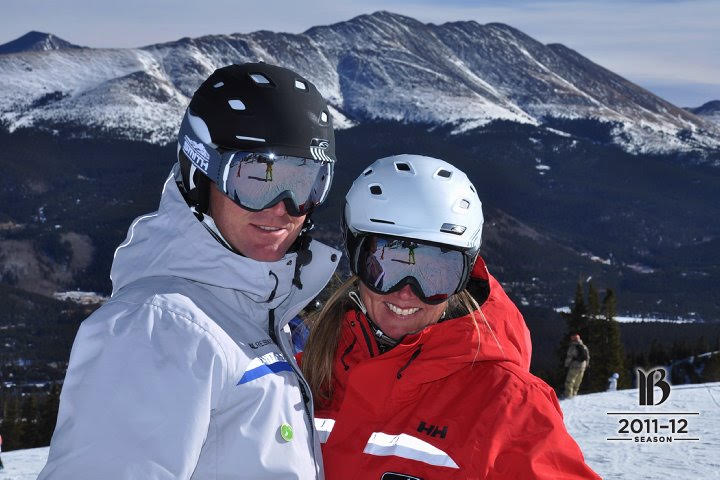
Doug and Leigh Ann Pierini make skiing a priority for their family. Photo/Provided

Doug and Leigh Ann Pierini make skiing a priority for their family. Photo/Provided

In between assignments, Pierini served on the Professional Ski Instructor Association national team, where he developed ski technique and training programs. This means training the trainers. He also maintained the high honor of taking a slot on the National Alpine Team for the United States.

But it was his time at Breck that really showed off his skills in management as vice president of skier services.

One could call Pierini an expert at teaching wannabes the finer skills of skiing. He started instructing in the 1980s. About the only people whom he wouldn’t recommend teaching are his own children, and the same advice holds true for other parents.

Still, when asked where his favorite place to ski of all is, he replied: “With my kids, anywhere they want to be.” Pierini has a 9-year-old son and 10-year-old daughter.

Truly a family man, Pierini is all about nurturing the individual nature and spirit of a person.

The Volkl ski purist (he has owned five pairs) plans to do the same at Kirkwood, which for years has developed a reputation as a lone wolf in the Tahoe-area ski resorts. He said he’s quite familiar with Kirkwood’s unique character and plans to maintain it.

Pierini replaces Casey Blann, who has worked at Kirkwood, Heavenly and Sierra-at-Tahoe.

“Casey’s an amazing guy with a good reputation. I feel honored to follow someone like that,” Pierini told Lake Tahoe News.

As for Kirkwood’s pending master plan, he agrees it “needs to be reviewed” but stopped short of implying Kirkwood needs a lot of change.

He wants to tap into Kirkwood stakeholders, community members and employees to get new ideas on how to proceed with the ski resort split between Alpine and Amador counties off Highway 88.

“Right now, we’re going to move forward with what we have,” Pierini said. “There’s nothing glaring Kirkwood needs for now.”

Some have long claimed the resort needs more high-speed chairlifts like Cornice, especially on the backside, but all will come with time. For now, Pierini sits in a pure get-to-know status and has met with numerous people since arriving.

And even his wife, a retired trainer from Keystone ski resort in Colorado, would like to get involved with the community. The family is also big on going out on the sailboat for a different kind of cruiser run.

Being family oriented carries over into his management style – in an egalitarian way.

“As a manager, I’m very team oriented. I place a lot of importance on having a strong team. It’s not all about me. I give a high standard on the brand and don’t like to settle for something mediocre,” he said of his expectations. “At the same time, I like to empower my team.”

The embracing of the team environment made him a good fit for Vail.

Pierini joined the Broomfield, Colo.-based ski industry giant team in October 2010 and hasn’t looked back.

“I like how responsible they are as a company. There’s so much they do for the environment,” Pierini said, further insisting the principles are part of the company mantra. “And it’s a leader in the industry with a ton of talent.”

Some would argue that Pierini represents that claim.

“He’s been in a key leadership role. Breckenridge is one of the most visited ski resorts in the country, so certainly he has a grasp of the business,” Vail Resorts Senior Advisor Blaise Carrig told Lake Tahoe News.

Carrig, who managed Heavenly Mountain Resort before moving up the Vail corporate management ladder until he fully retires in October 2017, is familiar with Pierini’s work. He pointed out his excellent attention to service and operational skills as traits that made Pierini stand out for Vail’s upper management.

“He’ll be great for staff and the community of Kirkwood,” Carrig said.

And the ski instructor known for his detailed training regimens was trained intensively himself.

Carrig cited how in 2010 Vail owned five resorts. Six years later, that number has more than doubled. The math adds up to the need for more chief operating officers.

And like most things Vail, there’s no stone unturned in terms of putting a tried-and-true structure in place to get the best leaders for the jobs.

Pierini went through Vail’s internal leadership program and embraced its VRV – Vail Resorts Vision. There are three steps named for scaling a mountain: Camps I, II and III.

“It’s a purposeful program. We’re very focused on successes – performance management successes with leadership development programs and peer reviews. Then we identify people we think have talent, have performed well and have the ability to take over more duties in the company,” Carrig said. “For Kirkwood, Doug rose to the top.”

Carrig wasn’t alone in his observations.

“Doug brings an impressive diversity of experience to his new role and leadership style that I’m confident will be a great fit at Kirkwood,” said Pete Sontag, chief operating officer at Heavenly and regional manager for Vail’s three Tahoe area resorts.


Opinion: Dissecting workplace discrimination

By Serena Does and Margaret Shih

While the U.S. currently has a black president and a woman just made history by clinching the Democratic presidential nomination, both racial minorities and women still face significant barriers in professional settings.

Considering the parallels and differences in the biases that women and racial minorities face is an important way to increase our understanding of workplace discrimination and equality. By reviewing some recent work by cross-disciplinary researchers from across the world, we attempted to shed light and theorize on some ways in which racial minorities might suffer from similar biases as those identified for women. For the sake of comprehension, we narrowed our scope to research on Asian Americans.

As our starting point, we took four patterns of workplace bias that women face as identified by a 2014 study by a research team based out of UC Hastings College of the Law’s Center for WorkLife Law. Joan C. Williams, Kathrine W. Phillips, and Erika V. Hall interviewed 60 women who work in the sciences and found that 100 percent reported experiencing one or more of four gender bias patterns.

Although these biases were identified as specific to women, by comparing them to findings from research on biases that Asian Americans face in the workplace, it becomes clear that they can also apply to racial minorities.

The first bias, “prove-it-again,” refers to when women have to provide more evidence of competence than men in order to be seen as equally competent. As the name suggests, women can find themselves in situations where they have to prove again and again that they are professional, competent, and/or intelligent. For example, a woman might have to exhibit competency at her job for a longer period before being considered for promotion than a man doing an equivalent job.

Similarly, Asians oftentimes have to provide more evidence of competence than non-Asians. A 2013 study by Lei Lai and Linda C. Babcock found evidence that Asian Americans are evaluated as less socially skilled than whites, and are therefore less likely to be hired for a job requiring social skills (like public relations) than technical skills (like information technology). A 2013 study on the leadership theories of Asian Americans and whites found that even when Asian managers are seen as equally competent as white managers in specific metrics, on the whole whites see Asian managers as less sociable, less transformational, and less authentic compared to white managers. Like women, Asian Americans must prove their competence to a greater extent than whites, particularly in areas where stereotypes and prejudices remain.

The second bias, “tightrope,” refers to when women find themselves walking a tightrope between being seen as too feminine to be competent—or too masculine to be likable. This is a difficult—not to mention unfair—balance for women to have to consider, and is often very hard to attain. Hillary Clinton is only the most recent and prominent example of a woman who has been criticized for being “too masculine” or, in more coded language, “too ambitious and eager.”

Similarly, Asians are commonly stereotyped as being more feminine and less masculine compared to whites or blacks. In 2012, Jennifer L. Berdahl and Ji-A Min examined stereotypes of East Asians (Chinese, Koreans, and Japanese) and found that they are expected to be as competent and warm as whites—but also less dominant (i.e., masculine). And a 2015 study of “gender profiling” by Erika Hall, Adam Galinsky, and Katherine Phillips found that because Asians are seen as more feminine than whites and blacks, they are seen as better fits for feminine rather than masculine positions. This could pose barriers when Asians seek positions—like police officer or banker—that are historically seen as masculine.

The third bias, “maternal wall,” refers to women finding themselves confronted with the stereotype that they lose their work commitment and competence after having kids. Men who have children don’t typically face this same stereotype in the workplace.

There is evidence suggesting that Asian women are faced with particular biases and challenges around motherhood in professional contexts. In the same 2014 study of women scientists by Williams and colleagues, Asian women described more pressure from their families to have children than whites and blacks, and also felt more responsible to cover for colleagues who are mothers compared to Latina and white women. At the same time, Asian women were more frequently told by colleagues that they should work fewer hours after having children compared to black and Latina mothers. So Asian-American women face more pressure from their families to have children, while also experiencing more pressure from colleagues to work less after having children.

The fourth bias, “tug of war,” refers to when gender bias fuels conflict among women. In some instances, having a sexist work environment can lead women to want to distance themselves from their gender group in different ways, including by criticizing other women.

Based on the interviews reported by Williams and colleagues, Asian women had to compete with other women for a “woman’s spot” – i.e., a position intended to be filled by a woman—at higher levels than white and Latina women. This seems to suggest that for Asian women, there is more (or at least greater perceptions) of a “zero sum” situation when it comes to the workforce and women colleagues, where one woman’s gain is another woman’s loss.

Ultimately, what strikes us is that there are clear intergroup differences in how women experience and are exposed to these four different patterns of bias, depending on their racial background. Asian women’s experiences can be significantly different from black women’s experiences, and in order to create an equal and inclusive workplace for all, it is important to be aware of such differences.

Future research should look at the ways in which biases and prejudice against women compare to those against racial minorities, and study which type of interventions are most effective in reducing the effects of such biases. More study is also needed on the intersections of race and gender when it comes to workplace bias. A greater understanding and awareness of the parallels and differences between the biases that women and racial minorities face can result in more effective and efficient interventions in the workplace designed to promote inclusion for all.

Serena Does is a postdoctoral researcher at UCLA Anderson School of Management and Margaret Shih is full professor at UCLA Anderson school of Management.


Officials trying to trap bear at Sand Harbor

Nevada State Parks and Nevada Department of Wildlife have set up a bear trap at Sand Harbor.

The need to trap the animal is because it has been getting into garbage at the popular Lake Tahoe beach.

The animal has had easy pickings because dumpsters have not been closed properly and have been overflowing, according to reports.

The state park is open from dawn to dusk, giving animals ample opportunity to forage for human food since the bins are not emptied every night.

— Lake Tahoe News staff report


Road beat: Hyundai Sonata Limited 2.0T

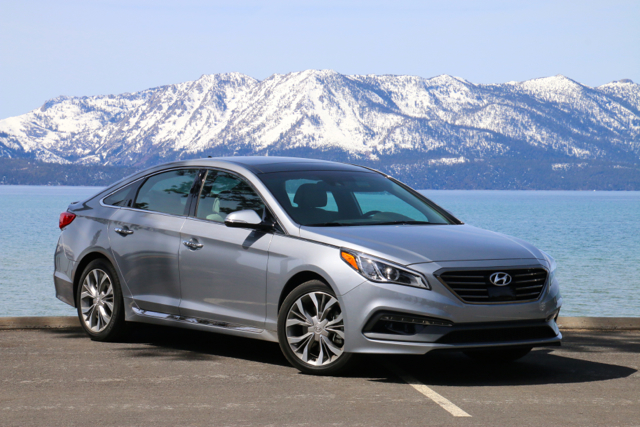
The Sonata 2.0T Sport/Limited fires on all cylinders and then some. Photos/Larry Weitzman

The Sonata 2.0T Sport/Limited fires on all cylinders and then some. Photos/Larry Weitzman

By Larry Weitzman

There are four distinct models of the Hyundai Sonata, the Sonata, the Sonata Eco, the Sonata Hybrid and this new Sonata 2.0T Sport/Limited. Within those four models there are also various trim levels. I tested a version of the 2015 model a year ago and while it is essentially the same vehicle, it is not. Because of a reworked 2.0-turbo engine it now boasts of 245 hp at 6,000 rpm and 260 pounds of twist from 1,350- 4,000 rpm.

Sonata is now in the second generation of its fluidic sculpture (seventh generation overall) and as said before about the new Sonata body, if you like the last generation, you are going to love this new generation. The new grille and front end and new character lines all tie together to make the whole concept flow with each component enhancing the next. And with the wide spaced quad exhaust, it is the best looking Sonata yet, especially the front end (I think I said that already). Coefficient of drag is a low 0.27.

Size-wise, the new Sonata 2.0T is a mid-size outside, but a full-size inside. Wheelbase is 110 inches and length is 191 inches, width and height 73 and 58 inches respectively, perfect mid-size numbers. But inside there are 122 cubic feet of passenger and cargo volume, 106 cubes on the inside and 16 cubes in the trunk. While the new Sonata is one slick design in reality and perception, it’s huge on the inside. Remarkable.

Specifications Price $35,035 Engine  Four cylinder inline 16 valve 2.0L 245 hp @ 6,000 rpm 				  260 lb.-ft. of torque @ 1,350-4,000 rpm Transmission Six speed torque converter automatic with a semi manual mode Configuration Transverse mounted front engine with front wheel drive Dimensions (Sport) Wheelbase 110.4 inches Length 191.1 inches Width 73.4 inches Height 58.1 inches Track (f/r) 62.9/63.1 inches Ground clearance 5.3 inches Cabin volume 106.1 cubic feet Trunk volume 16.3 cubic feet Fuel Capacity 18.5 gallons Weight 3,589 pounds Steering lock to lock 2.78 turns Turning circle 35.8 feet Wheels 18X7.5 inch alloys Tires 235/45X18 Co-efficient of drag 0.27 Performance 0-60 mph 6.32 seconds 50-70 mph 3.28 seconds 50-70 uphill 4.41 seconds Top Speed Beyond sanity Fuel economy EPA rated at 21/31/25 city/highway/combined. Expect 27-28 mpg in suburban driving and 36 plus mpg on a level highway at 70 mph.

Specifications
Price $35,035
Engine
Four cylinder inline 16 valve 2.0L 245 hp @ 6,000 rpm
260 lb.-ft. of torque @ 1,350-4,000 rpm
Transmission
Six speed torque converter automatic with a semi manual mode
Configuration
Transverse mounted front engine with front wheel drive
Dimensions (Sport)
Wheelbase 110.4 inches
Length 191.1 inches
Width 73.4 inches
Height 58.1 inches
Track (f/r) 62.9/63.1 inches
Ground clearance 5.3 inches
Cabin volume 106.1 cubic feet
Trunk volume 16.3 cubic feet
Fuel Capacity 18.5 gallons
Weight 3,589 pounds
Steering lock to lock 2.78 turns
Turning circle 35.8 feet
Wheels 18X7.5 inch alloys
Tires 235/45X18
Co-efficient of drag 0.27
Performance
0-60 mph 6.32 seconds
50-70 mph 3.28 seconds
50-70 uphill 4.41 seconds
Top Speed Beyond sanity
Fuel economy EPA rated at 21/31/25 city/highway/combined. Expect 27-28 mpg in suburban driving and 36 plus mpg on a level highway at 70 mph.

While it’s engine performance parameters appear to be identical to my last go-round, it is much more responsive to the throttle and its performance, especially in its 0-60 mph, which is now 6.32 seconds shortening the time by almost a full second. There is no lag in this turbo. However, passing times are virtually identical with a 50-70 mph run on the level stopping the Chrondek in 3.28 seconds and the same run up a six percent grade taking 4.41 seconds. Now we have a real performance sedan. Actually, you have to be careful not to stab the throttle as it really responds to significant throttle input in right now fashion and doesn’t let up until you do. It’s all about that super fat torque curve, 260 pounds of twist starts at just 1,350 rpm.

While EPA fuel ratings are about one mpg lower (21/31/25 mpg city/highway/combined) real fuel economy is up about one mpg over the last test. Overall, including rocket testing, the 2.0T averaged between 27-28 mpg. But in my run to South Lake Tahoe and back to Rescue improved by 2 mpg at 32.3 mpg. Even the 70 mph highway run showed an improvement of almost 2 mpg at 36.5 mpg. Those new 245 horses are really feeling their oats or Hyundai has a better breeding program.

If you don’t think cars have improved, here is a car with a full-sized interior that can accelerate from 0-60 mph in six seconds, carry five basketball players in sublime comfort and go down the road achieving 35 mpg plus. In 1957, in the middle of the horsepower race (which began in 1951 with the first Chrysler hemi of 180 hp which set the Speed weeks’ record of 117 mph) you could buy a Dodge D-500 with a 325 cubic inch V-8, producing 285 gross hp that the dean of automotive writers, Tom McCahill ran 0-60 mph in 8.7 seconds and returned about 17 mpg on the highway. At about a $3,500 purchase price you got an am radio with power steering and power brakes. No A/C and only one (left) side view mirror. Think about the equipment you get on this Hyundai, everything is power, it is probably safer than the Battleship Missouri, has built in TV cameras, has a panoramic sunroof and on a race track it would be crossing the finish line at Laguna before the Dodge made it to turn 8 (the Corkscrew) and while the price maybe 10 or 11 times more, the real cost in present dollars is far less. With proper maintenance, the Hyundai should be good for 300,000 miles, while the Dodge would be at the shredders at about 100,000 miles if you were lucky.

Speaking of Laguna Seca, this Hyundai can change directions with the best of them. For 2016, Hyundai has returned the suspension. Already a good handler with its 63-inch track quick and quick (2.8 turns lock to lock) steering, you can add on 18X7.5 inch alloys shod with some serious 234/45 rubber. Yes, it dances through the twisties with the best of them, mild understeer with a flat profile. Most drivers will never use 70 percent of this 2.0T Limited’s cornering power.

As to ride quality it’s about perfect, just slightly on the firm size. With no float it can do large undulations perfectly and absorb sharp bumps without any harshness or jarring. Couldn’t ask for more. And with the engine spinning right at 2,000 rpm at 70 mph, you certainly will be able to hear a church mouse if there is one because of the otherwise silence.

Safety is all over this Hyundai. Four-wheel ventilated disc brakes, you need a calculator to add up the airbags and count the electronic safety devices that act as an intervention for bad driving behavior or judgement including the emergency braking system, lane departure warning, blind spot detection, rear cross traffic alert and rear view camera. Panic stops from 40 mph were achieved in an excellent 42 feet. Headlights were excellent.

With the 2.0T Limited comes a sporty leather interior with contrasting piping on the seat edges. The soft light gray leather is comfortable and the define seat bolsters and wings were a bit wide for me, maybe I need to eat more. But that doesn’t deny their comfort. Rear seating is massive as this is a true five passenger sedan. Not only is the trunk massive, so is the gas tank at 18.5 gallons.

Instrumentation is complete and easy to use as is the radio, HVAC and the NAV. Some manufacturers think that dazzle and complexity outweigh simplicity of use and good, tasteful design.

Pricing for this limited 2.0T which has no options is $34,075 plus $125 for the carpeted floor mats. The train ride from Montgomery, Alabama assembly plant will add $835 making the totally $35,035. This car comes so well equipped it even has standard rear side window shades. You won’t find that in that Dodge D-500 at any price, nor will the Dodge have disc brakes or any of the electronics which in the Dodge consists of weak sealed beam headlights, turn signals, a floor dimmer, brake lights, possibly a 12-volt battery, an am radio and one low fidelity speaker.

Larry Weitzman has been into cars since he was 5 years old. At 8 he could recite from memory the hp of every car made in the U.S. He has put in thousands of laps on racetracks all over the Western United States.


Herbal, edible Tahoe plants subject of workshop

A workshop in Tahoe City will focus on Tahoe’s native herbal and edible plants.

The Sierra is home to many plants that are delicious and beneficial to one’s health. People will be taught which native plants are easily grown in the Tahoe garden and can provide homegrown teas for the kitchen.

Bring containers or bags to take home ingredients.

Registration for this workshop is requested. This program will begin at 11am on July 30 at 2400 Lake Forest Road in Tahoe City. Parking is limited.

This event put on the the UC Davis Tahoe Environmental Research Center is free, although donations will be accepted.

For more information, call 775.881.7566.