Inyowen ‘Yo’ John Shelton — 1986-2016

Inyowen John Shelton

Inyowen John Shelton

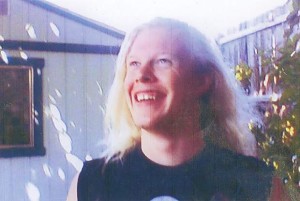
Inyowen John Shelton died June 20, 2016. He was 29.

Inyowen was a Tahoe baby who came into the world smiling. Being part Hidatsa and Chippewa, he was a steward of the Earth. He was wise for his years – a young sage and a scholar of all things, especially of the natural.

He loved to work with his hands and excelled at everything; art was in his blood. Inyowen was a painter of beautiful landscapes and custom homes. He played a mean, self-taught guitar.

An avid peak bagger, he slept on all the summits becoming one with the mountain. He shared the mountains with his friends. A woodsman, an eco-warrior, a river rat, sculptor, skater, a boarder, botanist, geologist, jeweler, a weaver, counselor, an animal magnet, and a hugger of trees in clouds; passions too many to include.

He was a misanthrope and a philanthropist. He cracked wise and enriched lives.

He is survived by his mother, Peg Standridge; brother Lukanyon Glen Shelton; son Vincent Michael Shelton; father Dwight Grinnell; aunt and uncle Amy and Mike Saladin; cousins Lilah and Connor Saladin; and many friends.


His life will be celebrated Aug. 2 from 3pm until twilight at Camp Richardson beach picnic area. Donations for his son, Vincent, may be made in lieu of flowers.

Bring swim attire to do a summer plunge for Yo. You may bring a small natural artifact or other bit of good medicine to be placed in his ledgestone monument soon to be under the Palisade Glacier in Big Pine Canyon, his new home.


Summer on steroids with record temps

By Tom Randall, Bloomberg

Last month wasn’t just the hottest June on record—it continued the longest-ever streak of record-breaking months: 14.

The start of summer in the Northern Hemisphere gave us the hottest June since 1880, according to data released Tuesday by the National Oceanic and Atmospheric Administration. That follows the hottest May, April, March, February, January, December, November, October, September, August, and July. Before June 2016, June 2015 had the monthly record, as did May 2015.

Last year’s massive El Niño warming pattern in the Pacific Ocean is over, but unprecedented heat remains across the planet. The extremes of recent months are such that we’re only halfway into 2016 and there’s already a greater than 99 percent likelihood that this year will be the hottest on record, according to Gavin Schmidt, who directs NASA’s Goddard Institute for Space Studies. NASA and NOAA maintain independent records of the Earth’s temperatures, but they both agree that last month was a scorcher.

Read the whole story


‘Transforming transportation’ to be discussed in Incline

Dan Sperling will give a talk on Transforming Transportation, Finally: How Three Transportation Revolutions Are Starting To Disrupt Transportation As We Know It on Aug. 11.

The passenger transportation system has seen little innovation since the advent of the Interstate Highway System. That is now changing. The ubiquity of smart phones is enabling the commercialization of a range of new mobility services, led by Uber and Lyft; rapid advances in battery and fuel cell technology are enabling electrification of vehicles; and rapid advances in digital technologies are enabling automation of vehicles. The challenge for policymakers is to direct these revolutions toward the public interest-including in the Tahoe basin.

Registration for this event is required. The program will begin at 6pm with refreshments and no-host bar from 5:30-6pm at 291 Country Club Drive in Incline Village on the campus of Sierra Nevada College.

Seating is open at 5:30pm to guests who have preregistered, open seating starts at 5:50pm, and the program begins at 6pm. A $5 suggested donation will be collected at the door.


Barkley: ‘Golf is fun until you hit somebody in the head’

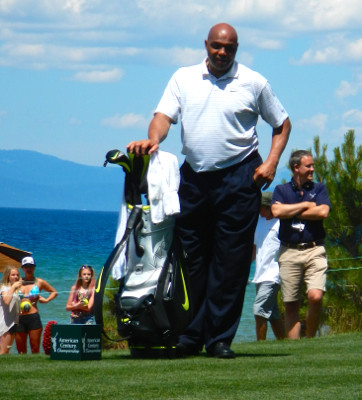
Charles Barkley keeps a sense of humor despite being at the bottom of the pack each year at the Tahoe Tournament. Photo/LTN file

Charles Barkley keeps a sense of humor despite being at the bottom of the pack each year at the Tahoe tournament. Photo/LTN file

By Scott Sonner, AP

Leave it to Charles Barkley to capsulize the challenges he and others will face atop the Sierra this weekend trying to keep their golf balls in the fairway, away from the galleries and out of the water during the 27th annual American Century Championship celebrity golf tournament at Lake Tahoe.

“Golf is fun, until you hit somebody in the head,” said Barkley, the Hall of Fame basketball player who’s a 6,000-to-1 long shot to win but still draws some of the biggest crowds at Edgewood Tahoe Golf Course in Stateline.

Two-time NBA MVP Steph Curry, NFL quarterback Aaron Rodgers, singer Justin Timberlake and comedian Ray Romano are among the more than 80 athletes and entertainers who tee off Friday in the 54-hole tournament running through Sunday.

Curry, who finished fourth three years ago in the tournament with a $600,000 purse, will be paired with his father, Dell, who played 16 years in the NBA, and fellow Golden State Warriors teammate Andre Iguodala.

“I haven’t heard my name called this many times in 14 years,” the elder Curry said while signing autographs after a practice round on Wednesday.

Tourney regulars and Hall of Famers Jerry Rice, Emmitt Smith and Marcus Allen are back again this year, along with more than a dozen past and present quarterbacks, including University of Michigan coach Jim Harbaugh, Carson Palmer, Ryan Fitzpatrick, Alex Smith, Doug Flutie, Jim McMahon, Joe Theismann and Steve Young.

Others in the field include former Vice President Dan Quayle, NASCAR driver Brian Vickers, Larry the Cable Guy, former “Saturday Night Live” star Kevin Nealon and Willie Robertson of “Duck Dynasty.”

Barkley said he tries to help newcomers understand it’s quite different than playing a round at their local country club.

“It ain’t like regular golf, because there are people everywhere,” he said during a recent conference call promoting the event. “And like I say, most of the guys will tell you they’re pretty good until they hit somebody. And then they get really nervous, because nobody wants to hit anybody.”

This year marks the 10th anniversary of one of the most infamous shots at the tourney where yachts and speed boats anchor along Tahoe’s south shore next to the par-3 17th and par-5 finishing hole.

Actor Matthew Settle’s slicing 5-iron on the 169-yard 17th broke a boat windshield in July 2006 — a shot playing partner John O’Hurley called a “flaming whoopsie.”

“I’ve seen broken windows on golf courses before but never on a boat,” O’Hurley said.

It wasn’t that strange to former NBA star Chris Webber, who once won a $50,000 charity bet with Barkley on who would finish last.

“I hit somebody in a boat a couple of years ago and they threw the ball back out like it was a home run at a baseball game,” Webber said at the time.

Barkley said, “I just hit people, I don’t hit boats.”


KMS sold — affordable housing to replace school

By Kathryn Reed

More than 500 affordable housing units could begin to be built on the South Shore in 2017.

Patrick Taylor of Cave Rock is in escrow to buy the former Kingsbury Middle School and Wells Fargo Bank properties, both of which are in Stateline.

“Everyone who has lived here a long time knows there is a lack of affordable housing,” Taylor told Lake Tahoe News. “Our goal is to help the community grow in the right way and provide housing opportunities for the workforce that is affordable.”
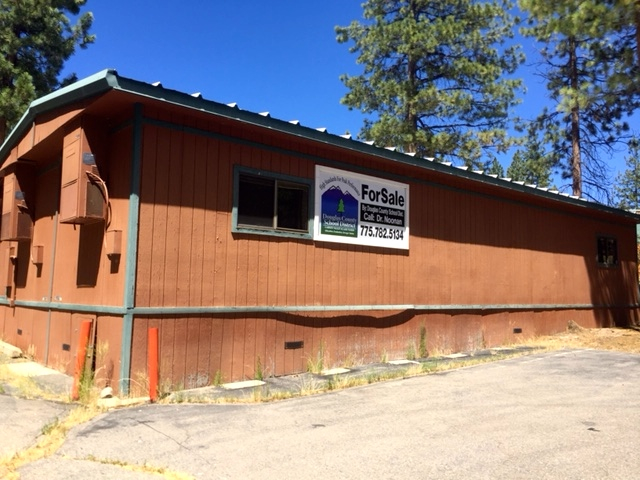
Where Kingsbury Middle School sits today affordable housing may rise. Photo/LTN

Where Kingsbury Middle School sits today affordable housing may rise. Photo/LTN

The school site has been sitting empty since students left at the end of the 2007-08 school year. The Douglas County School District board in January 2012 voted to put it on the market for $4 million. When there was first talk of consolidating the lake schools the superintendent at the time said the 22-plus acre site with 36,000-square-feet of space could fetch $9.5 million.

Taylor, through his company Lake Parkway, is buying it for $3.25 million. This includes paying half the utilities — $25,000 – for the next year. The board this month granted him a 12-month escrow so he could get everything together — including converting the land use designation, getting financing, and permits.

“A change from school use to housing is dependent on the Tahoe Douglas Area Plan being accepted and adopted by the Tahoe Regional Planning Agency. I hope to bring the plan, which has already been approved by our board, to TRPA in the next month,” Mimi Moss, director of Douglas County Community Development, told Lake Tahoe News.

Affordable housing is in such short supply that South Lake Tahoe might dedicate one-half cent of future sales tax collections to housing. The council in November will be asking voters to approve raising the tax, with a second question seeking input as to where to spend the new revenue. Housing will be one option.
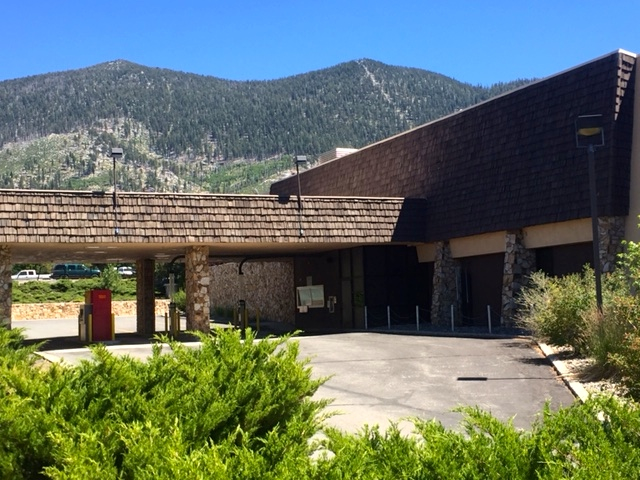
The Stateline Wells Fargo could become a mixed use commercial-residential development. Photo/LTN

The Stateline Wells Fargo could become a mixed use commercial-residential development. Photo/LTN

As this week’s council meeting the electeds also agreed to enter into a $71,500 contract with Michael Baker International to develop a socio-economic impact study regarding vacation home rentals. The electeds want the firm to make it a broader study and not be just about VHRs.

Councilman Tom Davis is hoping the report will actually define what affordable housing is beyond the legal definition.

“This is way bigger than affordable housing. It is all housing. People in all income groups are having trouble renting in South Lake Tahoe and the whole South Shore,” Councilman Austin Sass said.

Employers are having a difficult time hiring people in positions across the spectrum because of the limited and expensive housing stock. Heavenly now has work for people year-round, and Edgewood Lodge could employee 300. Those are just some of the new jobs, let alone the added workforce since the economy has turned around.

For Taylor, he expects the old bank location to be developed first; possibly in 2017. The number of units will range from 56 to 151 depending on if an outside partner is brought in.

He plans to keep the drive-through lanes because they are grandfathered in and no new ones can be added per a TRPA rule. The bottom level will be commercial.

“I’m in negotiations with In and Out Burger, but have not finalized anything,” Taylor said. He would like another lane for a coffee chain, and the other for a pharmacy.

He said nine-stories is allowed there, but he intends to build seven.

“If there are only 56 units, they will probably be all three bedroom, 3.5 baths so that way multiple tenants or generations of family can live there. It is designed for workforce housing,” Taylor said.

All will be deed restricted, with specific income requirements for people to be able to live at either development. These will be condos that people could buy or rent.

At the KMS property, Taylor intends to build a variety of floor plans that will include garages, though no more than three stories, with 412 units max. Construction won’t begin until 2018 at the soonest.

A traffic study will contribute to how much actually gets built. Taylor anticipates a light going in at Lake Village Drive that would stop drivers heading east on Highway 50 as people turn out of the development.

Another future impact to that intersection will be Sierra Colina, which will have 13 single-family residences and 34 duplexes on the neighboring18-acre site.

The buildings at KMS today will be demolished. It’s possible law enforcement will use it as a training facility where things could be destroyed before the official razing begins.


Star Guide: Preserving regional astronomical legacy

By Tony Berendsen

Passion is something we all have in varying degrees. Every once in a while we learn about someone with extraordinary passion who achieves something really amazing. Over the last couple weeks I’ve become reacquainted with a fellow ASN (Astronomical Society of Nevada) member Jay Lawson who has set the passion bar really high by completing an awesome project of great personal interest, and at the same time offering a gift to our community through the restoration of a part of Nevada’s astronomical history.

The story begins back in the 1930s when UNR Professor Bruce Blair founded the ASN.

Lawson recounts,  “After Professor Blair passed away in 1949, his widow Rebecca and Dr. Everett Harris worked with ASN member and ATM (Amateur Telescope Maker) Carl Wells to build a telescope for an observatory on the UNR campus. Built from 1951 to 1953, the telescope and observatory was located at the current location of Lombardi recreation center at UNR. The telescope was a 6-inch, f/15 refractor with a Carl Zeiss objective. The telescope mount was made by Haines Scientific Instruments in New Jersey.”

Jay Lawson in the Blair Observatory with the Carl Wells telescope in Sparks. Photo/Ryan Berendsen

Jay Lawson in the Blair Observatory with the Carl Wells telescope in Sparks. Photo/Ryan Berendsen

The observatory, located on the UNR campus, was open until 1967. Then it was demolished as part of UNR expansion. The observatory telescope, built by Carl Wells, was removed and stored in the basement of the physics building and later the Fleischmann Planetarium, until it found its way to Lawson’s house where he and friend Adam Kremers elected Lawson to put the observatory back together in his backyard.

Appropriately, Lawson is the current historian for the ASN.

I asked him why restore the Wells refractor?

“As the current historian for the ASN, I felt an obligation to preserve the memory and contributions of past ASN members like Professor Blair, Carl Wells, T.V. Frazier, Jessie Huntsman, Pete Gavazzi and others. Restoring the Wells refractor is part of that obligation. I built an h-alpha solar scope which is mounted to the Wells telescope and will be dedicating it to T.V. Frazier.” Frazier taught at UNR physics and had used the observatory.

“The telescope and observatory were part of many people’s lives in the ’50s and ’60s as interest in the space program and science was on the upswing. The fact that Professor Blair was nationally known in astronomy was no small feat. There is a tremendous amount of history associated with Blair, Wells, and this observatory,” Lawson said.

Lawson attributes his interest in astronomy to seeing the moon when he was young.

“I had first noticed the moon in the evening sky in 1962 when I was 4 and living less than a mile from the Blair Observatory. In about 1965, my father worked at Rocketdyne in north Spanish Springs testing rocket engines for the Gemini and Apollo missions, so there was a lot of interest in space exploration. One night I used a riflescope to look at Venus in the evening sky and saw that it was a crescent like the moon. I watched it for many nights and that year my parents bought me my first 60mm telescope from Sears. When I was 11 I wanted a larger telescope, so I mowed lawns all summer then sold my bike to afford to buy my next telescope, a 90mm one from Sears.  When I got my first real job out of college, I bought a 6-inch Meade reflector, and in 1986 bought my 16-inch in anticipation of Halley’s comet. I could see it months before most people.”

The observatory is mostly used privately, but is always available to members of the ASN with prior notification. Several times a year it is open to the public for special events like eclipses and transits. Notification of these public events are made on the Northern Nevada Astronomy Group Facebook page.

Tony Berendsen runs Tahoe Star Tours. He may be reached at 775.232.0844 or tony@tahoestartours.com.


Opinion: Not everybody is an expert on policing

By Maki Haberfeld

Nowadays, everybody—agenda-driven politicians, entertainment moguls, and many citizens on the streets —is considered an expert on what needs to be done to improve policing.

This is not helping policing or our current national conversation. As a former police officer and as author of many books and articles about the police profession, I resent the current rush-to-judgment environment and the ubiquitous pontification about the solutions.

Very few academics who study policing are part of the media conversation. We academics hear public officials quote out-of-context statistics, repeat catch phrases like “community-oriented policing,” and fuel the anger. Reputable media outlets often quote the number of people killed by police officers in a given year as an example of police use of force or brutality—even though that figure would include homicidal criminals like Micah Xavier Johnson, the Dallas sniper who killed five officers.

Almost 20 years ago I started teaching a course about police training, and the scarcity of available resources prompted me to write my first book, “Critical Issues in Police Training”. Published in 2002 and based on years of fieldwork and research, I identified five main areas that are extremely problematic for policing: recruitment, selection, training, supervision, and discipline.

Fast-forward almost 15 years, and we are talking about the same problems—as if they were new and we still need to study them and create commissions to identify what needs to be done. This is a dangerous waste of time for officers risking their lives and for communities living in fear of their local precincts. Research is clear: we know quite a lot about what needs to be done—we must transform the way police organizations operate.

It’s gratifying to hear so much in the conversation about the need to change how we train police to reduce violent encounters with citizens. But how we recruit and select officers comes first, before training.

For over two decades, research has shown a direct correlation between the emotional maturity of officers and their problem-solving capacity. Yet, as if deliberately ignoring the scientific research finding, most police departments in the United States continue to recruit and select their officers at the very young ages of 19 or 20.

Instead, we should be hiring older officers and putting them through a standardized, mandatory curriculum of training for all our law enforcement agencies. This training must cover a minimum number of hours that will approximate, at the very least, a two-year college degree. Don’t we owe it to our communities to give the officers we charge with guarding our lives at least as many hours of training a beauticians and hairdressers? We would not have to invent such standards. We already have the templates, primarily from other countries. Take Finland. The police college there offers bachelor’s and master’s degrees for its police force. Completed in about three years, the bachelor’s degree is composed of 180 credits.

While we have some police departments trying to transform recruitment, selection, and training, we have close to 18,000 different law enforcement agencies in this country, most of them smaller than 50 sworn officers. Teaching de-escalation techniques at the NYPD or the Dallas PD academy did not change the behavior of officers in Louisiana or Minnesota. If we want change nationally, we need to institute a standardized mandate for all.

What is standing in the way of change? On a federal level, a transformation would require revisiting the autonomy of the states to determine their own standards for police forces—the sort of changes politicians don’t want to touch. On a local level, sometimes unions oppose raising the standards, local politicians fear they will lose control over hiring, and money for recruitment and training is not a priority.

Yes, many police departments around the country have gotten better at recruitment of ethnic and racial minorities, but diversity is not a stand-in for emotional maturity. Nor does having a department where members of minority communities are in the highest leadership ranks of the police, as in Dallas, change the perception that policing is a profession that is inherently racist and discriminatory in its application of the law.

The promise of this moment is that we can reach the goal that any use of force must be necessary. But to get there, we can’t rely on opinions. We need to start with what we actually know about policing. And we need to pray for the right leadership to enable these changes.

Maki Haberfeld is a professor of police science in the Department of Law, Police Science, and Criminal Justice Administration at John Jay College of Criminal Justice in New York City and a former police officer. She has written, trained and lectured extensively on the police profession, specifically training needs in the areas of leadership, police community relations, multicultural policing, and operational tactics.


No excuse not to donate leftover food

By Eleanor Goldberg, Huffington Post

A single restaurant in the U.S. wastes about 100,000 pounds of food a year, according to the Green Restaurant Association, making them auspicious donors for hunger relief groups. But many restaurants are reluctant to give away their edible leftovers, citing fears of getting sued.

But they shouldn’t be so worried about backlash, experts say.

Because no such lawsuit has ever been waged.

There is no available public record of anyone in the United States being sued because of harms related to donated food.

Read the whole story


Kayaker drowns on South Shore

A 43-year-old kayaker died at Lake Tahoe on Tuesday.

Paul Anthony Aguirre of Rio Linda was paddling with family near El Dorado Beach on July 19 when he became separated. Family members found his kayak floating several hundred yards off shore just before 5pm. His life jacket was inside.

Timber Cove Marina located the victim floating in the water and without a life jacket. The man was unconscious and not breathing. He could not be revived.

South Lake Tahoe police officers said the initial investigation indicates the kayak capsized in the 13-15mph sustained winds. White caps were the norm throughout the day. The water temperature in this area was 69 degrees Fahrenheit.

— Lake Tahoe News staff report


Small fire burning in Desolation Wilderness

Update 8:28pm:

Helicopter crews are using Lake Tahoe to scoop up water to put out a blaze in Desolation Wilderness.

While the fire was reported Wednesday morning near Azure Lake, crews were still making drops as late as 5:30pm July 20.

U.S. Forest Service officials say it is less than one-half acre. In addition to the helicopter drops, a three-person helitack crew is on the scene. The cause is under investigation.

Crews in Truckee kept a fire near Hirschdale to 2 acres on Wednesday. It started about 6pm.

“Resources have contained the fire to 2 acres, but with terrain and winds it had potential to grow to 9-10 acres,” Truckee Fire Protection District staff said. The fire is currently under investigation.

These fires come a day after after there were two 1-acre fires near Montreal Road in South Lake Tahoe. Crews were still mopping those up on Wednesday. A spot fire erupted overnight underneath Heavenly’s gondola between towers seven and eight.

“The are in patrol status. The are looking for hot spots,” Lisa Herron with the USFS told Lake Tahoe News.

Campfires are illegal in Desolation Wilderness.

“Illegal and unattended campfires cause over 90 percent of wildfires in the Lake Tahoe Basin and increased fire danger due to the ongoing drought and warm summer weather is a big concern at Lake Tahoe,” according to the Forest Service.

Fire restrictions in the basin took effect July 1 and in the Eldorado National Forest they begin July 21. This means wood and charcoal fires will be restricted to designated recreation sites and other fire related activities will be prohibited until the end of fire season. Gas or propane fires are allowed with a permit.

— Lake Tahoe News staff report