Opinion: Did Protestant Christianity create the dismal American prison system?

By John Carl

While in Ireland teaching a criminal justice course this past semester, I had the opportunity to take a tour of an Irish prison.

The Irish prison service states one of its key missions is to protect human rights: The rights of the public and the rights of the offender. A tour of a temperature-controlled prison in the Irish city of Cork revealed prisoners had access to Wi-Fi, educational programs, drug treatment, and counseling. Clients interact with staff on a first-name basis. Prison food is high quality and health care is equivalent to what is available to the general public. As you may know, none of this is true in American prison systems.

As a criminology professor and U.S. prison system researcher, I get a front-row seat to the atrocious conditions that American prisoners live in, day in and day out, such as overcrowding, violence, rape, a program-funding deficit, and a disappointing health care system.

As I toured through the Irish prison, I began to formulate a simple thought: In all common law countries—countries that are legally guided by judges—except the United States, going to prison is the punishment. Because that is the punishment, the prison does not have to “add to” the punishment.

In the Irish prison, workout rooms, in-cell TVs, and quality food were all present. As the prison staff discussed their jobs, they mentioned several concepts: All of their prisoners eventually return to society and the staff’s job is to keep them from returning to prison after their release.

Having studied prisons in the United States, I’ve found it is clear we do not share that ideology.  In the United States, we view prison not only as the punishment, but also as the place for punishment, deliberately making prison more difficult in hopes of reducing recidivism. However, when comparing Ireland, which had a recidivism rate of 62 percent in 2007, and the United States, which had a recidivism rate of 67 percent in 2005, you quickly see that our “get tough” strategies have actually made return to prison rates higher.

Could this difference in the idea of punishment be related to some foundational ideology rooted in the religious history of these countries?

I started to reflect upon German sociologist Max Weber’s “A Protestant Ethic and a Spirit of Capitalism” during my time in Ireland. In it, Weber suggests that a major branch of Protestantism called Calvinistic Christianity laid the foundation for modern industrial capitalism by proposing beliefs and values that would lead adherents to adopt a “spirit of capitalism.”

Calvinistic Christianity is the belief that Calvinists took on as a reaction to the Lutheran movement and the Roman Catholic Church, with a theology that proposed a strict adherence to the Bible and “right” living. While other sects of Christianity preach right living, early Calvinists were known for their intolerance of others perspectives. In addition, they dropped the more sacramental notions of sin and forgiveness found in Anglicanism, Catholicism, and Lutheranism and adopted a personal relationship of understanding between the penitent and God.

With Weber’s theory in mind, I began to consider the role of religion in the creation of the modern American criminal justice system. Of all the common law nations, only the United States had its origins rooted in a form of religious fundamentalism, known as Puritanism. Puritans believed that strict adherence to sacred scripture was the only real faith. A “pure” faith was a biblical faith, and that was generally rigid and unwavering in its adherence to their interpretation of scripture. Although the United States was and is a country without a dominant religion, many colonists incorporated beliefs rooted in Calvinistic Christianity into the new nation—and its laws.

Even though Pew Research Center data from 2015 shows 70 percent of the U.S. population practices Christianity, down from 78 percent in 2007, the religion—in particular, Calvinist Christianity—remains a cultural power in the country. Foundational ideologies of right and wrong, punishment and redemption, remain rooted in this religious tradition. These concepts are at the forefront of our in country’s attempt to deal with criminals. While it is certainly true that religion is weakening in the United Kingdom, with 46 percent of citizens identifying as Christian in 2012 from 59 percent in 2011, the U.K. and all other common law countries do not house their cultural roots in Calvinist Christianity. This difference is a plausible explanation for some of the differences in punitive social policies between the United States and its common law cousins around the world.

The Church of England, like the Roman Catholic Church, recognizes the role of private and public confession for the forgiveness of sins. In these institutions, the penitent acknowledges his or her sin to a priest and is absolved, or washed clean, by the act of the Church. Once the sinner is forgiven, they are assured that he or she is “right with God,” will never again need to confess that sin, and are free to go on with life, assured of salvation.

In Protestant sects, such as Calvinist Christians, Weber points out that the sinner has no such assurance of divine forgiveness or acceptance. In fact, Protestants who join a non-sacramental sect must trust that their confessions of guilt were heard by God, accepted as valid, and actually absolved. They are told that their confession to God is “heard” but no human being is touching them, absolving them, or telling them that a sacramental change has occurred. The forgiveness for most Protestants happens not in the public arena of a church, but in the private recesses of the mind. This personal confession, according to Weber, creates a level of insecurity about whether or not one has actually received God’s forgiveness, which then forms a collective anxiety for Protestants who are not in sects that believe in a sacramental type of forgiveness.

Calvinists dealt with this anxiety by strict adherence to rules for “right living.” For example, Puritan punishment in Nathaniel Hawthorne’s “The Scarlet Letter” is to force a woman caught in adultery to wear a red letter “A” around her neck. Violations of the rules were dealt with authoritatively. Since Calvinist sects and their deviants dominated the American religious ideology for hundreds of years, could this be one reason for the differences in punishment ideologies that trickled into criminal justice systems?

What emerges in the United States is a penal system grounded in a protestant fundamentalist religious history, with a strong sense of right and wrong and a penchant for justifying abuse of some, writing people off, and suggesting they are going to hell because they didn’t practice Christianity strictly enough.

John Carl, criminology professor at the University of Oklahoma, is the author of “A Country Called Prison: Mass Incarceration and the Making of a New Nation”.



Hospitality workers target of sexual harassment

By Bernice Yeung, Reveal

It started out innocently enough when, in the spring of 2014, a Hilton Hotel housekeeper in Southern California was cleaning a set of rooms on the sixth floor. A guest from the next room asked her for extra towels.

She told him to take as many as he needed and he responded by saying, “Would you like to help me with them? I’m going to take a shower.”

The comment made the cleaner feel uncomfortable. A few minutes later, she alleged that he returned to the room, wearing only a towel around his waist. He asked the housekeeper about a late checkout before dropping his towel and moving toward her, she said.

The cleaner – who shared a police report with Reveal from the Center for Investigative Reporting on the condition of anonymity – said she ran out of the room, afraid that she’d be attacked. She tearfully told a coworker what had happened, and the workers called hotel security and management.

She was eventually told to return to the sixth floor to finish her shift. Dissatisfied with how the Long Beach hotel dealt with the situation, the cleaner went to the police a month later. The police weren’t able to locate the suspect because the hotel said it did not have a record of that guest. Hilton did not respond to multiple requests for comment.

Female hotel cleaners from across the country have similar stories of sexual harassment and indecent exposure. In the past decade, 818 incidents of sexual harassment were reported to the federal government by hotel industry workers.

And this month, Unite Here Local 1, a union that represents hotel workers, will issue a report about the state of sexual harassment in the industry. According to its survey of nearly 500 Illinois hospitality industry workers, 58 percent of hotel employees and 77 percent of casino workers said they’d been sexually harassed. Forty-nine percent of housekeepers said that a guest had opened the door naked, exposed themselves or flashed them.

The survey was spurred by a case from an Illinois casino where a guest pulled a 21-year-old waitress into his lap and asked her for a blow job.

“This indecent and gross behavior from guests is almost normalized,” says Sarah Lyons, one of the union organizers who conducted the survey. “Women talk among themselves, but it is not being brought into the light of day.”

Cleaners can be especially susceptible to sexual abuse on the job. They’re often isolated, working in hotel rooms by themselves. And they’re often low-wage immigrant workers, worried about the repercussions of speaking up. These are conditions we’ve previously detailed for female farmworkers and night-shift janitors.

Hospitality workers also said that they did not feel that they could report harassment by guests. According to the Illinois survey, only 33 percent of workers reported the harassment, mostly because they don’t think that there is anything that can be done to address indecent guest behavior. Others said that they were embarrassed or that they had normalized the problem and had simply become “immune” to it.

Nereyda Soto, a 23-year-old Long Beach hotel worker who was not part of the survey, said that the hospitality industry’s “guest is always right” mentality means that management tolerates behavior that it wouldn’t from its own employees. “When you walk into a hotel as a guest, they make you feel safe – like there’s nothing to worry about, and the only thing you have to worry about is relaxing, and they make you feel like everything is clean and safe in your room,” she says. “And if you promote this level of security to guests, why are you not promoting it for the workers?”

The American Hotel and Lodging Association says that the industry takes the issue of sexual harassment “very seriously.” In an email, a spokeswoman for the American Hotel and Lodging Association, said each hotel has its own protocols and procedures.

“As an industry, we are committed to ensuring hotel employers and operators have tools and resources to educate employees on guidelines and best practices to help avoid unsafe situations, protect themselves from harassment, assaults or injuries, and respond to and report any kind of inappropriate behavior or misconduct,” Vanessa Sinders wrote.

Nevertheless, various workers’ organizations and local chapters of Unite Here are working together to push for local laws in at least three cities across the country. In Long Beach, Seattle and Chicago, workers are calling, in part, for hotel companies to track complaints against guests and for a ban on those who sexually harass workers.

Advocates for these new local laws also want workers to have access to wearable panic buttons. New York City cleaners began using them after a Sofitel New York Hotel worker claimed in 2011 that the French dignitary Dominique Strauss-Kahn had sexually assaulted her in his room. (The charges against Strauss-Kahn were eventually dropped.)

Juana Melara has been cleaning Southern California hotel rooms for 21 years, and she says she has dealt with sexual harassment nearly every day on the job. Guests have flirted with her, asked her for massages and exposed themselves to her, she says.

Melara currently works at a Westin hotel in Southern California, and she knows that not everyone wants to talk about the harassment because it’s embarrassing and because some workers are afraid that they’ll lose their jobs for being outspoken. But she’s willing to break the silence. “We are women, and we deserve respect, and the hotel industry, especially in housekeeping, is dominated by women,” she says. “If some women aren’t going to speak out, I am going to do it.”

“I’m going to do whatever it takes to make it better for me and my coworkers,” she adds.


Power of the human-animal bond

By Las Vegas Sun

The gentle nudge of a paw. A friendly chirp. A boisterous purr. A soul-penetrating gaze.

These are the moments pet owners cherish and cling to, that make messes or misbehavior irrelevant. Because, at the end of the day, we need their love as much as they need ours. But why? Why can animals — whether they’re furry, feathered or scaled — inspire such deep emotion in humans? And how do they maintain such loyalty despite the broken promises to walk them, the late dinners we feed them and the hours we spend venting to them?

Scientists call it the human-animal bond, an indisputable phenomenon supported by an ever-growing body of research. The average person might call it unconditional love.

“They’re not judgmental; they’ll listen to us all day,” said Steven Feldman, executive director of the Human Animal Bond Research Initiative Foundation in Washington, D.C. “They’re always happy to see us. … It’s a strong bonded relationship where they really do focus on us and give us everything, which you don’t always get from another person.”

Read the whole story


Forest aficionados search for Nev.’s champion trees

By Henry Brean, Las Vegas Review-Journal

The Nevada Division of Forestry has a big surprise for those who think of the Silver State as a treeless wasteland.

Nevada is actually home to a long list of impressive trees, including two champion specimens, both just outside Las Vegas, that rank as the largest of their kind in the nation.

For the past 24 years, the state forestry division has maintained something called the Nevada Big Tree Register to track the largest and most impressive trees. The list was last updated in 2015 and now contains more than 300 different species.

The tallest tree in Nevada is a 159-foot-tall Jeffrey pine in Douglas County. The largest circumference tree is the state champion Great Basin bristlecone on Mount Charleston, with a trunk measuring 12 feet in diameter.

Read the whole story


Interaction with Timberlake at ACC lands man in jail

Keith Michael Weglin

Keith Michael Weglin

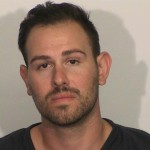
A Sacramento man was detained during the weekend celebrity golf tournament in Stateline for inappropriately touching singer Justin Timberlake’s face, according to Douglas County sheriff’s deputies.

Deputies said Timberlake declined to press charges after the July 23 incident at Edgewood Tahoe Golf Course.

However, Keith Michael Weglin, 29, allegedly became argumentative when Timberlake told him to leave. Weglin was arrested on disorderly conduct charges. Deputies said Weglin had been drinking.

— Lake Tahoe News staff report


Accident closes Hwy. 50 in Meyers

A multi-vehicle accident is blocking both lanes of Highway 50 in Meyers.

Caltrans said the road should be open just after 5pm July 26.

“There were minor injuries and they are waiting for tow trucks and ambulances,” Caltrans spokesman Steve Nelson told Lake Tahoe News.

The accident occurred just before near the gun mount at the base of Echo Summit.

— Lake Tahoe News staff report


Bike safety in Tahoe being promoted

Lake Tahoe Bicycle Coalition has launched a multimedia education campaign to promote safe bicycling on Tahoe’s roads and separated paths.


Key tips include biking in the same direction as traffic, using lights, reflectors and bright clothing to be visible to drivers, passing on the left when on a multi-use path, using proper hand signals, and obeying traffic safety laws.

A full list of bicycle safety tips is available online.

In addition to tips for people riding bikes, the safety campaign includes advice for motorists, with a pilot program to install special electronic sign boards in key locations around Lake Tahoe roadways to remind motorists to watch for bicyclists, share the road and give bicyclists three feet when passing.


Expect traffic delays on Hwy. 89 on North Shore

Traffic along Highway 89 between Squaw Valley Road and Cabin Creek Road in Truckee will be slow today through July 28.

Caltrans is paving in the area. Grinding work will take place from 7am-5pm each day.

Approximately one-half mile of one way traffic controls will occur as work progresses along the 5-mile long work zone.


Is hyperconnectivity enhancing or hurting ski experience?

By Megan Michelson, Powder

Imagine a world where drones fly overhead while you rip a steep line through powder-stuffed trees. A tiny camera inside the drone captures footage of you, making even the average skier look like a breakthrough performer in a TGR flick. Magically, within a day or so, a polished, edited video appears in your inbox, primed to score a gazillion likes on Facebook.

That is the world Jason Soll envisioned. And it becomes reality this winter with the launch of Soll’s Silicon Valley tech start-up, Cape Productions. While dozens of ski resorts are in the midst of writing policies that ban the use of personal drones, others are finding ways to incorporate them. This winter, skiers at resorts like Squaw Valley, and Fernie, British Columbia, can hire Cape’s team of drone pilots and professional editors to produce an aerial video of their day on snow. For under $200, you’ll get a two-minute edit within 48 hours. It’s the SharpShooter of the future.

Soll, 25, grew up in Ohio, and thanks to Warren Miller movies and a snow-covered mound in Pennsylvania, he became a skier. As a youngster, he took trips to Utah with his family, where he developed a love for soft snow and the Stein Eriksen buffet at Deer Valley. After college, he worked as a product design consultant at Google X, ground zero for gadgets built to make radical change. As a graduate student at Stanford’s Business School, he came up with the idea for Cape, named because it transforms Clark Kents into goggle-clad Supermen.

“I knew of all these drone products in development, but I wasn’t excited about having to deal with the hardware,” says Soll. “Then I realized we could deploy the technology as a service, not a product. That would also solve the other challenges of video production, like editing and distribution. Those skiers with GoPros and selfie sticks, they want to capture the moment, but many just wind up with raw data on their hard drive. Our big idea was eliminate the hard work and let people capture the moment without any distraction.”

Read the whole story


Bandaged Bandit bank robbery suspect behind bars

Updated 1:15pm:

A West Slope bank robbery suspect didn’t get far before being apprehended on Monday.

David Jarrell

David Jarrell

David Jarrell, 22, of El Dorado Hills reportedly robbed the US Bank on White Rock Road in El Dorado Hill s on July 25 at 2:35pm. Not long after that he was found by sheriff’s deputies in a creek.

Investigators said they recovered evidence on land and in the water. They said additional evidence related to the bank robbery was found at Jarrell’s residence.

Jarrell is believed to be the Bandaged Bandit who robbed banks in Stateline, Rocklin and Folsom

Anyone with information about Jarrell or other recent bank robberies is encouraged to call 530.642.4712.

— Lake Tahoe News staff report