Dog ban ending at Upper Truckee Marsh

The California Tahoe Conservancy’s annual seasonal dog closure at the Upper Truckee Marsh ends July 31.

The purpose of the closure is to keep dogs out of critical breeding habitat for special, threatened, and endangered species.

Beginning Aug. 1, dogs will again be permitted access to the Upper Truckee Marsh, provided they are on leash. The Conservancy-owned Cove East property, at the end of Venice Drive and near the entrance to Tahoe Keys Marina, remains open year-round to leashed dogs.


Taking precautions, aka Plan Bee

By Tom Stienstra, San Francisco Chronicle

An electric shock lit up my left ankle. A split second later, a hot jab pierced my right calf. Then in succession, it felt like an ice pick stabbed a toe, ankle and calf.

Not again, you think. Yep, again: The bees are swarming and stinging, and it’s like being stuck by a cattle prod.

All you can think of is to run and look for a lake to jump in. Since there is usually no lake, a bush might do. The bees have marked your scent and will keep nailing you as long as they think you remain a threat.

Like a lot of people who love wild places, I occasionally take it the extra mile in summer by heading off trail, tracking game routes or venturing to lakes, meadows, streams and mountaintops that don’t have trails to them.

Read the whole story


Tahoe’s rising water temp concerns scientists

By Linda Fine Conaboy

INCLINE VILLAGE – It’s been said that Lake Tahoe is a complex body that man may never understand. That is true; however, UC Davis and Geoff Schladow, the director of the UC Davis Tahoe Environmental Research Center housed at Sierra Nevada College, are doing their best to prove that statement wrong—well, maybe, just a little bit wrong.

It seems that when experts think they’ve finally arrived at data that absolutely cannot be questioned, that same data is put into conflict with the patterns of human action and natural forces. In fact, a document provided by UC Davis, states that, “These patterns make clear that Lake Tahoe is a complex ecosystem, behaving in ways we don’t always expect.”

Unfortunately, despite all human effort to the contrary, 2015 was the warmest year ever recorded. In fact, 15 of the 16 warmest years have occurred since 2001, Schadlow told his audience at the annual State of the Lake briefing on July 28.

“Climate change is affecting a lot of processes,” Schladow said. But how, is the big question.
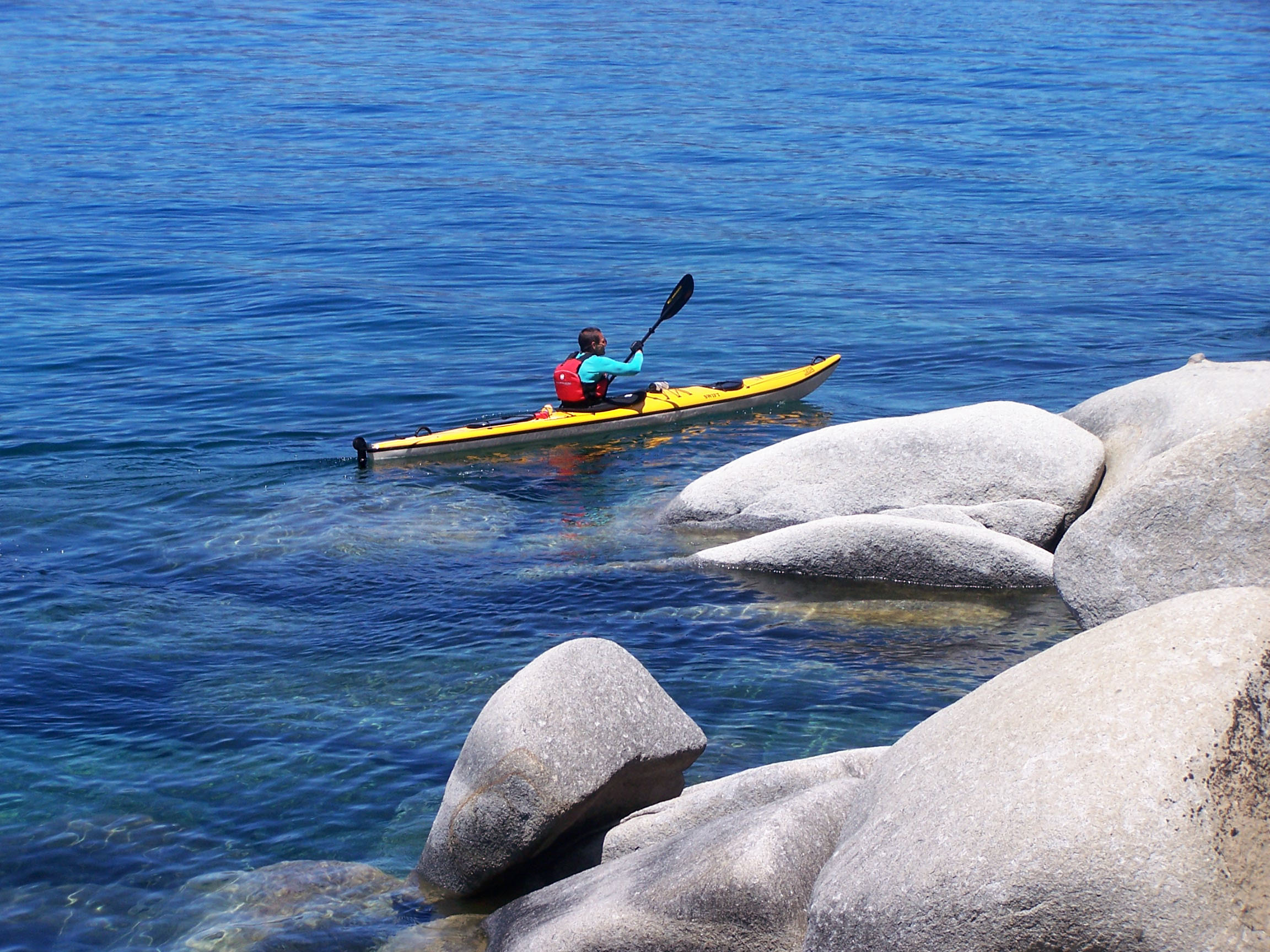
While Lake Tahoe may look pristine, clarity is getting worse. Photo/Linda Fine Conaboy

While Lake Tahoe may look pristine, clarity is getting worse. Photo/Linda Fine Conaboy

The answer lies in addressing numerous factors that influence the clarity and ecology of the lake. Such as night time air temperatures, which, according the Schladow, are drastically decreasing. In 1910, 80 days were below freezing; in 2015, only 24 days hit that mark.

Precipitation has remained fairly constant since 1910, Schladow said, but unfortunately, in 2015, only 6.5 percent of it fell as snow—this is the lowest number ever recorded. When precipitation comes from mostly rain, it is warmer and as it flows into the lake it brings with it silt and other detritus not conducive to a pristine body of water.

Schladow said that precipitation amounts in 2015 were devastatingly low leading to a dramatic 9-inch reduction in lake level. “Water normally fluctuates between a maximum level and the lake’s natural rim,” he said. “At the end of 2015, levels were well below that and are now just creeping above the natural rim.”

Research shows that the current drought is not really a long one, based on the study of trees still standing well below the surface of the Tahoe’s deep waters. However, Schladow cautioned, this could be the beginning of a 100-year drought.

As if these facts are not startling enough, there’s more to consider. Lake temperature continues to rise at the fastest rate ever. In 1970, the water averaged 42 degrees Fahrenheit; in 2015, it rose to 42.5 degrees. While this may not seem startling, Schladow said it takes a lot of energy to raise water temperatures even one-half degree. “That’s 15 times greater than long-term normal,” he said.

In addition, winter is now coming later in the year and spring is arriving sooner. Perhaps this is the reason that in the winter of 1975 colder water mixed all the way to the bottom of the lake; in 2015, the mix occurred at only a depth of 215 feet. Considering that at its deepest Lake Tahoe is 1,645 feet deep, this is alarming to scientists.

There is even more disquieting data regarding the state of the lake.

Consider that in 1965, a Secchi disk, a white, round object mounted on a pole or line lowered into the water and used to measure clarity, could be seen at a depth of more than 104 feet. In 2015, that distance had diminished to no more than 69 feet.

Think about the fact that there are no more Lahontan cutthroat trout in Lake Tahoe; the water’s too warm now.

Periphyton grows here now (white algae that coats rock around the shore). In the early days, the rocks were always clean. However, in 2015, there was not much periphyton growth, but Schladow holds little hope that this trend will continue.

Invasive species have made their way to Tahoe in the form of certain types of destructive shell fish and fast-growing non-native plants.

It is proven that the lake is definitely heating up and due to these warmer temperatures, in 2015 its waters did not mix to maximum depth—for the fourth year running. This lack of deep mixing accounts for the highest nitrogen-nitrate levels on record.

While the details are dismal, Schladow smiled as he related details of a partnership between UC Davis and the Desert Research Institute in Reno, a project that hopefully will reveal valuable information to researchers and enable them to begin to chip away at the negative processes affecting Lake Tahoe.

The Nearshore Network represents the initial collaborative step between the science community and the resource management agencies, aimed at developing a comprehensive approach for assessing and managing the nearshore ecology and aesthetics of Lake Tahoe. In lay-person’s lingo, that means that the environment of the shallower parts of the lake reveal myriad important data that are helpful to solving the evolving environmental quagmire facing all of us.

With seven water quality instruments strategically located around the lake, the hope is to obtain a more comprehensive look at the causes of Tahoe’s degradation and perhaps enough information to guide experts in the restoration of Lake Tahoe.

Unlike the deep part of the lake, the nearshore is the area in which lots of people recreate and it is subject to sudden changes in water quality because of storms, inflows from streams (which can have huge impacts on the turbidity of the water), storm drains and erosion.

“We need to know if it’s getting better or worse,” Schadlow said. “With these sensitive instruments, we can measure temperature, clarity, turbidity, wave height, wind speed and a host of other factors. We are monitoring trends. We know if it’s getting better or worse, but we also need to know why—hence the nearshore monitoring.”

As he closed his talk, Schladow said, “We may have reached the point where climate induced effects are similar in magnitude to the traditional effects from land use change and urbanization.”


Opinion: When marrying a Native American meant renouncing U.S. citizenship

By Ann McGrath

Mixed couples in the United States—those who crossed boundaries between Indian nations and the European newcomers—left permanent legacies well beyond the families they created. They also shaped the meaning of nation and citizenship.

Historically, U.S. policymakers were troubled by such marriages not only on the grounds of race, but also because they created conflicting loyalties within the American nation. The questions of consent and coercion are at the essence of contests over sovereignty. And consent is a central tenet of Western marriage.

Until the 1930s, women of American birth who married foreign nationals faced particularly hard choices regarding their national identity. Under the principle of coverture, the legal status of a married woman, including her citizenship, was subsumed under that of her husband’s.

The Marshall judgments of the Federal Court of the 1830s declared that Indian nations were nations in their own right, in the modern sense. However, they were classified as “domestic dependent nations” and considered subordinate to the United States. Indigenous families who had occupied their land for generations and who had matrilineal systems where the women had rights to land and property were gradually subsumed under a patriarchal system similar to that of the United States.

Controversies over citizenship continued. Consequently, during an active time for the American Indian Wars, some of the most heated moments between Native Americans and U.S. citizens happened not on the battlefield, but across the more intimate sphere of heterosexual unions.

This was the case in Connecticut in 1825, when the talented editor and Cherokee Indian Elias Boudinot asked for the hand of Harriett Gold, a white woman from a highly regarded family. The town went mad, burning effigies of Harriett and an archetypal “Indian” on a huge bonfire, threatening to lynch Elias, and protesting the Native American man’s “right” to marry a white woman.

Previously known as Gallegina Uwatie and Buck Watie, Elias had already crossed many transnational boundaries. He moved to Connecticut for an advanced education and strategically took the name of one of its patrons: Elias Boudinot, the New Jersey statesman, president of the Continental Congress, and president of the American Bible Society. Presented in fashionable clothing and practiced in the manners of American higher-ups, Elias was sought after by many of New England’s philanthropic elites, regardless of his Cherokee roots.

Despite rejection by her beloved family members and almost every lifelong friend in her hometown, Harriett went ahead with the wedding. By cover of night, the newlyweds travelled to their new home, New Echota (in present-day Georgia), the capital of the Cherokee Nation.

It was 1825, and Harriett was emigrating—a decision with serious risks.

When Harriett became a resident in the Cherokee Nation, their matrilineal society meant that she had no clan status and, therefore, no official citizenship. The uprooted Harriett was deeply interested in belonging, and she understood the emotional bonds that would make that possible. Upon her arrival there, she reported that her new family “joyfully” stated, “You are welcome in this nation.” In turn, she proclaimed, “I am now at home. Here I expect to pass the remainder of my days.” She was relieved that her relatives treated her like an old friend rather than a stranger.

Harriett was well aware of the uncertain future of her new nation—Native Americans were considered inevitably condemned by the arrival of Europeans on their lands—of the Cherokees’ “final destiny,” as she put it. In a letter to her parents, she made it clear where she stood: “Whatever may be their doom I shall share and suffer as a Cherokee.”

Harriett’s parents, who had adamantly opposed the marriage, soon travelled to the Cherokee nation in the South to visit their new family. Contrary to their own expectations, they were thoroughly impressed with what they saw. Harriett’s father Benjamin became an advocate of the Cherokee nation, assisting in their political struggles to gain great support in the north. Proud of their grandchildren, his soft and wryly expressed affection translates across the ages: “The oldest little girl is as smart and pretty and healthy as can be found, and the next is a bright, well-looking child. All who see her say, ‘she is the handsomest child I ever saw.’ You must not think that I brag.”

Through her family life, Harriett became a courageous border crosser. She was also a Cherokee nationalist who expounded the virtues of their civilization and backed their cause in asserting their sovereignty rights. The couple raised highly accomplished children who were proud Cherokees and who, as diplomats and lawyers, continued the struggle for their treaty entitlements through the courts.

Harriett had willingly joined a nation whose future was under constant threat from her own birth nation. Harriett and Elias’s story reveals how intimacy and family shaped and redefined individuals and nations with a glue that neither colonizer nor colonized state could dissolve.

Ann McGrath’s “Illicit Love: Interracial Sex and Marriage in the United States and Australia” was published by University of Nebraska Press in December 2015.


iPod donations help dementia patients

By Claudia Buck, Sacramento Bee

Got a used iPod? A regional concert promoter is collecting them for nursing homes and senior facilities, as part of the Music & Memory program that helps dementia and Alzheimer’s patients reconnect with their past by listening to favorite tunes.

“A lot of people have pushed their music onto their smartphone, and their iPods are in drawers somewhere,” said Forrest Reed, a volunteer fundraiser for Music & Memory. “They need to be recycled.”

The nonprofit Music & Memory, started in 2010 by New York social worker Dan Cohen, is based on research by UC Davis and other institutions showing the musical-memory part of the brain is one of the last to atrophy in Alzheimer’s patients.

Read the whole story


Overworked Americans aren’t taking vacation

By Patti Neighmond, NPR

A majority of Americans say they’re stressed at work. And it’s clear the burden of stress has negative effects on health, including an increase in heart disease, liver disease and gastrointestinal problems.

Still, though it’s been known for years that periodically disengaging from one’s everyday routine can reduce stress, most Americans don’t take advantage of their days off. A recent poll conducted by NPR, the Robert Wood Johnson Foundation and the Harvard T.H. Chan School of Public Health finds about half of Americans who work 50-plus hours a week say they don’t take all or most of the vacation they’ve earned.

And among respondents who actually take vacations, “30 percent say they do a significant amount of work while on vacation,” says Robert Blendon, a professor and health policy analyst at the Harvard T.H. Chan School of Public Health who directed the survey. “So they’re taking their stress along with them wherever they go.”

Read the whole story


Area plan maps Placer County’s future at Tahoe

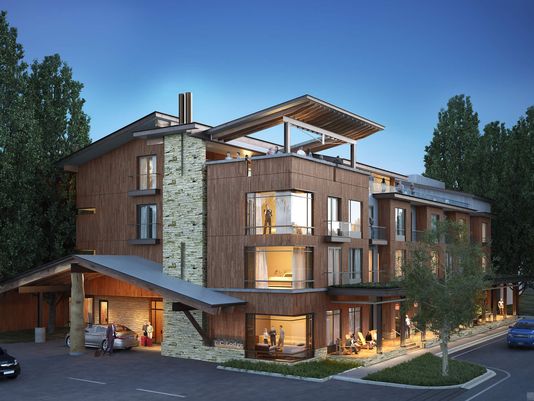
An artist's rendering of the proposed Tahoe City Lodge.

An artist’s rendering of the proposed Tahoe City Lodge.

By Kathryn Reed

If the preferred alternative is not selected, the developer of the Tahoe City Lodge said he would abandon the project.

Samir Tuma spoke before the Tahoe Regional Planning Agency Governing Board on Wednesday about the hotel he wants to build near the lake. This would be the first new lodging facility in Tahoe City in decades.

Tuma wants to build 40 traditional hotel rooms. An additional 31 one-bedroom and 47 two-bedroom suites are planned. The suites would be sold; with the idea most of the time owners would have them in the rental pool for tourists. They would be deed restricted.

Tuma estimates $43 million will be pumped into the economy during construction, with another $8.6 million annual contribution to Tahoe City-Placer County.

He owns 1.4 acres, which was the old Hendriksen site. The project, though, encompasses 3 acres. An agreement between Tahoe City Golf Course, which is owned by Tahoe City PUD, Placer County and Truckee Tahoe Airport, will need to be solidified to make the hotel come to fruition.

“I say we own the ugliest shopping center in Lake Tahoe and we would very much like to change that,” Tuma told the board July 27.

The meeting in Kings Beach was an opportunity for the board to hear from the public about what it thinks of the draft environmental documents for the Placer County Tahoe Basin Area Plan and Tahoe City Lodge project. Written comments will be taken until mid-August.

Of the 24 people who spoke Wednesday, there was not consensus about the documents. Some people are still upset a project is being tied into the area plan documents because there is a sense the plan is written to accommodate the hotel.

Tahoe Marina Lakefront homeowners are upset about a bike-pedestrian path going steps from their property. The condo owners are worried about safety, trespassing and vandalism, as well as losing privacy.

Some question the true environmental impacts, such as whether stream environmental zones will really be improved.

Placer County and TRPA staff acknowledged traffic would get worse.

The area plan encompasses all of Placer County’s acreage in the basin.

It allows for a second unit to be built on certain properties. There had been talk of deed restricting it for workforce housing and saying it could not be a vacation rental. Board member Shelly Aldean told staff she was disappointed this use for those units was removed from the preferred alternative. The Truckee-Tahoe Contractors Association is also an advocate for the secondary dwelling being deed restricted.

Many see the lodge being a welcome addition to town, especially with the upgrades to Tahoe City Golf Course. A partnership with Tahoe City PUD would mean a new clubhouse that would also be available to the hotel to use as meeting space.

—–

            Notes:

·      The deadline to comment is Aug. 15.

·      Final environmental documents should be out in the fall.

·      The TRPA Governing Board is expected to vote on it in January.


BBQ fundraiser with historian at Vikingsholm

Vikingsholm historian and advocate Helen Smith will be honored with an evening celebration Aug. 4 and rededication of the visitor center exhibit featuring Smith’s lifelong association with Vikingsholm.

Reminiscing on her 14 summers at Vikingsholm, Smith remembers the barbecue’s Lora Knight would have with her friends and family while overlooking Emerald Bay. Sierra State Parks Foundation is bringing back that tradition for one evening.

This celebration benefits the work of the Sierra State Parks Foundation. Seating is limited and reservations are required. Ticket cost $75 and include parking with the opportunity to drive down to the visitor’s center. Call 530.583.9911 to purchase tickets.

The Sierra State Parks Foundation’s fundraising efforts at Vikingsholm have most recently included the restoration of the sod roof, upgrading all electrical components in the castle, and providing free school group tours. SSPF is currently fundraising to stabilize the south turret of the castle.


Olympics free up Tahoe area campsites

By Tom Stienstra, San Francisco Chronicle

From the Sierra Crest on the edge of the Crystal Basin, you can scan down across miles of granite, forest and below to pristine Loon Lake and Pleasant Lake.

Below is a vast forestland and spectacular destinations with six lakes, three boat ramps, 20 campgrounds and many wilderness trailheads. The region is a testament to an upcoming phenomenon: The public loves its Olympics — but it loves its Saturday nights for camping even more.

The Olympics start Aug. 5, and the track-and-field events, Aug. 12. For the first time this summer, campsites will start becoming available at many of the marquee lakes across Northern California. That includes in the Crystal Basin in Eldorado National Forest, west of Tahoe and the Sierra Crest.

Read the whole story


Reward offered in 30-year EDC cold case

A 30-year-old murder case now has a $25,000 reward associated with it.

On June 2, 1986, 76-year-old Halley Wing, a grandfather and former law enforcement officer, was gunned down in the driveway of his son’s ranch on the West Slope.

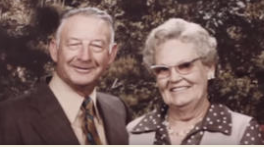
Halley and Bernice Wing

Halley and Bernice Wing

The day of the murder, Wing’s family had plans to celebrate his son’s 49th birthday. That day, Wing noticed a blue sedan driving up the driveway of his son’s empty home in Rescue, which was next door to his home on the adjoining property.

Wing decided to drive over and investigate. His wife, Bernice, watched through binoculars as one of the two suspects got into the passenger side of Wing’s car and opened fire.

Thirty years later and the case remains unsolved.

The Wing family is offering a $25,000 reward for information leading to the arrest and conviction of his killer, and $5,000 for info regarding items that were stolen.

Anyone with information is asked to call Robert Cosley at 530.903.8468 or email robert.cosley@edcgov.us.