Opinion: NASA’s other moonshot revolutionized marketing

By Richard Jurek

On July 20, 1969, an estimated 600 million people watched and listened in real time as astronauts Neil Armstrong and Buzz Aldrin touched down on the surface of the moon.

With the drama unfolding on their television screens, the attention of millions was focused on a single event—a single step, really—for the first time. It was one of the first grand, extended global social media events of our modern era, much bigger than a Super Bowl Sunday.

But landing on the moon almost didn’t happen—not for the public, anyway. While Armstrong and Aldrin were preparing to make one of the biggest celestial moves of a lifetime, NASA’s small and dedicated marketing team was preparing to make another major move on the ground: Televising the event.

Looking back on the moon landing, it would seem almost unfathomable that NASA administrators would have missed the mark to use live television to capture that historic moment, but they nearly did. Unlike live video, which had to be returned, developed, and shared after the fact, live television would allow viewers to watch in real-time. Many NASA engineers argued that live footage was a waste of valuable weight and crew focus and would require too much time and money to develop the technologies to broadcast live news feeds from the moon. Most of the original Mercury 7 astronauts and their bosses insisted, with good reason, that operating and performing for television cameras during their missions would unnecessarily detract from the important work at hand.

Embedded within NASA’s formative charter was a congressional mandate to report—freely and openly—the program’s activities and accomplishments to the world, unlike the secretive, closed military program in the Soviet Union at the time. “I insisted,” said Julian Scheer, the head of NASA Public Affairs during Apollo. He would not accept any dissent, either from the engineers or some of the astronauts. “They could never see the big picture. But they weren’t landing on the moon without that camera on board. I was going to make sure of that. One thing I kept emphasizing was, ‘We’re not the Soviets. Let’s do this thing the American way.’”

To enlightened astronauts like Tom Stafford, television’s value proposition was clear: “The American public was paying for Apollo and deserved as much access as it could get,” Stafford said. “They should see the wonders we saw. Photos and movies were great, but nobody saw them until after the mission was over. What better way to take viewers along to the moon than by using color television?”

“Without television, Apollo would have been just a mark in a history book,” says Gene Cernan, the last man to walk on the moon during Apollo 17, when reflecting on the importance of television on board Apollo. “The thing that meant so much and brought so much prestige to this country is that every launch, every landing on the moon, and every walk on the moon was given freely to the world in real time. We didn’t doctor up the movie, didn’t edit anything out; what we said, was said.”

So NASA’s small public affairs team, spread over 14 installations nationwide, got down to business, working long and hard to ensure that the world was informed and engaged using media outlets and other NASA-affiliated contractors’ public affairs employees.

“We sure didn’t do the PR job by ourselves,” remarked Chuck Biggs, a NASA public affairs officer during Apollo. “We needed representatives from Rockwell, Martin Marietta, and all the other contractors to do the job. By head count, we had more contractors’ public relations people than we had NASA public affairs employees.”

Operationally, NASA public affairs chose pioneering tactics now called content marketing, an approach that doesn’t overtly sell a product or brand. Rather than just promoting their cause, NASA used its resources to educate the media, who became surrogate spokespeople for the program and kept the story in front of a voracious public, both nightly on television and daily in the newspapers.

Embracing the content marketing technique, NASA operated its public affairs as if it were a newsroom—staffed not with “Mad Men”-era advertisers and public relations agents, but with highly qualified ex-journalists. They were professional storytellers, operating as news reporters embedded inside of the agency. As ex-newsmen, they understood what the broadcast and print media needed in terms of content, so they selected and pushed stories in various languages and formats that could slip easily into the news streams of the day. It wasn’t jus that they were good writers, but they were also newsmen who understood the power of storytelling and the importance of access to live, unedited, real-time events.

“The core contingent of NASA Public Affairs people were ex-newsmen,” recalled Jack King, head of public affairs at Kennedy Space Center during Apollo. “We were good writers, and we knew the news business. That made a major difference in the whole operation.”

“We are not doing what is known in the public relations business as flackery or publicity or propaganda,” said Scheer. “We are simply not in this kind of business. We are a news operation. We don’t put out publicity releases. We put out news releases.”

Keeping a global audience engaged over a decade—from 1961, when President John F. Kennedy announced his goal of landing a man on the moon, to 1972, when Apollo 17 became the last lunar landing mission—was not easy then and is not easy now. Long-term engagement requires creating a shared, communal experience that resonates with the audience. Due to NASA’s use of television, this experience was not only shared by its own engineers, but by millions of people worldwide.

I call the generation that took part in this shared experience—my generation—the “Children of Apollo.”

Apollo’s place in our collective memories is chiseled there because we experienced it together. NASA didn’t just send three men to the moon on the Apollo 11 mission; they sent more than 600 million of us—men, women, and children from all over the globe—to the moon and back, thanks to live television.

Richard Jurek, a marketing and public relations executive, is the co-author of “Marketing the Moon: The Selling of the Apollo Lunar Program”.


Surprising benefits of training in the heat

By Meaghen Brown, Outside

One of the highest sweat rates ever recorded was that of marathon runner Alberto Salazar at the 1984 Olympics in Los Angeles. In the months leading up to the games, which were expected to be oppressively hot, the marathoner was put through a regimen of temperature acclimation training with the goal of helping him adapt to running in the heat. While Salazar placed only 15th overall, the program was deemed a success, physiologically speaking—vitals taken after the race found that Salazar’s hormonal and thermoregulatory systems were completely normal. His body had compensated by causing him to sweat at an incredibly high rate—about three liters per hour, compared to the roughly one liter per hour for an average human.

Researchers have been looking at the effects of heat on athletic performance for decades, and their results have been consistently surprising. Studies have found that, in addition to an increased rate of perspiration, training in the heat can increase an athlete’s blood plasma volume (which leads to better cardiovascular fitness), reduce overall core temperature, reduce blood lactate, increase skeletal muscle force, and, counterintuitively, make a person train better in cold temperatures.

In fact, heat acclimation may actually be more beneficial than altitude training in eliciting positive physiological adaptations, says Santiago Lorenzo, a professor of physiology at Lake Erie College of Osteopathic Medicine and a former decathlete at the University of Oregon.

Read the whole story


Opinion: Calif. pot law would be bad for SLT

By Brian Uhler

During the last weekend of July, a group of women visited South Lake Tahoe for a bachelorette party. During the visit, the women willfully ingested marijuana brownies they obtained through a ride share company.

Within a few hours, 10 of the women were taken to the emergency room in South Lake Tahoe. Eight of the 10 were later admitted to the hospital for treatment.

Brian Uhler

Brian Uhler

While many would have you believe marijuana is a harmless drug, those of us in the public safety arena have seen increases in medical emergencies from marijuana ingestion. It is noteworthy that our system of emergency medical transport was completely tapped in order to handle this event. Thankfully, no other medical emergencies occurred simultaneously, otherwise someone might not have received timely emergency help.

Marijuana Legalization Proposition 64, which would legalize recreational marijuana if passed, is going to California voters in November. This initiative is bad for California and bad for South Lake Tahoe. After a similar, short-sighted 2014 initiative passed in Colorado, marijuana related traffic deaths jumped 32 percent from 2013 to 2014.

Some in law enforcement find details in Proposition 64 very disturbing:

  • False proponent claim: Provides “law enforcement the resources it needs to redouble its focus on serious crime”;
  • False proponent claim: Provides “the strictest child protections and billions in new revenue for important programs such as public safety”;
  • No MJ tax money for police: None of the tax money from marijuana is for any “boots-on-the-ground” law enforcement. In fact, the proposition specifically forbids marijuana related tax money from going to the California General Fund. The Governor’s Office of Business and Economic Development is the biggest winner for future marijuana tax funds (increasing to $50 million/year and continuing forever). California Highway Patrol, by contrast gets just $3 million/year ending after five years for the non-enforcement function to “establish and adopt protocols to determine whether a driver is operating a vehicle while impaired, including impairment by the use of marijuana.”
  • Kids exposed to MJ business: Proponents claim the proposition somehow provides child protections, yet Proposition 64 allows marijuana businesses to operate just 600 feet from schools. Further, marijuana businesses will be able to advertise to anyone, including kids, as long as the advertising “shall only be displayed where at least 71.6 percent of the audience is reasonably expected to be 21 years of age or older.”  What about the 28.4 percent of a given audience which are kids? How are they being protected?

Proposition 64 is opposed by a broad coalition of healthcare, law enforcement, education, business, and community organizations and leaders across California.  To learn more, go online.

Stealing from cars

We have seen an increase in the number of burglaries from cars (now a misdemeanor by virtue of Proposition 47 –The Safe Schools and Neighborhood Act).  Please lock your cars as we have noticed many of the victim’s vehicles were not locked.


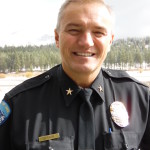
Brian Uhler is police chief of South Lake Tahoe.


Few Nevadans like their retirement prospects

By Jason Hildago, Reno Gazette-Journal

At 70 years old, Dee Goodman has clocked in decades as a member of the American workforce.

Ask the small business owner about retirement, however, and she just shakes her head. As the owner of Old West Barber in Reno, Goodman says she still loves doing her job. For many of the folks who sit in her barber chair and share their stories, however, retirement is easier said than done.

“Used to be, my financial man told me to put away 10 percent of my income to be able to live the way I want to live when I retired,” Goodman said. “People just don’t have that kind of money to put away.”

That sentiment was echoed by a majority of Nevadans surveyed in a new Wells Fargo/USA Today poll, which found 51 percent of respondents doubted they’d have enough income for an ideal retirement. In contrast, just 38 percent said they had confidence.

Read the whole story


Tahoe Douglas Fire hires bomb sniffing dog

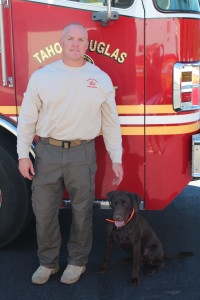
TDFPD Battalion Chief Todd Moss with Gunner. Photo/Provided

TDFPD Battalion Chief Todd Moss with Gunner. Photo/Provided

Gunner has a nose for danger.

He is the newest recruit at Tahoe Douglas Fire Protection District. He is officially a member of the Tahoe Douglas Explosive Ordinance Disposal team. Gunner is the seventh canine resource for the Northern Nevada Bomb Technicians Task Force.

Battalion Chief Todd Moss is his handler. Even though Gunner is still in training, one of his duties was to inspect Edgewood Tahoe Golf Course every day before the ACC celebrity tournament last month. When he is fully trained, he will be able to identify commercial and homemade explosives.

Tahoe Douglas Bomb Squad is one of the four FBI accredited bomb squads in Nevada – FEMA Type I classification. It is a joint effort between the Tahoe Douglas Fire Protection District and the Douglas County Sheriff’s Office


TEDxSouthLakeTahoe looking for speakers

Speakers are being sought for the inaugural TEDxSouthLakeTahoe event on Oct. 5.

This is a local, independently organized event striving to create an environment which inspires individuals to think and engage on a community and global scale.

The public event will be at the Loft Theatre from 4-9:30pm. Tickets can be purchased online starting Aug. 29.

Speakers from all disciplines are invited to apply to speak at TEDxSouthLakeTahoe. The following passions are especially requested: art and culture, environment, food, outdoor recreation, economy, technology, leadership and community. Speakers are encouraged to dream big. To apply or nominate someone for a TEDx Talk, complete the submission form online.


Viral video shows bears in Lake Tahoe

By Mike Luery, KCRA-TV

A cellphone video that has been seen more than 5 million times after KCRA 3 shared it on Facebook Tuesday. It shows a mother bear and her two cubs swimming at Pope Beach in Lake Tahoe, near Camp Richardson.

It’s not every day you see a family of bears playing in a public lake — unless you’re a biologist.

“At Lake Tahoe, we get bears down at the lake frequently,” said Jason Holley, a supervising wildlife biologist with the California Department of Fish and Wildlife.

In the video, which was shot last week, the mama bear doesn’t seem to mind the paddleboarders and other people nearby.

Read the whole story


Snippets about Lake Tahoe

·       The National Fish and Wildlife Foundation has granted the League to Save Lake Tahoe $35,000 to support its citizen science programs to address the threats to Lake Tahoe from aquatic invasive species and stormwater pollution.

·       A nesting pair of peregrine falcons has successfully raised three young this year at Cave Rock. Construction crews worked around the nest in cooperation with the U.S. Fish & Wildlife Service.

·       Rep. Tom McClintock, R-Garden Grove, is having a town hall meeting Aug. 11 at 6pm at the Pollock Pines-Camino Community Center, 2675 Sanders Drive, Pollock Pines.

·       Dogs are welcome on all trails and the tram at Squaw Valley.

·       Halden Wofford and the H*Beams plus the Heifer Belles Honkytonk will be at the Boathouse Theater on the South Shore on Aug. 10 at 7:30pm. Tickets are available online.


Sketch released in SLT sexual battery case

Police are looking for this man.

Police are looking for this man.

South Lake Tahoe police officers have released a new sketch of a man believed to be responsible for attempted sexual battery at Lake land Village on July 25.

A guest at Lakeland Village told officers a man grabbed her from behind and dragged her into a storage closet. She was able to escape, although the suspect fled with her purse.

On July 26 a man fitting the same description approached a resident on Ski Run Boulevard. The woman told police the suspect was aggressive in his behavior and language, and didn’t leave until she told him her family was inside.

The suspect is described as a Hispanic man between 18- and 30-years-old, about 5-feet-5-inches, small to medium build, with dark hair.

Anyone with information about this case is encouraged to call the South Lake Tahoe Police Department at 530.542.6100, or to remain anonymous, Lake Tahoe Secret Witness at 530.541.6800.

— Lake Tahoe News staff report


Republican women hosting party in SLT

South Lake Tahoe Republican Women Summer Party is Aug. 9.

Speakers include Kim Pruett from Rep. Tom McClintock’s office and California legislative advocate Allison Olson.

The event is from 4:30-7pm at 1896 Cascade Court, South Lake Tahoe.

Suggested donation is $20. This includes barbecue dinner, dessert and beverages.

Everyone is welcome — not just women.

RSVP to Gerri Grego at 530.545.2839 or solaketahoerepublicanwomen@gmail.com.