Nevada raffling off old welcome signs

Nevada residents to enter a raffle to receive a “Welcome to Nevada” sign as the old, obsolete highway signs are redesigned and replaced later this year.

The iconic signs depicting a lone miner have stood at many interstate and freeway entrances into Nevada, welcoming drivers to the state for approximately 25 years. The signs will be replaced beginning this year by new welcome signs designed by Nevada high school graphic artists through a contest.

Free entry is available online. One winner will be randomly selected from each region (northwest, northeast, southwest and southeast) shortly before the Nevada Day holiday weekend. Winners must be Nevada residents and willing to sign a waiver regarding lawful usage of the signage.


Sunset Campground bald eagle closure lifted

The Eldorado National Forest announced this week that the partial closure of Sunset Campground in Union Valley for the protection of a bald eagle nest and eaglets has been lifted.

After intensive monitoring by wildlife biologists, it has been determined that the eaglets have now fledged the nest.

Campsites 1-61 in Sunset Campground will be available to the public on a first come, first served basis until they are re-added to the reservation system on Aug. 16. At this time, these sites will be available online. There are a total of 131 campsites at Sunset Campground.


Big marijuana not calling the shots in Nevada

By Ric Anderson, Las Vegas Sun

As Nevada voters prepare to vote this fall on whether to decriminalize recreational marijuana use, they’re going to hear a sinister-sounding warning that the push for legalization is being fueled by out-of-state money.

Former Assemblyman Pat Hickey, a prominent opponent of legalization, already sounded the alarm in a June 21 post on his blog, Soup to Nuts. He wrote that “the term oligarchy (‘a business interest controlled by a small group of people’) applies to the mostly out-of-state special interests who are responsible and largely paid for the pot legalization question on this November’s ballot.”

Sounds foreboding. But voters should be aware that we do know where a great deal of the funding is coming from — longtime Nevadans who have invested in the business.

In fact, when state lawmakers crafted the licensing requirements for operators of marijuana businesses, they took pains not to open the door wide to outside control of the industry.

Read the whole story


5 ways to protect your garden from the deer

By Melinda Myers

Don’t let your vegetable and fall flower gardens succumb to hungry deer. Even if you’re lucky enough to be deer-free now, be vigilant and prepared to prevent damage as these beautiful creatures move into your landscape to dine. Here are five tactics to help you in the battle against these hungry animals.

Fencing is the best, though not always practical, way to control deer. Install a 4- to 5-foot-high fence around small garden areas. This is usually enough to keep out deer that seem to avoid small confined spaces. The larger the area, the more likely deer will enter. Some gardeners report success surrounding their garden or landscape with strands of fishing line set at 12 inches and 36 inches above the ground.

Low voltage electric fencing or posts baited with a deer repellent are also options. Just be sure to check with your local municipality before installing this type of fencing.

Scare tactics are less effective on deer in urban environments. They are used to human scents and sounds. Many gardeners report success with motion sensor sprinklers. As the deer passes in front of the motion sensor it starts the sprinkler and sends them running. Just be sure to turn off the sprinkler when you go out to garden.

Repellents that make plants taste or smell bad to deer can also help. You will find products containing things like garlic, hot pepper oil, and predator urine. Apply them before the animals start feeding for the best results. And reapply as directed on the label. Look for products that are easy to apply, odorless and last a long time.

Include deer resistant plants whenever possible. Even though no plant is 100 percent deer-proof, there are those the deer are less likely to eat. Include plants rated as rarely or seldom damaged by deer. And be sure to provide additional protection if you include plants known to be frequently or severely damaged.

Constantly monitor and evaluate the effectiveness of the methods used. Deer often change their feeding location and preferred food. And if the populations are high and the deer are hungry, they will eat just about anything. Be willing to change things up if one method is not working. Using multiple tactics will help increase your level of success.

So don’t let hungry deer stop you from gardening. Be vigilant and persistent and send them elsewhere to dine.

Gardening expert Melinda Myers has more than 30 years of horticulture experience and has written more than 20 gardening books, including “Small Space Gardening” and the “Midwest Gardener’s Handbook”. 


Placer Country SAR in need of money

The Placer County Sheriff Office’s search and rescue teams have started their annual telemarketing fundraising drive throughout the county.

Money is being raised to purchase mobile communications equipment for the Lake Tahoe area. Search and Rescue volunteers donate thousands of hours each year to locate lost hikers, skiers and anyone else who may need assistance in Placer County’s thousands of acres of wilderness.

Telephone solicitors will be calling Placer County residents to ask for donations. Anyone wishing to make a donation will be sent a pre-addressed envelope. Callers will not ask for credit card information. Donations should only be sent to the following addresses: PO Box 4150, Auburn, CA 95604 or PO Box 1710, Tahoe City, CA 96145.

During past fundraising efforts, another company calling themselves Search and Rescue Charities led some donors to believe that they were donating to Placer County. This is not the case and anyone interested in donating to the local search and rescue efforts needs to make sure they are giving to “Placer County Search and Rescue.”

For further information, call 530.889.7846.


Snippets about Lake Tahoe

·       At the Aug. 17 Soroptimist International of South Lake Tahoe meeting Tiffany LaVoie will explain how human traffickers target children. Cost to attend is $10, which includes lunch. The meeting is at Harvey’s Garden Room No. 1. Reservations must be made by Aug. 14 by emailing Linda Mendizabal at mendipath@gmail.com.

·       The 6th annual Rose to Toads mountain bike ride is Sept. 4. The 62-mile ride features 8,000 vertical feet of climbing and 10,000 vertical feet of descent. Go online to register.

·       Genoa Candy Dance is Sept. 24-25. Details are available online.

·       A Gut-Feeling: How intestinal microbes modulate mood and behavior is the topic of a Sept. 22 lecture at Sierra Nevada College in Incline Village. Time — 5:30-7pm. Cost — $5.

·       TAMBA is having workdays on the Kingsbury Stinger trail Aug. 12, Aug. 21, Aug. 26, Sept. 21 and Oct. 9. Meet at 9am at the end of North Benjamin-Andria Drive in Stateline.


Obama, fuels reduction funding may highlight Lake Tahoe Environmental Summit

Updated: Aug. 8 to reflect President Obama is definitely attending.

By Kathryn Reed

Protecting Lake Tahoe has been on the radar of the federal government for decades – and not just because the feds own 85 percent of the land in the basin. Congress implemented regulations mandating effluent be pumped out of the basin, created the Tahoe Regional Planning Agency, and funded the Lake Tahoe Restoration Act after President Bill Clinton’s visit in 1997.

The EIP – environmental improvement program – was established after the inaugural Lake Tahoe Environmental Summit when Clinton and Vice President Al Gore launched the annual event.

With this being the 20th anniversary of the summit and its being Sen. Harry Reid’s last one, it is being hailed as a bigger deal than the ones in recent years. Reid, D-Nev., is hosting the summit at Harveys in Stateline on Aug. 31 at 2pm.

New this year is that it costs to attend the event. Tickets are available online.

The Killers, the group that performs Nevada’s tourism theme song, will be putting on a concert for attendees.

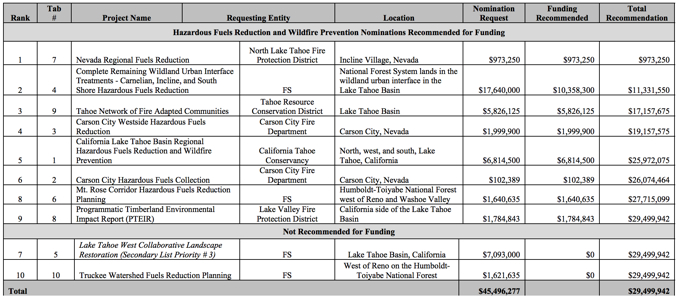
President Obama will be attending. Those close to the event are hoping he’ll bring news that the basin has been awarded the $29,499,942 for fuels reduction from the Southern Nevada Public Lands Management Act.

The White House has contacted Lake Tahoe Airport about Air Force One landing there.

Source: BLM

Source: BLM

SNPLMA was created in 1998. Land the federal government no longer wants in the Las Vegas Valley is sold, with the proceeds going to public entities. The Lake Tahoe Basin has received more than $300 million of these proceeds for environmental improvement program projects.

The Bureau of Land Management, which handles SNPLMA money, did not return a call asking when a decision will be made about this 16th round of funding. The comment period on allocations ended July 28.

The preliminary recommendation is for eight of the 10 funding requests to be filled. Though the sales are in Nevada, money can be spent in California in the basin. Of the nearly $30 million that would be just for forest fuels reduction, about $2 million is allocated to Carson City and the remainder in the Tahoe area.


Opinion: How to regulate gene drive technology

By James P. Collins

From ancient soothsayers to Wall Street stock pickers, humans have always yearned to be able to tell the future. The ability, needless to say, has mostly been overstated.

But what if there was a sense in which you really could tell the future? And what if we could also make a particular outcome more likely, even certain? The emerging technology known as gene drives offers just such a prospect for favoring particular traits in future plants and animals—to increase agricultural output, to reduce the risk of infectious disease transmission, or something we haven’t yet imagined. Indeed, some have already suggested using gene drives to eliminate certain mosquitoes that can spread Zika, malaria, and other ailments. But is that a good idea? How should we think about employing such a technology in ways that anticipate, and weigh, its benefits and harms for current and future generations?

Over the past year, at the request of the National Institutes of Health and the Foundation for the NIH, a committee of the National Academies of Sciences, Engineering, and Medicine considered these questions. Last month, the committee, which I co-chaired with Elizabeth Heitman from the Center for Biomedical Ethics and Society at Vanderbilt University Medical Center, released its report—“Gene Drives on the Horizon: Advancing Science, Navigating Uncertainty, and Aligning Research with Public Values.” So what did we conclude? I will get to that in a minute, but first, a lesson on the science.

Gene drive technology allows scientists to alter the normal rules—odds, if you will—of genetic inheritance in sexual reproduction. Through gene drives, we can significantly enhance the chances (from nature’s 50-50 odds in most sexually reproducing species) of a particular gene being passed to an offspring. The gene drive technology combines an altered genetic trait, such as producing a male, with an increased likelihood the trait passes throughout a population.

This is a new tool in a well-established pursuit. Inheritance is an area in which humans put a lot of effort into managing future outcomes. Breeders may work for years or decades to ensure that characters such as a plant’s seed size, or a horse’s strength or speed, pass predictably from generation to generation. How predictably? Well, throughout history the essence of “good breeding” is making passage of a desirable trait between generations as reliable as possible.

It was only in the late 1800s, however, that experiments with pea plants by an Austrian monk, Gregor Mendel, raised the prospect that managing the passage of traits between generations could move beyond best practices or even best guesses. Mendel demonstrated that for at least some parental traits he could predict the average frequency with which they would occur in offspring. For example, if parent plants in a sexually reproducing species had red flowers or yellow seeds, a prediction might be that half of all offspring would have red flowers or yellow seeds. It was a remarkable advance. By early in the 20th century, Mendel’s results were among the fundamental insights leading to the science of genetics.

Geneticists work to reveal the rules of inheritance by understanding the processes that link an individual’s DNA, or genotype, to the expression of a particular trait, the phenotype of a developing organism or an adult. This requires understanding the molecular and environmental variables controlling an outcome, such as having a male or female offspring. We know that in most species with two sexes, we can expect on average the offspring generation will have about half males and half females. This is a basic rule of inheritance—absent forces such as gene mutation or natural selection, the frequency of many traits in the offspring generation will equal that of the parental generation. But what if you had the technology to alter that basic rule and cause the ratio in the offspring generation to be 60:40 males to females, or 70:30, or even 99:1?

Gene drive technology opens up such possibilities. A gene drive could be designed to increase the likelihood a female produces males as opposed to females. In addition, with the passing of each generation the fraction of males in a population increases as the trait “drives” through a population—the future becomes more certain. In an extreme, much or all of a population could become males, and of course for a species with sexual reproduction the result would be reduction or elimination of a population, or even extinction of a species.

But should gene drives be used to alter population sizes, perhaps to the point of extinction? On the upside, gene-drive modified organisms hold the promise of improving human health and agricultural productivity, conserving other species and advancing basic research. Imagine eliminating a mosquito species that carries malaria.

There are, however, possible downsides to releasing gene drive modified organisms in natural ecosystems. How should we consider using such gene-drive power? What should we consider before deciding whether to use it?

The NIH committee report issued in June devotes a lot of attention to responsible science and the need for continuous evaluation and assessment of the social, environmental, regulatory, and ethical considerations of releasing gene-drive-modified organisms into the environment. Each step in research and deployment, we emphasized, rests on values held by individuals and communities. Public engagement in pursuit of uncovering and understanding these values cannot be an afterthought. The governance of research on gene-drive-modified organisms should begin with the personal responsibility of the investigator and extend from there to research institutions and regulators. But what regulators: state, federal, global? After all, upon release, a gene-drive modified organism is designed to spread. The borders of private property, states, or countries are not barriers to dispersal. A key message of the report is:

There is insufficient evidence available at this time to support the release of gene-drive modified organisms into the environment. However, the potential benefits of gene drives for basic and applied research are significant and justify proceeding with laboratory research and highly controlled field trials.

Some of the gaps in understanding the full impacts of gene drive technology include ecological and evolutionary processes in natural ecosystems. If we diminish or even eliminate a species like a mosquito that transmits a pathogen that infects humans, what will that mean for the ecosystem’s stability? This action, for example, may then open an opportunity for one or more additional insect species that transmit even less desirable infectious diseases to become established or increase in numbers.

The committee’s blueprint for moving forward includes a gradual framework for testing that stretches from laboratory development to field release and monitoring of gene-drive-modified organisms. We recommended ecological risk assessment as a method for quantifying how a specific change or changes in the environment will affect something of value to society—such as water quality, or the chance an unwanted pest species that transmits an infectious pathogen might become established.

Controlling the future of inheritance across entire populations and species is a powerful scientific advance, one that is hard to overstate. And, as often happens, there is a risk of scientific research outpacing the development of a broader ethical framework to determine whether, and how best, to deploy this newly acquired scientific power. Let’s hope scientists, and governments everywhere, heed the report’s call to proceed with caution. The promise of gene drive technology is immense, but when we’re talking about the power to make certain species extinct, it’s a technology we can’t afford to misuse.

James P. Collins is Virginia M. Ullman professor of Natural History and the Environment in the School of Life Sciences at Arizona State University in Tempe. This article was written for Future Tense, a Zócalo partner. Future Tense is a project of Arizona State University, New America and Slate.

Stoned-driving laws still half-baked

By Peter Fimrite, San Francisco Chronicle

There are certain telltale signs that a person is stoned: bloodshot eyes, forgetfulness, ravenous late-night cravings.

But the November ballot measure that would legalize recreational pot in California says nothing about how police should detect tokers who climb behind the wheel. There’s no marijuana equivalent to the famed blood-alcohol content tests — taken by breath, blood or urine — that have planted .08 into the American consciousness.

It’s not a pressing concern for marijuana advocates, even as entrepreneurs try to develop a better sobriety test for dope smokers. But it’s a big quandary for California law enforcement officers, who are facing a question that has vexed several other states where recreational pot is legal.

Read the whole story


Road beat: 2017 Hyundai Elantra Limited rocks

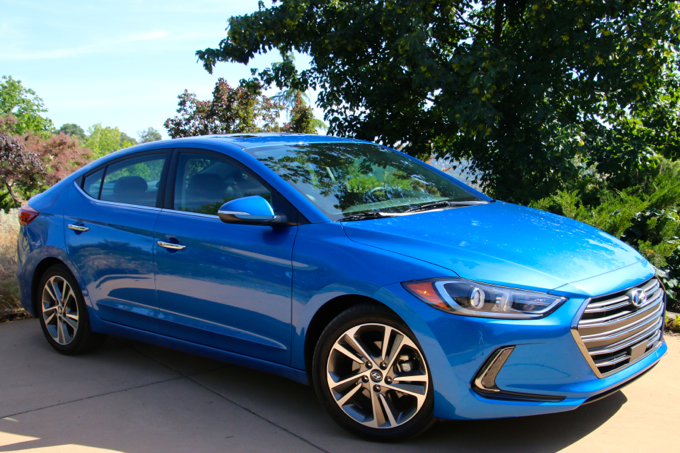
Hyundai Elantra Limited is one of the best in its class. Photos/Larry Weitzman

Hyundai Elantra Limited is one of the best in its class. Photos/Larry Weitzman

By Larry Weitzman

The almost all-new Hyundai Elantra Limited is reaching for best of class status in some pretty heady competition from the likes of the new Honda Civic and Mazda 3. Is it succeeding?

About the only leftover from the prior generation is the wheelbase dimension of 106.3 and the height of 56.5 inches. The balance of the car is all new including a new engine, tranny, construction techniques and exterior design. By construction means a much higher use of advanced high-strength steel which contributes to more torsional rigidity and bending strength which greatly improve vehicle dynamics, smoothness and quiet.

Elantra is an inch longer at 180 inches and also wider by an inch at 71 inches. Interior volume is 110 cubic feet, meaning by EPA standards it is a mid-size car.

First is the gorgeous new body. While it keeps the fluid dynamic theme, it is greatly improved by the new slick signature hexagonal grille design now used on the Sonata. Overall the new Elantra carries a more aggressive theme. It also has a low coefficient of drag, 0.27 which is just one piece of the puzzle to improve Elantra’s fuel efficiency.

Specifications Price $17,150 to $27,710 Engine 2.0L 16 valve, DOHC, Atkinson cycle inline four 147 hp @ 6,200 rpm, 132 lb.-ft. of torque at 4,500 rpm Transmission Six speed manual Six speed torque converter automatic Configuration Transverse mounted front engine/front wheel drive Dimensions Wheelbase 106.3 inches Length 179.9 inches Width 70.9 inches Height 56.5 inches Track (f/r) 61.0/61.3 inches Ground clearance 5.3 inches Fuel capacity 14.0 gallons Trunk capacity 14.4 cubic feet Passenger cabin volume 95.8 cubic feet Weight 2,811-2,976 pounds Steering lock to lock 2.7 turns Turning circle 34.8 feet Wheels 17 inch alloys Tires 225/45/17 Coefficient of drag 0.27 Performance 0-60 mph 8.71 seconds 50-70 mph 4.71 seconds 50-70 uphill 6.79 seconds Top speed Well into triple digits Fuel economy EPA rated at 28/37/32 mpg city/highway/combined. Expect 34-35 mpg in rural country driving with some stop and go. 40 plus mpg on the highway at legal speeds.

Specifications
Price $17,150 to $27,710
Engine
2.0L 16 valve, DOHC, Atkinson cycle inline four 147 hp @ 6,200 rpm, 132 lb.-ft. of torque at 4,500 rpm
Transmission
Six speed manual
Six speed torque converter automatic
Configuration
Transverse mounted front engine/front wheel drive
Dimensions
Wheelbase 106.3 inches
Length 179.9 inches
Width 70.9 inches
Height 56.5 inches
Track (f/r) 61.0/61.3 inches
Ground clearance 5.3 inches
Fuel capacity 14.0 gallons
Trunk capacity 14.4 cubic feet
Passenger cabin volume 95.8 cubic feet
Weight 2,811-2,976 pounds
Steering lock to lock 2.7 turns
Turning circle 34.8 feet
Wheels 17 inch alloys
Tires 225/45/17
Coefficient of drag 0.27
Performance
0-60 mph 8.71 seconds
50-70 mph 4.71 seconds
50-70 uphill 6.79 seconds
Top speed Well into triple digits
Fuel economy EPA rated at 28/37/32 mpg city/highway/combined. Expect 34-35 mpg in rural country driving with some stop and go. 40 plus mpg on the highway at legal speeds.

A new Atkinson cycle 2.0L DOHC 16 Valve inline four-cylinder engine boosts a 12.5:1 compression ratio and it runs on regular. It does this by using late closing intake valves. The six speed torque converter cog swapper has improved efficiency by 3.3 percent through a variety of improvements.

Making 147 hp at 6,200 rpm and 132 lb.-ft. of twist at 4,500 rpm the new Elantra scampers to 60 mph in 8.71 seconds. While average for the class, it feels spunkier than the numbers reflect as demonstrated by its passing numbers of 50-70 mph of 4.71 seconds. Up a steep grade that 50-70 mph time expands 6.79 seconds. Good performance especially in light of the Elantra’s new fuel economy numbers

EPA says the new Elantra should return 28/37/32 city/highway/combined mpg. My numbers were 5-10 percent higher with an overall number of 34-35 mpg and on the highway at 70 mph with the cruise control set at 70 mph it returned an average of 42.5 mpg and that’s with the engine spinning 2,300 rpm at 70 mph. And there is another model of the Elantra, the Eco with a new 1.4 turbo four on my test list that should do even better. Hyundai is going great guns. Something else contributing to its fuel economy and that is its new lower weight, 2,811 pounds in the base model and 2,976 pounds when fully loaded.

Something else is happening at Hyundai and it’s called “quiet.” Remember all that stuff above about advanced high strength steel is what you won’t hear in the cabin. This new Elantra is noticeable quieter than my previous Elantra tests. Hyundai even developed new adhesives to keep cars tighter. Also included in this new quiet campaign is new-found smoothness. It is uncanny that as driver or passenger just how smooth and quiet this new Elantra is.

Suspension is a Macpherson strut system up front and a semi-independent torsion beam out back with coils in all four corners along with gas filled shocks. The front set-up gets a stab bar. Steering is an electric motor driven rack that is quick at 2.7 turns lock to lock. No winding of the steering wheel in tight parking situations. It is more responsive. On and off center feel is also good. It’s turning circle is less than 35 feet. Also helping is the standard 17 inch alloys shod with 225/45X17 inch rubber. That’s a wide tire for a “compact.” The result is a sporty handling compact with some body roll, but the handling is very secure and maneuverability is excellent.

Ride quality is very good, handling with ease all but the worst road imperfections. And then there is the aforementioned smooth and quiet. In my last Elantra test, the previous generation couldn’t hold this new generation’s lug nut. Four hundred miles in this new Elantra would be a piece of case especially with its 40 plus mpg fuel economy and 14-gallon fuel tank.

Safety is also enhanced with nearly all electronic warning device available including, lane departure warning, lane keep assist, automatic emergency braking including pedestrian detection, blind spot detection, rear cross traffic alert and lane change assist. Those safety aids only add to the airbags and the already standard safety acronyms. Brakes are strong.

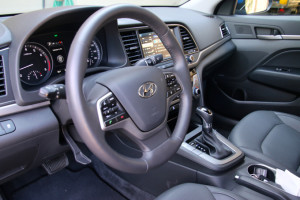
Inside is a new, easier to use Instrument panel somewhat in the style of some expensive German cars. Tach and speedo are front and center with the trip computer and other pertinent and not so pertinent driver info splitting the difference. To the right is the horizontally divided center stack with controls a seven-year old could master in a few minutes. Maybe that’s not such a good thing.

Doing 400 miles will require appropriate accommodations and the Elantra Limited supplies that as standard equipment with soft leather and a power driver’s seat with adjustable lumbar support. New this year thicker front door glass and added sound absorption, all adding to the quiet. Rear seating will handle three reasonably well in a pinch (pun intended).

New Hyundai Elantras start at $100 below last year at $17,150 plus $825 for the train from Montgomery, Ala. For $22,350 you can purchase by tester, the Limited Edition, which is hardly limited. My tested was loaded with the Tech package ($2,500) and Ultimate package ($1,900) which gives you all options, except for carpeted floor mats and for that you will pay another $125. With train fare my Limited totaled $27,710. While that price is maybe in mid-size car territory, the new Elantra is technically a mid-size car.

Larry Weitzman has been into cars since he was 5 years old. At 8 he could recite from memory the hp of every car made in the U.S. He has put in thousands of laps on racetracks all over the Western United States.