Fatal house fire in Incline Village

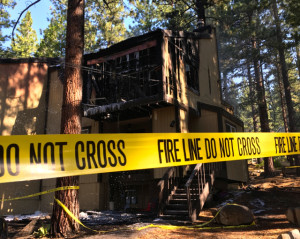
One person died in a structure fire in Incline Aug. 7. Photo/Provided

One person died in a structure fire in Incline Aug. 7. Photo/Provided

One person died this morning in an Incline Village house fire.

The name of the deceased has not been released pending notification of next of kin.

When North Lake Tahoe Fire Protection District crews arrived just after 3am Aug. 7 the house on Tomahawk Trail was fully engulfed with flames. It wasn’t until after several hours of firefighting that crews were able to enter the structure. That is when the remains were discovered.

The Washoe County Sheriff’s Office and the North Lake Tahoe Fire Protection have launched a joint investigation into the fire.

— Lake Tahoe News staff report


National park jewels draw record crowds

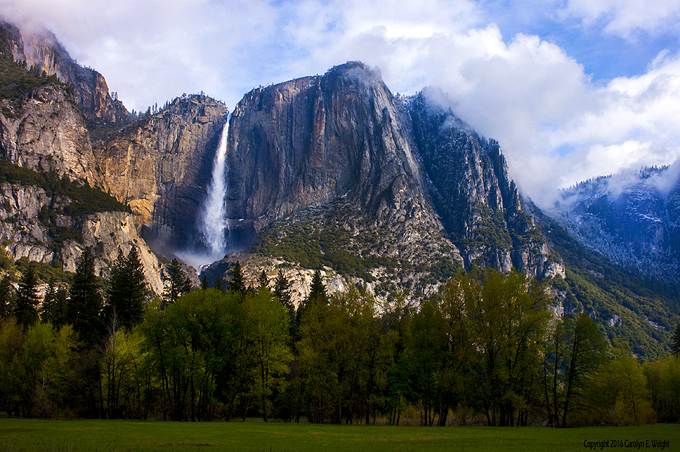
With this being the centennial celebration of the National Park Service, visitors are flocking to popular parks like Yosemite. Photo Copyright 2016 Carolyn E. Wright

With this being the centennial celebration of the National Park Service, visitors are flocking to popular parks like Yosemite. Photo Copyright 2016 Carolyn E. Wright

By Brad Branan, Sacramento Bee

Visitors light up as they step off tour buses at Tunnel View and see Yosemite Valley for the first time. Half Dome and El Capitan, those towering walls of granite, demand attention. From miles away, visitors can watch water pour from Upper and Lower Yosemite Falls and Bridalveil Fall. The Merced River and the meadows provide a peaceful retreat.

“It’s a park that captures the wonder of the world, that changes you by being there,” President Obama said during a visit to Yosemite in June. “There’s something sacred about this place.”

As the National Park Service celebrates its 100th birthday Aug. 25, visitors are about to break attendance records at Yosemite and other parks for the second year in a row. More than 4 million people visited Yosemite last year, the highest total ever, and the number of visitors through June of this year eclipsed last year’s total for the same period. Likewise, more than 307 million people visited Park Service properties last year, and this year’s figures suggest another record in the making.

Read the whole story


Crews get handle on Alder Fire near Hwy. 50

The Alder Fire burning near Kyburz is 40 percent contained, with 25 acres charred.

The fire is burning in steep terrain on the south side of Highway 50 in the Eldorado National Forest near Sand Flat campground.

“Firefighters made good progress overnight. The north side of the fire is within the containment area. Firefighters will be working on the south side of the fire on Alder Ridge and strengthening containment lines today,” fire officials said in a statement.

The Alder lookout and the communication site on Alder Ridge are threatened.

Drivers should expect to see fire vehicles on the highway and along the road to the campground.

The cause of the fire that stared Aug. 6 at 3pm is under investigation.

— Lake Tahoe News staff report


Opinion: Tips for drivers, kids as school resumes

By Chuck Allen

Summer break is ending soon and children will be heading back to school. The Washoe County Sheriff’s Office is asking drivers to slow down and be on the alert for children walking to school.

Here are some precautions for drivers:

  • Slow down and be especially alert in residential neighborhoods and school zones. Come to a full stop and check both ways at stop signs and red lights.
  • Take extra time to look for kids at intersections, on medians and on curbs.
  • Watch for children on and near the road in the morning and after school hours.
  • Watch for school bus stop signs. When a school bus stops with brake lights flashing or the stop sign raised, motorists from either direction must stop until all children have safely crossed the road.
  • Reduce any distractions inside your car so you can concentrate on the road and your surroundings. Remember, using your cellular phone while driving is against the law and a dangerous distraction.

Reminders for your kids:

  • Distracted walking can be just as dangerous as distracted driving. Reduce distractions while walking, focus on where you are going, not on your mobile device.
  • Cross the street at corners, using traffic signals and crosswalks.
  • Never run out into the streets or cross in between parked cars.
  • Make sure to always walk in front of the bus where the driver can see them.
  • Refrain from horseplay and remain in a group while waiting for the school bus.

Chuck Allen is sheriff of Washoe County.


Twin Lakes — a journey along a water-filled trail

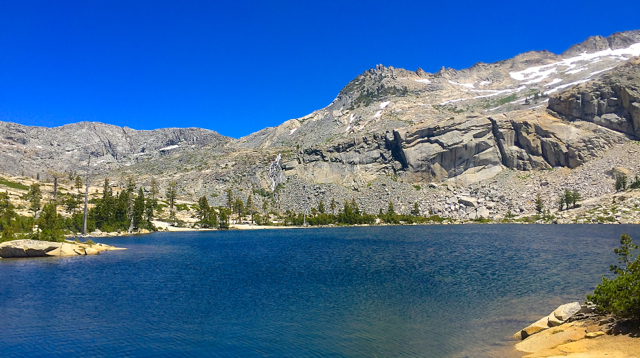
A waterfall descends from the far side of Twin Lakes.  Photo/Kathryn Reed

A waterfall descends from the far side of Twin Lakes. Photo/Kathryn Reed

By Kathryn Reed

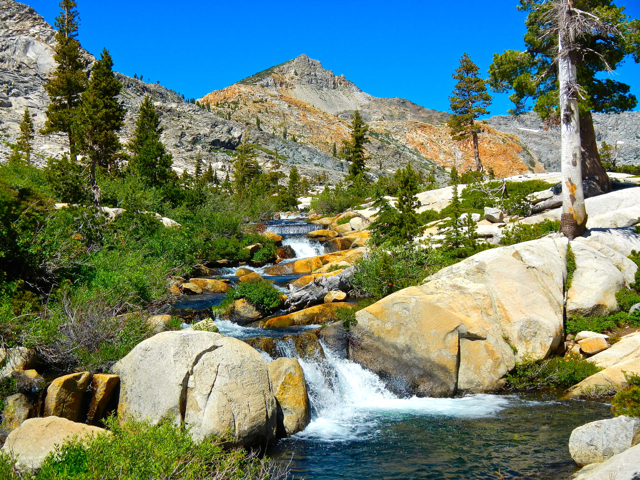
We almost didn’t make it to the lake. There were so many pretty places along the stream that called out it was hard not to stop and just take it all in.

It was one of those hikes where the journey truly surpassed the destination. And the destination was stunning, especially with the multi-legged waterfall in the distance cascading down the granite wall.

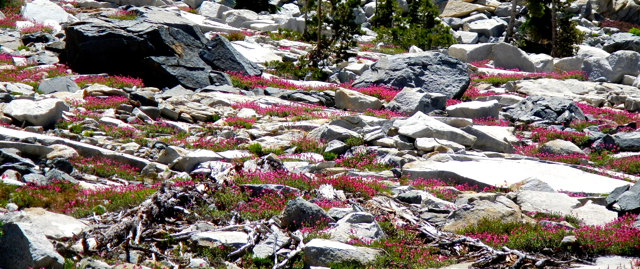
While there were some wildflowers along the route, this excursion is more about the water.

The end point was Twin Lakes in Desolation Wilderness.

Round-trip is it six miles, though we did a little loop at the end that took us closer to Wrights Lake to make it more like a seven-mile day.

Starting out the terrain is lush. The tree canopy provides a shady route. This is where the bulk of the flowers are.

Wildflowers sprout from the granite. Photo/Kathryn Reed

Wildflowers sprout from the granite. Photo/Kathryn Reed

The climb is gradual, though there are some granite steps that might make those with knee issues want poles.

Dirt gives way to granite. In some ways this is reminiscent of hiking to Horsetail Falls. But there isn’t so much rock that AJ needs her booties.

What’s better about this trail compared to Horsetail is that people have outlined with rocks where to go or built cairns. The markers are definitely needed at various locations.

An abundance of water is throughout this trail. Photo/Kathryn Reed

An abundance of water is throughout this trail. Photo/Kathryn Reed

While Twin Lakes looks inviting, the temperature is icy. The wind makes it necessary to put the layer back on that was removed on the way up.

Coming down, Wrights Lake, essentially the starting point, looks so tiny and far away. With starting at about 7,000 feet and going up nearly 1,300 feet, the expanse below is vast.

Pyramid Peak is a constant landmark during the hike. Photo/Kathryn Reed

Pyramid Peak is a constant landmark during the hike. Photo/Kathryn Reed

—–

Getting there:

From the Y in South Lake Tahoe, take Highway 50 west for 20.7 miles to Wrights Lake Road. Turn right. Follow signs for Twin and Grouse lakes. After 8.8 miles there is a big parking lot. The trailhead begins just below the parking lot.

Notes:

·      There will be a free wildflower and natural history hike on Aug. 13 at 10am starting at the Twin Lakes trailhead. It will last about an hour.

·      This is rated a moderate hike.


Opinion: The life of charity singles

By Lucy Robinson

A few years ago I took on a research challenge: to listen to every charity single released in the United Kingdom between December 1984 and the end of 1995. I ended up studying 82 singles in depth—some had international success, some were made for local community audiences.

Charity singles are the songs specially recorded by musical artists to benefit charitable causes. Perhaps the best known are 1984’s Band Aid, which sang “Do They Know It’s Christmas?” about Ethiopian hunger, and 1985’s “We Are The World,” recorded on behalf of Africa. Critics have never warmed to the genre, but I surprised myself by growing attached to a number of them. Not only do they tend to have the hookiest of choruses, there is something particularly pleasurable about music that makes no effort whatsoever to be cool.  In a cynical, highly marketed, auto tuned and media-managed music world, singers prepared to just turn up and belt out a chorus seem endearing. They have an appealing lack of glossiness and even an artificial show of sincerity is more attractive than posed irony.

But there is one thing that is clear when you listen to charity singles: Most are bad. Very bad. Being bad was evidence that a single was thrown together to confront an emergency, with the participating artists typically lowering their usual standards. Bad was kind of the point; the rough production values demonstrated that no money was spent, much less wasted. In fact, the ones that were any good musically were usually unsuccessful.

There had been musical fundraisers before the 1980s. Pete Seeger, Woody Guthrie, and Leadbelly did a benefit show for California’s Dust Bowl refugees in 1940. Elvis did a 1961 benefit concert in Hawaii for the USS Arizona Pearl Harbor memorial and George Harrison did a 1971 concert for Bangladesh. But it was in the ’80s that the charity single came into its own. Benefit songs sold philanthropy and Victorian values, raising funds for traditional causes such as Great Ormond Street Hospital in London, but in a style that appealed to youth-oriented broadcasting and made use of videos, which were then new.

Charity singles are never just about the money, though. They have an old-fashioned moral message and an idealistic take on the need for social change straight out of Dickens. These songs are statements: about who we think we are as a society, how we want to be seen, and which people in need we think we can “help.” “We Are the World”, we are reminded. “Do Something Now” for Christian Aid, “You’ll Never Walk Alone” for the Bradford Football Disaster, The songs themselves created a utopian sense of community, however artificial, between donors and an imagined community of worthy recipients.

There was a recipe for building the perfect ’80s charity single. Take an eclectic group of musicians who shouldn’t really get along. Include individual voices that have standout lines (good options are Boy George, Bruce Springsteen, and Sting). One participant must look as if they are taking their part too seriously, and one person must look as if they are not taking their part seriously enough. And there should be a video in which microphones, leads, lyric sheets and producers are visible, as well as a collective chorus shot including people who did not necessarily perform on the record.

Your group of singers should include someone old, someone new, someone with genuine credibility, someone surprising, and a puppet. The puppets from the British satire Spitting Image appeared in the videos for charity singles, including Genesis’ 1986 song raising awareness of Middle East policy “Land of Confusion.” (The puppets also made their own spoof charity single in 1990). The Muppets have had a good run in charity singles too, from the ’80s to the present day. More recently their theme tune was re-recorded to raise money for a New Zealand cancer charity, and Kermit the Frog performed a duet of “Rainbow Connection” with Ed Sheeran for Red Nose Day, a song that the Muppets and their fans have used to raise charity funds and awareness since the 1980s.

To go with the self-consciously eclectic stars, ’80s charity single videos were produced in a deliberately slipshod way to emphasize the time and labour donated by musicians, producers, and technicians. The urgent nature of production was made clear in willfully unprofessional-looking videos, thrown together in a hurry. Viewers got to see the nuts and bolts of the recording process, often with a motley skeleton crew portrayed mucking around together. In fact, the more uncomfortable the style pairings and the less likely the performers to work together normally, the clearer their own charitable donation was. The eclecticism of performers also made it easier to market a charity single broadly.

Whether it’s the performers singing together, the consumers buying the records, or the imagined recipients, everyone was part of the same community, headed up by the Muppets and Boy George. We weren’t just buying a single, we were buying a moral community. At a time when there was no such thing as society and greed was good, charity singles reminded us that there was another way, not perfect of course, but a statement of intent.

The problem with this recipe was that it became too familiar; once the format was instantly recognizable, charity singles lost their sense of spontaneity, their heart—and their charity.

Since that ’80s heyday, and up to the most recent wave of recordings, the most significant charity single releases have been corporate events for corporate-style charities attached to telethons like Red Nose Day, Children in Need, or Band Aid reboots. These events are not the spontaneous thrown-together responses to crisis, but professionally organized and carefully planned and executed. Recent charity singles have been linked to reality TV show brands like “The X Factor” and “BBC Music”, rather than being built from particular pop tribes. “The X Factor” finalists used to produce a charity single and music video before the final winner of the show was anointed. Making it through the live rounds to perform on the video was a badge of honor in itself. For “The X Factor” contestants, the charity single was a bridge into a professional music career. There is no awareness to be raised. There is no community to be built. There is a television event to be marketed.

Recently, the charity single has made a comeback as artists step away from the corporate event model to create moments of intensely shared feeling. Once again, some charity singles seem to be about community, and finding common ground amidst the shock waves of terrorism, mass violence, and climate change. Portishead, for example, has dedicated its haunting new ABBA cover “SOS” to the memory of Jo Cox, Labour MP, who was shot dead in the run up to the Brexit referendum. Adele and Christina Aguilera both used recent performances to express their reactions to the shooting in Orlando that killed 49 people at Pulse nightclub.

Indeed, Orlando may be a turning point for the charity single. The multiple charity singles for the Pulse shooting victims have not only been good, but also they are sung by the right people.

After Orlando, a vigil was held in London’s gay village on Old Compton Street in Soho, which was the scene of a violent hate crime in 1999 when 39 people were injured by a politically motivated nail bombing. The London Gay Men’s Chorus performed at the Orlando vigil, singing “Bridge Over Troubled Water,” and the live performance captured a feeling of shared vulnerability and collective resilience. Their recording of a charity single marks the arrival of a transatlantic LGBTQ community. It will raise funds for both the Pulse Victims Fund and a British-based charity fighting hate crime.

The most striking example of what a charity single can do now is the recording of Bruce Bacharach’s “What the World Needs Now,” by 60 Broadway stars to raise money for the LGBT Centre of Central Florida. “Broadway for Orlando” contains touches of the Band Aid template: It was recorded in one sitting and the recording studio is the focus of the video. We see shots of the mixing desk. And while some of the singing leaves a bit to be desired, this is not a re-enactment of the ’80s cliché. Whoopie Goldberg and Sarah Jessica Parker, might not compete vocally, but they understand the point of a good cameo. This record is an authentic outpouring by a community with deep-rooted connections to the recipients of funds raised.

This is the charity single at its best. The Orlando charity singers are singing for themselves, and singing resilience into their communities. United in a choir of voices, the Orlando singles find a way to give voice to victims of the unspeakable.

Lucy Robinson is a senior lecturer of Modern British History at the University of Sussex and co-organizer of the Interdisciplinary Network for the Study of Subcultures, Popular Music, and Social Change.
College isn’t always the way to get ahead

By Shahien Nasiripour, Bloombert

For generations of Americans, a college degree was the best way to advance. These days, it may be a way to avoid losing ground.

That’s the unfortunate reality facing millions of Americans in an era of stagnant wages and soaring higher-education costs. Encouraged by government officials to seek out further education and provided with hundreds of billions of dollars in cheap taxpayer-backed credit to finance those dreams, Americans in recent years flocked to college campuses to obtain credentials they hoped would lead to more fulfilling or better-paying jobs.

The result? Outstanding student debt has doubled since 2009 to nearly $1.4 trillion, according to the Federal Reserve.

Read the whole story


Wildland fire burning in steep terrain near Kyburz

A fire that started Saturday afternoon in the American River Canyon on Highway 50 has burned 30 acres as of 8:20pm. It is 10 percent contained.

Flames could be seen from the highway. The Alder Fire started on the south side of Highway 50 near Sand Flat Campground. It is near Ice House Road between White Hall and Kyburz, burning in steep terrain.

The cause is unknown, though there had been no lightning on Aug. 6.

Air and ground resources have been deployed.

— Lake Tahoe News staff report


Benefit of LTN subscription — musician meet-and-greet

Blues guitarist Joe Lewis Walker is going to be performing at the Village at Squaw Valley on Aug. 16.

Because Bruce Rettig is a subscriber of Lake Tahoe News he is getting to meet the musician before the show. The South Shore resident has been a loyal reader of LTN for years as well as a subscriber.

Subscribers help ensure the online news site is able to provide a variety of daily news to readers here and throughout the world. A $10/month or $100/year subscription also gives people the opportunity to comment on stories. Subscribers also receive breaking news bulletins – getting the inside scoop even faster.

Besides supporting Tahoe’s only daily news source, Lake Tahoe News subscribers are also eligible for occasional giveaways like the concert and meet-and-greet.

To subscribe, go online or send a check to Lake Tahoe News, PO Box 13406, South Lake Tahoe, CA 96151.

— Lake Tahoe News staff report


Specialized meteorologists on front lines of fires

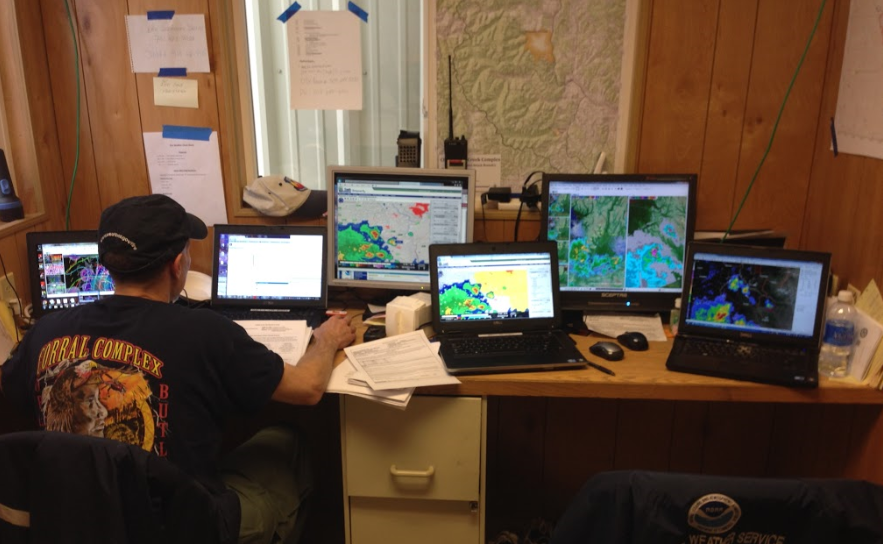
The set-up for an IMET who is keeping tabs on the weather at a fire incident. Photo/NOAA

The set-up for an IMET who is keeping tabs on the weather at a fire incident. Photo/NOAA

By NOAA

When you think of the role NOAA’s National Weather Service plays in hazardous weather, you may think of the forecasts they produce or the watches and warnings they issue leading up to a storm. What you may not realize is that the NWS has eyes on the sky before, during and after some of the country’s most dangerous weather.

On average each year, wildfires kill 30 people, destroy 2,800 homes and burn more than 7 million acres. The annual average cost for damages and suppression of wildland fire is more than $2 billion. Smoke from wildfires also causes numerous health issues. Breathing in smoke produced by wildfire can be extremely hazardous, particularly for children and older adults.

Meteorologists from NWS work on the front lines to support agencies who prevent and fight wildfires, collaborating closely with state and local fire control agencies, as well as the U.S. Forest Service and other federal agencies.

Wildfires are not weather. However, weather conditions influence how easily a fire may start, how quickly it spreads and where the fire (and smoke) will move. Lightning strikes in dry areas are a common cause of these fires.

Incident meteorologists (IMETs) help keep the fire crews safe by enabling responders to plan operations taking into account one of the most variable aspects of the incident — the weather. They are NWS forecasters who have been specially trained and certified to provide weather support at a fire location.

IMETs keep firefighters safe by interpreting weather information, assessing its effect on the fire and communicating it to fire crews. Once on-site, IMETs become key members of the incident command teams and provide continuous meteorological support for the duration of the incident.

IMETs are located in numerous NWS offices across the country. Once a large wildfire has started, an IMET is contacted and given orders to travel to the site of the fire as quickly as possible. Ken Simosko, an IMET with the NWS Bismarck Weather Forecast Office, has worked five fire incidents. “You have to be ready at a moment’s notice. I have my bag ready to go so that when I get the call, I can spend my time getting spun up on the history of the fire, its current and future situation. Usually an IMET is on scene within 24 hours to 48 hours of the initial call. This depends on the mode of travel [car or plane] and how far the IMET is from the wildland fire.”

At the fire site, the IMETs check in at the incident command center. This is usually located relatively near the active wildfire and is either part of a temporary tent or trailer camp that is set up for those who are working the event.

“Depending on the size of the fire there can be hundreds of folks involved. Some people bring tents to sleep in. I usually bring a blow-up mattress and sleep in the back of my truck. The command center supplies food and brings in shower and bathroom facilities on a flatbed for all of us who are working the event,” says Simosko.

Each IMET deployment lasts about two weeks, or until the wildfire is considered contained. If a fire lasts more than two weeks, another IMET will be sent to relieve the one who has just completed their two weeks on-site. There is very little “down time” when working a wildfire.

Jason Clapp, an IMET with the Sacramento WFO who has worked 18 fire incidents, notes that, “Morning comes early. You have to have time to check the weather situation and verify the forecast is still on track before the morning briefing.”

The day officially starts with this briefing for the full camp at 6am. From that point until lunch time an IMET’s time is filled with keeping an eye on the forecast and briefing individual groups who are handling different aspects of the fire.

“Sometimes I’ll be briefing the pilots who are fighting the fire by air so after the main briefing I’ll take a short ride to the airfield. Then I might come back and be asked to brief a state or county official who is going to be doing media interviews to get the latest information out to the public. You never know who you’re going to need to brief so you have to be flexible,” says Simosko.

IMETs often visit different locations where the wildfire is burning with a fire behavioral analyst. The fire area may have different types of ground cover, such as dry grasses, scrub brush, dense trees, or barren soil. If there is a terrain change, such as from flat field to rocky hillside, this can also impact the weather. To help understand these localized conditions, remote automated weather stations are placed around the fire and feed ground observations to the IMET to help them make their forecasts. To get a better idea of the weather conditions above ground level, which is especially important when monitoring for thunderstorms, weather balloons are launched on-site at the wildfire.

As the day goes on, an IMET’s duties shift a bit more heavily toward forecasting, especially if there is a chance of thunderstorms. In the areas where large wildfires tend to occur, thunderstorms don’t necessarily bring much rain, but they do bring plenty of lightning.

“If thunderstorms are in the forecast, you’re tied to your workstation, watching the storms on radar once they have started, and updating the forecast as needed,” says Clapp.

The safety of the crews working the fire is paramount so when lightning is in the area they are pulled back to a safe location. Wind is another dangerous element of thunderstorms. Strong gusts can cause the fire to suddenly shift, which can injure the firefighters or cut off their way back to safety.

Simosko noted that forecasting for a wildfire incident is very different from the general weather forecasts he issues in the office.

“[I’m] focusing on a much smaller area and a shorter time period. Because the forecasts are being used within minutes to hours, I get immediate feedback on how I did,” says Simosko.

Simosko and Clapp appreciate the immediate feedback. It challenges them to continually strive to make the best forecast possible.