Snippets about Lake Tahoe

·       The 31st annual Great Gatsby Tea and Fashion Show is Aug. 14 from 2-4pm on the Valhalla Grand Lawn. Tickets are available online.

·       The 50th Live at Lakeview concert in South Lake Tahoe is Aug. 18. It will feature Diego’s Umbrella (San Francisco’s ambassadors of gypsy rock). The free music goes from 4:30-8:30pm.

·       The 9th annual Landscape Conservation Workshop is Aug. 14. Discover the many approaches to Tahoe friendly landscaping and how to achieve conservation success. The free event is from noon-3:30pm at the Evans Family Garden, 1383 Mount Olympia Circle – in the Angora burn area.

·       Kit Knight is the artist in residence at Valhalla on the South Shore. She will be painting Aug. 12-28 from 11am-4pm.

·       The Rita Hosking trio will be at the Boathouse Theater on the South Shore on Aug. 17 at 7:30pm. Tickets are available online.


Money Matters: Understanding financial wellness

By Nic Abelow

What does financial wellness mean?

Financial wellness. On the surface, it sounds like an elusive trend du jour. But when it is considered in relation to the workplace, the idea takes hold. Employees are asked to make important financial decisions about retirement plans and health, life, and other insurance coverages as well as other benefits — all of which may have a lasting impact on their overall financial outlook. Yet often workers make these decisions on the fly without fully understanding their options or how their choices may affect their financial life today and into the future.

Nic Abelow

Nic Abelow

For their part, employers invest considerable resources in benefits programs, and while many provide educational support to employees, such support is typically targeted to a specific planning need — such as retirement — and often lacks the holistic approach that financial wellness programs seek to achieve.

Documenting the need

You needn’t look far to find evidence of the need for a new, more comprehensive approach to personal financial management. A recent study by the American Psychological Association found that money was the most common source of stress for 71 percent of adults — and has topped the list of stressors every year since 2007. Another report done by Metlife last year revealed that nearly half (46 percent) of employees who consider themselves to be “more financially stressed” say they are less productive at work. Half of this group also believes that employers have a responsibility for the financial wellness and security of their employees.

These findings suggest that there is considerable opportunity for employers to enhance their current financial education programs by assessing and addressing the overall financial well-being of employees. And this topic is “top of mind” with a growing number of companies. Aon Hewitt’s survey of the major themes being focused on in 2015 by large plan sponsors found that 93 percent of respondents were “very likely” or “moderately likely” to create or expand their focus on financial wellness this year.

In its comprehensive report, “Financial Wellness at Work,” the Consumer Financial Protection Bureau (CFPB) encouraged employers to “reimagine” their education efforts by introducing programs that “reinforce basic money management skills, measure financial stress, and help employees avoid high-cost credit.”

From concept to practice

While it is clear what a financial wellness program is intended to achieve, arriving at a common definition of what it is and how it can be implemented is less obvious. Companies that currently offer financial wellness programs as part of their benefits offering may all approach it in somewhat different ways. However there does seem to be general agreement that, like physical wellness, financial wellness is a lifelong journey that involves all aspects of an individual’s financial life — immediate, day-to-day issues as well as long-term goals that need to be addressed, such as:

  • Budgeting
  • Cash management
  • Building emergency savings
  • Managing debt
  • Purchasing a home
  • Saving for college
  • Investing for retirement.

As part of its research, the CFPB tracked financial wellness efforts currently underway at several companies, and then compiled a list of best and/or “promising” practices that are summarized here.

Assess needs and build trust. Employers stress the importance of surveying employees about their financial needs and building a level of trust before crafting a financial wellness plan. Some companies have hired third-party providers that offer coaching and education as a way to reinforce worker confidentiality.

Leverage technology to lower costs. Employers have found that mobile financial management applications, tools, and games to deliver financial wellness content offer engaging and affordable options that can be scalable to accommodate the disparate needs of a large, sometimes global, workforce.

Make financial wellness part of new employee orientation. Employers who introduce financial wellness as a natural part of the new employee orientation/benefits selection process report positive results. This is, as one employer called it a “milestone moment,” when employees are open to change.

Address the emotional baggage around money issues. Financial wellness initiatives that address and allay employees’ fears or embarrassment over their financial situation show promise in spurring employees to act and develop more positive financial behaviors.

Nic Abelow is a LPL financial advisor with Abelow, Pratt & Associates Financial Advisors and Wealth Management.


Cocktail event benefits Barton cancer program

Barton Foundation’s 7th annual Cocktails for a Cause is Sept. 21.

This year’s event will benefit the expansion of Barton Health’s Cancer Wellness Program. The expanded program will address the social, emotional, and functional aspects of a patient’s cancer journey through supportive services such as massage, exercise, psychotherapy, and nutrition classes. The program will be offered free to community members undergoing cancer treatment.

At Cocktails for a Cause, attendees may sample a variety of libations made by local mixologists featuring Tahoe Blue Vodka.

The best cocktail will be featured at the Barton Foundation’s 25th annual Gala, a black-tie fundraiser at the Festival of Trees and Lights. Attendees are invited to vote for the Most Congenial Bartender with their tips, while the “Best Cocktail” will be determined by a panel of local celebrity judges based on taste, theme, originality, presentation, and connection to the cause.

Cocktails for a Cause takes place at Riva Grill from 5:30-8pm. Tickets are $40 in advance, $45 on the day of the event.


Heller: ‘Still a lot of work to be done’ on economy

By Jose Olivares, Reno Gazette-Journal

While things are looking up for Nevada’s economy, many Nevadans are still reeling from the effects of the recession and Congress must do more to help people get back on their feet, Sen. Dean Heller, R-Nev., said Tuesday.

Heller made the comments at the Nevada Museum of Art during a talk on Nevada’s economy.

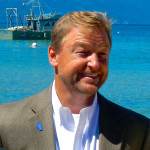
Dean Heller

Dean Heller

“Back in 2008 during the Great Recession, there was no other state that was hit harder than the state of Nevada,” Heller said. “Our economy was wrecked, unemployment was one of the highest in the country, our percentage of homes underwater was the highest in the country and businesses were closing.”

Heller said Congress could do things to help Nevadans, such as repealing specific provisions in the Affordable Care Act like the “Cadillac tax” on high-cost health insurance plans. He also said Interstate 11, which would connect the Phoenix area, Las Vegas and Northern Nevada, would dramatically help the state.

Read the whole story


Man dies while cycling on TRT

By Associated Press

Authorities say a Bay Area man has died after collapsing while biking on the Tahoe Rim Trail.

Charles Brust, 64, of Pacifica collapsed the morning of Aug. 8. He had started from the Spooner Lake area.

Douglas County Sheriff’s Office says a retired paramedic began CPR and continued until Tahoe Douglas firefighters and Douglas County deputies arrived.


Talk to focus on religious freedom

First Baptist Church of South Lake Tahoe will host international speaker David Courson on Aug. 14.

Courson is director of the Island Bible Institute in Hawaii, has directed Christian educational and assistance projects in war zones, refugee camps, and developing nations since 1974 in more than 60 countries. Current speaking topics emphasize the struggle for religious freedom all over the world.

He is a decorated U.S. Marine Corps Vietnam veteran.

The free talk starts at 11am. The church is at 1053 Wildwood Ave., South Lake Tahoe.

Call 530.544.2743 for more information.


Youngsters learning importance of nutrition

The Boys & Girls Club of Lake Tahoe will be hosting a farmers market with the help of the UC Cooperative Extension on Aug. 17 from 10 am-4pm.

UCCE started a nutrition program at the club. Each week a different grade learns about the healthy fruits and vegetables that are easily accessible in South Lake Tahoe.

There will be a fruit stand and vegetable stand where kids will learn the importance of incorporating these food groups in their diet through interactive games and tastings. One stand will be dedicated to the master food preservers where kids will learn different ways to preserve food and get a change to taste food that has been preserved. A station will have a smoothie bike where kids get to make a fruit and vegetable smoothie on a blending bike as well as being able to exercise at the same time.


Cole leaving SLT council after 20 years

One duty as mayor in 2011 was for Hal Cole to welcome Amgen cyclists to the start line. Photo Copyright 2016 Carolyn E. Wrightriders as the arrive at the starline Sunday May 15, 2011. Photo/Lisa J. Tolda

One duty as mayor in 2011 was for Hal Cole to welcome Amgen cyclists to the start line. Photo Copyright 2016 Lisa J. Tolda

By Kathryn Reed

Planning – it’s what got Hal Cole interested in local politics and it’s the reason he is getting out.

The South Lake Tahoe city councilman is not seeking another term. When he leaves at the end of the year he will have been on the council for five four-year terms that started in 1994. He was off the council between 2006-08.

Norm Woods is the longest serving member at 21 years – 1965-70 and 1976-92. By the time Tom Davis finishes his term in 2018 he will be tied with Cole at 20 years.

During his tenure Cole was mayor six times, each being a one-year term. (From 1965-68, mayors served six months.)

Hal Cole, right, speaks with Sen. Dean Heller, R-Nev., at the 2015 Lake Tahoe Environmental Summit. Photo/LTN

Hal Cole, right, speaks with Sen. Dean Heller, R-Nev., at the 2015 Lake Tahoe Environmental Summit. Photo/LTN

Near the end of each four-year term Cole would reassess if he wanted to stay. The passion for the job, the belief he was making a difference and the desire to keep learning kept him in the game. Now, he feels a bit like he’s paddling upstream. He’s tired – tired of trying to do what’s right and have roadblocks thrown at him; tired of the pettiness on the council; tired of change coming so slowly.

“After the (California Tahoe) Conservancy and TRPA went sideways, I said, ‘What is the use?’” Cole said in reference to the Knights Inn project. “These organizations are policy-based and not outcome-based. We played totally by the rules and they wanted us to change it at the eleventh-hour.”

He’s referencing the hotel project that could become a Whole Foods as the anchor. What the city and developer wanted was a project that would have had significant environmental gains and would have been a showcase for the basin. The agencies are accused of meddling and potentially derailing the project; and if it is a-go, it won’t be what it could have been. (Contracts still have not been signed.)

TAMBA's Ben Fish and Hal Cole at the Bijou Bike Park dedication. Photo/LTN

TAMBA’s Ben Fish and Hal Cole at the Bijou Bike Park dedication. Photo/LTN

The 67-year-old reflected back to previous councils where it seemed more like a team, with a vision even when there were disagreements. He liked the discussions, the respect they had for one another.

“This time with one councilmember suing us and putting things in the paper and on Facebook …  you go to the meeting and the tension, it is so thick. To the public we must look petty. I don’t think I want to be part of it anymore,” Cole told Lake Tahoe News. “I don’t want to sound bitter. I probably would have retired anyway. But the level of discourse isn’t as rewarding as it used to be.”

Still, Cole has a slew of accomplishments. Redevelopment is what he is most proud of – in particular Heavenly Village. That was a game changer for South Lake Tahoe. It took vision, it took more money than first budgeted, and it took courage.

While locals were slow to embrace the change and ever set foot there, that isn’t the case now. It’s a success in every sense – economically, visually, environmentally and socially.

Cole says the welcome sign by the airport is something that still brings a smile to his face. He’ll even stop when he sees tourists taking pictures and take it for them. It’s a project he started during his one year on the Planning Commission, which was then completed when he was on the council.

Hal Cole congratulates snowboarding Olympic gold medalist Jamie Anderson. Photo/Denise Haerr

Hal Cole congratulates snowboarding Olympic gold medalist Jamie Anderson. Photo/Denise Haerr

Being on council was like getting a second or third college degree, he said. Becoming immersed in finance, learning the science of the lake, the advances of technology – the council afforded him (as it does all members) the opportunity to delve into topics he might not otherwise have been exposed to.

As a builder, Cole had a natural affinity to be interested in planning matters. That is what led him to the Planning Commission, then the council and now retirement from politics.

“I wish I was on the City Council in 2007 when they let (developer) Randy Lane pull permits to pour the foundation when he didn’t have site control,” Cole said of the failed Chateau project that went into bankruptcy and ended up being known as The Hole. “It irks me to this day. He didn’t own the lots. It’s the biggest mistake this council ever made.”

He’s had a few of his own regretful votes. One was when Tony O’Rourke was city manager and he brought forth a spending mechanism for roads where the city borrowed $5 million. That, Cole said, was an ill conceived, expensive plan.

Now he’s advocating for the sales tax initiative that will be on the November ballot be spent on roads.

Hal Cole addresses the crowd at the city's 50th anniversary party. Photo/LTN

Hal Cole addresses the crowd at the city’s 50th anniversary party. Photo/LTN

And if he could, Cole would like a do-over with the paid parking fiasco. While he still supports the concept, he admits the city didn’t approach it correctly.

Other high points include approving City Manager Nancy Kerry’s plan to overhaul the health care system, saving the city millions of dollars, as well a refinancing bonds at various times.

Being mayor last year during the city’s 50th anniversary festivities is high on his list of good memories. It was a time to celebrate all of the accomplishments of the past five decades and dream about the future.

Cole’s future is a little uncertain. Once he has his Tuesdays free from council, no more Tahoe Regional Planning Agency board meeting or other city commitments, he is likely to be spending more time on the tennis court and enjoying life in South Lake Tahoe, the town he grew up in, and he’ll still be building houses.

—–

Note:

So far eight people have taken out papers to be on the City Council. The four who have qualified are Patrick Jarrett, Ted Long, JoAnn Conner and Robert Topel. With Cole not running, the filing deadline is now Aug. 17 at 5pm.


Opinion: Fighting poverty won’t defeat terrorism

By Bruce Hoffman

Do poverty and a lack of education produce terrorism?

That has long been a favored explanation for eruptions of terrorism. Since the Sept. 11, 2001, attacks, a succession of global leaders—among them Tony Blair, Pope John Paul II, the Dalai Lama, Desmond Tutu, Oscar Arias Sanchez, and Elie Weisel —fastened on poverty, illiteracy and an absence of education as “root causes” of the violent phenomenon.

“We fight against poverty because hope is an answer to terror…,” President George W. Bush declared before the United Nations Financing for Development Conference in March 2002. “We will challenge the poverty and hopelessness and lack of education and failed governments that too often allow conditions that terrorists can seize and try to turn to their advantage.”

These arguments remain canons of the conventional wisdom on terrorism a decade and a half later—even though historical and contemporary empirical evidence don’t support such claims.

To the contrary, those historically attracted to terrorism have in fact tended to be well educated, financially comfortable, and often gainfully employed.

Osama bin Laden obtained degrees in economics and public administration from Saudi Arabia’s King Abdul-Aziz University while ISIS’s Abu Bakr al-Baghdadi has a master’s and a doctorate in Islamic studies from the University of Islamic Sciences at Adhamiya, a Baghdad suburb.

A century ago, Irish Republican Army volunteers in West Cork were “more likely to have jobs, trades, and an education than was typical of their peers,” according to Peter Hart. Similarly, Menachem Begin, a prime minister and Nobel Peace Prize laureate who’d earlier in life led a Jewish terrorist group in British Mandate Palestine, received his law degree from Warsaw University in 1935. Yasir Arafat, Begin’s Palestinian counterpart who was awarded his own Nobel Peace Prize, graduated from Cairo’s Fouad the First University (now Cairo University) and was employed as an engineer in Kuwait before founding al-Fatah. George Habash, the founder and leader of the rival Popular Front for the Liberation of Palestine (PFLP), was the son of a wealthy grain merchant who received his medical degree from the American University in Beirut as did his close friend and collaborator, Wadi Haddad, the mastermind of the PFLP’s most spectacular aircraft hijackings——including the 1976 hijacking of an Air France plane to Entebbe, Uganda.

In a study of madrassas (Islamic schools) and lack of education as a putative terrorist incubator, researchers at New America, a Washington think tank, also reached the conclusion that terrorism is not linked to an absence of schooling. Using a database of 79 jihadis who were responsible for the five most serious terrorist incidents between 1993 and 2005, they found that 54 percent of the perpetrators either attended university or had obtained a university degree. These terrorists, they concluded, “thus appear, on average, to be as well educated as many Americans”——given that only about half of the people living in the U.S. have attended university. The researchers further noted that two-thirds of the 25 terrorists involved in the planning and hijacking of the four aircraft on Sept. 11, 2001, had attended university. Finally, they observed that the most popular subject amongst those who attended university was engineering, followed by medicine.

That engineers have disproportionately filled the ranks of violent Islamist movements is the central argument of Diego Gambetta and Steffen Hertog’s recent book “Engineers of Jihad: The Curious Connection between Violent Extremism and Education”. They found that 69 percent of their sample of 335 violent jihadis had attended institutes of higher education—nearly half had studied engineering. “Relative to their presence in the male population in their countries of origin,” Gambetta and Hertog argue, “the number of engineers among [Islamist] extremist groups is 14 times what we would expect …Furthermore, the over-representation is evenly distributed across all groups and across all countries of origin….”

Among the more notorious terrorists with academic degrees in this particular field were Ramzi Ahmed Yousef, the mastermind behind the 1993 bombing of New York City’s World Trade Center, who studied electrical engineering at a technical institute in Wales; his uncle, Khalid Sheikh Mohammad, the architect of the Sept. 11 attacks, who graduated with a bachelor’s degree in mechanical engineering from a North Carolina state university; and Umar Farouk Abdulmutallab, the so-called “underwear bomber,” a Nigerian national and son of a wealthy banker who tried to blow up a Northwest Airlines flight en route from Amsterdam to Detroit on Christmas Day 2009. His mechanical engineering degree was awarded by University College London——one of Britain’s top universities.

The popularity of medicine as a terrorist vocation is, of course, also not new. In addition to the aforementioned doctors Habash and Haddad, Ayman al-Zawahiri, al-Qaeda’s current leader, is a trained surgeon. Some of the best known terrorists in recent years with medical degrees were among the eight persons arrested in Britain following the botched attempt to bomb a nightclub in central London and the dramatic, but largely ineffectual, attack on Glasgow’s International Airport in June 2007. Six of the eight perpetrators were either doctors or medical students  and of the remaining two, one was employed as a technician in a hospital laboratory.

Perhaps the seminal scholarly work to debunk the conventional wisdom that links poverty and lack of education to terrorism is the 2003 article by Princeton economist Alan B. Krueger and his Australian colleague, Jitka Malecková. Surveying American white supremacists, members of the Israeli Jewish (right wing) underground, Hezbollah fighters, and Palestinian suicide bombers, they concluded that not only is there little evidence for this causality but in fact persons with higher incomes and more education are more likely to join terrorist groups. In the case of the Israeli Jewish underground, they found that “these Israeli extremists were disproportionately well-educated and in high-paying occupations. The list includes teachers, writers, university students, geographers, engineers, entrepreneurs, a combat pilot, a chemist, and a computer programmer.” For Hezbollah, they determined that fewer of its members came from impoverished or uneducated backgrounds compared to the general Lebanese population (28 percent versus 33 percent). Krueger and Malecková determined that Palestinian suicide bombers were also “less likely to come from impoverished families and are much more likely to have completed high school and attended college than the general Palestinian population.”

This counterintuitive conclusion about Palestinian suicide bombers—given the immense poverty and deprivation that continues to define the Palestinian people’s existence—is well supported by evidence gathered by Nasra Hassan, a United Nations aid worker based in Gaza, who has extensively studied the tendency of Palestinian youth to embrace terrorist martyrdom. Writing in the New Yorker magazine shortly after the Sept. 11 attacks, she observed that none of the nearly 250 suicide bombers and would-be suicide bombers she interviewed between 1996 and 1999 was uneducated, desperately poor, simpleminded, or depressed. Many were middle class and, unless they were fugitives, held jobs. Two were the sons of millionaires.

Similarly, according to Ronni Shaked, an Israeli journalist and former Shabak (Israel Security Agency or Shin-Bet) intelligence officer and expert on Hamas, “All leaders of Hamas are university graduates, some with M.A. degrees. … It is not a movement of poor, miserable people, but the highly educated who are using poverty to make the periphery of the movement more powerful.”

Having said all this, it would be wrong to conclude terrorist organizations are populated exclusively by the financially comfortable and educated. Indeed, an inevitable bifurcation generally occurs across all terrorist movements whereby the top leadership and mid-level command strata are populated by the educated (or relatively well-educated) and financially well off, while the majority of foot soldiers are less educated and often from far more modest socioeconomic backgrounds.

The reasons why someone picks up a gun or throws a bomb represent an ineluctably personal choice born variously of grievance and frustration; religious piety or the desire for systemic socio-economic change; irredentist conviction or commitment to some utopian or millenarian ideal. The forces that impel individuals to become terrorists are thus timeless.

Bruce Hoffman has been studying terrorism and insurgency for four decades. He is a professor in Georgetown’s Walsh School of Foreign Service and serves as director of the Center for Security Studies and of the Security Studies Program.



SLT man arrested in hit-and-run accident

A South Lake Tahoe man is accused of hitting a pedestrian near Highway 50 and Sierra Boulevard and then fleeing the scene.

The victim, whose name has not been released, sustained non-life threatening injuries, and was treated and released from Barton Memorial Hospital after the Aug. 6 incident.

Taken into custody was Gary J. Stanton, 66. He faces charges of causing bodily injury, driving under the influence of alcohol causing injury, and abuse of an elder.

The latter charge stems from Stanton allegedly dropping his father, who is in his 90s, on the corner of Ruth Avenue and Dunlap Drive. This, according to officers, was done so Stanton could hide his vehicle.

The scheme did not work. Witnesses were able to describe the vehicle, which was found on Eloise Avenue. Stanton was apprehended when he went to get his dad who was talking to officers.

— Lake Tahoe News staff report