Local November ballot taking shape

The November election for Lake Tahoe candidates is starting to solidify. Aug. 12 was the deadline to file if the incumbent is in the race, while Aug. 17 is the deadline if the incumbent is not running.

While El Dorado County elections officials on Friday told Lake Tahoe News the website would be updated after the 5pm filing deadline, that clearly did not happen because it does not list any candidates for South Lake Tahoe City Council. City Clerk Suzie Alessi did not respond to an email asking if anyone besides Patrick Jarrett, Ted Long, JoAnn Conner and Robert Topel had qualified for the ballot.

Because Councilman Hal Cole is not running, people have until Wednesday to file. This is true in all races where an incumbent is not running.

In other races the candidates, according to the EDC elections website, are:

·       Lake Tahoe Community College Area 3: Karen Borges, incumbent.

·       LTCC Area 4: Nancy Dalton and Dave Hamilton. (This is Fritz Wenck’s seat; he is leaving the board.)

·       Lake Tahoe Unified School District Area 1: Annie Davidson and Larry Reilly. (Adam Jones is leaving the board.)

·       LTUSD Area 3: Mike Doyle is being challenged by Bonnie Turnbull.

·       LTUSD Area 4: Troy Matthews. (Larry Green is stepping down.)

·       Lake Valley Fire Protection District: (3 seats open) Incumbents are Bob Bettencourt and John Rice; challengers are Leona Allen and Tony Sears.

·       South Tahoe Public Utility District: Incumbents Randy Vogelgesang and Kelly Sheehan will face Kirk David and Nick Exline.

For more El Dorado County offices, go online. Here are the Placer County candidates and the Douglas County officer seekers.

— Lake Tahoe News staff report


LTCC-SNC launch 4-year degree partnership

By Kathryn Reed

It’s no longer necessary to leave South Lake Tahoe to obtain a four-year college degree – and this has nothing to do with online education.

Lake Tahoe Community College and Sierra Nevada College are partnering to offer a bachelor’s degree in global business management.

“Over the last five years they are the No. 1 transfer institution coming to our institution. We have been working with their students for a number of years,” SNC Provost Shannon Beets told Lake Tahoe News. “We talked about all the issues people face being place-bound — family, work obligations, snow. These are things that keep them from coming to the North Shore.”

With business being the No. 1 degree LTCC students seek after leaving the college, it was a natural that this be the first four-year degree offered students.

Sierra Nevada College is a private four-year school based in Incline Village. Instructors will come to LTCC to teach the classes.

The goal is for classes to start Aug. 29, with cross cultural management and international business the first two on the schedule. The limited schedule is because so many LTCC students attend school part time. SNC would like to start with 25 students.

Three open houses have occurred in the last few weeks to familiarize people with the program, with 17 interested students showing up this week.

Besides being convenient, it will cost less for students to obtain the degree at LTCC than if they were to go to SNC’s main campus.

“We were shooting to try to get as close to about $20,000 for a degree in four years. We got it down to about $23,000 for California residents if they come to Lake Tahoe Community College for two years and then transfer to the Sierra Nevada College program here,” Kindred Murillo, LTCC president, told Lake Tahoe News. It will cost Nevada residents approximately $31,000 for the same degree at LTCC.

That total cost is what some universities charge for one year.

“The shared goal for everyone is access to affordable, high-quality education,” Beets said. “We want to be good neighbors and good partners.”

The ability to obtain a four-year degree at LTCC was a goal of Murillo’s when she first started at the college, and is now in place to be a reality before she leaves in February. (She tendered her resignation in January. The notice for her position will go out Aug. 15.)

Plus, offering a bachelor’s degree was an overriding desire during a strategic planning session conducted in 2013.

If there aren’t enough students to start the program this fall, it will roll out in the spring. Also at that time four-year degrees in education and psychology might begin.

This, though, would just be the start of bachelor programs at LTCC.

“We set the goal to have three different colleges at the university center when it opens in fall 2018. We intend to meet that goal,” Murillo said.

Talks are under way with UC Davis and CSU Sacramento to be the other two partners.

Building student housing is one way to potentially draw even more students to LTCC for associate and bachelor programs. The lack of dorms and the expense of housing on the South Shore are roadblocks for some people.

“In the master plan we are looking at about 150 units, possibly expanding it to 200 beds. We’ll know more when the feasibility study is done,” Murillo said. The feasibility study should be completed in November, and the master plan is being worked on with the Tahoe Regional Planning Agency. “We put $1.5 million for site development in the (facilities) bond (for housing). We are looking for a private developer to own and operate it on our campus. Our preference is not to be in rental business. That seems to be working for a lot of colleges nationally.”

It is penciled to be built between the gym and student center in the forested area. Still to be worked out is whether this would be too close to the South Tahoe PUD plant in terms of odor regulations.

Student housing today is more like a suite of rooms with a shared living and kitchen, as opposed to traditional dormitories.

Murillo said it’s possible the college could request proposals for the student housing in the spring, and then have them ready in 2018 when the university center opens.




Opinion: Cuba could learn from Tahoe

Cuba is on the cusp of a tourism avalanche that could have environmental consequences. Photos/Julie Regan

Cuba is on the cusp of a tourism avalanche that could have environmental consequences. Photos/Julie Regan

By Julie Regan

What pops to mind when you think of Cuba? Cigars? Castro? Lake Tahoe?

While it may not seem like our high-altitude mountain lake has anything in common with the largest island nation in the Caribbean, we share the challenge of balancing a tourist-based economy with the protection of our spectacular natural environments.

Having traveled to Cuba twice in the last three years through the nonprofit Californians Building Bridges, I was struck by this compelling comparison. During my visit, I met with many officials and we engaged in a conversation around the idea of sustainable tourism. In other words, ¿Cómo se evita amar un lugar hasta la muerte? (How do you avoid loving a place to death?)

In some ways Cuba has not evolved as evidenced by the cars people drive.

In some ways Cuba has not evolved as evidenced by the cars people drive.

There is no simple answer to this question. Having worked at the Tahoe Regional Planning Agency for nearly 13 years, I’ve been on the front line in the quest to find equilibrium between nature and the community. Trying to balance environmental protection of a special place like Lake Tahoe while encouraging a healthy economy and quality of life for residents is a very difficult thing to do. Tahoe provides an excellent case study of what works and what doesn’t. And Cuba is interested.

With 11 million people, including 2 million in Havana, Cuba is the largest island nation in the Caribbean and is only 90 miles from the United States. Having lived in the Florida Keys, I was always intrigued by the “90 miles to Cuba” sign, particularly since Americans were forbidden to go there at the time. America, the land of the free, has restricted travel and trade to Cuba since Fidel Castro’s revolution of 1959. After more than 50 years since the revolution, things are changing. Under the Obama administration, travel is getting much easier and Cuba is planning to welcome a virtual tsunami of American tourists in the coming years. While the U.S. trade embargo (called the blockade in Cuba) is still in place until Congress decides to lift it, this influx of tourism is essential for Cuba’s economic revitalization because they lack the infrastructure for other business sectors to grow.

Because Tahoe is on the world stage, I’ve been fortunate in my work at TRPA to receive hundreds of international delegations. From the pyramids of Egypt where roads were covering ancient ruins for T-shirt stands to Lake Atitlan in Guatemala where sewage degrades water quality, we tell Tahoe’s story of 50 years of conservation. When visitors see the crystal clear waters of Lake Tahoe and we share how we saved Lake Tahoe from being an overdeveloped super-sized mud puddle, they are intrigued.

Sustainable tourism is so intriguing to me that I’m pursuing a doctorate in environmental science and policy at UNR. I am drawn to Cuba as the ideal research base for sustainable tourism in an environmentally conscious nation on the verge of unprecedented growth and development.

South Shore resident Julie Regan is making Cuba a focal point of her doctorate studies.

South Shore resident Julie Regan is making Cuba a focal point of her doctorate studies.

Cuba’s combination of natural beauty, rich cultural history, incredible people, and phenomenal arts and music, makes it one of the most fascinating places in the world. With the fall of the Soviet Union in the early 1990s, Russia withdrew its economic support for Cuba. Since then, tourism has been a mainstay of economic development on the island. Approximately 3.5 million tourists, mostly from Canada and Europe, visit annually.

On my last visit just a few months ago, where my UNR professor and several policy experts joined me, we noticed Cuba is stepping up to prepare for the American tourism boom. In one paladar (paladars are restaurants in people’s homes), I felt I could have been on Ocean Drive in South Beach, Miami–the décor and food were stupendous. With U.S. airlines getting the green light to offer commercial flights to Cuba, (Jet Blue just announced $99 one-way flights to three Cuban cities from Fort Lauderdale), there is a demand for more hotel rooms, marinas, and other amenities. The trick is how to move forward with large-scale development while protecting Cuba’s unique biodiversity, pristine coral reef, incredible migratory bird populations, and other natural treasures.

In Havana, I met with university professors and officials from the Ministry of Science, Technology, and Environment about steps the government is taking to promote nature tourism. They shared that environmental protection is written into Cuba’s Constitution and that they’re serious about sustainability. With Cuba closer to the U.S. than Sacramento is to Tahoe, we have an obligation to continue reaching out to our Caribbean neighbor. I’m thrilled to be part of it. Viva Cuba!

Julie Regan is the external affairs chief for the Tahoe Regional Planning Agency.


Boomers’ new retirement plan is millennials paying rent

By Patrick Clark, Bloomberg

Pete Pollinger and his wife, Julie, are relocating from Boca Raton to Melbourne, a city of about 70,000 on Florida’s Space Coast, named for its proximity to NASA rocket sites at Cape Canaveral and the Kennedy Space Center.
They weren’t just hunting for a place to live. As they get ready to move this year, they’re also looking for single-family homes they can buy, fix, and rent out.

“We want to be more in control of our financial destiny,” said Pollinger, 51, a computer systems consultant. “As far as traditional investments go, we have less control of what really happens to those.”

He and Julie hope to build a portfolio of about 10 homes, buying when they see good value or selling a fixed-up home when the market presents the opportunity to take a profit.

The Pollingers are joining the ranks of what Redfin Chief Executive Glenn Kelman calls Landlord Nation, a group of mom-and-pop investors who have seized on low mortgage rates and robust rent growth to plow savings into rental properties. Together, they’ve lifted the percentage of single-family houses used as rental properties to stratospheric heights, even as many would-be first-time home buyers struggle to reach ignition.

The number of starter homes on the market dropped by more than 44 percent from the first quarter of 2012 to the first quarter of this year, according to research published by Trulia. With entry-level homes in short supply, median prices in the category increased by nearly a third.

Read the whole story


Caesars plans to convert corporations into LLCs

By Richard N. Velotta, Las Vegas Review-Journal

Nevada gaming regulators have recommended approval of Caesars Entertainment’s plan to convert its operating and real estate corporations into limited liability companies.

The conversion, approved Wednesday by the state Gaming Control Board and expected to be reviewed by the Nevada Gaming Commission Aug. 25, would minimize the companies’ and Caesars creditors’ tax liabilities in the bankruptcy case that has been ongoing since January 2015.

The action was part of two matters involving Caesars that included the recommended licensing of three executives, one of which led to extensive questioning by board members. The board ultimately recommended licensing for senior vice president Scott Wiegand, who serves as corporate secretary and deputy general counsel for Caesars Entertainment Operating Co. and secretary for subsidiaries Desert Palace Inc. and Harveys Tahoe Management Co. in Stateline.

Caesars is the parent company of Harrah’s Lake Tahoe and Harveys.

Read the whole story


Truckee man accused of felony DUI

A Truckee man was arrested early Thursday on charges of felony driving under the influence and and felony hit and run.

Richard Grundy Jr.

Richard Grundy Jr.

Richard Grundy Jr., 50, reportedly left his vehicle at Highway 89 and Rainbow drive after running off the road and hitting the dirt embankment about 1:20am Aug. 11.

“When the witness stopped to check on the driver and passenger, the driver told him not to call the police and he fled into the woods with the passenger,” Truckee police officers said in a press release.

Officers found Grundy and his passenger at their residence.

The passenger, whose name has not been released, was taken by ambulance to Tahoe Forest Hospital to be treated for injuries reportedly sustained in the accident.

Grundy has a prior conviction for felony DUI with injuries.

— Lake Tahoe News staff report


Calif. water supply pits farmers against fish

By Robin Abcarian, Los Angeles Times

The offer was too tempting to refuse: Westlands Water District, the ethically challenged agency that often finds itself in the news for all the wrong reasons, invited me on an aerial tour of its watershed.

From high above, I would be able to see the public works projects that have allowed the San Joaquin Valley to bloom, cities to explode and the natural environment to implode.

As someone who spends every flight between Los Angeles and Northern California with her nose pressed against the window, checking out reservoir levels, snow lines and lately, plumes of wildfire smoke, how could I say no? The engineering of water is the ultimate California story.

Soon, we were skirting the western edge of the Sierra Nevada, Yosemite’s granite peaks visible in the distance. Suddenly we were over Friant Dam, one of dozens of early- to mid-20th century federal dams, canals and reservoirs designed to transport Northern California’s abundant water to the dry but fertile San Joaquin Valley.

Friant harnessed the flow of the San Joaquin River, which was great for farmers. But it was a disaster for the river, and its Chinook salmon, which will probably never recover.

Read the whole story


Snippets about Lake Tahoe

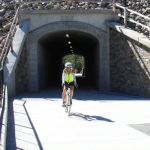
mousehole·       Truckee’s Mousehole pedestrian tunnel is open.

·       Jobe Sports will be in Incline Village at Hidden Beach with free standup paddleboard demos from noon-2pm on Aug. 12.

·       Tahoe Rim Trail Association is offering an introductory backpacking course Aug. 20-21. Hike 5 miles from Carson Pass to Showers Lake, spend the night, and learn hands-on backpacking techniques. Cost is $65 for members, $85 for others. Email maggieb@tahoerimtrail.org for more info.

·       Live Violence Free’s Sunset Gala is Oct. 23 from 5-8pm at Edgewood in Stateline. Tickets are available online.

·       Jenna Prescott is now director of mountain operations at Sugar Bowl.


Placer saving big with being energy efficient

Through a comprehensive effort to reduce energy use across its facilities Placer County has saved $1 million a year since 2008.

Without energy-saving efforts, the county’s annual energy costs would be about $1 million higher than current levels. Despite significant cost increases for energy in the last eight years, the county’s annual costs have seen an annual decrease of $160,000.

Initially, the county assessed the efficiency of energy systems and controls to understand how energy was being used and how much was being used. Facilities conducted cost-benefit analyses on building systems to determine if replacement or upgrades would cost less money over time.

Equipment and controls were upgrade, funded in part by grants and low-interest loans.

The Animal Services Center, when opened this year, will be the most energy efficient Placer County building ever constructed. The facility is a LEED gold building.

— Lake Tahoe News staff report


Hwy. 89 closures on South Shore coming in Sept.

Highway 89 near South Lake Tahoe from just south of the Cascade Creek Bridge to Bayview Campground and Inspiration Vista Point will be closed at various times in September.

The full roadway closure is scheduled starting Sept. 12 at 4am and ending Sept. 16 at 4pm,  and then again from Sept. 19 at 4am through Sept. 23 at 4pm.

During the closure traffic will be allowed to travel through the work zone between 4pm and 4am Tuesday-Friday. There will be no closure during the weekend from 4pm Friday to 4am Monday.

The work being done by Caltrans is part of the $13 million Emerald Bay water quality improvement project. The closure is for one portion of the project’s cold planing and hot mix asphalt paving work located on a ridge with steep slopes on either side of the roadway immediately adjacent to paved surfacing with steep mountainous terrain and tight switchbacks.