Fantasy sports operators seek return to Nev.

By Richard N. Velotta, Las Vegas Review-Journal

FanDuel and DraftKings, the largest daily fantasy sports operators in the country, are angling to return to the Nevada market and a representative will make a presentation to the Nevada Gaming Policy Committee next week.

Scott Ward, a public policy attorney with the Washington-based Orrick law firm, is expected to address the committee Tuesday on proposed legislation establishing a framework for regulating daily fantasy sports in the state.

FanDuel and DraftKings abandoned the Nevada market in October when regulators and Attorney General Adam Laxalt issued an opinion that daily fantasy sports is a form of gambling and that game operators are required to be licensed.

Read the whole story


Nev. cops’ agency against recreational pot law

The Nevada Sheriffs’ and Chiefs’ Association this week came out against the November ballot measure that would legalize recreational marijuana.

“Our association members have a particular concern about the growing edibles market of marijuana-infused products such as gummy bears, candy bars, and sodas; products with specific appeal to children that would become legal under this initiative,” Robert Roshak, executive director of the association, said in a statement.

Question 2 on the Nov. 8 ballot asks Nevadans to legal pot beyond medicinal uses.

“A second major concern to our members is the near-certain increase in impaired drivers and fatal car crashes,” Roshak said.

— Lake Tahoe News staff report


Eldorado changes wood permit rules

Woodcutting permits on the Eldorado National Forest have been changed to allow larger standing dead conifer trees to be cut for firewood.

This will allow for removal of potentially dangerous roadside hazard trees.

Forest Service permits are available for harvesting a variety of forest products for personal use including firewood, cones, decorative forest greens, boughs, and mushrooms.

The new fuelwood permits on the Eldorado National Forest allow removal of standing dead softwood trees such as pine, fir, and cedar up to 20 inches in diameter at eye level which is an increase from the previous 10 inch diameter limit. The size limit for dead standing hardwood trees such as oak is still 10 inches in diameter at eye level. There is no diameter limit in the fuelwood permit for dead trees that have already fallen to the ground, either softwood or hardwood species.

Woodcutting permits can be purchased year round, however the wet season closure of native surface roads will limit access when in effect. There is also no cutting of standing dead trees from Dec. 1-Marh 31 to prevent accidental cutting of live deciduous trees which may look dead when they lose their leaves.

Any dead tree that has already fallen to the ground may be cut year round with a permit provided that legal access is possible. All fuelwood permits expire on Dec. 31 of the year purchased.

For more info, call 530.295.5699.


STHS grad training to be Navy pilot

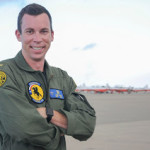
South Tahoe High School graduate Kyle Hauss is in the process of becoming a naval pilot.

Ensign Kyle Hauss is a student pilot with the Rangers Training Squadron (VT-28) based in Corpus Christi, Texas.

Kyle Hauss

Kyle Hauss

“Being a pilot is something that is like nothing else,” the 2007 grad said in a statement. “I enjoy being able to experience things that most others don’t get to and it is a thrill like no other, it is somewhat addictive.”

The T-6B Texan is a training aircraft that is powered by a 1,100 shaft horsepower, free-turbine, turboprop single-engine, four-bladed propeller, with a cruising speed of 310 mph.

Students must complete four phases of flight training in order to graduate, including aviation pre-flight indoctrination, primary flight training and advanced flight training. After successfully completing the rigorous program, naval aviators earn their wings of gold.

After graduation, pilots continue their training to learn how to fly a specific aircraft, such as the Navy’s F/A-18 Hornet strike fighter jet, the P-8 Poseidon maritime patrol aircraft or the SH-60 Seahawk helicopter. They are later assigned to a ship or land-based squadron.


Silver lining of Vail’s bid to take over skiing

By Devon O’Neil, Outside

When Vail Resorts announced this month its plan to buy Whistler Blackcomb, the Canadian ski resort, you could almost hear the sound of 10 million jaws dropping. It wasn’t Coke buying Pepsi, but to skiers and snowboarders and anyone who follows the balance of snowsports power, it was close.

For years, the only North American resort that has attracted more skier visits than Vail Mountain has been Whistler Blackcomb. Vail’s 5,289 skiable acres sounds like a lot. In fact, until last year’s merging of two other ski areas Vail Resorts recently bought, Park City and Canyons in Utah, it was by far the most in America. But Vail’s size is a mere 65 percent of Whistler Blackcomb’s 8,171 skiable acres.

A healthy ski industry is good for the towns and regions that host it, good for the people who work in it, and, most importantly, good for everyone who hopes their great-grandchildren get to enjoy this most fulfilling pastime of sliding downhill on snow.

Read the whole story


South Shore-Carson City bus route threatened

People relying on public transportation to get between the South Shore and Carson City may be out of luck starting Oct. 1.

The Tahoe Transportation District, which operates the BlueGo bus system, is losing funding for the 5-year-old route as of Sept. 30. It is not eligible for federal funding because Tahoe is no longer designated a rural area when it comes to transportation dollars.

The Stateline-based TTD lobbied hard to get the basin to be considered an urban area with the goal of being able to obtain more transportation dollars. Losing route 21x, which has 25,000 rides a year, is one of the side effects of that change.

The transportation agency is looking for other ways to pay for the route so there is not an interruption in what is mostly a commuter service.

— Lake Tahoe News staff report


Snippets about Lake Tahoe

·       The FIS Ski World Cup will return to Squaw Valley March 9-12. Tickets go on sale Aug. 23 at 10am.

·       Molly’s Revenge, an acoustic Celtic band known for its unique and infectious enthusiasm, will be at the Boathouse Theater on the South Shore on Aug. 24 at 7:30pm. For tickets, go online.

·       Patricia Charles-Heathers is now director of the Health and Human Services Agency for El Dorado County.

·       Author and comedienne Kat Simmons will give a free talk Aug. 28 at 10 about her book “Kat’s Daily Cups” at the Dangberg Home Ranch Historic Park in Minden.

·       Organizers of the Oct. 1 Downtown Truckee Wine, Walk & Shop are looking for volunteers. Volunteer for a three-hour shift and receive a free ticket to join in the merriment during the remaining half of the event. For more information, email truckeewinewalk@gmail.com.


Squaw’s McKinney set the pace for U.S. skiers

By Sam Taggart, Powder

In the 1980s, Tamara McKinney skied fast down icy race courses across the globe, setting records and accumulating podium appearances in every event possible on the international circuit. She was the first American woman to win the overall World Cup title, and many of her records held strong until Lindsey Vonn began racing years later.

Today, McKinney channels her competitive and friendly spirit selling luxury real estate in her adopted hometown, Squaw Valley. McKinney, the youngest of eight siblings, was born in Lexington, Ky., but moved west when she was just a toddler, and spent most of childhood at her family’s home near Lake Tahoe. McKinney’s parents were steeplechase jockeys who balanced a long-distance marriage. At one point, her father, Rigan, was the fastest jockey in the country, and a handful of her siblings also held positions on the U.S. Ski Team—including her brother, speed skier Steve McKinney—so, it’s clear, racing is in her blood.

Powder sat down with McKinney to find out which lessons she learned as a ski racer still resonate, the importance of giving back to younger generations, and why “you’re never too cool to be nice.”

Read the whole story


Opinion: Importance of Tahoe Summit grows

By Joanne Marchetta

Lake Tahoe was at a crossroads in 1997. The lake’s famous water clarity, once measuring 100 feet, was declining year after year because of stormwater pollution from roads and developed areas and erosion from streams damaged by logging and cattle grazing.

Joanne Marchetta

Joanne Marchetta

Tahoe’s forests, clear cut during the Comstock era, had grown back unnaturally thick with hazardous fuels and stands of similarly aged trees posing extreme wildfire risk. Communities were struggling with blighted buildings, outdated infrastructure, and limited private investment. And there was no place for bicycles or pedestrians in our towns.

Our region had regulations to protect the lake from new development. But it had no comprehensive restoration program to correct mistakes of the past that were continuing to harm the lake.

Former President Bill Clinton and Vice President Al Gore knew Tahoe was a special place and wanted to help fix that situation at the first-ever Tahoe Summit in 1997. With their lead, we united more than 100 federal, state, local, nonprofit, and private sector partners in a shared mission to conserve and restore Lake Tahoe through the environmental improvement program.

Since then, EIP partners have prioritized and completed nearly 500 projects to correct the landscape-level environmental problems Tahoe faces.

Projects have restored Tahoe’s streams, marshes, and wetlands; built transit facilities and 150 miles of bike and pedestrian routes; upgraded 729 miles of roadways to reduce stormwater pollution; protected our lake from aquatic invasive species; opened 2,770 feet of shoreline for public access; built recreation facilities; and cleared hazardous fuels from tens of thousands of acres of forest around our communities.

We have accomplished far more working together through the EIP than we ever could have done working alone. And today, those yearly declines in Tahoe’s famous water clarity have halted and are starting to reverse because two decades ago we made the right decisions and right commitments to work together to conserve and restore our unique mountain lake.

Sen. Harry Reid, D-Nev., organized that first presidential summit in 1997, putting a spotlight on Lake Tahoe and the importance of its conservation and restoration as a national treasure. Reid, who has done so much for the Tahoe region and is leaving office at the end of this year, is also organizing and hosting the 20th annual Tahoe Summit this month. He will be joined by President Obama, who plans to talk about our nation confronting climate change.

Heading into this summit, we must remember that Tahoe’s environment is at another important crossroads. Our climate is changing. The State of the Lake report for 2015 found the warmest air and water temperatures ever recorded at Tahoe, and a greater share of our precipitation falling as rain than ever before.

Climate change will pose unprecedented challenges for our lake and forests and mountains, and for our recreation-based economy that depends upon their health. Less snowpack and water storage, escalating tree mortality, a warming lake and environment, and population growth in major metropolitan areas all around Tahoe are just a few of the pressures we will need to confront. Climate change will only amplify the importance of us working together to meet new challenges for Tahoe and beyond in years to come.

We must continue our partnerships to implement the EIP to restore Tahoe’s water clarity and protect our forests from the drought and insects ravaging other parts of the Sierra Nevada. We must improve our transit services and bike and pedestrian trails, and improve our permitting processes to accelerate important redevelopment projects in our town centers that will improve our communities, our quality of life, and how we interact with our environment.

TRPA is committed to leading and helping in all of these important endeavors. Fortunately, the framework for collaboration and success is already in place, and every day we reach out to grow added partnerships for the benefit of Lake Tahoe. We have accomplished many things over the past 20 years and have much to be proud of. But our work is not done.

Tahoe is at an important new juncture as we head into another presidential summit. By staying committed to working together we can meet the challenges of the 21st century, make sure we face change with courage, and continue to restore and conserve this beautiful lake and forest for future generations to treasure.

Joanne Marchetta is executive director of the Tahoe Regional Planning Agency.


For millennials, Clinton vs. Trump choice ‘feels like a joke’

By Philip Rucker, Washington Post

FORT COLLINS, Colo. — Jo Tongue doesn’t have much time for politics, but the Hillary and Trump show is hard to tune out. And even harder to take. To this 31-year-old mother of two, with a third on the way, the presidency should be an honorable office, but instead she feels “bummed that we’re at a place where it all feels like a joke.”


At the Panetta Institute for Public Policy in California, the summer interns are up on the issues. But Dominic Cicerone has a similar sense of foreboding. For him, the big issue is his own safety — he was afraid to go to the July 4 fireworks at Fisherman’s Wharf because the Islamic State had released a video claiming San Francisco as a target — and neither candidate is easing his concerns.

Polling suggests the millennial generation will act much the same this November as it did four and eight years ago — by voting heavily for the Democratic nominee, though with a considerable share supporting a third-party candidate.

But in interviews this past week with more than 70 young voters in nine states from diverse backgrounds, lifestyles and careers, it is clear their mood is decidedly different from previous elections. Despite their varied lives, most of those interviewed shared a disgust with both Hillary Clinton and Donald Trump so intense that it is pushing many beyond disillusionment and toward apathy.

Read the whole story