Calif. firefighters stretched thin as blazes sweep state

By Don Thompson, AP

California’s state fire department is stretched thin just as the bone-dry state enters the peak of its wildfire season, with vacancy rates exceeding 15 percent for some firefighters and supervisors. The vacancy rate is more than 10 percent for some fire engine drivers, according to statistics provided to the Associated Press.

A five-year drought and changing weather patterns have transformed what once was a largely summertime job into an intense year-round firefight, said CalFire spokeswoman Janet Upton.

“It’s not the old days where we were a seasonal department with a season that lasted a few months,” she said. “It’s an increasingly challenging job, no thanks to Mother Nature and climate change.”

The shortage means that the state firefighting department is forced during weather conditions fanning large blazes to keep firefighters on duty for long hours as they do backbreaking, dangerous work trying to put out massive wildfires that have become bigger and more frequent in recent years.

Nearly 25 percent of departing employees over the last two years have told officials they quit for better-paying jobs with other firefighting agencies, according to the statistics provided to the AP by CalFire.

The union that represents the state firefighters who fight fires outside urban and suburban areas blamed low pay, as more than 100 members, families and representatives of other unions protested in Sacramento on Monday.

Union and department officials said California has enough state firefighters to keep the public safe — at the expense of firefighting men and women who frequently work for weeks without days off without seeing their families.

“We’re short-staffed, we’re stretched thin, we’re in these epidemic fire conditions,” said Patrick Walker, 40, a CalFire captain in San Diego County.

He worked 47 straight days fighting one large fire last year and said he worked three weeks with no break this year, most of it fighting a Monterey County fire that has burned more than 134 square miles.

“With the pay inequities, the shifts we work and the turnover, we’re running less and less people,” Walker said. “There may be a concern where the public is at risk due to the long hours.”

Union members are seeking a mid-contract pay raise that would give compensation above the $60,000 a typical firefighter is paid each year in salary and overtime. Fire captains typically make more than $85,000 and the salaries of battalion chiefs exceed $98,000.

A 2014 study by the state’s human resources department found state firefighters receive one-third less in pay and benefits, on average, than their counterparts at fire departments for 18 California cities and two counties surveyed.

The state firefighting department is responsible for preventing and fighting wildfires over terrain that covers about a third of California — more than 48,000 square miles spanning the Sierra Nevada foothills and the coastal mountain ranges from Santa Barbara to the Oregon border.

The federal government primarily handles firefighting at higher elevations, while local agencies are responsible for urban and suburban firefighting.

The department’s survey of departing employees supports the union’s complaint that there is a sizable exodus for better-paying jobs, although state officials could not immediately say if vacancy or departure rates were higher than in previous years.

State firefighter union president Mike Lopez said firefighters received a 4 percent increase last year after the minimum wage paid to entry-level firefighters rose to $10 an hour.

But the union wants the state to shorten the standard 72-hour work week that includes overtime and increase pay to bring state firefighters closer to the 56-hour standard workweek for urban firefighters.

Negotiations for higher state firefighter pay broke down about four months ago after Gov. Jerry Brown’s administration made a last offer that the union rejected as unacceptable. Lopez declined to reveal the offer, which he said was not disclosed to the union’s membership.

Administration spokesman Brian Ferguson called firefighters “everyday heroes,” but added in a statement that “the state must balance the needs of many different bargaining units and the overall state budget.”

State firefighters’ duties have changed as they try to protect an increasing number of rural homes built in the midst of tinder-dry brush and trees, a problem that continues to grow, said UC Riverside Professor Richard Minnich, who studies fire ecology.

“Maybe people are leaving because it’s too damn dangerous,” he said. “In urban firefighting, not only are the hours more reasonable but they’re also looking mostly at single structure events.”

Snowpack ‘double whammy’ may hit streams

By Benjamin Spillman, Reno Gazette-Journal

Changing snowmelt cycles could be more damaging to mountain streams and reservoirs in the Western U.S. than previously thought, according to recently published research.

That’s according to research that shows slow-melting snowpack reduces the amount of water that makes it into streams and reservoirs.

The results have ramifications for everyone from water managers to anglers to kayakers, essentially anyone who values mountain streams.

What’s interesting about the research is that it shows a slower snowmelt results in less water making it into streams and reservoirs. That’s counterintuitive for many who assume, under a climate change scenario, faster snowmelt would be a bigger problem.

Read the whole story


Fred Graham — 1936-2016

Fred Graham

Fred Graham

Frederick Artman Graham died July 27, 2016. He was 79.

Fred was born Aug. 21, 1936, in Butler, Pa., to Robert Humphries Graham II and Jennie Marie Schottenheimer.

At 15, he met and fell in love with Shirley Ann Ramelli. Their story began with him walking past her home on his way from work at Friedman’s Grocery Store. Their early years included flirting on the stoop outside Shirley’s home, a nationwide separation, a passionate reunion, an elopement to Maryland in 1955 and taking up residence in the swept-up and wallpapered chicken coop of Fred’s older sister until they got on their feet. In the decades that followed, they took well-calculated risks, made great choices and enjoyed some good luck. The couple had a long and trusting companionship, enriched by four children, 11 grandchildren, and nine great-grandchildren. Fred and Shirley lived in Pennsylvania, California, Nevada, Oregon and Washington throughout their 61 years of marriage.

Fred was a natural entrepreneur, making savvy business deals even as a young boy. As he matured, he was driven by his work ethic, strong values and desire to provide a good life for his family. Fred loved to drive and explore new places. When he was 25, he loaded his 1959 Chevy with his young family and took off from western Pennsylvania to southern California in search of new opportunities. More road trips took the family along countless blue highways and through many mountain passes.

On one such occasion Fred fell in love, once again. This time it was with the blue sky and crystal waters of Lake Tahoe, and he set his sights on relocating his family to the region. He reached that goal in 1977 by becoming the president and CEO of Tahoe Valley Electric Supply. He soon hired his wife and son to help him run the business. Fred was a successful and well-respected businessman and employer who led the corporation with both integrity and candor until his retirement in 2002.

In recent years, Fred continued to enjoy road tripping. Boating and fishing were also favorite pastimes and earned him the nickname “Fred of the Lake”. Always practical, Fred was “green” long before it was stylish as he delighted in acquiring, reusing and repurposing cast away or pre-owned items at great bargain prices. He forever marveled at the beauty of natural landscapes, revered all wildlife, and had a deep appreciation for the perfectly grilled steak with a thick slice of sourdough bread and a chunk of cold butter.

Fred leaves behind his wife, Shirley; their children Debby (Darell), Diane, Dan (Debbie) and Denise (Steve); grandchildren Dan (Kim), David, Danielle (Brian), Kari (Jackie), Casey, Jessica, Bryan (Stephanie), Darren, Amanda, Jason, and Graham; great-grandchildren Danica, Dylan, Damion, Trey, Dominic, Faith, Ryleigh, Braylon, and Aiden; brother Bob; and numerous nieces, nephews, grandnieces and grandnephews. Fred was preceded in death by his sister, Theola (aka “Toady”), and brother Jim.

There was a private service. The family declines flowers and donations, but is grateful for condolences. Cards and notes can be sent to reshirleygraham@gmail.com or Graham Family, c/o Chateau at Valley Center, 4450 Davis Ave. S, Renton, WA 98055.


Snippets about Lake Tahoe

·       The annual Lake Tahoe Summit start time on Aug. 31 has changed to 1:30pm, with access to Harveys starting at 11:30am.

·       Kenny Neal will play at the Squaw Valley Village on Sept. 6 at 6pm.

·       Tahoe Regional Planning Agency is having two workshops about the shoreline ordinances. The first is Sept. 21 at North Tahoe Events Center in Kings Beach, the second is at the TRPA offices in Stateline on Nov. 3. Both are from 6-8pm.

·       Whiskey Dicks in South Lake Tahoe is hosting an evening of Outlaw Country with the Supersuckers, plus Cash Only Band on Sept. 2. Doors open at 9pm. Must be 21. Advance tickets are $15 online.


Calif. Supreme Court lets teacher tenure ruling stand

By Howard Blume and Joy Resmovits, Los Angeles Times

Monday was the end of the line for a landmark California case challenging tenure and other traditional job protections for teachers — and the teachers won.

The outcome left some union opponents looking for a different battlefield in the ongoing wars over public education, while others said they should try the courts again.

The case, Vergara vs. California, was closely watched across the country as a test of whether courts would invalidate employment rights of teachers on the argument that they violate the rights of students.

The assault on these protections is part of a broader approach to reforming education that would make schools more like the private sector, which relies on competition, measurable results and performance incentives.

Read the whole story


Truckee commemorating 9/11 15 years later

Truckee Lutheran Presbyterian Church is hosting a communitywide Sept. 11 Commemoration & Thanksgiving event on Sept. 11 at 11:30am at Truckee River Regional Park.

TLPC’s leadership will host an opportunity for the community to come together to remember and honor those who died and those who served 15 years ago. As a part of the remembrance, TLPC will honor today’s first responders.

Speakers will include Truckee council members, police officers, firefighters and school district personnel. Boy Scout Troop 267 will present the colors and a group from the Truckee Tahoe Community Chorus will lead singing.


Road Beat: Prius 4 mpg off the charts

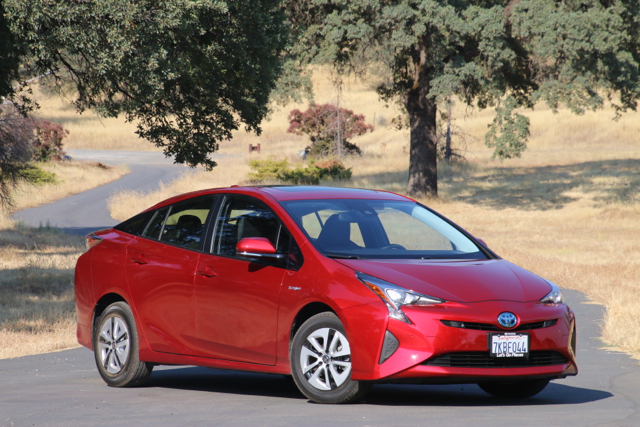
The latest Prius improves upon previous models. Photos/Larry Weitzman

The latest Prius improves upon previous models. Photos/Larry Weitzman

By Larry Weitzman

First introduced to the United States in 1999 and now in a new fourth generation, the first hybrid and still leading hybrid, is the Toyota Prius. Except for the front end, the new Prius is almost unrecognizable from the 2015 third generation model. Now made in several distinct models staring with the lowest priced Prius Two ($24,200), they share similar bodies and sheet metal.

My test vehicle is the popular Prius Four, which is sized comparable to the last generation Prius. Its dimensions all reflect an external compact size with a length, width and height of 179, 69 and 58 inches. Wheelbase is a long 106 inches. There is not only 93 cubic feet in the passenger cabin, but 27 cubic feet in the cargo hold totaling 120 cubic feet or the minimum size for a large car. But most large cars have well over 100 cubic feet in the cabin area, but let’s call it mid-size room with a small CUV trunk.

While the front end is clearly Prius, as its hatchback character lines continue to the rear end and that is where things get interesting when the lines are used to create some pretty wild taillights giving the new Prius some pizazz.

Specifications Engine 1.8L DOHC, 16 valve, Atkinson cycle inline four 95 hp @ 5,200 rpm 105 lb.-ft. of torque @ 3,600 rpm Electric Motor  Permanent magnet synchronous motor 71 hp, 120 lb.-ft. of torque (no rpm given) probably 0-1,500 rpm Combined system 121 hp Battery Lithium-ion Capacity 3.6 ampere hour, 600 volts Transmission Electronically Controlled CVT Configuration Transverse front engine/front wheel drive Dimensions Wheelbase 106.3 inches Length 178.7 inches Width 69.3 inches Height 58.1 inches Track (f/r) 60.2/60.6 inches Ground clearance 5.1 inches  Weight 3,050 pounds Cargo capacity 27.4 cubic feet Passenger volume 93.1 cubic feet Fuel tank 11.3 gallons Turning circle 33.5 feet Wheels (std/opt) 15X6.5/17X7 inch alloys Tires (std/opt) 195/65X15/215/45X17 Co-efficient of drag 0.24 Performance 0-60 mph 9.91 seconds 50-70 mph 5.59 seconds 50-70 uphill 9.95 seconds Top speed Not given but with a 0.24 CD, well over 100 mph Fuel economy EPA rated at 54/50/52 mpg city/highway/combined. Expect 50-54 mpg in rural country driving and 55 mpg on the highway at legal speeds.

Specifications
Engine
1.8L DOHC, 16 valve, Atkinson cycle inline four 95 hp @ 5,200 rpm 105 lb.-ft. of torque @ 3,600 rpm
Electric Motor
Permanent magnet synchronous motor 71 hp, 120 lb.-ft. of torque (no rpm given) probably 0-1,500 rpm
Combined system 121 hp
Battery
Lithium-ion Capacity 3.6 ampere hour, 600 volts
Transmission
Electronically Controlled CVT
Configuration
Transverse front engine/front wheel drive
Dimensions
Wheelbase 106.3 inches
Length 178.7 inches
Width 69.3 inches
Height 58.1 inches
Track (f/r) 60.2/60.6 inches
Ground clearance 5.1 inches
Weight 3,050 pounds
Cargo capacity 27.4 cubic feet
Passenger volume 93.1 cubic feet
Fuel tank 11.3 gallons
Turning circle 33.5 feet
Wheels (std/opt) 15X6.5/17X7 inch alloys
Tires (std/opt) 195/65X15/215/45X17
Co-efficient of drag 0.24
Performance
0-60 mph 9.91 seconds
50-70 mph 5.59 seconds
50-70 uphill 9.95 seconds
Top speed Not given but with a 0.24 CD, well over 100 mph
Fuel economy EPA rated at 54/50/52 mpg city/highway/combined. Expect 50-54 mpg in rural country driving and 55 mpg on the highway at legal speeds.

But Prius is all about fuel economy and this new one, as well all the new Priuses, produce phenomenal EPA numbers. This new Four is rated at 54/50/52 mpg city/highway/combined. The Prius Two Eco numbers are an even more amazing at 58/53/56 mpg. In the past when I tested Prius hybrids they rarely achieved their EPA fuel economy numbers. Not any more, this new model achieves or beats some of the EP A numbers by about 10 percent.

In actual highway tests at 70 mph in two-way runs this Prius averaged 55.4 mpg. In overall driving during a 100-mile run including 30 percent highway, over two minutes at full throttle testing and rural two lane 55 mph roads with about 10 percent stop and go, the Prius averaged 54 mpg. These are by far the best fuel economy numbers ever recorded by the Road Beat in car testing, even besting most of the motorcycles I have tested except for my test of a super scooter, the Suzuki Burgman 400 which averaged about 62 mpg, upon which got you soaked when driving in the rain. Most if not all of my motorcycle testing generally averaged about 45-50 mpg for large sport and cruiser type bikes. Even my very economical 1000 cc Ducati ST4S sport tourer, which had 108 rear wheel hp, had a best day of about 52 mpg.

Fuel mileage of the Prius was beyond amazing during a 140-mile roundtrip to South Lake Tahoe and back to Placerville. The Prius averaged to Echo Summit (a 6,000-foot climb) 37.8 mpg and overall to the lake shore 42.6 mpg. The return trip averaged an unbelievable 78.5 mpg and an average of 60.6 mpg. Imagine a fuel cost to Lake Tahoe and back on $5. If there is a negative, it’s the small fuel tank of 11.3 gallons. But on a highway trip, your own “tank” will be full long before the fuel tank gets close to fumes.

It is mind boggling that a car could achieve this kind of fuel economy. So how did they do it? It’s powered by a 1.8L DOHC, 16 valve Atkinson cycle, super high compression (13:1) inline four-cylinder engine that cranks out a modest 95 hp at a low 5,200 rpm and 105 pounds of twist also at an even lower 3,600 rpm. In addition, there is a 71 hp electric motor also driving the front wheels with a combined total for both engine and motor of 121 hp. In the Prius Four there is a new 600V Lithium-ion battery pack to power the electric motor which is 35 pounds lighter than the previous generation’s nickel-metal-hydride unit (an NMH battery is still used in the Prius Two). The Prius Four trips the scales at 3,050 pounds which is actually 25 pounds lighter than the model Two. The Two Eco is the lightest at 3,010 pounds.

If you are wondering why the combined hp is not 166 hp, it is due to the fact of a battery output that is limited to about 26 hp. The tightly controlled Prius batteries have shown to be reliable well beyond their warranty and have been cycled over 150,000 times without any significant loss of efficiency.

Performance is about averaged for compact cars with a 0-60 time of 9.91. Passing times from 50-70 mph averaged 5.59 seconds on level ground and 9.95 seconds up a steep grade (6-7 percent). Tip in was strong but when passing on Highway 50 at elevations of 5,000-7,000 feet the go-pedal got a little soft and you had to plan your passes, but otherwise the Prius Four will meet 98 percent of most driver’s performance needs and wants.

Suspension is state of the art double wish bone in all four corners with stabilizer bars at both ends. Standard wheels and tires are 6.5X15 inch shod with 195/65X15 inch rubber, not exactly track ready. But there is an option (Prius Three and Four Touring) for 17X7 inch wheels and more handling friendly 215/45X17 inch shoes. While the wheels are alloys, they are covered with drag reducing hubcaps. Now that’s an Interesting setup, anything (in this case hubcaps) for fuel economy.

Comfort is another selling point for the Prius.

Comfort is another selling point for the Prius.

Normal handling is good and while the 15 inch set up might seem lacking, the Prius has good grip and can be pushed in the twisties. Steering is a bit slow and numb and it requires your attention during aggressive driving, but its prowess will surprise you. Turning circle is a tight 33.5 feet and parking lot maneuvering is excellent.

While ride quality is good perhaps near the best in the compact world, on coarser roads there is tire noise, perhaps due to the high fuel economy tires. On most roads the Prius is quiet and smooth, especially when it runs on pure electric.

Safety systems include four wheel discs with all the braking acronyms including Smart-Stop Technology. In addition, blind spot monitoring and rear cross traffic alert are also standard. Lane departure alert with steering assist and an upgraded radar cruise and more come with the Advanced Technology Packaged ($1,935). I am not a fan of the radar cruise system. Special mention needs to be made for the Prius headlights. They are fantastic especially on low beams.

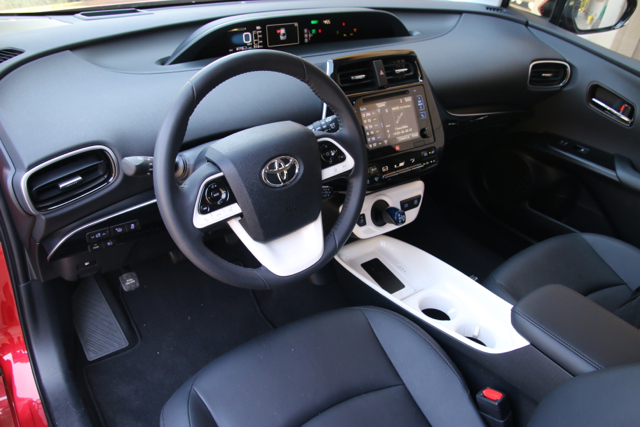
Inside is comfortable seating for five done in Toyota’s SofTex which is their excellent version of synthetic leather. The big rub is the centered instrument panel. It is designed for a world market so left and right hand drive cars are essentially the same. I found it difficult to read. My tester with that Tech Pack had a helpful heads-up display. While the center stack (radio, Nav and A/C system) is easy to use, to access IP info and setting up the IP info center is not. That needs a fix or a simple explanation in the user manual.

Pricing starts at $24,200 for the Prius Two. A great value with the higher aforementioned EPA economy numbers. The Four stickers at $28,650. My tester had the only two option packages, the Premium Convenience Package ($1,705) and the Advanced Technology ($1,935). My tester also had an extra cost red paint color called Hypersonic Red. It definitely did not make the Prius quicker or faster, but it will lighten your wallet by $395. The Four Season floor mats will ding you for $364. The total bite with $835 for the boat from Aichi, Japan is $33,884. Fabulous fuel mileage will cost you a real premium. If you are an environmentalist, it will make you feel virtuous. If you are a penny-pinching accountant, buy the Prius Two or a base Four, the standard equipment is long and quite complete including a power driver’s seat with power lumbar.

Larry Weitzman has been into cars since he was 5 years old. At 8 he could recite from memory the hp of every car made in the U.S. He has put in thousands of laps on racetracks all over the Western United States.


Nevada has money for Tahoe projects

The Nevada Division of State Lands is offering grants for projects that will preserve and restore the natural environment of the Lake Tahoe Basin.

Approximately $350,000 generated from the purchase of Nevada Lake Tahoe License Plates will be available. Proposals that include the implementation of construction projects listed on the Tahoe Regional Planning Agency’s five-year environmental improvement program list will be prioritized in this funding cycle.

Since the first license plate was purchased in 1998, the Tahoe License Plate Program has generated $7.6 million and funded 141 projects.

Applications for 2017 grants are due by Sept. 19 at 5pm. Applications are online. For more information, call 775.684.2725.


Basecamp TC blends indoors and outdoors

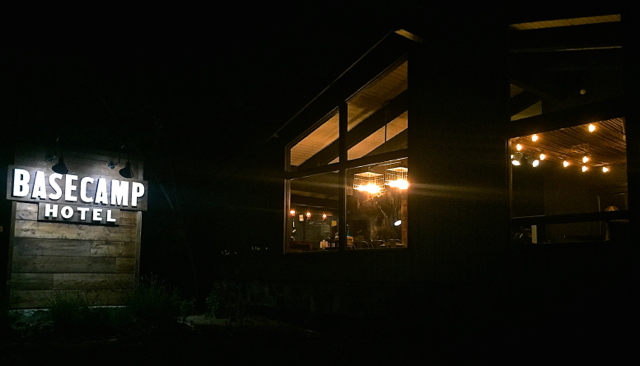
Basecamp has hotels in Tahoe City, South Lake Tahoe and Boulder. Photo/Kathryn Reed

Basecamp has hotels in Tahoe City, South Lake Tahoe and Boulder. Photo/Kathryn Reed

By Kathryn Reed

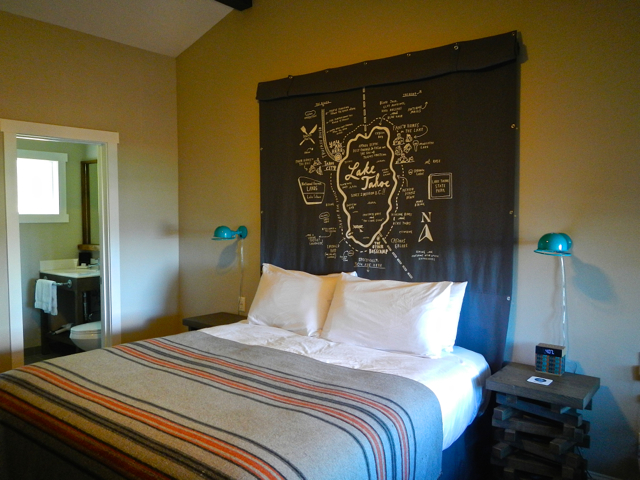
TAHOE CITY – Rooms are simple, efficient, clean and have what you need. It’s a bit minimalist without lacking anything.

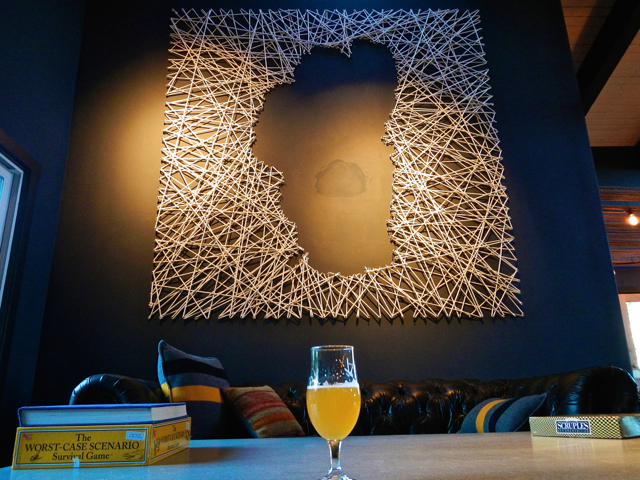
Refreshing, unique beers are on tap – perfect after a day exploring Lake Tahoe. Sit inside on a couch or at one of the outside areas, even by a fire pit.

Basecamp Tahoe City, which opened in May, is attracting visitors from near and far and of all ages. It’s quieter and smaller than its sister hotel in South Lake Tahoe.

Basecamp Hotel Tahoe City is comfortable without frills. Photo/Kathryn Reed

Basecamp Hotel Tahoe City is comfortable without frills. Photo/Kathryn Reed

It’s hard to recognize this was once the Aviva Inn. The 24 rooms have been gutted – as well as the lobby and shared spaces. There are five room types, with a couple at the far end having limited views of Lake Tahoe. Rooms range from a spacious king to queen bunk to “great indoors family room”. The latter has a king bed, tent, faux fire pit and stars on the ceiling.

To call the whole hotel glamping with real walls would be selling it short. It feels a bit like camping mostly because of the décor. In the room is a mini Playmate cooler that the front desk will fill with ice. A larger metal cooler acts as a table between two directors chairs that give it a definite campy feel. A lantern on the desk adds to the motif. Other light fixtures are modern and a bit industrial.

It was nice not to have the standard photos of Tahoe in the room. The wall hanging above the bed had key attractions pointed with an outline of the lake in the center. Where Sand Harbor is it says “swim suits galore”, between here and Truckee says “people floating down the river w/beer”, while on the West Shore it says “fancy pants boats”.

The communal space is ideal for relaxing and having beer or wine they have available for purchase. Photo/Kathryn Reed

The communal space is ideal for relaxing and having a glass of beer or wine that the hotel sells. Photo/Kathryn Reed

There is a television and indoor plumbing – oh, and a ceiling fan, air conditioning and heat – so, it really is far from camping.

The open closet area has ample room for skis and boots.

The bathroom is small, but the point of being here isn’t about spending hours getting pretty. It’s about getting out of the room and playing.

General Manager Robbie Kalinowski was great about suggesting places to go for a dog walk – ones right from the hotel as well as a short drive. Another worker suggested part of the Tahoe Rim Trail in the morning. Hmmm, sleep in or hike? (The super comfy bed won.)

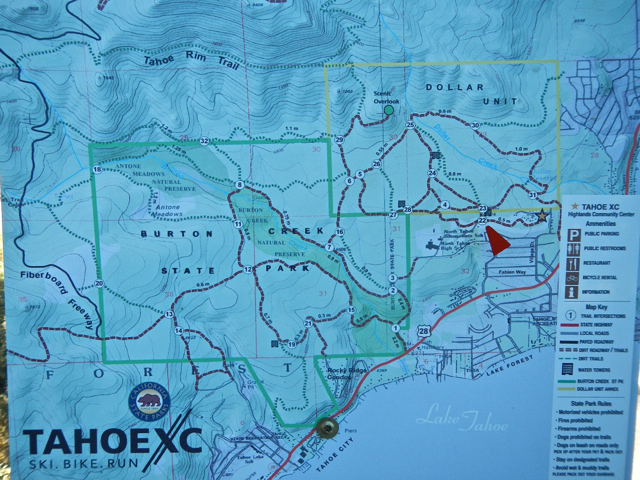
Kalinowski came around the corner to show me a few places on his laptop. I opted for TC Cross Country because I had never been there in any season. He emailed a link to it, which I then texted to myself. Technology is wonderful even for the outdoors.

Plenty of hiking and biking options at Tahoe XC when there isn't snow on the ground. Photo/Kathryn Reed

Plenty of hiking and biking options at Tahoe XC when there isn’t snow on the ground. Photo/Kathryn Reed

It was the perfect recommendation for AJ and me. Mostly it was mountain bikers who shared the trails with us. Signage is good for the most part, though we managed to zig when we should have zagged, which had us come out into a neighborhood. Obviously we figured out how to find the Jeep.

A nice feature for those with dogs were the multiple areas to take her out to do her business.

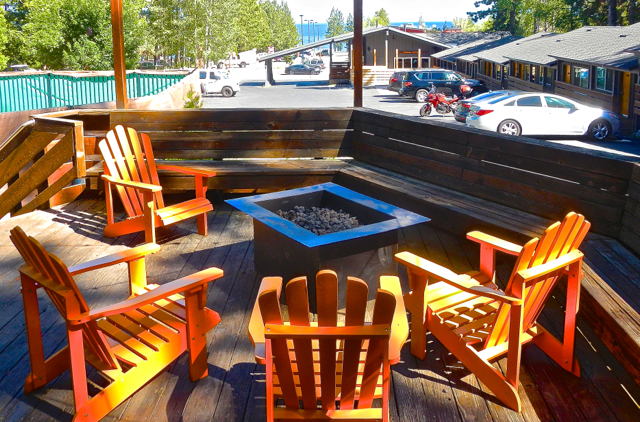
For people not wanting to spend all their time inside the hotel room, there are places to get away and still be on the property. The Sun Room is at the back of the property. It’s a quiet place to relax. Just outside of there are Adirondack chairs around a fire pit.

There’s another communal outdoor area off the lobby area. And the lobby is much more than that. It’s like a shared family room with big screen televisions and board games.

Basecamp Hotel has several areas to relax beyond one's room. Photo/Kathryn Reed

Basecamp Hotel has several areas to relax beyond one’s room. Photo/Kathryn Reed

Even though Basecamp is on the far east side of Tahoe City, it is still walking distance to so many things – like downtown (dining, shopping) and the lake (ample water sports).

The hotel’s recommendation to eat at Blue Agave was perfect. The food and service were wonderful. AJ would have been welcome outside, but I left her behind, opting to sit at the bar where a band was playing.

Breakfast is included in a night’s stay, consisting mostly of waffles, fruit and beverages. This is served in the lobby-main communal area.

While the old hotel had a swimming pool, Basecamp owners opted to conserve water. In its place will be a hot tub that should be open this winter.


Opinion: EDC caters to special interests

By Shiva Frentzen

There are not very many opportunities for the Board of Supervisors to easily add to the revenue
side of the balance sheet without adding additional expenditures. The BOS have made a major
commitment to obligate the residents of El Dorado County to a $2.6 million per year bond
payment for the next 40 years to build a much needed sheriff’s building so we can continue to
provide public safety to our residents.

Shiva Frentzen

Shiva Frentzen

The board has asked our chief administrative officer to work with the department heads and find “operational efficiencies” to pay for this annual $2.6 million commitment. We have nearly depleted our capital improvement project funds of $12 million to renovate our county buildings that have been neglected for years. Our roads are deteriorating while the road funds are diminishing and we are struggling with allocating General Fund dollars to them.

Public safety and roads were the top two priorities for our residents based on the survey that was conducted by the county last year. Needless to say, the unfunded liabilities for our retiree health benefits of $60 million are not even on our radar but will need to be dealt with in the not too distant future.

At our Aug. 16, Board of Supervisors meeting we had an agenda item to renew the Proposition
90 ordinance that expires on Sept. 30. Proposition 90 is a “local-option” law which provides
anyone over the age of 55 with relief from reassessment by allowing them to move from one
county to another without undergoing a change in their base property taxes, provided that the home that is purchased in the new county is of the same, or lower value. Prop. 90 has been approved by the BOS and been in place for the past six years while the housing market was down with a high inventory of homes on the market. El Dorado County is one of the 11 out of 58 counties in California that has adopted the Prop. 90 ordinance.

The report that was submitted by staff shows that El Dorado County has received $1.2 million less in property taxes in the past six years due to Prop. 90 incentives to these new homebuyers. The loss to the county General Fund is $300,000 and the other $900,000 is the lost revenue for the schools, special districts, fire districts and the two cities. So the county has forgone $1.2 million in revenue by incentivizing a small group to buy a home in El Dorado County. The argument for supporting the Prop. 90 extension is that these homebuyers have a higher purchasing power and spend more money, hence benefiting our county.

However, there is no solid data that this group of home buyers contributes more to our local economy than other homebuyers in our county. If these people in fact have higher purchasing power than other homebuyers, then a logical sense of fairness would dictate that they pay their fair share of taxes as younger people buying a similar home.

The BOS approved the extension of the Prop. 90 for another five years. Assuming that the number of homebuyers who take advantage of this program stays the same as in 2015-16, this policy will cause an additional $2 million in lost property taxes over the next five years. About half a million dollars is revenue lost to the El Dorado County General Fund to provide services to our residents.

The other $1.5 million revenue loss would impact schools, special districts, fire districts and the two cities. This is in addition to carrying the revenue loss of $1.2 million from the past six years of incentives.

El Dorado County still needs to provide the services required for these new residents, but the current residents would subsidize the new homebuyers. We all receive the same level of services and should pay our fair share. El Dorado County should put more emphasis on creating jobs and bringing businesses to our county so any incentives should be allocated to these efforts. El Dorado County should welcome every hom buyer to our county including young families who at times struggle to purchase a home and raise their children. It is unfair that a 30 year old person buying a home in El Dorado County will pay property taxes on the current full assessed value of that home, while his 55 year old neighbor can buy an identical home and have his property tax based on the value of a home he bought 30 years ago in another county. Two people purchasing identically priced homes on the same day, but one paying thousands of dollars more in property taxes each year for as long as they each own their homes.

We should also be thoughtful of other agencies in our county when making policy decisions. The struggling schools and fire districts can’t afford the loss of revenue and El Dorado County will see an increase in the number of requests from fire districts, cities and special districts to help fund their programs.

The Board of Supervisors should start saying no to some of the special interest groups instead of giving away the farm. Otherwise we put the residents of El Dorado County in a position to pay more taxes or receive inferior services from their county government. We need to get serious about balancing our budget with strong reserves for future years and not kick the can down the road.

Shiva Frentzen is the El Dorado County supervisor from District II.