Opinion: Citizen science is more than collecting data

By Jason Lloyd

The earthquake near Washington, D.C., five years ago in August 2011—the one that damaged the Washington Monument and the National Cathedral but had little other noticeable impact—caught me by surprise. Sitting in an office on the 12th floor of a building downtown, I thought it might have been an improbably large truck on the street below, until a co-worker suggested we probably ought to leave the building. We spent the rest of that sunny afternoon milling around with other office workers before calling it a day and heading to happy hour.

What I did not do, but really wish that I had, was enter a description of my experience into the U.S. Geological Survey’s crowdsourcing initiative, Did You Feel It? The system collects data from people who have felt tremors to determine the extent and intensity of earthquakes in near-real time. The submitted data are used in the USGS ShakeMaps, which help organizations like the Federal Emergency Management Agency prepare for and respond to earthquakes.

USGS’s Did You Feel It? initiative is a great example of one kind of citizen science—everyday people using their experiences or interests to participate in scientific projects. These research projects come from a startling variety of scientific disciplines. Bird lovers can participate in the Audubon Society’s annual Christmas bird count. History enthusiasts can scrutinize 19th-century whaling logbooks to better understand climate change. You could also use a virtual microscope to hunt for particles of interstellar dust retrieved by the Stardust spacecraft in 2006. If neuroscience is more your thing, you can help to map the brain by playing EyeWire, an online game designed by a lab at Princeton University.

Citizen contributions to projects like these go back at least as far as Thomas Jefferson’s plan to collect weather data from as many people as possible in order to produce “a reliable theory of weather and climate.” It’s the kind of citizen science that most everyone agrees is worthwhile—helpful to researchers and edifying for the public. In fact, a bipartisan bill making its way through Congress at the moment, the Crowdsourcing and Citizen Science Act of 2015, encourages collaboration between scientists and the public. The bill appeals to a range of political sensibilities because it encourages public engagement in science and broadens the scope of federally funded research without increasing budgets. (Citizen volunteers cost even less than postdocs it turns out.)

But citizens can do more for science than just collect data (as important as data collection is). By educating themselves in the research and infusing urgency into the process, citizen scientists can get involved in decisions about what gets researched, how research is conducted, and how results should be used. This pushes the bounds of citizen science in new and contentious ways.

Citizen participation in science-related decision making can mean advocating for testing, as residents in Flint, Mich., did when they realized that, despite their state Department of Environmental Quality’s claims, their water was contaminated with lead. It can mean loudly encouraging new research priorities, like AIDS activists did in the 1980s and some cancer patient advocates do today. Or it can mean funding the development of better air-quality samplers for use by communities near petrochemical facilities. Nonexperts can also contribute to decisions about consequential (and potentially controversial) technologies, such as gene-editing techniques and artificial intelligence, by voicing their politics, values, and concerns in emerging forms of structured deliberation.

As Darlene Cavalier, a citizen science pioneer who founded the SciStarter database, and researcher Eric Kennedy astutely point out in their new book on citizen science, the public’s involvement in these scientific issues is not intended to replace or refute expertise. (Disclosure: I work for Arizona State University’s Consortium for Science, Policy, & Outcomes, and we published Cavalier and Kennedy’s book.) Citizens complement traditional science policymaking by contributing perspectives that researchers and decision makers would not otherwise have access to.

The educational aspect runs both ways. Participation in citizen science in its many forms improves adult scientific literacy, an important task as scientific issues permeate public policy debates on everything from Zika research funding to genetically modified organisms. (This might also educate people on the limits of science and help diminish our habit of appealing to it to arbitrate disagreements over the nonscientific realms of policy, politics, and values.) Greater awareness of issues like lead contamination in municipal water supplies can benefit the research process, too. Under federal rules, for instance, city utilities must get volunteers to collect water samples for testing. In 2014, the Philadelphia water utility sent letters to more than 8,000 of its customers but managed to find only 134 volunteers. Demanding that our water supplies aren’t poisoning us means taking some responsibility for ensuring that it’s tested properly.

It’s also worth remembering that a lot of research in the United States is publicly funded, as Cavalier has emphasized: “American adults fund 50 percent of the basic science [through tax dollars], and we entrust people with issues that impact our lives, but we’re cut out of the conversation.” The federal government will spend nearly $150 billion dollars on research and development this year. Some measure of accountability to the people supplying that funding is necessary and appropriate.

Citizen scientists have different incentives than career scientists, which can affect the kind of research undertaken and how the results are used. Of course, scientists would presumably have chosen different career paths if they did not care a great deal about, for example, environmental quality and how it affects people. But the sample of murky water sitting on a lab bench looks a lot different than the murky water with which you’re making pasta for your kids. Because they’re human, the pressures of publishing, of finding funding, of making tenure, of discovering a marketable drug, or of keeping one’s boss in the environmental agency happy can all exert influence on scientists—and don’t always help align their research with the interests of everyday citizens.

This gets to an important final point about public involvement in science policy: Citizen participation improves the science. Ominous clouds have been building above many parts of the scientific establishment, aided by a steady updraft of retractions, fraudulent practices, reproducibility problems, conflicts of interest, conflicting results, and simple irrelevance. One of the reasons for this is that scientists are rarely accountable to anything outside their community. A citizenry that demands tangible results—such as effective cancer therapies and safe drinking water—can help to discipline research efforts toward finding solutions to pressing, real-world problems.

When dealing with the quality of our air, water, and food; searching for treatments for diseases we suffer from; or even understanding the enormous social implications of innovations stemming from cutting-edge science and technology, citizens’ voices need to be heard. This will require citizens like me to participate—rather than wandering off for a post-earthquake beer—and for scientists and policymakers to be more accepting of the public’s involvement in using the power of science to improve the world.

Jason Lloyd is a program manager for the Consortium for Science, Policy, & Outcomes at Arizona State University. This article was written for Future Tense, a Zócalo partner. Future Tense is a project of Arizona State University, New America and Slate.  



Number of insured swell in California

By Victoria Colliver, San Francisco Chronicle

More than 70 percent of California residents who were uninsured before the Affordable Care Act went into effect now have coverage, even though some worries about costs and access to medical care persist, according to a study released Thursday.

The study, the fourth in a series of surveys of Californians who did not have health insurance in 2013, found that 72 percent have since obtained coverage, either through their employer, the state exchange created by the federal health law or through Medi-Cal, the state’s Medicaid program for the poor. This number is slightly higher than the 68 percent reported last year, a gain that represents hundreds of thousands of newly insured Californians. The state had the largest number of uninsured in the country, with about 6 million residents lacking coverage in 2013.

The Kaiser Family Foundation, a nonprofit health policy research organization in Menlo Park, has been following more than 1,000 Californians who lacked health insurance in September 2013, before the exchange and the major reforms in the health care act went into effect, through the past three open enrollment periods, the latest of which ended Jan. 31.

Read the whole story


Neva Roberts, former SLT council member, dies

Neva Roberts, who served on the South Lake Tahoe City Council from 1982-90, died Aug. 26.

The 79-year-old was most recently living in Reno. She had health issues for several years.

Neva Roberts

Neva Roberts

Ms. Robert’s two terms on the council were significant because this is when redevelopment was just beginning. Her tenure was during the time the project at Ski Run Boulevard that is now Lake Tahoe Vacation Resort and the one near the state line that today is Lake Tahoe Resort Hotel were approved.

She became mayor in 1989, following Terry Trupp who was arrested on federal drug charges in what was known as Operation Deep Snow.

The Los Angeles Times on Sept. 10, 1989, wrote, “South Lake Tahoe Mayor Neva Roberts is proposing that all of her city’s employees be required to submit to drug testing. ‘It (the community) may never be 100 percent (drug free), but the best place to start is by example,’ she said.”

Ms. Roberts had been a resident of the city before it was one, having been in town since the 1950s. There was a time when she worked for the post office.

One of her lasting legacies is having initiated a competition for artists to design a city flag. To this day it is the one that flies at city offices. In her honor they are now at half-staff.

Ms. Roberts was an accomplished artist, but didn’t enter the flag contest.

Del Laine, a friend and council colleague of Roberts’, wrote the following for Lake Tahoe News during the city’s 50th anniversary series, “Neva Roberts initiated the competition that gave us the city flag, but what she more reveres are the people who came to her when they felt unheard by others. Her strong advocacy gave a handicapped woman a variance from CTRPA strictures and put a stop sign in Al Tahoe to provide a sense of safety for a neighborhood.”

— Lake Tahoe News staff report


BLM plays important role at Lake Tahoe

By Chris Rose

The progress made on Lake Tahoe’s restoration over the last 20 years required significant capital investment from the public and private sectors. While the federal Bureau of Land Management does not manage any lands in the Tahoe basin, the agency has played an instrumental role in funding and coordinating the federal share of the Lake Tahoe environmental improvement program.

As the largest federal manager of public lands in the United States, BLM’s role in Tahoe has not been widely known. BLM became involved in the Lake Tahoe Basin in 1997 through an executive order former President Bill Clinton signed to create the Lake Tahoe Federal Interagency Partnership. The partnership includes agencies from the U.S. Departments of Agriculture, Defense, Interior, and Transportation, as well as the Environmental Protection Agency.

$400 million in projects

Agencies in the partnership work to implement high-priority projects in the Lake Tahoe EIP, and BLM has used funding from the Southern Nevada Public Land Management Act (SNPLMA) to help to restore Lake Tahoe through stewardship, service, and science. Since 2002, BLM has provided approximately $400 million in SNPLMA funding for more than 400 projects in the Tahoe basin to stop water clarity-harming soil erosion and reduce hazardous fuels in the wildland urban interface where Tahoe’s forests and communities meet.

An amendment to SNPLMA in 2003 facilitated a predictable funding stream to fulfill the federal share of the EIP. This major investment has required close coordination to plan, execute, and account for SNPLMA funding.

BLM has also used portions of that SNPLMA funding to acquire environmentally-sensitive lands identified by the Santini-Burton Act. To date, $115 million has been set-aside for Santini-Burton Act acquisitions at Tahoe. Of that amount, the U.S. Forest Service has spent $67 million to acquire 2,576 acres. Another 21 acres are in the process of being acquired for $2.9 million, leaving more than $44 million available for future land acquisitions. Protecting sensitive lands from development has a direct tie to improving the lake’s famed water clarity.

Thinning the forests around Lake Tahoe has helped return the woodlands to natural conditions while reducing the threat of catastrophic wildfire. Photo/Mike Vollmer

Thinning the forests around Lake Tahoe has helped return the woodlands to natural conditions while reducing the threat of catastrophic wildfire. Photo/Mike Vollmer

Providing the oversight

BLM provides the framework, rules, and program oversight for federal agencies in the Tahoe basin, and its focus on transparency, accountability, and demonstrated results is critical to ensure that Environmental Improvement Program projects comply with applicable laws and regulations.

A new project category for hazardous fuels reduction and wildfire prevention was created through the White Pine County Conservation, Recreation, and Development Act amendment to SNPLMA in 2008. This project category helps pay for the creation and implementation of multi-jurisdictional hazardous fuels reduction plans and wildfire prevention in the Tahoe basin, as well as in the Carson Range and the Spring Mountains in Nevada.

Thousands of acres treated

BLM organizes the nomination, implementation, and compliance of hazardous fuels reduction projects for all 18 entities in the Tahoe basin eligible for this hazardous fuels funding. Of the 76 hazardous fuels reduction projects SNPLMA has funded to date, 43 projects have been for the Tahoe Basin, removing hazardous fuels from thousands of acres of forests around Lake Tahoe communities.

“The stability and sustainability of funding from SNPLMA has allowed, and will continue to allow, federal, regional, local, and private entities to create and implement long-term hazardous fuels reduction and wildfire prevention plans within the basin,” BLM Nevada Director John Ruhs said.

BLM will continue to be a major partner in reducing wildfire risk and improving forest health at Tahoe, and will consider approving more hazardous fuels reduction projects in future rounds of SNPLMA funding.

This summer, BLM issued a preliminary recommendation for funding another round of hazardous fuels reduction projects through SNPLMA. BLM recommends funding another 37 projects totaling almost $105 million, with five of those projects totaling almost $25.7 million in the Tahoe basin.

“Federal funds through BLM are critical to reducing the risk of catastrophic wildfire at Lake Tahoe,” said Forest Schafer, of the North Lake Tahoe Fire Protection District and incident commander for the Tahoe Fire and Fuels Team. “We are grateful for the longstanding partnership.”

Chris Rose is a public affairs specialist with the Bureau of Land Management. This article first appeared in Tahoe In Depth. 


Snippets about Lake Tahoe

·       The Fall Fish Fest on Oct. 1-2 celebrates the annual migration of Kokanee salmon at Taylor Creek Visitor Center on the South Shore. Children and families can learn about the Lake Tahoe ecosystem while participating in activities such as treasure hunts, crafts and visits from Smokey Bear and Lulu the Lahontan Cutthroat Trout.

·       Here are the El Dorado-Tahoe and Sierra roadwork schedules for next week.

·       WordWave, a three-day literary festival on the grounds of Valhalla at the Tallac Historic Site, is Oct. 21-23. For more info, go online.

·       The 21st annual Lake Tahoe Marathon is Oct. 9-11. It includes multiple options. Details are online.

·       Barton Health is putting on a free talk Oct. 17 from 1-3pm at Lake Tahoe Resort Hotel in South Lake Tahoe about aging and depression. Topic will cover prevalence, signs and symptoms, risk and protective factors, effective therapies, crisis intervention and support for caregivers.


Technology helps in fight against AIS

Smartphones became Lake Tahoe’s first line of defense against the introduction of new aquatic invasive species this summer.

Members of the Lake Tahoe Aquatic Invasive Species Program received real-time updates from other land managers about vessels traveling to Lake Tahoe from waters with a high risk of containing invasive species. The data-sharing app used by partner agencies acts as an early warning system for Tahoe’s watercraft inspectors.

Since 2009, Tahoe Regional Planning Agency has enforced mandatory watercraft inspections at Lake Tahoe, which has prevented the introduction of new aquatic invasive species.

So far this year, inspectors in the Lake Tahoe region have conducted more than 7,300 inspections and decontaminated more than 3,500 vessels.

In 2016 thus far, Lake Tahoe watercraft inspectors have prevented four boats containing quagga mussels from launching. The most recent discovery took place this month at the boat inspection station in Meyers.

Quagga mussels have caused significant environmental damage in U.S. waterways, including the Great Lakes and Lake Mead.

In addition, 20 boats have been found with other invasive species, including New Zealand mudsnails, during the inspection process at Lake Tahoe.


CalFire, USFS team up to thin forest

Eldorado National Forest and CalFire Amador-Eldorado Unit have signed an agreement which transfers $908,000 to the state agency to reduce hazardous fuels federal land.

This is the first supplemental project agreement under the Good Neighbor Master Agreement between the California Natural Resources Agency and the U.S. Forest Service, Pacific Southwest Region which was finalized in January.

The fuel reduction includes work on two phases of Fire Adapted 50 which is a key component of the South Fork American River Cohesive Wildland Fire Management Strategy. The funding will provide 1,000 crew days to treat 500 acres; a tracked chipper; an equipment trailer; and the environmental analysis required for additional fuel break construction.

The work includes 100 acres on the Camino Pollock Pines Fuel Break; and 400 acres on the Highway 50 Fuels Reduction Project. These projects are located in the wildland urban interface within a high value landscape along the Highway 50 corridor where there have been five major wildfires in the last 40 years.


Dugard loses federal parole case

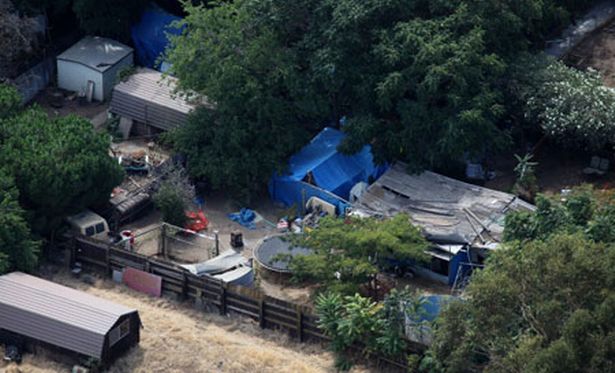
Jayee Lee Dugard was held captive in a backyard in Antioch for 18 years. Photo/Provided

Jaycee Lee Dugard was held captive in a backyard in Antioch for 18 years. Photo/Provided

By Maura Dolan, Los Angeles Times

A federal appeals court decided by a 2-1 vote Friday that Jaycee Lee Dugard, who was kidnapped as a child from a bus stop in Meyers and held by a parolee for 18 years, cannot hold federal parole officials liable for failing to supervise her abductor.

“Phillip Garrido, a parolee with a terrible history of drug-fueled sexual violence, committed unspeakable crimes against Jaycee Dugard for 18 years,” U.S. 9th Circuit Court of Appeals Judge John B. Owens wrote. “State and federal authorities missed many opportunities to stop these tragic events.”

Dugard received a $20 million settlement from California and sued the federal government for similar compensation.

Read the whole story


Trump raises $70,000 in Lake Tahoe

Donald Trump arrives in Lake Tahoe Aug. 26 for a fundraiser at Harrah's Lake Tahoe. Photo Copyright 2016 Carolyn E. Wright

Donald Trump arrives in Lake Tahoe Aug. 26 for a fundraiser at Harrah’s Lake Tahoe. Photo Copyright 2016 Carolyn E. Wright

By Ben Botkin, Las Vegas Review-Journal

STATELINE — Donald Trump headlined a fundraiser for the Nevada Republican Party on Friday, making an appearance without a teleprompter and taking questions from the audience.

About 840 people attended the $200 a plate event at Harrah’s Lake Tahoe to hear the GOP nominee for president. Trump’s presence was the result of a conversation that started last year with Nevada GOP chairman Michael McDonald.

Trump touched down on some key themes of his campaign, including better trade deals to boost the economy, rebuilding the military and criticizing the Affordable Care Act.

The event netted more than $70,000 after expenses, a party official said.

Read the whole story


EDC man pleads guilt to tax evasion

An El Dorado County businessman this week admitted he cheated on taxes.

Briant Benson did not file income tax returns for 2004, 2005 and 2006, despite having incomes of $870,000 $838,000 and $206,000, respectively.

The 59-year-old from El Dorado Hills was the president and CEO of multiple medical device companies.

According to court documents, Benson also used corporate funds to support his lavish lifestyle such as multimillion dollar homes, jewelry and furniture, and for lavish travel accommodations such as luxury hotels, private jets, and limousines. Benson also used corporate funds to pay over half a million dollars in gambling debt.

Benson is scheduled to be sentenced Dec. 2.  He faces a maximum  sentence of five years in prison and a $100,000 fine.

— Lake Tahoe News staff report