Opinion: Obama and economic equality

By Ron Formisano

You’d never know from this year’s presidential campaign rhetoric that anyone in Washington has been paying attention to economic inequality. Donald Trump has hijacked the Republican Party with his populist rhetoric about working class Americans no longer “winning,” and Hillary Clinton acknowledges at every turn (partly to woo and mollify Democrats who backed Bernie Sanders) that inequality needs addressing. No one seems to recognize the great strides made during the past eight years of Barack Obama’s presidency to mitigate the problem.

That’s a shame, because the Obama-era efforts hold important lessons about what’s possible in addressing inequality and how we must do better in the future.

As Obama entered office, public consciousness of inequality of income and wealth was on the rise and the Great Recession brought disastrous economic consequences for tens of millions of Americans. In the past 40 years, inequality of income rose faster in the U.S. than in any other nation and the inequality of wealth exceeded that found in any other advanced economy.

Obama tackled the problem of inequality from the beginning. The first bill he signed as president was the Lilly Ledbetter Fair Pay Act—an equal pay legislation. Ledbetter had worked for Goodyear for 20 years before learning she was paid less than men for the same job. The law removed the requirement that a petition regarding discriminatory pay be filed within 180 days of the discrimination; it also made any discriminatory paycheck actionable.

The American Recovery and Reinvestment Act, the administration’s 2009 stimulus bill, has not received enough credit for assisting poor families and for preventing more people from falling into poverty. The act added $20 billion for food stamps and food banks, support for poor neighborhoods, an increase in unemployment insurance, and $3.5 billion for job training. With an unprecedented 45 million Americans in poverty today, one enduring criticism is that Obama should have focused on a second stimulus rather than his health care bill.

Yet the Affordable Care and Patient Protection Act also helped reduce inequality to a degree. The law’s redistributive features are not generally recognized by the public, but they help explain the unrelenting opposition from its reactionary opponents. Obamacare contains higher Medicare payroll taxes on individuals with incomes above $200,000 and families with incomes above $250,000 and it levies fees on the healthcare industry (which has gained millions of new customers from the ACA) and on drug and medical device manufacturers.

Obama’s critics, and the president himself, have said he hasn’t done enough to tell the story of this battle against inequality. But it’s not for lack of trying. In December 2011, Obama confronted the unfairness of our economic system in a speech at Osawatomie, Kansas, where ex-President Theodore Roosevelt in 1910 made his historic New Nationalism speech calling for a “Square Deal” for the American people.  The next month, Obama’s State of the Union focused on restoring America’s promise of opportunity. Always cautious during his first term, Obama waited until after his re-election to talk directly about “income inequality.” Instead, he emphasized fairness and everyone “playing by the same rules.” At the time, billionaire Warren Buffett pointedly disclosed that he was taxed at a lower rate than his secretary (who Obama invited to sit with first lady Michelle Obama in the House gallery for the State of the Union), and Obama called attention to the unfairness of hedge fund earnings being taxed at 15 percent; anyone earning over $1 million, he said, should pay an effective tax rate of at least 30 percent. The Republican-controlled House predictably ignored his suggestion.

In his campaign for re-election, Obama hammered away at the same themes, while successfully painting his opponent Mitt Romney as an out-of-touch rich guy, with help from Romney’s own mistakes. Once re-elected, in his 2013 State of the Union, Obama spoke directly about income inequality, calling it “the defining challenge of our time.” He promised then, and at other times throughout the year, to devote the rest of his presidency to attacking inequality. The Congress he addressed had reached a milestone: more than half its members were millionaires and the body’s total worth was approaching $5 billion.

Obama’s second term is often portrayed as an exercise in futility: the president proposes and the Republican Congress opposes. But that’s not the whole story. In 2013, the president’s give-and-take with Republicans on budget priorities succeeded in increasing tax rates on the highest earners.

This happened in two ways: Money in tax shelters got treated like other income and limits were imposed on the deductions high earners can claim. While the “Bush tax cuts” were extended for most Americans, the cuts for those making over $500,000 expired. The so-called 1 percent are now taxed at pre-Ronald Reagan levels. Although most capital gains are still taxed at only 15 percent, more affluent taxpayers in the 39.6 percent income-tax bracket now face a 20 percent rate on their capital gains. The result: The 400 highest earners among American taxpayers are now paying an effective tax rate of 22.9 percent, up from 16.7 percent in 2012, but still down from 26.4 percent in the late 1990s.

Obama has also made effective use of his office and executive powers to address inequality. Unable to persuade Republicans in Congress to raise the federal minimum wage, (stuck at $7.25 an hour, and worth far less in real terms than the minimum wage in 1968), Obama has used the “bully pulpit” to advocate higher wages and encouraged a growing movement among states and cities to raise their minimums on their own.

In 2014, the president issued an executive order raising the minimum for workers hired by federal contractors to $10.10 an hour. The president also required federal contractors to report wage data to the Labor Department, to prevent abuses and serve as fuel for future action.

In early 2015 Obama again resorted to an executive order to give federal workers up to six weeks of paid maternity leave, and asked Congress to extend this to private workers. The president also advocated a Healthy Families Act giving workers in the private sector up to seven days paid sick leave; some 44 million, or 40 percent of the workforce, do not have paid sick leave. Just four states and the District of Columbia, along with 18 cities, have passed laws requiring employers—usually with 15 or more employees—to give such paid leave.

Obama’s Labor Department also issued guidelines to help states establish savings plans for private-sector employees whose employers don’t offer them. And Obama has sought to reverse regulations that burden unions. While organized labor was disappointed that the president and Senate Democrats failed to enact legislation making it easier to unionize workplaces, Obama delivered a huge gain for low-wage service workers in his appointments to the National Labor Relations Board.

In August 2015, the board delivered a series of decisions by a 3-2 partisan vote making it easier for unions to represent workers in fast-food restaurants and retail giants like Wal-Mart.

And this May, the Department of Labor announced sweeping new overtime rules that could affect as many as 12.5 million workers. The regulatory action will make it almost impossible for employers, even smaller firms, to avoid paying overtime to workers who put in more than an eight-hour workday.

Meanwhile, even as the more progressive wing within Obama’s party would have liked to see more energetic action taken against Wall Street, there is evidence that the complicated financial reform known as the Dodd-Frank is having some effect in reining in the financial sector. Bank earnings are down, and the biggest banks are lending more while preserving healthier balance sheets under tighter regulation.

All told, the administration’s higher income tax rates on the affluent, subsidies for health insurance, expanded tax breaks for poor families with children, and other measures, amount to an impressive government counterattack on advancing inequality. Nevertheless, the administration faces two problems in selling its narrative: the fact that public opinion is a lagging indicator to economic reality (things can turn better before the benefits are widely appreciated), and the more daunting reality that there are limits to what government can do in the face of structural forces (such as technological change) creating deeper income and wealth inequality in our society.

As Obama prepares to leave office, Americans are only now beginning to consider his overall legacy, and may soon come to appreciate his efforts to combat economic inequality and restore a sense of fairness and opportunity to American life. Whether his successor will try to build on Obama’s effort, or be able to do so, remains to be seen.

Ron Formisano is the author of “Plutocracy in America: How Increasing Inequality Destroys the Middle Class and Exploits the Poor” (Hopkins, 2015) and professor of history emeritus at the University of Kentucky.



National Park Service’s befuddled funding

By Phil Taylor, High Country News 

As the Park Service celebrates its 100th anniversary, lack of funding threatens its ability to fulfill its basic mandate to preserve America’s iconic scenic, historic and recreational sites for the public’s enjoyment.

Congress has been tightening the agency’s purse strings. Annual appropriations, which make up about 88 percent of its roughly $3 billion budget, declined 8 percent between 2005 and 2014 after adjusting for inflation, according to a December report from the Government Accountability Office.

As a result, park superintendents are being forced to do more with less — particularly when it comes to staff. “What options do superintendents have?” says Denis Galvin, a Park Service retiree who served as deputy director under presidents Reagan, Clinton and George W. Bush. “You’ve got to pay the electric bill. You’ve got to pay your suppliers of materials. The only thing a park superintendent can really do is not hire people.”

Read the whole story


Nev. women business owners closing gender gap

By Nicole Raz, Las Vegas Review-Journal

Nevada is making gains in closing the gender gap in business ownership as well as in the fields of science, technology, engineering and math, or STEM jobs.

Thank the economic downturn, too, at least in part.

Nevada is ranked 10th in the country for the highest share of women working in STEM fields, and it is keeping up with the national average of 38 percent in its share of women-owned businesses.

According to the report, the number of women-owned businesses in Nevada increased from 82,000 in 2012 to an estimated 92,000 in 2016. However, revenues did not show a correspondingly wide increase.

Read the whole story


Climate change threatens American pika in Nev.

By Brady McCombs, AP

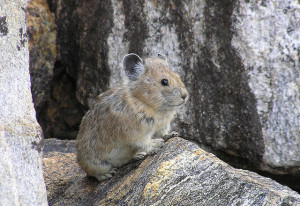
Populations of a rabbit-like animal known as the American pika are vanishing in many mountainous areas of the West as climate change alters its habitat, according to findings released Thursday by the U.S. Geological Survey.

The range for the mountain-dwelling herbivore is decreasing in southern Utah, northeastern California and in the Great Basin that covers most of Nevada and parts of Utah, Oregon, Idaho and California, the federal agency concluded after studying the cuddly looking critter from 2012-15.

This study’s conclusion marks a more authoritative statement about the role of global warming on the animal compared to research released in 2003 that found climate change was at least partly contributing to the animal’s decline.

“The longer we go along, the evidence continues to suggest that climate is the single strongest factor,” said Erik Beever, a research ecologist with the U.S. Geological Survey and lead author.

A study shows the American pika is vanishing from areas of the Western United States. Photo/Shana S. Weber/USGS

A study shows the American pika is vanishing from areas of the Western United States. Photo/Shana S. Weber/USGS

The pika’s habitat on mountain slopes, known as talus, are hotter and drier in the summer and more harsh in the winter with less snowpack to serve as an insulator, Beever said.

The study bolsters the case for wildlife advocacy groups pushing for years to have the animal added to the endangered species list amid concerns about global warming.

The U.S. Fish and Wildlife Service rejected a request in 2010, saying not all populations were declining. A new request was made this April by a high school student in New York state.

A preliminary decision on that request is due out in early September, but the agency’s staff won’t take into account the new study because they are bound to only take into account information submitted with the petition, said Fish and Wildlife Service spokeswoman Serena Baker.

Noah Greenwald, the Center for Biological Diversity’s endangered species director, said the new research confirms that climate change is putting the animal at real risk. He said it should help with future petitions to have the animal declared endangered — something he says is necessary to ensure future generations are treated to seeing the critters during mountain hikes.

“It’s gotta be one of the cutest animals in North America. It’s like a cross between a bunny rabbit and prairie dog,” Greenwald said. “Part of what makes our world interesting is the diversity of animals and plants that you can see when you go to different species.”

President Obama mentioned the plight of the pika this summer when he spoke at Yosemite National Park about the damage climate change is inflicting on the nation’s national parks. He said the pika was being forced further upslope at Yosemite to escape the heat.

The study didn’t quantify how many total American pika still exist, but honed in on several areas where the small animal has historically roamed eating grass, weeds and wildflowers.

The animal is thriving in a few places, such as the Columbia River Gorge in Oregon and Grand Teton National Park in Wyoming, but overall is suffering, Beever said.

At Utah’s Zion National Park, they’re gone all together despite being seen as recently as 2011. In nearby Cedar Breaks National Monument, they’re no longer in three-fourths of their historical habitat, Beever said.

Pikas were not found in 11 of 29 sites where it once lived in northeastern California.

In the Great Basin, which stretches from Utah’s Wasatch Mountains in the east to the Sierra Nevada and Cascade Mountains in the west, the population is down about 44 percent compared to historical records.

“It’s not that they’ve just moved, they are gone all together,” Beever said.


CalFire has grant money for fire prevention

CalFire is giving nearly $16 million in fire prevention grants to local fire departments and fire safe councils to reduce the threat of large wildfires.

The 2016-17 State Responsibility Area Fire Prevention Fund and tree mortality grants are aimed at reducing the threat wildfires as well as dead and dying trees in and around communities within the State Responsibility Area, which includes the Lake Valley area.

These grants have a one-time appropriation of $10 million that is intended to address the risk and potential impact of wildfire and dead and dying trees on habitable structures in the SRA. The grants also provide a one-time allocation of $6 million for fire prevention projects that are not limited to the SRA.

Applications are due Sept. 28. Details are online.


‘War Dogs’ nails it with story, acting

war dogsBy Howie Nave

Man, when did Jonah Hill grow up to become a serious, dramatic actor? I mean, he caught me off guard how good he was playing opposite Brad Pit in 2011’s “Moneyball” and opposite Leonardo DiCaprio in 2013’s “The Wolf of Wall Street” but “War Dogs” solidifies it.

And just like in those roles he played in movies based loosely on true characters, Hill is so perfectly cast here it’s almost uncanny. The year is 2005 and Jonah plays Efraim Diveroli, a stoner con artist who will scam anyone if it furthers his own well being. His latest adventure that of a small time arms dealer during the Bush-Cheney invasions of Iraq and Afghanistan. His love of high powered guns in a wall sized poster of “Scarface” hanging in his office pretty much says it all.

Meanwhile, his former stoner school friend, David Packouz (played by Miles Teller) is a massage therapist who has a baby on the way with girlfriend Iz (Ana de Armas) and realizes being a masseuse (and seller of bed sheets on the side) just isn’t cutting it. Both friends reunite at a friend’s funeral and after playing catch-up with one another find a common denominator: both love money.

War Dogs poster 2016 verticalBased on the 2011 Rolling Stone article, “The Stoner Arms Dealer” by Guy Lawson, scriptwriters Todd Phillips (who also directed), Stephen Chin and Jason Smilovic had their work cut out for them creating not just the backdrop of a real war but also creating interest in their leading characters of two friends in their early 20s living in Miami Beach during the war. Director Todd Phillips (who directed the three “Hangover” movies”) did an exceptional job too balancing the movie with both dramatic and comedic effects to keep your attention span intact throughout.

Phillips also paints yet another absurd vision of that war giving us a dollar sign percentage on how much it costs on average to outfit each American soldier in the Middle East. Apparently it just wasn’t the Halliburton’s who profited from the war but also smaller, enterprising businesses who could also profit by exploiting a little-known government initiative that allowed small businesses to bid on U.S. military contracts.

Problems start to arise with Efraim and David when their company starts growing faster than they can both handle it and Efraim starts to spiral out of control. The more pragmatic David (who actually opposes the war but not the money) tries to reel his friend in but is naive with the reality not just of his friend’s past but of the shady dealings and people who profited from this war (including the U.S. government.

“War Dogs” works not just because the story is contemporary but also because of its interesting characters. In addition to the acting capabilities of both Jonah Hill and Miles Teller, the supporting cast is top notch with a fine cameo by Bradley Cooper showing up mid-movie playing one of those shady characters. Comedian turned actor Kevin Pollack is also excellent playing the Jewish owner of a chain of dry cleaners who helps fund the young arms dealers’ endeavors in order to make a little cash and convinced he’s doing it to help Israel. It’s always cool seeing Pollack on the big screen because I knew him when we both attended Temple Emanu-El in San Jose and would cross paths on the comedy club circuit during his time in the Bay Area.

“War Dogs” is rated R for language throughout, drug use and some sexual references with a running time of 114 minutes.

Howie Nave is host/emcee/manager of The Improv at Harveys. You can hear him Monday-Friday 6 to 10am on KRLT FM-93.9.


SoCal firm may buy Tahoe water companies

A Los Angeles County-based firm is interested in purchasing two Lake Tahoe water companies.

Mid-Sierra Water Utility in 2013 put Tahoe Cedars Water Company in Tahoma and Madden Creek Water Company in Homewood on the market. Tahoe Cedars has 1,265 customers, and Madden Creek 165. Madden Creek will be responsible for supplying water to the expanded Homewood Mountain Resort, which is expected to break ground next summer.

Tahoe City Public Utility District put in a bid, by a price could not be agreed upon.

San Dimas-based Golden State Water Company, a subsidiary of American State Water Company, has made a more favorable offer. Details, though, have not been released. Even if both parties reach an agreement, the California Public Utility Commission has the ultimate say.

— Lake Tahoe News staff report


Mammoth, Forest Service say let’s make a deal

By Michael Doyle, McClatchy News Service

A Sierra Nevada land swap that would add 1,317 acres to three national forests in exchange for about 30 acres serving the prominent Mammoth Mountain ski resort is nearer completion.

After maneuvering that dates at least to 2011, the Forest Service on Friday pushed ahead with the proposal involving the Stanislaus, Plumas and Inyo national forests. Supporters call it a win-win proposition.

The swap must still survive scrutiny, starting with a 45-day public comment period and a hearing Sept. 8 in Mammoth Lakes. Already, though some residents of nearby June Lake have raised concerns, the proposal has cleared political hurdles that exemplify how Washington works.

To navigate a deeply partisan Congress, the land-swap proponents got companion bills in the House of Representatives and the Senate introduced by the local congressman, Republican Rep. Paul Cook of Apple Valley, as well as by California Democratic Sen. Dianne Feinstein.


Read the whole story


Letter: Candidate has issues with chamber

Publisher’s note: The following letter was sent to Lake Tahoe News by the writer.

Dear Rabbi [Evon] Yakur:

Thank you for the opportunity to seek the [Lake Tahoe South Shore Chamber of Commerce’s] endorsement, however, I must decline seeking of same at this time. Nor will I be providing my personal, private information to your organization for a “background check”. This is information that even the county elections department does NOT ask for. Neither is it required on the many state election forms that I have filled out. Additionally, I do not believe as an Interim Exec.,  Mr. [Steve] Teshara is bonded in the event my information is inadvertently released. Would the chamber’s own experts advise giving this information to an out of state organization headed by a temporary employee?

I am a former executive vice president, economic development director of the Greater Tulare Chamber of Commerce, so I am a huge supporter of chambers of commerce, but I find that a candidate seeking election in the city of South Lake Tahoe (California) who seeks endorsement from a Nevada-based organization is asking for trouble. I also have concerns with how closely the chamber’s PAC is to its board of directors. There is simply not the requisite distance between those soliciting candidates and those endorsing candidates. I was involved in many conversations with WACE and the CalChamber in the early ’90s, where it became very clear to those involved that a chamber of Commerce that has a PAC and endorses candidates for local (non-partisan) elections is asking for trouble. While it is OK and encouraged for chambers to take positions on ballot measures and state propositions, the personalities involved in small town elections can be detrimental to a chamber and its future. And while it is your choice to seek this path, I must seek the path I believe to be right.

Of your 600-plus members, I am sure that many are in California. In light of this, I am happy to answer your questionnaire. But please remove me from the list of City Council candidates seeking endorsement.

I will submit the completed questionnaire in the time frame you requested  and am happy to meet with your CEO Roundtable on Sept. 2. Please let me know when you require me to be at Lake Tahoe Resort Hotel.

Respectfully,

Tamara Wallace


PCT work to impact trail users

Sections of the Pacific Crest Trail near Lake Tahoe will be reconstructed.

Crew members from the American Conservation Experience, Truckee Trail Foundation, REI and  Tahoe National Forest will work north of Old Highway 40 past the rock climbing areas and the Summit Lake Trail, beginning at the junction with the PCT and proceeding north. These areas are currently below National Forest Service trail standards because of overuse and detrimental environmental conditions and require intensive maintenance.

While minor delays may impact recreationalists as they hike the trail Monday through Friday between the hours of 8:30am-4:30pm from now until Sept. 9, major delays are expected on Sept. 13 on these segments. Weekend use of the trails should not be affected, but hikers are cautioned to move through the affected areas taking into consideration the current status of the construction.