NASA scientist keeps eye on Calif. drought

By Frani Halperin, High Country News

Sitting in a place they call the “mall” in the center of NASA’s Jet Propulsion Laboratory campus in Pasadena it’s shady and relaxing. Scientists confab at tables with umbrellas, sipping coffee, laptops open to graphs and charts.

Jay Famiglietti, senior water scientist, is talking about NASA’s latest missions. The space agency isn’t just sending rockets to explore our galaxy—they’re launching satellites to look back at Earth.

Missions with names like “GRACE” are “amazing”—not just for their bird’s-eye view of our home planet but for what that perspective is telling us about our challenging water future.

“Sadly the picture that our work is painting is one that is very compelling and points to a very complicated water future where the availability of water will become more contentious and groundwater in many parts of the world is disappearing,” Framiglietti said.

Read the whole story


STHS teachers extinguish fire on campus


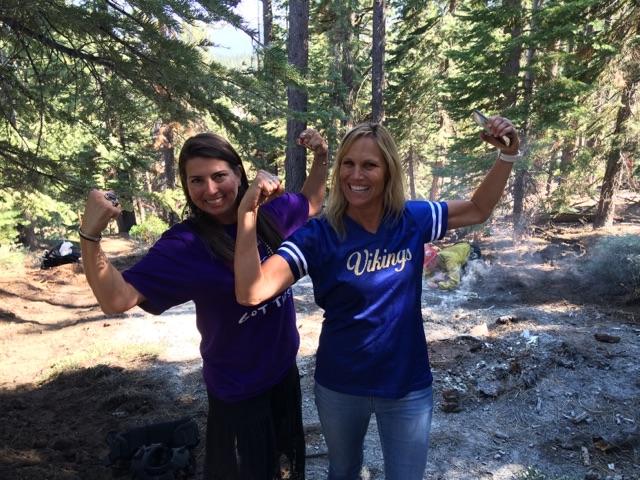
South Tahoe High instructors proved they can do more than teach on Aug. 29 when they put out a fire on campus. Photo/Provided

South Tahoe High instructors Whitney Pomeroy and Melissa Berry on Aug. 29 prove they can do more than teach when they put out a fire on campus. Photo/Provided

Three South Tahoe High School teachers are being credited with putting the kibosh on a fire on campus this afternoon.

The first day of school is often full of surprises, but this took it to a new level.

“By the time we got there the active flame was suppressed. They did a pretty good job,” Battalion Chief Tim Spencer told Lake Tahoe News.

Teachers Lori Buchan, Whitney Pomeroy and Melissa Berry saw smoke, called 911, tried kicking dirt on the flames, and then grabbed fire extinguishers from inside the school to put out the fire.

About a 15 by 40 foot swath of land burned to the south of the front of the school on Aug. 29. The nearest structure was about 30 yards away. Underbrush and pine needles were charred.

“Keep in mind we don’t know the actual cause. If it was a discarded smoking material, and that is possible — we aren’t ruling anything out, a word of caution that it is extremely, extremely dry out,” Spencer said. “We are still in fire season, with high temperatures, low humidity and we are very susceptible to a wildfire right now.”

— Lake Tahoe News staff report


Snippets about Lake Tahoe

·       The 17-piece Reno Jazz Orchestra will be at Sand Harbor on Sept. 3 at 7:30pm. For tickets and more info, go online.

·       A Journey in Long Term Planning for Long Term: A frank discussion about the likelihood of needing long term care, documents to have in place and how to prepare them, and options that may be available to pay care will be presented by an attorney from El Dorado County Legal Services. The free talk is Oct. 24 from 1-3pm at Lake Tahoe Resort Hotel in South Lake Tahoe.

·       The 15th annual Thin Air Chili Cook-off at Kirkwood is Sept. 3 starting at noon. For more info, go online.

·       What is Palliative Care? This discussion on Oct. 31 from 1-3pm will help participants understand the difference between hospice vs. palliative care, including who qualifies and services received under this valuable program. The free talk by Barton Health will be at Lake Tahoe Resort Hotel in South Lake Tahoe.


Letter: Weighing in on SLT bike trails

To the community,

The South Shore area, including Meyers, has made great progress in developing bicycle access. The Sawmill Pond extensions are great examples.

In my opinion the weakest link is Highway 89, Emerald Bay Road north from the Y to the very nice actual bike paths en route to Camp Rich. This section is a high speed four lane race track for eight-tenths of a mile. The bike lanes are very narrow and non-existent in sections. There are no crosswalks for pedestrians or bikers to cross. A deadly accident waiting to happen.

With two bike shops along this strip, it is clearly a biking favored route. Eloise is the actual designated bike path. Pot holes, large cracks abound. Stop sign favor cars and ignore biking flow. Eloise is the anything but a trash dump for bikers and a disgrace to the city. The solution is very easy for Caltrans to resolve.

Roger Pratt, South Lake Tahoe


Concerns over Nev. water-restriction proposals

By Sandra Chereb, Las Vegas Review-Journal

CARSON CITY — A legislative subcommittee Friday declined to request a bill draft to mandate meters on all domestic wells in Nevada but agreed to seek authorization for the state engineer to restrict domestic well use when groundwater curtailments are ordered.

State Engineer Jason King stressed that curtailment has never been used in Nevada and the changes he is seeking are intended to protect well owners.

Nevada water law is grounded on the doctrine of “first in line, first in right,” meaning senior water right owners get their allotments first before junior right holders. Domestic well owners do not have a permitted water right. Instead, they have a right to “use” 2 acre-feet per year and are essentially last in line.

Read the whole story


Road Beat: Hyundai Santa Fe Sport top of its class

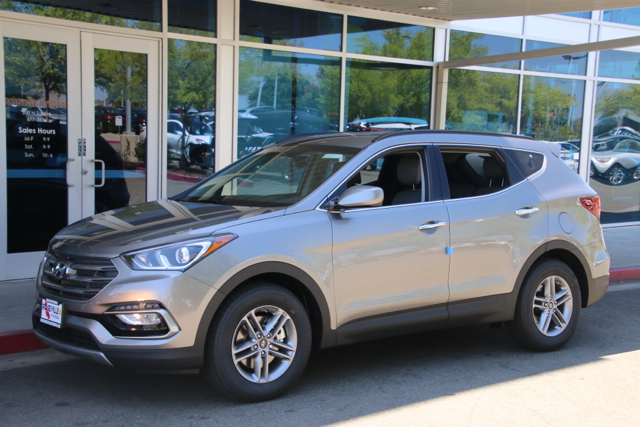
The 2017 Hyundai Santa Fe Sport may be the best in its class. Photos/Larry Weitzman

The 2017 Hyundai Santa Fe Sport may be the best in its class. Photos/Larry Weitzman

By Larry Weitzman

First with respect to the Santa Fe Sport is its classification. While it rides on a 106.3-inch wheelbase, which is 1 to 3 inches longer than the RAV4 and CR-V, it is a half an inch shorter than the Nissan Rouge and identical to the CX-5 wheelbase at 106.3 inches. But Santa Fe Sport is at least a couple inches longer (185 inches) and perhaps an inch or 2 wider (74 inches) than the aforementioned competition. But the EPA classifies them all as small SUVs.

Then there is the question of competition. Is the new class leader in small SUVs the new Santa Fe Sport, taking over from the Mazda CX-5? In a one-word answer, yes, as you will understand below.

While the CX-5 has world class looks, the continued refinement of the SF Sport makes it the new equal in this department. The SF Sport new front end is aggressive, well proportioned, tying in the headlights well in the new hexagonal shape of the grille and creating and implementing the theme or signature grille for most every new Hyundai. It is stunning. And then there is the dynamic window line putting the SF Sport in motion standing still while maintaining perfect proportions between the two box design of all SUVs. This is one good looking ride.

Powering my SF Sport Ultimate was a 2.0L four-cylinder turbo sporting a, high for a turbo, 10:1 compression ratio. Because of that there is almost no turbo lag. Being state of the art, it features DOHC, 16 valves and direct injection. Producing 240 hp at 6,000 rpm and a whopping 260 pounds of twist between 1,450 to 3,500 rpm means this engine makes prodigious hp at very low rpms, like about 100 hp at just 2,000 rpm and about 150 hp at just 3,000 rpms. Most normally aspirated 2.0L engines are lucky to make 150 hp even when wound out to 6,000 rpm. My tester drove only the front wheels through a six-speed torque converter auto tranny.

Specifications Price $25,350 to about $40,000 Engine 2.0T DOHC, 16 valve, directed injected turbocharged inline four 240 hp @ 6,000; 260 lb.-ft. of torque @ 1,450-3,500 rpm Tranny Six Speed torque converter automatic Configuration Front mounted, transverse mounted engine/FWD/AWD Dimensions Wheelbase 106.3 inches Length 185.0 inches Width 74.0 inches Height (w/o/with roof rack) 66.1/66.5 inches Track (f/r) 64.1/64.5 inches Weight 3,949 pounds GVWR 5,004 pounds Fuel capacity 17.4 gallons Cargo capacity (behind front seats/second row) 71.5/35.4 cubic feet Wheels 19X7.5 inch alloys Tires 235/55X19 Tow capacity 3,500 pounds with trailer brakes Steering lock to lock 2.95 turns Turning circle 35.8 feet Co-efficient of drag 0.34 Performance 0-60 mph 7.17 seconds 50-70 mph 3.51 seconds 50-70 up a steep grade 6=7 percent) 5.65 seconds Top Speed Well into triple digits Fuel economy EPA rated 20/27/23 mpg city/highway/combined. I recorded 27-28 mpg overall with 50 percent in rural country driving and 10 percent freeway. Highway mileage should average 33 mpg at legal speeds.

Specifications
Price $25,350 to about $40,000
Engine
2.0T DOHC, 16 valve, directed injected turbocharged inline four 240 hp @ 6,000; 260 lb.-ft. of torque @ 1,450-3,500 rpm
Tranny
Six Speed torque converter automatic
Configuration
Front mounted, transverse mounted engine/FWD/AWD
Dimensions
Wheelbase 106.3 inches
Length 185.0 inches
Width 74.0 inches
Height (w/o/with roof rack) 66.1/66.5 inches
Track (f/r) 64.1/64.5 inches
Weight 3,949 pounds
GVWR 5,004 pounds
Fuel capacity 17.4 gallons
Cargo capacity (behind front seats/second row) 71.5/35.4 cubic feet
Wheels 19X7.5 inch alloys
Tires 235/55X19
Tow capacity 3,500 pounds with trailer brakes
Steering lock to lock 2.95 turns
Turning circle 35.8 feet
Co-efficient of drag 0.34
Performance
0-60 mph 7.17 seconds
50-70 mph 3.51 seconds
50-70 up a steep grade 6=7 percent) 5.65 seconds
Top Speed Well into triple digits
Fuel economy EPA rated 20/27/23 mpg city/highway/combined. I recorded 27-28 mpg overall with 50 percent in rural country driving and 10 percent freeway. Highway mileage should average 33 mpg at legal speeds.

Performance was outstanding equaling the CX-5 in its 0-60 mph run at 7.16 seconds (CX-5 ran a 7.17). And what turbo lag there was cost me a tenth or two off the line. But it was in passing performance where the rubber meets the road and turbo lag is non-existent. Fifty-70 mph passes averaged 3.51 seconds on level ground and up a steep grade that time only slowed to 5.65 seconds. Compared to the CX-5, the SF Sport was a half a second and a second quicker respectively in each performance parameter. The SF Sport will get it done in the flatland or in the Sierras. This is without question the best performing small SUV. And the ability continues in the mountains as the turbo SF Sport will continue to make full hp even as the altitude climbs where normally aspirated engines start to wheeze a bit. (For every 1,000 feet of altitude a normally aspirated engine loses three percent of its hp. At Echo Summit, 7,382 feet of altitude, your 240 hp normally aspirated engine would be down 22 percent in hp or about down to 187 hp.).

But here is where it gets interesting, fuel economy. EPA rates the SF Sport at 20/27/23 mpg about average or slightly below average for its class even though Hyundai has improved the SF Sport’s efficiency by an mpg or two over the 2016 model. However, in my testing it did way better than the EPA says. With the smart cruise control set at 70 mph on a two-way run it averaged a constant 33.2 mpg and if that isn’t enough during the entire test that included all kinds of driving, but perhaps 50 percent in rural country driving, the SF Sport averaged 27-28 mpg. The reality is it basically equaled the non turbo CX-5 while besting it on the highway by 1.5 mpg. The SF Sport is having your cake, eating it, too and never getting fat. However, this FWD model tips the scales at a not so svelte 3,949 pounds (AWD will add about 150 pounds) and the co-efficient of drag is 0.34.

So what about handling which is the forte of the CX-5. Hyundai designed the SF Sport as a state of the art automobile so it comes with four-wheel independent suspension (MacPherson struts up front, multi-link in the rear, gas filled shocks, coils in all four corners plus stab bars at each end). In addition, the SF Sport gets wider 19X7.5 inch alloys and more generous rubber at 235/55X19 inch rubber. Other creds are 2.96 turns of the electrically powered rack from lock to lock, a front and rear track of 64 inches and a 36 foot turning circle.

All this adds up to one super nimble SUV with oodles of cornering power, good feedback, and balance, the kind of handling you expect from a good sports sedan or coupe. It is a point and shoot SUV with limited body roll, understeer or even head tossing, certainly equal to the CX-5.

But where we separate the two is in ride quality and that has to do with perceived noise and obvious smoothness. The SF Sport is the smoothest and quietest small SUV the Road Beat has ever tested. It is uncanny. Even on coarse roads noise is extremely subdued as the engine rpms are just 2,000 at 70 mph. There is no wind noise as well. This SF Sport would be a superb road vehicle, it has a supple and very compliant ride that is slightly firm, big cargo capacity, room for five, plenty of performance plus over 30 mpg. And the coup de gras is the larger 17.4-gallon fuel tank.

Brakes are strong with the ventilated front binders being over a foot in diameter. In this top of the line Ultimate is every electronic aid. ABS, TCS, etc is standard as well as LED adaptive lighting that turns night into day and a Multiview system that shows everything around the car when in a tight situation. Lane departure warning and auto emergency braking are part of a Tech package costing $1,550.

Inside are comfortable leather seats and a well-organized instrument panel. Tach and speedo are front and center separated by the trip computer/info center. The center stack is well laid out as well as the sound system which can be mastered in five minutes.

Being a couple of inches longer and wider than the rest of the class adds to the SF Sport. Instead of about 65 cubic feet of cargo volume behind the front seats, the SF Sport will swallow almost 72 cubic feet and about exactly half that amount behind the second row seating.

Pricing for this top of the line SF Sport FWD Ultimate starts at $38,500 and with the Tech package, $125 bucks for fancy floor mats plus $895 for the rail car from West Point Georgia, the total price of admission is $39,070. But a SF Sport base with the peppy 185 hp 2.4 inline four, FWD starts at $25,350 and a 2.0T starts at $31,700. AWD adds $1,750 to any FWD model. Santa Fe Sport is now at the top of this class.

Larry Weitzman has been into cars since he was 5 years old. At 8 he could recite from memory the hp of every car made in the U.S. He has put in thousands of laps on racetracks all over the Western United States.


Entrepreneur wants Tahoe to be a mini Silicon Valley

By Ben Margiott, KRNV-TV

Lake Tahoe is known for its unbelievably blue water, first-class recreation and, if a local entrepreneur has his way, will one day be known for its tech startup scene.

That’s one of the goals of Elevate Blue, a startup incubator in Incline Village launched in October 2015 by Jameson Stafford.

Since its October 2015 launch, Elevate Blue has helped start companies like PetSurf, Likemoji and KickParty. Elevate Blue shares its prime location with Samba TV, a company based in San Francisco that opted to open up a Tahoe office.

Read the whole story


Caesars’ shares slide after court ruling

By Steven Church, Bloomberg

Caesars Entertainment Corp. tumbled the most in more than a year after a judge ruled that the casino company must face bondholder lawsuits that could force it into bankruptcy alongside its main operating unit.

The shares fell 15 percent to $6.37 this morning in New York, and dropped as much as 28 percent earlier, the biggest intraday drop since July 2015. They had been down 11 percent in the past year through Friday.

The ruling by U.S. Bankruptcy Judge A. Benjamin Goldgar in Chicago on Friday means Caesars could lose court cases by mid-September in New York and Delaware worth $11.4 billion. Judges in those states have scheduled court hearings to decide whether to rule immediately against the Las Vegas-based company, dismiss key parts of the suits, or send the cases to trial.

Caesars is the parent company of Harrah’s Lake Tahoe and Harveys.

Read the whole story


Tahoe Tails — Adoptable Pets in South Lake Tahoe

Squishy

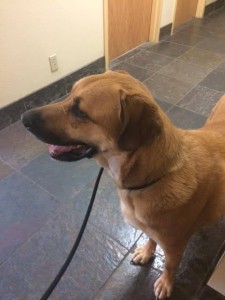
Squishy

Squishy is a very large boy. Our best guess is that he is some sort of Mastiff mixed with Lab mixed with shepherd mixed with Great Dane.

He is very shy when first meeting people, but he is quite affectionate once he gets to know them. He likes dogs of all sizes and didn’t chase the cat that he met at the shelter. Squishy is 4 years old, house trained, and walks nicely on the leash. He was found tied up and abandoned and will need a patient new family to help him learn that people are nice.

Squishy is neutered, microchipped, tested for heart worm, and vaccinated. He is at the El Dorado County Animal Services shelter in Meyers, along with many other dogs and cats who are waiting for their new homes. Go to the Tahoe animal shelter’s Facebook page to see photos and descriptions of all pets at the shelter.

Call 530.573.7925 for directions, hours, and other information on adopting a pet.

For spay-neuter assistance for South Tahoe residents, go online.

— Karen Kuentz


Partnerships help form legacy of Tahoe summit

By Tom Lotshaw

Restoring Lake Tahoe’s environment is no small feat.

Tahoe is one of the world’s deepest, largest, and clearest mountain lakes, holding about 39 trillion gallons of famously blue water any given day—water that takes hundreds of years to flow through the lake and out the Truckee River.

And long before any environmental restoration started, Tahoe’s 500-square-mile watershed suffered decades of reckless logging, cattle grazing, and urban development in marshes, wetlands, and stream zones.

As the first Lake Tahoe Summit approached in July 1997, agencies were not satisfied with the pace of the lake’s restoration.

Realizing no one agency could succeed alone, agencies were working to create a coordinated program for the entire watershed, one with the size and scope needed to correct past environmental harms that continue to impact the health of the lake and its landscape.

Environmental Improvement Program at a Glance 729 miles of roads upgraded to reduce erosion and stormwater pollution 65,380 acres of treatments to clear forests of hazardous fuels 16,343 acres of wildlife habitat restored 2,770 feet of shoreline made public 152 miles of bike and pedestrian routes constructed 46,853 watercraft inspected for invasive species 23,502 watercraft decontaminated 41 acres of treatments for invasive weeds or clams

Environmental Improvement Program stats                                 • 729 miles of roads upgraded to reduce erosion and stormwater pollution • 65,380 acres of treatments to clear forests of hazardous fuels • 16,343 acres of wildlife habitat restored • 2,770 feet of shoreline made public • 152 miles of bike and pedestrian routes constructed • 46,853 watercraft inspected for invasive species • 23,502 watercraft decontaminated • 41 acres of treatments for invasive weeds or clams                                                            Source/Photo: Tahoe Regional Planning Agency

Former President Bill Clinton and Vice President Al Gore arrived at the Tahoe summit with that same goal in mind. “We have a shared responsibility to build on our commitment at all levels to be sure the lake and its environs are protected,” Clinton said.

At the summit, Clinton signed an executive order creating the Lake Tahoe Federal Interagency Partnership. The order helped unite federal, state, and local agencies and TRPA, as well as a wide range of their programs, into a new Lake Tahoe environmental improvement program.

Clinton pledged tens of millions of dollars in federal funding for the new effort, money matched by the states of California and Nevada, local governments, nonprofits, and the private sector.

So was the official launch of the EIP, a collaborative, basinwide program involving more than 50 partners working together to not only restore Lake Tahoe’s famed water clarity, but also improve its air quality, forest health, fish and wildlife habitat, and public recreation.

Several years of work went into forming the EIP before Clinton’s visit. Jim Baetge, then director of TRPA, and Carl Hasty, then a program manager at TRPA, laid the groundwork by spelling out preliminary cost shares and priorities for the local, state, and federal partnership, as well as a $900 million project list for the first 10 years.

“When you think about how we fix Lake Tahoe, it’s really a retrofit issue,” Baetge said. “We’ve got regulations to control new development, and that’s important. But we also need to have funding to correct the mistakes of the past.”

Baetge, Hasty, and others rallied support for the EIP framework and raced to prepare plans for the new program in time for Clinton’s visit.

“Everywhere I could at that summit I made a point of waving that document around,” Baetge said about early plans for the EIP. “I wanted everyone to recognize that there is a solution. To say, here it is, here is what it will do, and here is what it costs.”

The EIP has proven more successful than even Baetge or Hasty imagined. Twenty years later, federal, state, and local agencies and nonprofit and private sector partners have invested more than $1.9 billion and completed nearly 500 projects.

“This program is a model of how you can do environmental restoration throughout the country,” Baetge said.

By taking a broad, landscape-level approach to Tahoe’s restoration, often with multiple partners working together on multiple benefit projects across their normal jurisdictional boundaries, more has been accomplished than via a traditional silo approach.

Thousands of feet of stream channels have been restored around the basin, such as projects in the Ward Creek, Blackwood Creek, Third Creek, Incline Creek, and Upper Truckee River watersheds. These projects have fixed past damage from logging, cattle grazing, and urban development to improve fish and wildlife habitat and reduce erosion and the amount of clarity-robbing fine sediment washing into Tahoe.

EIP TimelineThousands of acres of marshes and wetlands have also been restored through the EIP. Tahoe’s natural water filters, these areas are critical in restoring and protecting the lake’s water quality and clarity. They also improve fish and wildlife habitat and, through projects like the Lower West Side Project, which includes the well-used Cove East area near the Tahoe Keys on the South Shore, provide popular recreation areas.

In the Lower West Side Project, the California Tahoe Conservancy restored part of the Upper Truckee Marsh that was filled in decades ago for planned but never built condominiums and a hotel. The agency is now working to expand on the project, looking for funding to restore another 500 acres of the Upper Truckee Marsh, once one of the largest marshes in the entire Sierra Nevada, and tie it in with other restoration work upstream.

Working as the Tahoe Fire and Fuels Team, local fire districts and land management agencies like the U.S. Forest Service, Nevada Division of Forestry, and California State Parks have cleared hazardous fuels from tens of thousands of acres of forest, improving forest health and habitat and reducing wildfire risk for Tahoe communities. The Tahoe Fire and Fuels Team has reduced hazardous fuels on more than half of the wildland urban interface around Tahoe neighborhoods, and is working to complete the rest over the next five to 10 years and expand projects into more remote forests around the basin.

Caltrans, Nevada Department of Transportation, and county transportation departments have upgraded hundreds of miles of roadways in the Tahoe Basin to reduce soil erosion and capture and treat polluted stormwater runoff before it washes into the lake.

Agencies have built new transit centers, visitor centers, even state parks. They have opened new stretches of lakeshore to the public, put in new beach facilities including Lakeview Commons in South Lake Tahoe and Commons Beach in Tahoe City, and built miles of new bike and pedestrian paths to link neighborhoods with shopping centers, schools, workplaces, and recreation areas. Last year, El Dorado County completed a stretch of bike path linking South Lake Tahoe and Meyers. And this summer, the Tahoe Transportation District broke ground on a path that will link Incline Village and Sand Harbor State Park.

The Heavenly Gondola is a significant example of the EIP’s public-private partnership model. The gondola, opened in 2000, provided a way to reach Heavenly Mountain Resort from the redeveloped shops and lodging in Heavenly Village. By eliminating the need to drive from the bed base to other mountain access points, the project helped reduce crosstown traffic by about 20 percent. Redevelopment has continued in the area, reducing impervious coverage and installing better stormwater systems. And the Heavenly Epic Discovery Project approved in 2015 is now expanding the mountain’s summer attractions, offering people new ways to access national forest lands and experience Lake Tahoe.

Another example of the EIP’s public-private partnership approach can be found in the aquatic invasive species program. A boat inspection program launched in 2008 through the EIP has successfully protected the lake from new aquatic invasive species. And researchers and agencies have pioneered new ways to fight invasive species already in the lake. Over several years in iconic Emerald Bay, barrier mats and divers were used to eradicate acres of invasive plants that were taking over the sandy shores and clear water and keeping people from swimming, boating, and enjoying the lake there.

After 20 years of projects completed by the partners working through the EIP, the long-running decline in Lake Tahoe’s water clarity has halted and started to reverse. Tributaries, marshes, and forests are healthier. Rare plants like Tahoe yellow cress are protected. Tahoe’s only native trout species, the Lahontan cutthroat trout, has been reintroduced in Fallen Leaf Lake and the headwaters of the Upper Truckee River. Communities and the transportation system are improving.

“We have a great goal to rally around, taking care of this special place,” Jeff Marsolais, forest supervisor for the Lake Tahoe Basin Management Unit, said about the EIP. “It’s the old adage about the sum being greater than its parts. The EIP is the framework to bring intention and purpose to the work we are doing, and allow all of us to accomplish more together than we ever could alone.”

“The EIP provides a common vision for all the public and private partners in the basin,” said Patrick Wright, executive director of the California Tahoe Conservancy. “For each major program—from stormwater to forest health to aquatic invasive species—the partners have developed a joint guiding document, a priority list of projects, and a set of performance measures to track progress.”

Keeping Tahoe blue is a collaborative effort. Photo/Kathryn Reed

Keeping Tahoe blue is a collaborative effort. Photo/Kathryn Reed

Lake Tahoe’s environmental problems and solutions have never been limited to any one political jurisdiction. And the EIP reflects the reality that Tahoe’s environment can never be restored without multiple agencies working together, coordinating, prioritizing, and investing in the right projects.

“Lake Tahoe is collaborating on a monumental scale,” said Kim Caringer, TRPA’s environmental improvement division manager. “This level of coordination is driving results on the ground.”

Lake Tahoe and its environment are responding positively to the basin-wide restoration approach launched through the EIP. With sound science guiding project investments, the EIP now ranks among the most comprehensive environmental restoration programs in the nation. The biggest challenge now, after 20 years, is to keep progress going. That means finding funding for additional projects and adapting to new challenges such as climate change and drought and the impacts they pose for the jewel of the Sierra—as well as the local economies that depend on its health.

“If we value Lake Tahoe as a national and international icon, we have to continue and protect the investment we have made,” Caringer said.

Tom Lotshaw is the public information officer for the Tahoe Regional Planning Agency. This article first appeared in Tahoe In Depth.