Cascade Falls hike ends in tragedy

A 21-year-old man hiking at Cascade Falls on Labor Day died.

“He fell 40 feet and tumbled another 60 feet,” Kileigh Labrado, spokeswoman for Lake Valley Fire Protection District, told Lake Tahoe News.

Her agency was notified about the incident at 4:06pm Sept. 5. She does not know if the victim was with friends or alone.

A California Highway Patrol helicopter extracted the body from the wilderness area on the South Shore.

— Lake Tahoe News staff report


Abduction case ends with SLT kids’ safe return

A South Lake Tahoe mother has been reunited with her two children after their father allegedly abducted them.

Scott Selger was arrested near Rosarito Beach in Mexico. He will be extradited to El Dorado County where he faces a slew of charges. Bail has been set at $500,000.

Scott Selger

Scott Selger

Neither of the 9-year-olds was harmed during the two-week ordeal that ended Sept. 1.

Selger, who lives in Chula Vista, was supposed to return the children on Aug. 15.

According to officials, El Dorado County district attorney Investigator Bryan Kuhlmann, along with family members, spent hours communicating with Selger during the past week via Skype and phone to negotiate the return of the children. These efforts did not pan out.

On Sept. 1 at about 2pm, Selger’s  vehicle was located in Rosarito with him and the children nearby. He was then detained.

— Lake Tahoe News staff report


Teen Court looking for participants

Teen Court is looking for El Dorado County students in grades 8-12 on the South Shore to participated in the program.

Teens will serve as court personnel for real cases in which a minor has committed an offense, admitted the offense and chosen to be judged by his/her peers.

Orientation training is Sept. 29 from 5-6:30pm at the courthouse in South Lake Tahoe.

Teen Court hearings in South Lake Tahoe are Thursday nights at 5pm beginning Oct. 20 and ending in May.

For more information, call 530.573.7964.


Gratitude — a drug with positive side effects

By Linda Fine Conaboy

INCLINE VILLAGE – Gratitude. The word slides easily off of our tongues. But have you ever thought about what it really means? According to Webster’s New World Dictionary, gratitude is a feeling of thankful appreciation for favors or benefits received; thankfulness.

Easy enough definition to digest, but Bob Emmons, a scientific expert on the subject, isn’t satisfied to simply feel grateful and move on. Emmons has made gratitude his life’s work.

Bob Emmons

Bob Emmons

During his lecture to a packed house at Sierra Nevada College last week, the psychology professor at UC Davis, passionately explained his take on gratitude, how it works, why it matters, what it means in the scheme of worldly things and how it can have a most favorable impact on those who practice it daily.

Gratitude, he said, requires a benefactor, a beneficiary, intentionality and appreciation. “There’s a moral face to gratitude,” he said. “It’s very complex. But it’s available to anyone from kids to oldsters.” He recommends keeping a gratitude journal. “It’s a good thing to do, almost like a spiritual exercise.”

Emmons described gratitude as a drug without side effects, saying there’s a significant difference for those who actually practice it and those who don’t. People feel alive and alert; they get along well with others and they notice the good things. Additionally, he said grateful people feel alive—they comprehend what it means to be more connected with others and to life. “You don’t want to keep in the good, you want to give it back,” he said.

It’s hard to believe that a “drug” like gratitude isn’t used by everyone. Emmons said there’s an impact on physical function. Threatening situations suddenly become less bothersome. Exercise becomes important; leading to lower levels of cortisol, which can lead to less depression.

There definitely is something going on in the grateful brain, there’s a pattern of activity, but it’s hard to track. To get a handle on the subject, researchers turned to Holocaust survivors, tracking their memories to see what impact gratitude had.

While not conclusive, they found that in the brain gratitude is more than just a pleasant experience. The social impact is tremendous. People began to recognize what others did for them; that the good deeds were amplified. “We begin to notice the good in ourselves and others,” Emmons said. “Gratitude connects. It’s the moral memory of mankind.”

He described gratitude as the new willpower. “If you’re depressed, you take it now. There’s no gratification delay. If you’re in a grateful mood, you can accept delayed gratification.”

But why, you may ask? And that is what scientists are attempting to determine. How does gratitude “get under your skin?”

Emmons’ website discusses the long-term research he and others are now engaged in. According to his website, his project is “designed to create and disseminate a large body of novel scientific data on the nature of gratitude, its causes and its potential consequences for human health and well-being.”

Emmons said that much of his team’s recent work focuses on the development of gratitude in children.

Children, he said, are notoriously ungrateful. Gratitude does not emerge early in life, rather it seems to kick in between ages 7 and 10. He said kids can easily be taught the concept. He listed a few ways to heighten grateful attitudes in children:

·      Link gratitude to philanthropy. Giving not receiving mobilizes gratitude and establishes your identity.

·      Teach that gratitude isn’t something you can just go out and get. It’s the everyday good things that happen to you.

And finally. “Being thankful isn’t just saying thanks, it’s a divine feeling that can’t be hidden. It’s the everyday things that happen to you. It’s an operating system; a way of looking at life.”


Scuba diver dies near Glenbrook

A scuba diver died at Lake Tahoe on Monday.

The 63-year-old man, whose name and hometown have not been released, was diving with friends near Glenbrook on Sept. 5. They were exploring the wreckage of the SS Tahoe at a depth of about 360 feet.

“The victim and his diving companions are experienced divers and had completed a similar dive at the same wreckage the day before,” Douglas County sheriff’s deputies said in a statement. “The victim made an emergency ascent to the surface for unknown reasons. When he reached the surface he was unconscious and not responsive.”

His friends and first responders were not able to revive him.

The incident is under investigation.

— Lake Tahoe News staff report


App provides BlueGo riders with real-time info

GPS trackers have been installed on BlueGo buses to generate real-time arrival information for South Shore riders.

Riders may access up-to-the-moment bus arrival predictions for routes 50, 53, 23, 19x, 20x, 21x, and seasonal services right from their phone.

Swiftly’s free mobile app offers many features to help people get around the area.

In addition to real-time transit information, Swiftly users may access multi-modal trip planning, live maps with vehicle locations, and can report transit-related issues for other riders to see.

The app can be downloaded for iOS and Android.


Harn to lead state accounting committee

El Dorado County Auditor-Controller Joe Harn is now chairman of the state Controller’s Advisory Committee of County Accounting Procedures.

Joe Harn

Joe Harn

Committee members are selected by state Controller Betty Yee. Harn has been on the committee since the mid-1990s. He also serves on the state Association of County Auditors Accounting Standards Committee.

The committee is made up of county administrative officers, county supervisors, and county auditor-controllers from across the state.

Under state law the state controller must prescribe accounting procedures to counties, but must do so after consulting with and receiving the approval of the advisory committee. The committee’s work generally consists of approving changes to various accounting guidelines and changes to the California Code of Regulations.

Harn said his time commitment as chair would consist of a couple of conference calls per year and a lot of reading.


Exline: Renewable energy is the future

Publisher’s note: Lake Tahoe News asked candidates for South Lake Tahoe City Council, Lake Tahoe Community College, Lake Tahoe Unified School District, Douglas County School District, South Tahoe Public Utility District and Lake Valley Fire Protection District a series of questions. We are running the responses in the order received.
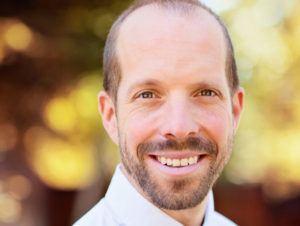
Nick Exline is running for one of two open seats on the South Tahoe Public Utility District board.

Nick Exline is running for one of two open seats on the South Tahoe Public Utility District board.

Name: Nick D. Exline

Age: 35

Job/profession: AICP, senior land use planner, Midkiff and Associates Inc.

What boards, commissions, or other experience, including volunteering, do you have?: Master’s of science degree in land use planning, bachelor’s of science degree in geography, American Institute of Certified Planners, American Planning Association, Tahoe Chamber Government Affairs Committee, Tahoe Drug Free Coalition board member, Leadership Lake Tahoe. I began a non-partisan, market driven climate change group.

Why are you running for the South Tahoe PUD board?: I believe in developing innovative ideas that support the economy and our community. Through the installation of renewable energy we can stabilize rates and improve/expand fire safety infrastructure. I would also like to create a fair construction fee system.

High construction fees put an undue hardship on middle and lower income households. When a project is halted due to high fees this puts our community members out of work and hurts our economy. I would like to introduce a sliding scale on fees that will ensure everyone in the community has the opportunity to improve their businesses and homes. I would also like to improve community participation in STPUD board decisions. The STPUD board meetings start at 2pm, which means if you work during the day, you can’t participate.

Why should voters vote for you over another candidate?: Every candidate talks about rates and fees, some talk about health and safety and too few talk about how renewable energy is the future. We need to take action on those issues and start making the future happen now. In my role as a solution orientated planner I succeed everyday in getting government, private business and community members working together so that innovative projects become reality. Using my experience and determination I will work extremely hard to ensure my plan to stabilize rates is given top priority, that there is fairness in the fee system and to make certain our homes, businesses and most importantly our families are safe.

Through the installation of renewable energy we can lower STPUD’s energy bills and fight climate change. Those savings would be used to improve/expand fire safety infrastructure. As we are all aware fire is the single greatest threat we face and we need to make sure our fire department have the tools they need to ensure our safety.

I’d push for the introduction of a sliding scale for construction fees so lower and middle-income homeowners and businesses are not stopped from improving our community and creating jobs, but are encouraged to do so.

Finally, I understand our community’s concerns. My family is a single income household so I can sympathize with anyone that has stayed up at night worrying about money.  Our town’s thoughts and worries will be with me at all times whenever I am faced with a tough decision.

What distinct experience or competency makes you uniquely qualified to lead effectively as an elected official?: I am currently a solution oriented AICP, senior land use planner with Midkiff & Associates. In this role I work with local businesses, homeowners and with every level of government from the federal to the local level to get innovative projects completed on time and under budget. These projects benefit the economy, create jobs and help the environment. Recently the $18.7 million state loan to complete phases 2-5 of meter installation was changed by the state. This resulted in higher annual debt payments, which negatively impacted the future borrowing capacity of STPUD. My experience will allow me to assist STPUD with any regulatory processes and to negotiate with governmental agencies ensuring the best deal for us as consumers.

Public agencies have been under scrutiny the last few years for lack of transparency and accountability. What will you do to ensure both?: First, I will work to change the board meeting time from 2pm to a time that works for more people.  If someone plans a party when they know you can’t attend, you would think they don’t want you there and that is how the community feels now. Secondly, I would make myself available. I have publically posted my phone number, address, email and have a Facebook page on which I invite everyone to discuss their thoughts on our water. This level of openness will enable me to be accountable to the community and transparent in all my actions.

What stands out for you in the current budget that you support and that you would change?: I fully support and would like to see increased investment into our fire safety infrastructure. A percentage of the water distribution system is undersized and does not provide appropriate fire protection. Fire is the single greatest threat we face and we need to ensure that when fire comes our fire departments have the correct tools and are fully prepared to fight it.

STPUD’s energy costs are huge. With so much of STPUD’s budget being fixed, we need to find areas in which we can lower costs without sacrificing service. With innovation and technology, and through the installation of renewable energy on STPUD properties we could lower our energy costs, which would allow us to reinvest those savings into fire safety infrastructure, rate stabilization and improved conservation efforts.  We need to start looking at how we can make money instead of just spending it.

Do you support current legislation for $15 minimum wage? Please explain.: I would prefer we ask the question, how do we create good paying jobs in our community? We need to begin to diversify our economy because a diversified economy is far more stable. I am very aware that small businesses are concerned about the additional cost a $15 minimum wage would result in, but those costs would be outweighed by more members of our community having money in their pockets to spend locally. We are a community and with so many living in poverty we need to start working to create a brighter future for all.

Do you support Proposition 55? Please explain: I do support proposition 55. In a globally competitive world, education is only going to become increasingly important for both personal and community success. We need to support education, which will ensure our economic survivability.

Describe three attributes for a successful board: Rational: In my experience with boards (from every level of government and regulatory agency) I see decisions being made, not on a rational review of the information provided, but rather to check a bureaucratic box. Often times this box checking poses significant hardships to the people. A board should be a reflection of the people and decisions should be made rationally to the benefit of all of us.

Forward thinking: Boards need to be evaluating plans that extend 10, 50 and 100 years into the future.

Team work: Which not only includes other board members, but also extends to the STPUD staff, local businesses and our community.

What are your thoughts about public employee defined benefits?: Having employee defined benefits allows families to properly plan for the future and enables them to invest in the economy. Unfortunately these sorts of benefits are on the decline. I believe that the future of these plans is one that combines the best features of all those currently available including employer contributions, pooled investments and annuities along with the best parts of 401(k)s, including employee contributions and portability.

Please explain your position on contracting out work normally done by staff: I do not support contracting out work that would result in layoffs or a reduction of critically important staff. If the contracting work is needed to assist staff, to speed up projects or infrastructure improvements (specifically fire safety infrastructure projects) then I am supportive.

What is your 10-year vision for STPUD?: Throughout this questionnaire I have outlined my proposals and vision. Now I want to explain how that vision affects our community. In 10 years we will have installed renewable energy both in Alpine County and up at the lake. This renewable energy will have created good jobs, stabilized our rates and resulted in savings while fighting climate change. These savings will be used to install fire protection infrastructure so that wherever you live, you and your family can feel safe knowing that in the event of a fire you have the proper protection.

As a result of the sliding scale for construction permit fees more of us in the community will be improving our homes and businesses. This will lead to more work for those in the construction field, engineers and landscapers, etc. This additional work will spur economic growth throughout the community as people begin to spend more money locally.

Finally, the board meetings will be held at a time when the community can attend and the transparency I am demonstrating throughout this campaign will become the norm and more people will be involved in the conversation about our water.

What one vote in the last four years that the current board made do you disagree with and why?: STPUD has done many things well over previous years and has kept up with basic needs from a “business as usual” stance. For a time the rates were kept low because of the poorly performing economy but then eventually a rate increase was made. I am concerned that if the board continues working in the same vein we may reach a time when every decision is made from an emergency only perspective.

We should be building for tomorrow and not making decisions from a standpoint that leaves us constantly playing catch-up. I will bring progressive ideas to the board that will keep STPUD at the forefront of innovation and fire infrastructure. I will work to develop a fair construction permit fee system so more of us can improve our homes and businesses.

How many meetings have you attended this year for the board you are running for?: The current STPUD board meeting schedule does not allow for participation. That is why I propose changing the meeting time to when more people can attend. I have always kept up with STPUD board decisions, as it is also a part of my role as a planner to do so. I am up to date with all staff reports and meeting minutes for the year and have been present at two meetings.

What do you know about the strategic plan, finances, debt, goals of the district?: I have been the lead land use planner on projects with comparable budgets, strategic financing and debt mechanisms as STPUD deals with annually. In addition, I have done a thorough review and met with staff regarding all STPUD related plans and budget items.

What concerns me is that with aging infrastructure the speed at which rates will have to increase within the next 10-15 years will begin to accelerate. Today we need to begin to lower long term cost wherever possible. The area of energy is a large, non-fixed cost in which STPUD could begin to realize savings immediately. With the installation of renewable energy (specifically solar) we could lock in low energy rates and fight climate change. With California’s cap and trade law all non-renewable energy will become more expensive. What this means is that as time goes on the savings made will only become greater. We can use those savings to ensure that we don’t see the “business as usual” massive rate increases in the next decade.

In addition, construction permit fees only comprise 3 percent of STPUD’s revenue, but these fees make it difficult for households and small business to redevelop.  This has a negative impact throughout the community because when projects can’t start, people can’t work. We need to create a fee system that incentivizes redevelopment and creates more, good paying jobs.

Being on a board means working as a team. How will you work with the other board members for the greater good of the community?: I grew up in the world of sports and the idea of team is fundamental to my very core. Being part of a team means picking your teammates up when they are down, spending the extra time to get something right or running that extra mile. Although there will be disagreements on any board I will never let ego or arrogance get in the way of working with board members to accomplish what is best for the community. Because in the end the team’s performance doesn’t stop with the board, the team is all of us.

What should be the three main priorities for the board?: 1. Water supply and quality: To provide reliable and safe water distribution, wastewater collection/treatment and recycled water systems.

2. Keeping infrastructure up-to-date and innovative: To make use of any appropriate technology to improve efficiency and ensure infrastructure and other assets are kept up to date/replaced. Renewable energy.

3. Health and safety of our community: To continue to ensure we have appropriate fire protection and the installation of fire hydrants at 500ft intervals.

How do you balance the economic situation of the community with the infrastructure needs of the district?: As a community we have aging infrastructure and a high rate of people living at or below the poverty line. We simply cannot afford to keep raising rates because fewer and fewer people can afford to pay those increased rates. Nor can we simply put off infrastructure improvements or routine maintenance because that will leave a huge unfunded bill for our children resulting in rate increases in excess of 10 percent annually in years to come. If we don’t install fire protection infrastructure, we could be putting lives at risk.

To solve these conflicting problems we need to fundamentally change the economic realities of the district. Where possible we need to lower cost and that is why I am proposing the installation of renewable energy on STPUD properties so we can lower our energy bill and use those savings to stabilize rates, accelerate the installation of badly needed fire infrastructure and improve conservation efforts. The business as usual model will eventually result in huge rate increases, but with innovation and forward thinking ideas we can stabilize rate growth, which will not only helps our pocket book, but the environment as well.

STPUD is often criticized for having some of the highest paid public employees on the South Shore. Any comment?: Currently $16.4 million or 32 percent of STPUD’s budget goes to employee pay and benefits. In the private sector you would want your payroll to be between 15-30 percent and as you can see STPUD is slightly above the high end of that threshold. I will work to keep payroll at a reasonable level while taking care to have great staff moral, which will minimize turnover and keep the high standard of service currently in place.

I work with government agencies from the federal to city level. Agencies with a high employee turnover are slower, less responsive and impose many unnecessary and expensive regulations onto a project. This is our water we are talking about and we need to ensure a high level of service.

When it comes to permits for construction, the district has high fees. Do you believe they are fair? Why or why not?: The district fees have a disproportionate impact on middle and lower income individuals. These fees are only 3 percent of STPUD’s revenue but pose a significant barrier to improvements. In my role as a land use planner I have seen projects halted or abandoned as a result of high fees. This has a ripple effect throughout the economy. It results in our neighbors who are in the trade fields being out of work, construction equipment not being sold, a reduction in our property tax base and stops the ability for many of us to improve our homes and businesses. I would work to implement a sliding scale for fees so that every one of us in this community, regardless of income level has an opportunity to improve our home or business.

Tell us something about yourself that people may not know: Besides the fact that I like to paddleboard at night with my dog, I love to read. It is enlightening to be able to see things from a different point of view and that really helps in the decision making process.




Opinion: Coyotes are just like hipsters

By Dan Flores

If you don’t have a coyote story, give it time. You will.

The tawny, golden-eyed, sharp-nosed wild dog of the American deserts is now our backyard predator, everywhere from Miami to Seattle.

The stories pile up. During a heat wave, in broad daylight, a coyote strolls into a sandwich shop in Chicago and hops up on a freezer to cool off. Customers and staff flee for the street, where a shocked crowd peers through the windows as the coyote commandeers the store.

On the other side of the country, a California couple driving at freeway speeds plows through a pack of coyotes near Las Vegas. Hundreds of miles later, while unpacking the car near Nevada City, they discover a full-grown coyote snagged like a bug in the grill of the car. Their flying coyote ornament is fully alert, has one cut on a paw and another on its muzzle. Having hitchhiked to California, it is otherwise unhurt.

Such is the life of the American continent’s native small wolf in the 21st century. Our task, because there is really no other option, is to understand them well enough to enjoy them as neighbors.

Exactly a century ago, Joseph Grinnell of the Society of American Mammalogists proposed we allow coyotes and wolves to live unmolested in the parks of the country’s new National Park Service. Today rural coyotes outside the parks are still shot and trapped in staggering numbers. So coyotes came up with an even better refuge than the national parks: cities.

Los Angeles and Chicago are now home to thousands of coyotes, and Denver has at least a thousand in more than 125 packs. City-dwelling coyotes are living richer lives than their rural counterparts.

History is on the side of the urban coyote. For one thing, the species has a lot of experience as wild town dogs. Coyotes were living in Indian cities like the Aztec capital Tenochtitlan and the ceremonial Southwestern city now called Chaco Canyon a thousand years ago. They’ve been practicing in contemporary U.S. cities like Los Angeles for at least a century.

Some biologists argue that city life may be selecting for particular canid genetic strains: novelty-seeking, “super-genius” coyotes that can solve the riddles of being a predator in a modern metropolis.’

Compared to rural America, where the average lifespan of a coyote is just 2½ years, in cities the living is easy. Leash laws and municipal programs that curbed feral dog populations made city living even better for coyotes. Mice and rats, a coyote’s most dependable prey, are numerous, as are geese and ducks and exotic fruiting plants of all kinds. In the city, nobody is shooting at you, trapping you, or poisoning you. So town coyotes are living to 12 or 13 years old. Because urban coyote territories are also resource-rich, metropolitan coyotes often get more than 60 percent of their pups to adulthood. In the countryside that figure is commonly less than 15 percent.

The most dangerous element of modern urban life for coyotes is crossing highways teeming with cars. No Aztec coyote had to master 70 mph traffic, but modern coyotes are figuring it out. Biologists have watched them in Chicago rush hour: crossing half a multilane interstate highway boiling with traffic, then sitting in the median until traffic thins enough for them to cross the other lanes. More than 60 percent of coyote deaths still come under the wheels of cars in Chicago. But with more generations of city experience in carmageddon Los Angeles, coyotes have lowered that figure to about 40 percent.

A media out of its depth has tended to portray coyotes as invaders, as unnatural in cities, often describing them in language associated with criminals or gangs. But once we get over our shock at seeing them lope through our suburbs, and accept their presence in town as normal, there are far more reasons to celebrate coyotes than to fear them.

While coyotes will guard their pups against our dogs in the spring-summer denning season, careful studies indicate the vast majority of city coyotes are upstanding citizens. Coyotes are not foraging from dumpsters behind fast food restaurants, and they do not carry rabies. The prescription to co-existence is to keep them wild and wary of us, or at least thinking we’re too weird to trust, and never habituating them to associating humans with handouts. Then we’ll get to enjoy them as a remarkable flourish of the wild and the ancient, smack in the middle of modern life.

As the Aztecs discovered long ago, coyotes are a fact of urban existence. Resistance is futile.

Dan Flores is an environmental writer whose newest book is “Coyote America: A Natural and Supernatural History.”


Congress not expected to do much as election looms

By Andrew Taylor, AP

WASHINGTON — Lawmakers return to Washington this week for an abbreviated election-season session in which they will likely do what they do best: the bare minimum.

All Congress must do this month is keep the government from shutting down on Oct. 1 and, with any luck, finally provide money for the fight against the mosquito-borne Zika virus. Republicans controlling Congress promise they won’t stumble now, but the weeks ahead could prove tricky.

A chief motivation for the September session, especially for Senate Majority Leader Mitch McConnell, R-Ky., is allowing lawmakers to return to campaigning as soon as possible. Republicans are scrambling to hold onto their Senate edge as GOP presidential nominee Donald Trump lags in the polls.

The short-term spending measure is sure to pass. The alternative is that Republicans would get the blame for a government shutdown, as they did in 2013.

But it’s a complicated path for the temporary spending bill. Some House conservatives say the measure should last into next year, when there is a new president and a new Congress, and that would block any chance for a session after the Nov. 8 election. Leaders in both parties feel otherwise — as does President Obama — and a temporary measure until December seems to be the consensus.

“We are not doing anything into next year and every Republican should be aware of that right now,” said Senate Minority Leader Harry Reid, D-Nev.

Lawmakers left Washington seven weeks ago without resolving a dispute over money for Zika. The virus can cause severe birth defects and is linked to a host of other maladies. Obama asked Congress in February for $1.9 billion in emergency money, but legislation to partially pay for his proposal collapsed in July amid various fights. Among them was a Republican provision to deny money to Puerto Rican affiliates of Planned Parenthood.

Because the shutdown-prevention measure simply has to pass, it’s a tempting target for lawmakers seeking to use it as a vehicle for their preferences. For instance, Sen. Bill Cassidy, R-La., is pressing for emergency grants to help communities in his flood-ravaged state to recover.

“I hope we can accomplish that in September,” Cassidy said.

But GOP leaders probably will try to keep the spending bill as free of unrelated additions as possible, especially now. If GOP leaders were to grant Cassidy’s request, it would make it more difficult to say no to others, such as Democrats seeking money for fixing the lead-tainted water system of Flint, Mich.

House conservatives are looking to press ahead with impeaching IRS Commissioner John Koskinen over the destruction of agency emails and misleading testimony on whether the tax agency, before his arrival, improperly scrutinized conservative groups seeking nonprofit status. The impeachment drive is a headache for Republicans who believe that Koskinen’s conduct isn’t serious enough to warrant impeachment, but who may be reluctant to support the Democratic appointee in such a politically charged environment.

In a recent memo, House Majority Leader Kevin McCarthy, R-Calif., said lawmakers will take up legislation regarding the Obama administration’s $400 million payment to Iran in January, made immediately after four U.S. prisoners were released. The payment, for undelivered arms to the shah of Iran, was made on the same day of the prisoner release, and Republicans call it “ransom.” The as-yet-unreleased legislation is designed to prevent a repeat, but seems like an election-season messaging effort.

McConnell also wants to advance a popular water projects measure. But the priority is to simply adjourn the chamber to allow embattled incumbents such as Sens. Kelly Ayotte, R-N.H., Pat Toomey, R-Pa., and Richard Burr, R-N.C., to get back home and campaign for re-election against the political headwinds created by Trump.

The abbreviated session should give GOP-run committees a final pre-election chance to hold hearings on the Obama administration and other targets such as EpiPen manufacturer Mylan, N.V. That company has come under withering criticism for steep price increases for its life-saving injector, which can stop potentially fatal allergic reactions to insect bites and stings, and foods such as peanuts and eggs.

House Republicans are promising hearings on Hillary Clinton’s emails. FBI Director James Comey criticized Clinton’s use of a homebrew email server to handle sensitive work-related emails as “extremely careless,” but said his agency’s yearlong investigation found no evidence of criminal wrongdoing.

Republicans now are demanding that the Justice Department open a new investigation into whether Clinton lied during testimony last year before the House Benghazi committee. They claim the FBI note may show Clinton provided inconsistent answers to questions about her handling of emails containing classified information.