Airman dies hiking in S. Lake Tahoe

Tyler Oimoen

Tyler Oimoen

Details have not been released surrounding the Sept. 5 death of an airman hiking in South Lake Tahoe.

Airman 1st Class Tyler Oimoen was stationed at Beale Air Force Base in Marysville.


Oimoen was originally from Mount Horeb, Wis. He was a food service apprentice with the 9th Force Support Squadron.

“Our thoughts and prayers are with Airman Oimoen’s family, co-workers and friends. During this difficult time we are caring for his family and co-workers with the support of the Beale community,” Lt. Col. Matthew R. Mountcastle, 9th Force Support Squadron commander, said in a statement.

The cause of the death is under investigation.

— Lake Tahoe News staff report


Study: Nevada 48th in health care

By Jose Olivares, Reno Gazette-Journal

The website WalletHub recently ranked Nevada 48 out of 51 in a list analyzing health care in the U.S. in 2016.

According to WalletHub, Nevada is one of the states with the worst health care, ranking last in terms of children with health insurance.

According to WalletHub’s findings, Nevada was ranked 41 in health care costs, 45 in health care access, 39 in health outcomes and 48 overall. The Silver State was ranked below Arkansas but above Mississippi.

Read the whole story


Jarrett: South Tahoe needs clear vision

Publisher’s note: Lake Tahoe News asked candidates for South Lake Tahoe City Council, Lake Tahoe Community College, Lake Tahoe Unified School District, Douglas County School District, South Tahoe Public Utility District and Lake Valley Fire Protection District a series of questions. We are running the responses in the order received. All profiles may be found under the Special Projects listing and then the 2106 November Candidate Profiles category.
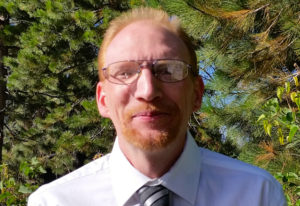
Patrick Jarrett is running for one of two seats open on the South Lake Tahoe City Council.

Patrick Jarrett is running for one of two seats open on the South Lake Tahoe City Council.

Name: Patrick Jarrett

Age: 45

Job/profession: retail sales

What boards, commissions, or other experience, including volunteering, do you have?: 2016 South Lake Tahoe Citizens Academy participant

Why are you running for City Council?: I care about this city, and the current council doesn’t seem to have any clear direction. They are too busy with all the infighting to listen to the people’s wants and needs.

Why should voters vote for you over another candidate?: I have a vested interest in this city. I attended school here from third grade at Tahoe Valley Elementary all the way to STHS graduation in 1989. My son is currently in eighth grade at STMS. I care about this city and its people and I want us all to succeed and be happy and prosperous. This city needs to accept change and adapt, not just stick our heads in the sand and keep the “old guard” in place.

What distinct experience or competency makes you uniquely qualified to lead effectively as an elected official?: I served in the U.S. Army during Operation Desert Shield/Storm where I learned responsibility, teamwork and leadership skills and I have also been assistant manager and store manager at a few businesses here in town.

Public agencies have been under scrutiny the last few years for lack of transparency and accountability. What will you do to ensure both?: A lot of people know me in this town. I tell it like it is, shoot straight and don’t pull punches. I’m not afraid to tell the truth or to speak up when things are out of line.

What stands out for you in the current budget that you support and that you would change?: We as a city are spending too much and seeing very little return. We need to find a dedicated way to fix and support our infrastructure.

Do you support current legislation for $15 minimum wage? Please explain: No — $15 an hour not only cuts full-time employment in favor of part time, it eliminates employers’ desire to reward hard working employees with bonuses.

Do you support Proposition 55? Please explain: (Did not respond.)

Describe three attributes for a successful council: Listening to the citizens, fair and just treatment of codes and laws, and clear, concise communication.

What are your thoughts about public employee defined benefits?: If a person is capable of accomplishing their job, benefits are part of the reward.

Please explain your position regarding contracting out work normally done by staff: In this economy, you must ask why we are hiring someone to do a job that we have clearly been capable of doing in the past? Did all of the city employees quit working?

What is your 10-year vision for South Lake Tahoe?: Tahoe needs to accept change. We need to grow together more. More community events with more community participation and involvement.

What one vote in the last four years that the current council made do you disagree with and why?: The vote to censure Councilwoman [JoAnn] Conner. This whole matter has become so convoluted, I wonder if the parties concerned even remember what started it. And we spent how much taxpayer money on this?

How many City Council meetings have you attended this year?: 2

What do you know about the strategic plan, finances, debt, and goals of the city?: I learned a lot on all these subjects at the Citizens Academy. I think more people should attend the academy and learn about the inner workings of this city we all call home.

Being on the council means working as a team. How will you work with the sitting members for the greater good of the community?: Through teamwork, communication with the council and the citizens, and fresh new ideas.

What should be the three main priorities for the council?: Repairing our infrastructure, finding some affordable housing solutions and bringing in more business to create more jobs.

What have you done to make yourself ready to be a council member?: I’ve spoken with a lot of people in town who both agree and disagree with me. One of the traits I’ve been recognized for is that I am a good listener.

What role should government have in housing for residents?: Almost none.

How can the city partner with the school district to improve high school graduation rates?: We could have some incentives for good grades, attendance, and graduation.

How can local government support and expand job creation and small local businesses?: By lowering business fees and taxes in order to attract more businesses.

If you believe in the one South Shore concept, what would you do to further make this a reality? If you don’t believe in blurring the state line, why don’t you?: We are two different townships with different laws and regulations. Stateline is a 24-hour party community with their own interests. South Lake Tahoe should be more family friendly and family oriented.

What are your views on:

a: Vacation home rentals: If we were to enforce the laws already on the books, we wouldn’t need to debate this.

b: Loop road: It was unsuccessful back in the late ’70s/early ’80s and it’s really not necessary now. If you want to fix the traffic problem, do what myself and countless people have been saying for years: synchronize the stoplights.

c: City streets: We need to find a dedicated revenue stream for our streets and equipment.

d: Relationships with other public agencies: We can’t have this us vs. them attitude. We need more communication on all sides.

e: Recreation: We can do so much more.

f. TRPA defined commodities: The TRPA is great at their original job, but they do take some things a little too far.

g. Transient occupancy tax measure: We need TOT to support city services and other things the TOT pays for. Our TOT is a drop in the bucket when you look at TOT in places like San Francisco.

h. Sales tax measure: Everybody pays taxes one way or another. If the city needs more money, put it to the voters. Most people won’t mind .0025 percent raise in sales tax if they feel they get an equal say in the matter.

i. What do you want the additional sales tax money to go to?: We badly need to fix our infrastructure (roads, equipment, facilities).

Tell us something about yourself that people may not know: I’m proud to have been all around the world. From the time I was born in West Virginia, lived in Tucson, Ariz., for six years, grew up in Tahoe, joined the Army, lived in Germany for two years and came back to Tahoe only to meet the love of my life; and she’s from New Zealand.



Opinion: Importance of Calif.’s Admission’s Day

By Joe Mathews

As California celebrates Admission Day—we joined the United States on Sept. 9, 1850—we should give ourselves an overdue present: A founding story of our statehood starring someone we can be proud of, both as Californians and Americans.

Like too much else in California, the narrative of our statehood is sprawling and complicated, involving the Mexican-American War, the Gold Rush and migration—and devoid of a hero who can tie the history together The closest thing we have had is Sen. John C. Fremont, whose main talents were for insubordination and bankruptcy.

Joe Mathews

Joe Mathews

Fortunately, more recent scholarship suggests that California could cut through its obscure history in a Shermanesque way. William Tecumseh Sherman—the Civil War general known for his decisive march through the South—offers Californians a compelling but overlooked protagonist in the tale of becoming a state.

Sherman’s military exploits have long overshadowed his earlier time in California—which was formative both for the state and for the man himself. A new biography from historian James Lee McDonough shows how Sherman served as a stabilizing figure for California during war, the Gold Rush, and various crises.

Originally from Ohio, Sherman arrived in California as a soldier in 1847. Stationed in Monterey, he never saw action in the Mexican-American War, but met almost everyone of note, visiting missions, hunting grizzly bears, patronizing the arts, and opening a store in Coloma (to supplement his Army wages). He was an early surveyor of the Sierra Nevada, traveled to L.A. by boat and horseback, and was a fixture of the gold country during the Gold Rush, even getting to know John Sutter.

In 1849, Sherman was the U.S. military’s representative at the California convention, which produced the state’s first constitution. In 1850, California entered the Union as a free state, part of a famous compromise in the long run-up to the Civil War. That same year, Sherman went east to marry. But by 1853, he had resigned from the Army and was back in San Francisco to establish a bank, becoming a significant figure in the growth and travails of California’s first great city.

Sherman’s conservative management of his growing bank made him an outlier in the wildly unregulated and corrupt financial sector of 1850s San Francisco. McDonough recounts—with new details—how Sherman’s care forestalled banking panic; in 1855, even as Wells Fargo and other banks closed during a bank run, Sherman’s bank stayed open and calmed the city.

He did this all at personal cost. San Francisco was so expensive (some things don’t change) that even a banker couldn’t afford to live there; he went deeply into debt. His wife, not without reason, considered the city “thoroughly wicked” and begged him to leave. He suffered from terrible asthma that was aggravated by San Francisco’s wet weather. And he was bitterly criticized by the press in 1856 when he opposed the Committee of Vigilance that had lawlessly seized control of the city, banished some enemies, and hanged others.

After another financial panic, Sherman would have to shut down his bank in 1858—though he was scrupulous about it—selling his own property so that depositors could be made whole. Having invested eight years and most of his money in California, he left the state that summer, but often would confess a desire to return (even in letters written at the height of the Civil War).

“If I had no family I would stay in California all my life,” he wrote in one letter. Alas, he would come back only as a visitor.

Sherman’s view of California, formed in that founding period from 1847 to 1858, still resonates. He loved the natural beauty of the place and the adventurous culture of its people. But he was distressed by its volatility, its boom-and-bust economy, and he learned to distrust its democratic spirit, since that could curdle so quickly into mob rule.

“Sherman’s lack of patience with democratic republican government … emerged full blown during the Californian years,” writes McDonough, adding: “He beheld a society dramatically transformed, in an amazingly short period of time. It was not a pretty sight.”

California, McDonough shows, helped convince Sherman that humans needed a strong hand—and that authorities should deal forcefully with those who might step out of line. It would of course be the South that would feel the full force of Sherman’s conclusion.

Sherman became Sherman here, just as California was becoming the state of California. After 166 years, isn’t it time we adopted a founding narrative that is more Shermanesque?

Joe Mathews writes the Connecting California column for Zócalo Public Square.


Cyclists incensed after bike pedal blamed in Sierra wildfire

By Kurtis Alexander, San Francisco Chronicle

A lot of things can start a wildfire: lawn mowers, gunfire, smoldering cigarettes. It makes sense in a state dried out by drought.

But the latest culprit — a bike — is largely unheard of as a source of ignition, and is being met with disbelief in some circles.

U.S. Forest Service investigators say a bicycle pedal that scraped a rock and shot sparks on a mountain bike trail was responsible for a 122-acre blaze in the Eastern Sierra last month, a finding that unleashed a firestorm of incredulity on the Internet.

Read the whole story


Californians saving water, but not as much

By Associated Press

Californians are still saving water despite the recent lifting of mandatory statewide conservation, but not as much as they were last year at the peak of the drought, water officials said Wednesday.

Monthly figures showed water conservation in cities and towns statewide dropped 1 percent in July from the previous month.

July water-savings were down 11 percent from July 2015, which marked peak urban water conservation under last year’s mandatory 25 percent statewide cutbacks for cities and towns.

The state Water Resources Control Board began lifting the statewide cutback order in the spring after an El Nino weather pattern brought near-normal rain and snow to Northern California.

Water board member Steven Moore stressed on Wednesday that California households and businesses are still using significantly less water than at the start of the five-year drought, even though the state’s population has increased by more than 3 percent since 2013.

“These are promising trends and it’s good to place this in context,” Moore said.

Drier and hotter Southern California, which gets much of its water from Northern California rivers, marked one of the bigger drops in conservation last month, saving 16.9 percent compared to 28.2 percent in the same month last year.

This year’s welcome wet winter filled many state reservoirs, although four-fifths of California remains in drought. State water officials in June turned conservation efforts back over to local leaders, putting them in control of how much water their residents and businesses should conserve, if any.

More than 80 percent of the state’s water districts told the water board earlier this summer that they have adequate supplies to handle continued drought and should not be subject to mandated conservation targets.

Officials continue to urge conservation statewide, however, not knowing if this coming winter will begin to erase the extended drought or plunge the state back into the dry spell.

Water officials say they are monitoring monthly water use figures and may adjust conservation requirements after January.


Anti-DUI campaign snares 57 offenders

Fifty-seven people were arrested on driving under the influence charges in El Dorado County from Aug. 19-Sept. 5.

The Avoid the 6 ramped up its usual enforcement efforts, deploying several roving DUI saturation patrols.

“For us, saving one life would make the campaign worthwhile,” District Attorney Vern Pierson said in a statement. “We wanted our community to know that we do not tolerate drunken driving. Our law enforcement was out in full force, pulling over and arresting drivers who were under the influence.”

The enforcement was part of the national Drive Sober or Get Pulled Over campaign to save lives and make roads safer.


Free paint recycling in Truckee

PaintCare is hosting a one-day paint recycling event in Truckee on Sept. 24.

The 9am-1pm event will be at Truckee Tahoe Airport.

Households and businesses from anywhere in the Truckee area may drop off leftover house paint, stain, or varnish—even if it’s 20 years old. All brands of latex or oil-based paint are accepted.

Only paint containers that are 5 gallons in size or smaller will be accepted. Containers must have original manufacturer labels. Leaking or empty containers and aerosol spray paints will not be accepted.

Hazardous waste or chemicals will not be collected at this event, such as paint thinner, solvents, motor oil, spackle, glue, adhesive, roofing tar, pesticides, and cleaning products.


Tahoe bettor wagered $122,000 on college football

By James Crepea, Al.com

Auburn may have lost its season opener with No. 2 Clemson, 19-13, on Saturday but sports books and at least one bettor won big.

ESPN.com reported a bettor at William Hill’s sportsbook at the Hyatt in Incline Village wagered $122,000 on Clemson to defeat Auburn straight-up at a moneyline bet of minus-320. Clemson’s victory returned $38,125 for the unnamed bettor.

Auburn was a 7.5-point underdog for most of the week and closed at plus-9, according to VegasInsider.com, with some books favoring Clemson by eight points.

Read the whole story


USFS may buy disputed campground site

Updated 3:29pm

By Kathryn Reed

Plans are in the works to permanently stop all development on a 120-acre site off Highway 267.

What was to become the controversial Brockway Campground may remain undisturbed forestland.

Sierra Pacific Industries owns the ridegtop parcel off Fibreboard Freeway. If a deal goes through, the U.S. Forest Service will be the owners.

In a proposal that was announced Sept. 7, the Lake Tahoe Basin Management Unit plans to buy the property from the timber company. Money to do so would come from the Santini-Burton Purchase Program via the Southern Nevada Public Lands Management Act. This funding source limits what can then be done with the land.

“The reason for buying is to protect it from development,” Bob Rodman Jr., lands program manager with LTBMU, told Lake Tahoe News. “We will not develop it. It will be managed for diversified recreation.”

The local USFS branch has already submitted the paperwork requesting the regional office in Vallejo to do an appraisal. The goal is to have all of that done next year, along with completing the purchase.

However, it will be up to SPI to accept whatever offer the feds make. The company could say no and the 282 sites on the resort-like campground could become a reality – pending approval by regulators.

While Mark Pawlicki with SPI said in the long run the campground was likely to make more money for the company, it was going to be years before it became a reality, assuming the permits were granted.

He said the appraisal will be based on the fact that a campground could go there, and does not anticipate the number coming in too low. Pawlicki told Lake Tahoe News if a price can’t be agreed upon, the campground idea could be resurrected.

An appraisal was done by the California Tahoe Conservancy, which helped bring the two parties to the table. Aimee Rutledge with CTC told Lake Tahoe News the appraisal, while paid for with taxpayer dollars, is a confidential document.

Mountainside Partners out of Truckee had wanted to turn the barren land into a high-end campground. This was met with a tremendous amount of opposition. That backlash led to this latest turn of events.

“The construction of the Brockway camping resort complex would have set a terrible precedent, as it would have added significant traffic and related pollution to the Tahoe basin. This announcement is also a win for Tahoe’s regional plan, which calls for the concentration of development in the basin’s already existing town centers,” Darcie Goodman Collins, the League to Save Lake Tahoe’s executive director, said in a statement.

While the land has been logged in the past, there are no permanent structures. The Tahoe Rim Trail goes through the parcel. There are also mountain bike and cross country ski trails that tie into Northstar ski resort.