Zika virus basics and prevention techniques

By Clare Rudolph

Since the mosquito-borne illness known as Zika virus first made headlines in 2015, panic has spread more quickly than the disease itself. Here are some facts about this emerging illness.

What is Zika virus?

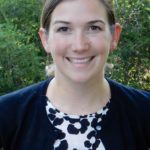
Clare Rudolph

Clare Rudolph

A relative of dengue, yellow fever, and West Nile, the Zika virus first appeared in Uganda in 1947. Most infections cause only a mild illness. However, women infected with the Zika virus while pregnant may have babies with microcephaly, a birth defect involving an abnormally small head and problems with brain development.

How does it spread?

Mosquitoes distribute the disease when they bite an infected person, and then bite another person without the virus. Mothers can also pass it to children during pregnancy and birth. Doctors have now documented cases spread through sexual contact as well.

Who’s at risk?

Anyone who travels to affected countries can contract the disease from an infected mosquito. Go online for the latest list. Doctors believe sexual transmission can occur before, during, after, and even in the absence of symptoms.

What are the symptoms?

Only about 20 percent of people infected with Zika virus become sick. Those who do typically have mild symptoms, including:

•          Fever

•          Rash

•          Joint or muscle pain

•          Headache

•          Red eyes

Signs can last from several days to a week. Most people don’t feel bad enough to go to the hospital. That means many recover without knowing which virus infected them.

Some evidence also links Zika to a rare neurological condition called Guillain-Barré syndrome. Signs of this illness include weakness in muscles of the arms, legs, and face.

How can I protect my family and myself?

For now, Florida is the only place in the U.S. where Zika has been transmitted by a mosquito. All other cases have been related to travel or were sexually transmitted.

Right now, Zika virus disease has no treatment or vaccine. However, you can still take steps to stay safe. Start by preventing mosquito bites, especially when you travel. Wear long-sleeved shirts and long pants, sleep indoors or under a mosquito net, and use insect repellants registered by the Environmental Protection Agency (find details online).

Take extra precautions when pregnant. Avoid traveling to areas where Zika is spreading. If your partner has lived in or traveled to an area with Zika, either abstain from sex or use condoms. If you’re pregnant and have recently traveled to a Zika-infected country, check in with your doctor, even if you feel fine. Right now, doctors are working hard to understand the link between Zika virus and microcephaly. Your story will help others understand the risks—and what to do about Zika.

Clare Rudolph recently joined the OB-GYN physician team at Barton Women’s Health.


Stormwater drawing contest for grades K-5

In an effort to help raise awareness with the younger generation about the importance of stormwater pollution prevention, the Nevada Department of Transportation is having a drawing contest for all Nevada students grades K-5.

Winners will become published artists, with the first place student’s artwork featured on the cover of the 2017 NDOT Stormwater Program brochure, and the second and third place students’ artwork featured inside of the brochure.

The Love NV Waters drawing contest is open to all Nevada students grades K-5 including charter and home-schooled students. Artwork will be judged based on creativity and artistry in depicting the student’s favorite activity at their favorite Nevada lake or river and/or showing an activity people can do to help prevent stormwater runoff pollution.

Information, entry and release forms are online. The deadline is Nov. 7.


Sheehan: Leading by example, hard work

Publisher’s note: Lake Tahoe News asked candidates for South Lake Tahoe City Council, Lake Tahoe Community College, Lake Tahoe Unified School District, Douglas County School District, South Tahoe Public Utility District and Lake Valley Fire Protection District a series of questions. We are running the responses in the order received. All profiles may be found under the Special Projects listing and then the 2106 November Candidate Profiles category.

Kelly Sheehan is running for one of two seats on the South Tahoe PUD board.

Kelly Sheehan is running for one of two seats on the South Tahoe PUD board.

Name: Kelly Sheehan

Age: 58

Job/profession: Owner/manager Steamers Bar & Grill

What boards, commissions, or other experience, including volunteering, do you have?: I served two terms on the St. Theresa school board, two terms St. Theresa Pastoral Council and am currently on the St Theresa Parish Finance Committee. I am currently the vice president of the board of  directors at the district, as well as the board’s alternate representative to the El Dorado County Water Agency.

Why are you seeking re-election to the South Tahoe PUD board?: I have gained so much knowledge these past four-plus years, leading me to believe I still have much to offer as a board member.

Why should voters vote for you over another candidate?: I have no personal agenda and base my decisions on what is best for the district and its customers.

What distinct experience or competency makes you uniquely qualified to lead effectively as an elected official?: I have been in management for most of my adult life. I have always tried to lead by example and hard work. Objectivity is one of my best traits.

Public agencies have been under scrutiny the last few years for lack of transparency and accountability. What will you do to ensure both?: The district has policies and procedures in place to ensure transparency. I, along with fellow board members and staff, have just completed ethics training. The district and its board are always mindful of the importance of transparency.

What stands out for you in the current budget that you support and that you would change?: The district is on a good path with the budget and long term planning. Staff has done an excellent job of prioritizing projects. It is definitely a balancing act to keep rates reasonable without ignoring the infrastructure. I would not change this direction.

Do you support current legislation for $15 minimum wage? Please explain: I struggle with the $15 minimum wage as I am in an industry where the employees receive gratuities. As a small business owner, payroll is always one of your largest expenses. Someone, most likely the consumer, is going to have to help shoulder that cost. But I am a firm believer in a fair, living wage.

Do you support Proposition 55? Please explain: Yes, especially for the benefit to K-12 and community college education.

Describe three attributes for a successful board: Respect for your fellow board members, even when you may disagree with them.
Objectivity: making decisions based upon what is best for the district and all of its customers, leaving your personal feelings and benefits aside.
Preparedness: do your homework and make informed decisions.
By the way, I feel our current board has all of the above attributes.

What are your thoughts about public employee defined benefits?: There has been such a large shift between the benefits of public and private sector employees in the last 40 years for multiple reasons. I feel the most important thing about public employee benefits is that they don’t become an unfunded liability.

Please explain your position on contracting out work normally done by staff: This something that is done for various reasons, most importantly efficiency and cost effectiveness. I have no problem with this practice as long as those are the factors considered.

What is your 10-year vision for STPUD?: To continue to provide clean and safe drinking water, as well as environmentally responsible wastewater collection, treatment, and export for our community in a financially responsible manner.

What as an elected official are the three things you are most proud of during your tenure?: I don’t know that I can name three specific things. But, I know that I have strived to handle myself in a gracious and adult manner even when being publicly criticized for decisions I have made. This was hard for me. By nature, I tend to be a people pleaser, I want everyone to be happy. But I know that cannot always be the case. I have based every decision made since being a board member on fact and the good of the district and its customers, whom I represent. I have never made a decision based on what would be easiest and most beneficial for myself.

Which votes would you change and why?: I would not change a vote.

Being on a board means working as a team. How will you work with the other board members for the greater good of the community?: I will continue to listen and be prepared, I will respect my fellow board members’ opinions, while ultimately basing my decisions on fact, the good of the district and its customers.

What should be the three main priorities for the board?: 1.) Provide clean and safe drinking water.
2.) Provide environmentally responsible wastewater collection, treatment, and export.
3.) Make sure our infrastructure is able to provide protection against the devastation of forest fires.
Further to achieve all of the above in a fiscally responsible manner.

How do you balance the economic situation of the community with the infrastructure needs of the district?: As I have said before, this is a balancing act. We need to be sensitive to our local economy, but realize the infrastructure ages regardless. We can’t ignore the infrastructure. But, we need to explore every funding source, such as state and federal grants in an effort to keep our rates affordable.

STPUD is often criticized for having some of the highest paid public employees on the South Shore. Any comment?: It takes a significant responsibility and skill to maintain the district’s systems, especially in Lake Tahoe’s sensitive environment. We need to be able to attract and maintain a skilled work force. This is not to say that we should not ask for exceptional performance in return for one of the best local public compensation packages.

When it comes to permits for construction, the district has high fees. Do you believe they are fair? Why or why not?: I think they are bit high. I would like to see the board do some research and perhaps consider more affordable options.

Tell us something about yourself that people may not know: I am actually quite shy. Speaking in public is hard for me. I tend to get tongue tied around people I do not know and am not comfortable with. Once I do feel comfortable though, this all changes.

Opinion: Rationing education in Calif. schools

By Joe Mathews

Californians think we have a system of public education. What we really have is a system for rationing public education.

I got a taste of this in the spring, when I took my 5-year-old son to our local school district offices to determine his educational future. This being California, the determination was made not by any test or assessment but by a lottery. An administrator pulled names out of a hat to fill spots in our elementary school’s new Mandarin immersion program.

Joe Mathews

Joe Mathews

The beginning of the academic year is when we hear fine speeches about how our state is committed to doing the very best for every child. But when you see firsthand how educational resources are allocated, California schools leave much to chance.

We do this for two reasons: scarcity and avoidance. Educational resources here are scarce—there is simply more demand for schooling than the state’s wobbly budget system can accommodate. And so we use lotteries and formulas, so that our officials can avoid the work of deciding who deserves resources, and so that Californians can avoid reckoning with our collective failure to support public education.

By all reliable accounts, there aren’t nearly enough good, experienced teachers in our schools. The state offers only 180 days of instruction (when research suggests there should be more than 200 days). And the inadequacy of newer programs and schools offered by some districts in the name of educational choice only underscores the ongoing scarcity. There are simply not career-readiness programs, Advanced Placement classes, charters, magnets, or language immersions to meet the demand for high-quality options.

There’s little hope of trying to do more to meet those needs, since California decouples school funding from academic needs. Our state constitution’s school funding formulas, known collectively as Proposition 98, guarantee only a portion—you might say a ration—of the state budget to schools. (Tellingly, that money is supplemented by a small amount—usually $1 billion or less than 2 percent of annual education funding—from the state lottery).

In the absence of funds to meet all our students’ needs, we turn to education’s version of lotteries to allot scarce resources. State law (mirroring federal guidance) directs school districts to use a lottery system for charter school admissions once the number of pupils who want to enroll exceeds the number of spaces. Districts with magnet programs do the same. Many of these lotteries have complicated rules and exclusions, often in the name of diversity, as well as with the aim of keeping kids in their neighborhood schools, or keeping siblings together.

Such lotteries are not all that fair. Research shows the lotteries favor students whose parents have the time and resources to investigate their local educational possibilities and sign their children up in the first place. (We parents gotta play to win). Then there’s a bigger question: Does “random” allocation of educational resources really represent justice?

This year, the California Supreme Court, in a 4-3 vote, declined to hear challenges that said California doesn’t provide enough school funding or qualified teachers to meet the state’s constitutional guarantees of education for all. In declining, the court endorsed the argument that, while there might be problems with funding and teachers, these weren’t constitutional problems—because the impact of bad policies was arbitrary, and not felt by any particular group of students.

Mariano-Florentino “Tino” Cuellar, an associate justice of the Supreme Court, dissented powerfully from that logic. Curtailing access to educational opportunity, the justice argued, doesn’t become justifiable simply because it’s done arbitrarily.

“Arbitrary selection has at times been considered a means of rendering a governmental decision legitimate,” he wrote. “But where an appreciable burden results—thereby infringing a fundamental right [like the right to an education]—arbitrariness seems a poor foundation on which to buttress the argument that the resulting situation is one that should not substantially concern us.”

The brilliantly cynical filmmaker Orson Welles once said,  “Nobody gets justice. People only get good luck or bad luck.” He wasn’t wrong—our parents, where and when we were born, the people we happen to meet, all influence the direction our lives take, through no fault or deed of our own.

My own son was lucky. His name was pulled 16th out of the hat, winning him the place he now enjoys in that Mandarin immersion kindergarten. His own luck will transfer to his younger brother, who is automatically eligible to join the program when he reaches kindergarten age.

But California is not as fortunate in leaning its educational system so heavily on luck. Our schools are supposed to be equalizers, helping counter the lottery of life. Instead, they are emulating it.

            Joe Mathews writes the Connecting California column for Zócalo Public Square.


Lively questions addressed in Nev. gaming law book

By Richard N. Velotta, Las Vegas Review-Journal

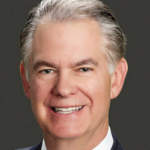
Greg Giordano

Greg Giordano

What kind of paperwork do I have to file to go to work in a casino?

How bad do I have to be to be listed in Nevada’s “black book?”
And what the heck is the “gray list?”

Those are some of the questions answered in the new edition of the “Nevada Gaming Law Practice and Procedure Manual,” unveiled last month in a reception during a gaming law conference at UNLV.

Greg Giordano, a gaming attorney with the McDonald Carano Wilson law firm, was the chief editor for the book, published by the State Bar of Nevada Publications Department and the Gaming Law Section of the State Bar of Nevada, but the 19 authors are an all-star team of practicing gaming lawyers.

Read the whole story


Evacuations because of fire near Mammoth

By Associated Press

MAMMOTH LAKES — Firefighters are battling a wildfire in the Eastern Sierra that has led to the evacuation of a campground and several ranches and private developments near Mammoth Lakes.

The U.S. Forest Service says the blaze broke out Saturday about 7 miles north of the ski resort town along Highway 395.

It has burned at least 500 acres of brush and timber in Inyo National Forest, sending a plume of smoke visible for miles along the highway corridor.

Officials say the fire forced an unknown number of people to evacuate from the Big Springs campground, a popular climbing area called Clark Canyon and nearby ranches and private developments.

However, they say there are no threats to Mammoth Lakes.


Grants keep injured athletes mobile

Truckee’s High Fives Foundation is awarding empower grants to two people who have suffered spinal cord injuries to help them have more active lives.

Taylor Fiddyment, 22, was injured in 2011 in an ATV accident that left her paralyzed. She has worked with the High Fives Foundation, receiving prior grants that have brought her skiing, rock climbing, personal training and physical therapy.

The grant is for a freewheel modification for her wheelchair that will allow her access to terrain normally difficult for standard wheelchairs. The freewheel is attached to the front portion of the chair near her feet.

Truckee resident Jeff Andrews’ grant is for massage therapy with Karen Stubbs at the CR Johnson Healing Center.

In March 2014, Andrews suffered a spinal cord injury that resulted in limited use of his hands an legs in a snowboarding accident that occurred at Sugar Bowl.

A new policy allows local athletes with life-altering injuries to workout in the CR Johnson Healing Center for free with trainer Jack Powell. The High Fives Foundation is a Tahoe-based nonprofit that supports the dreams of mountain action sports athletes by raising injury prevention awareness while providing resources and inspiration to those who suffer life-altering injuries.


Study: Calif. drought could last indefinitely

By Tracy Bloom and Eric Spillman, KTLA-TV

A grim study led by a UCLA geography professor revealed that the current five-year drought in California could last indefinitely, with the resulting arid conditions becoming “the new normal” for the state.

The study, which looked at prolonged periods of dryness in California over the past 10,000 years, was published Thursday in the Nature.com journal Scientific Reports.

It noted that the state’s drought in the 21st century has been the most intense ever recorded, with drier than normal conditions in 10 of the past 14 years; the last three years have also been the hottest and driest in about 120 years.

Read the whole story


Kings Beach center likely to be privately operated

North Tahoe Public Utilities District and Laulima Development LLC are starting lease agreement talks for the company to operate and maintain the North Tahoe Event Center in Kings Beach.

Three groups initially sought to operate the lakefront entity. The board chose Laulima as the preferred operator.

A primary goal of the district’s is to seek financial solvency for the recreation and parks department. One idea was to explore the potential of a public-private partnership to operate and maintain the North Tahoe Event Center. The center has consistently operated at an annual operating deficit averaging $90,000 over the last 10 years. An additional $80,000 a year is needed to be set aside for deferred maintenance, which also hasn’t been achieved.

Maintaining access and affordability to the community is an element of the agreement with Laulima and will also be included in lease negotiations.


Steve Myers — 1921-2016

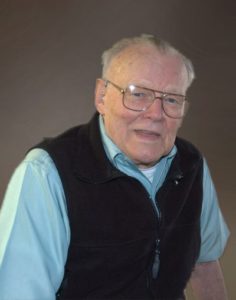
Steve Myers

Steve Myers

Steve Myers, the builder of the old drive-in theater in South Lake Tahoe and one time owner of Echo Summit Ski Area, died June 24, 2016. He was 94.

Steve was born July 7, 1921, in Minneapolis to Frank Colby Myers and Mildred Dyer Myers. The family soon moved to Oakland.

Steve graduated from UC Berkeley in 1942. He then joined the military, what with the U.S. having entered World War II. Steve served with the 101st Airborne Division over Utah Beach in the invasion of Europe and over Holland. He transferred to the 501st Parachute Infantry where he fought in the Battle of the Bulge.

Steve moved to South Lake Tahoe in 1947 and built the Tahoe Drive-In Theatre. Owning the theater was a summer job for Steve, allowing him in the winter to attend Stanford University where he earned his MBA. This is where he met Jean Thayer. There were married in 1953.

Jean had never seen it snow before, however,with their purchase in 1957 of the Echo Summit Ski Area that would change.

In 1962 they cast an even wider business model and began to get involved in retail stores in the state line area. In 1970 they sold the ski area and theatre and dove head first into their growing retail business.

They moved to Fairfield for health reasons.

Jean Myers died on April 5, 2008.

The Myers Trust, administered on their behalf by the El Dorado Community Foundation, will provide an ongoing financial support for learning and exploration for generations of South Lake Tahoe residents for years to come.

There will be a celebration of life on Oct. 22 at 2pm at Chapel of Flowers, Cherokee Memorial Park in Lodi. RSVP to tahoesum@gmail.com or call the El Dorado Community Foundation at 530.622.5621.