Nevada gardeners tame desert

By Ashley Andrews, Reno Gazette-Journal

More than 170 years ago, a woman named Gertrude Jeckyll was born in Mayfair, London. Eighty-nine years later, she died. Gertrude filled the years in between to the brim. She created a line of flower vases, and she documented fading facets of 19th-century life. Gertrude published more than 300 photos. She wrote more than 15 books and 1,000 articles. Gertrude was a painter. She also created more than 400 gardens.

“There is no spot of ground, however arid, bare or ugly, that cannot be tamed into such a state as may give impression of beauty and delight,” she said.

I am glad to know Gertrude understood the plight of Nevada gardeners. Our spot of ground comes with challenges. Its organic matter content is often less than 1 percent. Because of this, Nevada soil has a decreased ability to absorb and store water, hold plant nutrients and support soil biota. Some consider this the biggest obstacle to gardening in our area.

Read the whole story


Continued privatization of water on the West Shore

By Kara Fox, Moonshine Ink

By 2025, all water systems in California must be metered. This requirement proved too much for Mid-Sierra Utilities, which owns and operates Tahoe Cedars and Madden Creek water companies in Homewood and Tahoma.

“I didn’t want to put in the meters, so I sold it,” said Robbie Marr, president of Mid-Sierra Utilities.

But instead of selling to the Tahoe City Public Utility District, which put in offers for the small water companies in 2013 and again earlier this year, Marr and his siblings decided to sell to San Dimas-based Golden State Water Company, which has 39 water systems across California. Marr said the sale has not been finalized and an application still needs to be submitted to the California Public Utilities Commission, which regulates private water and sewer companies. Marr believes selling to Golden State is the best choice for his family, and for customers.

Although Golden State boasts 1 million customers and 500 employees throughout California, the TCPUD believes the right choice to be for it to take over Mid-Sierra Utilities water systems and is not backing down despite the impending sale. The public utility district has acquired 17 private water systems since it was founded in 1938. There are currently 10 private water companies along the West Shore.

Read the whole story


Snippets about Lake Tahoe

·       South Lake Tahoe is looking for people to commit to a two-year stint on the Planning Commission, Airport Land Use Commission, Building/ADA Board of Appeals and Parks and Recreation Commission. Applications are online and are due Dec.30.

·       Tahoe Truckee Excellence in Education is celebrating its 30th anniversary. During this time the group has spent more than $3.1 million on educational programs in Tahoe Truckee Unified School District.

·       TRYP’s South Shore mixer is Oct. 12, 6-9pm at the Hard Rock Café inside Harveys. Attendees are encouraged to wear pink in honor of the Hard Rock Cafe’s Pinktoberfest celebrations. The North Shore mixer is Oct. 18 from 5:30-8:30pm at The Local in Incline Village. One free drink and complimentary appetizers will be provided. Cost is $10 for non-members, free for members.

·       Sierra Nevada College was granted full membership in the National Association of Intercollegiate Athletics.


Slots and free drinks no longer a guarantee

By Thomas Moore, Las Vegas Sun

Free booze, handed out by casinos to reward regular gamblers is a tradition that may be going by the wayside.

“There’s always been this unspoken rule that the bartenders decide who gets what,” said Scott Roeben, a blogger who reported on the issue last week. “They’re watching the play and if you don’t play enough, they say you gotta play more. They’re automating that system … so there’s a very one-to-one correlation between play and the rewards.”

Roeben thinks automating the process is a way for the casinos to tighten up on comps and ensure people are really gambling before they get free booze.

On his blog vitalvegas.com, Roeben posted pictures of a system at Caesars Entertainment properties that feature red and green lights that tell the servers when to hand out comps. In a statement, Caesars officials confirmed they rolled out a comp-validation system in all its Nevada resorts, which includes Harrah’s Lake Tahoe and Harveys.

Read the whole story


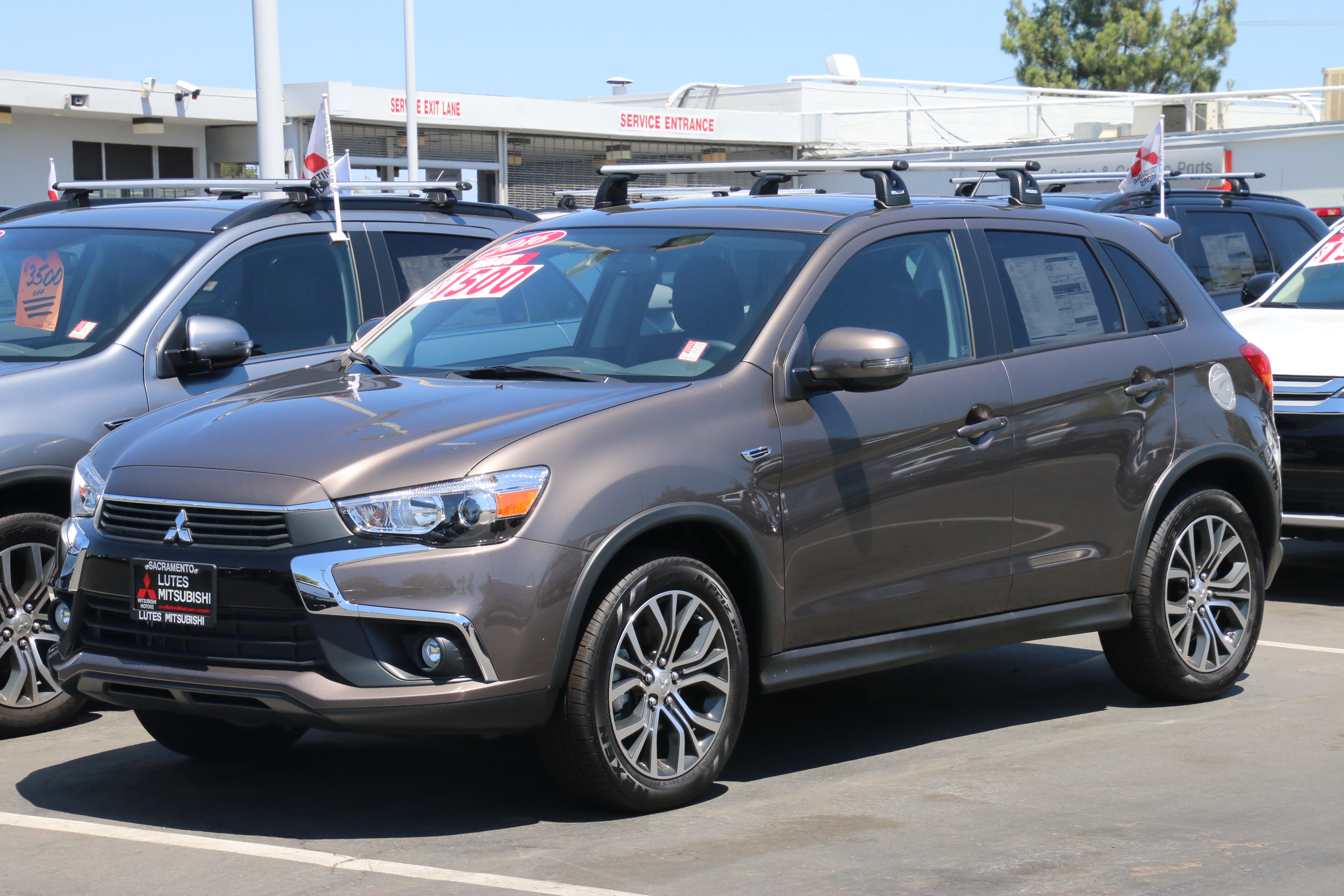
Road Beat: Mitsubishi Outlander Sport shines

The Mitsubishi Outlander Sport is a stout, but compact CUV. Photos/Larry Weitzman

The Mitsubishi Outlander Sport is a stout, but compact CUV. Photos/Larry Weitzman

By Larry Weitzman

Good things come in small packages, and you could say this new Mitsu Outlander Sport can be classified as such. And the Outlander Sport is a small CUV being just 171 inches long or about 10 inches shorter than your average compact SUV such as the CR-V and RAV4. But since it is built on the same 105-inch wheelbase as the 185-inch-long Outlander, it is not only stout and has copious second row cabin room, but it means the front and rear overhangs are short giving it outstanding terrain clearance and ground clearance (8.5 inches).

Since the chassis is shared, the overall width remains at over 71 inches. When you slip inside, it almost feels like a full size SUV. Outside is a very attractive design following in the theme of the bigger brother Outlander. The front end is smooth and attractive and that theme is carried through its side view, only the window line is truncated. While it is still a great looking ride it looks a little stubby. Remember the Sport carries almost the exact same dimensions (height is about an inch shorter) as the bigger Outlander other than in length.

There are some other benefits carried over from the Outlander such as the identical size 18-inch alloy wheels and generous 225/55X18 inch tires and the identical track of 61 inches. They also share engines in the 2.4L DOHC, 16 valve inline four that belts out 168 hp at 6,000 rpm and a 167 pounds of twist at a very low 4,100 rpm, so as you might suspect this motor pulls strong from the bottom end. It is connected to CVT with the ability to shift six preselected gears, although CVTs are most efficient when left alone. It always picks the most efficient ratios. However, the pre selects can be useful for engine braking when going downhill or in heavy traffic at constant speeds.

Specifications Price as tested $25,995 plus $850 for shipping Engine 2.4L DOHC, 16 valve inline four 168 hp @ 6,000 rpm; 167 lb.-ft. of torque @ 4,100 rpm Transmission CVT automatic with six preselected gears Configuration Transverse mounted front engine/FWD/AWD Dimensions Wheelbase 105.1 inches Length 171.5 inches Width 71.3 inches Height 64.2 inches Track (f/r) 60.6/60.6 inches Ground clearance 8.5 Weight 3,109 pounds GVWR 4,343 pounds Weight distribution (f/r) 60/40 % Fuel Capacity 16.6  Wheels 18X7 inch alloys Tires 225/55X18 inch all season Steering lock to lock 3.3 turns Turning circle 34.8 feet Cargo capacity behind front row/second row 49.5/21.7 cubic feet Performance 0-60 mph 8.41 seconds 50-70 mph 4.89 seconds 50-70 mph uphill 7.22 seconds Top speedwell into triple digits Fuel economy EPA rated 23/28/25 mpg city/highway/combined. Expect 27-28 overall in rural country driving and 33-34 mpg on the highway at legal speeds.

Specifications
Price as tested $25,995 plus $850 for shipping
Engine 2.4L DOHC, 16 valve inline four 168 hp @ 6,000 rpm; 167 lb.-ft. of torque @ 4,100 rpm
Transmission
CVT automatic with six preselected gears
Configuration
Transverse mounted front engine/FWD/AWD
Dimensions
Wheelbase 105.1 inches
Length 171.5 inches
Width 71.3 inches
Height 64.2 inches
Track (f/r) 60.6/60.6 inches
Ground clearance 8.5
Weight 3,109 pounds
GVWR 4,343 pounds
Weight distribution (f/r) 60/40 %
Fuel Capacity 16.6
Wheels 18X7 inch alloys
Tires 225/55X18 inch all season
Steering lock to lock 3.3 turns
Turning circle 34.8 feet
Cargo capacity behind front row/second row 49.5/21.7 cubic feet
Performance
0-60 mph 8.41 seconds
50-70 mph 4.89 seconds
50-70 mph uphill 7.22 seconds
Top speedwell into triple digits
Fuel economy EPA rated 23/28/25 mpg city/highway/combined. Expect 27-28 overall in rural country driving and 33-34 mpg on the highway at legal speeds.

This same engine is the base engine for the longer Outlander, but in the Sport the base engine is a 2.0L inline four that produces 148 hp at 6,000 rpm and 145 pounds of twist at 4,200 rpm. In my bigger Outlander test vehicle of a few months ago it had the 224 hp 3.0L V-6. Performance of the Sport while not quite as quick as the Outlander V-6 was still peppy scampering 0-60 mph in 8.41 seconds. Backing that up was a level passing time of 4.89 seconds and an uphill run of 7.22 seconds. Because of the CVT it feels peppy and stronger than the numbers reflect.

Fuel economy is EPA rated at 23/28/25 mpg city/highway/combined. Overall with almost no time spent on the freeway it averaged 27-28 mpg about average for the class. However, in a two-way run to South Lake Tahoe and back to Placerville the Sport returned a remarkable 34.2 mpg averaging 28.0 on the uphill climb and 40.4 mpg returning to Placerville. Part of the fuel mileage secret is the Sport’s weight of 3,109 pounds. Its GVWR 4,343 pounds meaning it has a huge payload of over 1,200 pounds. That’s stout.

Underpinnings are also similar to the bigger brother’s state of the art set-up, MacPherson struts up front and a multilink system out back. It also shares the electronic power steering rack with 3.3 turns lock to lock among other parts bin engineering. Don’t get me wrong here, there is nothing wrong with sharing parts and here it’s a good thing as the Sport really is the smaller brother of the Outlander which is a great product. If you think about it, they even share powertrains.

Riding on the same wheelbase and almost 500 pounds lighter handling should be good and it is. With those big wheels and tires it has plenty of grip and it goes where you point it. But that takes some effort in spirited driving as the steering is a bit slow creating a feeling of understeer.

Since the Sport is a shortened Outlander, the Outlander’s improved ride quality, quiet and smoothness transfers right over so the Sport while on the firm side of riding quality still delivers an excellent balance. Road and wind noise are inaudible with special attention to window sealing. The engine spins a low 2,200 rpm at 70 mph.

Safety is also second to none with big four wheel discs (front ventilated) stopping the Sport in 41 feet from 40 mph. Its safety inventory includes a full alphabet soup of acronyms, a plethora of airbags and a rear view camera.

Inside is a leather interior and firm comfortable seats with the rear holding three people in reasonable comfort. The instrument panel has a big speedo and tach separated by an information center including trip computer info. The uncomplicated center stack is easy to use. Behind the front seats is 50 cubic feet of cargo volume and 22 cubes are behind the second row, a bit smaller than some other compact CUVs, but remember this Sport is about a foot shorter than those other vehicles it competes with.

Pricing makes the Sport a vehicle you should consider. This full boat, top of the line FWD Sport with leather and no options as delivered to the Road Beat stickers at $25,995 plus $850 for the boat ride from Okazaki, Japan. AWD will add $1,400. The only option package is NAV which stickers for $1,800. The new Sport shines on standard features and value and looks great in its new Octane Blue. Finally, Mitsubishi is the other car company that warranties their entire car for five years/60,000 miles and the power train for 10 years/100,000 miles.

Larry Weitzman has been into cars since he was 5 years old. At 8 he could recite from memory the hp of every car made in the U.S. He has put in thousands of laps on racetracks all over the Western United States.


Nevada pot ballot measure too close to call

By Colton Lochhead, Las Vegas Review-Journal

Nevadans are split when it comes to legalizing recreational marijuana use, according to a poll of 800 likely voters commissioned by the Las Vegas Review-Journal.

Forty-seven percent said they would vote “yes” on Question 2 on the Nov. 8 ballot, 46 percent opposed the measure, and 7 percent remained undecided, according to the poll.

The proposed measure would let Nevada join the likes of Colorado, Washington, Oregon and Alaska in allowing the retail sale of marijuana to adults 21 years and older. It would also decriminalize the possession of less than 1 ounce of the drug.

Read the whole story


IVGID has money to help with bear boxes

Incline Village General Improvement District is offering $300 rebates for bear sheds to its residents.

Rebates are available for residential properties which install an approved bear shed or commercial properties which install an approved wildlife enclosure.

The rebate application is available online.

For more info, call 775.832.1284 or email wastenot@ivgid.org.


Letter: Northstar volunteers on trails projects

To the community,

On Sept. 17, more than 100 volunteers of Northstar California Resort gathered to reinvigorate the surrounding natural landscape. Northstar’s volunteers united in support of Vail Resorts’ annual EpicPromise Day and represented a portion of roughly 2,000 employees, nationwide.

Approximately 100 volunteers constructed almost two miles of the Elizabethtown Meadow Trail. The terrain is facilitated by the Truckee Trails Foundation and connects the Waddle Ranch Preserve and associated trails into the Tompkins Memorial Trail and connects to the Martis Valley area. An additional 20 volunteers landscaped Pocket Park in downtown Truckee including planting over 150 native plants, gathering over 50 pounds of trash ranging from micro-trash to large pieces of rusty metal and pipes, as well as clearing over 60 pounds of debris from Trout Creek to improve water quality.

“EpicPromise is a remarkable program and a strong example of Northstar – and the greater Vail Resorts’ – commitment to environmental sustainability and to the people in these mountain towns,” said Beth Howard, vice president and general manager of Northstar California Resort. “We appreciate the North Lake Tahoe area communities and are proud to partner with them for the greater good.”

EpicPromise acts year-round to uphold sustainability of the resort-area natural environment. Originally established in 2010, EpicPromise organizes 20,000 hours of company-sponsored employee volunteer time, executes on a variety of environmental initiatives annually, and contributes $7.8 million in charitable donations to 250 nonprofit partners. In 2015, Vail Resorts implemented the EpicPromise Foundation, which now allows the company to also support employees experiencing personal and financial challenges.


Cass Walker, Northstar


Editorial: LTUSD board – Davidson, Turnbull

Publisher’s note: The following endorsement is from Lake Tahoe News after a team of seven community members gathered to discuss who should be on the Lake Tahoe Unified School District board.

This will be the first election in which Lake Tahoe Unified School District residents vote for board members based on areas – aka, where they live – instead of everyone being at large. Two contested races are going on, with a third area only having one filer.

Bonnie Turnbull

Bonnie Turnbull

Annie Davidson

Annie Davidson

In choosing who to endorse Lake Tahoe News gives a great deal of thought as to the total makeup of the board. Normally, building a cohesive, well-run board is the goal. But with this election we believe it’s time to shake things up a bit.

For too long the LTUSD board has been a puppet for Superintendent Jim Tarwater. He controls the board instead of the board controlling him. After all, the board is his boss, which is often lost on these electeds. This is not to unequivocally say what Tarwater and the board are doing is bad. What we are saying is that those who disagree with him have found themselves silenced in some manner. This is never a good thing.

All entities need to have open dialogue, be able to agree to disagree without being disagreeable, and to welcome new ideas.

Two of the more innovative ideas to recently come into being in LTUSD – two-way immersion at Bijou Community School and growing domes at Sierra House Elementary School – were the inspiration of parents. Tarwater was initially against them and started to lead the board that way. But the parents were tenacious. Eventually they won, and therefore the students were the ultimate beneficiaries.

Tarwater also did not bring the issue of the community play fields to the board, but instead made it a staff decision not to be a partner with the city and Lake Tahoe Community College. While the outcome may have been the same, a stronger board likely would have demanded the topic be agendized for discussion and a vote.

Lake Tahoe News believes Bonnie Turnbull for Area 3 and Annie Davidson for Area 1 are the change the LTUSD board needs.

Turnbull, while she can be aggressive and difficult to work with, is a woman with conviction who has tremendous ideas. We hope she will be able to temper her personality just a bit in order to be a productive member of the board, while at the same time challenging the status quo.

She would be replacing Mike Doyle, who admits he is the quietest board member. At meetings he appears uninterested, unengaged and a rubber stamp for the administration. The community deserves better representation. He also chose not to respond to LTN’s questions by the deadline, saying he was too busy.

While Davidson and Larry Reilly are both well respected in the community, Davidson brings more to the table. In August she had already read the district’s Education Technology Plan, the 2014-15 and 2015-16 budgets, Local Educational Agency document, Local Control Accountability Plan and Measure G bond projects information. And she said she was able to discuss any of them in detail.

Reilly when asked the same question – What do you know about the strategic plan, finances, debt, goals of the school board? – told LTN, “Again, I am currently reviewing the data.”

There isn’t time for that – we need someone who gets the intricacies of the district now. Being a classroom teacher and coach are much different than being a board member.

Another strike against Reilly is that his wife is a high school counselor. This could present a conflict of interest when it comes to voting on staff contracts and other issues. The district several years ago had this same problem with the Romagnolos – one was on the board, the other a principal. Eventually the board member stepped down.

We would like to take this opportunity to commend Troy Matthews for asking to answer Lake Tahoe News’ questions even though he is running unopposed in Area 4. This shows he wants people to know who he is, that he is conscientious, and cares about the community and district.


Vacancies in home-sharing insurance policies can create a living hell

By Max A. Cherney, Reveal

Walter Baronowski didn’t think there was anything peculiar about a couple of guys renting his mother’s Florida house. He was relatively new to vacation rentals and managing the investment property, listing it on sites such as Airbnb and Expedia Inc.-owned HomeAway. Last-minute rentals weren’t a frequent occurrence, but it was, after all, Thanksgiving week, and Baronowski figured the two guys wanted to get away.

The men sounded normal over the phone and a brief back-and-forth through HomeAway’s messaging service. Plus, they were paying about $4,000 to book the place for the weekend, and the cash had arrived in his mother’s account. Nothing appeared awry with the rental until Baronowski’s cleaning guy arrived to find the place had been burglarized.

Baronowski’s erstwhile guests had broken into locked closets and storage areas and purloined what he later determined was more than $6,000 worth of property. A handgun, dumbbells, even his mother’s luggage were among the missing items, as well as one of Baronowski’s backup credit cards and several checks stolen from the middle of a checkbook.

“When I spoke with the people, they sounded normal, they checked into the property, and there were no red flags until they checked out,” Baronowski told Reveal from the Center for Investigative Reporting. “I didn’t learn until later that they paid on two separate credit cards with two separate names.”

Horror stories such as Baronowski’s – including trashed units and evendeaths – have been percolating in the American consciousness as Silicon Valley’s so-called sharing economy companies have turned inefficiencies into fortunes.

Although burglary by guests is decidedly rare, Baronowski’s experience serves to highlight how consumer habits have yet to catch up with the underlying complexity of the sharing economy. And it serves as yet another reminder that it’s worth reading the fine print of Silicon Valley’s promise to change the world with websites, clicks and apps.

Neither Baronowski’s homeowners insurance nor HomeAway would cover the theft.

Unlike tech giants’ preference to “move fast and break things” – to quote an old Facebook company motto – the insurance industry is lumbering toward new policies that help home sharers. As a result, what’s available is a motley bevy of policies that often contain vast differences in terms of what is and is not covered, according to the trade group Insurance Information Institute and representatives from four insurance companies.

“Many people kind of know they should talk with their insurer but don’t want to because they’re afraid it will cost them more,” Insurance Information Institute spokeswoman Janet Ruiz said in a phone interview. “That’s the wrong approach. You should talk to your agent so you know what to expect if something happens.”

Many homeowners and renters insurance policies, however, don’t cover frequent short-term rentals, which for the insurance industry would be classified as a business and thus require commercial insurance.

In a prepared statement, MetLife spokesman David Hammarstrom said the company is “working on creating specific policy language that will address home sharing, which did not exist at the time our current policies were created,” but he did not provide a time frame for when that would be implemented. Currently, MetLife’s homeowners policies do not, in general, cover home sharing, he wrote.

But Ruiz said some homeowners wouldn’t require additional coverage if a property is rented for just a few days every year. And so long as a unit isn’t listed beyond that threshold, the policy may cover burglary and damages, among other things – but coverage for lost rental income is less likely.

“Generally speaking, liability and property insurance coverage is provided (subject to all policy provisions) if you do a one-time short term rental of your home while you are not residing in the house at the time of the rental,” State Farm spokesman Sevag Sarkissian wrote in a prepared statement, adding that renting a room while still occupying the rest of the home likely would be covered by the homeowners policy.

To bridge the gap in insurance, other companies are experimenting with new kinds of coverage that are much cheaper than a commercial policy. In August, Allstate launched a pilot program in six states – Arizona, Colorado, Illinois, Michigan, Tennessee and Utah – that for $50 per year adds additional protection for home sharers, and Allstate spokesman Justin Herndon said the company plans to add another half-dozen or so states in early 2017. The pilot policy would have protected Baronowski from the burglary.

For its part, HomeAway offers insurance through CBIZ, a third-party, publicly traded financial firm, that would cover renter burglary, among other things. Because his mortgage has a homeowners insurance policy, Baronowski said he didn’t think he needed it.

Airbnb offers guarantees – but not theft insurance – that aim to protect hosts from the existing holes in insurance coverage. But those too have fine print that excludes certain items and is not a contractual obligation. The Insurance Information Institute and insurance companies such as Allstate believe it’s important to add a home-sharing policy, just in case.

“Airbnb has limits on what they’ll cover, and you need to know what Airbnb will really cover and when,” Ruiz said. “And you need to know what your insurance will cover and when.”

For academics, the issue of fine print is decidedly straightforward. Arecent paper titled “The Biggest Lie on the Internet: Ignoring the Privacy Policies and Terms of Service Policies of Social Networking Services,” by Jonathan Obar of York University and Anne Oeldorf-Hirsch of the University of Connecticut, used empirical evidence to demonstrate what has become the conventional wisdom.

“There’s a culture of not reading these policies. In some cases, companies are assuming that people are going to skip policies. And for their part, people don’t think anything is going to happen to them if they do.”— Assistant Professor Jonathan Obar, York University
Focusing on the privacy policy, the authors presented a fake social network with some jarring policies for users – giving up their first-born child and handing data to the National Security Agency directly, for example – and observed what happened when students signed up.

The results do not bode well for our future.

Of the students asked to sign up for the new social media site, 74 percent skipped the privacy policy altogether. Those who did read the fine print spent 73 seconds on the privacy policy and 51 seconds on the terms of service – which, respectively, should have taken 30 and 16 minutes, on average, to read.

“There’s a culture of not reading these policies,” Obar said in a phone interview. “In some cases, companies are assuming that people are going to skip policies. And for their part, people don’t think anything is going to happen to them if they do.”

Aleecia M. McDonald, a nonresident fellow at Stanford University’s Center for Internet and Society, suggests fine print is “stuffed in our faces so often” that people have become desensitized to its importance. We see it as another interruption. In a 2008 paper, McDonald and Lorrie Faith Cranor, a professor at Carnegie Mellon University, estimated that reading only the privacy policy (not including terms and conditions) of major sites people visited over a year would take an average of about 200 hours.

But even taking the time to read the documents entails several more hurdles.

“To understand these documents, you have to be a geek, a wonk and a nerd,” she said, referring to the amount of legal and technical jargon. To further complicate the documents, many of the companies hedge claims by using what McDonald called “weasel words,” which are effective at encouraging people not to take action.

Although McDonald agrees it’s ridiculous to expect Americans to read every privacy policy, reading the terms of a couple of websites used for a vacation rental site, or paying an attorney to do so and explain it, is not outrageous.

“While we’ve been trained out of reading these terms of service – it’s like yes, yes, yes, get out of my face – this is a time people really need to pause and think about what could go wrong,” McDonald said.

For his part, Baronowski readily admits that he assumed HomeAway would do more than it agrees to and that he didn’t read its policies closely. He also made the assumption that HomeAway would offer the same level of protection for its hosts as its rival, privately held Airbnb, which, according to spokesman Nick Shapiro, would have reimbursed Baronowski for the stolen property and the loss of rental revenue. Baronowski said he knew Airbnb offered some form of protection in addition to the security deposit, but not the details.

HomeAway places the burden of payments on the person renting out his or her property. In an emailed statement, HomeAway Chief Services Officer Jeff Mosler told Reveal that it suggests that the host talk on the phone with the guest, verify the person’s identity via internet searches and get a copy of his or her identification, among other things.

“As part of the client services agreement to sign up for HomeAway Payments,” Mosler wrote, “owners and property managers appoint Yapstone as a limited partner to provide online payment services. In this relationship, owners and property managers still maintain liability for chargebacks.”

Contract aside, Baronowski doesn’t think the company handled his situation appropriately. In addition to the stolen property, Baronowski also was out rental income of about $3,000 and a security deposit of $1,000. That’s because HomeAway doesn’t collect the cash itself, but rather works with a third party, YapStone, to process payments – and YapStone figured out, too late, that the credit cards used by the burglars were stolen. Although HomeAway markets the payments service asHomeAway Payments, the company wouldn’t handle Baronowski’s service inquiry, referring him to YapStone.

YapStone did not return a request for comment.

Both HomeAway and YapStone invest in fraud detection and prevention technology and operations, but risks still exist, which is why HomeAway recommends the additional security measures, according to Mosler.

In Baronowski’s email exchanges with YapStone customer service, reviewed by Reveal, the company refused to compromise. It was Baronowski’s responsibility to ensure that the renters weren’t fraudsters, YapStone reps told him – and to investigate the potentially mishandled transaction, they would charge him an additional $25 fee for each one.

“If I’m paying for transaction processing, I expect to get something for the service. Isn’t fraud protection a part of that service?” Baronowski said. Although YapStone eventually waived the fee, Baronowski never got the rental income.

“They were just so rude about it,” he said. “They didn’t help with anything. They didn’t even offer an apology. For a multibillion-dollar company (parent company Expedia), it would have been nothing.”

Speaking with Reveal, HomeAway spokesman Jordan Hoefar reiterated that the company’s terms spell out that it does not bear the responsibility to reimburse hosts for losses and encouraged Baronowski to work with local law enforcement to recover his property. Baronowski filed a police report, but Fort Lauderdale police did not return Reveal’s requests for comment about progress on the case.

Additionally, because HomeAway doesn’t process the payments directly or see the revenue flow through its own accounts, it has no mechanism to reimburse Baronowski for the lost sales, according to spokesman Hoefar.

Airbnb, HomeAway and other vacation rental firms insist that incidents such as burglary or a home being trashed are rare. “Of the millions and millions of travelers, we’re talking about percentages of percentages,” Hoefar said. Airbnb echoed the sentiment, citing millions of successful bookings and relatively few issues.

The anecdotal evidence, what little is public, appears to bear out what the vacation rental firms insist: Reveal did not find an issue like Baronowski’s that was logged with the Better Business Bureau for HomeAway. That’s not to say that vacation rental firms didn’t have their share of complaints.

For example, hundreds of similar issues have been filed with the Federal Trade Commission, according to documents obtained by Reveal through the Freedom of Information Act, and the Better Business Bureau received hundreds of complaints for both Airbnb and HomeAway. And in Airbnb’s case, there is a website dedicated to horror stories from both hosts and guests.

As of publication, Baronowski says that, conservatively, he’s spent about 200 hours dealing with the aftermath of the burglary, following up with police and dealing with customer service at HomeAway and YapStone, as well as financial institutions. He’s frustrated by the situation but, aside from costly and lengthy litigation – which, because of the terms, he very well might lose – he has little recourse.

“Baronowski is trapped in a time where we’re still figuring out the edges,” McDonald said.