2 Truckee teens accused of tagging public buildings

Two Truckee teenagers were arrested Oct. 12 on felony vandalism charges.

During the last several months the Truckee Police Department has received multiple reports of graffiti on the walls of numerous businesses along the Highway 89 south of Deerfield Drive, the new mouse hole pedestrian crossing as well as inside Truckee High School. The same 15- and 16-year-old suspects are also accused of spray painting graffiti on the new Trout Creek Hiking Trail and multiple businesses along the Pioneer Trail business district.

The vandalism has caused thousands of dollars in damage.

Officers were also able to identify additional unreported locations the suspects vandalized. A third, lesser involved 15 year old suspect was charged with one count of misdemeanor vandalism tagging.

— Lake Tahoe News staff report


Tahoe athletes take a stand on non-sport issues

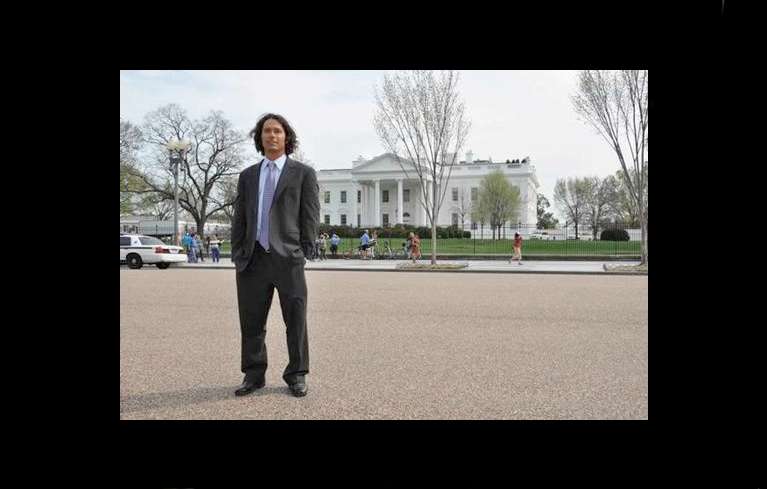
Jeremy Jones of Truckee takes his cause to the White House. Photo/Protect Our Winters

Jeremy Jones of Truckee takes his cause to the White House. Photo/Protect Our Winters

By Dave Zook, Moonshine Ink 

Tahoe’s pro athletes. They hone their craft to a level attainable only by an incredibly few, and their abilities are merely one factor that got them there. How many skiers, for example, do we all know that have mind-bending prowess on snow, but are not in the professional ranks? Athletes are required to also be professionals in self-promotion, social media, networking, and more, and in the course they have become some of the most well-known and celebrated names in Tahoe.

Some athletes take their celebrity to the next level and become involved in the social, political, or environmental realm, adding up to a serious juggling act. These politically-oriented actions bring a new dynamic, and can usher in both criticism and praise. Locally, this discussion has become more relevant than ever in the shadow of the proposed Village at Squaw Valley Specific Plan, and begs the question: Where does the role of professional athletes lie in areas outside of their sports?

Truckee resident Jeremy Jones, arguably the most well-known big mountain snowboarder of all time, has lived this question firsthand. He moved into the political arena in 2007 by starting Protect Our Winters, a nonprofit with its core mission to fight climate change.

Read the whole story


Letter: Supporting Turnbull for LTUSD board

To the community,

You may have heard of Bonnie Turnbull thanks to the excellent presentation she has been giving in multiple venues around town on global climate change, how it may affect Tahoe, and how we as a community can work together to slow climate change.

I love Bonnie’s presentation because it is simultaneously fascinating, realistic, and optimistic. After watching it I not only feel empowered to tackle solutions, I feel excited about embarking on this problem particular to our era.

Now, Bonnie Turnbull is running for the Lake Tahoe Unified School District board, Area 3. I am certain that Bonnie will bring her natural sense of what engages people to her decisions on the school board. Bonnie believes that all of the schools in our district should have arts, health, STEM (science, technology, engineering, and mathematics) and environmental education as part of the curriculum. She also believes in supporting teachers through weekly collaboration time, allowing them to use their expertise to make content engaging and providing curriculum training. Bonnie is also extremely well-organized and will come to meetings prepared and ready to work with the board and community to make great decisions for our schools.

Please vote for Bonnie Turnbull for school board.

Karen Fink, South Lake Tahoe


Snippets about Lake Tahoe

·       California Assembly Speaker Anthony Rendon has appointed Belinda Valles Faustinos to the Tahoe Regional Planning Agency Governing Board. Faustinos, a native of Southern California, previously served as executive officer of the San Gabriel and Lower Los Angeles Rivers and Mountains Conservancy, as well as executive officer of three joint powers authorities, the Watershed Conservation Authority, San Gabriel River Discovery Center Authority, and Los Cerritos Wetlands Authority. Faustinos runs BVF Consulting. The firm’s primary client is San Gabriel Mountains Forever.

·      Whiskey Dick’s 10-year anniversary and locals’ appreciation party is Oct. 14 starting at 9pm. Black Star Safari is the headliner at the South Lake Tahoe bar. It’s free to attend. Must be 21.

·       The husband and wife indie folk-rock duo You Knew Me When will be at Alibi Ale Works in Incline Village on Nov. 2 at 6pm. No cover.

·      Author Peter Mires will give a talk about Tahoe’s rustic architecture on Oct. 15 at 10am. The free talk is at the South Lake Tahoe Library, 1000 Rufus Allen Blvd.

·     The History Club is designed for children to experience activities from the past, learn a new skill, play a game, and use their imagination.
Reservations are required. Cost is $20 per child. Dates are Oct. 22, Nov. 12 and Dec. 10 at the museum in South Lake Tahoe. Call 530.541.5458 to register.


Imperiled fishes subject of talk at SNC

Nann Fangue will give a talk Nov. 3 for people to learn how people can conserve the imperiled fishes and find solutions by understanding physiological specializations that allow animals to survive and thrive in complex environments.

The world is rapidly changing, including the coastal and inland waters. Find out what is being done and the issues California’s coast and inland waters are confronted with.

Registration for this event is required. The program will begin at 6pm with refreshments and no-host bar from 5:30-6pm at 291 Country Club Drive in Incline Village on the campus of Sierra Nevada College.

A $5 suggested donation will be collected at the door.


Gaming industry targets older patrons

By John Rosengren, AARP Bulletin

Beauford Burton had enjoyed the occasional poker game in his youth, but in his 60s the slots hooked him. He and his wife, Sharon, started making the 2 1/2-hour drive every Friday from their home in Kings Mountain, N.C., to Harrah’s Cherokee Casino Resort, where they won occasionally but lost more frequently. In one year, he lost about $50,000, nearly the equivalent of his annual salary as a manager in a textile company.

They often stayed longer than they’d intended—many times the casino would offer them a free hotel room Saturday night. Burton can’t remember ever paying for a room. He had access to an exclusive bar with free drinks and food, preferred seating in the restaurants and suite upgrades in the hotel. Harrah’s once flew the couple to its casino in Laughlin, Nev., and covered all their expenses—except, of course, what they gambled.

In the end, Burton knew that all of the freebies weren’t really free, and that he had paid for them tenfold with his losses. “I have always known you don’t get something for nothing, but I fell for it,” he says. “It’s the good old devil at work.”

Over four years, the slots drained more than $100,000 from Burton’s 401(k). But he kept playing. He cashed in a life insurance policy, took out cash advances on his credit card and gambled away Social Security checks meant to pay utility bills. Finally, in 2008, the gambling habit took his home.

By then, he was playing in a panic, betting up to $15 to $20 a spin, chasing his losses and pursuing the one illusory jackpot that he hoped would save him. “As you start to lose, you think, This is a luck thing, my luck is going to change,” says Burton, now 73. “But the more you go, the more you lose. It ends up in desperation. I can see how people get so deep that it causes them to take their own lives, because it gets really, really bad.”

Of the 101 million visitors to America’s casinos in 2014 (the last year for which information was available), nearly half were age 50 or older, according to data from the gambling industry. In 2014, American casinos reported over $66 billion in gambling revenue, and much of that profit came from these older gamblers.

A 2011 study published in the Journal of Gambling Studies revealed that many older adults viewed the casino as a place where they can socialize and escape from loneliness or grief.

Read the whole story


Environmental writer to give talk at LTCC

Environmental writer and humorist Michael Branch will give a free talk at Lake Tahoe Community College on Oct. 20 at 8pm in the Roberta Mason Library.

Books will be available for purchase and signing.

For more than a decade, Branch has been writing about life in Nevada’s Great Basin Desert. In his latest book, “Raising Wild”, he offers an intimate exploration of the western high desert, a wild and extreme land of caliche and juniper, where pronghorn antelope run and mountain lions stalk, and where wildfires and snowstorms threaten in equal measure.

Branch is the author of more than 200 essays, articles, and reviews, and he has hosted more than 250 public readings and lectures. Branch is also professor of literature and environment in the English Department at UNR where he co-founded the nation’s first graduate program in literature and environment studies.


Letter: Davidson for LTUSD board

To the community,

Annie Davidson is the right choice for school board in trustee Area 1. Annie came to Tahoe with a strong background in education. Annie understands our educational system. And most importantly, Annie is trustworthy, forthright, and kind.

Kathy Haven

Kathy Haven

And while Annie is a very good listener and collaborator, Annie is also intelligent, strong, and determined to do an exceptional job. Annie is one of those people who can come into the room and make everyone feel welcome and help everyone work together effectively.

Furthermore, Annie understands the relationship between a school board and all of the public school staff. And very importantly, Annie has a long-term plan; An educational plan for our children to reach their highest potential and become confident, contributing citizens in our community and for our country.

I strongly endorse Annie Davidson as she is the best choice for our LTUSD school board.

Kathy Haven, South Lake Tahoe


State of mental health and facilities in Tahoe

Publisher’s note: This is one of several stories about mental health issues in the Lake Tahoe Basin that will be running through October. The other stories may be accessed from the Home page under Special Projects, then click on Mental Health.

By Linda Fine Conaboy

Living at beautiful Lake Tahoe and the lake’s surrounding areas, where some of the most dazzling scenery in the world is always accessible, should contribute to a stress-free existence not to mention a well-balanced, mentally fit and happy population, right?

Partially right. It appears that living in stunning surroundings does not necessarily guarantee a cure for what ails us. And to compound that, there is a great divide when it comes to serving people with mental illness as opposed to those who have a physical ailment such as a sore throat, although physical and mental health cannot truly be separated.

Medical care for folks with mental health needs within the Tahoe basin, it seems, has long been on the decline, at least in the area of study that included South Lake Tahoe, El Dorado, Douglas, Washoe and Placer counties. However, new and concerned people have recently relocated to the basin, recognized the situation and are doing their best to rectify it.

Caring people like Jeanne Nelson and her husband, Alan, who are Family to Family instructors for the El Dorado County branch of the National Alliance on Mental Illness or NAMI, the nation’s largest grassroots mental health organization dedicated to building better lives for the millions of Americans affected by mental illness, are two of the bright spots, doing their best to bring the situation to light.

The following is a list of some of the mental health resources available in and for residents of the Lake Tahoe Basin and Truckee: •Nevada County Crisis Line – 530.885.2300 •	Nevada County Suicide Prevention Lifeline – 530.885.2300 •	Nevada County Adult and Children Line – 530.582.7803 •	Placer County Adult Mental Health Services – 530.581.4054 •	Placer County Children’s Mental Health Services – 866.293.1940 •	Barton Community Health Center – 530.543.5623 •	Barton Psychiatry – 775.589.8946 •	Tahoe Safe Alliance domestic and sexual violence/child abuse Kings Beach – 530.546.7804 Truckee – 530.582.9117 Incline Village – 775.298.0010 •	North Tahoe Family Resource Center Kings Beach – 530.546.0952 •	Telehealth Adult Psychiatry – 530.543.5867 •	A Balanced Life – 530.544.1748 •	Carson Counseling and Supportive Services – 775.687.4195 •	El Dorado County Mental Health – 530.573.7970 •	El Dorado County Alcohol and Drug Program – 530.573.7959 •	Family Resource Center – 530.542.0740 •	Hope Lutheran Church – 530.541.1975 •	Live Violence Free – 530.544.2118 •	NAMI El Dorado County South Lake Tahoe – 650.740.5776 •	Sierra Child & Family Services – 530.541.2111 •	South Lake Tahoe Drug Free Coalition – 530.541.2445 •	St. Theresa Church – 530.544.3533 •	Tahoe Turning Point – 530.541.4594 •	Tahoe Youth & Family Services – 530.541.2445 •	Each Mind Matters at www.eachmindmatters.org •	Psychiatric Health Facility – 530.621.6210 •	Spanish Wellness Support Group – 530.542.4912 •	Narcotics Anonymous – 530.541.4100 •	Alcoholics Anonymous – 530.541.1243 •	Carson-Tahoe Behavioral Services 46-bed facility – 775.445.7350 24-hour crisis line – 775.445.7350 Senior Pathways (age 50-plus) – 775.445.8181 •	Willow Springs – Children’s and teen’s residential treatment center in Reno – 775.858.3303 •	West Hills in Reno 95-bed residential treatment center – 800.242.0478 •	Northern Nevada Adult Mental Health Treatment Center 70-plus beds – 775.688.2001 •	Tele-Care El Dorado County Psychiatric Health Facility in Placerville 16 beds – 530.621.6213 •	Sutter Hospital in Sacramento 69 beds – 916.386.3620 •	Sierra Vista Hospital in Sacramento 120 beds – 916.288.0300 •	Heritage Oaks Hospital in Auburn 125 beds – 916.489.3336 •	Dignity, in-patient mental health services in Woodland – 530.662.3961 24-hour crisis lines: •	El Dorado County Mental Health – 530.544.2219 •	Live Violence Free – 530.544.4444 •	Tahoe Youth & Family Services – 800.870.8937 •	National Alliance on Mental Illness (NAMI) – 800.950.6264 •	National Suicide Prevention Hotline – 800.273.8255

The following is a list of some of the mental health resources available in and for residents of the Lake Tahoe Basin and Truckee:
• Nevada County Crisis Line – 530.885.2300
• Nevada County Suicide Prevention Lifeline – 530.885.2300
• Nevada County Adult and Children Line – 530.582.7803
• Placer County Adult Mental Health Services – 530.581.4054
• Placer County Children’s Mental Health Services – 866.293.1940
• Barton Community Health Center – 530.543.5623
• Barton Psychiatry – 775.589.8946
• Tahoe Safe Alliance domestic and sexual violence/child abuse
Kings Beach – 530.546.7804
Truckee – 530.582.9117
Incline Village – 775.298.0010
• North Tahoe Family Resource Center Kings Beach – 530.546.0952
• Telehealth Adult Psychiatry – 530.543.5867
• A Balanced Life – 530.544.1748
• Carson Counseling and Supportive Services – 775.687.4195
• El Dorado County Mental Health – 530.573.7970
• El Dorado County Alcohol and Drug Program – 530.573.7959
• Family Resource Center – 530.542.0740
• Hope Lutheran Church – 530.541.1975
• Live Violence Free – 530.544.2118
• NAMI El Dorado County South Lake Tahoe – 650.740.5776
• Sierra Child & Family Services – 530.541.2111
• South Lake Tahoe Drug Free Coalition – 530.541.2445
• St. Theresa Church – 530.544.3533
• Tahoe Turning Point – 530.541.4594
• Tahoe Youth & Family Services – 530.541.2445
• Each Mind Matters at www.eachmindmatters.org
• Psychiatric Health Facility – 530.621.6210
• Spanish Wellness Support Group – 530.542.4912
• Narcotics Anonymous – 530.541.4100
• Alcoholics Anonymous – 530.541.1243
• Carson-Tahoe Behavioral Services 46-bed facility – 775.445.7350
24-hour crisis line – 775.445.7350
Senior Pathways (age 50-plus) – 775.445.8181
• Willow Springs – Children’s and teen’s residential treatment center in Reno – 775.858.3303
• West Hills in Reno 95-bed residential treatment center – 800.242.0478
• Northern Nevada Adult Mental Health Treatment Center 70-plus beds – 775.688.2001
• Tele-Care El Dorado County Psychiatric Health Facility in Placerville 16 beds – 530.621.6213
• Sutter Hospital in Sacramento 69 beds – 916.386.3620
• Sierra Vista Hospital in Sacramento 120 beds – 916.288.0300
• Heritage Oaks Hospital in Auburn 125 beds – 916.489.3336
• Dignity, in-patient mental health services in Woodland – 530.662.3961
24-hour crisis lines:
• El Dorado County Mental Health – 530.544.2219
• Live Violence Free – 530.544.4444
• Tahoe Youth & Family Services – 800.870.8937
• National Alliance on Mental Illness (NAMI) – 800.950.6264
• National Suicide Prevention Hotline – 800.273.8255

“Primary care physicians must incorporate mental health screening into their standard of care,” said Jeanne Nelson, adding that “families need to openly discuss mental health in the same manner as going to the dentist.

“Preventative care and sharing family histories of addiction and mental health issues are a must to help encourage early intervention. Stigma prevents people from seeking help; it also makes individuals feel they can get better on their own.”

Although providers exist, knowing how to navigate through the system can be daunting. Many people, Nelson said, drive long distances to Sacramento, Roseville or Reno for treatment, because in-patient services simply do not exist within the basin.

She added, this is what comes with living in a beautiful, rural area, a sentiment put forth by nearly everyone who talked to Lake Tahoe News about the state of mental health at Tahoe and environs.

Sgt. Michael Seligsohn, coordinating supervisor with the El Dorado County Sheriff’s Office Crisis Intervention Team lamented that we are definitely facing a mental health care crisis in California and nationwide. He also echoed Nelson’s statement that living in a rural area can have drawbacks.

The CIT is a group of deputies assigned to the patrol division who are specially trained to recognize and understand mental illness and brain disorders. They are familiar with the resources available to support individuals in need and they are also trained to understand the impact on families.

“Acute psych beds are few and far between,” Seligsohn told Lake Tahoe News. “Mental health clinics that are available have very restrictive policies about whom they may treat based on diagnosis and insurance. Those with multiple problems, such as a psychiatric diagnosis, drug or alcohol issues and/or traumatic brain injury, may fall through the cracks in the system as the issues that they have are not all treated by the same clinician or even in the same clinical setting.

“To a real degree, the geographic isolation of the Tahoe basin from major metropolitan areas exacerbates the problem. As an example,” he said, “the nearest in-patient psych facilities are in Placerville and Reno. One receiving treatment in either of these communities is a long way from home and support. Once separated from these facilities, follow-up with the treating psychiatrist may be difficult for some, and impossible for one of limited means.”

Seligsohn was upbeat as he described some of the services available at El Dorado County Mental Health including the Outpatient Clinic, and the Wellness Center and Intensive Case Management.

The same services exist on the West Slope of El Dorado County. In addition, in Placerville there’s the Telecare El Dorado Psychiatric Health Facility, a 24/7 community-based, locked intensive inpatient psychiatric treatment program for individuals 18 and older who experience an acute mental health crisis.

“A key factor,” Seligsohn said, “is to understand that while there are beds, they are few. As an example, if detained in South Lake Tahoe on a 5150 (involuntary psychiatric hold), you can be confined to a location in California. It is not unheard of for patients to sit for days or weeks in a non-psychiatric setting, not receiving acute psych care, while waiting for a bed. On many occasions, beds have been found in the San Francisco Bay Area or even further.”

Seligsohn said that surprisingly, he is not aware of a facility that can provide psychiatric as well as medical care (wound treatment for example), concurrently. He added that the El Dorado County Sheriff’s Office is committed to the idea that people ought not to be incarcerated for symptoms of mental illness.

Unfortunately, mental illness does not confine itself to only adults—it plays no favorites when it comes to age.

Cheyanne Lane is the supportive services Coordinator for Tahoe Youth & Family Services, which includes a drop-in center and a street outreach program providing services to runaway, homeless, street, couch surfing and high-risk youth up to age 24. This facility is in South Lake Tahoe at 1021 Fremont Ave.

In addition, clientele can be aged-out foster kids, those from dysfunctional homes (where the streets are actually safer), youth with mental health issues and/or substance abuse problems, LBGT youth, parenting youth and simply those who have fallen through the cracks, a term used as a catchall within the mental health community.

“We provide a full continuum of services that include emergency shelter, 24-hour crisis line, case management, individual and family counseling, food, clothing, showers, laundry and other survival items,” she told Lake Tahoe News.

Additionally, Lane said her organization aims to improve youngsters’ safety, well-being, self-sufficiency and permanent connections to caring adults while maximizing their potential to become productive citizens of the community.

“We conduct weekly outreach to our schools, street outreach to local youth hangouts, post flyers and we are on social media,” Lane said.

In Truckee, Tahoe Forest Hospital serves a wide population and annually updates a list of local behavioral and mental health providers. This directory can be found by accessing the hospital’s website, scrolling down to Quick Links then clicking on Mental Health Crisis Information.

In Placer and Nevada counties, Phebe Bell, the program manager for county Health and Human Services said part of her department’s activities revolve around providing mental health services to people on Medi-Cal.

“I think we are effectively serving the people who meet these criteria. We provide therapy, psychiatry and case management as needed to people who need our services. The challenge comes for people who don’t meet those criteria,” Bell said.

Bell agreed with Sgt. Seligsohn, saying in general, people in rural communities struggle with mental health issues in some specific ways. “There is more stigma in rural areas about mental illness and about asking for help,” she said. “Because our population base is small, we don’t have as wide an array of services as are available in urban areas.”

She added that like many resort communities, “We tend to have high levels of substance abuse, which can be closely connected to mental illness. I am not sure I would say we have a mental health crisis, but I do believe that we can do more as a community to support the mental health of all of our residents.”

Bell said that when Placer and Nevada counties survey the community about health issues that concern them, mental health always ranks at the top of the list. “I think we continue to have room to improve. From reducing stigma around mental illness to improving comprehensive services for everyone, we have plenty of work to do.”

Nelson said nationally there is a 50 percent deficit in psychiatrists, but at South Lake Tahoe, this problem is no longer a problem.

“The government recommends that a population of 32,000 have one psychiatrist,” she said. “The Lake Tahoe Basin has three, although there are none in Douglas County, but you can use Telepsychiatry if you’re chronic or severely disabled.” Telepsychiatry can be accessed at Barton Community Health Center. Barton’s main phone number is 530.541.3420.

Nelson commented that there is a striking difference in mental health services between Douglas County and the Lake Tahoe Basin. “Nevada has a long way to go in education, access and stigma,” she said.

As an example, Nelson pointed to the new and innovative kiosks to be found around South Lake Tahoe, crammed full of information about mental health. Each kiosk highlights local mental health services and educational materials printed in both English and Spanish.

They are at:

·      Barton Community Health Center Lobby – 2201 South Ave.

·      Barton Family Medicine lobby – 1090 Third St.

·      Barton Memorial Hospital’s Emergency Department – 2170 South Ave.

·      El Dorado County Probation and Sheriff’s offices — 360 Johnson Blvd.

·      Lake Tahoe Community College in the Commons Area – 1 College Way

·      South Lake Tahoe Library – 1000 Rufus Allen Road.

The burgeoning mental health situation at Lake Tahoe is in actuality one which many communities face. The area has dedicated people who are aware of the problem, who are trained in the field and who are determined to reign it in.

As Christopher Croft, the executive director of Tahoe Youth & Family Services puts it, “We’re seeing more and more of the area service providers and community members collaborate to address the issues … now, we’re all attempting to work together to figure out care programs for community members.”


Opinion: Teaching in era of gun rights is scary

By Jervey Tervalon

Now that Texas’ “campus carry” law, that bit of cowboy legislation that empowers everyone over 21 with a concealed handgun license to carry a pistol into a public university classroom is in effect, those of us who teach are watching with dark fascination. What could possibly go wrong?

I don’t become easily flustered at the prospect of violence. I grew up in Black Los Angeles in the “body count” ’70s, and taught in an inner city high school for five years during the rock cocaine epidemic. I became desensitized to prison-like security and sworn officers of the law putting young people in headlocks—and the sound of gunshots in the distance. Then, after leaving for graduate school and receiving my MFA in creative writing and selling my first novel, my life as a publishing novelist afforded me the opportunity to teach at many of the better universities in Southern California.

Still, some of the entitled—and barely conscious—students I have since encountered at these prestigious schools make me nostalgic for the daily grind of the high school classroom. At the college level I usually grade generously because a fiction workshop is subjective by nature. But with one student I couldn’t bring myself to give him an A. He wrote smug and mean pieces that left me depressed. I gave him a B+ instead of the A- he coveted. As soon as I submitted grades I received an angry email from him.

“You have 24 hours to change my grade to an A- or else….”

I was alarmed, but less so when I bothered to read a few sentences down to see that he hadn’t threatened to kill me, rather he’d get his parents to sue me. I laughed it off, but then a female student who was in the same fiction workshop emailed me this:

“This may seem strange or out of the blue to you, but it has worried me the past few days and I thought I would email you about it. I’m sure you have heard about the tragedy at Virginia Tech that happened yesterday. Today the news released information about the gunman, who was also student. Classmates and teachers of the gunman have talked about how he was a creative writing student who wrote disturbing plays and stories in class about murdering people. His teacher reported him to the school administration, and nothing was done. I don’t know if you remember this, but one of the students in our class wrote a story that was disturbing to say the least. It talked about stalking female students and included graphic details of several murders. I don’t know his name… I don’t really know what I’m asking you to do, but I wanted to possibly trigger your memory about this. The mere thought of something happening on our campus terrifies me, and if this kid is deranged, or ‘troubled’ as the papers have described the VT gunman, the administration should know about it immediately. I may sound paranoid, but I think when something like this happens there’s no reason to take any chances.” 

She was describing the student trying to intimidate me into changing his grade. I reported him to the administration, but he kept writing vaguely threatening emails to me even when he was told to cease contacting me.

A few years later another student, a guy who seemed pleasant and a little goofy, made a comment before class in the hallway in front of his fellow classmates that his next story would be about killing his classmates. Suddenly half my students were skipping class (before attendance had been great). Again, a female student told me that students were frightened of the goofy guy. The student boycott got the attention of the university higher-ups and he was interviewed after I talked to him. He had no idea of the panic he caused, or that armed undercover campus security officers were in the hallway ready to handle the situation if I called them in.

I teach at UC Santa Barbara now, the school I graduated from. It’s a university that has experienced its share of tragedy. I was on campus on May 23, 2014, the night when Elliot Rodger killed six people in Isla Vista, the college town abutting the university. I had just finished class in the late afternoon and noticed an email to the campus community:

May 23, 2014

To:       Campus Community

Re:         Campus Wide “Responding to Distressed Students” Training

The offices of Student Mental Health Coordination Services, Student Health, Counseling & Psychological Services, and the UC Police Department invite you to a “Responding to Distressed Students” training on May 28, 9:00 – 11:00 am. The goals of the training are to provide attendees with a context for student mental health, to introduce and review the distressed student protocol and appropriate campus resources for students, offer suggestions on how to refer students, and review potential distressed student scenarios. This interactive training is open to staff and faculty and all are invited and encouraged to attend.

Please join us on Wednesday, May 28, 2014, 9:00 – 11:00 am in the Multipurpose Room of the Student Resource Building. Coffee and bagels will be provided.

Unfortunately Elliot Rodger wasn’t a student at UCSB eligible to receive counseling services and coffee and bagels. David Attias, son of film director Daniel Attias was, but he didn’t seek counseling back in 2001 when he ran over five people in Isla Vista. Both young men had families who knew their sons were troubled and desperately tried to intervene to prevent tragedy, but the efforts didn’t work.

About a year ago I brought Elise, my 15-year-old daughter, to sit in on the fiction writing course I teach at UCSB, so that later we could celebrate the birthday of my older daughter Giselle, who was then a global studies major at UCSB. Our plans were scuttled when the university was put on alert and locked down. No one could enter or leave the university while the campus police searched for a shooter. Seemingly it was a drug deal that became a dorm robbery that resulted in a massive response including multiple helicopters circling campus. It felt strangely like being a kid in South L.A. when the police were chasing somebody down.

As a kid I feared being killed because there was epidemic of shootings around me. Pootbutts (nerds) like me got shot along with gangbangers: Friends shot friends as well as family members and bystanders. I learned then that having a gun isn’t a magic talisman that keeps bullets from finding you. The tortured logic is that maybe you can avoid being shot because you’ll shoot first, or get a shot off if the shooter misses — and then that baby in the stroller gets a bullet in the brain. I had guns pointed at me four times; once out of anger, twice out of mistaken identity and, the last time, as part of a family dispute. In all of these instances guns were pointed at me suddenly and without opportunity for escape. The last time it happened all I could think to do was stare down the barrel of a shotgun and smile stupidly. The lesson I learned in L.A. was invaluable: When your neighborhood becomes awash in guns, no one is safe and you need to find somewhere sane to live, or spend your life inside of the house, hiding in the bathtub. What I dealt with as kid, fear for my personal safety, I wouldn’t now tolerate for myself, or my family. Sadly professors at these public universities in Texas—with possible gun-wielding students—have to carefully consider what it means to teach in a potentially militarized classroom.

The Texas Legislature must believe more guns equal more safety, and that gun ownership is such an unmitigated good that it should be a largely unregulated right shoehorned into all aspects of daily life. The consequences remain to be seen. I can imagine being a professor at the University of Texas and leading a critique of a lousy story of a potentially armed student. Or the joy of explaining his failing grade during office hours behind my bullet proof partition, my own pistol close at hand deep in the heart of Texas.

Jervey Tervalon is the author of six books including “Understanding This”, for which he won the Quality Paper Book Club’s New Voices Award. He is currently the executive director of Literature for Life, an educational advocacy organization. His latest novel is “Monster’s Chef.”