Dems, GOP see tight Nev. race key to Senate control

By Michelle L. Price, AP

Democrats hoping to take control of the U.S. Senate in November believe one of their best chances to pick up a seat this year lies in battleground Nevada, where Sen. Dean Heller is the only Republican running for re-election in a state that Democrat Hillary Clinton carried in 2016.

Heller, who has spent nearly three decades in public office, is expected to face Democrat Jacky Rosen, a first-term congresswoman, in what could be one of the closest Senate battles in November.

Heller says it will be a close election but he’ll pull it off.

Democrats, who are anticipating a “blue wave” across the country driven by opposition to President Trump, have criticized Heller as a one-time critic of Trump’s who is now tied to him.

Read the whole story


Snippets about Lake Tahoe

·      NAMI of El Dorado County is having a crowd sourcing fundraiser. The goal is to fund a program to help family members support a loved one with mental illness.

·      The Bicycle Advisory Committee of the South Lake Tahoe Recreation Facilities Joint Powers Authority will meet June 6 from 9-11am in the downstairs conference room at Lake Tahoe Airport.

·      Karin Holmes is now officially principal of Sierra House Elementary School.

·      The Renaissance Faire at Camp Richardson will be June 2-3 and June 9-10. Cost is $16 for adults. For tickets and more information, go online.

·      Ortovox is launching a precautionary recall of 3+ avalanche beacons running software version 2.1. This is due to a rarely occurring software error that can cause a disruption of the transmission function, potentially prolonging the search process. 


Opinion: Remembering Bill Morgan’s contributions

By Clem Shute

We at the Tahoe Regional Planning Agency are mourning the passing of Bill Morgan. In the pantheon of people who have contributed mightily to the agency’s success, Bill is in the top tier. He was executive director from April 1, 1985, to Sept. 30, 1989, one of the most tumultuous times for TRPA. There is a high likelihood that there would be no TRPA if Bill had not been at the helm and found ways to bring disparate parties together.

Clem Shute

In the spring of 1984, the Governing Board adopted the 1984 Regional Plan. Many are not aware that there was a plan adopted then because of the events that followed its passage and eventually led to the more well-known 1987 Regional Plan. It is the period between the adoption of the two plans when Bill played a decisive role.

The hearings leading to the adoption of the 1984 plan revealed deep disagreements between California and Nevada and between development and environmental interests. The controversy can be described fundamentally as different visions of the amount of development that should be allowed in the Tahoe basin. The day after the 1984 plan was approved by the TRPA Governing Board, the state of California and the League to Save Lake Tahoe filed a lawsuit in federal court seeking to void the plan and stop all development in the basin until, in their view, a proper plan could be adopted. A federal judge agreed and ordered a development moratorium at the Lake. 

At this point, “all hell broke loose.” Nevada believed California had overstepped its bounds by, in effect, transferring TRPA’s powers to the federal court. This was so serious to Nevada that it threatened to withdraw from the bi-state Compact. Developers were beside themselves as they were prevented from having permits issued. Local governments were concerned about lost tax revenue from new development. California and the environmental groups believed this was justified because the 1984 plan allowed too much development. Into this boiling cauldron stepped Bill Morgan.

As executive director, Bill convened a consensus building workshop which included all the interests in the basin ranging from representatives of both states to representatives of major developers and environmental interests and Realtor associations and the League of Woman Voters, both groups that had not been involved on a day-to-day basis. His stated goal was to come up with a regional plan by consensus. Everyone was willing to give it a try, in large part because of the respect Bill commanded in every quarter. The story goes that at the first meeting, during the lunch break, a Realtor offered a League to Save Lake Tahoe representative an apple, which was only taken after he was assured it did not contain poison. 

Convening such a group is one thing. Keeping it together and working through all the issues is another. As it turned out, the group met for several days each month for about two years. It was during this difficult time that Bill’s skills shined brightest. First, he led in identifying issues and proposing solutions. He was courteous at all times. On more than one occasion, someone would walk out in disgust. Bill would follow them to the parking lot and in his quiet, persuasive way bring them back. Everyone trusted him to be an honest broker. He also had to keep Governing Board members informed of the progress of the consensus group so that they would be willing to accept the plan when it emerged.

In 1987, consensus was reached. The results were presented publicly through hearings and the Governing Board ultimately adopted the Regional Plan. The lawsuit was settled. The two states and all the other interested parties had learned to talk to each other. The bitter controversy ended as did the risk that the Compact would be voided. 

Without Bill’s intellect, integrity, honesty and diligence, it would not have happened. This is accomplishment enough, but there is an even longer lasting legacy that is at the core of how TRPA operates today. That is collaboration. As our Governing Board’s recent strategic planning retreat demonstrates, all TRPA initiatives today are underpinned by partnering with the interested parties to work toward the common goal of achieving the environmental thresholds. Bill set the path forward. He will be missed.     

Clem Shute was appointed to the TRPA Governing Board in 2011 by California Gov. Jerry Brown.


Volcanic activity a real, but slim threat to Tahoe

By Sam Gross, Reno Gazette-Journal

As images of lava rivers engulfing homes in Hawaii reach mainland viewers, thoughts turn to our region’s own volcanic history, and wonder: Could it happen here?

The risk for an eruption happening within the bounds of the Silver State is slim, but that doesn’t mean Nevada is totally in the clear.

The risks mostly center on volcanoes just outside the state’s bounds.

Just over the border with California, two sizable and at one time destructive volcanic areas bookend the Reno-Tahoe region.

Read the whole story


DCSO deputies, civilians honored for bravery

Tahoe Elks Lodge No. 2670 this month hosted the annual Law and Order night for Douglas County law enforcement agencies.

Several employees from Douglas County Sheriff’s Office, juvenile probation, China Springs Youth Camp, DCSO youth explorers, citizen patrol, search and rescue, reserves, 911 communications, as well as state of Nevada Department of Corrections, and Nevada Highway Patrol received awards for their outstanding contribution to the community through their employment. 

Richard Rodriguez

There were four lifesaving medals awarded to Deputies John Lenz, Kevin Karosich, Scott Battcher and Robert Holbrook. A DCSO records employee was choking on food in the office during lunch when Holbrook successfully performed the Heimlich maneuver and dislodged the food. Holbrook’s quick thinking and immediate action saved her life.   

Five citizens were honored for their participation in an event in March where a DCSO deputy was involved in a physical altercation with a theft suspect trying to escape. The five citizens, Marco Huerta, Keith Smith, Bernard Brady, Scott Morasci and Grant Bell stopped on Highway 395 near Cradlebaugh Bridge to assist the deputy fighting with the suspect. This is the first time the sheriff’s office has honored civilians.

The volunteers and employees were recognized for their exemplary service and dedication to the Sheriff’s Office. Citizen patrol officers Tom Black and Steve Bolger, explorer Fallon Montanucci, search and rescue member John Murray, reserve Deputy Joe Benigno, record division employee Crystal Allen, Chaplain Rich Lammay, jail Deputy Steven Kimbrell, and evidence technician Debra Schambra were honored.

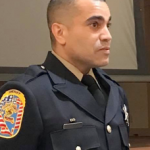
Deputy Richard Rodriguez was named officer of the year.


S. Lake Tahoe council to restructure VHR fines

By Kathryn Reed

The South Lake Tahoe City Council on Tuesday acknowledged its fees for some vacation home rental infractions are astronomical.

The $1,000 parking fine levied against the renter and owner is expected to be reduced to $250, and both may not be fined in the future.

The 75 percent reduction in large part came about because of the negative national media exposure the fines garnered.

“The chamber and LTVA have received numerous complaints because of the national publicity. People are not coming,” Steve Teshara, executive director of Lake Tahoe South Shore Chamber of Commerce, told the council May 15. He said the city’s policies are already having a serious financial impact. “It will take some time to unring the bell on the negative publicity.”

Attorney Sergio Rudin with the law firm of Burke, Williams and Sorensen was directed to bring back a resolution on June 5 with revised fees for VHR infractions. Any changes agreed to by the council would take effect immediately, so before the summer crowds arrive.

“I am sickened we are seen as a community not welcoming to tourists,” Mayor Wendy David said.

Rudin advised the council not to make changes to the existing VHR ordinance (the fees are separate from that document) because of the pending VHR ballot initiative that could face voters in November. Rudin’s law firm says it would tie the council’s hands when it comes to being able to make changes to the ordinance, and that future changes would have to go to the voters. In essence it freezes the ordinance as it stands today.

Lake Tahoe News asked Rudin why not have the council make changes it wants and let those rules be the law of the land until such time any ballot initiative affecting it is approved. Rudin said that would be up to the council to decide, but said his advice was to keep the ordinance as is until the initiative process is complete.

As for parking, it has become the No. 1 VHR complaint. Noise used to have that distinction.

Maureen Stuhlman, who oversees the short-term rentals for the city, said the parking issue is leading to vigilantism. She said people calling in parking issues use it as a way to get a strike on a VHR owner, not because there was a disturbance.

Stuhlman said one person called in to report six vehicles that violated the city’s ordinance. They could do so because they were driving around looking for violators. She said another person got a citation because he opted to park on the street – a no-no per the city ordinance – instead of waking his friends up to move cars around to allow him to park on the property. He thought staying on the street would be less disturbing to the neighbors than starting up a bunch of cars in the middle of the night.

Many of the calls are frivolous, a word Councilman Jason Collin used. He questioned if this is the best use of city resources.

Police Chief Brian Uhler asked for flexibility in the street parking issue as long as the visitors didn’t exceed the number of vehicles allowed. Council gave consensus.

Also brought up at the meeting was how home owners’ associations were supposed to be able to make some of their own rules. Councilman Austin Sass seemed most perplexed by this revelation. It showed not everyone read the final version of the ordinance that they voted on.

The resolution with more details is expected to be on the June 5 agenda.


Tahoe resident picking up trash for fun

By Ryan Canaday, KTVN-TV
 
Trash around Lake Tahoe is a year-round concern for residents of the area and one local is taking matters into her own hands.

With a trash picker and small plastic bag in hand, Jaime White keeps her eyes peeled for any piece of litter that may come her way.

On Monday, at Logan Schoals Vista Point, she demonstrated just how easy it is to spot debris off the beaten path. In plain sight, she finds bottles, cans, papers and plastics. At least once a day, this third generation Tahoe resident will walk up and down trails and beaches searching for trash and she does it all in her spare time, even considering it to be fun.

Read the whole story


SLT staff acts on its own; ignores council direction

By Kathryn Reed

South Lake Tahoe’s human resource director lied to the City Council on Tuesday when it came to the salary for the interim city manager.

Councilmember Brooke Laine asked how the $103.85 an hour salary that Tom Stuart negotiated came about when it’s not what the council agreed to. His response: “It’s in the top.”

Tom Stuart

But the top was really $15,833 a month as was agreed to May 1.

The monthly rate at the hourly wage that was approved is $18,000. That is nearly 14 percent higher than what the council originally allocated.

The council let the dollar figure go and didn’t call Stuart out on his lie. They just wanted to make sure there were no other payments coming from the city say for housing or a car allowance. And there won’t be.

Still, what Dirk Brazil will be making starting next month is higher than what the council had agreed to.

The money to pay him will come from undesignated reserves. It can’t just come out of the city manager’s account because it all got used up for this fiscal year and essentially into next year’s, which starts Oct. 1, because the council paid the former city manager nine months of severance for reasons no one has explained.

What the council had a hard time grasping on May 15 is that Brazil will be an hourly employee, not salaried. Brazil will also be keeping track of his own hours, according to Stuart. However, Councilmember Jason Collin pointed out that Brazil will be working for the council and accountable to them.

The hourly bit has to happen because Brazil is a CalPERS retiree. He’s allowed to double dip, so to speak, as long as he does not work more than 960 hours in a CalPERS fiscal year, which begins July 1. So, he could work unlimited hours in June per CalPERS, but the city will still be paying him more than 100 bucks an hour. The council did not set a hard limit on the pay/hours for Brazil to work in June.

The 960-hour mark would be reached in 24 weeks or about 5½ months, so mid-December, if Brazil works 40-hour weeks starting July 1.

It will be an adjustment for council members because they are used to calling-texting-emailing the city manager seven days a week, at all hours of the day and night and expecting an answer pronto. Now when they reach out it will be much like contacting the city attorney – it will be billable hours — at least if contact is not during the normal confines of the workday/workweek.

Brazil’s contract has no definitive end date. It’s supposed to be when a permanent city manager is hired.

But that process has been a bit convoluted. The council in April had asked for the city manager positions – interim and permanent – to be a priority over the city attorney. But Prothman Executive Recruitment, the firm that was hired to find both executives, has only started the city attorney process.

Part of the reason for this came to light at Tuesday’s council meeting. Staff arbitrarily agreed to stick with the salary range for the city attorney that had been on the books. They did so without council input. This meant Prothman could get started.

However, staff does not like the salary structure the former city manager had where some of her compensation was put into a 401(a)/457 instead of being subject to CalPERS. Her hourly salary was $80.25 or $166,928.94 a year. This didn’t account for the $50,000 a year put into the other retirement account. Staff doesn’t like the lower annual salary listing because they don’t all want that salary structure. Plus, it would be normal for staff to have a base salary less than city manager. If the city manager salary is really $216,000 a year, that makes for a better place from which staff can negotiate raises.

The city benefited from the restructured compensation package because its CalPERS obligation was lessened.

The staff report for the permanent city manager lists a salary range from $178,467.95 to $216,928.82.

Ultimately the council decided they wanted the city manager ads to say something about being open to a nontraditional pay structure like the former city manager had.

Council also directed the HR chief to tell the recruiting firm to concentrate on the city manager hire. Normally it would be the council, the mayor in particular, who would communicate with the recruiting firm. After all, the firm is working for the council – not staff.


Letter: Questioning how best to deal with VHRs

By Brandie Jordan Griffith

Will SCA’s VHR initiative be the answer for South Lake Tahoe?

By now most have heard of the initiative sponsored by the Sustainable Community Alliance (SCA) which calls for maintaining regulation while making some minor changes to the current code. I appreciate that people keep bringing items to the table for consideration and their initiative has a few items worth expanding on. I see they are focused on finding a solution to the VHR crisis, but what I see lacking is a focus on the community as a whole.

I am not afraid to throw bad ideas around (I have plenty) as sometimes you need a few bad ones to come up with a great one. I won’t pretend to thoroughly understand the implications of each change, but a few of the items listed in the SCA’s initiative have me questioning. 

My biggest concern (not addressed in the measure) is a lack of sustainable infrastructure. Over the last decade our tourism count has grown by leaps and bounds, but the roads haven’t. At times it is a wonder how we can handle the person/car count that pours into the basin on any given weekend. The roads into Tahoe have not been adjusted to handle the traffic that currently plagues us. This is evidenced every Sunday when the mass exodus commences and is most painful in the winter when weather is present. On numerous occasions I was held hostage in my vehicle for hours while trying to get from the Y to Meyers. Side streets were as bad if not worse due to Google Maps. Most people know that you just don’t leave the house on Sundays but not everyone has a choice. One would expect some traffic and that is one of the inconveniences of living in a beautiful tourist destination, but the amount of traffic that we had to deal with was just wrong on every level. South Lake Tahoe was not designed to accommodate the number of tourists that we have allowed to come. We need to do a negative impact study that calls for an emphasis on fire and safety. South Lake Tahoe has become over-tourismed.

Worth noting is the amount of energy, expense and manpower that it takes to clean up after the numbers. I hear an outcry for beach cleanup already, but it is not just the beaches that need extra attention … it’s the informal sledding hills, roadways, parking lots and food establishments. We need all hands on deck after every major holiday and three-day weekend.

Part of being a “Sustainable Community Alliance” is focusing on issues that are concerning to the residents and to the area in general. If we are to come to a peaceful agreement regarding VHRs, then there are larger issues that need to be addressed, not just parking and noise. It is difficult to see anything “sustained” in this initiative other than cash flow produced for and from vacation rentals.

How do we trust that City Council can assemble a fair committee that would focus on the needs of the community while regulating VHR, especially when this measure makes declaration for two of those members to be VHR owners? It seems that council is failing on most levels to follow the suggestions of any committee they appoint, so what will make this committee effective? It is reasonable to think that the panel will have some influence on council and their decisions, so it is of upmost importance that said panel be unbiased. Yeah, good luck with that.

Suggestions regarding occupancy are a step in the right direction. Less people, less problems, less cars and less impact=good … and it is admirable that they have made provisions for prohibiting use of noise-related equipment and permanently prohibiting issuance of licenses to VHRs caught operating without a permit.  Although it looks good on paper, it is of little importance to the family living next door to a VHR that loses sleep every weekend from hot tub parties and general noise. 

The measure also requires the city to create and provide VHR operators with a pamphlet of conduct that is distributed to all VHR occupants. I believe that the pamphlet approach has failed miserably in most arenas … no one reads them and people still don’t think the rules apply to them.

Another item that this measure moves to do is forbid the renewal of a VHR permit should the operator not generate $1,500 of TOT during their 12-month licensing period. I believe this to be the most opportunistic component of the entire initiative.  This guarantees that mega renters will stay in business (let’s not try and call it anything else, because that is what it is) while the lower volume mom-and-pop type rentals will be forced to rent more days in order to keep up with the new requirements. So, essentially it will force the little guy out and create a more elite rental society. The city is already giving preferential treatment and issuing VHR permits to new McMansion construction (Herbert) that hasn’t even passed inspection yet.

This cancels out the occupancy reduction effort because now smaller VHRs have to rent more to keep up. More nights rented, more people, more problems, more cars and more impact.

Would people be more inclined to support this measure if it had any meat on the bone? For instance, how about phasing out a percentage over time to reduce the number of rentals to a more manageable number… say cut it down near 30 percent to 1,000? Cap the county where they are at and keep them under that number? How about instead of a “pamphlet” we implement a standardized terms and conditions rental agreement that is from the city of SLT? In this agreement, they either e-sign or hard sign the contract and provide an “incident deposit” at the time of rental to be refunded when they check out without citation. If there is a citation issued, they simply do not get their deposit back and it goes directly to the city. No different than a damage deposit on a rental car. People will comply more often if there is a real threat of cost. 

Should the initiative pass, what about putting five residents from the community that are not associated with VHR in any other way than living amongst them? At that point the threat of a ban would be gone and the residents would have a much more realistic and proactive approach, given some time to accept the situation.

Finally, the initiative requests a five-member special VHR committee to make recommendations to City Council regarding allocation of some TOT to housing programs. Do we really need another committee for this and what housing programs are they referring to? This does not make clear who, what, how much … but again it looks good on paper.

And about those long-term tenants that are worse. They have been around forever and they aren’t going anywhere. If we see a rental that lacks a minimum standard in cleanliness, etc., shouldn’t we as residents be calling them in to the city? A possible motion on the owners to get the yard cleaned up? Or is more productive running around snapping photos and then posting them on Facebook? If the owner of the long-term rental gets a notice to clean it up and doesn’t, then we should be sending Clean Tahoe over there to do it for them, followed by a bill for services rendered.  If they don’t pay the bill, they get a lien. Of course, not all long-term renters are the problem, especially when it is their wallets that are open during slow season, supporting local businesses.

This is not a pro or anti-VHR platform. I am pro community, pro peaceful enjoyment of property, pro sustainability. This community has the ability to come together when it matters. A thank you is in order for the Realtors and VHR/business owners took time to put something together and I am sure that they believe it will make a difference in bringing a peaceful co-existence. Should it pass, I hope that they are right.

Brandie Jordan Griffith is a resident and Realtor at Realty World Lake Tahoe.



Most successful entrepreneurs are older than you think

By Benjamin F. Jones and J. Daniel Kim, The Conversation

The romanticized image of entrepreneurs is a picture of youth: a twentysomething individual with disruptive ideas, boundless energy and a still-sharp mind. Silicon Valley has bet on this image for years.

But is this right?

Far from it, according to our recent research with Javier Miranda of the U.S. Census Bureau and Pierre Azoulay of MIT.

Our team analyzed the age of all business founders in the U.S. in recent years. We found that the average age of the most successful entrepreneurs is 45 – and that founders in their 20s are the least likely to build a top firm.

The myth of the young entrepreneur

The idea that the most successful new business ventures come from the young, even the very young, is widespread.

Younger people are often thought to be less beholden to current thinking and thus more naturally innovative and disruptive. Many observers (perhaps enviously) believe the young have more time and energy, with fewer family responsibilities like nightly dinner with the kids or financial demands like mortgages. Besides, as Facebook founder Mark Zuckerberg said, “Young people are just smarter.”

Young founders also make for a dramatic story. The college dropout or young corporate drone shakes off conventional expectations to launch a new business with a ragtag team of fellow twentysomethings. After countless late nights, they emerge with the new killer app or consumer product that takes the market by storm, landing them on the cover of Inc., creating enormous personal wealth, and reminding stuffy executive types that hungry young upstarts can and will eat their lunch.

This stereotype has meaningful consequences. In Silicon Valley, for example, venture capitalists show a clear bias toward investing in younger founders, often leaving older founders out in the cold. The perceived link between youth and success is so prevalent that some tech workers reportedly seek plastic surgery to appear younger.

Prime time for entrepreneurship is middle age

But the image of the young entrepreneur didn’t hold when we looked at the data.

Past studies of high-growth entrepreneurship and age have yielded conflicting results, based in part on small and selected data sets that researchers studied.

To examine the question more definitively, we conducted an internal project at the U.S. Census Bureau. That enabled us to examine all businesses launched in the U.S. between 2007 and 2014, encompassing 2.7 million founders. We compared founder age to firm performance measures, including employment and sales growth, as well as the “exit” by acquisition or IPO.

Successful entrepreneurs are much more likely to be middle-aged, not young. For the top 0.1 percent of fastest growing new businesses in the U.S., the average age of the founder in the business’ first year was 45.

Similarly, middle-aged founders dominate successful exits. By our estimation, a 50-year-old founder is 1.8 times more likely than a 30-year-old founder to create one of the highest growth firms. Founders in their early 20s have the lowest likelihood of building a top-growth firm.

Why would entrepreneurs get better with age? It’s not clear, but we have a few theories. More seasoned entrepreneurs may draw on greater experience in management or deeper industry-specific knowledge. They may also have greater financial resources and more relevant social networks to leverage the founder’s business idea. For example, our study showed that prior work experience in the startup’s specific industry more than doubled the chance of an upper-tail growth success.

Even some of the most famous young founders tend to peak toward middle age. For example, Steve Jobs and Apple found their blockbuster innovation with the iPhone, released when Jobs was 52.

Change the narrative

By continuing to associate entrepreneurship with youth, investors are likely betting too young. If venture capitalists and other early-stage investors take our findings to heart, they’ll consider founders from a broader age range and may thereby back higher-growth firms.

By the same token, middle-aged would-be entrepreneurs may feel more confident about their chances – and more likely to win the resources they need to bring business visions to life.

On an even broader scale, the emphasis on young entrepreneurs has likely skewed innovation and its funding toward problems that the younger segment understands best. Updating views of the entrepreneur’s life cycle – and peak performance within it – may shift innovation toward areas that older individuals know better.

The myth of the young entrepreneur is an age-old image, but perhaps one whose number is finally up.

Benjamin F. Jones is a professor of entrepreneurship and strategy at J. L. Kellogg School of Management at Northwestern University. J. Daniel Kim is a doctoral candidate in management at Massachusetts Institute of Technology.