Study: Nevada worst state for mentally ill

By Lindsay Holmes, Huffington Post

Mental Health America recently released their comprehensive State of Mental Health Report, where it ranked how well each state handled mental health challenges, primarily through its citizens’ access to care and the percentage of people with unmet needs.

And the results are pretty dismal.

Nevada fell last on the list, partly due to a majority of adult residents with mental illness not receiving treatment and a large shortage of care providers.

The rankings were based on 15 different criteria, including the total number of adults and children with a mental illness, how many mental health care professionals were available and the number of adults who were uninsured. Researchers gathered data from 2011 to 2014, which was the most up-to-date information, to reach their conclusion.

Read the whole story


Nev. officers on look out for predators on Halloween

In an effort to provide enhanced safety for children and to give the public a greater sense of security during Halloween, officers from the Nevada Department of Public Safety-Division of Parole and Probation will conduct Operation Scarecrow on Oct. 31.

The primary objective is to minimize the potential for contact between children and division-supervised sex offenders whose crime involved a minor. These targeted offenders are given specific direction well in advance by means of a written notice of “Sex Offender Restrictions for Halloween.” Restrictions include that offenders may not distribute candy to children on Halloween, answer their doors for children on Halloween, display Halloween decorations or attend festivities associated with the holiday where children are present.

During this operation officers will be conducting home visits and surveillances.


2 Incline residents vie for state higher ed board

By Siobhan McAndrew, Reno Gazette-Journal

Carol Del Carlo and Sara LaFrance are vying for the District 9 spot on the Nevada System of Higher Education Board of Regents.

The Incline Village women both want the post that is part of 13-person board that oversees the state’s public colleges including URN and Truckee Meadows Community College.

Del Carlo, 64, and LaFrance, 72, both have strong ties to Nevada and are graduates of UNR before continuing their educations out of state.

Read the whole story


Letter: Former principal supporting Reilly

To the community,

Larry Reilly is the candidate best qualified to be a member of the LTUSD school board. As the former principal of Whittell High School, I have seen Larry work collaboratively with teachers and administrators alike to not only identify issues but to develop and implement solutions. With a stellar career as a classroom teacher, Larry knows how to raise student and teacher performance. Best of all, Larry is always analytical and action-oriented.

There are surely candidates with excellent credentials, but Larry Reilly is the person you need right now. Public education is at a critical juncture, and Larry has the precise expertise and experience to ensure that your community delivers the best education possible.

Sue Shannon, Sedona, Ariz., former principal Whittell High School


Avalanche prep key to surviving the elements

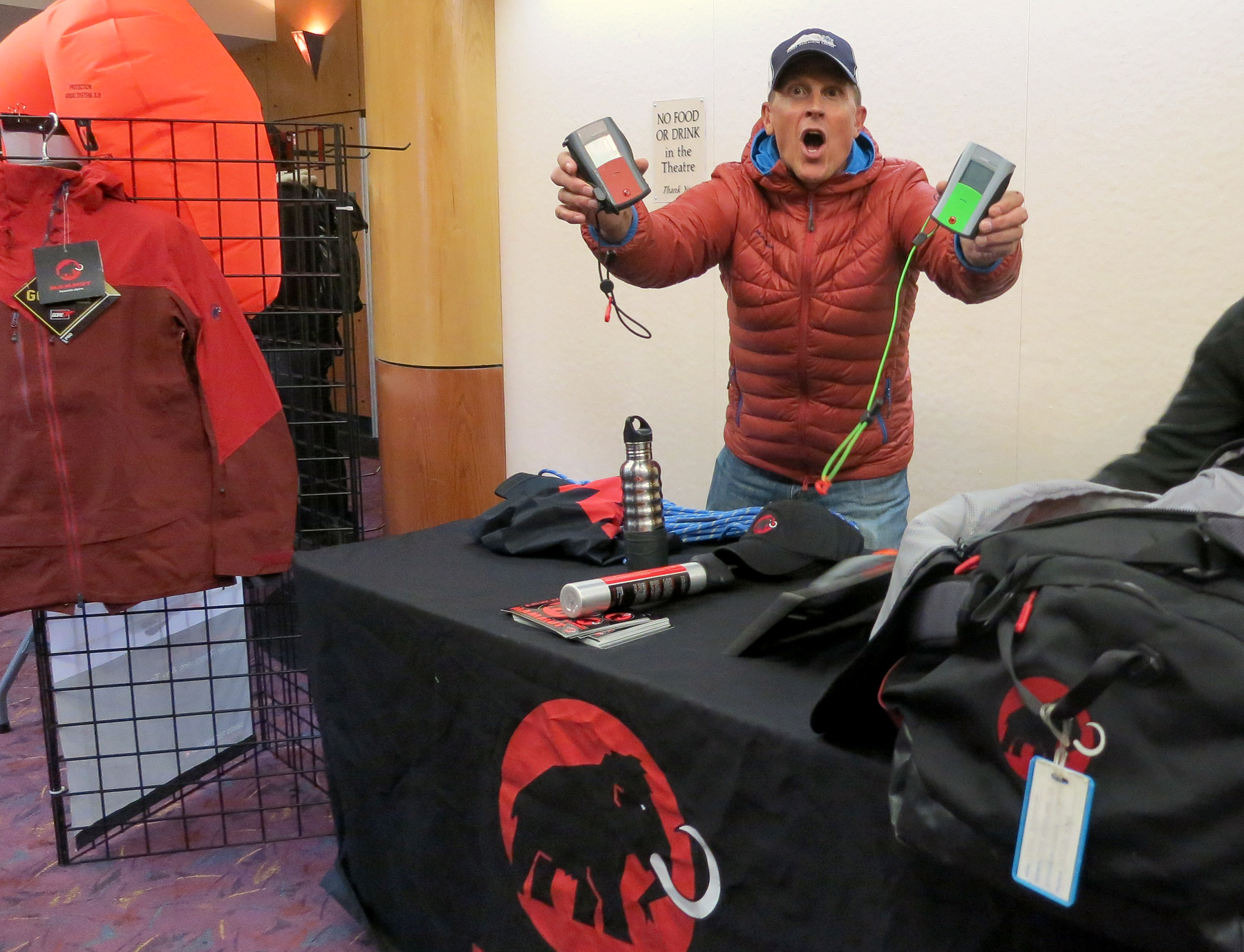
Sierra Avalanche President Todd Offenbacher shows off some avalanche beacons at the Mammut table. Photo/Jessie Marchesseau

Sierra Avalanche President Todd Offenbacher shows off  avalanche beacons on Oct. 15. Photo/Jessie Marchesseau

By Jessie Marchesseau

“You can know everything there is to know about snow, but if you don’t make good decisions, that doesn’t do you any good,” said Mike Ferrari, patrol director for Mt. Rose and board member of the American Avalanche Association.

Making good decisions was a predominant theme throughout the California Avalanche Workshop at Lake Tahoe Community College this month. Now in its third year, the annual workshop is a one-day event designed to educate snow industry professionals as well as backcountry enthusiasts about avalanche safety. It also serves as a networking opportunity for people who love snow.

Sierra Avalanche Center Director Todd Offenbacher called the CAW invaluable, and said it’s the best service available to the local snow and winter sports community.

Presentations from professional skiers opened and closed the day with South Shore local Hazel Birnbaum kicking off the event by sharing her personal experience being caught in an avalanche at last year’s Freeride World Tour competition in Fieberbrunn, Austria. Her story emphasized that just because you are at a resort, or someone else tells you an area is safe, doesn’t necessarily mean it is.

As the day progressed, Steve Reynaud from the Sierra Avalanche Center gave a recap of last year’s snow and avalanche season. Nate Greenberg, president of the Eastern Sierra Avalanche Center in Mammoth, shared his own backcountry experiences and hindsight lessons before offering a preview of an upcoming backcountry app designed to help users apply avalanche forecasts to make better decisions about ski terrain.

SAC forecasters Brandon Schwartz & Andy Anderson recapped the most significant lessons of the recent weeklong International Snow Science Workshop in Colorado. And Alex Taran, founder of the South American Beacon Project, talked about the need for more avalanche education in the mountains of South America.

Abe Greenspan of TahoeLab talked gear with skiers and snowboarders at the California Avalanche Workshop. Photo/Jessie Marchesseau

Abe Greenspan of TahoeLab talked gear with skiers and snowboarders at the California Avalanche Workshop. Photo/Jessie Marchesseau

To wrap up the afternoon, professional big mountain skier Cody Townsend introduced the crowd to the concept of the “normalization of deviance” and how it applies to snow safety. What it comes down to is this: when we do something dangerous without catastrophic results, the behavior begins to seem normal, even though the danger has not dissipated. This can lead to a habit of bad decision making or pushing limits too far. The end result is often disastrous. Luckily, Townsend recognized and corrected these habits in his own skiing before a disaster happened, and he encouraged listeners to do the same.

This was an eye-opening idea for Jason Champion, a mountain guide from Truckee, attending the workshop for the first time. Like many others, he felt the overall emphasis of the day was on good decision making while in the mountains. He was glad to hear the presenters voicing the importance of this and of communication within groups. In the end, Champion said he hopes it will result in fewer fatalities in the mountains.

But backcountry skiing almost always involves an inherent amount of risk. After his presentation, Townsend was asked how he balances good decision making with conquering new and difficult terrain, he responded: “It’s all about timing. There’s a time and a place for everything in the mountains, you just have to wait for it.”

The workshop featured eight speakers divided up into four sessions. Short breaks in between allowed attendees a chance to converse, make new contacts and check out tables featuring info, representatives and gear from Sierra Avalanche Center, TahoeLab boards, Mammut and the American Institute for Avalanche Research and Education.

Workshop organizer David Reichel, who is also the wilderness education coordinator at LTCC, said the personal connections people make in between presentations are equally as important as the information offered by the speakers. These are relationships attendees will follow up on later, when ski season is here, and they’re headed out into the backcountry.


Opinion: Democracy is best in moderation

By Jason Brennan

The open secret of democracy is that it works because it doesn’t quite work as advertised. Representative democracies do not simply impose the will of the people. They overperform, producing better policies than the people actually want because elites keep the masses in check (and vice versa). But the new wave of populism through Europe and North America threatens to upset the balance.

We are witnessing a rising tide of nationalist populism. The end of the Cold War was supposed to bring about a cosmopolitan, globalized, liberal world. But now larger and larger segments of voters in Western democracies want to close borders, cut trade, and kick out the brown and yellow people, especially the brown people who practice scary religions.

Whether you use “populist” as a compliment or an insult depends a great deal on what you think makes “populism” tick. If you think populist movements are about the disaffected and left-behind forcing their governments to help them, you’ll like populism. But if you think—as I do—that populist movements consist of misinformed people pushing for counterproductive policies, policies that will hurt them rather than help them—then you’ll sigh with relief when such movements fail, as they usually do in the end.

Politics are often thought of as apocalyptic battles of good and evil, of the good guys versus the bad guys. But economists prefer to think in terms of incentives. In particular, people behave (and misbehave) as they they do because they’re incentivized to do so by the way we distribute political power.

When we concentrate power in the hands of an elite few, such as kings, oligarchs, or a band of aristocrats, they have every incentive to use it for their own interests at the expense of others. When we spread power out widely, as in a democracy, no individual voter has significant power. This removes the incentive to vote selfishly, but it also removes the incentive to vote wisely. Individual voters aren’t rewarded for being knowledgeable or thinking carefully about their votes; they aren’t punished for being misinformed or indulging delusions. To illustrate, imagine you were in a 1,000-student class and the professor announced a final exam. But suppose she adds, “I’ll grade each of you, but instead of being awarded your own grade, I’ll average all the grades together, and you’ll each receive the class average.” The other students and you probably wouldn’t study much, or might not bother to focus on the more challenging material presented in lectures. The class average could easily wind up being an F.

Democratic politics faces the same problem. The American National Election Studies and other surveys of voter knowledge routinely find that most voters are uninformed. Voters know who the president is and not much else. They can’t estimate the unemployment rate within 5 percentage points. They don’t know how much money the government spends on different programs, or what the government did last year. After the Brexit vote, we discovered that “leave” voters who wished to flee the European Union greatly overestimated the number of immigrants in the U.K. and greatly underestimated how much foreign investment comes from the E.U. Voters not only lack the background in the social sciences needed to evaluate or make sense of the relevant facts. They lack knowledge of the relevant facts themselves. Non-voters tend to know even less.

It’s not that citizens are stupid; it’s that they just don’t care — and that’s a rational response to the incentives democracy creates. Since none of our individual votes matter except as part of the collective majority, it’s easy to conclude that we can afford to remain ignorant, or indulge irrational and false political beliefs. In fact, understanding how to vote well—whether politicians deserve to be kicked out and replaced—requires tremendous knowledge. One needs to know 1) who has been in power, 2) what they had the power to do, 3) what their options were, and 4) what the likely effects of different policies would have been.

It’s tempting to view populist movements as the people “taking back” their government, rebelling against corrupt and incompetent leaders. But this gives the movements more credit than they deserve. Populist waves tend to be made up of low information voters. Consider a stereotypical early Donald Trump supporter. He might look around his rural hometown and have a vague sense that white people in the fancy suburbs are richer, happier, have healthier children, and hold better jobs. He might know that 50 years ago his hometown held a small factory, which disappeared when he was a child. He might vaguely be aware that poor Chinese people have gotten richer, and wonder if somehow that happened at his expense. But being aware of these conditions does not magically transform him into a good voter. To know which policies would help his hometown, he’d need significant knowledge of economics, sociology, and related disciplines. If you have felt ill for the past month, that does not magically enable you to self-diagnose that you have cancer, nor does it magically imbue you with the medical knowledge to treat your cancer.

Representative democracy tries to split the difference between elitism and populism. To win elections, politicians have incentives to cater to the policy preferences of the median voter. But politicians and bureaucrats also retain significant independence. They sometimes override or ignore what voters want.

They can use this independence for good or ill. Recently, political scientist Martin Gilens measured how responsive presidents have been to different groups of voters. Gilens found that when voters at the 90th, 50th, and 10th percentiles of income disagree about policy, presidents are about six times more responsive to the policy preferences of the rich than those of the poor.

As a committed “small-d democrat,” Gilens is upset by these findings. But he admits there’s a positive twist: Voters at the 90th percentile of income tend to be significantly better informed than voters at the 50th or 10th percentiles. Gilens found that poor Democrats approved more strongly of invading Iraq in 2003. They more strongly favor the Patriot Act, invasions of civil liberty, torture, economic protectionism, and restricting abortion rights and access to birth control. They are more opposed to gay rights. In contrast, high information Democrats—such as party elites—are more strongly in favor of free trade and the strong protection of civil rights, and are less interventionist.

I read Gilens’s work as showing us an uncomfortable truth: Democracy works because it doesn’t quite work. If politicians just did exactly what the median voter wanted, we would have worse policies — policies people support because they are ignorant or misinformed. Democracies work because politicians and bureaucrats can to some extent override most voters’ preferences. Often they make better choices aligned with what better-informed elites would like to see.

Political elites are far from perfect. They often cater to special interest groups in ways that undermine the common good. For instance, economists of all ideological persuasions despise agricultural subsidies. Yet the federal government grants subsidies and protective tariffs to the corn lobby—that’s why your Coke has corn syrup rather than sugar in it. Limited benefits are concentrated for a select few (companies like ADM) and steep costs diffused among the many (taxpayers and consumers). This kind of “rent seeking” is pervasive in representative democracy because politicians have every incentive to indulge it while voters have no incentive to learn about it, let alone fight it.

These problems—voter ignorance and misinformation, populism, rent seeking—are endemic to representative democracy. It’s not because bad people sabotage the system. Rather, the system incentivizes these behaviors. No one has yet come up with a workable solution.

The good news is that representative democracy still performs better than the other political systems we’ve tried. In general, people living in representative democracies are more prosperous, happier, and healthier than people living elsewhere. Representative democracies do a consistently better job of protecting civil and economic liberty. They allow popular movements and educated, powerful elites to serve as checks against each other. Overall, representative democracies work quite well—and that’s true whether you prefer railing against elitist cosmopolitanism or pitchfork nativist populism. But there’s no guarantee that the system will continue to work. Democracies do sometimes collapse when populist demagogues rise to power. It looks like we’ll dodge that bullet this election, but that doesn’t mean we shouldn’t worry about the future.

Jason Brennan is the Flanagan Family chair of strategy, economics, ethics, and public Ppolicy at Georgetown University, and the author of “Against Democracy.”


Here’s the most popular Halloween treat by state

By Ryan W. Miller, USA Today

Candy corn lovers, you’re not alone.

In a survey of more than 40,000 people around the United States to determine the most popular Halloween candies, candy corn claimed the top honors in the most number of states.

Oregon, Wyoming, Tennessee, Texas and South Carolina all picked the polarizing treat as their favorite candy.

Elizabeth Scherle, co-founder and president of Influenster, the website that surveyed its users to determine the top candies by state, said candy corn’s victory surprised her.

Read the whole story


Another bid from China for U.S. hotel

By Associated Press
 
HNA Group is snapping up a 25 percent ownership stake of the Hilton hotel chain for about $6.5 billion, the latest attempt by a Chinese interest to acquire real estate in the U.S.

HNA will appoint two directors at Hilton, expanding the board to 10 members, and will have partial ownership of Hilton’s planned spinoffs of Park Hotels & Resorts and Hilton Grand Vacations, expected to conclude by the end of the year.

HNA’s deal for Hilton is expected to close not long after that, in early 2017.

With real estate investors looking to cash out of a red hot market over the last several years, Chinese interests have stepped in, seeking a safe place to keep cash.

Anbang Insurance Group bought the flagship Waldorf Astoria in New York two years ago from Hilton. It tried unsuccessfully to acquire Starwood Hotels in a $14 billion deal.

Late last year, the Starwood Capital Group sold the 50-story Baccarat Hotel, just north of Rockefeller Center in Manhattan, to the Sunshine Insurance Group of China.

Last week China Life Insurance Co., the country’s biggest life insurance company, took an approximately $2 billion stake in U.S. hotels owned by Starwood.

HNA Group runs hotels, airlines, airports and financial services and real estate businesses. Earlier this year, a wing of HNA acquired Carlson Hotels, which owns Radisson, Country Inns & Suites and other chains.

The company is acquiring its stake from the private equity firm Blackstone, which now has an approximately 21 percent interest in Hilton Worldwide Holdings Inc. Blackstone will also control two board seats.

Blackstone led a $20 billion deal to take Hilton private in October 2007. It brought in new management, expanded its luxury brands, Waldorf Astoria and Conrad. It was aggressive in pursuing growth through franchise deals.

That growth extended overseas and Hilton soon became the world’s largest hotel until it was surpassed recently after Marriott International won in the contentious fight with Anbang for ownership of Starwood.

Blackstone typically turns deals around quickly after acquisitions like Hilton, but the recession and an ensuing drop-off in business travel delayed its turnaround plans.

Blackstone took Hilton public almost three years ago. The initial public offering raised $2.35 billion, surpassing Twitter’s IPO the month prior.

It was the second largest IPO of the year and the biggest ever for a hotel chain.


Letter: Barbells for Boobs a success

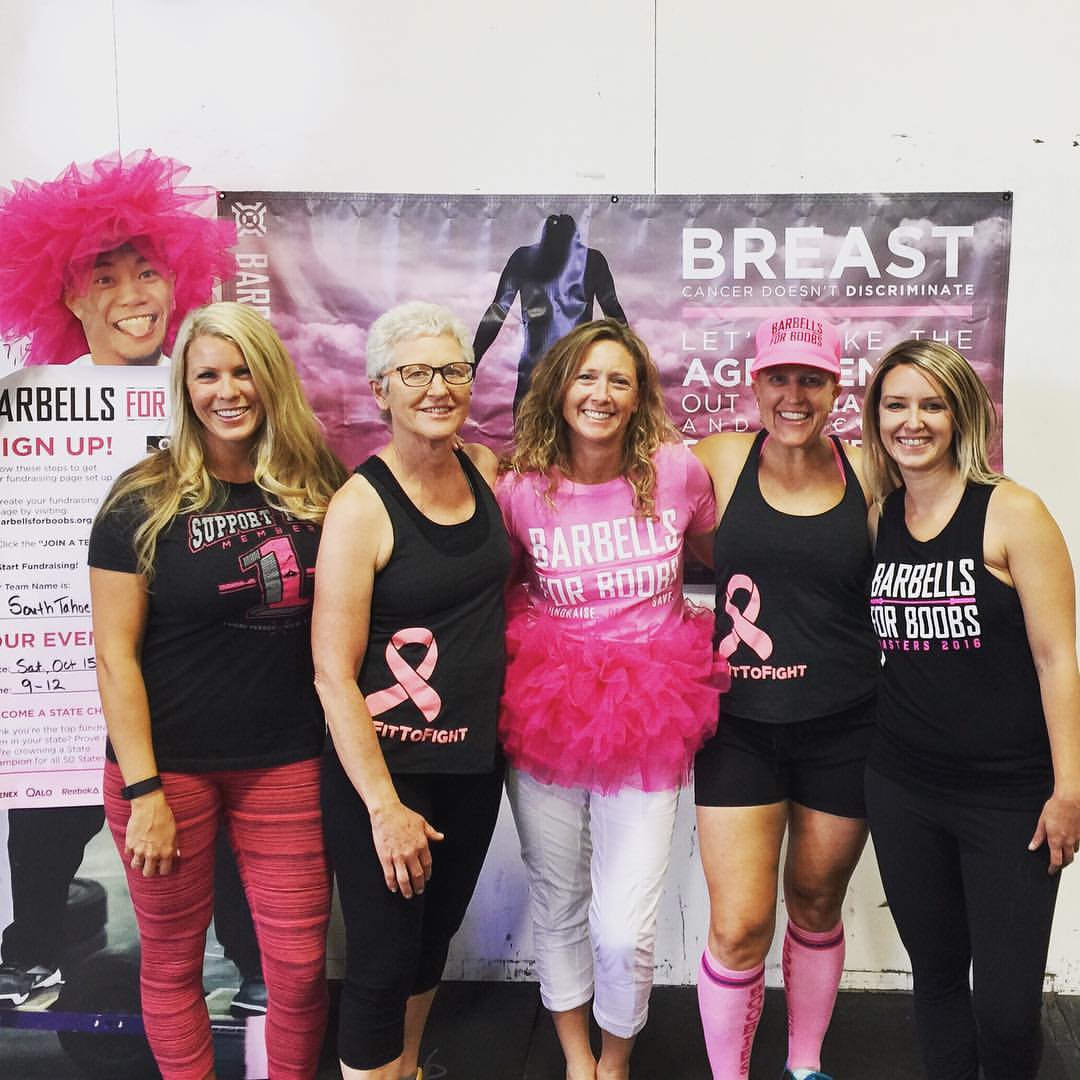
Barbells for Boobs supporters.

Barbells for Boobs supporters. Jen Spina is second from right.

To the community,

I would like to personally thank South Tahoe Crossfit for putting on the Barbells for Boobs fundraising event on Oct. 15.

Over $12,000 was raised for metastatic breast cancer research (Metavivor.org) and for mammograms for under-insured or non-insured people regardless of age or gender (Barbellsforboobs.org). The event was near and dear to my heart and to my bald, shiny head as I am currently battling and winning my own fight with breast cancer. I just finished five months of chemotherapy and will follow with a lumpectomy in December and five weeks of radiation in January-February.

I would like to give an additional heartfelt thanks to South Tahoe Crossfit (they have waived my gym fees since my diagnosis) and to the South Lake Tahoe community and my friends and family for all of their love, support, and cheerleading to get me through all of this. I have been #fittofight (my motto!) from the get-go and plan on staying that way. Read more online about my story and how to donate.

Jen Spina, South Lake Tahoe


Dugard campaigns against Calif.’s Prop. 57

Phillip and Nancy Garrido are in prison for the abduction of Jaycee Lee Dugard.

Phillip and Nancy Garrido are in prison for the abduction of Jaycee Lee Dugard.

By Jennifer McGraw, CBS-13

It’s a case that’s hard to forget, an 11-year-old Meyers girl was kidnapped and held hostage for 18 years, but now she is taking to Facebook to stop a proposition on the November ballots.

“The eligibility for parole for Philip Garrido after only 17 years is really a travesty,” said James Clinchard, then prosecutor in the Jaycee Lee Dugard case. “I can’t imagine how she would feel if the Garridos were eligible for parole at a date before 431 years.”

That’s how many years Garrido was sentenced to, but Clinchard said with Proposition 57 Garrido could get that hearing after just 17 years.

Read the whole story