North Tahoe firefighting in the 1950s

By Pat Dillon, Moonshine Ink

A gleaming red fire engine roars by, a paramedic ambulance close behind. Arriving at the scene, the firefighters attack the fire, assess the wrecked car, or stabilize the sick or injured person. On the North Shore, we’re fortunate to have the expertise and equipment to handle almost any emergency, but has it always been this way?

The North Tahoe community has only had a year-round population since the 1920s. At that time, there were just a few hardy families that stuck it out through the often brutal winters. After World War II, however, people built more homes, established businesses, and the towns of Kings Beach and Tahoe City expanded.

During summer, the U.S. Forest Service provided fire protection, with engines equipped with small water tanks for fighting brush fires. While adequate for the infrequent forest fire problem, these units and the rangers that staffed them were not equipped to deal with structure fires. In winter, the residents were left to handle blazes themselves. Even into the 1950s, bucket brigades were still used by neighbors to fight fires.

Read the whole story


Free tuition for select LTCC students

Starting this fall, all first-time, full-time California residents or AB540 eligible students attending Lake Tahoe Community College will pay zero tuition their first year.

The Lake Tahoe College Promise is available to any student who is attending college for the first time.

“Finances can be a huge barrier for those considering a post-high school education,” Jeff DeFranco, LTCC’s president, said in a press release. “We are proud to be a leader in this movement of opportunity by providing a first-rate, affordable education that equips students with the skills to attain a good-paying job, transition to a four-year institution either on our campus or elsewhere, or advance in their current careers.”

In addition to free tuition for a year for qualifying students, LTCC also offers a range of campus resources and programs that can help students achieve success. Among these is the Open Educational Resources Initiative, which works to supply free or reasonably priced textbooks and other course materials. Other resources include laptop rentals, unlimited free bus transportation within the South Shore, free tutoring and mentoring services, writing help, and academic counseling.

For more information about the Lake Tahoe College Promise or Lake Tahoe Community College, go online.


Upshaw golf tourney to benefit cancer, concussion causes

In the decade since football legend Gene Upshaw died from pancreatic cancer in 2008, the Gene Upshaw Memorial Fund held with Tahoe Forest Health System Foundation has raised nearly $1.5 million for cancer and concussion research and helped fund vital programs and services for patients at the Gene Upshaw Memorial Tahoe Forest Cancer Center.

Terri Upshaw, Gene Upshaw’s wife, started the fund at Tahoe Forest Health System Foundation because of care her husband received at Tahoe Forest Hospital.

On July 8-9, National Football League hall of famers, former Major League Baseball players and other sports and entertainment celebrities will gather at Schaffer’s Mill Golf & Lake Club for the 10th annual Gene Upshaw Memorial Golf Classic. 

Proceeds from the 2017 tournament helped fund breakthrough technology in mammograms for area patients with the purchase of 3D mammography equipment, which is helping to improve breast cancer detection rates. The fund raised a total of $205,006 in 2017. Money also was given to further the Tahoe Institute for Rural Health Research’s mild traumatic brain injury diagnosis project. This project is attempting to develop a simple, portable, self-contained sideline diagnostic system for the identification of mTBI.

The tournament format features one sports celebrity and four amateurs on each team playing a shamble format.

Registration, sponsorship opportunities, volunteer inquiries and a full list of participating celebrities can be viewed online.


Time to sign up for mountain festival events

The sixth annual nine-day summer edition of the Alpenglow Mountain Festival on the North Shore will showcase more than 40 individual events from June 16-24, and is almost entirely free.

Geared toward beginner and intermediate summer recreation enthusiasts, the festival includes trail running, hiking, backpacking, lakeshore yoga, stand-up paddle boarding, rock climbing, natural history events and more.

Registration is open. A complete event schedule is online.


Kingsbury Grade a defining climb for Amgen racers

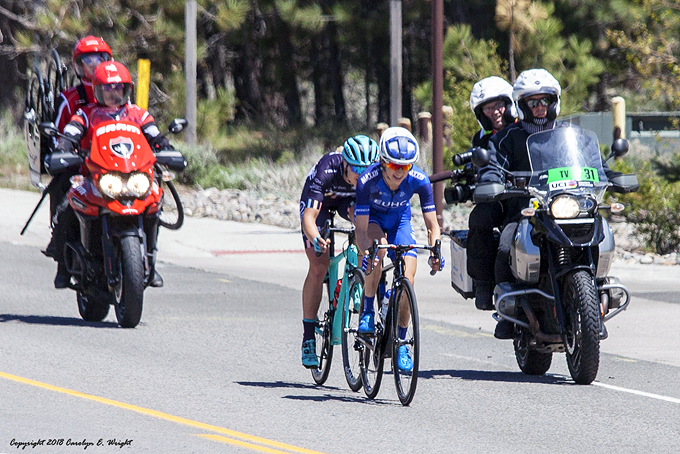
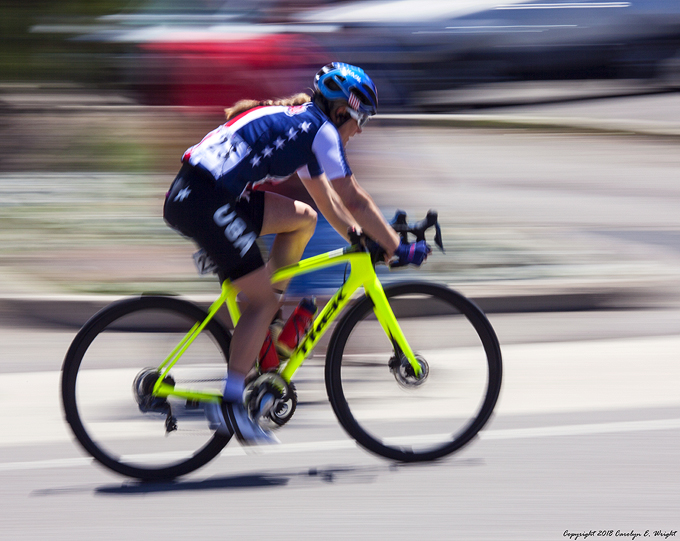
Katie Hall uses Kingsbury Grade to her advantage on May 18. Photo Copyright 2018 Carolyn E. Wright

By Ashton Lyle

Thousands of residents came out to watch as the Amgen Tour of California cycling race return to South Lake Tahoe on Friday.

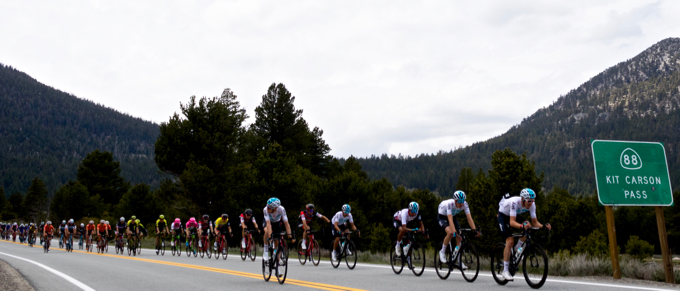
The main group descends Carson Pass with 30 miles to go. Photo/Ashton Lyle

The women started the day with Stage 2, a 67-mile loop running into the Carson Valley, with a start and finish at Heavenly Mountain Resort’s Cal Lodge. The day also included an ascent up Kingsbury Grade, an 8-mile climb that averages over 6 percent grade.

The women scream down Kingsbury Grade under the threat of stormy weather. Photo Copyright 2018 Carolyn E. Wright

The men finished later in the day, tackling Stage 6, which ran over 120 miles from Folsom to Heavenly. 

The Tour of California has visited the Lake Tahoe area six times over the 13-year history of the race, most recently visiting South Lake Tahoe in 2017. The high altitude and mountainous terrain have a profound impact on the final results, and have led to some of the most exciting stages in the history of the event, including Tom Skujins’s win from the breakaway in 2016.

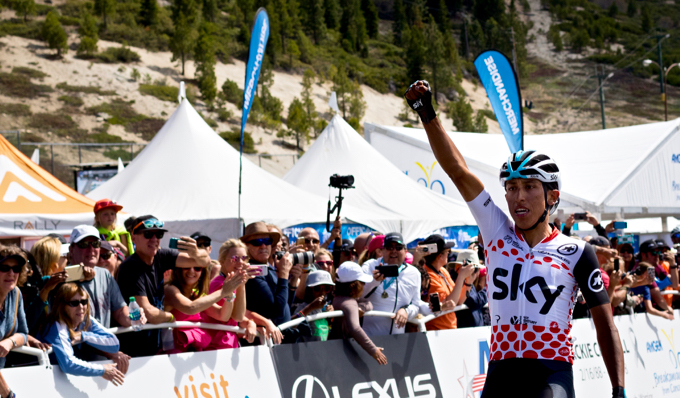
Egan Bernal (Sky) salutes the crowd as he wins Stage 6 in South Lake Tahoe. Photo/Ashton Lyle

In the women’s race, American Kendall Ryan (Tibco) held the race lead after a surprise win in Elk Grove on Thursday, but faced a stiff challenge from world-class climbers such as Megan Guarnier (USA) and Katie Hall (UHC).

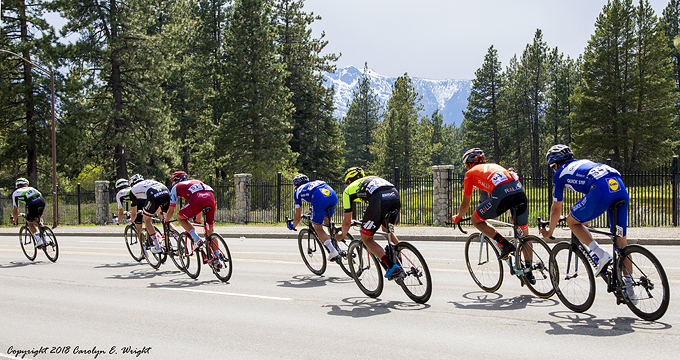
Riders are often going much faster than the posted speed limit. Photo Copyright 2018 Carolyn E. Wright

Liza Rachetto (Hagens-Berman) was the first to attack, but Coryn Rivera (Sunweb) and Lily Williams (Hagens-Berman) formed the day’s early breakaway. After the first major climb, Williams dropped Rivera on the decent and forged on solo. She held a maximum advantage of 2 minutes, but rejoined the peloton just after the intermediate sprint, with over 15 miles still to race.

A group of men make their way through the South Shore. Photo Copyright 2018 Carolyn E. Wright

Astana drove the pace into Kingsbury Grade, the day’s hardest climb, which tops out with just 6 miles to the finish. The high pace quickly reduced the field to an elite group of six riders, dropping overnight leader Kendall Ryan (Tibco). Less than a mile from the summit, Hall (UHC) and Tayler Wiles (Trek) attacked and opened a gap of 40 seconds. After the decent, Hall attacked again, opening up a gap on the final climb into Heavenly and took the stage by 25 seconds over Wiles and 1:01 over Katazyna Niewiadoma (Canyon). 

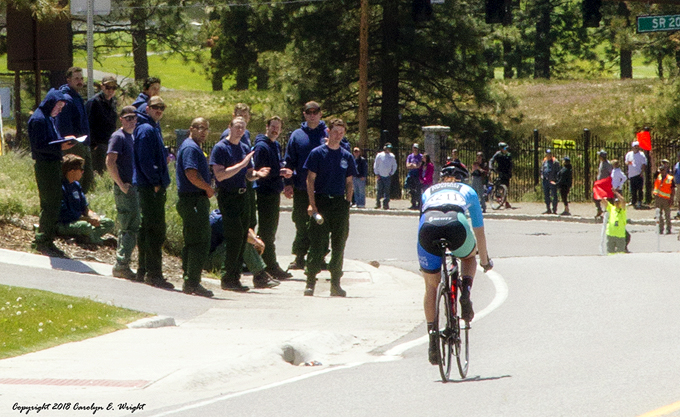
Zephyr Cove firefighters watch and applaud the women as they race by. Photo Copyright 2018 Carolyn E. Wright

In the men’s race, another American, Tejay van Gardernen (BMC) entered the day as the race leader, with Colombian Egan Bernal (Sky) a mere 23 seconds down. With Saturday’s stage in Sacramento designated for the sprinters, the race would be decided on the run into Lake Tahoe.

It was a grind for the men who had started Friday in Folsom. Photo Copyright 2018 Carolyn E. Wright

Eight miles into the race, a nine-rider breakaway separated themselves from the peloton, gaining a maximum advantage of over 5 minutes. The break had three Americans, Sean Bennett (Hagens Berman), Lawson Craddock (EF Education First) and Evan Huffman (Rally). Bennett was only 3:23 down on Tejay van Garderen, forcing BMC to ride on the front to keep the breakaway close.

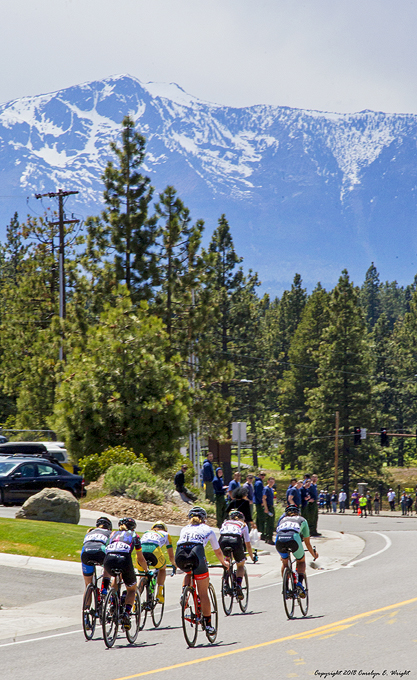
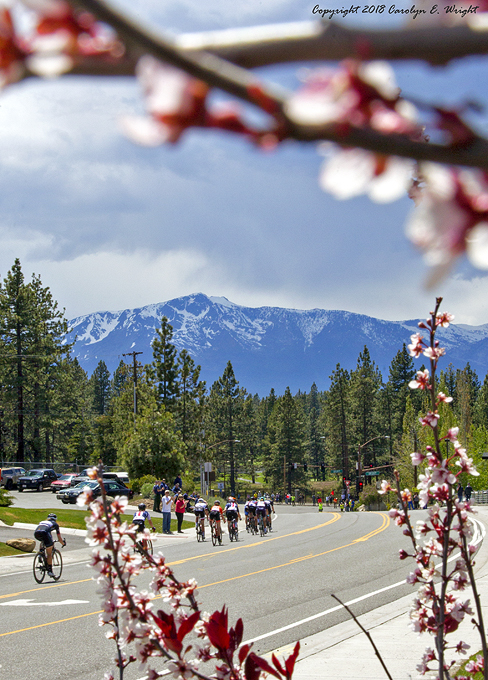
Mount Tallac looms in the background as the women race through Stateline. Photo Copyright 2018 Carolyn E. Wright

Sky took over the front of the peloton, and drove a hard pace. Inside of 30 miles to go and the peloton had been reduced to under 40 riders. The last remnants of the early break were caught on the penultimate climb, with 12 miles to the finish. Racing up the same climb where Hall (UHC) had attacked in the women’s race, Sky continued to drop riders as they rode a brutally fast pace.

Bernal (Sky) attacked hard from the reduced front group with 10 miles to race, opening up a minute gap over Tejay van Garderen (BMC) by the top of the climb. The chasing group, driven first by van Garderen, and then by Brandon McNulty (Rally) could not close the gap, and Bernal took another solo stage win. Adam Yates (Mitcheton-Scott) finished second at 1:28 down and Tao Geoghegan Hart (Sky) finished third, a further two seconds down.

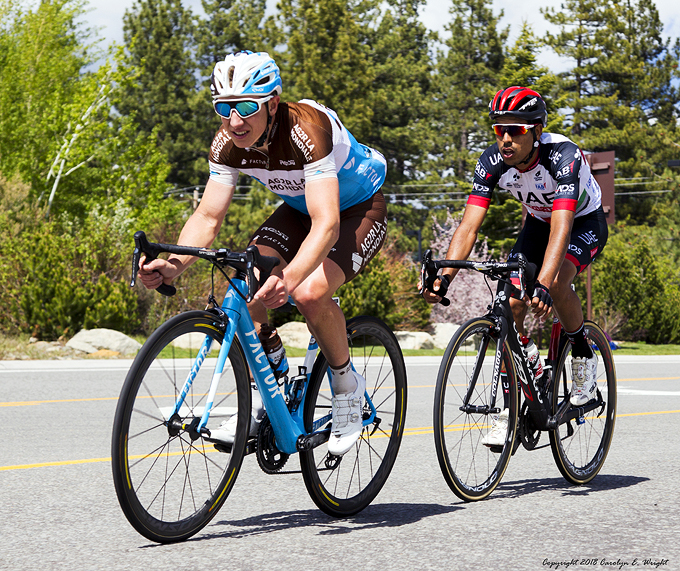
The men find the strength for the final push to Heavenly. Photo Copyright 2018 Carolyn E. Wright

Hall and Bernal now confidently lead their overall classifications with the race finish May 19 in Sacramento, on a day that is made for a bunch sprint. Caleb Ewan (Mitcheton-Scott) will look to take his first stage victory after two second place finishes, while Fernando Gaviria (Quick-Step) will look to add to his total.

The final stage of the Tour of California will be live on NBC from noon-2pm on May 19, with the daily race recap available on NBCSN from 7:30-9:30pm.


Opinion: Is bigger really better?

By Alexandra Staub, The Conversation

The United States is facing a housing crisis: Affordable housing is inadequate, while luxury homes abound. Homelessness remains a persistent problem in many areas of the country.

Despite this, popular culture has often focused on housing as an opportunity for upward mobility: the American Dream wrapped within four walls and a roof. The housing industry has contributed to this belief as it has promoted ideals of “living better.” Happiness is marketed as living with both more space and more amenities.

As an architect and scholar who examines how we shape buildings and how they shape us, I’ve examined the trend toward “more is better” in housing. Opulent housing is promoted as a reward for hard work and diligence, turning housing from a basic necessity into an aspirational product.

Yet what are the ethical consequences of such aspirational dreams? Is there a point where “more is better” creates an ethical dilemma?

The better housing craze

The average single-family home built in the United States in the 1960s or before was less than 1,500 square feet in size. By 2016, the median size of a new, single-family home sold in the United States was 2,422 square feet, almost twice as large.

Single-family homes built in the 1980s had a median of six rooms. By 2000, the median number of rooms was seven. What’s more, homes built in the 2000s were more likely than earlier models to have more of all types of spaces: bedrooms, bathrooms, living rooms, family rooms, dining rooms, dens, recreation rooms, utility rooms and, as the number of cars per family increased, garages.

Today, home building companies promote these expanding spaces – large yards, spaces for entertainment, private swimming pools, or even home theaters – as needed for recreation and social events.

Each home a castle?

Living better is not only defined as having more space, but also as having more and newer products. Since at least the 1920s, when the “servant crisis” forced the mistress of the house to take on tasks servants had once performed, marketing efforts have suggested that increasing the range of products and amenities in our home will make housework easier and family life more pleasant. The scale of such products has only increased over time.

In the 1920s, advertising suggested that middle-class women who had once had servants to do their more odious housework could now, with the right cleaners, be able to easily do the job themselves.

By the 1950s, advertisements touted coordinated kitchens as allowing women to save time on their housework, so they could spend more time with their families. More recently, advertisers have presented the house itself as a product that will improve the family’s social standing while providing ample space for family activities and togetherness for the parent couple, all the while remaining easy to maintain. The implication has been that even if our houses get larger, we won’t need to spend more effort running them.

In my research, I note that the housework shown – cooking, doing laundry, helping children with their homework – is presented as an opportunity for social engagement or family bonding.

Advertisements never mentioned that more bathrooms also mean more toilets to scrub, or that having a large yard with a pool for the kids and their friends means hours of upkeep.

The consequences of living big

As middle-class houses have grown ever larger, two things have happened.

First, large houses do take time to maintain. An army of cleaners and other service workers, many of them working for minimal wages, are required to keep the upscale houses in order. In some ways, we have returned to the era of even middle-class households employing low-wage servants, except that today’s servants no longer live with their employers, but are deployed by firms that provide little in the way of wages or benefits.

Second, once-public spaces such as municipal pools or recreational centers, where people from diverse backgrounds used to randomly come together, have increasingly become privatized, allowing access only to carefully circumscribed groups. Even spaces that seem public are often exclusively for the use of limited populations. For example, gated communities sometimes use taxpayer funds – money that by definition should fund projects open to the public – to build amenities such as roads, parks or playgrounds that may only be used by residents of the gated community or their guests.

Limiting access to amenities has had other consequences as well. An increase in private facilities for the well-off has gone hand in hand with a reduction of public facilities available to all, with a reduced quality of life for many.

Take swimming pools. Whereas in 1950, only 2,500 U.S. families owned in-ground pools, by 1999 this number had risen to 4 million. At the same time, public municipal pools were often no longer maintained and many were shuttered, leaving low-income people nowhere to swim.

Mobility opportunities have been affected, too. For example, 65 percent of communities built in the 1960s or earlier had public transportation; by 2005, with an increase in multi-car families, this was only 32.5 percent. A reduction in public transit decreases opportunities for those who do not drive, such as youth, the elderly, or people who cannot afford a car.

Redefining the paradigm

“Living better” through purchasing bigger housing with more lavish amenities thus poses several ethical questions.

In living in the United States, how willing should we be to accept a system in which relatively opulent lifestyles are achievable to the middle class only through low-wage labor by others? And how willing should we be to accept a system in which an increase in amenities purchased by the affluent foreshadows a reduction in those amenities for the financially less endowed?

Ethically, I believe that the American Dream should not be allowed to devolve into a zero-sum game, in which one person’s gain comes at others’ loss. A solution could lie in redefining the ideal of “living better.” Instead of limiting access to space through its privatization, we could think of publicly accessible spaces and amenities as providing new freedoms though opportunities for engaging with people who are different from us and who might thus stretch our thinking about the world.

Redefining the American Dream in this way would open us to new and serendipitous experiences, as we break through the walls that surround us.

Alexandra Staub is an associate professor of architecture with the Rock Ethics Institute at Pennsylvania State University.
Making a cleaner, greener, environmentally safe sunscreen

By Yousong Ding, The Conversation

As the temperatures rise and Americans swarm to the beach, they slather on sunscreen to protect against the sun’s harmful UV radiation that causes skin cancer. As they splash and swim, few give thought to whether the chemicals in the lotions and sprays are safe for marine organisms such as the fish and corals living in these coastal zones.

The bad news is that mounting evidence suggests that certain chemicals in these radiation filters are bleaching the corals and killing fish. The good news is that there is a greener, cleaner and safer alternative in the works.

The sunscreens widely available belong to two major categories: physical and chemical. Physical sunscreens contain tiny minerals that act as a shield deflecting the sun’s rays. On the other hand, chemical sunscreens use many synthetic compounds that absorb UV light before it reaches the skin.

Killer chemicals

But these lotions wash off in water. For example, for every 10,000 visitors frolicking in the waves, about 4 kilograms of mineral particles are washed into the beach water each day. These minerals catalyze the production of hydrogen peroxide, a well-known bleaching agent, at a concentration high enough to harm coastal marine organisms. In fact, up to 14,000 tons of sunscreens are released into the water each year. Active ingredients in these sunscreens, minerals and synthetic organic compounds, are putting 10 percent of the global reefs under stress, including 40 percent of coral reefs along the coast.

One of these ingredients is oxybenzone, a synthetic molecule commonly used in chemical sunscreens and known to be toxic to corals, algae, sea urchins, fish and mammals: A single drop of this compound in over 4 million gallons of water is already enough to endanger organisms. Unfortunately, its concentration in coastal water is already significantly higher than its toxic limit, though not yet deadly, and might be accelerating coral bleaching. To save their marine ecosystem from further destruction, legislators in Hawaii passed a new law banning chemical sunscreens containing oxybenzone and another harmful ingredient, octinoxate. The law will take effect Jan. 1, 2021.

Sunscreen from algae

Protecting ourselves from UV rays is nothing new. Many organisms including microbes, plants and animals have evolved ways to guard themselves. These organisms produce small molecules that absorb UV rays and block radiation from entering cells and damaging the DNA. Unlike physical and synthetic chemical sunscreens, these naturally available compounds are environmentally friendly and biodegradable. As such, these natural products have the potential to be safer compounds for commercial sunscreens.

In my laboratory in the College of Pharmacy at the University of Florida, we are interested in combing the world for naturally occurring chemicals that have applications in health, agriculture and environment. Recently, my colleagues and I have discovered a more efficient way to harvest shinorine – a natural sunscreen produced by microbes called cyanobacteria.

Shinorine belongs to a family of natural products, called mycosporine-like amino acids, and is made up of two amino acids and one sugar. Many aquatic organisms exposed to strong sunlight, like cyanobacteria and macroalgae, produce shinorine and other related compounds to protect themselves from solar radiation. The cosmetics industry is already infusing products with shinorine as a key active ingredient. Commercial supplies of shinorine come from marine red algae that grows slowly in large tidal pools that experience frequent environmental changes. That means that conventional extraction method is time-consuming and unpredictable.

To ramp up shinorine production, we sought a fast-growing strain of cyanobacteria that would thrive under predictable conditions. This took a lot of work! We decoded the genetic blueprints – genomes – of more than 100 varieties of cyanobacteria from marine and terrestrial ecosystems and selected one, Fischerella sp. PCC9339, to cultivate in the laboratory.

To our delight, after four weeks this strain produced shinorine, but unfortunately not enough. To produce more we then transferred a set of genes that encode the instructions to make shinorine, into one freshwater cyanobacterium (from Berkeley), Synechocystis sp. PCC 6803, which grows fast with just water, carbon dioxide and sunlight. Using the engineered cyanobacterium, we produced a quantity of shinorine comparable to the conventional method – but we did it in just a few weeks instead of one year that’s needed to cultivate red algae.

By advancing the method to produce more shinorine and other UV-absorbing natural products, we hope to make “green” sunscreens more available – to protect our skin and the lives of the creatures we are so eager to see.

Yousong Ding is assistant professor of medicinal chemistry at University of Florida.


Tribes welcome opportunity to add sports books

By Felicia Fonseca, AP

American Indian tribes are welcoming an opportunity to offer sports betting in potentially hundreds of casinos across the country after the U.S. Supreme Court cleared the way for states to legalize it.

Tribal casinos generate more than $31 billion a year in gross revenue. While adding sports books isn’t expected to boost that number significantly, tribes say it’s another source to deliver services to tribal members.

Many tribes give a share of casino profits to states in exchange for exclusive rights to conduct gambling operations.

In California, voters would have to approve a change to the state Constitution. As is, California tribes have exclusivity in casino-style gambling, and some believe that includes sports betting.

Read the whole story


NCAA tourney games now possible in Reno

By Chris Murray, Reno Gazette-Journal

The NCAA has long considered Nevada taboo territory for hosting its championship events, citing the state’s legalized sports betting, but that policy changed Thursday.

The organization, in a press release addressing the Supreme Court’s decision to allow sports wagering across the nation, said:

“Also in response to the Supreme Court decision, the NCAA Board of Governors suspended the Association’s championships policy related to sports wagering. The board’s decision will ensure championship location continuity by temporarily allowing NCAA championship events to occur in states that offer sports wagering.”

Read the whole story


Snippets about Lake Tahoe

·      Megan Jewell is the newest ob/gyn doctor at Barton Women’s Health.

·      The 39th annual Fireworks & Beach Party will be July 3, 7-10pm at Kings Beach State Recreation Area.

·      Squaw Valley will close Memorial Day, with skiing that Monday from 8am-2pm.

·      North Tahoe Public Utility District is having a budget workshop on May 22 at 3pm.

·      President Trump has appointed A.J. “Bud” Hicks to the Tahoe Regional Planning Agency Governing Board. Hicks, a resident of Reno since 1957, will assume the non-voting, presidential-appointee seat that Tim Carlson had since 2012. Hicks is an attorney, and has a second home in Glenbrook.