Road Beat: Toyota Corolla, competent compact
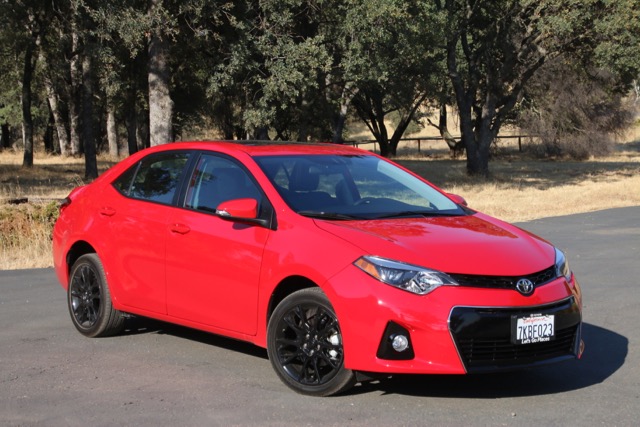
Toyota Corolla remains a top performing go-to vehicle. Photos/Larry Weitzman

Toyota Corolla remains a top performing go-to vehicle. Photos/Larry Weitzman

By Larry Weitzman

Toyota is a default brand. It is the brand that the public understands to always be reliable, trustworthy, high quality, competent, economical and with decent performance. I could end my Road Beat on Corolla here, but let’s examine why the Toyota reputation is so well deserved.

Corolla is in its umpteenth generation (11th) as Toyota’s compact to the world, with well more than 40 million sold since the model was created in 1966 and by 1974 it was the best-selling car in the world and has remained so or at near the top since then. It surpassed the VW Beetle as the bestselling model by 1997.

This new generation was introduced two years ago and has remained without significant changes since then. Outside the body remains crisp with some aggressive styling. I am still not a fan of the upside down frown grille. But the side view is excellent, as is the strong rear end. My special edition had some special touches in sportiness in the good looking blacked out 17-inch alloy wheels (shod with big 215/45 series tires), badging and trim, especially on the inside.
Specifications Price $17,300 to about $24,000 with destination Engine 1.8L DOHC 16 valve inline four cylinder with VVT-I   132 hp @ 6,000 rpm       128 lb-ft of torque @ 4,400 rpm Transmission CVT  Six speed manual Configuration Transverse front engine/front wheel drive Dimensions Wheelbase 106.3 inches Length 183.1 inches Width 69.9 inches Height 57.3 inches Tread (track) (f/r) 59.8/59.9 inches Ground Clearance 5.6 inches Weight 2,845 pounds Fuel capacity 13.2 gallons Trunk volume 13.0 cubic feet	 Steering lock to lock 3.19 turns Turning circle 35.6 feet Wheels 17X7 inch alloys Tires 215/45X17 inch all season radials Co-efficient of drag 0.30 Performance 0-60 mph 8.90 seconds 50-70 mph 4.71 seconds 50-70 mph uphill 8.46 seconds Top Speed Well into triple digits Fuel economy EPA rated 29/37/32 mpg city/highway/combined. Expect 42-44 mpg on the highway at legal speed and 33-35 mpg overall in rural country driving.

Specifications
Price $17,300 to about $24,000 with destination
Engine
1.8L DOHC 16 valve inline four cylinder with VVT-I 132 hp @ 6,000 rpm
128 lb-ft of torque @ 4,400 rpm
Transmission
CVT
Six speed manual
Configuration
Transverse front engine/front wheel drive
Dimensions
Wheelbase 106.3 inches
Length 183.1 inches
Width 69.9 inches
Height 57.3 inches
Tread (track) (f/r) 59.8/59.9 inches
Ground Clearance 5.6 inches
Weight 2,845 pounds
Fuel capacity 13.2 gallons
Trunk volume 13.0 cubic feet
Steering lock to lock 3.19 turns
Turning circle 35.6 feet
Wheels 17X7 inch alloys
Tires 215/45X17 inch all season radials
Co-efficient of drag 0.30
Performance
0-60 mph 8.90 seconds
50-70 mph 4.71 seconds
50-70 mph uphill 8.46 seconds
Top Speed Well into triple digits
Fuel economy EPA rated 29/37/32 mpg city/highway/combined. Expect 42-44 mpg on the highway at legal speed and 33-35 mpg overall in rural country driving.

Sizing is compact all the way with a 106-inch wheelbase supporting a 183-inch body that is 70-inches wide. However, inside is mid-size volume of 110.5 cubic feet, 97 cubes in the passenger compartment and 13 cubes in the good size trunk. Even with a moonroof, it remains in the 110 cube mid-size category.

Under the hood is a contemporary 1.8L DOHC inline four cylinder putting out 132 hp at 6,000 rpm along with 128 pounds of twist at 4,400 rpm. While a six-speed manual is standard, go with the excellent CVT automatic that hooks up to the front wheels. Performance is about mid-pack with 0-60 mph taking 8.90 seconds, which is almost identical to my test of a 2014 Corolla that averaged 8.84 seconds. That’s consistency. Passing times were almost identical as well with this edition knocking off 50-70 mph simulated passing runs of 4.71 seconds on a level highway and 8.46 seconds up a steep grade (7percent). The CVT makes the Corolla very responsive and actually feel quicker than it is.

Fuel economy is better than the EPA numbers of 29/37/32 mpg city/highway/combined. On the highway on cruise control at 70 mph the trip computer recorded an average of 44 mpg on a two-way 20 mile run. Highway mileage is helped by the CVT providing a super low final drive ratio and only 1,850 rpm at 70 mph. And with the CVT, stepping on the throttle provides an instant “downshift” for performance if needed. And the CVT is absolutely seamless and smooth although it can be programed by the driver to simulate shifts. Average fuel economy for a round trip from Placerville to South Lake Tahoe on Highway 50 was an excellent 39 mpg. Corolla returned 28.9 mpg for the 6,000 foot climb from Placerville to Echo Summit. Overall the Corolla averaged between 33-35 mpg in rural country driving.

While Corolla may not be your weekend autocrosser or track car, handling is still quite competent. My special edition was helped with upgraded wheels and tires, but slow steering (3.2 turns lock to lock), a torsion beam rear end and a ride set up for more comfort than sport prevents the Corolla from being considered as a competitor in an F1 race, a GT contest or a drift competition. But the other 99 percent of drivers will find the Corolla quite handy and nimble. My special edition did remarkably well in the twisties even when pushed hard, holding its line with minimal body roll, good steering accuracy and following the exact course charted. It was more than fine. It does come with stabilizer bars at both ends. Its 35 foot turning circle will make tight parking lot maneuvering a snap.

Ride quality for the Corolla is good, compliant and well controlled. In other words, it is comfortable. And with its extremely slow turning engine it is smooth and quiet on the highway with no road or wind noise. A big improvement over prior generations.

The S and upgraded special edition also gets you four-wheel disc brakes (front ventilated) and they are strong. All the safety acronyms are present including smart stop technology plus eight airbags are standard and a dozen or more other features or devices. But I have to emphasize that your best safety device is good judgment and attentiveness. Nothing will replace that until we are driven by robotic, autonomous cars which is a day we may all rue. With the government controlling the highways and traffic and you program your autonomous car to go somewhere, your computer response may be that you have a slot reservation in 42 minutes to get started, sort of like our air traffic control system when it gets busy. Headlights are good.

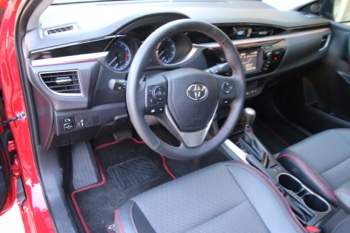
With the special edition you get an upgraded, tasty interior with lots of red accents including piping on the very comfortable seats. Done in Toyota’s SofTex, imitation leather, it’s some of the best in vinyl and the animals must really appreciate that. The instrument panel has all the correct gauges plus and easy to use center stack. This is a car you get in everyday and drive. It will be an enjoyable trip wherever you go.

Pricing for this Corolla starts at a reasonable $20,635 plus $865 the train ride from a window sticker that says Detroit. A base car stickers for $17,300 plus destination. My tester had only two upgrades, a NAV/audio package ($1,200) and a moonroof ($850) bringing the total to $23,550. I would forget the moonroof and save the money. Special edition floor mats are standard and the great looking, attention getting Absolutely Red paint is a no cost color choice. Go with it.

Larry Weitzman has been into cars since he was 5 years old. At 8 he could recite from memory the hp of every car made in the U.S. He has put in thousands of laps on racetracks all over the Western United States.
Emerald Fire proves effectiveness of forest thinning

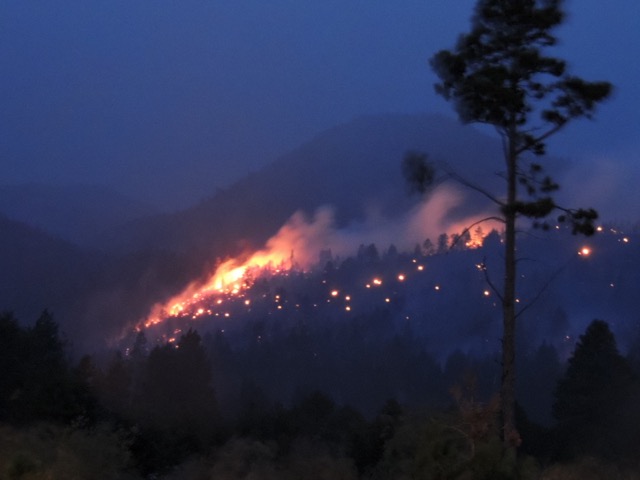
Flames from the Emerald Fire are visible on Oct. 14. Photo/Taylor Flynn/Tahoe Mountain News

Flames from the Emerald Fire are visible on Oct. 14. Photo/Taylor Flynn/Tahoe Mountain News

By Benjamin Spillman, Reno Gazette-Journal

It doesn’t take a wildland fire professional to see how fuel reduction can protect forests and communities.

It just takes a field trip to the site of the Emerald Fire on the South Shore.

Despite burning at the same time and under similar conditions to the disastrous Little Valley Fire, the Emerald Fire was much less destructive.

The Little Valley fire destroyed 23 homes and charred 2,300 acres while doing tens of millions of dollars in damage in western Washoe County. The Emerald Fire was limited to a burn area of 176 acres and was contained within three days.

Although no two fires are the same, a recent walk-through of the Emerald Fire shows how fuel reduction projects by the U.S. Forest Service and others helped minimize damage from the fire and slowed its rate of spread.

Read the whole story


TDPUD trading old holiday lights for new

Truckee Donner Public Utility District will again swap out old, incandescent holiday lights for free energy efficient LED holiday lights for customers.

The LED holiday light exchange begins Nov. 21 at 8am and will continue while supplies last during regular business hours at the TDPUD office located at 11570 Donner Pass Road.

Bring a current TDPUD electric bill along with up to three strands of old incandescent holiday lights. The TDPUD will replace them with your choice of up to 60 feet of warm white or multicolor LED lights. These energy-efficient holiday lights can save between 80 and 98 percent on energy costs versus the old-style incandescent lights.

Eligible customers can also receive other free light bulbs (CFLs, seven types) and information on the district’s energy and water savings programs.

For more information, call 530.587.3896.


Warm room in South Lake Tahoe needs help

Tahoe Coalition for the Homeless is seeking volunteers to staff the warm room this winter.

The next training will be Dec. 8 at 7:30pm at Unity at the Lake, 1195 Rufus Allen Blvd., South Lake Tahoe.

For more info or to RSVP, email contact@tahoehomeless.org.


Study: Poverty in U.S. ‘deeply disturbing’

By Karen Kaplan, Los Angeles Times

The United States is one of the richest countries in the world, but it would look dramatically different if its 50 states were organized according to income instead of geography.

If that were the case, residents of the poorest state in the union would have a median household income that’s just above the federal poverty line for a family of four. They would also expect to live shorter lives than people in more than half of the world’s countries.

It’s not a pretty picture, according to the researchers who carried out this thought experiment.

“In essence, there are several developing countries hidden within the borders of the United States — regions defined, in this case, by poverty,” they wrote in a study published Thursday in the American Journal of Public Health. “The ‘state’ of poverty in this country is dramatic and deeply disturbing.”

Read the whole story


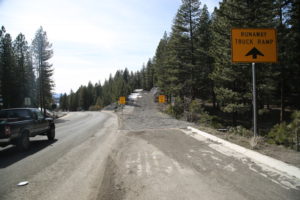
Mt. Rose truck ramp near Incline completed

The old Mount Rose truck ramp. Photo/Provided

The old Mount Rose truck ramp. Photo/Provided

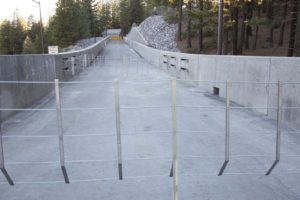
Mount Rose truck ramp today. Photo/Provided

Mount Rose truck ramp today. Photo/Provided

Nevada spent $4.6 million to build what transportation officials say is now a safe truck ramp on Mount Rose Highway.

The truck ramp on the westbound side of the highway in Incline Village has been converted from a rock surface to asphalt. A series of six pre-tensioned drag nets were installed to catch the front grill of runaway vehicles and help safely absorb the impact to slow, then ultimately stop, the vehicle.

Before trucks were not always able to stop and had landed in a house.

The asphalt will be heated to ensure that snow or ice does not hamper use of the nets during winter months. Two roadside flashing signs and one large overhead digital message sign have also been installed to alert drivers when a vehicle is in the truck ramp.

The original ramp was built in the late 1970s.

— Lake Tahoe News staff report


Tahoe Fund seeks environmental project ideas

The Tahoe Fund is looking for environmental organizations to partner with to help solve environmental challenges at Lake Tahoe.

Organizations have until Jan. 29 to submit project ideas online.

The Tahoe Fund is seeking projects for its 2017 Signature and Premier Project Portfolios. These are late-stage projects that will improve Lake Tahoe’s environment by enhancing the water quality of the lake, restoring watersheds, providing healthier forests, improving transportation and fostering outdoor recreation.  The organization also seeks projects to build a greater sense of stewardship in the Tahoe basin.

The organization is raising funds for two 2016 Signature Projects: the new Taylor Creek overlook that will improve the visitor experience for the people and bears at the basin’s most popular visitor center; and the Rubicon/Lighthouse Trail Restoration at Bliss State Park.


Alan Wilkie — 1916-2016

Former South Lake Tahoe resident Alan Wilkie died Nov. 10, 2016. He was 99.

Alan grew up in the Oakland Hills. Most recently he was living in Sonoma.

He rode horseback all his life. He road in the Cavalcade in the 1939 World Fair on Treasure Island.

Starting as a child he spent summers at Camp Richardson. He helped Indian James with brushing and feeding his horses. When older, he led pack trips into Desolation Wilderness.

Alan was a building contractor in the Livermore area and helped build the horse barn with Allan Ross at Camp Rich. He also helped move the log cabin which became the history museum in South Lake Tahoe.

He and wife, Nell, were involved in many activities in South Lake Tahoe. One favorite one of his was the animal shelter. Nell Wilkie died in 2008. They did not have children.

Alan was a kind and intelligent person and will be missed. He would have been 100 on Christmas Day.


Osmosis: A sanctuary for the mind and body

Relaxation comes in many forms at Osmosis in Sonoma County.

Relaxation comes in many forms at Osmosis in Sonoma County.

By Susan Wood

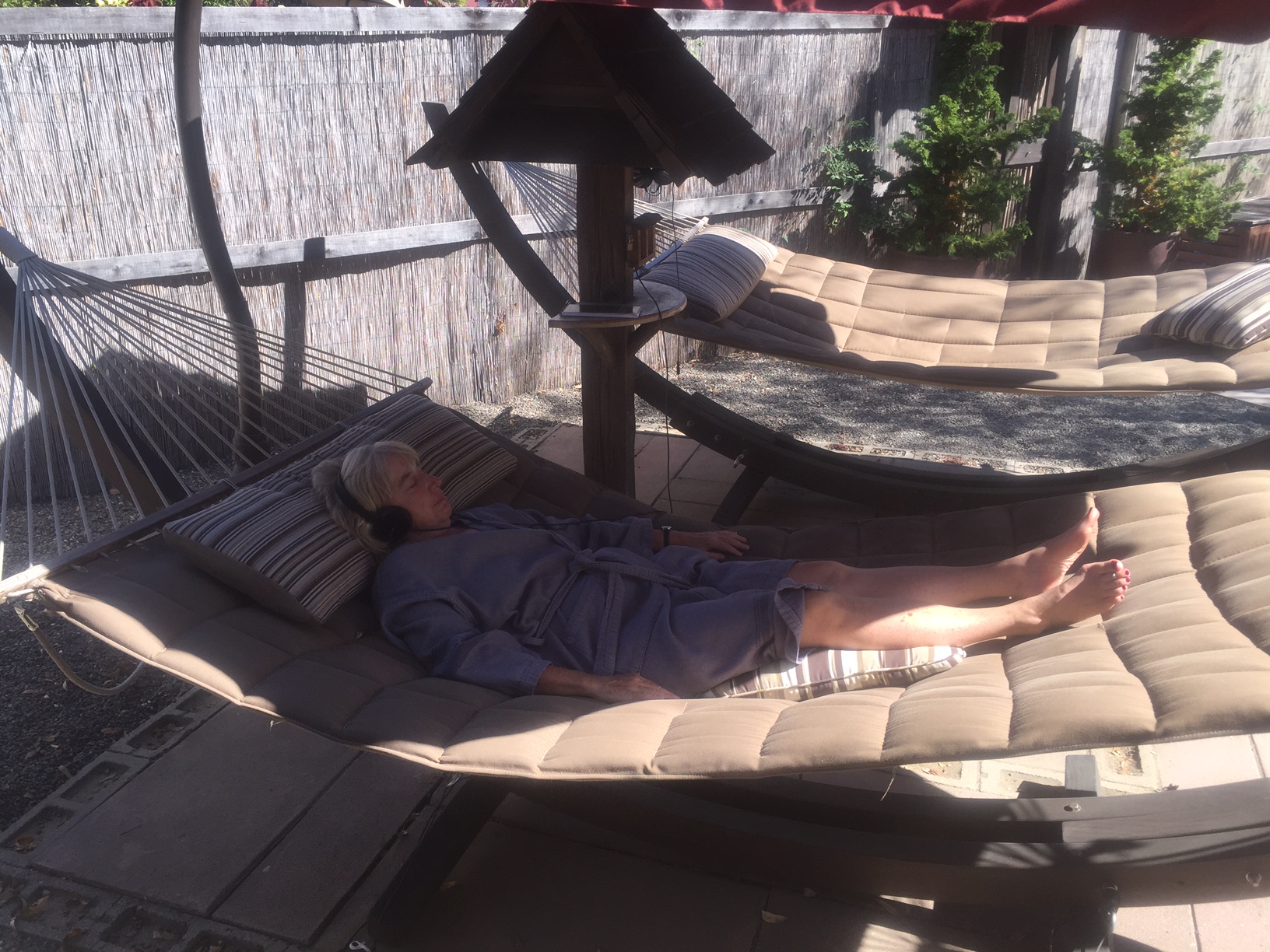
FREESTONE – Like a child within, tears rolled down my face as I listened to the sentimental music through headphones while lying wrapped in a robe resting in a hammock enveloped by nature.

I was smitten with surprise and awe that I could be so moved by my setting – and in one single chunk of my day, the nastiness of a tumultuous world left me. It was only replaced by beauty, goodness and peace.

Indeed, there is something naturally spiritual about this Sonoma County haven called Osmosis.

The Field of Hammocks, a fairly new amenity at the Japanese-inspired day sanctuary, granted me the opportunity of something I rarely do – to just be.

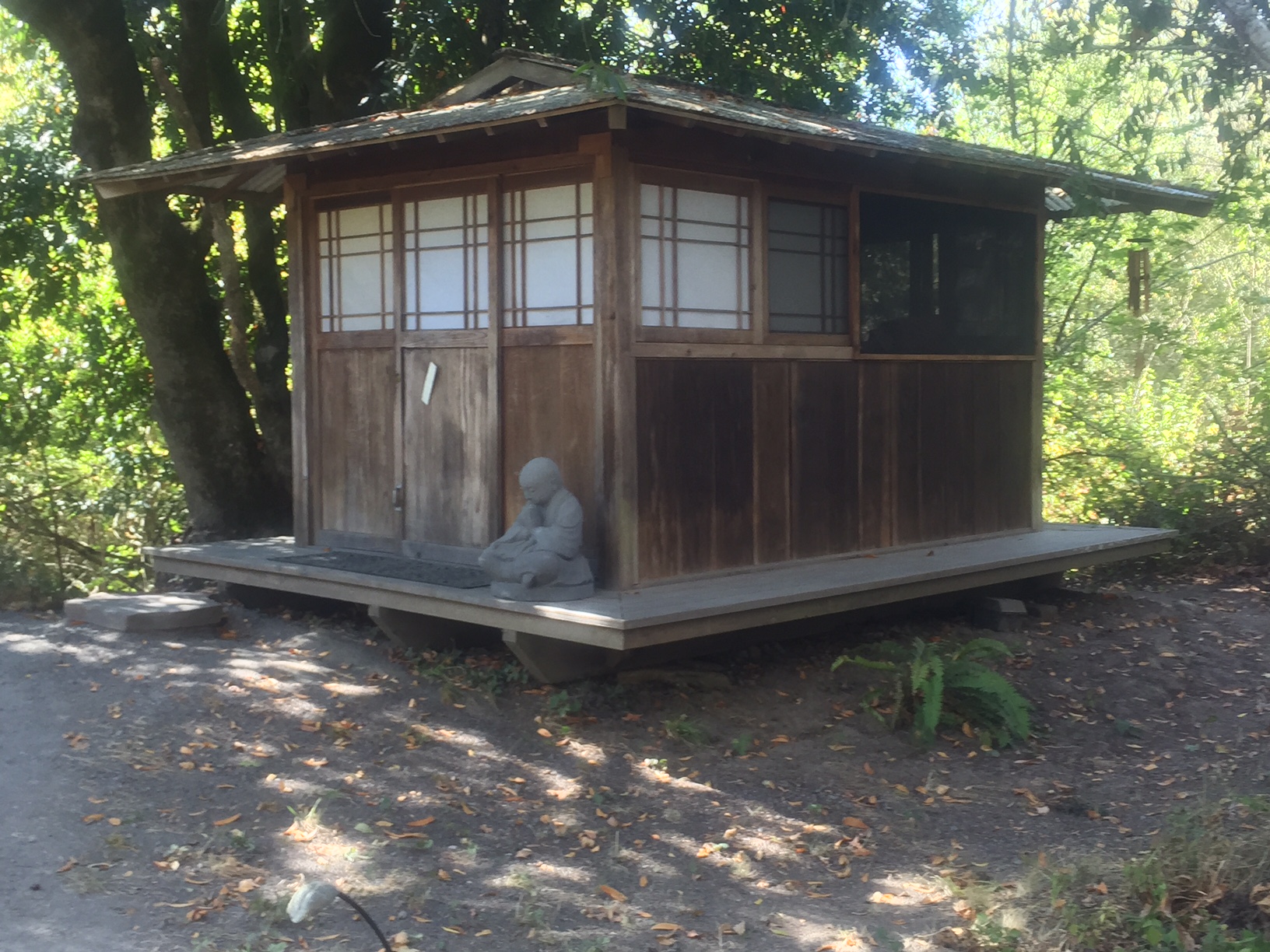
It helped to immerse myself in a state of relaxation after enjoying a massage. On the 5-acre grounds, a guest may opt for one of a number of different types of massages in either the main building or in the pagodas. I chose the latter as something entirely new to me. The small, tasteful shack sits above the river nestled in the lush greenery that provides a safe haven to many songbirds.

Pagodas offer a more remote, secluded setting for massages. Photo/Susan Wood

Pagodas offer a more remote, secluded setting for massages. Photo/Susan Wood

My senses were enhanced by the prospect of receiving the 75 minutes of healing touch from therapist Cari. As for my other senses, I chose lavender for aroma therapy.

It was warm that day, so the hut remained the perfect temperature. When the mercury drops, the small heater in the room provides comfort along with a super soft face pillow.

And with the changing of the seasons, the end of drought would be especially inviting to those receiving or giving therapy in the pagodas. They have tin roofs, providing sound therapy when it rains.

Cari noted that Thursday through Saturday remains the busiest time in the week for Osmosis, with many coming from Sebastopol. The sanctuary offers memberships, with discounts for return customers, and hosts events that add even more goodwill to this tiny farm community a few miles from Occidental.

What’s different in the last few years has been the steadiness of the clients through all the seasons.

“There’s been no seasonal slowdown,” she said.

Apparently, many are finding their way back to this innately spiritual place.

And appropriately so, according to the therapist.

“Osmosis found me,” Cari said. She admitted her “workplace” of sorts is “the best job I’ve ever had” – especially when nature takes over.

“I love it when they go crazy,” she said softly of the birds chirping outside. The hut is full of windows, so I had no trouble hearing them.

That’s not the only wildlife she’s encountered in the few years she has worked there. She saw a bobcat in the creek bed while having lunch on the patio. (Guests may opt for a box lunch filled with organic ingredients from a local, student-supported garden if they make a day of it between sessions.)

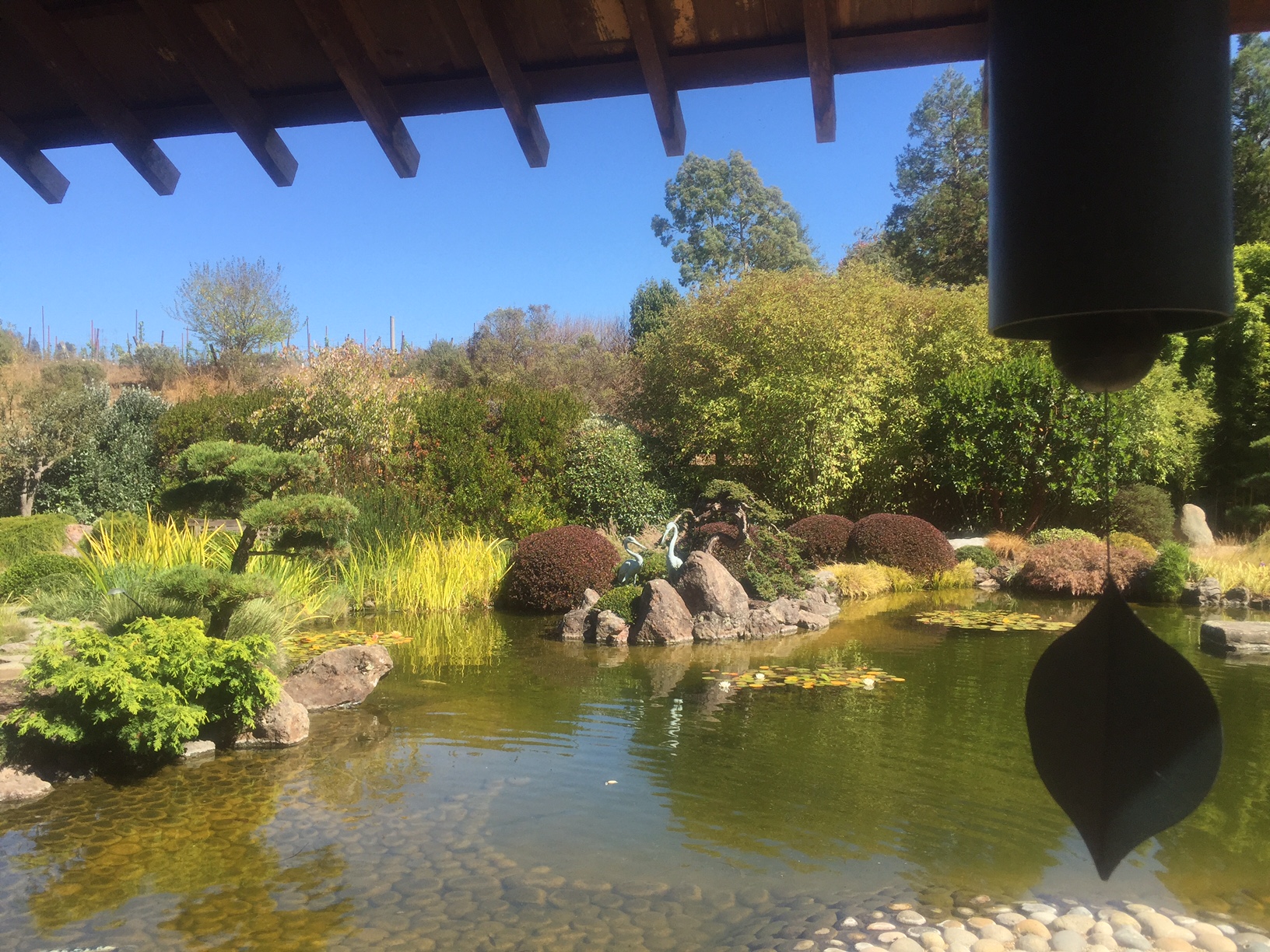
During my lunch, I saw a deer lying still across the creek bed. It looked as much at peace as the clientele who have walked through the bamboo, koi-pond anchored meditation garden and walking path.

Osmosis celebrated its 30 years in business last year with a fond look at its modest beginnings. Founder Michael Stusser’s love of meditation took him to Kyoto, Japan, in the 1980s to apprentice in traditional landscape gardening. He developed a passion for blending ecological sustainability with Zen meditation through healing practices.

Tranquility abounds throughout the grounds at Osmosis. Photo/Susan Wood

Tranquility abounds throughout the grounds at Osmosis. Photo/Susan Wood

Stusser turned his quest into reality in 1984 when he built a cedar enzyme bath with lumber recycled from a chicken coop on his friend’s ranch in Sebastopol. A year later, he built a few more on his own property in Freestone. Today, the biomass cleansing remains popular – a surefire way to heat up the body in the cold winter months.

The spa menu has evolved through the efforts of 80 employees in this modest-looking complex. Retreats like What Truly Matters, wind and music-infused fundraisers and more services including a “forest bathing” treatment and other seasonal specials have been added over the years.

The tranquil grounds, which also include a mile-long nature trail, are covered with plants that are intended to provide a nurturing influence.

And sometimes with healing, there’s heartbreak.

Osmosis recently lost one of its founding influences – Zen priest Steve Stucky, the sanctuary’s longtime landscaper.

An altar is being erected to honor and embody the work of Stucky – with walking meditation instructions to experience the full magnitude of the Osmosis Day Spa Sanctuary.

With the urging of silence to clear the mind, the card at the altar will open with:

“Take a few long, slow and deep breaths. As you exhale, let go of all tension and let your attention flow deep into your belly, legs and feet.”

It will end with: “You can feel truly at ease with yourself. If you can take one peaceful step, you can take two. If your steps are peaceful, the world will have peace.”


Letter: Governors call for end to ‘fire borrowing’

Publisher’s note: The following letter was sent Nov. 15, 2016, to Rep. Paul Ryan, Rep. Nancy Pelosi, Sen. Mtich McConnell and Sen. Harry Reid from governors in the West.


Dear Sen. McConnell and Reid, and Rep. Ryan and Pelosi:

Western governors wish to once again express support for congressional efforts to end the so-called “fire borrowing” practice employed by the U.S. Forest Service (USFS) and the Department of the Interior to fund wildfire suppression activities. We strongly urge Congress to resolve this enduring issue as among its highest priorities when it returns to complete the business of the 114th Congress.

Responsible management of federal lands is a significant concern for western governors. Western states include more than 75 percent of our national forest and grassland system. These public lands serve as critical economic drivers, and they provide numerous conservation benefits, water supply, and recreational opportunities for Western communities and the nation.

States have a particular interest in improving the active management of federal forest lands. State governments possess trust authority over water, wildlife and forest resources, along with primary authority and expertise to protect community health and safety. Poorly managed forests can create significant problems for the landscapes and communities of the West, including: negative effects on air quality and public health, degradation of rivers and streams and associated water quality, including drinking water; reduced forage for domestic livestock; impaired habitats for wildlife and fish; and the loss of forest products and associated jobs. This also has impacts on local fire protection districts, which often bear the brunt of costs associated with first response to wildfire, and state budgets that are also burdened by the costs of wildfire response.

Our views are summarized in Western Governors’ Association (WGA) Policy Resolution 2016-01, National Forest and Rangeland Management. This issue is also the subject of the current WGA Chairman’s Initiative. The initiative is examining many of the management practices of federal, state and private landowners to assess their effectiveness and evaluate the need for regulatory and/or statutory changes to improve them.

Restoration and wildfire mitigation work in western forests has been negatively affected by fire borrowing for years. We recognize that Congress is responsible for maintaining process controls to ensure a responsible use of taxpayer dollars. Further, western governors understand the budgetary challenges posed by wildfire funding and the need for agency accountability.

We also assert that changes are needed, as the current funding situation has allowed severe wildfires to burn through crippling amounts of the very funds that should instead be used to prevent and reduce wildfire impacts, costs, and safety risks to firefighters and the public. This represents an unacceptable set of outcomes for taxpayers and at-risk communities, and does not reflect responsible stewardship of federal land.

Western governors are on record as strong supporters of ending the practice of fire borrowing. Congress should pass legislation to fund federal wildfires off-budget (as many states already do), and ensure the USFS budget for forest restoration, recreation, road maintenance, hazardous fuels reduction, funding to states to treat Wildland-Urban Interface areas, insect and disease response activities, and wildlife/watershed protection is fully restored. We are hopeful that you find an avenue to accomplish this result before the adjournment of the 114th Congress.

Sincerely,

Steve Bullock, governor of Montana

Dennis Daugaard, governor of South Dakota