Tahoe funding restored to federal water act

By Kathryn Reed

The Lake Tahoe Restoration Act, once thought unable to be approved by Congress this session, has been resurrected.

It was announced Monday that it is now part of the final bicameral Water Resources Development Act (WRDA), titled the Water Infrastructure Improvements for the Nation Act. 

In October, it had been removed from the House version of the WRDA.

The House and Senate still need to vote on it, and the president must sign the legislation. 

“This is a monumental step in the legislative process for the Tahoe basin. After fighting for years to refocus federal policy on the twenty-first century threats to the Lake, we have ensured important work that preserves the Jewel of the Sierra for future generations will advance. This was a total team effort by both the Nevada and California delegations which required bicameral and bipartisan support,” Sen. Dean Heller, R-Nev., said in a statement.

He was the lead sponsor on the legislation.

The bill would deliver $415 million to the Lake Tahoe Basin across seven years. The money would be used for wildfire prevention, the environmental improvement program, invasive species management, stormwater projects, Lahontan cutthroat trout recover, and other projects.

“This is great news for Lake Tahoe. TRPA is excited to see such strong and widespread bipartisan support for this comprehensive legislation that is so important for continued environmental conservation and restoration work at Lake Tahoe, one of America’s natural treasures,” Tom Lotshaw with TRPA told Lake Tahoe News.

The original Lake Tahoe Restoration Act was passed by Congress in 2000, three years after President Bill Clinton was here for the initial Lake Tahoe Environmental Summit. The bill brought $300 million in federal money to the basin in 10 years.

Since the 1997 summit more than $2 billion has been spent in the basin on what officials call environmental projects. This is a combination of federal, state, local and private dollars.

With the U.S. government owning about 80 percent of the land in the basin, that has always been one of the leading arguments that the feds should have a major role in the upkeep of the area.



Deadline approaching for overseas military mail

To people serving in the military overseas receive packages on time, it is best to ship holiday gifts no later than Dec. 9.

For other international destinations, it’s best to have the mail on its way by Dec. 10.  

Here are the military deadlines form the U.S. Postal Service for most destinations:

Dec. 7 — Retail ground

Dec. 9 – Priority mail packages

Dec. 9 – First class cards and letters

Dec. 16 – Priority mail express military service


Domestic deadlines:

Dec. 15 – USPS retail ground

Dec. 20 – First class cards and letters

Dec. 21 – Priority mail packages

Dec. 23 –  Express service.


Snippets about Lake Tahoe

·       South Lake Tahoe Library is having a Winter Extravaganza on Dec. 10 from 10am-noon. Creation stations will be set up with easy to make, seasonal decorations suitable for all ages. Santa Claus is scheduled to drop by. The library is at 1000 Rufus Allen Blvd.

·       Here are the El-Dorado-Tahoe and Sierra roadwork schedules for the week from Caltrans.

·       Veteran real estate advisor Alison Elder has joined Engel & Völkers Lake Tahoe.

·       Tahoe Tot Spot in South Lake Tahoe is having a Christmas party Dec. 11 from 10am-noon. Santa and Mrs. Claus will be there, as will a photographer to capture the moment. Normal open play rates apply and digital pictures can be purchased.

·       The Devil Makes Three will play at Harrah’s Lake Tahoe on Dec. 29 at 7:30pm.


USS Arizona survivor recalls tragedy 75 years later

By Audrey McAvoy, AP

HONOLULU — Lauren Bruner was getting ready for church in 1941 on his battleship, the USS Arizona, when the alarm sounded.

The Japanese attack on Pearl Harbor had begun, and Bruner, then 21, scampered up five stories by ladder to the enormous anti-aircraft guns he was responsible for manning.

But bullets hit his left leg and explosions set off by the Sunday morning bombardment rocked his ship before he could get to the weapons. The ship sank just nine minutes later. Bruner escaped, but suffered severe burns.

This week Bruner, now 96, plans to visit a memorial over the Arizona’s sunken wreckage and attend a remembrance ceremony at Pearl Harbor on the 75th anniversary of the Dec. 7, 1941, attack.

Bruner has traveled from his Southern California home for the events many times, but doesn’t know how long the Arizona’s few remaining survivors will able to keep up the tradition.

“It’s getting close to being the end pretty soon. There’s only five of us left now,” Bruner said.

More than 2,300 servicemen died in the Japanese attack that plunged the United States into World War II. Nearly half of those killed were on the Arizona, most still entombed in the wreckage.

The Navy and National Park Service expect several dozen attack survivors to attend the remembrance ceremony Wednesday on a pier overlooking the harbor. They, along with thousands of others, will observe a moment of silence at 7:55 a.m. — the same minute the Japanese planes hit their first target in the harbor.

Back then, in 1941, Bruner didn’t know who was attacking until the planes got close enough for him to see the red Rising Sun Japanese insignia on their sides. The aircraft shot at “everything in sight,” he said. Then an explosion tore through his battle station.

“That’s where the flames blew right through and cooked me right there,” Bruner said in a telephone interview from his home in La Mirada.

With “everything burning,” Bruner tried to get off the ship as fast as he could. But the water in the harbor 80 feet below — infused with leaked oil — was on fire, too, so jumping wasn’t an option.

Bruner and a few fellow shipmates shouted to a sailor on the ship moored next to the Arizona to toss over some rope. The six of them tied the rope and carried themselves hand-over-hand across the 100-foot expanse to the USS Vestal.

“You’re like a chicken getting barbecued,” he said. All of them made it, becoming six of the 335 sailors and Marines on the Arizona to survive. Another 1,177 shipmates died.

Doctors on the USS Solace hospital ship wanted to amputate most of Bruner’s hands, leaving him with just his forefingers and thumbs, he said. Ultimately they peeled off his dead skin and let new skin grow in. They put him in a special bed with hoops that allowed sheets to be draped above him but not touch him.

Navy documents recently uncovered by the genealogy and historical records company Ancestry show Bruner suffered burns on his face and the back of his neck, his right shoulder, right arm and forearm, fingers, hands, outer thighs and lower legs.

The burns on his right arm were particularly severe and took longer to heal, according to the documents, which Ancestry has posted in a special section for Pearl Harbor survivors within its military records site Fold3.com.

Bruner spent seven months recovering but returned to service, he said, because the Navy needed sailors to train new recruits to fight the war. He was on the USS Coghlan when it bombed Japanese positions on Attu Island in Alaska in 1943. His ship later took troops to the South Pacific and was near Guam when the war ended.

He doesn’t like to rehash many details from Dec. 7. He said he just “grins and bears it” to cope with the memories.

“There are parts of this whole thing that I can’t talk about. If I do talk about it, I cannot sleep,” he said.

After the Navy, Bruner went to work for a former Marine’s refrigeration business and spent 39 years with the company. He married twice, but outlived both wives.

Bruner wants his ashes interred inside his old battleship after he dies, like many other Arizona survivors who have chosen to be buried with their shipmates. Bruner said he prefers this to lying in a sparsely visited cemetery.

“I think I’ve got the last spot,” he said, expressing confidence he’ll be the last of the survivors to go.

Associated Press writer Christine Armario in Los Angeles contributed to this report.


Letter: Grateful for Ameriprise’s help at B&B

To the community,

In partnership with Feeding America, Ameriprise Financial Services Inc. advisors and employees participate in the national day of service by volunteering at events which help feed the hungry. On Nov. 28, private wealth advisor Richard Gross and client service manager Elizabeth Palmer from Tahoe’s Ameriprise Financial Services office sponsored and volunteered at Bread & Broth’s Monday meal. 

Feeding 95 dinner guests, they joined the nationwide effort by Ameriprise Financial’s volunteers to feed the one in six in our nation who struggle with hunger.

“Every year we are humbled to be able to serve,” stated Gross. “All the volunteers have huge hearts. See you next year.”  

Gross and members of his Ameriprise Financial office have been sponsoring Adopt A Days for the past four years. Bread & Broth can always count on an Ameriprise dinner sponsorship in November and look forward to their cheerful and “ready and willing” attitude when helping at the event.

Bread & Broth would like to recognize and thank Ameriprise Financial Services for their dedication to utilizing the firm’s resources and talents to improve the lives of individuals and help build strong communities.  Through their partnership with Bread & Broth, Ameriprise Financial Services Inc. has taken the opportunity to help people in our community and provide an example of how corporations can positively impact the lives of those in need.

To partner with B&B as volunteer, donor or sponsor, visit our us online. 

Carol Gerard, Bread & Broth


Tires deliberately punctured in South Tahoe

By Kathryn Reed

The rash of flat tires on the South Shore continued this weekend, with five reports on Saturday and one Sunday.

Unsuspecting drivers in the area are driving over caltrops and ninja road stars. They can easily be purchased; with the main purpose being to deflate tires. They are being placed on the street and drivers puncture their tires after riding over them.

This is an example of the tool used to puncture tires.

This is an example of the tool used to puncture tires.

“Some people are real jerks and they get their jollies making other people’s lives difficult,” Police Chief Brian Uhler told Lake Tahoe News. 

Because the flat isn’t necessarily immediate it’s difficult to pinpoint the location of where the devices have been placed.

“I was driving home and turning onto Golden Bear and my low tire light came on,” one victim told Lake Tahoe News on Dec. 4. “It’s probably some kids who think that it is funny.”

The calls first came into the SLTPD sporadically about a week ago. Now neighboring jurisdictions are reporting the same problem.

The various crimes that the culprits could be charged with are all misdemeanors, which means they could receive a citation instead of going to jail. If a driver were to have an accident because of the flat, the seriousness of the crime could rise to a felony.

Officers are seeking the public’s help in find the people responsible for putting the destructive devices on local streets.


Tahoe Tails — Adoptable Pets in South Lake Tahoe

Foxtail

Foxtail

Foxtail is a stunningly handsome boy who looks like a Norwegian Forest cat. He likes to hide out in his house all day, so be sure to ask to meet him when you visit the shelter. He is about 4 years old.

Fees for all adoptions for the next few weeks have been paid by a kind donor. There are 14 dogs (including nine puppies) and 13 cats (including several kittens and several older cats) at the shelter as of today.

Foxtail is neutered, microchipped, tested for FIV, and vaccinated. He is at the El Dorado County Animal Services shelter in Meyers, along with many other dogs and cats who are waiting for their new homes. Go to the Tahoe animal shelter’s Facebook page to see photos and descriptions of all pets at the shelter.

Call 530.573.7925 for directions, hours, and other information on adopting a pet.

For spay-neuter assistance for South Tahoe residents, go online.

— Karen Kuentz


Efficient woodstoves improve Tahoe air quality

By Kathryn Reed

Black smoke billowing from chimneys is exactly what air quality regulators don’t want to see.

Woodstoves have become so efficient that little or no smoke should be seen. The problem is there are thousands of open face fireplaces and inefficient woodstoves in the basin. This contributes to poor air quality, and the soot reaching the lake degrades the clarity of Lake Tahoe.

“Older, outdated woodstoves generate significant emissions that harm air quality and the environment. Newer, more efficient woodstoves certified by EPA burn one-third less wood and can result in particulate matter emission reductions that are equivalent to removing five diesel buses from the roads,” Tom Lotshaw with the Tahoe Regional Planning Agency told Lake Tahoe News.

The California Air Resources Board’s initial draft plan that was released Dec. 2 calls for reducing greenhouse gas emissions by 40 percent below 1990 levels by 2030. This mandate is the most ambitious of any state.

“This plan lays out a road map for California – and the rest of the world – to achieve climate goals that were inconceivable only a decade ago,” Gov. Jerry Brown, who established this 2030 target by Executive Order in April 2015 and signed SB32 in September to codify it, said in a statement. “There are steep hills ahead, but we’ll scale them by continuing to take a series of bold actions, including extending California’s Cap-and-Trade Program.”

El Dorado County is doing what it can to work on air quality issues. The problem is that much of the pollution is not generated in the county, but instead blows in from the west.

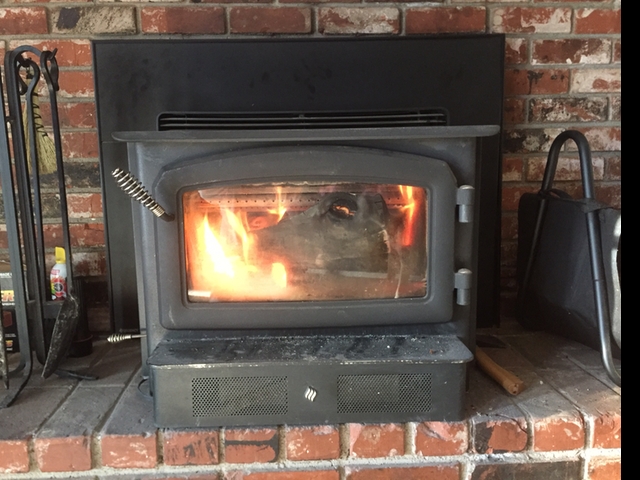
Efficient woodstoves improve air quality. Photo/LTN

Efficient woodstoves improve air quality. Photo/LTN

“Parts of our county are in non-attainment for ozone standards and particulate matter standards,” Adam Baughman, air quality engineer with the El Dorado County Air Quality Management District, told Lake Tahoe News. “We have deadlines in which to attain standard. We have to show reasonable forward progress. We will meet the ozone standard by about 2022.”

By providing rebates to people to take out their inefficient wood burning device and replacing it with a better model or even gas, the county is doing what it can to achieve the state air quality standards. Not all areas of the county can go to gas; only the basin and El Dorado Hills have natural gas.

“We try to do things like this with the incentives that help get us there without laying the hammer down,” Baughman said.

The program started in 2007, but has been revamped through the years. Funding has come from the feds and state. The rebate throughout the county is a few hundred dollars, in the basin it is more because TRPA has provided $88,750 to the cause.

In the basin in El Dorado County 122 people have received rebates. Of these, 58 went to gas only units and 41 went back to wood. The rest did complete removal, with a couple going to pellet or electric. 

Baughman said these conversions mean 6 tons of particulate matter that is 2.5 to 10 micrometers in diameter are no longer being emitted. Greenhouse gas emissions have been reduced by 300 tons. Countywide, those numbers are 20 tons of particulate matter and 777 tons of greenhouse gas emissions.

According to the website AirNow, “Particles less than or equal to 10 micrometers in diameter are so small that they can get into the lungs, potentially causing serious health problems. Ten micrometers are less than the width of a single human hair.”

For more information about the rebate program in El Dorado County, go online. 


Opinion: 2 lesser-known reasons to celebrate public lands

By Martin Nie, High Country News

America has spent the last year celebrating the centennial of the National Park Service. Given that the agency protects 80 million acres — 3.5 percent of the United States — this is a birthday well worth celebrating.

But two other important birthdays passed almost unnoticed: October marked the 40th anniversary of both the Federal Land Policy Management Act, or FLPMA (pronounced “flipma”), which covers the Bureau of Land Management’s holdings, and the National Forest Management Act (pronounced “nifma”), which covers our national forests. The combined acreage overseen by the two laws amounts to almost 20 percent of the U.S.

Of course, the very notion of publicly managed lands, which are mostly concentrated in the West, has its adversaries. Most spectacularly, the Bundy Clan occupied the Malheur National Wildlife Refuge in Oregon after decades of flouting federal grazing laws. Meanwhile, a more insidious threat to public ownership comes from those politicians and interest groups seeking the transfer of federal lands to the states or into private ownership. 

Why have these two almost unknown laws inspired such resistance? Because each in its own way transformed the federal lands into law-abiding areas that could be managed for our collective good.

Read the whole story


Kale is about to have an identity crisis

By Natalie Jacewicz, NPR
 
Kale is getting a makeover, and the very essence of kaliness may hang in the balance.

To develop a new variety of kale tailored to American palates, horticulture professor Philip Griffiths of Cornell University College of Agriculture and Life Science and graduate student Hannah Swegarden are soliciting consumers’ kale reflections — the good, the bad, and the ugly. The scientists face a philosophic question for the ages.

Asks Swegarden: “How far can you push a consumer’s concept of what kale is, before it’s not kale anymore?”

Read the whole story