Opinion: We must broaden the notion of family

By Elizabeth Brake

Since at least the time of Aristotle’s “Politics”, families have been considered the building block of society. Strong families produce the stability—and reproduce the future citizens—needed for society to flourish.

But the inverse can also be true. When members of insular nuclear families lose understanding and empathy for those unlike them, the family can threaten liberal democracy itself.

This threat intensifies when citizens feel left behind, economically or otherwise. When a family’s own economic survival appears to hang in the balance, voters can ignore the interests or rights of groups of others —for example Muslims or undocumented immigrants. Such a response undermines democracy, since democratic decision-making functions best when we can take the larger view of what is good for all citizens—including those unlike us.

Democracy requires a meeting place where people can share ideas, interact with those different from them, and—at least—not demonize them. This serves a few purposes. The better we understand the concerns and anxieties of those unlike us, the more we can empathize, and be persuaded to compromise or consider their good. This directly contributes to stability, since we are more likely to maintain our commitment to democratic institutions, and to uphold the rights of all, if we have some trust and empathy for our fellow citizens, especially those we aren’t related to, or don’t know personally.

Marxist theory co-founder Friedrich Engels saw the private family as foundational to capitalism, making possible the intergenerational transfer of wealth from biological father to son. The nuclear family also enables caring about one’s own to the exclusion of others, because focusing on the success of “one’s own” conceptually depends on marking off “one’s own” from others.

The nuclear family configuration idealized in America today, which draws sharp dividing lines between people, is historically atypical. Throughout human history, we lived in extended kin groups, working together in larger family configurations. Today as we enter our “single-family” homes through our garages without meeting our neighbors, it’s no wonder we’re grappling with an epidemic of loneliness. Working families are struggling to provide childcare, to pay bills, and to have time with each other. The greater distances workers must travel each day for gainful employment further isolates families.

In a society where people face so many pressures and have long experienced stagnant incomes, it’s only human to turn the focus inward. Anxiety about providing for our own family naturally overshadows concern about others when success seems to be a zero-sum game.

To surmount isolation, democratic theorists have stressed the importance of public schools, in which children from diverse backgrounds mingle, laying a foundation for respect and tolerance for fellow citizens. Public universities too can serve this process, when students learn from peers with different experiences.

But we have no infrastructure for a vibrant civil society in which adults interact with peers from different backgrounds—different religions, races and ethnicities, social and economic classes and educational backgrounds—to discuss issues of political importance. And that is distressing, when finding a way to bring disparate groups together seems especially urgent with regard to both racial tolerance and economic inequality.

Notions of family, are, of course, deeply intertwined with race—whatever race is. Tellingly, Derek Black—who defected from Stormfront, the Internet’s first and largest white nationalist site, founded by his father—wrote in the New York Times that he’d viewed white nationalism as defending the interests of his “white friends and family.” Of course, some families cross racial boundaries; but when families are racially homogenous, their separation allows members to be ignorant of challenges faced by others.

The nuclear family contributes to economic inequality in two ways. First, by the so-called “marriage gap in the U.S.” between lower-income people, who are less likely to marry, and higher earners, who are more likely to marry each other, further consolidating wealth. Secondly, a family’s ability to provide a strong start for its children is directly tied to economic advantage. If, as studies suggest, an activity as simple as parents reading to their children can increase their life chances, consider the long-term effects of parents’ ability to provide a stable home, decent food, and quality healthcare.

Political philosophers have long recognized that the nuclear family is in tension with the ideal of equal opportunity, precisely because different families will give children different head starts in life. To be clear, I’m not proposing the abolition of the nuclear family, as political philosopher John Rawls once suggested in a throwaway comment. While Rawls recognized that the nuclear family detracted from equal opportunity, he also saw that the moral development which occurs within families was crucial for citizens to develop a sense of justice which would keep liberal democracy stable.

In the family, we learn to move beyond self-interest to care about the good of others. The problem is that families may isolate us from those unlike us—religiously, racially, socioeconomically— and make it harder to care for their good because we do not understand their challenges.

How to fix this? We should start by broadening the definition of family. Why not create a new-old model that builds on the age-old notion of extended family?

Legal theorists have recently been discussing “in-between” legal family statuses. Currently, one is either a parent or a legal stranger to a child; either a legal spouse, or not. So why not create a path to recognizing the variety of relationships which reach beyond the nuclear family? For instance, “in-between” legal status for grandparents or friends of parents who help care for a child, or kinship status that allows legally recognized relationships within friend groups.

In this way, the law could encourage bonds beyond the nuclear family, and thus ease some of the burdens of isolated nuclear families. This first step could put us on the path to widening circles of trust and care, and to encouraging greater interaction within a vibrant, diverse civil society.

Elizabeth Brake is an associate professor of philosophy at Arizona State University. She is the author of “Minimizing Marriage: Marriage, Morality, and the Law” (OUP, 2012) and editor of “After Marriage: Rethinking Marital Relationships” (OUP: 2016).


Canine cancer research may improve human treatments

By Laurie McGinley, Washington Post

PHILADELPHIA — Flyer, a 70-pound golden retriever, lies patiently on her left side on an examination table as technicians scurry around, placing little sandbags on her legs and neck to keep her still. She’s getting chest X-rays to answer a critical question: Has a deadly bone cancer spread to her lungs?

When the session is over, Martha MaloneyHuss, a veterinarian at the University of Pennsylvania’s Ryan Veterinary Hospital, glances at the images. “I don’t see anything hugely obvious,” she says, “but we’ll see what the radiologist says.” Oblivious to the good news, Flyer hops down the hall on three legs, eager to find her owner.

After the 8-year-old retriever began limping last year, she was diagnosed with osteosarcoma, a painful, aggressive cancer that often strikes Great Danes, Irish wolfhounds and other large breeds. At Penn Vet, she got the standard treatment: One of her left legs was amputated, and she underwent chemotherapy.

Flyer is part of a burgeoning field called “comparative oncology.” It focuses on finding new ways to treat cancer in pets, mostly dogs, in an effort to develop innovative treatments for people and animals.

Read the whole story


Burning man prices to increase in 2017

By Jenny Kane, Reno Gazette-Journal

Burning Man is increasing the ticket prices for next year’s weeklong Black Rock Desert gathering.

On Tuesday, the San Francisco-based arts nonprofit announced that general admission tickets will cost $425, $35 more than the 2016 price.

The increase is one of the largest since Burning Man organizers first sold tickets in 1992 for $25, an increase that Burning Man representatives said is necessary to cover their growing costs.

Read the whole story


Substantial snow in forecast for Tahoe

It looks like it will be a white Christmas in Tahoe after all.

A winter storm warning is in effect from 10am Friday to 4pm Saturday.

According to the National Weather Service in Reno, between 8 and 16 inches of snow will fall at lake level, with 1 to 2 feet above 7,000 feet.

White-out conditions are expected on mountain passes.

Winds will be from the southwest at 15 to 25 mph, with gusts near 40 mph. The ridge tops could see 100 mph gusts.

The sun should return on Christmas Day.

— Lake Tahoe News staff report


Nevada benefits from forgotten casino tickets

By Thomas Moore, Las Vegas Sun

Gamblers left more than $35 million on casino floors in the past five years, money the state of Nevada was happy to come along and pick up. The cash came in the form of slot and video machine tickets that players either lost, forgot about or simply didn’t bother to turn in.

With the days of coin-based slots long receded, these tickets are how slot and video poker players collect their winnings. Machine-dispensed tickets must be taken to either a kiosk — the industry name is a ticket-in, ticket-out machine — or the casino’s cage and exchanged for cash.

According to Nevada gaming regulations, the tickets expire at a date the casino sets or 180 days, whichever is sooner. State government only gets a portion of what players abandon.

Read the whole story


Squaw-Alpine piloting transit option during holidays

This holiday season, Squaw Valley Alpine Meadows will offer a pilot intra-valley transit program in partnership with the app-based transportation provider Chariot.

It will be available Dec. 23-Jan. 4.

Chariot’s mobile app will allow people to book rides for on-demand and fixed-route services within the Squaw Valley and Alpine Meadows neighborhoods, using new 14-passenger Ford Transit vehicles equipped with ski and snowboard racks.

Shuttles will pick up passengers along fixed 15-20 minute routes between 8-10am and 3-5pm. From 10am-3pm, Chariot will provide custom resort-to-doorstep rides within the Squaw Valley and Alpine Meadows neighborhoods, in addition to fixed routes. Resort-to-doorstep rides can be booked via Chariot’s mobile app.


Nev. population growth rate rebounded in 2016

By Henry Brean, Las Vegas Review-Journal

Call it the Great Basin boom.

Utah and Nevada ranked as the nation’s two fastest-growing states over the past year, according to U.S. Census Bureau population estimates for 2016 released Tuesday.

Utah’s population grew by just more than 2 percent while Nevada’s added 1.95 percent from July 1, 2015, to July 1 of this year. That brought Nevada’s population to 2.94 million, up 56,300 from the previous year, the bureau said.

At this rate, Nevada could welcome its 3 millionth resident in 2017.

Read the whole story


Time to start advertising with Lake Tahoe News

Every business wants more customers and to make more money. Lake Tahoe News wants to help you accomplish those goals.

LTN is the only place to get news about Lake Tahoe seven days a week and it is not affiliated with any other media.

We have readers inside and outside of the basin. That is why your business belongs on Lake Tahoe News. We are reaching the people you want to reach. 

We aren’t like other media in the basin.

New stories are posted about every 90 minutes, seven days a week. There’s always a reason to be reading LTN. This means people will see your ad when it’s convenient for them – whether they are on their computer, tablet or phone.

We are a serious news site that is serious about making your business successful. 

This is what we do: 

  • We were the only publication on the South Shore to provide in depth election coverage – from profiles to having the most extensive endorsements to results as they came in.
  • We are regularly breaking news – like Whole Foods 365 coming to South Lake Tahoe, Councilwoman JoAnn Conner and the city reaching a settlement, and the initial Nevada Fire Safe Council debacle.
  • We take on projects: This year we published a multi-part series on mental health and one on national parks with this being the 100th anniversary. 
  • We cover news throughout the basin and in Truckee. Some of it is hard hitting, some whimsical. We write human interest stories about people doing interesting things. There are business, tourism and environmental stories. Travel, outdoor and food are other topics.

You now know a little about our story. Let us help tell current and potential customers about you. Your display ad will do this. But even better is that an ad on Lake Tahoe News will click through to your website, so you get to say even more.

Contact us today about starting your ad campaign on Lake Tahoe News. Email info@LakeTahoeNews.net and put “want to advertise” in the subject line. An incentive to do so now is to lock in the rates because in 2017 the prices will be changing. 


Phone scam targeting Washoe County residents

The Washoe County Sheriff’s Office has received a number of reports this week from people saying they received phone calls from someone claiming to be from the department and stating that the potential victim has “law enforcement issues” which need to be taken care of.  

Typically with these types of scams, the scammer provides instruction on how the payment should be submitted, usually through an “eGift” cash card, pre-paid credit card, or similar payment to a specified account or name given by the caller.

The Washoe County Sheriff’s Office does not ask for payment over the phone or negotiate for payment in lieu of arrest. Anyone with questions about a law enforcement issue is asked to call the sheriff’s office or the appropriate local law enforcement agency before providing any information or making payments.

Anyone who has suffered a loss as a result of this type of scam should call WCSO at 775.328.3001, ext. 7.


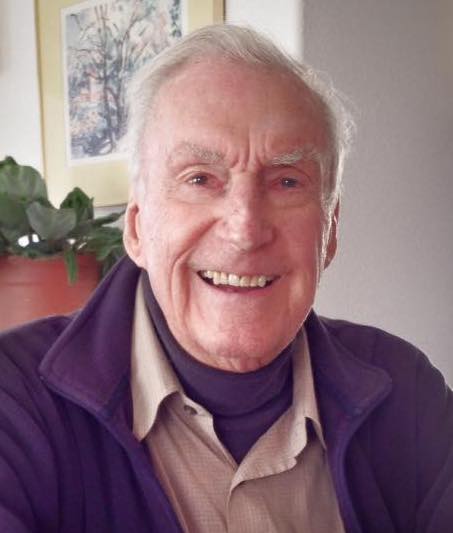
Ollie Hayden — 1927-2016

Ollie Hayden

Ollie Hayden

Oliver Wendell Hayden was born at home Nov. 18, 1927, in Nicholson, Pa., to Hallie I. Hayden and Leta Cooley Hayden; the fifth of seven children. He passed way Dec. 17, 2016, at Carson Tahoe Medical Center in Carson City. He was 89.

Ollie graduated from Nicholson High School in 1945, and entered the U.S. Navy where he served as bugler aboard the aircraft carrier USS Leyte.

He acquired his life-long passion for classical music during that period.

Ollie entered the field of media marketing in the late 1940s, working for three newspapers on Long Island, N.Y. In 1954 he changed his focus to broadcasting, becoming an account executive at WNBF AM-FM in Binghamton, N.Y. During that time he also undertook higher learning education, taking courses mainly in the arts at Syracuse University’s extension school at Endicott, N.Y. (Harpur College). In 1956 he was promoted to a similar position at WNBF-TV, where he served until 1962.

He moved to California in 1962, taking a position as account executive at KSBW-TV in Salinas, followed by KGO radio in San Francisco. In 1965 he moved into national sales with CBS Radio spot sales. He was transferred to the Chicago sales group in 1966 and in 1968 was awarded a double promotion, first to the New York sales team, and in July of that year named general sales manager at KCBS, San Francisco.

In 1972 he became general manager of KRE, Berkeley, and following that held similar positions at KTIM, San Rafael, and KTHO, South Lake Tahoe, all in California. He became part owner and president of the latter station from which he retired in 1992.

For the next several years he continued to work, doing fieldwork for Ridge Tahoe and Selective Properties in Stateline and Zephyr Cove.

He was a member of the Tahoe-Douglas Rotary Club and served as president in 1995-96.

Ollie was an avid reader and his main interests outside of work were in the areas of classical music, history and travel. Over many years he had collected more than 700 CDs and a large library of history, military history and music reference books. He also enjoyed downhill skiing and hiking.

Ollie was a kind and thoughtful man and was loved and respected by all who knew him. He will be greatly missed, but we will treasure the wonderful memories of the life he shared with us.

He is survived by his beloved wife, Nancy Oliver Hayden of Carson City; children Dean of Long Island, N.Y., Stuart of San Jose, Michael of Albany, Calif., and Jai of Seattle; grandson Kai DeSpain of Seattle; sister Carol Vest of Cedar Rapids, Iowa; stepsons John Oliver of Reno and Mark Oliver of Bell, Texas; and several nieces and nephews.

He was predeceased by two sisters, Lucille Lewsader and Betty Hartman, and three brothers, Edward, Hallie Jr. and David.

At his request no services are planned at this time. A celebration of life will take place at a later date.