2017 brings new laws, changes for Nevada

By Cy Ryan, Las Vegas Sun

Changes to laws involving guns, marijuana and mopeds will greet Nevadans in 2017.

Here’s a rundown of some of the most talked-about issues affecting our community beginning Jan. 1.

Voters in November narrowly approved a ballot question to expand background checks for firearm purchases.

This new law is aimed at those who sell weapons online or at trade shows, making their private transactions subject to the same legal requirement as purchases involving licensed dealers, for which federal background checks are necessary.

Read the whole story


Officials: Mountain snowpack low, but it’s early

By Associated Press

Officials say it’s too soon to declare an end to California’s drought despite heavy rain falling early in the wet season.

The state’s Department of Water Resources said Tuesday that the Sierra Nevada snowpack is at 72 percent of normal for this time of year.

The mountain snow contributes about a third of the state’s water when it melts in the warm months and fills reservoirs. California has endured five years of historic drought.

State climatologist Michael Anderson says California needs the rain and snow to continue falling to make up for the past several dry years.

Northern California had the wettest October in 30 years with heavy rains.

Forecasters say, however, that they’ll know better by April 1, when the snowpack is typically its deepest and wettest.


Road Beat: Honda Ridgeline almost all new in ’17

Honda Ridgeline 2017 is worth the wait. Photos/Larry Weitzman

Honda Ridgeline 2017 is worth the wait. Photos/Larry Weitzman

By Larry Weitzman

Starting in model year 2006, the first-generation Honda Ridgeline enjoyed a long nine-year run through 2014 to be replaced by an almost entirely new vehicle in model year 2017. There was no 2015 or 2016 model. This new second generation 2017 Ridgeline was unveiled in January 2016 and production commenced in May of this year. Was it worth the wait? You bet it was and you can take that to the bank.

Almost everything is new, even more that 50 percent of the chassis is all new, something not usually done in American trucks. First the new truck while based on the new Pilot as was the old Ridgeline, has a new curvaceous, smoother, more purposeful body. It is now a great looking ride, not like the three, distinct box design of the prior Ridgeline. Everything about this new Ridgeline is integrated with lines flowing throughout the body. It looks slicker and it is with a 15 percent reduction in co-efficient of drag and an overall 18 percent reduction in vehicle running resistance.

Wheelbase is up three inches to 125 inches and overall length at 210 inches has grown by the same amount. It still stands 71 inches tall but it is a bit wider by almost an inch, now a broad shouldered 78.6 inches. Track is still a super wide 66 inches.

Finally, while lighter by about 100 (down to 4,431) pounds, the new Ridgeline through the use of more advanced materials is stronger with a 28 percent increase in torsional rigidity and tighter sealing, meaning a much quieter ride, improved handling and more comfort. But we are just beginning here.

Under the hood is essentially the same slightly undersquare 3.5L V-6 engine, but with plenty of changes. First and most important is direct injection which increases engine output and fuel economy simultaneously. It has other changes in variable cylinder management cylinder deactivation (running on less than six cylinders), drive by wire and a new, higher 11.5:1 compression ratio (up a point and a half). The bottom line is now 280 hp at 6,000 rpm and 262 pounds of peak twist at 4,700 rpm, up by 30 hp and 15 pounds respectively. Also new is a six-speeder auto cog swapper replacing the older five speed unit, helping both performance and fuel economy. It’s a smoothie, but it hunts a bit.

Specifications Engine 3.5L SOHC, 24 valve, direct injected V-6 280 hp @ 6,000 rpm                262 lb.-ft. of torque @ 4,700 rpm 					 Redline 6,800 rpm Transmission Six-speed torque converter auto transmission Configuration Transverse mounted front engine/FWD/AWD Dimensions Wheelbase 125.2 inches Length 210.0 inches Width 78.6 inches Height 70.8 inches Track (f/r) 66.0/66.1 inches Ground clearance 7.3 inches Fuel capacity 19.5 gallons Weight (FWD/AWD) 4,242/4,431 Weight Distribution 57.6/42.4 Max payload 1,584 pounds GVWR 6,015 pounds Bed Length 64.0 inches Wheels 18X8 inch Alloys Tires 245/60X18 Steering lock to lock 3.0 turns Turning circle 40.8 feet Tow capacity (FWD/AWD) 3,500/5,000 pounds Performance 0-60 mph 6.65 seconds 50-70 mph 3.55 seconds 50-70 mph uphill 5.06 seconds Top speed Does anyone care, but way beyond sane Fuel economy EPA rated (AWD) at 18/25/21 city/highway/combined. Expect 26 mpg in rural suburban driving

Specifications
Engine
3.5L SOHC, 24 valve, direct injected V-6 280 hp @ 6,000 rpm
262 lb.-ft. of torque @ 4,700 rpm
Redline 6,800 rpm
Transmission
Six-speed torque converter auto transmission
Configuration
Transverse mounted front engine/FWD/AWD
Dimensions
Wheelbase 125.2 inches
Length 210.0 inches
Width 78.6 inches
Height 70.8 inches
Track (f/r) 66.0/66.1 inches
Ground clearance 7.3 inches
Fuel capacity 19.5 gallons
Weight (FWD/AWD) 4,242/4,431
Weight Distribution 57.6/42.4
Max payload 1,584 pounds
GVWR 6,015 pounds
Bed Length 64.0 inches
Wheels 18X8 inch Alloys
Tires 245/60X18
Steering lock to lock 3.0 turns
Turning circle 40.8 feet
Tow capacity (FWD/AWD) 3,500/5,000 pounds
Performance 0-60 mph 6.65 seconds
50-70 mph 3.55 seconds
50-70 mph uphill 5.06 seconds
Top speed Does anyone care, but way beyond sane
Fuel economy EPA rated (AWD) at 18/25/21 city/highway/combined. Expect 26 mpg in rural suburban driving

As to straight line performance 0-60 mph arrives in an average of 6.65 seconds, which makes the Ridgeline the quickest by far of all mid-size pickups. Passing performance backs up that number with a 50-70 mph run in just 3.55 seconds and up a steep grade (6-7 percent) only slows that time to 5.06 seconds. Throttle response in strong and linear. In comparison to the prior generation Ridgeline, the numbers were 7.73, 4.28 and 6.36 seconds respectively. Honda claims a 1.8 second improvement in 0-60 mph times. If I would have got that kind of improvement, the new Ridgeline would have accomplished the benchmark in under six seconds. The old Ridgeline wasn’t that slow and the new Ridgeline is really quick.

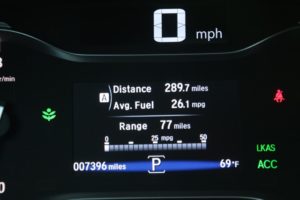
With all that performance, you would think it would suck gas like a full-size pickup, but it doesn’t. Where other mid-size trucks get similar fuel economy to their larger full size brethren, maybe an mpg better, this Ridgeline actually gets significantly better fuel economy. Rated by the EPA at 18/25/21 mpg city/highway/combined, the Ridgeline averaged 25.2 mpg in 385 miles of testing which included all kinds of driving with very little time spent of the freeway except for its highway fuel economy test at 70 mph in which the Ridgeline averaged 31.6 mpg! Amazing for an AWD pickup. But the improvement in fuel economy becomes more dramatic when compared to the prior generation which averaged only 16.8 mpg overall and just 22.5 mpg on the highway. That’s a 9-mpg pick up (no pun intended)!

In a round trip to South Lake Tahoe and back to Placerville the Ridgeline averaged 28.2 mpg and on the way up the western slope to Echo Summit of 7,382 feet it averaged 20.5 mpg during its 5,500-foot ascent. Tell Honda engineers to release the emergency brake during fuel economy testing because it seemed to average 4 to 6 mpg better than the window sticker. Fuel capacity is down a couple of gallons to 19.5.

Handling is excellent, especially considering what the Ridgeline is. It has great credentials, super wide track as mentioned above, a reasonably quick electric power steering rack (three turns lock to lock), four-wheel state of the art independent suspension, coils in all four corners, stab bars at both ends and both the front and rear systems all mounted to subframes to a rigid chassis. Wheels are 18 x 8 inches shod with 245/60 series rubber exclusive to the Ridgeline. All this adds up to agile handling with some understeer.  It certainly doesn’t handle like other pickups, especially full size units. Ridgeline handles much better, like a tightened up full sized sedan. Turning circle for the Honda is just under 41 feet.

Ride quality is also car like. No rear end skipping out during cornering in the bumps. No jarring over deep, large potholes. No jiggling, even on smooth roads, as in other small pickups. Just a smooth compliant ride which probably mirrors the new generation Pilot. It is quiet on the road except for coarse roads when some tire noise intercedes. The engine spins just under 2,000 rpm at 70 mph and the cabin remains a place for introspection and solitude or maybe some good, old fashion rock or country. It is a nice place to spend time.

Safety is second to none with about every acronym ever thought of, including blind spot detection, rear cross traffic monitoring, rear camera and more. Large disc brakes over a foot in diameter with ABS, etc., are strong.  LED headlights are fantastic. Of course, there are a plethora of airbags.

We are not done yet and maybe I left the best for last, the interior. The front chairs are the best ever encountered in a pickup. The shape and form densities are perfect for my average body and passengers who rode shotgun agreed as to their remarkable comfort. In my loaded Black Edition, both front seats were powered. Rear seating is almost as comfortable and roomy. I recently spent some significant time in an Avalanche which is a Suburban based vehicle now out of production, but I would rather spend time in the second row of the Ridge line. Seats are better and there is more room. That’s saying something.

Instrumentation is complete with a big tach and speedo flanking an info/trip computer center. Not fancy or like a NASA inspired cockpit, but very nice and extremely legible and useable nonetheless. The center stack is reasonably easy to use but I prefer actual buttons as opposed to a touch screen system which the Ridgeline has. A very minor deficiency.

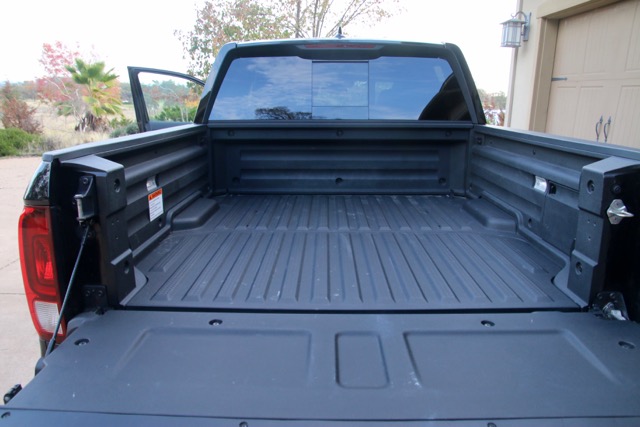
Finally, we get to the huge cargo bed. While only 64 inches long plus the tailgate, it is deep (17 inches) and almost as wide as it is long (60 inches wide) with a scuff proof liner. It is well done and there still is the huge hidden compartment below the cargo floor. Perhaps, a consequence of that is a rubber donut spare tire, but how many times have you used a spare tire in your lifetime? Tires today are almost bullet proof.

Pricing starts for a base RT 2WD model at $29,475. My fully loaded Black Edition AWD steps that number up to $42,870 plus $900 for the train/truck from its Lincoln, Ala., assembly plant. This is a fantastically versatile motor vehicle. If I had one I could sell my F-150 4X4 and RX8. For my kind of driving it would be perfect plus 25 plus mpg. This vehicle does it all and checks all the right boxes. It is by far the best non-full size pickup on the market. Its only real limiting factor is a 5,000-pound tow capacity, which it should do with ease meaning at least nice 22-foot day cruiser or a two-horse trailer, but no three horse or bigger goosenecks, leave those to the diesel duallys. This is my third Honda I have tested in three months (one was an Acura TLX, no offense) and all three were very impressive motor vehicles. Honda has really got it together.

Larry Weitzman has been into cars since he was 5 years old. At 8 he could recite from memory the hp of every car made in the U.S. He has put in thousands of laps on racetracks all over the Western United States.


Teen suicide clusters a mandate to confront topic

By Jessica Calefat, CalMatters

In California and across the country, suicide is the second leading cause of death among teens—a grim reminder that many high school students’ primary barrier to adulthood is themselves.

More young people take their own lives than the number killed by cancer, heart disease, birth defects, stroke, flu, pneumonia and chronic lung disease combined. And under legislation set to take effect in January, school systems up and down the state will be forced to confront the taboo topic head-on.

Assembly Bill 2246, authored by Assemblyman Patrick O’Donnell, D-Long Beach, requires districts to adopt suicide prevention policies that target high-risk groups, such as students bereaved by a classmate’s death and LGBTQ youth. It was inspired by teen suicide clusters that have traumatized Palo Alto and San Diego in recent years.

A string of suicides this school year among boys who attend the same Central Valley high school in Clovis is the latest example underscoring the urgent need to tackle this problem. The new law asks districts to attack it from all sides by promoting students’ emotional well-being, intervening when they’re in crisis and responding appropriately when tragedy strikes.

“This is not a policy to write up and put on a shelf. It’s a lifesaving policy,” said Abbe Land, executive director of The Trevor Project, a nonprofit serving LGBTQ youth that sponsored the legislation. “One teacher reaching out at the right time because they were trained to see the warning signs can save a student’s life.”

After declining steadily in the 1980s and 90s, the prevalence of suicide in this country began to rise once again around the turn of the century, increasing 24 percent between 1999 and 2014, according to a report published earlier this year by the Centers for Disease Control.

That analysis also revealed that the suicide rate among tween girls ages 10 to 14 had tripled over 15 years, alarming researchers.

Surveys of California high school students have shown that one in five had seriously considered attempting suicide in the past year and that thoughts of suicide were most prevalent among female students and among students from multiracial, Native American and Pacific Islander backgrounds. Males, however, account for three out of every four deaths.

O’Donnell knows this is an “uncomfortable topic” but said he felt an obligation as chair of the Assembly Education Committee to take it on.

Earlier this year, the measure cleared the state Senate with unanimous support, but in the lower house, almost a dozen GOP members voted no, including Assembly Republican leader Chad Mayes, R-Yucca Valley.

Asked about the recent group of suicides at Clovis West High School, including two in the last few weeks, O’Donnell called the cluster “beyond tragic” and said it’s proof of the new law’s relevance.

“Not talking about this problem won’t make it go away,” said O’Donnell, who taught middle and high school before joining the Legislature. “These are our kids. This is a problem. This is a big deal. And we have a duty to act.”

Palo Alto Superintendent Glenn “Max” McGee had only been on the job a few months in 2014 when a series of student suicides swept through the leafy Silicon Valley enclave like a deadly storm. It was the second cluster to hit the district in fewer than five years, a statistical aberration, leaving McGee almost paralyzed with emotion.

“I felt such terrible sadness,” McGee said. “All I could think was, ‘What could have been done?’”

The district responded to this latest cluster—defined as a succession of deaths in close proximity to one another—by refining the prevention plan it had adopted after the first one and striking a better balance between the district’s storied academic rigor and students’ social and emotional wellbeing.

McGee finally started enforcing a 15 hour-per-week cap on homework that had been on the books for years and began promoting the value of sleep by moving the start of the school day back almost an hour to 8:25 a.m. The district also switched to block scheduling, opened wellness centers staffed by licensed therapists and taught students how to seek help for their friends.

Commuter trains that roll past his office on the hour remind McGee of the work’s importance.

“I still grimace when I hear the train whistle,” McGee said, referencing the preponderance of area students who killed themselves by stepping in front of an oncoming Caltrain.

Legislative analysts predict it will cost hundreds of thousands of dollars for districts to develop these plans but noted that costs would be defrayed if they adopt a model policy the California Department of Education is drafting now. Palo Alto has also made its prevention policy available to other districts for free.

“We know now that student wellness is a critical component to learning and that you can’t have one without the other,” McGee said. “We’re eager to share this work with any and everyone.”

Six other states have already adopted similar legislation, and research published earlier this year in The Lancet found that schools have an important role to play in reducing the number of teen suicide attempts. But another study published in a different journal found that schools’ role in tackling the vexing problem has limits.

A meta analysis of schools’ impact on teen suicide revealed that many treat self-harm as bad behavior, which discourages students who are depressed or suicidal from confiding in their teachers. It also found that bullying and stress over school performance can contribute to the problem.

Palo Alto’s prevention plan doesn’t target LGBTQ teens, homeless youth or students with disabilities, but it will need to once the new state law takes effect. Surveys cited by the CDC show LGBTQ youth are bullied more than their straight peers and that they’re more than twice as likely to have attempted suicide.

Last year, San Diego County endured a string of suicides by transgender youth. Max Disposti had worked with several of them at the LGBTQ resource center he runs in Oceanside and understands how much they struggled.

“For these kids, it’s not about doing well on exams, it’s about survival,” Disposti said. “They leave the house each morning knowing their body doesn’t match who they are and that they’ll need to explain themselves over and over again. It’s a heavy load.”

Taylor Alesana was one of them.

Some of the videos posted to the 16-year-old transgender girl’s YouTube channel were bubbly makeup tutorials with tips on foundation application and contouring. Others were painful revelations about the hateful bullying she endured after posting a bikini selfie on Snapchat and watching it go viral.

In a December 2014 video, she told her followers she no longer felt safe at school.

“Words kill. They do. I know people can say words are words, but words kill,” Alesana said. “It sucks that we live in a society where people use words like they’re nothing.”

Four months later, the Fallbrook teen was gone. She took her life on April 2.

Calmatters.org is a nonprofit news venture devoted to covering California state policy and politics.


Snippets about Lake Tahoe

·       The deadline to become a 2017 voting member of Tahoe Women’s Community Fund is Dec. 31. Applications are online. 

·       One the 20 most expensive houses sold in the U.S. in 2016 was in Lake Tahoe. Check out this story. 

·       The Golf Channel assembled the most bizarre moments of 2016. A fan touching Justin Timberlake at the American Century Championship made the list. 

·       Truckee Chamber of Commerce has 2017 mandatory law posters available. More info is online. 

·       Spirit of Spring, the Lake Tahoe Boys & Girls Club annual fundraiser, is April 11 from 7-9:30pm at Edgewood Tahoe. Go online to purchase tickets. 


Fire destroys day lodge at Homewood resort

Crews work to suppress the fire at Homewood on Dec. 28. Photo/Provided

Crews work to suppress the fire at Homewood on Dec. 28. Photo/Provided

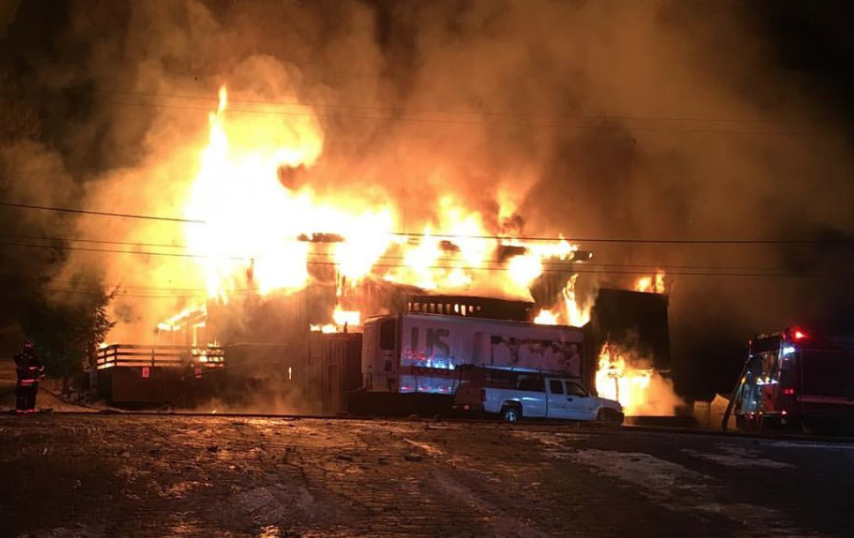
An early morning fire ripped through the South Lodge at Homewood Mountain Resort.

The West Shore ski resort is closed today as crews mop up the fire and resort officials assess the damage. The South Lodge was primarily used as a restaurant and administration offices.

The fire was reported just after 3am Dec. 28.

No injuries have been reported, and no individuals were at the lodge when the fire started.

North Tahoe Fire Protection District is investigating the cause of the fire.

Tahoe Ski Bowl Way was still closed as of 9am Wednesday.

— Lake Tahoe News staff report


History stroll at Sand Harbor

Nevada State Parks is putting on a holiday-themed presentation that will also include historic Christmas scenes from around Northern Nevada and mining towns, including Virginia City and Tonopah.

People may sip hot chocolate and enjoy holiday treats while learning about the origins of traditions like Santa Claus, candy canes and Christmas trees. This event can be combined with a sleigh ride or a walk around the 3-mile nature trail at Sand Harbor Visitor Center.

The Dec. 31 event is from 10-11am. It is free, though it costs $7 to enter the park. There is a $2 discount for Nevada residents.

Advance reservations and separate fees are required for the sleigh rides — 775.588.2953.


Nevada tourism guru turning in work passport

By Susan Wood

There’s no fencin’ in Larry Friedman, who’s retiring today from TravelNevada.

The preeminent deputy director of the Silver State agency once known as the Nevada Commission on Tourism has traveled the world to promote the state.

Now the 62-year-old Douglas County resident plans to travel for himself with family and friends. A death in the family and his own major illness in the last year spurred him to call it quits.

But to those who know and love Friedman – nothing can keep this iconoclast down. He’ll continue to travel, this time for pure leisure.

“To be a father, grandfather and have my friends – I just thought I’d go out on a high note,” he told Lake Tahoe News. “I thought about it for a long time, and my friends encouraged me to do it.”

Friedman admitted the decision to leave was a dilemma for him because he loves his job.
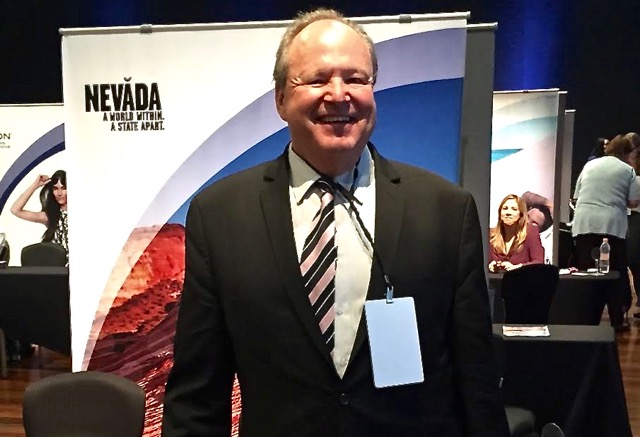
Larry Friedman has been the backbone of TravelNevada for more than two decades. Photo/Provided

Larry Friedman has been the backbone of TravelNevada for more than two decades. Photo/Provided

He got choked up talking about it – especially when mentioning Rural Roundup, a program he started that involves connecting the small rural communities of Nevada to the state agency’s tourism efforts around the world.  The agency has spearheaded trips and promotions connecting Nevada to China, India, South Korea, France, Australia, Mexico and Brazil.

Friedman refers to these events as economically and culturally rewarding, and he has felt a total welcoming from those in the far stretches of Nevada that are often conservative pockets of the state.

“My work with rural Nevada was exceptional and so rewarding. I never felt anything but love, a partnership and warmth from these people,” he said, while holding back tears. “Being gay or straight never made a difference. I can’t speak highly enough of these people. I wasn’t judged on my sexual orientation. I was judged on purpose.”

He’ll miss the people the most when he leaves his job.
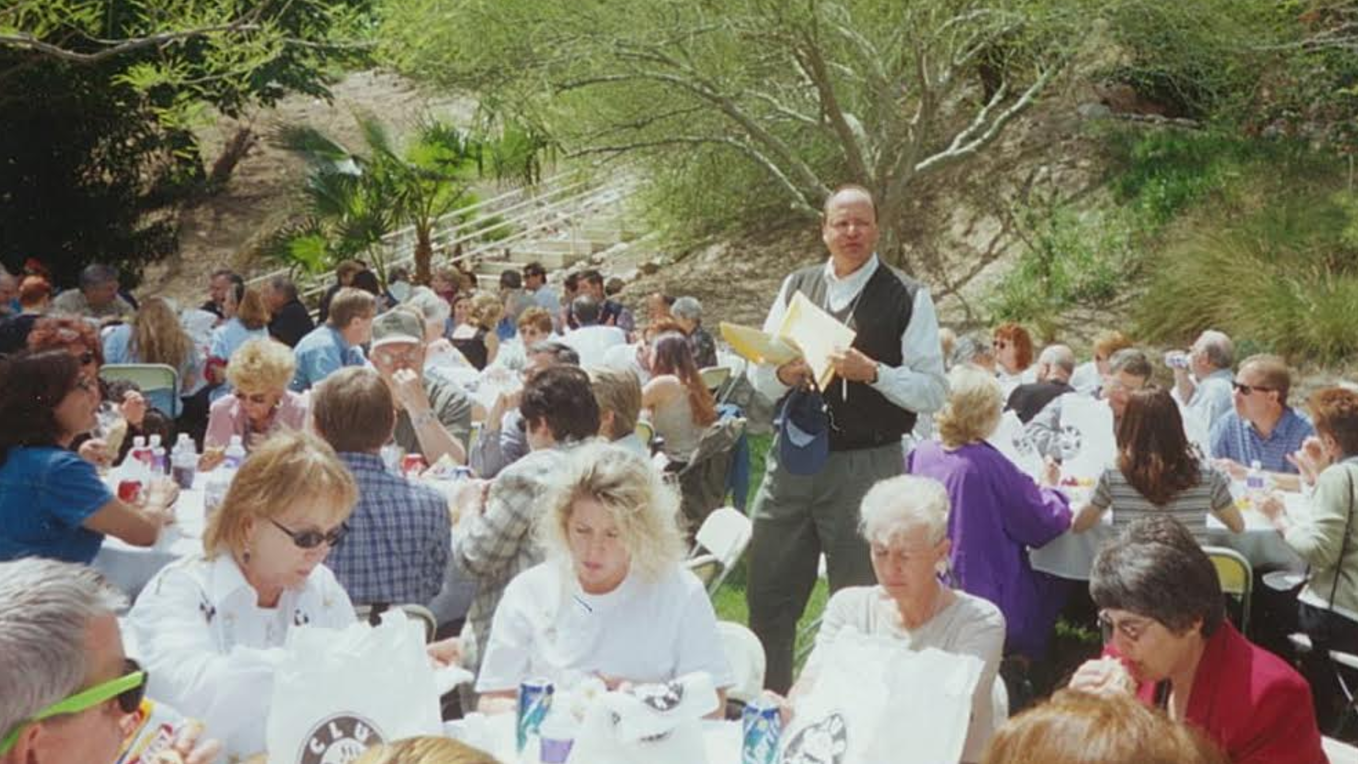
Larry Friedman was a master in the travel-tourism industry. Photo/Provided

Larry Friedman was a master in the travel-tourism industry. Photo/Provided

“I made some great friendships throughout the world,” he said.

Friedman also formed lifelong partnerships with agencies and companies connected to Nevada and Lake Tahoe, where he spent much of his career.

Upon leaving his childhood home in Marin County to be a foreign exchange student in Greece at age 17, he formed a close relationship with a family in Greece and has since returned for various weddings.

“The first person to repost my (TravelNevada) award is the son of my Greek brother,” he said of a man who’s like a brother to him.

The tourism agency just announced establishing the Larry J. Friedman Industry Partner of the Year Award to celebrate the tourism guru’s lifelong commitment to these special professional and personal partnerships in the name of the Nevada’s interests.

His career certainly left a mark on Lake Tahoe and its people. Friedman came to the South Shore to work as the director of sales for Lakeland Village for a short stint in the early years.

From there, he worked for three years on the Tahoe Queen paddle-wheeler boat as the marketing director. He also worked as an overnight disc jockey and program director for five years with KTHO. He recalled how longtime radio executive Ollie Hayden gave him his first job. Hayden died a few weeks ago, marking another poignant time for Friedman.

Friedman has been with TravelNevada (or NCOT) for 26 years.

What would he tell his replacement?

“I would tell them they’re very lucky – that the keys to success is to respect all of Nevada,” he said.

Carson Valley Chamber of Commerce Executive Director Bill Chernock agreed with a caveat.

“Oh, they’ll find someone for the job, but he will not be replaced,” Chernock told Lake Tahoe News. “There’s only one Larry Friedman. The state was lucky to have him.”
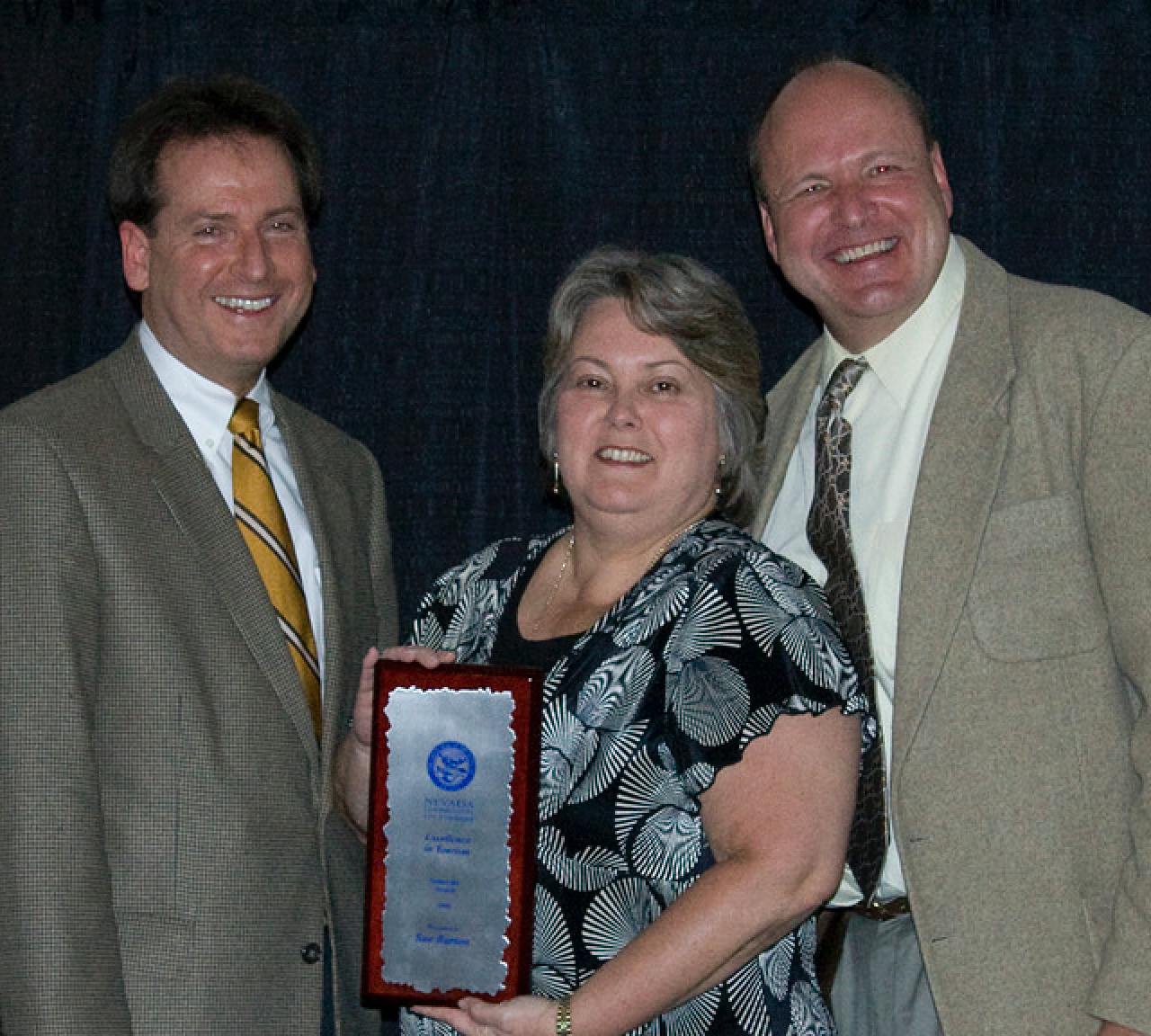
Brian Krolicki, Sue Barton and Larry Friedman

Brian Krolicki, Sue Barton and Larry Friedman

Chernock recalled a special Rural Roundup, which was always celebrated near Friedman’s birthday in April. For his 40th, a sheriff’s deputy rounded him up to claim someone might have broken into his hotel room. When Friedman was gone, other tourism officials putting on Rural Roundup snuck in friends and Friedman’s parents to stage a surprise birthday party for him.

Chernock pointed to Friedman’s infectious laugh as making him so lovable.

“When Larry laughs in Carson City, dogs in Fallon say: ‘Did you hear that?’” Chernock joked.

The longtime tourism official who traveled in similar circles with Friedman cited how Friedman got him his first job on the radio.

“That crummy 20-hour-a-week job at KTHO – literally everything (related) that’s happened to me in the last 32 years I attribute to that. For that, I thank him, and other days, I curse him,” Chernock added.

All was in good fun for the people in Friedman’s life.

Former Nevada Lt. Gov. Brian Krolicki also had memorable moments to share about Friedman.

Krolicki noted how Friedman “invented” Rural Roundup, and it grew into a major success.

“Lots of people looked forward to that,” he said. This was unless one wore a tie to the event.

“If a tie was on, it was cut off. I lost more than one tie,” Krolicki told Lake Tahoe News.
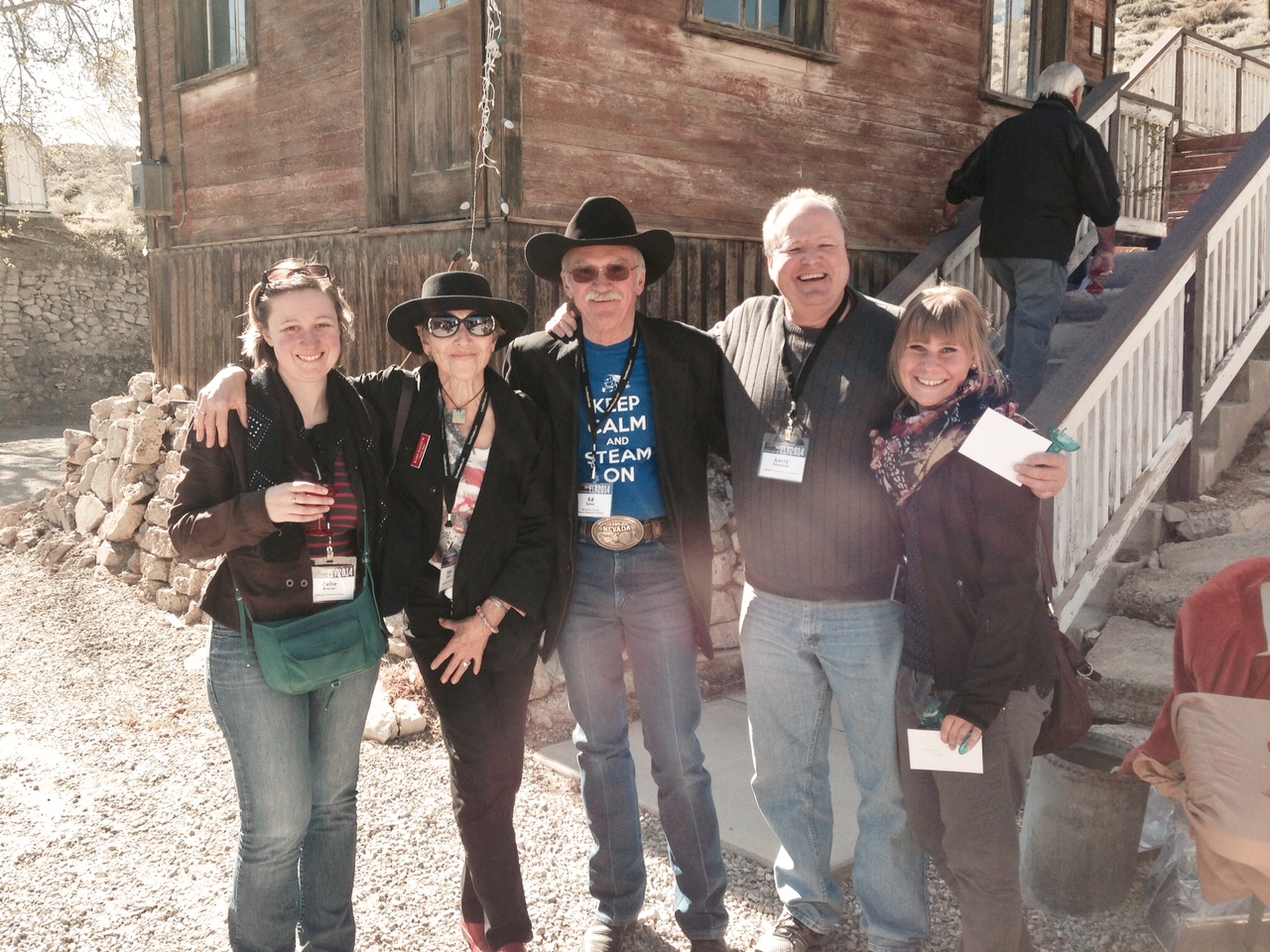
Rural Roundup is one of Larry Friedman's legacies. Photo/Provided

Rural Roundup is one of Larry Friedman’s legacies. Photo/Provided

When asked why he wore one knowing that standard, Krolicki responded with a chuckle: “I didn’t think he’d cut off the tie of the lieutenant governor. He proved me wrong.”

Krolicki further commended Friedman’s dedication and passion about Nevada tourism.

“He broke barriers between professional relationships and personal friendships. His roots go very deep. He opened markets in India, Korea and China. He handled an amazing network of collaborations,” said Krolicki, who served for many years on the Nevada Commission on Tourism board. “You knew Larry was in the room. He brought people together.”

That’s the precise impression Friedman painted for Chris Chrystal, who’s retired from the NCOT.

“You always knew when Larry was in the building,” said Chrystal, who worked with Friedman for 13 years. “Larry has been a great salesman for Nevada. He’s a vivacious person who knows how to communicate a product – in this case, Nevada. He’s got the expertise in talking to crowds. He’s at ease behind the mic or in a booth at a trade show. He excelled in bringing people to Nevada.”

For that, his contributions won’t go unnoticed to those who work closely with Friedman.

“From his time on the radio and with the Tahoe Queen to TravelNevada, he’s been so passionate about his work and travel, and it’s been so advantageous to us,” said Carol Chaplin, Lake Tahoe Visitors Authority executive director.

“Larry is part of a big hospitality family here. He’s fun to be around. We all love him. We’re going to miss him – but on to another venture,” she said.

Not only did Chaplin hang in the same tourism agency circles, the two of them also worked on board the Queen.

That’s where LTVA’s Senior Vice President of Administration and Operations Sue Barton got to know Friedman, a year after watching him carry the Olympic torch at Lake Tahoe on its way to the 1984 Summer Games in Los Angeles.

The friendship and collaboration came full circle when the torch returned to Tahoe in 2002 while on its way to Salt Lake City. Barton helped spearhead an evening event at the then Caesars Tahoe parking lot in which Friedman was the emcee.

“He brought the 1984 torch. That was a fun, full-circle experience there,” she said.

Barton has traveled extensively to promote Nevada with Friedman.

“His passion about Nevada and tourism is unmatched. It’s made him an incredible ambassador,” she said.

Friedman will be honored on his “industry partner” award at the Rural Roundup slated for April 26-28 in Elko.

Hawthorne-area quakes shake Tahoe residents

Lake Tahoe residents were jolted by two powerful earthquakes today that were centered near Hawthorne.

The first one was recorded at 12:18am Dec. 28. It was 5.8, according the Nevada Seismological Laboratory. Four minutes later a 5.7 temblor hit.

Both were felt by residents of South Lake Tahoe.

A third quake, this one slightly closer to Bridgeport, hit at 12:29am. It measured 3.6. And fourth — 3. 5 — struck at 12:48am in the same region. At 12:57am, a 3.9 quake hit.

The 1:08am 3.0 quake was mild in Tahoe compared to the first two.

Dispatch at Mineral County Sheriff’s Department told Lake Tahoe News there have been no reports of damage as of 12:44am. The movement triggered alarms to go off and a boulder to fall onto the shoulder of Highway 95 at mile marker 64.

— Lake Tahoe News staff report


Opinion: Time for Calif. to embrace dirty deals

By Joe Mathews

Raise a glass and bend your mind around this California New Year’s resolution: in 2017, let’s become more tolerant of political corruption.

While the idea of tolerating dirty deal-making may sound perverse or strange, so are the ways we make decisions in California. Over the last century, we’ve designed a highly complex government with the primary goal of preventing corruption, by limiting the power and discretion of elected and appointed officials. That is the channel connecting our state’s rivers of regulations, oceans of laws, and tsunamis of formulas for budgets and taxes that defy human navigation.

Joe Mathews

Joe Mathews

All these obstacles have worked to a point: we’re a pretty clean state by American standards, with a relatively low rate of public corruption convictions. And most of these are small stakes—minor embezzlements, small-time cover-ups and violations of tricky campaign laws.

The perverse result: in keeping our government clean but hampered, we’ve opted to embrace large-scale, incapacitating societal wrongs. In California, among the richest places on earth, we tolerate America’s highest poverty rate, we do little in the face of a massive shortage of affordable housing, and we leave our roads and waterworks in dangerous disrepair. Our schools offer too little education, and our tax system, by bipartisan acknowledgment, doesn’t tax us fairly.

And yet, attacking such big problems is considered wildly unrealistic. There are too many rules and regulations standing in the way of large-scale action. And if we got rid of those rules, we fear we would be abetting corruption.

Which is why we so desperately need to adopt a new attitude toward corruption.

Samuel Huntington, the great 20th century political scientist, famously observed: “the only thing worse than a society with a rigid, over centralized, dishonest bureaucracy is one with a rigid, over centralized, honest bureaucracy. A society which is relatively uncorrupt … may find a certain amount of corruption a welcome lubricant easing the path to modernization.”

California needs such lubrication to advance larger public goals. The Golden State must expedite the building of affordable housing, homeless housing, housing on lots already zoned for housing—even if it means paying off certain interests to prevent their opposition and handing out exemptions to planning requirements and zoning and environmental laws like party favors.

The poor state of California’s roads also cries out for some big corrupt deals, damn the environmental reviews. For years, the state has failed to address a $130-billion-plus backlog in state and local road repairs. But California’s mix of limitations on infrastructure and taxes mean we’ll keep falling behind—as long as we play by the rules. Raising taxes to cover repairs requires a two-thirds vote of both houses of the Legislature and getting to two-thirds in cases like this requires buying votes with spending. But our abstemious governor hasn’t been willing to do the buying. He should resolve to be less righteous and more road-friendly in 2017.

Roads and housing aren’t the only contexts where we prioritize following the rules over meeting real needs. In education, state leaders make a fetish of meeting the very low requirement of the constitutional funding formula for schools—instead of finding ways, kosher or not, to lengthen our short school year (just 180 days) and offer students the math, science, arts and foreign language they need, but aren’t getting.

Our aqueducts and water mains so badly need updates and repairs that politicians should be raiding other government accounts to secure the necessary funds. But moving money around brings lawsuits and scrutiny. So no one dares resolve the problem, not even in a time of drought.

The stakes of our anti-corruption fixation may get higher in 2017. California finds itself in a confrontation with President-elect Donald Trump. Politicians say they will fight Trump if he attacks California policies or threatens vulnerable people, like immigrants and Muslims. But California is at a disadvantage in a battle with a rich, powerful federal government. In Sacramento, some veteran political players are arguing that California should instead buy off Trump—either personally or in his presidential role—given the president-elect’s love of negotiations and his lack of interest in legal niceties. Of course, such creative dealmaking runs up against Californian rules and sensibilities. 

That’s why the change we need is not legal—it’s cultural. We must realize that big progress in governance usually involves actions that are not entirely forthright.

So as we greet 2017, let’s raise a toast to dealmaking that brings real progress, even when it’s dirty.

Joe Mathews writes the Connecting California column for Zócalo Public Square.