Crash closes Hwy. 88 near Gardnerville

By Sarah Litz, Reno Gazette-Journal

Nevada Highway 88 was closed in both directions near Gardnerville on Thursday morning after a two vehicle crash, officials with the Nevada Highway Patrol said.

Trooper Dan Gordon with the Nevada Highway Patrol said one lane of traffic was reopened at 8:20am.

At around 6:53am, three vehicles were involved in a T-bone type crash, Gordon said. One person was extricated, he said.

Read the whole story


150 lbs of pot confiscated, 1 arrest in Truckee

A Missouri man was arrested Tuesday in Truckee on charges of transporting nearly 150 pounds of marijuana.

A California Highway Patrol officer stopped Randall Scott Akers, 38, on Dec. 27 on Interstate 80 near Highway 267 in Truckee for reportedly having a GPS device affixed improperly on his windshield.

The officer then noticed the auxiliary diesel tank was fake and that there numerous false compartments. A search of the vehicle revealed the marijuana.

Akers faces charges of possession of marijuana for sale, transport for sale, possession of more than an ounce of marijuana and using a room/space to sell a controlled substance.

— Lake Tahoe News staff report


Stateline gaming revenue up despite statewide drop

By Associated Press

State officials say Nevada gambling revenue dropped about 1.5 percent in November mainly due to decreases in the Las Vegas area.

However, Stateline revenue jumped 12.5 percent to $16 million.

The Nevada Gaming Control Board said Thursday that the state’s casinos won more than $930 million in November.

Revenue on the Las Vegas Strip was down 3.5 percent year-over-year, to $517 million. Downtown Las Vegas winnings fell 5.5 percent to $51 million.

Reno casino revenue was up almost 3 percent to $46 million.


Tahoe resorts score in Liftopia awards

Several Tahoe area ski resorts made Liftopia’s inaugural Best in Snow Awards.

Winners were compiled in five regions: Northeast, West Coast, High West, Southeast and Midwest.

Magic Mountain in Vermont came out on top as the Overall Best in Snow winner in North America, with customers saying it’s “the best kept secret in the Northeast” and “a true skier’s mountain” that is “steeped in tradition” and “never overcrowded” with a “great community and old-time, retro vibe,” “a large amount of natural snow that is never over-groomed,” “awesome terrain,” “challenging runs,” and “the best staff in the business.”

“For years consumers have told us they wanted a ranking system that wasn’t based simply on which resorts were the biggest or relied on a handful of ‘expert’ opinions or even pay-to-play advertising dollars. They wanted to know which ski areas had the most passionate customers and which ones they should try as they searched for their next favorite,” Evan Reece, co-founder and CEO of Liftopia, said in a press release. “We crafted the Best in Snow Awards with details from a consumer survey and normalized the results with our proprietary data to uncover the ski areas people love the most, all over North America. We are excited that the findings show what we already believed to be true: consumers do have amazing passion for ski areas of all sizes.”


Here are the West Coast results:

Beginner-Friendly Ski Areas 

1. Anthony Lakes, Oregon

2. Diamond Peak 

3. June Mountain 

4. Boreal Mountain 

5. Tahoe Donner 

6. Bear Valley 

7. 49 Degrees North, Washington

8. Snow Valley 

9. Homewood 

10. Donner Ski Ranch 

Most Challenging

1. Kirkwood 

2. Kicking Horse, British Columbia

3. Squaw Valley-Alpine Meadows 

4. Revelstoke Mountain Resort, British Columbia

5. Crystal Mountain, Washington

6. Mammoth Mountain 

7. Alyeska, Alaska

8. Whistler Blackcomb, British Columbia

9. Red Mountain Resort, British Columbia

10. Mt. Baker, Washington

Family-Friendly Ski Areas

1. Tahoe Donner 

2. Diamond Peak 

3. Snow Valley 

4. Boreal Mountain 

5. Mt. Rose Ski Tahoe 

6. Mammoth Mountain 

7. Squaw Valley-Alpine Meadows 

8. Sierra-at-Tahoe

9. Sun Peaks Resort, British Columbia

10. Whistler Blackcomb, British Columbia

Best Snow Consistency and Quality

1. Kirkwood 

2. Mammoth Mountain 

3. Whitewater, British Columbia

4. Revelstoke Mountain Resort, British Columbia

5. Mt. Baker, Washington

6. Squaw Valley-Alpine Meadows 

7. Sugar Bowl 

8. Mt. Rose Ski Tahoe 

9. Alyeska, Alaska

10. Whistler Blackcomb, British Columbia

Least Crowded

1. Anthony Lakes, Oregon

2. June Mountain 

3. 49 Degrees North, Washington

4. Red Mountain Resort, British Columbia

5. Homewood 

6. Kicking Horse, British Columbia

7. Revelstoke Mountain Resort, British Columbia

8. Powder King, British Columba

9. Alyeska, Alaska

10. Panorama Mountain Resort, British Columbia

Best Value

1. Anthony Lakes, Oregon

2. Kirkwood 

3. Revelstoke Mountain Resort, British Columbia

4. Kicking Horse, British Columbia

5. Alyeska, Alaska

6. Squaw Valley-Alpine Meadows

7. 49 Degrees North

8. Tahoe Donner 

9. Crystal Mountain, Washington

10. Diamond Peak.
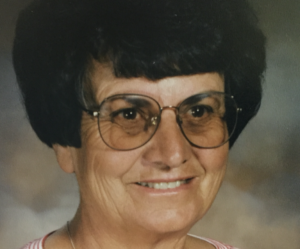


Rosie Borges — 1929-2016

Rosie Borges

Rosie Borges

Rosie Borges, known by most in South Lake Tahoe as Mrs. Rosie, passed away in her sleep on Dec. 24, 2016. She was 87.

She was born Rosie Perreira Luis in Kings County, Cali., July 10, 1929. While growing up in Stratford, Calif., she had memories of hand milking cows with her seven siblings every morning and every afternoon. She left the farm, and gladly the milking chore, when her father, Franklin, passed in 1933.

Rosie graduated Lemoore High School in 1949 as the top female student of the year. She played lead trumpet in the marching band. At 5-feet-4-inches-tall, she was the female basketball player of the year.

In 1949, Rosie and Sam Borges were married in Las Vegas. Early in her marriage Rosie worked as a nurse in Lemoore, Calif. She continued her athletic prowess in city league fast pitch softball until she rushed home plate while six months pregnant with Don.

In 1955 the Borges family moved to San Jose. Sam sold tractors for Allis Chalmers and Rosie worked as a Crossing Guard for San Jose Unified School District. On weekends they competed in waterski speed racing. Rosie was a United States National Champion speed water skier in the early 1960s.

A family business of cutting cord wood allowed the growing family to save up to move to Tahoe. In about 1959 Sam designed and built a wood splitter that would process a standing tree to stacked cord in the truck in one hour. Using his boys as labor and Rosie as the splitter operator, the family averaged 200 cords of wood/year, split, delivered and stacked for $36.36/cord. 

A family business of cutting cord wood allowed the growing family to save up to move to Tahoe. In about 1959 Sam designed and built a wood splitter that would process a standing tree to stacked cord in the truck in one hour. Using his boys as labor and Rosie as the splitter operator, the family averaged 200 cords of wood/year, split, delivered and stacked for $36.36/cord.

The Borges family happily made the move to Lake Tahoe, the “All Year Playground” in 1965. Rosie operated Rosie’s Waterski School in the summer and worked with Sam and their sons at Borges Sleigh Rides in the winter.

“Miss Rosie” was the Crossing Guard for the Lake Tahoe Unified School District and the city of South Lake Tahoe. For 20 years, with a perfect record of no student injuries, she safely crossed students at the intersection of Lyons Avenue and Lake Tahoe Boulevard. She also attended South Tahoe High School Viking sports for 50 years.

After retiring, Rosie enjoyed many years of daily water aerobics exercises with the “Tahoe Keys Ladies.”

Sam and Rosie were both first generation Americans. They traveled to the Portugal mainland where Sam found his father and with niece Kathleen. They were able to locate and visit her family in the Azores Islands.

Rosie leaves four sons Dean, Don, David and Dwight, many grandchildren and great-grandchildren. She will be greatly missed by all who knew and loved her.

The celebration of life will be celebrated privately with family.

In lieu of flowers or gifts, please light a candle and celebrate the wonderful life and example Rosie left to her family and our community.

If you have a “Miss Rosie” story, please comment below.


South Shore braces for 3 days of partying

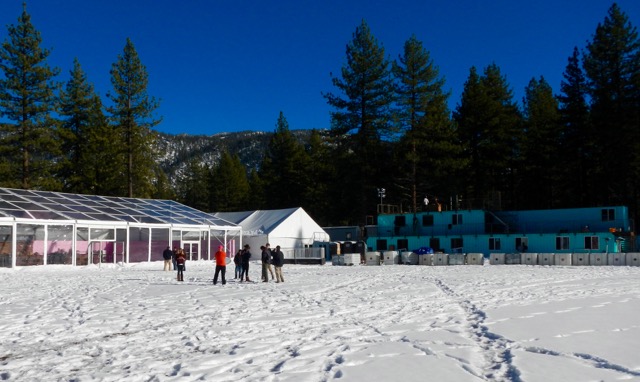
The view from the main SnowGlobe stage shows the VIP area to the right and a warming tent to the left that has thick plastic as windows to allow concert-goers to see what is going on outside. Photo/Kathryn Reed

The view from the main SnowGlobe stage shows the VIP (cargo container) area to the right and a bar to the left that has thick plastic as windows to allow concert-goers to see what is going on outside. Photo/Kathryn Reed

By Kathryn Reed

SnowGlobe might be the safest place to be for the next three nights – assuming you aren’t a criminal.

Controlled environments where there is fencing to contain people are safer than free-for-all venues like what is found in the Stateline casino corridor on New Year’s Eve. Still, law enforcement has strategies in place to make both areas safe.

“My biggest concern is terrorism,” South Lake Tahoe Police Chief Brian Uhler told Lake Tahoe News. He pointed to recent events in Europe as concerns and reasons to be on high alert.

It takes a concerted effort of all the local public safety agencies as well as hired security personnel to ensure locals and visitors are safe during these three days of festivities.

“I think the unified command between California and Nevada is very unusual,” South Lake Tahoe Fire Chief Jeff Meston told Lake Tahoe News. He said this degree of cooperation is unheard of anywhere else in the United State.

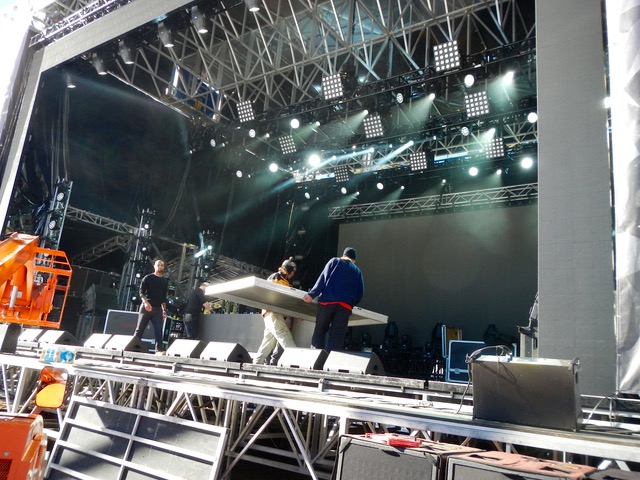
Crews on Dec. 28 set up the main stage of SnowGlobe. Photo/Kathryn Reed

Crews on Dec. 28 set up the main stage of SnowGlobe. Photo/Kathryn Reed

It’s necessary for the two states to work together because the proximity of a potential threat from revelry at Stateline on Jan. 31 and during the next three nights at SnowGlobe would have reverberations into the other state if there were a large-scale incident. And while each state does things a little differently when it comes to prevention and response, the jurisdictions have an understanding of how things would work in the event of an emergency.

For decades the South Shore has come together to ensure Stateline is safe. That used to be where the big party was until SnowGlobe came into being five years ago. Still, this is expected to a unique year for the casino corridor.

“This year will be final test for us; it will be a watershed for us,” Douglas County Undersheriff Paul Howell told Lake Tahoe News. “Are we truly seeing a decline in that uncontrollable street party? It is a Saturday night, we have snow and it’s a three-day weekend.”

The past few years have been uneventful on New Years’ Eve at Stateline; to the point last year people barely came into the street.

“Even if a large crowd shows up, we can control everything,” Howell said.

Emergency personnel are positioned at various locations that night – beyond their normal headquarters. This will ensure a faster response if need be. The agencies have representatives at a command post so everyone knows what is going on and no one is acting in a silo.

Officers stand guard before Highway 50 is reopened shortly after New Year's 2016. Photo/LTN file

Officers stand guard before Highway 50 is reopened shortly after New Year’s 2016. Photo/LTN file

The cooperation includes Tahoe Douglas Fire Protection District scouring the SnowGlobe venue every night for explosive devises.

Tonight begins the first of three nights for the outdoor music festival on the new play fields owned by South Lake Tahoe off Al Tahoe Boulevard. The venue is new. No longer is the festival on the field used by the Lake Tahoe Community College soccer team.

On Wednesday crews were still busy putting all the pieces together. The setup is different. The promoter actually worked with the city this year to get the necessary permits to turn cargo containers into the VIP area. Last year it was a bust because the fire and building departments put the hammer down and didn’t allow the structure to be built.

“After the big fire in Oakland, this showed why building codes matter, especially in temporary spaces,” City Manager Nancy Kerry told Lake Tahoe News. “They didn’t have a certified engineer (last year) who signed off on those plans.”

Chad Donnelly, who has been the promoter of the festival these six years, no longer speaks to Lake Tahoe News.


Opinion: How Calif. can survive the U.S.-China war

By Joe Mathews

California is trapped—in the dangerous space between two authoritarian regimes that want to fight each other.

One is in Beijing; the other is taking power in Washington, D.C. Viewed from the Golden State, it’s striking how much they have in common.

Joe Mathews

Joe Mathews

Both are so nationalist and bellicose they are spooking neighbors. Both express open contempt for human rights and undermine faith in elections and the free press. Both promote hatred of minorities (anti-Tibetan and anti-Uighur in China; anti-Mexican and anti-immigrant in the U.S.).

And both regimes are captained by swaggering men (President Xi Jinping in China; President-elect Donald Trump in U.S.) who tend to their own cults of personality and pose as corruption fighters while enriching their own families.

Most frighteningly for Californians, both regimes seem to see advantage in escalating conflict with the other. The incoming American administration is threatening to raise tariffs and label China a currency manipulator, actions that would likely start a trade war. The Chinese administration is provoking confrontations in the South China Sea while the new American strongman embraces Taiwan—actions that could start a real war.

A sustained conflict between China and the U.S. could produce new restrictions on the flow of money and people, with devastating results for California. Our public universities rely on federal funds from D.C.—and top-dollar, out-of-state tuition fees from Chinese students to subsidize the education of Californians. So any Trump restrictions on foreign visitors—or retaliatory Chinese limits on overseas study and travel—could blow up the University of California’s business model.

Hollywood depends on moviegoers who live under both regimes, and Silicon Valley’s promising ventures in virtual reality and artificial intelligence rely on our ability to bring together manufacturers, investors and technologists from China and the U.S. A trade war would threaten those exchanges. Our tourism relies on Chinese visitors and our housing market relies on Chinese buyers, who spend an estimated $9 billion a year on homes here. But will people still come if Washington’s anti-Chinese rhetoric fuels a racist backlash against Chinese nationals and Chinese Americans?

How can California handle such a conflict?

First, by protecting our people and institutional connections to China, with the same fervor we are rallying to protect our undocumented immigrants. This will be especially hard given the hyper-sensitivity of the autocrats in Beijing and D.C. to the slightest of slights; just as Trump lashes out at “Saturday Night Live” parodies, Xi sees the “Kung Fu Panda” films as American warfare.

And, second, by reminding both regimes—in friendly but firm ways—that we are opposed to conflict because the U.S. and China need each other more than they appear willing to acknowledge.

Californians who doubt this would do well to consult John Pomfret’s new book, “The Beautiful Country and the Middle Kingdom: America and China, 1776 to the Present”. Pomfret, an American journalist long posted in China, writes “The two nations have feuded fiercely and frequently, yet, irresistibly and inevitably, they are drawn back to one another. The result is two powers locked in an entangling embrace that neither can quit.”

California’s role in this difficult period should be to tell the story of its own deep ties to China and to seek out new areas of productive cooperation, argues Matt Sheehan, author of the forthcoming book “Chinafornia: Working with Chinese Investors, Immigrants and Ideas on U.S. Soil”.          

“I think of California as a living laboratory for a more practical, productive version of U.S.-China relations,” says, Sheehan who also publishes the weekly Chinafornia Newsletter.

But not all collaborations with China would be helpful. Our technologies companies shouldn’t be aiding the U.S. surveillance state or assisting the Chinese government in suppressing human rights. And California labor interests should stop playing to anti-Chinese prejudice in opposing trade agreements and advancing union organizing. (The hotel workers’ union, as part of an organizing campaign, recently claimed a possible sale to Chinese interests of the Westin Long Beach would threaten national security.)

One possible model for California’s strategy might be Anson Burlingame, whom President Abraham Lincoln dispatched to Beijing to represent the U.S. during the Civil War. Burlingame’s approach was to commiserate with the Chinese (we have our terrible rebellion with the South, you with the Taipings) as a basis for collaboration. His work produced the Burlingame Treaty, which welcomed Chinese students to U.S. educational institutions, and opened the way for Chinese immigrants to become American citizens.

Today, Burlingame’s accomplishments are mostly forgotten, but his name belongs to a suburb in the Bay Area, a region boasting one of America’s most prosperous populations of Chinese Americans. 

Joe Mathews writes the Connecting California column for Zócalo Public Square.


Homewood ski resort to reopen Thursday

Homewood Mountain Resort plans to resume normal operations on Thursday after a fire ravaged a base lodge on Dec. 28.

Top-to-bottom skiing will be available starting at 9am. Access to the upper mountain will be via Madden Chair, which is located at the North Lodge.

Ski school, rental shop, retail store, and food and beverage venues will be available at the North Lodge from 8am-4pm.


The South Lodge was destroyed by fire in the early morning hours of Dec. 28. The cause is still under investigation.

— Lake Tahoe News staff report


Curt Amacker — 1959-2016

Curt Amacker

Curt Amacker

Lifelong South Lake Tahoe resident Curt Amacker died Dec. 25, 2016. He was 57.

Curt was born July 23, 1959, in Carson City

He lived in South Lake Tahoe his entire life, other than a short time while attending tech school in Phoenix.

Curt was an avid outdoorsman who loved the mountains, riding ATVs and snowmobiles, shooting his prized firearms, and sitting around a bonfire visiting with his friends and family.

Curt is survived by his parents, Cass and Virginia; sons, Adam and Matt (Amy); grandson, Ryder; brothers Mike and Cass (Debbie); many other relatives, friends; and his faithful four-legged companion, Rowdy.

There will be a celebration of life at a later time.


Meyers teen alive after falling through ice

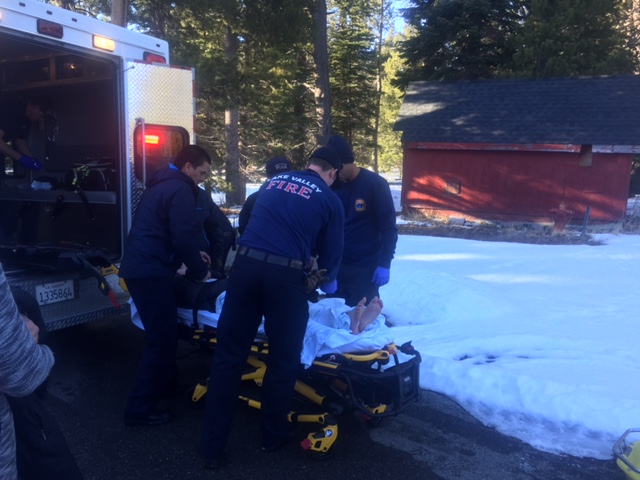
A South Shore teen is rushed to the hospital Dec. 28 after falling through ice. Photo/Provided

A South Shore teen is rushed to the hospital Dec. 28 after falling through ice. Photo/Provided

A 13-year-old boy from Meyers is lucky to be alive after falling through the ice at Lake Baron today.

The youth, whose name has not been released, was riding his bike at Tahoe Paradise Park in Meyers when the front tire broke through the ice. The ice cracked, then the boy and his bike went under water.

Ian Whitmarsh from Oakland crawled onto the ice to try to rescue the boy while others called 911.

The teen was taken to Barton Memorial Hospital with severe hypothermia.

Public safety officials are warning people to stay off ice in the basin because it is probably not thick enough to carry the weight of any size person.

— Lake Tahoe News staff report