Heated necklace takes chill out of outdoor sports

By Chadd Cripet, Idaho Statesman
 
Jarid Davis was working in a ski shop in Whitefish, Mont., when he started using Christmas light ropes to warm himself – first by holding them, then by stringing them around his neck.

“I was pretty impressed,” he said. “I thought, ‘Wow, someone should do something like that.'”

That someone is South Lake Tahoe resident Davis, who is selling the Kozy Core – a heated necklace designed to warm the central part of the body. It runs off a power bank like the ones many people use to charge their phones.

Read the whole story


Nev. hopes inmate programs yield post-prison success

By Michelle Rindels, AP

Nevada prisons are going to start planning for their inmates’ successful release back into society on the first day they get into prison, rather than waiting for the end of their sentences.

The changes taking effect Jan. 1 are part of the Nevada Department of Corrections’ effort to reduce recidivism and are supported by two new federal grants. About 12,000 inmates who are in Nevada prisons today will return to the community in the next 15 to 18 years.

The goal is to reduce re-offense rates in a targeted group by 15 percent over the first two years and 50 percent over a five-year period. The Board of Examiners approved a $232,000 agreement with UNR allowing the university to evaluate the effectiveness of the new strategy.

“If we do a better job of re-entry, that means there will be less victims of crimes,” state prisons director James Dzurenda told the Nevada Board of Examiners at a meeting earlier this month.

Support comes from a nearly $1 million federal Second Chance Act grant. Nevada was one of three states to get the money.

Since 2014, the state has been studying the impact of its existing programs to help inmates adjust to life after prison. The review found that about one-third of that work was making little or no impact on inmates’ drug addiction problems or overall crime rates, Dzurenda said.

The department will be scrapping those old programs and refocusing on a group where interventions might be more effective — male inmates between ages 18 and 55 who were convicted of property crimes and are thought to have a moderate to very high likelihood of re-offending. The target group includes drug offenders and inmates whose substance abuse played a role in their crime.

Property crimes accounted for 80 percent of all crimes committed in Nevada in 2014.

“It makes sense to begin focusing our evidence-based programming on those offenders who commit the majority of crimes in order to have the most significant impact on public safety,” Dzurenda said in a statement.

Part of the plan is to develop a data management system that allows the Department of Corrections to share information more easily between agencies.

Nevada is also starting a partnership in 2017 with the New York-based Vera Institute, which runs a Safe Alternatives to Segregation Initiative. The institute has a $2.2 million federal grant to work with states over 21 months and help them reduce the use of solitary confinement.

The new initiatives come after the department changed its mission statement earlier this year. Its new goal is to incorporate “proven rehabilitation initiatives that prepare individuals for successful reintegration into our communities.”

“In the past it was just supervising and watching offenders assigned to us by the court,” Dzurenda said.

Gov. Brian Sandoval, who chairs the Board of Examiners that approved the grant-related spending, applauded the new direction.

“I think this is extraordinary,” he said at the meeting. “It makes for a safer community but it also allows those individuals to have a second chance.”


Dozens evacuated from Heavenly chairlift

Comet chair at Heavenly is popular with skiers on the Nevada side. Photo Copyright 2017 Carolyn E. Wright

Comet chair at Heavenly is popular with skiers on the Nevada side. Photo Copyright 2017 Carolyn E. Wright

By Kathryn Reed

No one was injured New Year’s Day when the entire Comet Express chairlift at Heavenly Mountain Resort had to be evacuated.

It came to a stop in the late morning because of mechanical problems.

“Heavenly lift maintenance personnel are currently assessing the mechanical issue and stoppage, and will continue to work in conjunction with state and regulatory agencies until all issues are resolved,” Coop Cooper told Lake Tahoe News in a prepared statement.

It is not known when the lift, which is one of the more popular chairs on the Nevada side, will resume operations.

A witness said it appeared to be an orderly evacuation of the lift, with no one seeming to panic. Heavenly did not release how many people were on the chairlift when it stopped.

While this chair appeared to have people in every seat, overall the mountain was not very crowded on New Year’s Day.

Per the resort’s agreement with the U.S. Forest Service, Heavenly’s personnel must be able to handle such an evacuation on their own. And that’s just what happened on Sunday. No outsides agencies were involved with the rescue.

“Between each pole they seemed to have a separate team of about three people. They looped a rope and some sort of harness, I’ll call it a T-bar,” Steve Haerr of South Lake Tahoe told Lake Tahoe News.

He and family members watched as ski patrollers helped skiers and snowboarders to the ground. The skiers put a rope across their chest and sat on what looked like a T-bar.

The detachable quad chairlift is 20 to 40 feet off the ground. When it was installed in 1988, Comet was the resort’s first high-speed lift.


Road Beat: Kia Sorento SXL — smooth operator

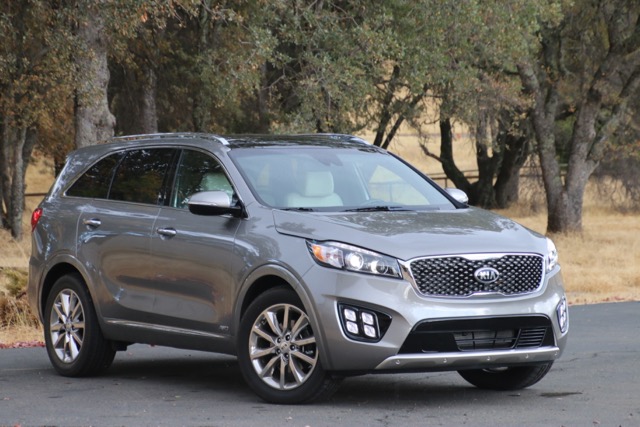
Kia Sorento handles well and is comfortable to drive. Photos/Larry Weitzman

Kia Sorento handles well and is comfortable to drive. Photos/Larry Weitzman

By Larry Weitzman

Many auto people think that Hyundai and Kia are basically twins and therefore one would think that the Kia Sorento is the identical twin to the Hyundai Santa Fe. While they may share “hearts” in the form of the powertrain, it ends there. In fact, the Sorento is 6 inches shorter and rides on a 1-inch shorter wheelbase. Sorento is a small midsize at just 187 inches on a 109-inch wheelbase. Width is broad in the shoulders at 74 inches. Sorento’s AWD system only adds 133 pounds to its weight.

While the design of the Santa Fe is edgy, the new Sorento has a softer, smoother rounded surface without any sharp lines, except for a scallop in the rear rocker area. It uses the signature Kia grille and integrates its design theme from there. It is one attractive CUV. About the only “average” design point on the Sorento is the termination of the rear quarter window.

Under the hood resides Kia’s extremely smooth and efficient 3.3L DOHC, 24 valve V-6 that cranks out 290 hp at 6,400 rpm and 252 pounds of twist at 5,300 rpm. It drives all four wheels via a 6-speed torque converter tranny. And this is one smooth and powerful powerplant. Zero to 60 mph arrives in just 7.02 seconds. Its responsiveness is linear and eager. Passing times are also quick with a 50-70 mph simulated pass requiring 3.85 seconds and the same simulation up a steep grade only slowing that time to 6.18 seconds. That is getting down the road for a 4,343-pound vehicle. It is rated to tow 5,000 pounds when properly equipped. The gross vehicle weight rating (GVWR) is a whopping 5,622 pounds giving the Sorento a huge 1,300-pound payload.

As an aside, Sorento also has two other engine choices, a 2.4L inline 4 with 185 hp and 178 pounds of twist. It is also found in the Optima where it performs beautifully, but might be a bit anemic in the Sorento. While the window sticker may reflect better fuel economy, I doubt it is any better than the V-6 as you will read in the following paragraph. The other choice is a 2.0L turbo (240 hp, 260 pounds of twist) which I found to do a very good job with respect to performance and fuel economy in a smaller CUV model (Santa Fe Sport) which you may have read. I also tested the 2.0L turbo in last year’s Sorento and the test results show almost identical passing performance with acceleration to 60 mph about half a second slower. But here is the deal, fuel economy was superior with the V-6 by as much as four mpg on the Tahoe trip and at least two mpg on the highway at 70 mph. So I suggest that you go with the V-6 if possible but the 2.0L turbo four might be a good choice as well. The V-6 is a $1,600 upgrade over the 2.0L turbo.

Specifications Price $25,400 to $45,700 Engine 3.3L DOHC, 24 valve V-6 290 hp @ 6,400 rpm  252 lb-ft of torque @ 5,200 rpm 2.0L DOHC, 16 valve, turbo charged inline 4 240 hp @ 6,000 			          		       260 lb-ft of torque 1,450-3,500 rpm 2.4L DOHC, 16 valve inline 4 185 hp @6,000 rpm 			        178 lb-ft of torque @ 4,000 rpm		 Transmission Six speed automatic with manual mode Configuration Transverse mounted front engine/FWD/AWD Dimensions Wheelbase 109.4 inches Length 187.4 inches Width 74.4 inches Height 66.5 inches Track (f/r) 64.1/64.5 inches Weight 4,343 pounds GVWR 5,622 pounds Weight Distribution (f/r) 59/41 Fuel capacity 18.8 gallons Tow capacity 5,000 pounds Steering lock to lock 2.9 turns Turning circle 36.4 feet Wheels (std/opt) 17X7.0/19X7.5 alloys Tires (std/opt)235/65X17/235/60X18/235/55X19 Interior volume (2nd row up/down, 3rd row up) 38.0/73.0/11.3 cubic feet Performance 0-60 mph 7.02 seconds 50-70 3.85 seconds 50-70 mph uphill 6.18 seconds Top speed governed at 130 mph Fuel economy EPA rated 17/23/19 mpg city/highway/combined. Expect 23-24 mpg in rural and suburban driving and 32 mpg on a level highway at legal speeds.

Specifications
Price $25,400 to $45,700
Engine
3.3L DOHC, 24 valve V-6 290 hp @ 6,400 rpm
252 lb-ft of torque @ 5,200 rpm
2.0L DOHC, 16 valve, turbo charged inline 4 240 hp @ 6,000
260 lb-ft of torque 1,450-3,500 rpm
2.4L DOHC, 16 valve inline 4 185 hp @6,000 rpm
178 lb-ft of torque @ 4,000 rpm
Transmission
Six speed automatic with manual mode
Configuration
Transverse mounted front engine/FWD/AWD
Dimensions
Wheelbase 109.4 inches
Length 187.4 inches
Width 74.4 inches
Height 66.5 inches
Track (f/r) 64.1/64.5 inches
Weight 4,343 pounds
GVWR 5,622 pounds
Weight Distribution (f/r) 59/41
Fuel capacity 18.8 gallons
Tow capacity 5,000 pounds
Steering lock to lock 2.9 turns
Turning circle 36.4 feet
Wheels (std/opt) 17X7.0/19X7.5 alloys
Tires (std/opt)235/65X17/235/60X18/235/55X19
Interior volume (2nd row up/down, 3rd row up) 38.0/73.0/11.3 cubic feet
Performance
0-60 mph 7.02 seconds
50-70 3.85 seconds
50-70 mph uphill 6.18 seconds
Top speed governed at 130 mph
Fuel economy EPA rated 17/23/19 mpg city/highway/combined. Expect 23-24 mpg in rural and suburban driving and 32 mpg on a level highway at legal speeds.

Fuel economy is rated by EPA testing at 17/23/19 mpg city/highway/combined. But I don’t know if the EPA pulled a plug wire or whether they left the emergency brake on, but the lowest fuel economy recorded by the Road Beat was 21.6 mpg in heavy freeway traffic much of it stop and go and during some full throttle performance testing. Overall the Sorento averaged 23-24 mpg. On the highway at 70 mph on a two way run on level ground 31.9 mpg. During a round trip from Placerville to South Lake Tahoe which includes a 6,000-foot climb over the Sierras the Sorento averaged 26.6 mpg. The fuel tank is a large 18.8 gallons.

As to handling the chassis is state of the art MacPherson struts up front and a multilink system in the rear and those broad shoulders allow for a wide stance of 64 inches of track. Rolling gear are 19 x 7.5 inch alloys shod with wide 235/55 series rubber. Steering is just under three turns lock to lock and it does a 360 degree turn within 37.2 feet. Sorento actually corners with aplomb with great grip and accurate steering albeit a bit numb. It just means it requires more attention when doing the cha-cha in the tight twisties. But it clearly has good cornering power, far more than most drivers will ever demand. It is a real pleasure to drive. Impressive.

Now here is where it gets good. Sorento is one of the smoothest and quietest CUVs on the planet. It was noticeable on my first drive. It became a magic carpet. It ran as if the engine was off, ethereal. It’s that good. It handles bumps in a sublime, well controlled manner. One of the best rides I have encountered. As to quiet, one must think in a whisper while in the Sorento, there is no engine, wind or road noise except when under full throttle acceleration and then the smooth V-6 emits a mild, pleasant roar, not bad for a V-6. But again this 3.3L unit is one of my favorite engines manufactured today.

Braking performance is strong from its huge disc brakes (over a foot in diameter ventilated fronts). And it has a standard autonomous emergency braking system which is new for 2017. Of course it has most every conceivable safety acronym including adaptive front head lights all standard. About the only thing it didn’t have was a lane keeping assist, but it did have lane departure warning, again all standard on the SXL model.

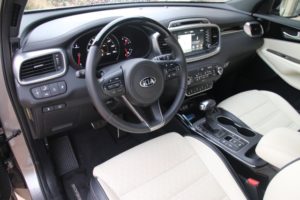
On the inside is another winning interior. This is a luxury ride with gorgeous nappa perforated leather seats, soft touch materials everywhere else, on the doors, dash and center console. The seats are done in a dark charcoal on the side trim with the faces being covered in a cream leather with deep bolstering. They are comfortable. I thought about grabbing one for my office chair. Shoulder room is almost 60 inches giving the interior an extremely spacious feel. Cargo capacity is good size at 73 cubes behind the front chairs and 38 feet behind the second row and almost 12 cubes behind the third row.

The instrument panel has all the instrumentation, trip computer, speedo, tach and ancillary gauges. The center stack is well done with a big screen info center for the radio, nav and other info. Operation of the systems is intuitive, simple and tastefully done.

Did I like the Sorento? You bet. Pricing for this Best in class and top of the line ride Sorento SXL starts and ends at $45,700 plus $895 for the train and truck from West Point, Georgia assembly plant. Even the floor mats are standard equipment. Such a deal.

Larry Weitzman has been into cars since he was 5 years old. At 8 he could recite from memory the hp of every car made in the U.S. He has put in thousands of laps on racetracks all over the Western United States.


Bargains await the smart traveler in 2017

By Jack Chang, Sacramento Bee

Change likely will define 2017 in many ways, and the travel industry is no outlier in that forecast.

Airlines, as they occasionally do, will look for new revenue streams by going extra-budget. Cities will continue building their allure through their food and drink cultures. More private homes will welcome guests in more cities as Airbnb forges stronger partnerships with local governments.

That’s at least how CSU Chico Professor Matthew Stone sees this new year shaping up. As an expert in recreation, hospitality and parks management, Stone identified several travel trends that point to more options for the smart bargain hunter.

Read the whole story


Calif. enacts stricter phone-driving rules

By Tony Bizjak, Sacramento Bee

Starting today, drivers no longer will be allowed to hold their cellphones in their hands for any reason, including using any of a phone’s apps, such as music playlists.

“The whole idea is you don’t have the phone in your hand, period,” said Assemblyman Bill Quirk, D-Hayward, author of the new law, which he says should make it easier for officers to stop and cite drivers for illegal phone use.

Quirk’s bill, AB1785, plugged what safety officials called a major loophole in the state’s groundbreaking hands-free cellphone laws. Those laws ban talking and texting on handheld phones while driving. But any other handheld use of a phone, such as shooting videos or scanning Facebook, has been technically legal.

Under the new law, drivers can still use their cellphones if they do it hands-free, which often means voice activated and operated.

Read the whole story


6 Round Hill residents displaced by NYE fire

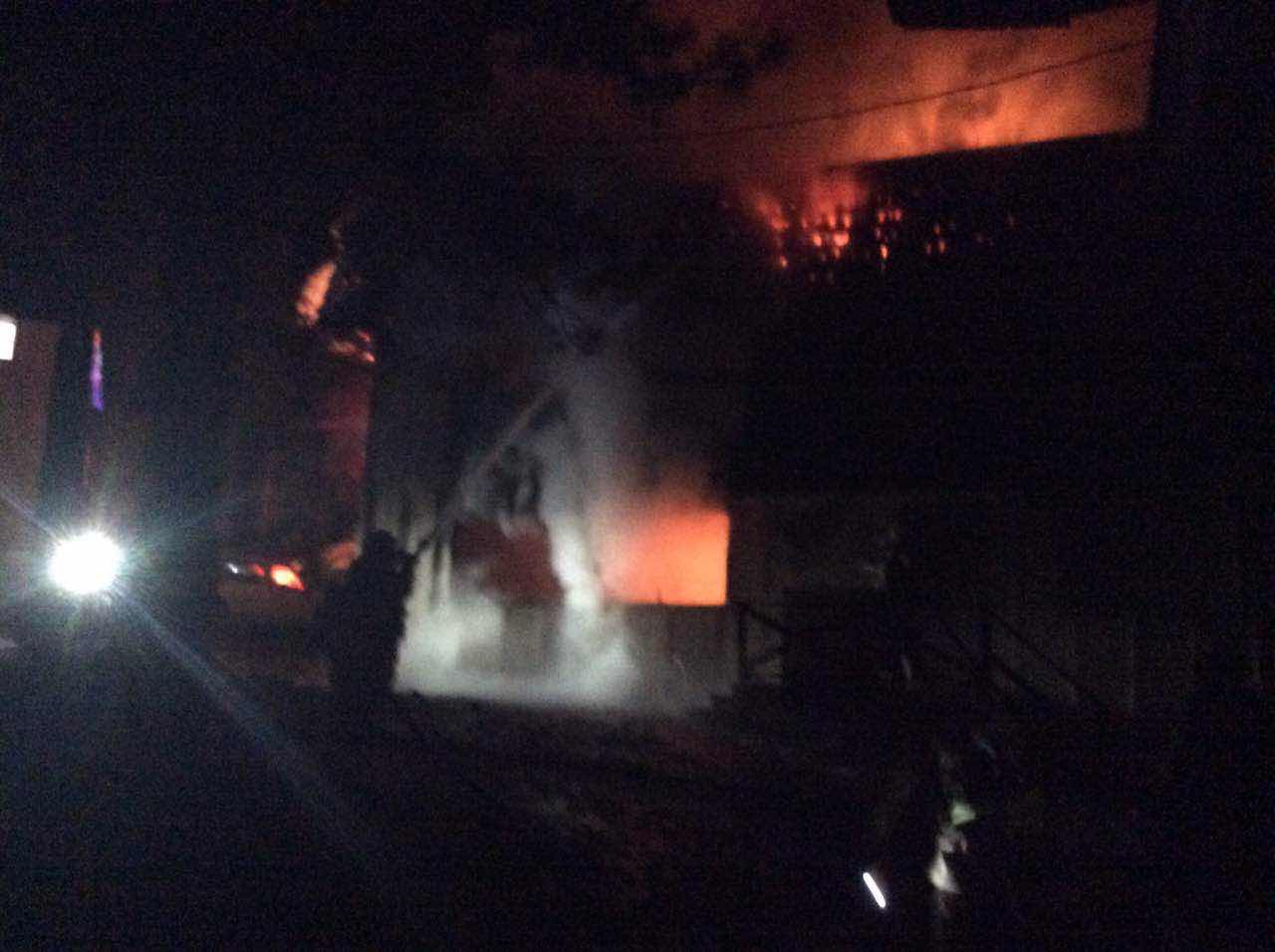
A duplex in Round Hill is destroyed by fire on Dec. 31. Photo/Provided

A duplex in Round Hill is destroyed by fire on Dec. 31. Photo/Provided

Two dogs and a cat died New Year’s Eve in a residential fire in Round Hill.

Tahoe Douglas firefighters arrived at about 8pm Dec. 31 to a duplex on McFall Way that was engulfed in flames. No people were inside the side that was burning.

The neighbors on the adjoining unit smelled smoke, saw the flames and then called 911.

Crews were able to stop the flames from spreading. It took about 20 minutes to knock down the fire.

“The exterior is standing. Basically it is just a shell,” Eric Guevin with Tahoe Douglas fire told Lake Tahoe News.

One unit was completely destroyed by the fire, while smoke, water and fire ruined the other side.

The two families consisting of six people – all full-time residents –  are being helped by Red Cross.

The cause of the fire is under investigation.

— Lake Tahoe News staff report


Opinion: Why poor Americans are so patriotic

By Francesco Duina

Why do the worst-off American citizens love their country so much?

Patriotism may be defined as a belief in the greatness, if not superiority, of one’s country relative to others. Depending on how one defines the term exactly, somewhere between 85 to 90 percent of America’s poor are “patriotic.” They would rather be citizens of their country, for instance, than of any other country on Earth, and they think America is a better place than most other places in the world.

This is striking for at least three reasons. First, those are very high figures in absolute terms. Secondly, the corresponding figures for working class, middle class, and upper class Americans are generally lower. And, thirdly, the worst-off in most other advanced nations are also less patriotic than America’s—even in countries where people receive better social benefits from their government, work fewer hours, and have better chances of upward intergenerational mobility than their counterparts in the United States.

Why are America’s poor so patriotic? The short answer is: We don’t know for sure. And we should, because so much depends on the patriotism of poor Americans. Their love of country contributes to social stability, informs and supports America’s understanding of itself as a special place, and is essential for military recruitment. It is also a force that can be tapped into by politician’s eager to rally a large contingent of voters.

To understand this patriotism, I spent parts of 2015 and 2016 in Alabama and Montana—two distinctly different states that are both “hotbeds” of patriotism among the poor. I hung out in Laundromats, bus stations, homeless shelters, public libraries, senior citizen centers, used-clothing stores, run-down neighborhoods, and other venues. And I interviewed 63 poor Americans of different ages, genders, religious and political orientations, races, and histories of military service.

I came away with three overarching insights.

First, many view the United States as the “last hope”—for themselves and the world. Their strong sense is that the country offers its people a sense of dignity, a closeness to God, and answers to most of humanity’s problems. Deprive us of our country, the people I met told me, and you deprive us of the only thing that is left for us to hang on to. 

This feeling of ownership is national and personal. Consider the words of Shirley (all names here are pseudonyms, per my research rules), a 46-year-old unemployed black woman in Birmingham with plans to become a chef: “For me to give up hope on the country in which I live in is almost to give up hope for self. So I gotta keep the light burning for me and for my country or I’m gonna be in the dark.”

That comment connected to a second insight. America appeals to the poor because it is rich. “The land of milk and honey” was a phrase I heard often. The poor see it as a place where those who work hard have a chance to succeed. In my interviews, people separated the country’s possibilities from their own frustrations; many took full responsibility for their own troubles in life. “People make their own life, make their own money the way that they wanna make it and however much they wanna make it,” said Jeff, a white man in a bus station in Billings, Mont.

Many saw this as an American virtue. Here, at least, your failures belong to you. Your chances aren’t taken away by others. “If you fail,” said Harley, a vet now on food stamps, “gotta be bad choices.” This sentiment was articulated with particular frequency by African American interviewees in Alabama—something that particularly struck me, given the legacies of slavery and segregation in that part of the country.

For the same reason, many were confident that the future was about to bring them better things. Several felt that they had just turned a corner—perhaps with God on their side. Rich Americans, they told me, deserve what they have. Besides, they added, look at the rest of the world: They keep trying to come to America. This must be the place to be.

That related to a third source of pride in the nation: America is the freest country on earth. Many of the people I met spoke of feeling very free to come and go from different places, and to think as they wish. America allows people to be as they want, with few preconceived notions about what the good life should look like. Such a narrative took on libertarian tones in Montana.

For some, this included the freedom to be homeless, if they choose. As Marshall, a young, white homeless man, told me in Billings, “it’s a very free country. I mean, I’m actually, I live on the streets, I’m kinda choosing to do that … sabbatical. Nobody bothers me for it; I’m not bothering anybody. I got my own little nook. There are other places in the world where I’d be forced into some place to shelter up or, you know, herded off or … jailed.”

When conversations turned to freedom, guns were often mentioned. Guns give one security and make hunting possible—enabling one to feed one’s self and family. I was accordingly often reminded that Americans rebelled against the English by making guns. Guns equal freedom. And America, thankfully, ensures gun ownership.

Taken together, these conversations helped me understand that the patriotism of the poor is rooted in a widespread belief that America belongs to its people. There is a bottom-up, instinctive, protective, and intense identification with the country. This is a people’s country.

Of course, some of this patriotism is clearly grounded in misconceptions about other countries. One person told me that there are only two democracies in the world: Israel and the United States. Another told me that Japan is a communist country. Yet another that in Germany one’s tongue can get cut off for a minor crime. Many also assumed that other countries are poorer than they really are. But these were almost tangential reflections that further justified—rather than drive—their commitment to the country. They seldom came up on their own unless I asked about the limitations of other countries.

As I completed my interviews and reflected on what I heard from these patriots, I realized that their beliefs about America are not a puzzle to be solved. In America, there is no contradiction between one’s difficult life trajectories and one’s love of country. If anything, those in difficulty have more reasons than most of us to believe in the promise of America.

Francesco Duina is a professor of sociology at Bates College, as well as honorary professor of sociology at the University of British Columbia. He is the author of “Broke and Patriotic: Why Poor Americans Love Their Country,” published by Stanford University Press.

Opinion: Outcome of 2017 depends on all of us

By Kathryn Reed

As the fog of ringing in a new year fades, we must collectively begin to face the reality that 2017 is going to be much different than 2016. Some of it we will have control over, some we won’t. The worst part will be if people stop being engaged.

As the late U.S. Speaker of the House Tip O’Neill said, “All politics is local.”

The Lake Tahoe Basin has plenty of issues that need to be addressed – housing, wages, transportation, and climate change are just a few. These are big topics with no easy answers. They are problems that should not be solved in a vacuum by only a few people. All of these issues affect everyone who lives in and visits the basin. That is why we, the residents, need to have a say in the cure that will be used to treat what ails us as a community.

Don’t wait until the eleventh hour, don’t wait to be asked for your opinion – just find a forum to express it in a manner that could effect change.

Housing – lack of it and the exorbitant price – is not unique to Tahoe. Lake Tahoe News will be exploring this topic through a series of stories beginning later this month.

One thing Tahoe will likely always face is a housing shortage. In some ways this is a good thing because it means we did not pave over paradise. The fact that there is a limit on what can be developed in the basin is a good thing. It means we will continue to live in a wooded forest instead of a concrete jungle.

Should employers provide housing for employees? Should people expect to live and work in the same town? What role should government have in housing? These are some of the bigger questions we need to address collectively to find consensus.

I wonder if people were paid a livable wage, if the housing crisis would not be as severe because they could then afford more. At the same time, it is unrealistic to expect everyone who wants to live here to be able to do so.

California’s minimum wage as of today is $10.50/hour. By 2021 it will be $15/hour. Nevada’s minimum wage is $8.25 an hour, but drops to $7.25 if an employer offers health insurance. The federal minimum wage of $7.25/hour was set in 2009. The average annual household income on the California side of the South Shore is $28,565.

Vail Resorts, one of the larger employers in the greater Lake Tahoe area, in June 2015 made a big splash by announcing it would have a minimum wage of $10/hour. For its three California resorts, it’s no longer relevant.

I’m all for companies making a profit, but at some point that money needs to trickle down to the workers who are doing the heavy lifting. This is true of all sectors. The economic divide is growing dramatically between the haves and the have nots.

Climate change is real. Argue all you want as to why, but it is changing. Scientists have proven this. Look at all that rain we had in the fall. Is this going to be the new norm? The snow line is rising. This could dramatically change our economy if the winter sports season is shorter. It might also mean a longer off-season, as evidenced by the bustling fall the basin and Truckee areas experienced in 2016.

People are clearly wanting to recreate in the basin and Truckee – just look at how congested our roads are. It’s great they want to enjoy our home and drop some cash while doing so. But if their experience is miserable because of the congestion and lack of functional public transportation, how long will it be before they play elsewhere?

It is mindboggling to me that the powers that be keep approving development projects with no answers to how to mitigate the impacts the projects will have on roads and other infrastructure. Nor do these policymakers seem to care that the lack of housing for the workers at these developments means those people will be commuting, thus adding to the congestion. This then adds to air pollution and degradation of Lake Tahoe’s clarity.

As for what is going on nationally – Jan. 20 brings a new president. I have had friends tell me Trump will not be their president. To date I have failed to be persuasive to argue otherwise. Bridges cannot be built with that thinking.

He will be the president of the United States. (It is alarming that a Qualtrics poll taken in December showed 29 percent of the respondents believed Trump won the popular vote. Fifty-two percent of Republicans said Trump won the popular vote. The reality is Hillary Clinton won that count by more than 2.8 million votes.)

This is part of our collective problem – people refusing to learn (accept?) the truth, the facts.

It is our choice if we want to remain the Divided States.

Finding even the smallest commonality and building on that is critical. Educating people through civil discourse, listening – these are things that need to be done. Protesting and making oneself heard has its place, too. In all of this, there must be purpose beyond anger and telling others they are wrong. That is where the education piece becomes so important. It’s a critical component for all sides.

Drawing a line in the sand for equality, to thwart discrimination, and to uphold the Constitution and Supreme Court decisions is righteous. Drawing a line in the sand because you didn’t get your way and your person isn’t in office is beyond unproductive.

The questions now are – How do we overcome being the Divided States of America? How do we make the greater Lake Tahoe region sustainable for future generations?


End of an era for Sens. Boxer, Feinstein

By Sarah D. Wire, Tribune Washington Bureau

In 1992, Dianne Feinstein and Barbara Boxer pitched themselves to California voters as the dynamic duo, as “Thelma and Louise,” as “Cagney and Lacey.”

They were trying to persuade voters to do something no state had ever done: Elect two women to represent them in the U.S. Senate.

Feinstein, a former mayor of San Francisco, was a consensus builder willing to buck her own party at times to reach a compromise. Boxer, who served 10 years in the House before coming to the Senate, was a bit of a flamethrower, more rigidly ideological and staunchly devoted to the environment and women’s health care.

The 76-year-old Boxer is retiring in January, leaving behind a 24-year working relationship with Feinstein that was by all appearances in sync until its last days, when an argument over water policy played out in public.

Starting Jan. 3, Feinstein will have a new partner in Democrat Kamala Harris, who has a blend of Boxer’s progressive ideology and Feinstein’s pragmatism.

Read the whole story