Nev. tax officials seek funds to create recreational pot rules

By Associated Press

Nevada tax officials are seeking a nearly $900,000 loan to hire four officers to create regulations for the newly passed recreational marijuana law.

A state Department of Taxation request to tap funds from an Interim Finance Contingency Account will be considered Tuesday by the three-member state Board of Examiners, the Las Vegas Review-Journal reported.

Officials say the money would fund four tax officers through the June 30 end of the fiscal year, and would be repaid with proceeds from a 15 percent excise tax the law imposes on wholesale recreational marijuana sales.

If the request is approved by the panel — made up of Gov. Brian Sandoval, Attorney General Adam Laxalt and Secretary of State Barbara Cegavske — it will go to the legislative finance committee on Jan. 26.

Question 2 legalized recreational marijuana in amounts up to 1 ounce by adults 21 or older.

The law took effect Jan. 1, but officials say it could be a year before the drug is available for purchase through licensed dispensaries. Revenue from the excise tax is earmarked for the tax agency and local municipalities for administration and regulation, plus the state general education fund. State and local sales taxes also apply.

The tax department is working with the governor’s office on an executive order to develop a task force to provide guidance on issues related to legalization.

A public workshop is expected soon to look at temporary regulations to let the department begin issuing licenses while permanent regulations are drawn up for review by the Legislative Counsel Bureau.

Nevada provided a similar budget boost to start regulating medical marijuana dispensaries in 2014. Lawmakers allocated $623,000 to the Division of Public and Behavioral Health, and the program brought in $761,000 in tax revenue in the first fiscal year.


HR employment law topic of workshop

Lake Tahoe South Shore Chamber of Commerce’s Level UP Workshop series will be the third Wednesday of the every month throughout 2017. The workshop series will kick off with the Human Resource Employment Law Workshop on Jan. 18 from noon-1:30pm.

This ongoing chamber workshop series brings the latest business resources and hot topics to the South Shore business community. Each workshop will be facilitated by experts on variety of topics including human resources, marketing, social media, doing business with the city, sales strategies, and more. The Level UP Workshops are designed to provide participants with the tools necessary to solve work-related issues, as well as gain hands-on experience to further their expertise. 

Workshop facilitators for the first event will be Heather Satin, founder and CEO of Satin Legal INC., and Cameron Bordner, attorney at MOBO Law.

Attendees are encouraged to bring their  lunch to the chamber conference room located at 169 Highway 50, Stateline.

The cost for each Level UP Workshop is $10 for members and $20 for others. 


Truckee’s Engel scores first World Cup points

By USSA

ADELBODEN, Switzerland  – David Chodounsky (Crested Butte, Colo.) was the best U.S. racer of the day on Sunday, taking 12th place through tough conditions at the Audi FIS Ski World Cup slalom in Adelboden. Michael Ankeny (Deephaven, Minn.) and Mark Engel (Truckee) grabbed top-30 spots to score points.

The weather was inconsistent at Adelboden, with heavy fog rolling through for many of the racers. However, it didn’t seem to bother Norwegian Henrik Kristoffersen, who built a huge lead second run to take the win by 1.83 seconds. Manfred Moelgg of Italy was second, while Marcel Hirscher of Austria was third.  

Chodousnky was eighth after first run, but had a tough second run with fog and ruts.

“I’m actually a little bit disappointed with today, even though it’s my best result of the season,” said Chodounsky. “I’ll take it, but I left a lot out there. You gotta fight and earn everything on the World Cup. It’s not given to you at all.”

Ankeny, who had scored his first World Cup points at Adelboden last season, was excited about making the points, taking 23rd place. But he’s looking for more this season, and knows he can put two runs down to achieve a better result. “I’m super excited to get back in the points,” said Ankeny. “I had kind of a tough December with some injuries to my hip, but came back after the new year super refreshed and ready to go. I think seeing that my teammates Mark Engel and AJ Ginnis pop it in there, really helped me – because we’re all really close in training and so it makes it really feasible.”

Earlier this week, Engel skied from bib 45 to third place in the first run of the Zagreb night slalom. While he crashed second run, Engel got a glimpse of the top and is continuing to attack. “I’m pretty stoked to make it down two runs in a row, but I’m still unsatisfied,” said Engel, who finished 24th and scored his first World Cup points. “I think that I can do better than that. I wasn’t holding back to finish, but this hill is really steep and I’m a lot more comfortable on flats. It was just a little intimidating, but I was trying to go full gas.”


SNC-LTCC expanding 4-year degree offerings

Sierra Nevada College is accepting applications before the start of spring semester for bachelor’s degree-completion programs on the Lake Tahoe Community College campus in education, psychology and global business management.

The program is a partnership between Incline Village-based SNC and LTCC.

Tuition for SNC Tahoe students at LTCC is discounted ($382 per credit hour) and students may qualify for further financial aid based on individual eligibility. In addition to a focus on affordability, SNC and LTCC have worked hard to ensure easy transfer of credits for students, regardless of whether they have already completed their associate’s degree, or are planning to co-enroll while finishing lower-division requirements.

Spring will be the second semester for the program, the first where education and psychology degree majors are being offered. The inaugural cohort of SNC students on the LTCC campus started in fall on a global business management track and will start the second semester soon.

Classes for SNC programs at LTCC start as early as Jan. 17, with different modules offered throughout spring.

For more information, contact Kendra Wong atKWong@SierraNevada.edu.


Snippets about Lake Tahoe

·      Comedian and impressionist Justin Rupple will be at Hard Rock Lake Tahoe on Jan. 14 at 8pm. Tickers are $10. Must be 21 to attend. 

·      Tahoe Truckee Unified School District is going to start having two-hour late starts when there has been significant snow during the night that ends or is expected to end by 5am.

·      Placer County’s Community Development Resource Agency’s Lake Tahoe office will have reduced office hours in January while staff participates in training. The office will be closed Thursdays from 10am-2pm through Jan. 26.

·      There will be a cocktail snowshoe race at the Beacon restaurant on the South Shore on Jan. 21 at 7pm, with signups starting at 5pm. No cost to enter.

·      There will be a farewell lunch for Lake Tahoe Community College President Kindred Murillo on Jan. 11 at noon. RSVP to foundation@ltcc.edu.


Region weathers first storm; snow comes next

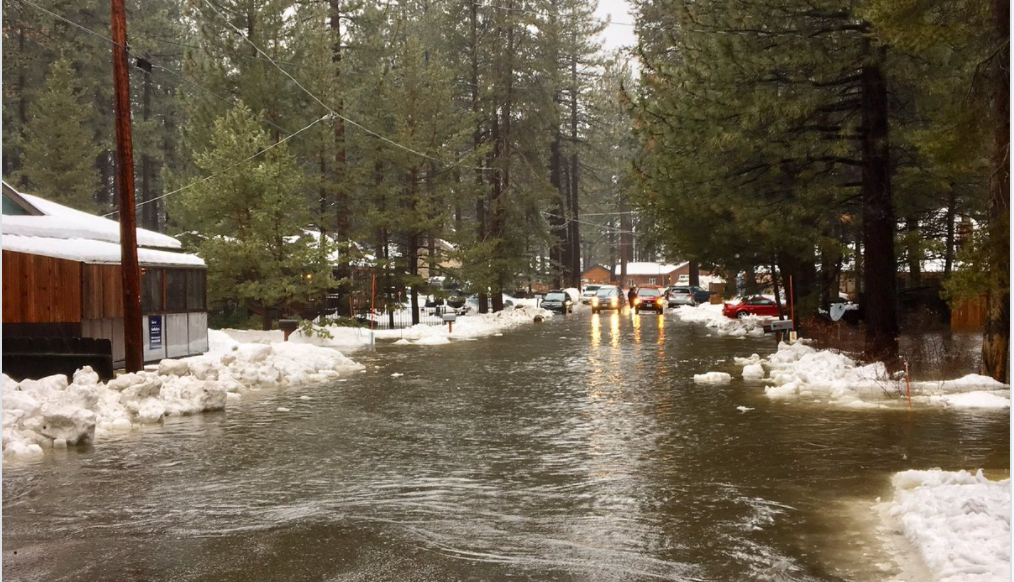
Bill Street in South Lake Tahoe on Jan. 8. Photo/Provided

Bill Avenue in South Lake Tahoe on Jan. 8 had to be closed because of flooding. Photo/Provided

Updated 2:10pm:

Since the first of the year Lake Tahoe has risen about 1 foot; that’s 33.6 billion gallons of water.

Interstate 80 is open in both directions.

Highway 395 is closed in both directions from Stephanie to Cradlebaugh Bridge. Jacks Valley Road is open.

Multiple state roads in the greater Truckee Meadows and Carson Valley areas remain closed as the Nevada Department of Transportation clears and accesses flood-related damages. Road closures can change rapidly.

Here is what NDOT is working on:

  • Some of the greatest flood damage to state roads occurred in the Pyramid Lake area, with extensive damage to highways 445, 446 and 447. An approximately 50-feet drop-off was created by erosion on Highway 446 along Pyramid Lake. Sections of state roads in the Pyramid Lake area will continue to be closed indefinitely as repairs are made.
  • At Kingsbury Grade all of the new roadway surface and much of the new earth that was placed down to fill the previous erosion remained intact. However, with the overwhelming amount of precipitation, additional erosion occurred in the area, particularly to drainage areas. With snow and winter weather forecast, NDOT will do all possible to repair the road efficiently and quickly, but no timeframe is yet set. 
  • Both directions of Interstate 80 west of Keystone Avenue of downtown Reno has extensive potholing.
  • Genoa and Muller lanes in the Minden/Carson Valley area remain closed. The entire length of Genoa Lane between Highway 395 and Foothill Road is closed. The western section of Muller Lane is closed between Highway 395 and Foothill Road. Both roads experienced roadway shoulder damage, but are anticipated to reopen within the next day or two. Residents will valid ID are allowed access on Muller and Genoa lanes.
  • NDOT bridge inspectors have visually assessed state bridges susceptible to high levels of erosion in northwestern Nevada for any imminent bridge safety concerns. No immediate damages or imminent safety concerns were found.

Liberty Utilities says treacherous conditions have slowed the restoration progress in some areas. Service remains out for multiple customers between Tahoe City and Tahoma. Additional crews have been brought in and are onsite. Sporadic outages continue throughout the service territory due to falling trees and branches.

The National Weather Service in Reno has issued a high wind watch from Reno through Carson valley for the 24-hour period ending Tuesday night. Flooding is also still possible in those areas.

All Washoe County schools, including Incline Village schools, will be on a two-hour delay Tuesday.

Gary Kank sent this video to Lake Tahoe News. It was from his commute on Jan. 9 from South Lake Tahoe to Shingle Springs on Highway 50. It’s the most water he’s seen in 15 years.

Updated 9:33am

South Tahoe Public Utility at peak flow on Jan. 8 had 17.5 million gallons coming through its sewer lines. This is twice the pumping capacity over Luther Pass to the Carson Valley. This meant the emergency retention basins near the plant are in use.

Stormwater was getting into the pump stations at Fallen Leaf Lake those were pumped out so there would not be an overflow.

“A number of lift stations had all the pumps on full speed which almost never happens,” Richard Solbrig, executive director of STPUD, told Lake Tahoe News. “Hopefully, we escaped the worst of it. Snow is not as hard to deal with as rain on snow.

As of 3:30am, customers from Emerald Bay through and including Tahoma have power. All other West Shore customers remain without power with estimated restoration time at 5pm Monday. NV Energy crews are assisting Liberty crews in addition to the contracted crews called in three days ago. There are two power lines that have been affected by mudslides and downed trees, and two of NV Energy sources that supply Liberty were affected by mudslides. Road closures are hampering efforts to get supplies and crews to needed locations. 

In Douglas County damage assessment teams have been deployed to determine the impact of the storm and necessary clean-up. Officials are being advised the West Fork of the Carson River is expected to recede below the banks. There was a crest in the east fork last night and is now below flood stage. Last night’s evacuees are expected to return home later in the day.

Manhole covers are covered in water and Trout Creek is 15 feet into some properties in South Lake Tahoe. Photo/Lisa Huard

Manhole covers are under water and Trout Creek is 15 feet into some properties in South Lake Tahoe. Photo/Lisa Huard

By Kathryn Reed

The Upper Truckee River through South Lake Tahoe and Meyers for the most part stayed within its banks, allowing South Shore residents and officials to breathe a sigh of relief.

The hope is that the water level will recede a bit before the next system arrives.

“There were no major incidents of any kind,” City Manager Nancy Kerry told Lake Tahoe News. “Many of the investments we’ve made over the last 10 years such as the Bijou erosion control project and others performed exceptionally well.”

Minor flooding occurred at Denny’s restaurant, at school sites, Knights Inn hotel and residences. The worst road flooding was in the state streets area where the drainage is nonexistent and there is a high water table.

Placer County said it received 4 inches of rain in 24 hours.
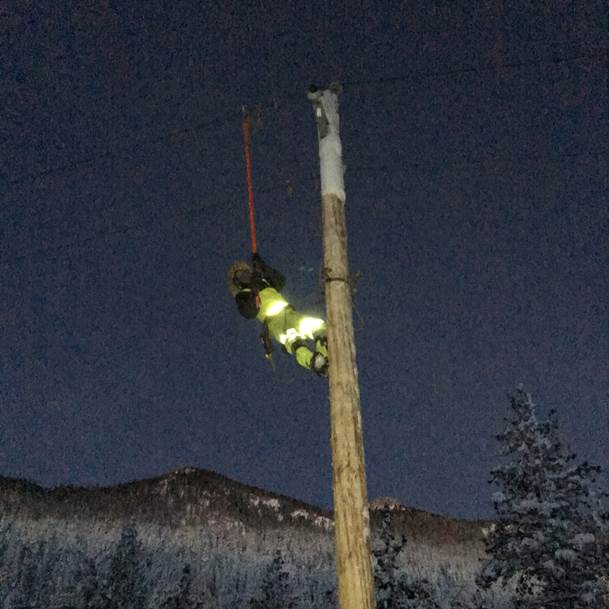
Liberty Utilities crews work at all hours to restore power. Photo/Provided

Liberty Utilities crews work at all hours to restore power. Photo/Provided

Liberty Utilities is reporting outages in El Dorado and Placer counties, with no details available.

Problems throughout the region remain. Kingsbury Grade is closed again because of a sink hole in the same area where the road was repaired last week. There is no estimated time when it will be open. People can still drive from Highway 50 to Tramway.

Caltrans is still working to clear the mudslide on Interstate 80 that has traffic halted from Colfax to the Nevada state line. The eastbound lanes are open.

Highway 89 around Emerald Bay is closed.

Truckee has measurable water on some roads. Water has gone down along Glenshire Drive near Trout Creek, however there is still standing water along Donner Pass Road at Donner Lake. 

Public safety and transportation officials are urging people not to travel on any roads in the region unless they have to.

Most schools in and around the basin are closed on Jan. 9 – including Lake Tahoe Unified, Douglas County at the lake, Incline Village, Tahoe-Truckee Unified, Lake Tahoe Community College, and Sierra Nevada College.

Ski resorts are assessing whether they will open on Monday. Most were shuttered on Sunday. Northstar, Squaw and Alpine are closed.

The Truckee River in Reno-Sparks is starting to rise again and could crest in Sparks at about noon today. There have been no flood related injuries, but rescues have occurred in the Reno area.
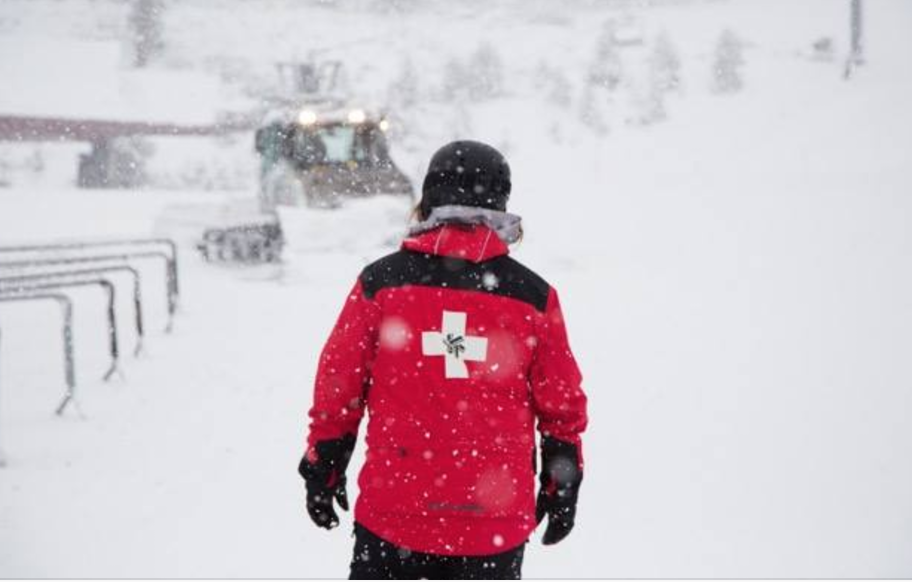
Northstar and other ski resorts will be closed Jan. 9. Photo/Provided

Northstar and other ski resorts will be closed Jan. 9. Photo/Provided

While the rain has changed to snow for much of Tahoe-Truckee, another significant system is barreling down on the region. It should be here this evening and last through Thursday. A winter storm warning is in effect for the Tahoe basin through Thursday at 4am.

For detailed road information, click on the state icons on the home page Lake Tahoe News.

Another 6 to 8 feet of snow is expected above 7,000 feet, with 2 to 5 feet at lake level, according to the National Weather Service in Reno.

By Friday it is expected to be mostly sunny.

The U.S. Postal Service said it had trouble last week delivering mail in South Lake Tahoe, Truckee and Incline Village and the same may be true this week because of road conditions.



Tahoe Tails — Adoptable Pets in South Lake Tahoe

Peanut

Peanut

Peanut is a 9-month-old mystery puppy. We see Pug, maybe terrier, maybe miniature Schnauzer. But whatever his background, he’s a very cute puppy who gets along well with other dogs, cats, and kids.

Peanut is one of eight dogs at the shelter, including several other small young dogs, looking for new homes. Many of the dogs were brought to Tahoe by one of the shelter’s partners, which transfers dogs from crowded shelters to ours in the hopes of improving their chances of finding homes quickly.

Peanut is neutered, microchipped, tested for heart worm, and vaccinated. He is at the El Dorado County Animal Services shelter in Meyers, along with many other dogs and cats who are waiting for their new homes. Go to the Tahoe animal shelter’s Facebook page to see photos and descriptions of all pets at the shelter.

Call 530.573.7925 for directions, hours, and other information on adopting a pet.

For spay-neuter assistance for South Tahoe residents, go online.

— Karen Kuentz


Lahontan trying to cope with climate change

By Kathryn Reed

It’s not a matter of whether climate change exists; the discussion now is what is going to be done about it — not to stop it, but in terms of how to live with it.

That is exactly what the Lahontan Regional Water Quality Control Board’s directors are going to discuss at this week’s meeting. The board and staff are working on climate change adaptation strategies.

Specifically, the outcome of a climate change survey is on the Jan. 11 agenda. Because the survey closed on Dec. 31, an in depth analysis of all the responses will not occur at this meeting. (The meeting is in Apple Valley.) However, staff has been able to consolidate the more than 400 ideas into about two dozen potential adaptation concepts or actions.

The survey was open to the public and agencies.

“The biggest take home message is there is strong support for the board to take action to protect our recharge areas, to help out with addressing stormwater and infrastructure,” Scott Ferguson, supervising engineer with Lahontan, told Lake Tahoe News. “Where we saw differentiations was how to do it.”

All nine regional water boards are looking at climate change and coming up with ideas for their particular area.

There has been much talk about pollution and climate change, but very little about water quality and climate change. The latter is the direction Lahontan wants the conversation to go. Stormwater, flood plains and infrastructure are the main topics.

People used to only look at stormwater as something to get rid of. Now people are trying to figure out how to better capture it and reuse it. This is particularly prudent thinking in areas prone to droughts.

“How do we retain it and how do we manage it so we are not altering existing surface water?” Ferguson said. The answers are still being sought.

With the snowpack expected to decrease in the Sierra it means more rain will be falling. Lahontan would like that water to get into the ground.

“We need to be restoring wetlands; they act as a sponge to hold water and release water later in the year,” Ferguson said.

Regarding infrastructure, some industrial facilities and wastewater treatment locations are vulnerable to extreme flooding. Lahontan plans to do a threat analysis to determine how to protect areas.

“We are looking for a lot of coordination with our partners out there as we move forward with how best to be better prepared. We recognize everyone has limited resources,” Ferguson said.

Lahontan’s jurisdiction covers a large swath of eastern California, stretching to Southern California. Lake Tahoe and Truckee are just a small part of the territory. Whether there are different rules for various locales remains to be seen.

After staff does a thorough analysis of the survey the results are expected to be released in the spring, with public workshops in June, and the draft climate change adaptation strategy presented to the board in September.

“We will probably look to identify some particular actions that have been rising to the top, and offer another opportunity for input from partners, the water board and interested parties,” Ferguson said.


Opinion: Year of conquering negative thinking

By Lesley Alderman, New York Times

Here’s a New Year’s challenge for the mind: Make this the year that you quiet all those negative thoughts swirling around your brain.

All humans have a tendency to be a bit more like Eeyore than Tigger, to ruminate more on bad experiences than positive ones. It’s an evolutionary adaptation that helps us avoid danger and react quickly in a crisis.

But constant negativity can also get in the way of happiness, add to our stress and worry level and ultimately damage our health. And some people are more prone to negative thinking than others. Thinking styles can be genetic or the result of childhood experiences, said Judith Beck, a psychologist and the president of the Beck Institute for Cognitive Behavior Therapy in Bala Cynwyd, Pa. Children may develop negative thinking habits if they have been teased or bullied, or experienced blatant trauma or abuse. Women, overall, are also more likely to ruminate than men, according to a 2013 study.

Read the whole story


Beware the little green frog logo on sustainable food

By Bernice Yeung, Reveal

That little green frog logo is everywhere: sprawled across chocolate bar wrappers, stuck to the side of tea canisters, perched on banana labels. The web-toed  amphibian is the Rainforest Alliance Certified seal, a signal to consumers that the product is friendly to the planet and to farmworkers.

But when it comes to worker protections, Rainforest Alliance hasn’t always delivered on its promises.

According to a report by the fair-trade watchdog organization Fair World Project, consumers should be skeptical of some certification groups, such as Rainforest Alliance. The popular green frog logo, in fact, was deemed “unqualified to ensure farmworker justice” because of weaknesses in its audits.

This follows on recent accusations that Rainforest Alliance is certifying products sourced from farms where workers have been mistreated.

In 2015, a BBC investigation found that workers on Rainforest Alliance-approved Indian tea estates lived in shoddy housing and received unacceptably low wages. Reporters also found evidence of children working on the plantations. The organization has acknowledged that its auditing process was imperfect, and responded by decertifying one tea estate, reducing the risks that lead to child labor and improving housing conditions.

But additional critical reports about the Rainforest Alliance certification process surfaced this year. Following a 2011 study that found a host of problems on Rainforest Alliance-certified Indian tea plantations, a worker advocacy group re-evaluated some estates this summer. The latest report found improvements, though it also noted ongoing issues related to overtime pay and unions.

The Rainforest Alliance and the Sustainable Agricultural Network, which jointly oversee the green frog label, sent in an audit team to look at these concerns but said it couldn’t corroborate most problems raised in the report, except for a minor issue related to working hours, which it has addressed.

And according to an Oxfam Germany report published last spring, there are problems with the labor conditions at Rainforest Alliance-affiliated banana and pineapple plantations in Latin America, too. Banana workers in Ecuador said that pesticides were sprayed by planes while they worked in the fields below, and pineapple workers in Costa Rica said that after working 12 hours a day, they still could not make ends meet. Rainforest Alliance has launched ongoing investigations into these claims but have not found evidence of these problems.

The recent inquiries focus in on farms that source products such as Lipton teas and Dole pineapples. Brands like Taco Bell, Clif Bar and Naked Juices also bear the little green frog logo.

Representatives of Rainforest Alliance and the Sustainable Agricultural Network said that when they learn of substantiated problems, they make changes.

“What we appreciate is constructive criticism and input, and we realize we do not have a perfect system,” said Andre de Freitas, the executive director of the Sustainable Agricultural Network, which creates the certification standards. “We are working on improving and engaging more with worker organizations. Our commitment is to getting better.”

The Rainforest Alliance certification program operates in 74 countries, and says it promotes sustainability in areas ranging from forestry to tourism. Food businesses can carry the frog logo by sourcing from certified farms, which pledge to follow specific environmental and labor standards. Though the Rainforest Alliance certification program is primarily funded by donations and philanthropy, some businesses pay a small royalty for the right to carry the logo.

The farms themselves pay to be certified. To make sure participating farms aren’t breaking the rules, the program conducts routine audits. The Justice in the Fields report, however, dinged Rainforest Alliance for inspections that were only once-a-year and pre-announced, and where worker representatives weren’t involved in the interview process – something the report says would make them more comfortable coming forward with complaints.

De Freitas said that the program is increasing the number of surprise audits and getting workers involved in oversight. He pointed out that the Justice in the Fields report contained verifiable inaccuracies and flagged issues around wages that the organization had already addressed through new standards announced in September.

Justice in the Fields evaluated seven of the largest certification programs that claim to ensure that products are free from farmworker exploitation. It looked specifically at labor conditions at medium- and large-scale farms, with an eye toward employee housing, wages and the enforcement of labor laws. (Some of these programs also monitor environmental practices, but the Justice in the Fields report only considered job conditions.)

Of seven certification programs, the report recommended four: The Fair Food Program, the Agricultural Justice Project, the Equitable Food Initiative and Fairtrade International.

The remaining three certifications make claims that “speaks to buzzwords around fairness, but their practices are not substantial enough to actually affect workers’ lives in a positive way,” said Kerstin Lindgren, the report’s author.

These weaker programs – Fair Trade USA, Fair for Life and Rainforest Alliance – should be approached with caution because of concerns over whether they pay a living wage or have strong auditing systems, Lindgren said.

But even the certification programs that received high marks from the Justice in the Fields report are not perfect. Florida’s Fair Food Programwas recommended by the Fair World Project, but the program is nevertheless silent when it comes to reducing workers’ exposure to pesticides.

Lindgren said part of the purpose of the report was to show the limits of certification programs. “For consumers, I hope they begin to become more aware and engage on these issues,” she said. In addition to getting involved at a policy level, she suggested that consumers “look for the strongest label and don’t assume that a weak label is better than no label.”