The forgotten history of Memorial Day

By Richard Gardiner, The Conversation

In the years following the bitter Civil War, a former Union general took a holiday originated by former Confederates and helped spread it across the entire country.

The holiday was Memorial Day, and this year’s commemoration on May 28 marks the 150th anniversary of its official nationwide observance. The annual commemoration was born in the former Confederate States in 1866 and adopted by the United States in 1868. It is a holiday in which the nation honors its military dead.

Gen. John A. Logan, who headed the largest Union veterans’ fraternity at that time, the Grand Army of the Republic, is usually credited as being the originator of the holiday.

Yet when Logan established the holiday, he acknowledged its genesis among the Union’s former enemies, saying, “It was not too late for the Union men of the nation to follow the example of the people of the South.”

I’m a scholar who has written – with co-author Daniel Bellware – a history of Memorial Day. Cities and towns across America have for more than a century claimed to be the holiday’s birthplace, but we have sifted through the myths and half-truths and uncovered the authentic story of how this holiday came into being.

Generous acts bore fruit

During 1866, the first year of this annual observance in the South, a feature of the holiday emerged that made awareness, admiration and eventually imitation of it spread quickly to the North.

During the inaugural Memorial Day observances which were conceived in Columbus, Ga., many Southern participants – especially women – decorated graves of Confederate soldiers as well as, unexpectedly, those of their former enemies who fought for the Union.

Shortly after those first Memorial Day observances all across the South, newspaper coverage in the North was highly favorable to the ex-Confederates.

“The action of the ladies on this occasion, in burying whatever animosities or ill-feeling may have been engendered in the late war toward those who fought against them, is worthy of all praise and commendation,” wrote one paper.

On May 9, 1866, the Cleveland Daily Leader lauded the Southern women during their first Memorial Day.

“The act was as beautiful as it was unselfish, and will be appreciated in the North.”

The New York Commercial Advertiser, recognizing the magnanimous deeds of the women of Columbus, Ga., echoed the sentiment. “Let this incident, touching and beautiful as it is, impart to our Washington authorities a lesson in conciliation.”

Power of a poem

To be sure, this sentiment was not unanimous. There were many in both parts of the U.S. who had no interest in conciliation.

But as a result of one of these news reports, Francis Miles Finch, a Northern judge, academic and poet, wrote a poem titled “The Blue and the Gray.” Finch’s poem quickly became part of the American literary canon. He explained what inspired him to write it:

“It struck me that the South was holding out a friendly hand, and that it was our duty, not only as conquerors, but as men and their fellow citizens of the nation, to grasp it.”

Finch’s poem seemed to extend a full pardon to the South: “They banish our anger forever when they laurel the graves of our dead” was one of the lines.

Almost immediately, the poem circulated across America in books, magazines and newspapers. By the end of the 19th century, schoolchildren everywhere were required to memorize Finch’s poem. The ubiquitous publication of Finch’s rhyme meant that by the end of 1867, the southern Memorial Day holiday was a familiar phenomenon throughout the entire, and recently reunited, country.

Logan was aware of the forgiving sentiments of people like Finch. When Logan’s order establishing Memorial Day was published in various newspapers in May 1868, Finch’s poem was sometimes appended to the order.

‘The blue and the grey’

It was not long before Northerners decided that they would not only adopt the Southern custom of Memorial Day, but also the Southern custom of “burying the hatchet.” A group of Union veterans explained their intentions in a letter to the Philadelphia Evening Telegraph on May 28, 1869:

“Wishing to bury forever the harsh feelings engendered by the war, Post 19 has decided not to pass by the graves of the Confederates sleeping in our lines, but divide each year between the blue and the grey the first floral offerings of a common country. We have no powerless foes. Post 19 thinks of the Southern dead only as brave men.”

Other reports of reciprocal magnanimity circulated in the North, including the gesture of a 10-year-old who made a wreath of flowers and sent it to the overseer of the holiday, Col. Leaming, in Lafayette, Ind., with the following note attached, published in the New Hampshire Patriot on July 15, 1868:

“Will you please put this wreath upon some rebel soldier’s grave? My dear papa is buried at Andersonville, (Georgia) and perhaps some little girl will be kind enough to put a few flowers upon his grave.”

President Abraham Lincoln’s wish that there be “malice toward none” and “charity for all” was visible in the magnanimous actions of participants on both sides, who extended an olive branch during the Memorial Day observances in those first three years.

Although not known by many today, the early evolution of the Memorial Day holiday was a manifestation of Lincoln’s hope for reconciliation between North and South.

Richard Gardiner is an associate professor of history education at Columbus State University.


Road Beat: Toyota Corolla XSE lacks performance

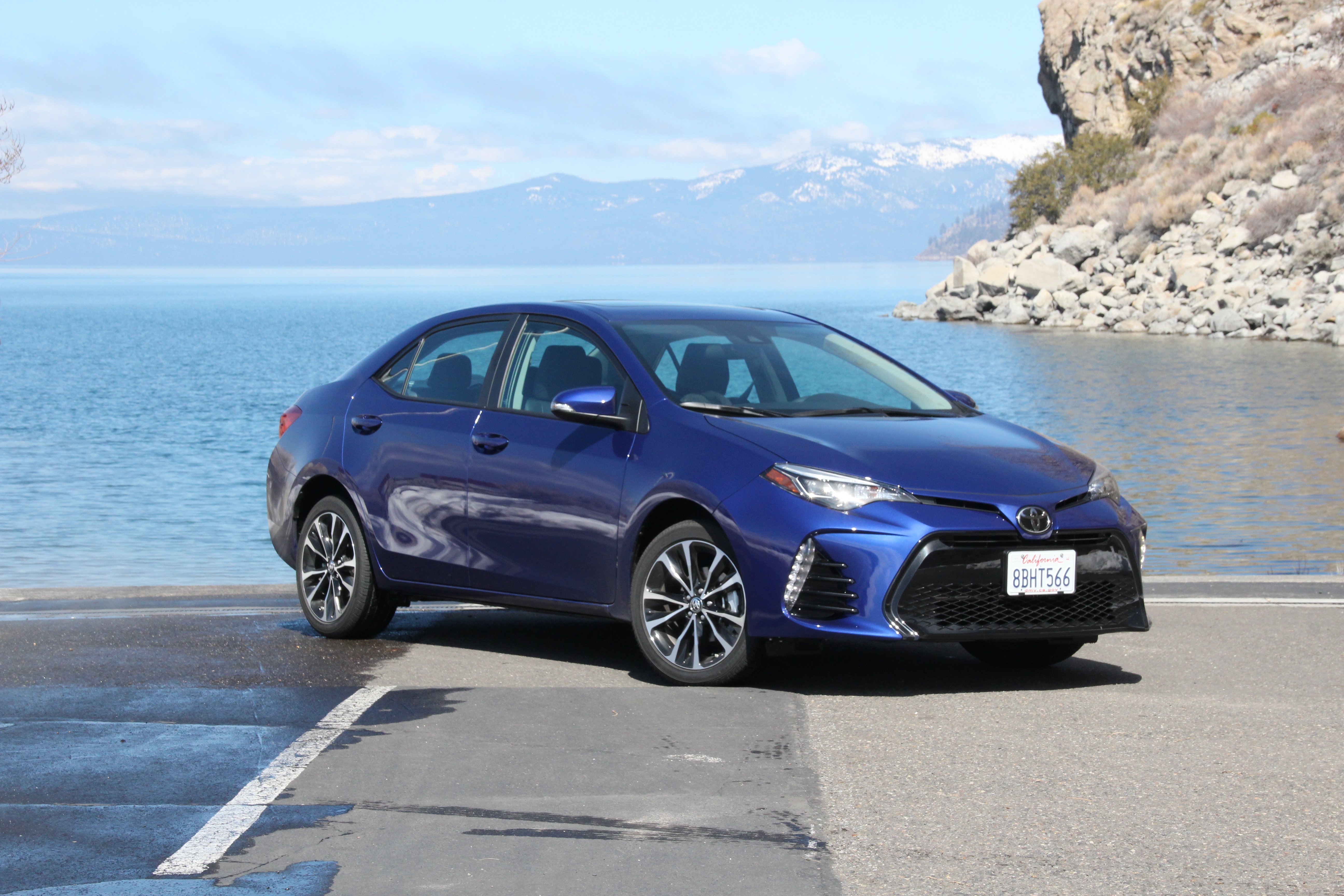
The 2018 Toyota Corolla XSE does not get high marks in all categories. Photos/Larry Weitzman

By Larry Weitzman

Maybe it was too spiffed up to compete with other compact sporty models, or maybe it was for good looks, but if it was spiffed up and made to sound good by adding TRD (Toyota Racing Development) Performance Exhaust and Performance air filter, that addition does little if anything to improve the vehicle performance. When it comes to sporty performance in a compact, Corolla XSE is not the leader and by a long shot.

Corolla’s new body, introduced a couple of years ago, is certainly a looker and looks is a huge ingredient in a customer’s purchase decision, but it still lacks in the performance department. It should be said, the XSE does a great job for its rated horsepower of 132 from its 1.8L DOHC 16 valve four banger that also produces 128 pounds of peak twist at 4,400 rpm.

Corolla is one of those default cars that people buy who want a good car that is reliable and bullet proof as a bank vault. Nothing to think about as Corolla will give you all that and more.

Corollas drive the front wheels via a six-speed manual tranny or a stepped CVT which runs smoother than greased silk. In my XSE tester it had paddle shifters to give you six pre-selected ratios which are created by the computer and not by actual gears as with a planetary gear-set.

Specifications
Price $25,337 with destination
Engine
1.8L DOHC 16 valve inline four cylinder with VVT-I 132 hp @ 6,000 rpm
128 lb.-ft of torque @ 4,400 rpm
Transmission
CVT (S model)
Six-speed manual
Configuration
Transverse front engine/front wheel drive
Dimensions
Wheelbase 106.3 inches
Length 183.1 inches
Width 69.9 inches
Height 57.3 inches
Tread (track) (f/r) 59.8/59.9 inches
Ground Clearance 5.6 inches
Weight 2,845 pounds
Fuel capacity 13.2 gallons
Passenger volume 97.1 cubic feet
Trunk volume 13.0 cubic feet
Steering lock to lock 3.19 turns
Turning circle 35.6 feet
Wheels 17X7 inch alloys
Tires 215/45X17 inch all season radials
Co-efficient of drag 0.29
Performance
0-60 mph 8.31 seconds
50-70 mph 4.58 seconds
50-70 mph uphill 7.66 seconds
Top Speed Well into triple digits
Fuel economy EPA rated 28/35/31 mpg city/highway/combined. Expect 41 mpg plus on the highway at legal speed and 33-35 mpg overall in rural country driving.

In my XSE version, the Corolla was an overachiever (maybe Toyota underrates the hp) knocking off 0-60 mph in about 8 seconds posting an elapsed time of 8.31 seconds. Passing times are also respectable recording a 50-70 mph sprint in 4.58 seconds and the same run up a 6-7 percent grade of 7.66 seconds. It is the best performing Corolla I’ve tested in 20 years. I never tested one before that anyway. And while tip-in is a bit soft, once under way, say from 10 mph, this Corolla feels very responsive which might be enhanced by the exhaust note, which by the way sounds good at times. Starting the engine definitely gets your attention, but the promises heard are a bit misleading. This XSE is hardly a race car. At speed, at least it’s quiet and the potential droning does not exist. Part throttle response is good as well.

Fuel economy is what Corollas are about and the XSE will not disappoint. EPA numbers are 28/35/31 mpg city/highway/combined. Overall, the XSE averaged between 33-34 mpg and at a constant 70 mph in cruise control on a level highway, the XSE posted an average number in a two-way run of 41.6 mpg. In my round trip to Carson City from Placerville, the XSE averaged 38.6 mpg in 200 miles of moderately aggressive driving with a dozen full throttle passes in the passing zones. Fuel capacity is a diminutive 13.2 gallons.

One of the upgrades with the XSE are bigger wheels and tires with 17 x 7 inch alloys shod with substantial 215/45 series rubber. It also gets upgraded four-wheel disc brakes from rear drums, but otherwise its standard Corolla, with MacPherson struts up front, a semi-independent torsion beam in the rear, two small stab bars, front and rear, slower electric power steering at 3.19 turns lock to lock and not much else. The bigger wheels and tires plus a 60-inch track make the reasonably nimble Corolla a bit more nimble but don’t expect a Toyota 86 here, it’s not. But most Corolla drivers will like its predictability just as they love its reliability as the sun will rise tomorrow.

When it comes to ride and quiet, Corollas shine with a smooth compliant, quiet ride with no noise from its tires or wind. Now in the XSE, engine noise is another story if not the whole story. Get your foot into the gas and it will let you know the engine is making fire, but be aware the size of the fire will be a bit of an optical illusion. It may sound like a rocket sled but it goes more like just a sled.

Safety is all Toyota with Toyota Safety Sense which includes things like lane departure warning and assist, radar cruise and auto high beams and about everything in between. LED low beams while bright have a sharp cut off, but the LED high beams are very good. Brakes are strong.

Toyota “Softex” baths the interior which can almost fool you into thinking its leather and the blue stitching and piping adds a sporty touch, but remember it’s only a touch in the interior and not under the hood. It comes with all the requisite gauges including a large tach and speedo flanking the trip computer/info center. Easy to read and use as is the center stack, sound system and HVAC. No advance college courses necessary.

For a compact car, the EPA rates it as a mid-size as there is a combined 110 cubic feet of internal room with the trunk owning 13 well shaped cubes of that total. It’s a roomy car for just 183 inches of length and 70 inches of width. It’s a pretty good wind cheater with a co-efficient of drag of 0.29.

Sticker for this fanciest of Corollas starts at $22,730 plus $895 for the train and truck from its Cambridge, Ontario assembly plant. My tester had a couple of grand of options including $649 for the TRD performance exhaust, $80 for a TRD air filter and a hundred bucks for a TRD rear sway bar. Save your money or if you want to spend $25 large for a sporty sedan, go for an 86 for about a grand more and get real. And an 86 with an automatic would still be a blast to drive. Total list for my tester was $25,337.

Larry Weitzman has been into cars since he was 5 years old. At 8 he could recite from memory the hp of every car made in the U.S. He has put in thousands of laps on racetracks all over the Western United States.


Tahoe Tails — Adoptable Pets in South Lake Tahoe

Ra

Ra is a beautiful 10-month-old brown tiger longhair cat who was picked up as a stray in Meyers and his owners never claimed him. He is very playful and inquisitive, and is a confident older kitten.

Ra is neutered, microchipped, tested for FIV, and vaccinated. He is at the El Dorado County Animal Services shelter in Meyers, along with other dogs and cats who are waiting for their new homes. Go to the Tahoe animal shelter’s Facebook page to see photos and descriptions of all pets at the shelter. 

Call 530.573.7925 for directions, hours, and other information on adopting a pet. 

For spay-neuter assistance for South Tahoe residents, go online

— Karen Kuentz


Public’s help necessary to keep Lake Tahoe blue

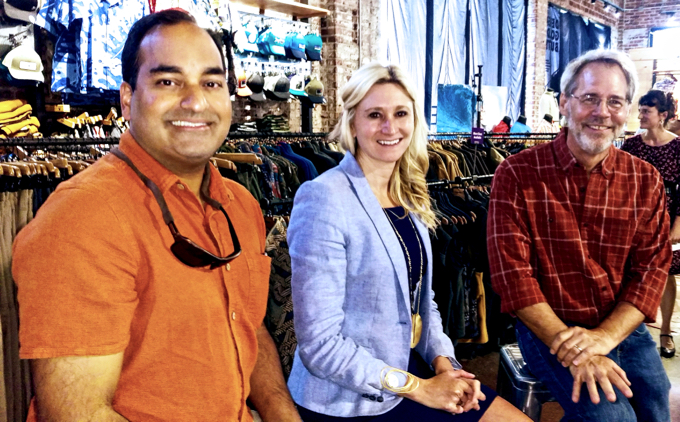
Sudeep Chandra, Darcie Goodman Collins, and Alan Heyvaert talk about Lake Tahoe issues. Photo/Linda Fine Conaboy

By Linda Fine Conaboy

RENO – Citizen scientist—maybe you’re familiar with these two words. You may have even read about them in Lake Tahoe News. Maybe you are a citizen scientist.

At any rate, a citizen scientist is an individual who voluntarily contributes his or her time, effort, and resources toward scientific research in collaboration with professional scientists. They can work alone, but don’t necessarily have a formal science background.

Turns out that this cadre of citizens is becoming more and more important to the health of Lake Tahoe as efforts heat up to protect the lake from the harsh reality of climate change, increasing amounts of sediment makings its way in the lake and just plain old human disregard for nature.

Because there are not enough classically trained scientists available to continually monitor the lake’s health, citizen scientists are becoming the eyes and ears on the lake, reporting their findings regularly.

In an attempt to shed some light on Tahoe’s declining health and the increasing importance of citizen scientists, representatives from Reno’s Desert Research Institute, The League to Save Lake Tahoe and UNR teamed up to present an overview of the current state of Lake Tahoe at a seminar last week hosted by DRI and the Discovery in Reno with support from Patagonia Outlet Reno.

Alan Heyvaert, director of the Center for Watersheds and Environmental Sustainability at DRI, reminded the substantial crowd gathered at Patagonia in Reno that Lake Tahoe is 95 feet below the base of Carson City. It’s a small watershed, he said, and stays clear because it’s so small—the only lake clearer is Crater Lake in Oregon. It would take 650 years to refill it if it were drained.

Heyvaert described the Secchi disk, a plate-like object suspended into the water and used to determine the lake’s clarity. He said monthly measurements prove that over the years, Lake Tahoe is losing its brilliance, which, he said, is caused mainly by suspended sediments floating in the water.

“We have lost a large amount of the clearness because of sediment,” he said, saying that this sediment consists of fine particles from roads and urban areas that wash continually into the lake. Measurements of the near shore prove that there is far less clear water on the South Shore in the vicinity of Tahoe Keys than at other parts of the lake.

According to Heyvaert, Mark Twain, in his novel “Roughing It,” written in 1870, estimated the lake’s clarity close to 100 feet; today, it’s less than 70. “Mark Twain actually gauged the details of the lake’s size and depth very closely,” Heyvaert said, giving a nod to Twain as perhaps the first citizen scientist. “He was a riverboat captain, this probably helped him gauge the measurements.”

He also spoke about the Pipe Keepers program, the League to Save Lake Tahoe’s project launched as a way for citizens to monitor 34 of the roughly 300 pipes continually spilling their contents into Tahoe’s waters. “Pipe Keepers monitor and report on a particular pipe, collect samples and collect weather data,” Heyvaert said.

Pipe Keepers are trained by the League to collect, among other data, stormwater samples from pipes located throughout the Tahoe basin. According to the League to Save Lake Tahoe’s website, unchecked 20th century development paved over much of Tahoe’s marshes and wetlands, which acted as natural pollution filters. Now, when rain hits the roads and parking lots, it washes off fine sediment pollution, which is drained into the Tahoe’s waters via a series of pipes funneling directly in the lake.

Sudeep Chandra is the director of the Global Water Center at UNR, and as such heads up a team addressing the multi-faceted and complex issues facing, as he says, one of the most precious resources, water.

Chandra is also deeply concerned about the nutrients cascading into the lake as well as the non-native species which are now quite happy within their Lake Tahoe habitat, eating the food designated for the lake’s original inhabitants.

“Even slight changes in clarity can alter big habitats,” he said. “There is now almost no plant growth in the very deep bottom of the lake—only 4.5 acres of plants left. These plants feed the 10 species of invertebrates living at the bottom.”

Chandra said crayfish (a non-native species) are in abundance in Lake Tahoe. “Crayfish are cattle grazers,” he said. “They are eating the plants.”

In addition to non-native crayfish, many other species have been introduced over the years for one reason or another. These introductions have resulted in the demise of native Lahontan cutthroat trout.

“In the last 20-25 years, most of the invasive species of fish and plants live and swim in the near shore—like bluegill bass and Eurasian watermilfoil. There are even goldfish, and in 2014, a freshwater skate was sighted,” he said.

The League to Save Lake Tahoe was ably represented by Darcie Goodman Collins, its executive director. 

“Citizen scientists are one of the best ways to monitor Lake Tahoe,” she said. “Tahoe has 20 million visitors annually, but does not even have the protections offered to national parks.”

Collins said the enormous amount of traffic within the basin contributes to a loss of clarity in the lake. Besides pipes feeding it pollutants, climate change makes the lake’s waters warm and then becomes hospitable to invasive species.

The good news is, according to Collins, marshlands are being restored, especially in the Upper Truckee Meadows, and there are efforts to mitigate reliance on cars—think Lime Bikes. Presidential visits bring much needed money into the coffers.

Collins touted the importance of citizen scientists. “If you’ve participated in a beach clean-up, you’re a citizen scientist,” she said, adding that trash is a huge problem at Tahoe. “More than 16,000 pounds of trash has been accumulated since we started collecting data.”

Consider that along with hundreds of thousands of plastic bottles, more than 60,000 cigarette butts have been accounted for. “The Lake Tahoe shoreline is under assault,” she said, introducing the League’s Eyes on the Lake program that requests people protect the lake while they play at the lake and then report their findings.

In addition, Collins described Watershed Watchers where civilians can adopt a watershed, monitoring it over time.

It is evident that the assault on the lake is not being taken lightly by these three entities. Anyone interested in any of these programs, should contact the League to Save Lake Tahoe at 530.541.5388 or info@keeptahoeblue.org.


Opinion: You too can be Austin Beutner

By Joe Mathews

No Californian is more inspiring than Austin Beutner.

The Los Angeles investment banker has gone straight to the top of four major institutions in the last decade—without paying his dues at any of them.

Joe Mathews

It started in 2009 when Beutner, having decided to devote himself to public service after a bicycle accident, convinced Mayor Antonio Villaraigosa to appoint him as first deputy mayor of the city of L.A.., despite his lack of prior experience in local government. During that stint, he was named interim general manager of L.A.’s Department of Water and Power—without experience in the field.

Then, Beutner, without experience in journalism, took over as publisher of the Los Angeles Times, and later publisher of the San Diego Union-Tribune. But all those were a mere appetizer for his latest job. Beutner this week became superintendent of the Los Angeles Unified School District. With 600,000 students, it’s the largest school district in California and the second largest in the nation. And yes, he had no previous experience in school districts.

Of course cynics might look at Beutner’s conquest of L.A.—the fastest takeover of a global city since the Visigoths sacked Rome—and suggest that Southern California’s institutions must be awfully weak to keep seeking the services of the same finance guy. They might question why he keeps getting jobs while only staying in previous ones for a short time (typically a year or so) and without producing sustained success.

To such critics, I say, you are prisoners of your small minds. Austin Beutner is a model for all Californians.

His inspiring lesson is that you can be anything you want to be, with one caveat. You have to want to lead the big, complicated institutions that Californians suspect are destined to fail.

Beutner’s No. 1 qualification is that understanding that most Californians have given up on governance. This state’s public institutions are so complex and dysfunctional, that we feel utterly powerless to fix them.

So most Californians look at leadership positions in such institutions and ask ourselves, why would anyone bother? Beutner has discovered there’s opportunity in California’s governing hopelessness. What, after all, is there to lose if you fail as school superintendent? Especially when a modest effort can beat our low expectations?

Of course, this method is not available to everyone. In the 21st century, to be able to pick your own gig, you need a background in high finance, and connections to rich people. Beutner fits the bill: He worked at the Blackstone Group, and then, after a stint at the U.S. State Department, co-founded investment banking firm Evercore Partners.

To get the jobs, he portrays himself as the rare Angeleno who hasn’t given up on these institutions. He studies up on an entity, participates in a reform task force, and tells the rich people who matter in L.A. that he thinks there might be a way to fix it. And those rich people call the elected officials whose campaigns they fund, and pretty soon Beutner is running said institution.

Then Beutner works hard, and advances intriguing ideas. But nothing ever takes hold permanently because, before very long Beutner is off to the next hornet’s nest.

And that can’t be blamed on Beutner. By definition these are short-term, no-hope gigs. At DWP, Beutner was the ninth general manager in 10 years. At the L.A. Times, he was one of several publishers fired by out-of-town ownership.

Who are we to complain about Beutner’s short tenures, since we don’t bother to assist these institutions ourselves? Beutner is sacrificing so we don’t have to. And building a resume so that one day he might be U.S. senator or president, a job for which he is already overqualified.

It’s high time we stopped whining about Beutner and other plutocrats running our institutions—and started emulating them.

I, for one, resolve to follow Beutner’s example.          

Instead of writing this column that appears in various California papers, I should be their publisher. (Would I be any worse at running legacy media businesses than their current operators?)  Just as Beutner wrote reports on institutions before taking them over, I’ve reported on water policy (I could chair the state water board), and the arts (I could straighten out MOCA in downtown L.A.). Heck, I wrote a book about Arnold Schwarzenegger, so I could probably be governor or run a studio.

Beutner never sells himself short. Neither should we.

Yes, his L.A. Unified stay should be short—one of the four members of the board majority that gave him the job is under federal indictment. But don’t worry—the opera needs leadership, LAX is a mess, and the Dodger manager is in his contract’s last year.

Beutner embodies the zeitgeist. We all know now that knowledge is power, and that power corrupts—so knowledge itself is corrupting. Yes, it’s a fallen world. Why not rise in it?

Joe Mathews writes the Connecting California column for Zócalo Public Square.


Improving school climate key to violence prevention

By F. Chris Curran, The Conversation

School shootings like the one that took place in Santa Fe, Texas, on May 18 are often followed by calls for enhanced security measures.

But Santa Fe High School already had many of these security measures in place.

For instance, the high school had a school resource officer who responded to the attack. The school also had security cameras in place and had recently conducted active shooting training and drills.

As the nation searches for ways to prevent school violence, the focus must be as much on school climate and culture as it is on school security. I make this argument as an educational researcher who studies school safety.

Calls for beefed up security

Many of the security measures in place at Santa Fe High School were called for in the wake of the Feb. 14 school shooting in Parkland, Fla. For instance, several states have passed legislation to increase law enforcement presence at schools. The federal government expanded funding to support the use of security measures such as metal detectors as well as training for threat identification and emergency response.

Beyond the school walls, there have been broader calls for gun control. It is notable that the weapons used in the attack are reported to have been owned legally by the father of the shooter and were not the type targeted by most gun control proposals.

One area that often gets overlooked in the aftermath of these tragedies is school culture. News reports indicate the shooter was reportedly bullied by other students and coaching staff. School officials, however, dispute this account.

An examination of the school culture at Santa Fe High School could prove as important as a review of the school security measures that were in place and the extent to which they were followed.

Why school climate matters

Research has consistently shown that positive school climate is a strong predictor of school safety. When students have healthy peer relationships, teachers they trust, and school policies that they perceive as fair, they are more likely to feel safe in the school and less likely to misbehave.

Building a sense of community among students and adults in schools may reduce the risk of school violence.

Some advocates have called for a return to greater use of exclusionary discipline practices like suspension.

Given the importance of supportive school climates for student safety, it is important to consider how the use of security measures and discipline practices that are meant to enhance safety might actually decrease it.

Unintended consequences of security

The use of visible security measures have been linked to lower measures of school safety. Likewise, the research on the use of law enforcement in schools is at best mixed.

Prior work suggests that school resource officers can improve some measures of safety but can also result in more student arrests. They may also contribute to the use of more punitive school disciplinary environments.

Research on school discipline suggests that suspending students from school can weaken students’ ties to the school community. When such exclusion is perceived as unfair, as might be the case when arising from an overly prescriptive zero tolerance policy, the damage to school connectedness may be even more pronounced.

The need for a balanced approach

As policymakers and school leaders respond to the most recent school tragedy in Santa Fe, they should be mindful of the full implications of their choices for enhancing safety. The use of security measures like law enforcement may deter or minimize the damage of a school shooting, but their use must be balanced with approaches that enhance community within schools.

Luckily, there are promising approaches that schools can take to building trust and community among stakeholders.

The presence of school counselors and partnerships with community organizations can help ensure that students have a trusted adult in the building and access to necessary mental health supports when needed. Restorative justice practices have shown promise as an alternative to suspension. Such practices focus on the rebuilding of trust among the student and school community instead of excluding the student from school. Other anti-bullying efforts may also be considered as part of such an approach.

No student should have to fear for his or her life at school. Taking a multifaceted approach – one that balances security with community building – may help ensure that tragedies such as the one that unfolded in Santa Fe are fewer and further between.

F. Chris Curran is an assistant professor of public policy at the University of Maryland, Baltimore County.


Mammoth concerned as geothermal plant expands

By Matt Weiser, Water Deeply

The town of Mammoth Lakes is generally known for two things: epic skiing in winter, thanks to the very high elevation of its ski mountain; and volcanic activity, because the mountain is a simmering volcano. It’s normal to hike or ski around Mammoth and smell the sulfurous gases venting from gurgling magma deep under the mountain.

That magma is also a rich source of geothermal power. Ormat Technologies based in Reno has been tapping that power source for three decades. Now it wants to double its energy output to 60 megawatts by drilling more geothermal wells.

Not so fast, says the Mammoth Community Water District. The agency is concerned that Ormat’s proposal to drill as many as 16 new geothermal wells could cause boiling hot geothermal fluids to mix with the town’s groundwater wells.

Read the whole story


Nev. casino companies, suppliers have promising outlook

By Richard N. Velotta, Las Vegas Review-Journal
 
Executives in boardrooms across the gaming industry had to be smiling when first-quarter results began rolling in. Shareholders, too.

The final earnings reports for the three months that ended March 31 were filed with regulators last week.

The reports revealed that casino companies and their suppliers got off to good starts in 2018, and that the outlook for the rest of the year is promising.

The reasons?

The economy is cruising along.

Read the whole story


Video shows sheriff’s candidate using excessive force


A video from 2001 involving Douglas County sheriff’s Capt. Dan Coverley has resurfaced in the four-way race for sheriff.

In a statement Coverley said this of the episode, “For the incident in 2001, I was disciplined and suspended for one day for using an improper lifting technique. The incident was investigated for excessive use of force and I was cleared of those allegations. The case was reviewed by a federal judge who said that he had been involved in excessive use of force cases and this was not that. Furthermore, when I was accepted to the FBI National Academy my entire personnel file and this incident was reviewed page by page and they.”

He is alleging one of his opponents is behind circulating the video as well as still photos from the incident.

LTN asked Coverley if he wanted to comment further. His response, “No, I don’t. I have commented several times. The matter was settled in 2004.”

The video shows Coverley choking a suspect as another officer stands by.

— Lake Tahoe News staff report


Money Matters: 5 money rules to live by

By Nic Abelow

It’s not simply a matter of working harder; it’s much more about using your non-financial skills and talents in new ways to bring you prosperity and a greater sense of personal satisfaction.

Here are five tips to follow when seeking balance in your finances.

Nic Abelow

1.     Access to money is not evenly distributed. Take the time to understand credit scoring and how it can affect your ability to get lower-cost money — in terms of lower credit card rates, auto financing and more. Credit scores are driven off your payment history. If you pay off your credit cards and other bills on time, you will benefit from a higher credit score. But paying late has a negative effect on your score that could result in your paying more for mortgages and other big-ticket items. Home ownership has long been a way for people to build a nest egg. Even if the tax incentives may not be as compelling as they once were, owning a home is a form of forced savings that can build significantly over time.

2.     Think like a business owner. Your greatest asset is your ability to make an income from your unique talents. Thinking like an entrepreneur — even if you have a regular job — is a critical way to survive in the 21st century, when the only certainty is change. At work, do you routinely look for new problems to solve? Are you willing to take on new challenges? As you find opportunities to apply your unique talent and skills, you are reinforcing your value to the organization. Goodwill and flexibility go a long way to creating a career path that you may never have imagined for yourself.

3.     Build work and non-work relationships. Your ability to be successful depends on how well you build relationships with others. These are the folks who can refer you to the next great career opportunity, or a volunteer gig that can bring you great personal satisfaction and happiness. Remember, relationship-building is different from networking. Networking is mostly about what you can get from others. Relationship-building is based on what you have to give others. And don’t forget mentoring as a positive way to give back to your work and non-work communities.

4.     Be positive. “Once you replace negative thoughts with positive ones,” said Willie Nelson, “you’ll start having positive results.” Low self-esteem or lack of confidence are two major reasons why people don’t achieve their goals. Being positive is a self- reinforcing feedback loop. If you catch yourself getting discouraged about a financial or personal setback, turn it around.

5.     Don’t neglect health and happiness. There’s nothing more important than your good health. Having lots of possessions is not wealth. The ancient philosophers have long argued that true wealth and happiness stem from an abundance of the spiritual, not the material. Be sure to take time each day for good diet and exercise, and learn to appreciate that your total well-being depends just as much on these two pillars as it does on your financial security.

Nic Abelow is a certified financial planner and LPL financial advisor with Abelow, Pratt & Associates.