Public use of marijuana to be debated in Nev.

By Colton Lochhead, Las Vegas Review-Journal

Marijuana is legal to possess in Nevada, but using it anywhere but inside of a private residence is a big no-no.

That is something the state’s most weed-friendly lawmaker wants to change.

State Sen. Tick Segerblom, D-Las Vegas, intends to introduce a bill this session, which begins Feb. 6, that would give governments at the city and county levels the authority to issue public marijuana-use permits for just about every possibility. Big events like the Electric Daisy Carnival, bars, hookah lounges or even designated pot-friendly streets or sidewalks would all be fair game if Segerblom’s bill were to pass.

Read the whole story 


Opinion: TTUSD alters calendar because of snow

To the community,

We appreciate you taking the time to share your input regarding proposed changes to our current school calendar. We received over 600 survey responses, and 88 percent of the respondents were in favor of the district adding three make-up days of classes to address lost instructional time because of the high number of snow days.

The board of education met Jan. 25 to review and discuss the survey results, hear input from parents in attendance, and take action on the proposal.

On Jan. 25, the board of education approved a new calendar for the 2016-17 school year that includes the following:

  • Waiving five instructional days based on a waiver approved by the board of education on Jan. 18.
  • Eliminating the Feb. 1, March 8, and May 10 districtwide minimum days to regain instructional time. Note: This does not recover additional school days, but it does allow for more uninterrupted instruction time.
  • Adding three days of school on Feb. 22, 23, and 24, during Ski and Skate Week. These are indicated as “make-up” days on the calendar where students have two options for completing assigned work by their regular classroom teacher(s) during these days.

a) Parents sign an independent study contract and complete work independently outside of school and turn in for credit by a date to be determined in early March, after Ski Skate Week.

b) Students attend scheduled “make-up” classes on those days at school sites in both parts of the district and complete work assigned by their classroom teachers (in addition to other activities planned by the teacher in charge on these days).

The revised 2016-17 school calendar is posted.

Our district leadership team is currently working on the details of how we will implement this make-up program, and more details will be coming soon.

Thank you for your patience and understanding during this time. We all want what’s best for our students, and we are working diligently to ensure students continue to have a high-quality education in a safe environment.

Sincerely,

Robert Leri, superintendent Tahoe Truckee Unified School District


What to consider before taking the Patriots or Falcons

By Case Keefer, Las Vegas Sun

It seemed as if everyone in Nevada held a betting position on the Super Bowl last year, when gamblers wagered a record-high $132.5 million on the game.

And that record is expected to fall when the New England Patriots take on the Atlanta Falcons as 3-point favorites in Super Bowl 51 on Feb. 5 in Houston. Here’s why you should believe in, and doubt, both teams’ chances to cash in the biggest betting event of the year.

It’s simple — the Patriots are the best team in the NFL. In fairness, the best team doesn’t always, or even often, win the Super Bowl. But the gap between New England and the rest of the league is particularly wide.

Read the whole story


Tahoe Tails — Adoptable Pets in South Lake Tahoe

Delilah

Delilah

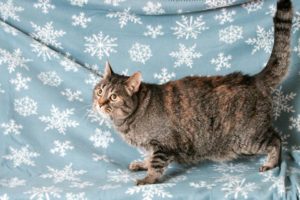
Delilah and Eli are 10-years-old and are brother and sister who are looking for a home together. Delilah is very sweet and loves to be scratched. Eli is a beautiful black kitty. He has silky fur and is quite friendly once he starts to warm up to someone.

This pair will be great in a home where they are given a little time to blossom.

Delilah and Eli are spayed/neutered, microchipped, tested for FIV, and vaccinated. They are at the El Dorado County Animal Services shelter in Meyers, along with many other dogs and cats who are waiting for their new homes. Go to the Tahoe animal shelter’s Facebook page to see photos and descriptions of all pets at the shelter.

Call 530.573.7925 for directions, hours, and other information on adopting a pet.

For spay-neuter assistance for South Tahoe residents, go online.

— Karen Kuentz


Tahoe stormwater systems survive Jan. deluge

By Kathryn Reed

Stormwater systems were put to the test this month, and seemed to handle the onslaught of water without any serious problems.

“It is somewhat of a success story. In Tahoe all the sewer agencies reported a high flow, but they kept it in their systems. With the stormwater we haven’t heard of any problems,” Lauri Kemper with the Lahontan Regional Water Quality Control Board told Lake Tahoe News.

Lahontan regulates and monitors the amount of sediment reaching Lake Tahoe from the various jurisdictions in the basin on the California side, including Caltrans. The Tahoe Resource Conservation District oversees the stormwater.

On Jan. 7 when more than 5 inches of rain fell in some parts of the basin Tahoe RCD measured the highest flows ever recorded at all eight monitoring locations since monitoring began in 2013. 

“During this storm event our Tahoe Valley site, located off Tahoe Keys Boulevard, measured 1.5 million-cubic-feet of flow, nearly 90 percent of the flow that was observed throughout the whole 2016 water year,” Sarah Bauwens with TRCD said in a statement.

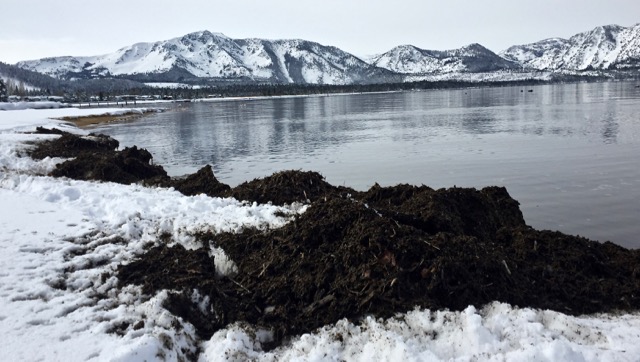
Rich soil covers the edge of the beach at Cove East. Photo/Kathryn Reed

Rich soil covers the edge of the beach at Cove East. Photo/Kathryn Reed

In one storm this month 18 million gallons of runoff was recorded at the TRCD sites. Even more reached the lake through the other pipes.

The Bijou pump area was temporarily clogged, but South Tahoe Public Utility District and the city of South Lake Tahoe worked together to get it functioning properly.

“There were no major incidents of any kind,” City Manager Nancy Kerry told Lake Tahoe News during the thick of the storms. “Many of the investments we’ve made over the last 10 years such as the Bijou erosion control project and others performed exceptionally well.”

One of the good things about strong runoff in the heart of winter when it’s so cold is that fine sediment tends to drop to the lake’s floor relatively quickly. This is what happened in the 1997 storms. Had there been this much runoff in the summer, it might be a different outcome for the effect to lake clarity. This is because when the air and water temperature is warmer that sediment stays closer to the surface, making the water murky and creating a situation where algae can grow.

UC Davis working through the Tahoe Environmental Research Center at Sierra Nevada College regularly tests the lake’s clarity in the winter and summer. The results will reveal in part how the storms this season have affected the lake.

TRCD through its monitoring system analyzes for fine sediment particles, nitrogen, and phosphorus to estimate nutrient and sediment loading from urban stormwater runoff.

Lahontan is still waiting to receive samples taken at various marinas during the storm events. 

“When I look around California we are lucky in Tahoe that we made such a big deal about disapproving development in flood lands and wetlands. We have a lot less infrastructure damage because we have not put infrastructure there,” Kemper said.

Restoration of meadows and stream environment zones is paying off. For rivers and creeks to overflow their banks into meadows is a good thing. That means the ecosystem is working. Much of the sediment in the water is filtered out naturally.

But it’s also normal for Mother Nature to wash away the top layer of soil and carry it downstream. That is why a layer of dirt has been distributed along the beach area of Cove East on the South Shore. It is what was naturally carried out via the Upper Truckee River.


Opinion: You always have to be cutting back

By Joe Mathews

She left us only recently, and already San Mateo has gotten way too leafy.

As I drove through that Bay Area city on the way to my grandmother’s memorial service this month, the bushes off Hillsdale Boulevard were growing far bushier than they used to dare. The trees along Alameda de las Pulgas flaunted branches that hung much too low. Flowers breathed too easily.

Joe Mathews

Joe Mathews

Frances Mathews, who passed away a few months short of her 100th birthday, was generous and unthreatening—in almost every respect. She was a loving wife, beloved mother, popular schoolteacher, proud UCLA alum, leader of parenting classes, churchgoer, wearer of the color purple, and such a klutz that her grandchildren called her Grandma Oops.

But, now that she is in a better place outside the reach of California authorities, I can speak frankly: there was a Hyde to this kindly Jekyll.

Grandma Oops was a harsh pruner, unrepentant about cutting back plants to the nub. If a bushy bush were to appear in her line of vision, she would not let it go untrimmed. It never mattered if the plants were hers, or whether she had any legal sanction to prune. As a boy, I was brought along on pruning raids on Laurel Elementary and Abbott Middle schools, various church gardens, a few street trees, and countless private homes.

The only other Bay Area figure who ever came close to matching her vigilante’s passion for mowing down living things was Harold Francis Callahan, the fictional San Francisco cop played by Clint Eastwood in the movies. Grandma Oops and Dirty Harry shared a philosophy: Give an inch to overgrowth or punks, and civilization will teeter.

At my grandmother’s memorial service, her friend, the Rev. Kibbie Ruth, observed that pruning was spiritual for my grandmother, a way to get to the core of life. Because, as Grandma Oops wrote in one birthday note to me, “if you don’t prune, you can never really grow like you should.”

And she erred on the side of pruning more rather than less. Relatives from Los Gatos to Long Beach cried that she had reduced beloved plants to their stubs. She was unapologetic—and for a reason that should resonate statewide.

Cutting back, whether your target is a plant or a government program, is so extremely difficult that one must be a pruning extremist—if you’re ever going to overcome the human instinct for hewing to the status quo. California could sure use more of that extremism. Hollywood, in the era of Netflix, is overgrown with too many TV shows we never have time to watch. Silicon Valley is a jungle jammed with pointless startups. Old warehouses across our state have been repurposed as storage facilities, for all the things we Californians won’t throw away.

In Sacramento, our state Legislature adds hundreds of new laws a year, and rarely eliminates old ones. Our tax code and budget are incomprehensible thickets of formulas and exemptions. Our state Constitution, with all its guarantees and mandates, makes thoughtful pruning essentially unconstitutional. One of this year’s most important decisions affecting the future of California could be an anticipated state Supreme Court ruling on a challenge to the so-called “California rule,” which guarantees that public employees’ pensions can never be reduced in any way.  

Lack of pruning can have huge costs, and not just in dollars and cents. At the heart of our mounting shortage of housing is thick regulatory overgrowth that makes construction overly time-consuming and expensive.

And it may get even harder to prune properly as our state righteously fights the Trump Administration on multiple fronts. We’re so geared up to protect our people and programs that we may have little time or space to jettison those pieces of government we no longer need.

If Grandma Oops is reincarnated, I think she might come back as one of those consultants that rich people now hire to help them figure out how to get rid of their stuff. As she approached the end, I marveled at how she meticulously disposed of almost everything in her small house, leaving only basic furniture and a few photo albums. I wish I had her pruning discipline. Maybe I could figure out how to work less, or to simplify our home life—currently a mad scramble of children’s classes, sports, and other commitments.

In her later years, Grandma Oops expressed frustration about one living thing that she couldn’t uproot—herself. She had lived too long, she often said, and was using too many of the earth’s resources as she hung on past her prime.

I respected her opinion, but I couldn’t agree. Sometimes in a family tree, you get one branch so special and enduring that you can hardly bear to see her go.

Joe Mathews writes the Connecting California column for Zócalo Public Square.


Calif. bill would let candidates live outside district

By Jim Miller, Sacramento Bee

Recently introduced state legislation would relax voter registration rules, allowing California legislative candidates to live far outside the district they seek to represent.

The change would let candidates live in one place in the state and register to vote and seek office elsewhere – as long as they “hold property, whether by lease or by title” in the district.

The proposed change, if it had been in effect in 2008, could have spared the political career of former state Sen. Rod Wright, who resigned in September 2014 after a Los Angeles County judge upheld his conviction for lying about where he lived. Wright is barred from running for future political office.

Read the whole story


U.S. wine shipments, sales increase in 2016

By Bill Swindell, Santa Rosa Press Democrat

Continuing an expansion that has lasted more than 20 years, U.S. wine shipments grew 2.8 percent in volume last year even as competition increased from cheaper-priced imports, according to industry figures released last week.

Revenue from domestic wine sales jumped 4 percent last year as Americans continued to trade up for higher-priced wines, according to data published by BW 166, a Santa Rosa consulting firm. The price for the average bottle of wine sold in the U.S. surpassed $10 for the first time, a reflection of consumers’ willingness to pay more for better wines.

 U.S. wineries sold a record 383 million cases of wine in 2016, according to preliminary figures released by BW 166.

Read the whole story


Calif. doing away with raised highway marker

By Tony Bizjak, Sacramento Bee

California’s iconic Botts Dot, the bump that warns you’re drifting out of your lane, has reached the end of its road.

After more than a half century of service, the safety device created by Elbert Botts in a Sacramento lab and once described by a state official as a loyal old dog, is expected to be relieved of duty sometime this year. The classic white ceramic dot, a notable innovation in its day, appears to be a bad fit as a lane marker in the emerging new world of driverless cars that rely on cameras, radar and computers to “read” and understand lane lines.

Although automated vehicles can be taught to “see” a variety of lane markings, including dots, federal officials and the vehicle industry say they want more uniformity nationally on lane lines. Given that few states outside of California still employ the original cookie-shaped ceramic Botts Dot, the writing is on the wall.

Read the whole story


Road Beat: Alfa Romeo Giulia Quadrifoglio, escape velocity   

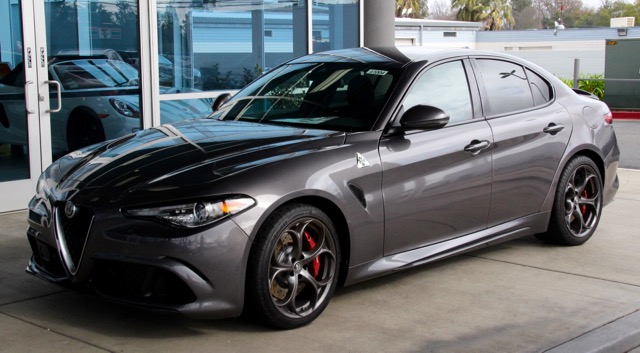
The 2017 Alfa Romeo Giulia Quadrifoglio will have you drooling. Photo/Larry Weitzman

The 2017 Alfa Romeo Giulia Quadrifoglio will have you drooling. Photo/Larry Weitzman

By Larry Weitzman

Besides being capable of super sedan acceleration (0-60 mph times in the mid threes), the experience of driving the new Alfa Romeo Giulia will also help you escape from the mundane and take you to perhaps the twisties of the famed Targo Florio course or maybe Monza, all by driving from your home to work, or even better driving home from work.

It is the second Alfa to come to the United States in about 20 years, the first being the diminutive, sinewy and sexy Alfa Romeo 4C sports car. The new Giulia is a sophisticated, state of the art car designed to grab a market owned by BMW 3s, Mercedes C and E, Infiniti Q50, Lexus IS and some others. It will do it by having the most voluptuous, gorgeous body, the best running gear and the best combination of ride and handling offered in this class of automobile.

Alfa’s dimensions are compact with a length, width and height of 183x74x56 inches on a long 111-inch wheelbase, meaning a usable backseat. Instead of looking like everyone else, the body is all Alfa with its tradition Alfa front end, smooth, curvaceous lines creating perfect proportions. It follows in the footsteps of other great Alfa’s like the 1930’s 8C 2900, a late ’60s early ’70s GTV (a Giugiaro design), the Montreal and the more recent Alfa 8C super car.

When asked about Italian design inspiration, head of Alfa design Lorenzo Ramaciotti said, “Italy has 60 percent of the (western) world artifacts … we have been around it our whole lives.” There is little question Alfa Giulia is the looker of its class and for a lot of other classes too.

Inside may be an even better treat. The instrument panel gives the driver a command position with beautifully done, serious business gauges and a color center stack info screen that magically appears. Instead of a dash push to start button, it’s a big red button located on the fabulous steering wheel. Seating is sublime and gorgeous as well and rear seating which was tested by my friend Rich. He said it is an easy six-hour space with copious room and comfort.

Now to the best part, the drive. In as few words as possible, simply the best. Performance is outrageous. The few times I got into the throttle is was astounding, probably the quickest car I have ever driven, which includes Z06 Corvettes and Vipers. I suspect 0-60 times as above for the Quadrifoglio model which has RWD, a turbocharged, direct injected 2.9L V-6 of 505 hp. For the entry model the engine is a 2.0L turbocharged, direct injected inline four with 280 hp. It is also RWD with an AWD option. Both models have a superb eight-speed auto cog swappers. Expect 0-60 mph times of low fives for the 280 hp four cylinder. Why I didn’t mention some other allegedly competing cars above in the entry luxo class is because many of them are front wheel drive.

In hitting the throttle, the response was instantaneous, hit it hard and the growl it makes will give you goosebumps.  During mild throttle applications, which will still bring on startling acceleration, it is reasonably quiet. Driving in traffic, it was a dream, extremely smooth and sharp. Steering is quick, crisp and very accurate as you would and should expect from a world class super sedan. It also gives your four distinct driving modes as well to suit your style, from eco-mild to full on track. They work and do change the character of the car. This car needs to be driven to be fully appreciated.

I would suspect that the standard, non-Quadrifoglio, should be within 99 percent of the Quadrifoglio in almost all driving except for acceleration and track performance, but the base model is still almost world class quick, anyway, with an Alfa claimed 0-60 mph time of 5.1 seconds which bests the competition smartly.

Now it even gets better. The entry level Giulia starts at just $37,995 and a Ti or AWD only adds two grand. Sounds like a deal. For the Quadrifoglio, the price of admission goes up to about $72,000. But remember, it blows the doors off anything in its class and then some. And then there is the Alfa styling, nothing else comes close. This is definitely not a cookie cutter entry level luxury vehicle, that looks like every other entry luxo ride. It has among all its other attributes, panache. Neillo is the dealer with the Franchise for Alfa in Sacramento. It’s worth the drive.            

Larry Weitzman has been into cars since he was 5 years old. At 8 he could recite from memory the hp of every car made in the U.S. He has put in thousands of laps on racetracks all over the Western United States.