Amgen cycling route includes Luther, K’Grade

When the elite female cyclists return to Tahoe this May they will pedal the highest summit in race history — 7,740 feet.

Luther and Daggett passes will be part of the route for Day 2, while the inaugural leg will be riding the 72 miles around Lake Tahoe.

The Amgen Breakaway from Heart Disease women’s race is May 11-14. 

Stage 1 starts at Heavenly Mountain Resort, passing through South Lake Tahoe, Emerald Bay, Tahoe City, Incline Village, and back to Heavenly.

The stage will feature two sprints, 5,300 feet of elevation gain and two Queen of the Mountain challenges where riders vie for a separate jersey by completing the climbs in the lowest cumulative time.

The finish for both stages is Ski Run Boulevard via Needle Peak via Wildwood.

Day 2 is 67.1 miles. Racers again start at Heavenly. They will go through Meyers, over Luther Pass, into Hope Valley along the Carson River, around Washoe Reservation, then along Highway 88 before bending west onto Foothill Road, over Kingsbury Grade (an 8-mile climb that gains 2,700 feet) and ending at Heavenly.

The race is sanctioned by Union Cycliste International, denoting the highest level for a non-World Cup event. 


Manzanar — Testament to racism in the U.S.

Not everyone made it out of Manzanar alive. Photo Copyright 2017 Carolyn E. Wright

Not everyone made it out of Manzanar alive. Photo Copyright 2017 Carolyn E. Wright

By Kathryn Reed

INDEPENDENCE – Without touching the barbed wire, it inflicts a wound on my soul.

The raw imagery of Manzanar coupled with my imagination is almost too much to take in. What’s left of this internment camp is a stark reminder of one of the darkest times in U.S. history.

The government sent more than 100,000 Japanese-Americans to what were called war relocation centers. Others would call it jail. The only crime committed was their ancestry.

After Pearl Harbor was bombed, President Franklin Roosevelt in 1942 issued an executive order that removed anyone of Japanese descent – even if they were born in the United States – to the camps. It was forced incarceration. Most lost their homes, businesses and worldly belongings all because they looked different than the white power structure.

Guard towers were located throughout the property to ensure no one escaped. Photo Copyright 2017 Carolyn E. Wright

Guard towers were located throughout the property to ensure no one escaped. Photo Copyright 2017 Carolyn E. Wright

They were finally allowed to leave the camps in November 1945, three months after World War II ended.

Manzanar is a juxtaposition with its desolate beauty. The Eastern Sierra peaks – including Mount Whitney – tower over the Owens Valley. They are majestic no matter the season. For the people shipped there they were just another physical barrier. Most of those at Manzanar had come from coastal towns in California.

They had to endure barren conditions. Temperatures in the summer along this outpost on Highway 395 can hit triple digits. It was nothing like what they were used to.

When Manzanar was open there were rows of barracks. Photo Copyright 2017 Carolyn E. Wright

The 504 barracks housed 11,070 people. Privacy didn’t exist – showers were communal and toilets had no barriers. Dust blew through the knot holes in the floorboards. Mattresses were filled with hay.

Looking at the barracks today from the outside it would be easy to say these were nothing more than barns – except people were housed in them.

It was like a little self-contained city in some ways. A driving tour points to where a garden once blossomed, to the various buildings that have long since been demolished. It was row, upon row of substandard housing.

Barracks were crowded and lacked privacy. Photo Copyright 2017 Carolyn E. Wright

Barracks were crowded and lacked privacy. Photo Copyright 2017 Carolyn E. Wright

The first time I went to Manzanar I watched the video in the visitors center. To this day I remember walking out feeling ashamed to be white, ashamed to live in a country that could lock people away because of their race.

When I went back last year there had been improvements to the displays that allowed me to get a better idea of what living conditions were like. Cots fill the barracks. Cloths lines are full of hand washed items. They lived out of suit cases or trunks. There were no closets.

Remnants of the limited recreation at the site. Photo Copyright 2017 Carolyn E. Wright

Remnants of the limited recreation at the site. Photo Copyright 2017 Carolyn E. Wright

A dirt basketball court shows there was time for play amid the travesty.

Scattered about are testimonials regarding the “loyalty questionnaire” they had to fill out. One question asked if the men would serve in the military and if the women would aid the war effort in some other manner. They were being asked to fight for a country that had taken away their freedoms. That irony was not lost on them.

Manzanar was one of 10 war relocation centers. Photo Copyright 2017 Carolyn E. Wright

Manzanar was one of 10 war relocation centers. Photo Copyright 2017 Carolyn E. Wright

More than 130 internees died at Manzanar. One of the inmates who had been a stonemason built a memorial at the cemetery. The literal translation of the inscription means “soul consoling tower,” though some say a better phrase in English would be “memorial to the dead.”

Since 1992 Manzanar has been a National Historic Site operated under the National Park Service. It’s one of those places every U.S. citizen should go to – especially white ones. We can’t forget our history, lest we repeat the evils of the past.


Opinion: I’m still talking about my incarceration

By Chizu Omori

I am a member of a once despised minority group, American Japanese, who spent three and a half years incarcerated in an American concentration camp during World War II. Although that ordeal ended 72 years ago, the impact of that experience on my life and its broader implications for American society resonate deeply to this day.

In 1941, at the beginning of the war, roughly 10 percent of the adult “alien” men (Japan- born persons being ineligible for citizenship) were picked up by the FBI as potentially dangerous and interned by the Justice Department, effectively robbing the community of leadership. We had been under surveillance for quite a while, and these men were singled out. My father, who was an alien, was not picked up, though many of our friends were. No one was convicted of a crime or act of sabotage, though many were held for years in captivity.

I was a citizen by birth, but the distinction meant nothing at the time. My entire family—my parents, two sisters and I—were sent to Poston in southwestern Arizona, geographically the largest of the 10 camps where American Japanese were held. At the time, I had just turned 12. By the time we were permitted to leave I was 15.

We, along with 120,000 others, spent the better part of four years in desolate areas where we were monitored, our movements restricted. We ate in mess halls, and our tar paper barracks were so flimsy I remember wind and dust storms so strong that roof tops were torn off, debris flying around like crumpled paper.

Perhaps even more of a shock to me than the prison-like conditions was the fact that for the first time in my life I was living totally surrounded by others of Japanese descent. In my early school years, most of my classmates were white, with a scattering of Mexican American kids. Although I was one of the few American Japanese in my small town, I never experienced any prejudice there. But at Poston my farm upbringing contrasted sharply with the sophistication, manners, and clothes of the American Japanese kids from Los Angeles and other cities.

Here we were, all locked up together, doing our best to be “normal” teens. My mother disapproved of the camp’s faster growing-up process, driven by the city kids. She wasn’t sure about my going to the parties and dances that were a big part of teen life at the camp, and she did not want me to have a brassiere or wear makeup. I missed my white classmates, my home, my town, and my less-pressured life. I felt like an ugly duckling.

We had the trappings of society like schools, jobs, a camp government, a police and fire department. My father did some wood carving while my mother took sewing lessons, making our dresses. I spent a lot of time reading books from the library. But life was far from normal. The usual social hierarchy was turned upside down, with the elders stripped of power and the young freer to pursue their interests.

It was the pettiness of life in camp that got to me. Almost every aspect of everyone’s life was known to all and this promoted a culture of gossip and rumor mongering, with whispers and speculations about others filling our time. The meanness, the nastiness exhibited, the way we picked on one another, was an ugliness I hadn’t known before. Of course, it was a manifestation of the cramped living conditions, forced idleness, and the insecurity of our situation.

A group formerly known for hard work and pride in our accomplishments was reduced to committing little acts of rebellion aimed generally at the government and administration who were oppressing us. People “stole” wood scraps to make furniture and pilfered food from the mess halls. Many did not feel that manual work was worth doing and slacked off, held strikes, and quit their “jobs.” My father “borrowed” a tractor and took a mob of kids to the Colorado River, a couple of miles from the camp.

I was too young and naïve to understand the bigger picture, but the smaller world I inhabited was beset with contradictions. In eighth grade, a white school teacher from Massachusetts ordered us to memorize a Marc Antony speech from Shakespeare’s “Julius Caesar”. “Friends, Romans, countrymen, lend me your ears,” it began. “I come to bury Caesar, not to praise him. The evil that men do lives after them; The good is oft interred with their bones.” We labored mightily to master those lines and dozens more. But, alas, most of us had trouble doing it, and she castigated us as ignorant, lazy, know-nothings.

There were those, particularly older men, who listened to Japanese propaganda broadcasts on smuggled-in radios. Reports of Japanese victories would elicit some cheers. Clumps of men would discuss the latest “news,” sneering at those who didn’t believe, severely criticizing those who remained loyal to the U.S.

Our community was caught up in this international war at a particularly sensitive period. My parents’ generation were still culturally old country. Some, like my mother, never learned to speak English. Their children, including me, were rapidly becoming Americanized. I joined the Girl Scouts and edited the junior high newspaper, the Desert Daze.

In prewar times, it was customary to send children to Japanese school because many believed that eventually they were going to return to their home country. In some places, it was a Saturday-only class, but in my case, we attended an hour of Japanese lessons each day, after American school, and our teachers were brought from Japan. I perfected my calligraphy and reading and writing, but the authoritarian style and emphasis on obedience went against what we were learning in the American school. Even though most of us spoke Japanese at home with our parents, we weren’t interested in it. English was becoming our main language.

These intergenerational conflicts, typical of the American immigrant experience, intensified in the camp. In the beginning, because no Issei (immigrant generation) were allowed any leadership roles in the camps, the block managers and elected members of the camp councils were all young people who had been born on American soil. This powerlessness of the older men was manifest in continuous grumbling about how callow and ill-prepared for leadership the young were.

A call by the Japanese American Citizens League, (composed of young men and women who acted as the liaison between the people and the government), to allow young men to serve in the American military to prove their loyalty, provoked intense conflict. I had no brothers, but I know that my parents thought that to send our youth to fight for this country, the very country which had imprisoned us, was absolutely unacceptable. I had cousins who “resisted”, refusing to comply with draft orders, and I also had an uncle who served as an officer in the army, fighting in Europe.

These divisions in the camp were reflected in my family. Several years into our incarceration, my father decided that he would apply for repatriation. He had had enough of the mistreatment, feeling that prospects would be better in Japan where the family had some property. I was astounded and angry. America was my home and I knew that I was not Japanese. I had no interest in going to Japan. I’d seen enough of the patriarchal, authoritarian style of Japanese society in my own family and others to know that I didn’t want to be a Japanese woman, subservient and under the control of men.

I fought with my parents, even writing letters to magazine editors, but nothing I did would change their minds. As the war wound down I watched as friends left, moving to eastern parts of the U.S. and then back to the West Coast. I was feeling trapped. But when Japan was defeated, my father learned that there was nothing to go back to. He changed his mind and we resettled in Oceanside.

For the rest of my father’s life, we never talked about the camp experience in a serious way. It was too painful. He started farming again, but wasn’t very successful. Two years later my mother died of bleeding ulcers. My father became more passive and quiet.

For my part, I was relieved that the ordeal was over and determined to put it out of my mind. I went to college, married a white man, raised a family, lived mostly in white society. I protested the Vietnam War and was active in the civil rights movement. And in the course of these activities, I began to think about my own background.

The wars against Korea and Vietnam made me very aware of American attitudes toward Asians, and the topic of camp came up from time to time. I ran into a therapist at a party who questioned me about my experience and I brushed it off as not very important. But she pressed on, telling me how formative those early adolescent years were, that I should reexamine those times. This stuck with me, and when a movement for redress began to take shape, I joined in and worked at the legislative level and as a named plaintiff, in a court case that went to the Supreme Court.

I learned that the most damaging event that occurred in the camps was a so-called “loyalty questionnaire” administered in 1943, mandatory for everyone 17 and older. It was used to separate the “loyal” from the “disloyal”. It was a poorly designed instrument, resulting in divided families, friends. On the question of agreeing to serve in the American military, to say no was to automatically designate “disloyalty”. My cousins said no and were charged with being draft dodgers. A sympathetic judge fined them one penny.

After the government turned the camp at Tule Lake into a segregation center for all “disloyals” and troublemakers, I watched friends loaded on to trucks to be taken there. By the flimsy logic of the day, our family should have been sent there as well—I never learned why we were not. Perhaps a fortunate oversight kept us out.

The government seemed hell-bent on tarnishing all of us as aliens—and enemy aliens at that. How could we remain “loyal” to a country that had held us captive for years, impoverishing us in so many ways? How were we to respond to these humiliations and victimization? We were expected to disallow our Japanese heritage and submit to the demands of our captors. And we did. But it left us with a badly damaged community, an ever-present split between the “loyals” and “disloyals”, and a deep understanding about how vulnerable we were.

Ironically, we were very good at adapting and melting into the American middle class, earning the label of “model minority.” In my own case, I lost my primal language, distanced myself from the American Japanese community and for many years didn’t look back. We paid a heavy emotional price, and the issue of identity has always dogged us: can we truly be American?

It’s been a long time since World War II and one would think that Poston would be a fading memory, but it is not. I have made pilgrimages to Tule Lake, seeking a better understanding of our history. Though I have spent my years in white society and my children are half white, I am certain that given particular circumstances, I could be targeted again for my

political views, ethnic background, for my religion or being a member of a group identified as other.

I am not bitter, but I remain quite angry. I am a liberal, a believer in equality, but I am also a cynic. I don’t think that our founding fathers really meant to extend equality to everybody, but the words and sentiments remain part of our Constitution. The struggle for our ideals continues and it is necessary to remind us about what happened to me and 120,000 other Americans because without that memory, it could easily happen again.    

Chizu Omori is a freelance journalist and co-producer of the documentary “Rabbit in the Moon” with her sister Emiko Omori, chronicling the WWII internment of Japanese Americans.


Storm system should push out inversion layer

Mount Tallac stands tall above the inversion layer Jan. 30 as seen from Kingsbury Grade. Photo/John Gomez

Mount Tallac stands tall above the inversion layer Jan. 30 as seen from Kingsbury Grade. Photo/John Gomez

The inversion layer that has created fog at lake level should be moving on Tuesday.

Pockets of sun and fog were the norm on the South Shore Monday. The fog returned tonight, making driving at lake level a bit sketchy.

As the next storm system heads toward the basin, the inversion layer should lift.

Rain is expected Wednesday and will be here through Friday, according to the National Weather Service in Reno.

— Lake Tahoe News staff report


EDC judge hasn’t worked in nearly 6 months

Updated Feb. 4:

The family of the judge sent this statement today: “Judge Brooks suffered a cardiovascular event last summer. He has not been medically cleared to work at this time and the family greatly appreciates all the caring concern that has been expressed by the public regarding this unfortunate event.”

—–

By Kathryn Reed

No one is saying why El Dorado County Superior Court Judge Nelson Brooks has not been to work for nearly six months.

Brooks did not return a call to Lake Tahoe News.

Nelson Brooks

Nelson Brooks

Suzanne Thurman, court coordinator, told LTN, “He is out on leave.” She did not know how long he would be out of work.

The leave started Aug. 8.

Since then the county has relied on the assigned judge program through the Judicial Council, the reciprocal agreement with neighboring courts and having local judges fill in for Brooks.

Brooks was first appointed to the bench by Gov. Arnold Schwarzenegger in 2009, and was elected a year later to a six-year term with more than 75 percent of the vote. He was re-elected in a bitter battle in June 2016. He had 58.53 percent of the votes, while his opponent Roland Thiemann had 41.16 percent. The race garnered statewide scrutiny because it is almost unheard of for a sitting judge’s colleagues to support a challenger.

Even though Brooks isn’t working, he was still sworn in this month for another term. And he is still collecting his full paycheck — $189,041 — at taxpayers’ expense.


Calif. looks to build $7B legal pot economy

By Michael R. Blood and Don Thompson, AP

SACRAMENTO — The future of California’s legal marijuana industry is being shaped in a warren of cubicles tucked inside a retired basketball arena, where a garden of paper cannabis leaves sprouts on file cabinets and a burlap sack advertising “USA Home Grown” dangles from a wall.

Here, in the outskirts of Sacramento, a handful of government workers face a daunting task: By next year, craft regulations and rules that will govern the state’s emerging legal pot market, from where and how plants can be grown to setting guidelines to track the buds from fields to stores.

Getting it wrong could mean the robust cannabis black market stays that way — outside the law — undercutting the attempt to create the nation’s largest legal marijuana economy. The new industry has a projected value of $7 billion, and state and local governments could eventually collect $1 billion a year in taxes.

California is “building the airplane while it’s being flown,” lamented state Sen. Mike McGuire, a Democrat whose sprawling Northern California district includes some of the world’s most prized pot fields.

He questions if the state can meet January deadlines to create a coherent system that accounts for the loosely regulated medical marijuana industry, now two decades old and developing its own rules, while transforming the enormous illegal market into a legal, licensed one.

“It’s going to take us 10 years to dig out of the mess we are in,” predicted McGuire, referring to the unruly market, legal and not.

It’s likely that tens of thousands of people and businesses will need licensing. The job of overseeing the industry touches on issues from protecting water quality for fish in streams near pot grows, to safely collecting hundreds of millions of dollars in taxes from businesses that often operate in cash.

Inside the former arena, Lori Ajax, the state’s top pot regulator, acknowledged the challenges but said the state can, indeed must, be ready on Jan. 1 when California is required to issue licenses.

“We’re small but mighty,” she said of her staff of 11 full-time workers spearheading the project.

The new law calls for nearly 20 different types of licenses, including permits for farmers; delivery services that will take pot to a buyer’s front door; testing labs; distributors; and dispensary operators at the retail level.

Part of the job heading toward the start of next year falls to other agencies, including the Food and Agriculture Department, which will issue licenses for cultivators.

In November, California joined a growing number of states in legalizing recreational marijuana use for adults. In general, the state will treat cannabis like alcohol, allowing people 21 and older to legally possess up to an ounce of pot and grow six marijuana plants at home.

The law kicks in Jan. 1, 2018, but many communities already turn an indifferent eye toward pot smoking and local cultivators.

Earlier this month, Gov. Jerry Brown proposed spending more than $50 million to establish programs to collect taxes and issue licenses while hiring dozens of workers to regulate the industry, a figure some say is too low. His office stresses that one regulatory framework is needed, not separate ones for recreational and medical cannabis, even though there are laws for each that could duplicate costs and confuse businesses.

One of the new law’s requirements calls for the state to develop a computerized system to track cannabis, sometimes called “seed-to-sale” monitoring. It’s envisioned that scanners will be used to keep tabs on pot as it moves from the leafy raw product to street-level sales.

McGuire, however, projects it could take much of this year for the state to evaluate and hire a company to do the work, making it questionable if a functioning system could be in place when legal sales launch in January.

Attorney Aaron Herzberg, a partner at CalCann Holdings, which leases property to cannabis operations, called the governor’s funding only a starting point. He doesn’t believe there’s enough time to get a regulatory system in place by January.

“You are always going to have a black market,” he said. To make the new economy work, “you have to reduce the black market to tolerable levels.”

With the rules in development, there are concerns that cottage-industry growers could be driven out by corporate-type businesses, much the way large-scale agribusiness doomed family farms in the Midwest.

State Treasurer John Chiang, who is running for governor, has asked President Donald Trump for guidance on how the state’s marijuana industry can participate in the nation’s banking system, while pot remains illegal under U.S. law.

Legislators were to hold a hearing Monday on whether the state can meet the January deadline.

Ajax, whose agency is an arm of the California Department of Consumer Affairs, is well-versed in controlled substances. Six badges she carried while rising through the ranks as an agent with the state Department of Alcoholic Beverage Control are on display in her sunny, corner office.

Along with her extensive experience, she brings a sense of humor to the job. Her office decor includes a psychedelic-style painting of a 1960s hippie wearing a peace symbol necklace with a marijuana plant, joints and a bong.

It’s inscribed by the artist to the “new czarina of weed.”

“We’re confident that we can get this accomplished,” Ajax said.


FEMA assessing Nevada storm damage

Nevada and federal officials began assessing storm damage on Jan. 30 to determine if FEMA funding will be made available to the state.

The counties affected include Douglas, Washoe, Carson City, Lyon and Storey. The Pyramid Lake Paiute Reservation is also being considered.

After officials look at the damage it is up to Gov. Brian Sandoval to determine whether to declare a major disaster. If he does, then it goes to President Donald Trump for his approval. If that is granted, then FEMA would allocate funding to cities, counties and schools.

Up to 75 percent of damage repair costs is possible.

— Lake Tahoe News staff report


Immigration ban unpopular with Nev. lawmakers

By Seth A. Richardson, Reno Gazette-Journal

Republican President Donald Trump’s executive order banning immigration and refugees from seven Muslim-majority countries continues to be unpopular with the public and lawmakers.

Trump first proposed banning all Muslims from entering the country during the campaign, but few believed he would actually follow through on the plan. Even lawmakers who supported him scoffed at the idea.


While many lawmakers – especially Republicans – have remained mum on the order, Nevada’s delegation has largely condemned the move.

Read the whole story


Snippets about Lake Tahoe

·      South Lake Tahoe Friends of the Library is hosting a books sale March 18 at 10am. The sale will have hundreds of previously read and some new books, movies and music. Members get in an hour early. The library is at 1000 Rufus Allen Blvd.

·       Tahoe Maritime Museum is looking for people with tattoos with a nautical theme or deep Tahoe connection. For more info, email Barbara@tahoemaritime. org.

·      Tahoe Coalition for the Homeless is hosting an open house Feb. 22 from 4-6pm at the warm room, 2179 Lake Tahoe Blvd., South Lake Tahoe.

·      Incoming Placer County Sheriff Devon Bell has appointed Capt. Wayne Woo undersheriff effective Feb. 26.


When an avalanche comes knocking

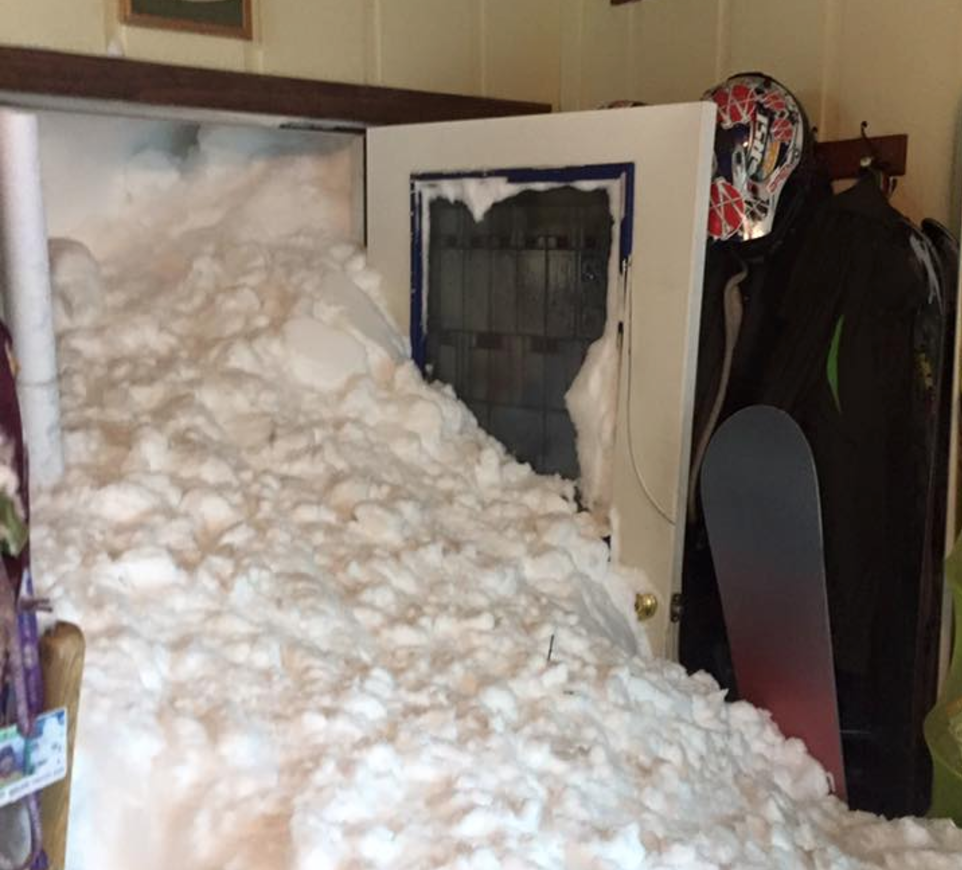
A wall of snow at the Siig's house in Alpine Meadows on Jan. 10. Photo/Steven Siig

A wall of snow at the Siig’s house in Alpine Meadows on Jan. 10. Photo/Steven Siig

By Melissa Siig, Moonshine Ink

On the morning of Jan. 10, little did I know that by the end of the day I would have one of the most famous doorways in the country. But that’s what happened when an avalanche slammed into the front of our house, and the picture we took of our mudroom filled with snow went viral.

Welcome to life in an avalanche zone.

Living in Alpine Meadows’ Avalanche Zone is like living anywhere else in Tahoe, except when there is major snowfall. Then the mountainside across from our house, which separates Squaw Valley from Alpine Meadows, begins to look different. It begins to look ominous. I stare at it and pray: please be kind. Please be stable. Please don’t slide into our home.

Read the whole story