EDC offering free caregiving classes

The El Dorado County Health and Human Services Agency, Family Caregiver Support Program is presenting a free Aging & Caregiver Mini Series on the West Slope.

The educational, three-part series will be on July 24, July 31 and August 7 from 2:30-4pm at the Greenwood Community Center located at 4401 Highway 193 in Greenwood. The series will provide instruction and support for people who care for or plan to care for a family member or friend aged 60 or older.

Series topics include: Effective Communication Strategies, Advanced Health Care Directive vs. POLST, and Grief, Palliative Care and Hospice. 

Participants may attend one or all of the classes. The classes are free, although donations are accepted.

Call 530.621.6192 to register or for questions.


EDC supe candidate spews hatred, bigotry

By Kathryn Reed

A business with the same SS logo used by the Nazis, posing with the Confederate flag and using it in another business, slamming gays and immigrants, saying there is no such thing as a transgender, and belonging to an outlaw motorcycle gang.

The above describes one of the candidates on the June 5 ballot for District 5 El Dorado County supervisor.

Kenny Curtzwiler is divisive for a lot of reasons. Often it’s not about his dark side, but more his assertions about myriad topics of which he professes to be well-versed but is often ill informed. Lake Tahoe News had to stop publishing his comments years ago when South Tahoe Public Utility District was his pet target because it required a correction nearly every time he hit send.

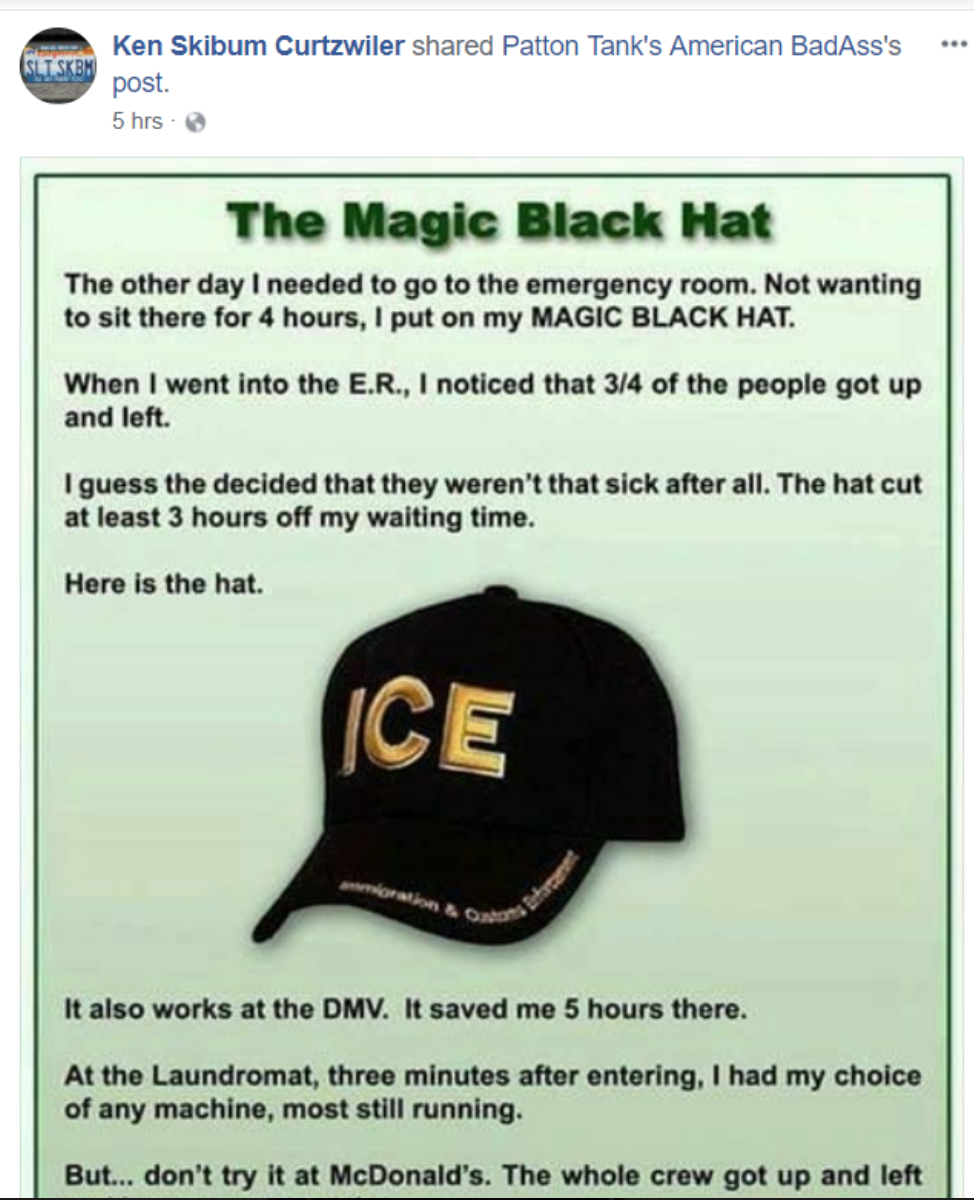
There was a time when Curtzwiler’s Facebook page was full of hate. Much it has been scrubbed, but there are still inflammatory opinions there. It is his right to believe what he wants and to even write what he wants when it’s opinion and not stated as fact. It is also the public’s right to know as many facets of a candidate as possible.

A Facebook post from Feb 3, 2017, says, “If the Black Panthers can have an exhibit celebrating their heritage in Oakland why can’t the Confederates have an exhibit celebrating their heritage in South Lake Tahoe?? Don’t get your panties in a bunch people, it’s just a question?”

Another post (date unknown) Curtzwiler posted a Fox News link with the headline “Democratic Rep. Frederica Wilson: White House ‘is full of white supremacists.’” Curtzwiler wrote: “Ok. I can live with that.”

This is the same person who when unsuccessfully running for supervisor in 2014 defended having said, “Yes I do collect unemployment on your dime and enjoy every powder day and have absolutely no regrets or ashamed of what I do.”

Curtzwiler works during the summer, then collects unemployment in the winter to help fund his “ski bum” lifestyle. At the time he told LTN in defense of his actions, “My company is a corporation and I am an employee of the company. I receive a paycheck and pay into EDD.”

This philosophy is in conflict with other posts on Facebook where he told someone to give up their citizenship and become an immigrant so they’d get kickbacks from the government faster.

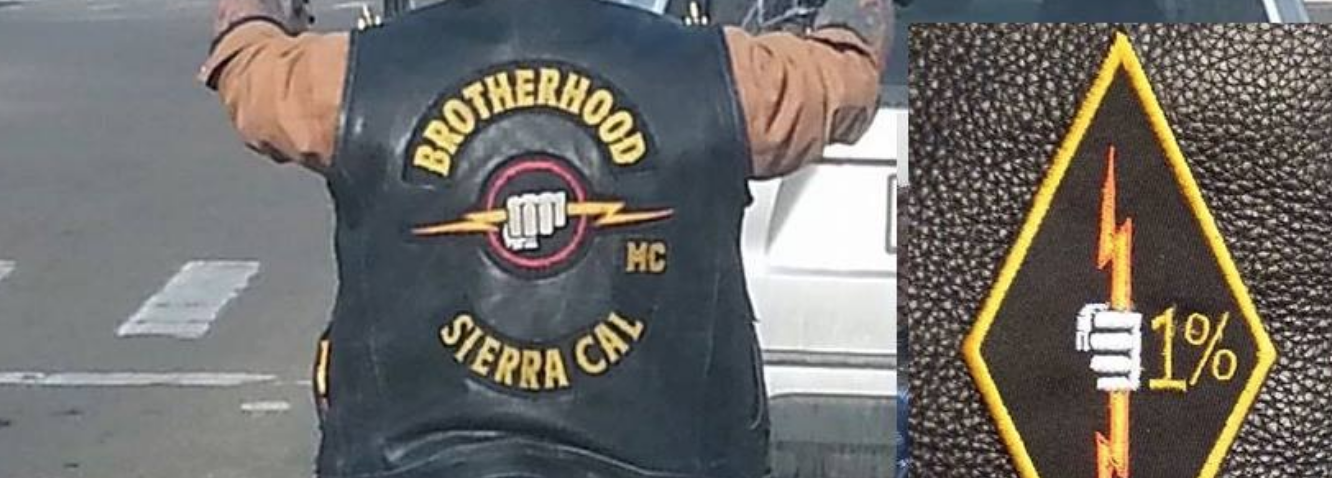
From the Brotherhood motorcycle gang’s Facebook page.

On May 23 Curtzwiler emailed Lake Tahoe News stating, “I understand there are some questions being raised about my affiliation with a certain club. Rather than go through third parties you can ask me and if I feel the question is relevant rather than looking for dirt I will answer it.”

He could only have been alerted to this fact from the South Lake Tahoe Police Department because that is the only entity this reporter called regarding Curtzwiler’s affiliation with the Brotherhood motorcycle group.

The Brotherhood on its Facebook pages calls itself part of the 1 percenters. This designation, according to Police Chief Brian Uhler, puts them in the same category as the Hells Angels. Uhler also called the Brotherhood a gang.

While the local cops have not had any issues with members of the Brotherhood for a few years, drugs and assaults are part of their past.

Curtzwiler, according to Uhler, claims not to be part of the gang anymore. But with most gangs it’s not possible to just walk away. In other words, once a member always a member even if you don’t fly the colors.

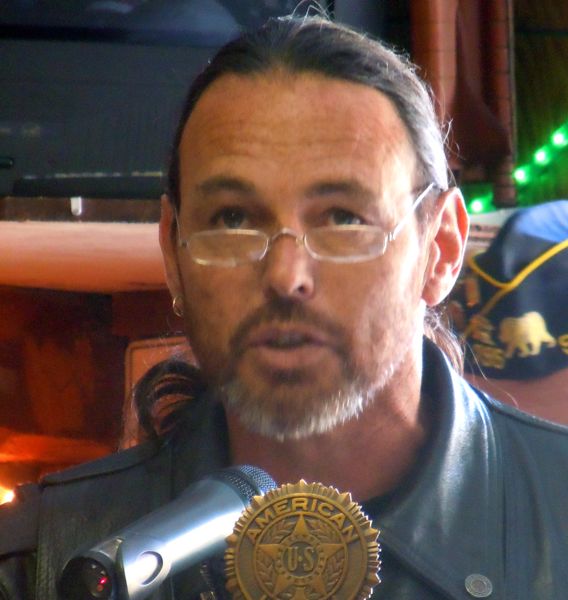
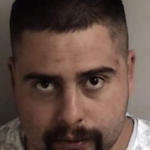
Kenny Curtzwiler

Lake Tahoe News on May 27 emailed Curtzwiler a series of questions with the deadline being May 29. No response.

Here are the questions:

1.     When did you first join the Brotherhood motorcycle group and why?

2.     What is your affiliation with them now?

3.     This is a self-described 1% motorcycle gang. The police describe it as a gang. Comment?

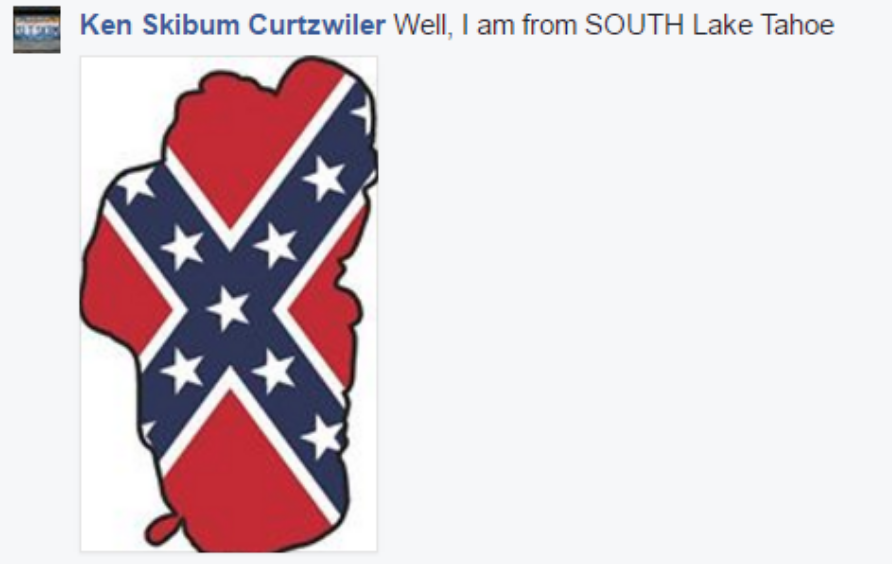
4.     On social media you have posed with a Confederate flag and have one of your Ski Bum logos as a Confederate flag. Why? What are you trying to say? Most people see this as a symbol of racism. Do you? Why or why not?

5.     On social media you have supported white supremacists, the KKK and Nazis. Why?

6.     Your former business Lake Tahoe Custom Cycles had a logo of two S’s. The same logo as the Nazi Schutzstaffel, better known as the SS, of which the Gestapo was part of. Any comment?

7.     On social media you have come out against gays and have said there is no such thing as a transgender. Why do you have hatred toward these people?

8.     Why are you against immigrants?

9.     How do you believe someone with such hatred toward so many groups of people will be able to represent those same people?

10.  Why all the hatred?

Curtzwiler in 2012 and 2017 applied for a concealed weapons permit with the El Dorado County Sheriff’s Department. He was denied both times.

“Sorry, that information is not releasable,” Lt. Bryan Golmitz told Lake Tahoe News when asked why Curtzwiler was not given the permit.


Opinion: A California-Texas summit

By Joe Mathews

To: Governor Jerry Brown of California; Governor Greg Abbott of Texas

From: Joe Mathews

If North and South Korea can have a peace summit, why can’t California and Texas do the same?

Joe Mathews

The United States desperately needs its two biggest states to figure out how to keep the country together.

Sure, you are different places. Texas is the cheap, lightly-regulated, freedom-loving counterpoint to California’s progressive, cultural, and technological powerhouse.

But you have one big thing in common: You’re both nation-sized places (California has 40 million people and the world’s fifth largest economy; Texas has 28 million and the world’s 10th largest economy) stuck in a giant country whose leaders are intent on dividing it.

The D.C. business model for elections depends on ever-greater polarization of the American electorate. So national politicians now run the government as a spoils system for their donors and politically favored demographics.

As a result, California and Texas, despite their differences, share a common enemy: federal power.

For a century, whichever party controls the White House has seized more authority for the U.S. government. Recent presidents of all stripes have ruled increasingly by executive order. Often this dictatorial federal power has been aimed at your two states.

By now, the drill is familiar. A Democratic administration imposes policies that run contrary to Texas’s conservative preferences. And so Texas fights and sues constantly. Now that Republicans are in power, it’s California’s turn to be targeted for its progressive policies—and to tie up the federal government in dozens of lawsuits. The New York Times recently called this a legal civil war.

All this fighting takes time and resources away from your states’ efforts to improve the lives of your citizens. And the resentments create internal divisions. Both of your states have movements seeking secession from the United States.

The good news: together, the two of you can break the cycle.

Start with a peace summit. The goals of the talks should be twofold. First, for both states to reaffirm their American-ness and commit to peaceful coexistence.

Second, for both states to work together to reduce federal power, and enhance the independence of states and their local communities.

This must go beyond reaffirming the U.S. Constitution’s 10th Amendment, which reserves for the states the powers not given to the federal government. California and Texas are now so big that they need more explicit autonomy—in taxation, regulation, environment, health care, and immigration—so that they can choose their own destinies without interference.

The D.C. Mandarins will call this a revolution. So be it. California and Texas must declare that this is not the United States of 1789, with 13 states and 3 million people. Our country of more than 320 million is simply too big to be governed from Washington. Indeed, the best argument for greater state autonomy is a democratic one. Our states are far more democratic than the federal government, which has a presidency sometimes won by the loser of the popular vote, a U.S. Senate that defies equal representation, and bureaucracies that resist accountability.

A concerted effort to demand greater autonomy for both states— pursued jointly through politics, lawsuits, and even constitutional amendment—would be healthy. Your states wouldn’t be able to blame the federal government for your own follies. Instead, California might have to confront how its oppressive environmental regulation makes building sufficient housing impossible. And Texas might have to face how its lack of planning puts its people in flood plains in the path of hurricanes.

To get the talks started, California should immediately revoke its counterproductive ban on government-funded travel to Texas. Yes, the Lone Star State has discriminatory laws on adoption by LGBTQ families, but how do you change minds if you can’t meet with people?

Each state offers places where a visitor from the other would be comfortable. Why not start the talks in Austin, a California chunk in the heart of Texas, where Apple employs more than 6,000 people? In California, Gov. Brown could take Gov. Abbott to oil-rich Bakersfield for a meal at  Wool Growers, which serves the cuisine of the Basques—a people famous for fighting for sovereignty.

I’m not expecting you to produce the political equivalent of “Pancho and Lefty,” the joint album from California’s Merle Haggard and Texas’s Willie Nelson. (Though bringing Willie to the summit is not a bad idea.) But regular California-Texas summits would remind us that, while we will never be the most cohesive country, our collection of states requires some unity.

And that, in a country as diverse as ours, there may be no peace treaty more powerful than an agreement to disagree.

Joe Mathews writes the Connecting California column for Zócalo Public Square.


Amtrak: Injured passenger likely attempted suicide

By Sam Gross, Reno Gazette-Journal

Amtrak Chief of Police Neil Trugman said Tuesday at a press conference that his department’s investigation is indicating that 22-year-old Aaron Salazar attempted suicide by jumping from his moving train as it entered Truckee.

Salazar’s family fiercely disagrees.

The Portland State University economics student was traveling on Amtrak’s California Zephyr from Colorado to Oregon on May 15, but never made it to his destination. His family believes Salazar, a gay man, was attacked — the victim of a hate crime. But Amtrak police say nothing to suggest that has been found.

Read the whole story


Roommate fight ends with 1 in jail, 1 in hospital

A disagreement between two men who recently moved to South Lake Tahoe ended in a knife fight on Memorial Day.

Edmundo Martinez

Edmundo Martinez, 45, was arrested on May 28 on assault with a deadly weapon charge.

The name of the 23-year-old victim has not been released. According to police, he was in stable condition at Renown Medical Center in Reno after sustaining life threatening wounds.

The incident occurred at the Mark Twain Lodge on Park Avenue.

The two had moved here to work for a cleaning company at Harrah’s-Harveys. While they were roommates at the hotel, they had not known each other before to coming to Tahoe.

— Lake Tahoe News staff report


Feds have long treated Nev. as a dumping ground

By Michael Green, The Conversation

Nevadans can be forgiven for thinking they are in an endless loop of “The Walking Dead” TV series. Their least favorite zombie federal project refuses to die.

In 2010, Congress had abandoned plans to turn Yucca Mountain, about 100 miles northwest of Las Vegas, into the nation’s only federal dump for nuclear waste so radioactive it requires permanent isolation. And the House recently voted by a wide margin to resume these efforts.

Nevada’s U.S. Sens. Dean Heller, a Republican, and Catherine Cortez Masto, a Democrat, have made their determination to block the latest Yucca proposal clear since the Trump administration first proposed resurrecting the project in early 2017.

While teaching and writing about the state’s history for more than 30 years, I have followed the Yucca Mountain fight from the beginning – as well as how Nevadans’ views have evolved on all things nuclear. The project could well go forward, but I believe that it probably won’t as long as there are political benefits to stopping it.

The roots of statewide resentment

Two-thirds of Nevadans oppose this plan, according to a 2017 poll. The state’s experience with federal actions, including nuclear weapons and waste, may help explain the proposed repository’s long-standing unpopularity.

When Nevada became a state in 1864, it had to cede all claims to federal land within its boundaries. This left the federal government owning more than 85 percent of the state, reducing its potential tax base, and angering ranchers who have chafed at federal controls and fees for grazing their livestock ever since.

In 1873, the U.S. adopted the gold standard, reducing the value of silver – large amounts of which came from Nevada, known as the “The Silver State.” After the “Crime of ’73,” Nevadan state leaders dedicated themselves to restoring silver as an anchor of monetary policy, to no avail.

A series of boom-and-bust cycles ensued. Nevadans sought other means of prosperity, including some that other states shunned. In 1897, for example, Nevada hosted a world heavyweight boxing championship when other states refused.

That decision and the state’s declining population prompted the Chicago Tribune to suggest revoking Nevada’s statehood. Similar calls cropped up over Nevada’s permissive divorce and gambling laws.

A magnet for federal projects

Tourism, however, became central to Nevada’s economy. So did federal projects, like Hoover Dam, which enabled Southern Nevada to obtain most of the water it needs to survive.

World War II and the Cold War prompted numerous federal projects that benefited southern Nevada. A wartime gunnery school evolved into Nellis Air Force Base, and a magnesium plant led to the founding of the city of Henderson.

In 1951, seeking a cheaper domestic location for nuclear tests and research, the Atomic Energy Commission chose part of Nellis. Until 1963, the Nevada Test Site was the scene of about 100 aboveground atomic tests, with more than 800 additional underground tests to follow until nuclear testing ceased in 1992.

When aboveground testing began, Nevada cashed in. The governor welcomed the chance to see the desert “blooming with atoms.” Las Vegas marketed the mushroom cloud as a tourist attraction, as well as an atomic hairdo and cocktail. Atomic Energy Commission pamphlets and videos declared the tests to be harmless to those living nearby.

Distrusting government

After learning more about the health dangers associated with nuclear fallout, Nevadans began to trust the government less. Repeated leaks and safety issues at the nation’s first low-level nuclear waste dump, opened in 1962 in Beatty, eventually led to its closure in 1992.

Distant nuclear incidents also stoked concerns. The nation’s worst nuclear accident to date at the Three Mile Island plant in Pennsylvania, as well as the Soviet Union’s Chernobyl meltdown, rang alarm bells.

Separately, some rural Nevadans came to resent federal regulations overall, especially after the federal government increased the Bureau of Land Management’s regulatory powers in the mid-1970s. Their Sagebrush Rebellion sought state control over almost all federal lands within Nevada’s borders and spread throughout the rural West.

The ‘Screw Nevada’ bill

As nuclear testing waned, the federal government scrambled to find somewhere to stow the spent fuel from nuclear power plants that had piled up in 39 states. In 1982, Congress approved a plan for the consideration of sites in Washington, Texas and Nevada.

But five years later, without getting conclusive findings based on those studies, lawmakers voted to consider only one site – Yucca Mountain, about 20 miles west of the dump for less- radioactive nuclear waste in Beatty. The state’s leaders and pundits protested this “Screw Nevada” bill, which they ascribed to the state’s lack of political clout.

Around that time, Nevada created a new state agency to deal with nuclear issues and a state commission charged with warding off nuclear waste. A bevy of new state laws made it harder for federal officials and private contractors to obtain and pay for licenses needed for work on Yucca Mountain, and the state filed numerous lawsuits.

Sena.Harry Reid, a Democrat first elected in 1986, crusaded against the measure. So did his Nevada colleagues in Congress.

To make their case, Nevadans pointed out the safety risks in moving nuclear waste along highways and railroads to their state, and how terrorists might take advantage of that opportunity. They cheered when a “West Wing” episode zeroed in on these dangers.

Reid eventually moved up through Senate ranks as one of the nation’s most powerful lawmakers, serving as the majority and minority leader. When former President Barack Obama took office and had to depend on Reid’s help, he ended funding for Yucca Mountain.

What to expect this time

Obama and Reid are no longer calling any shots, and Nevada’s congressional delegation is more junior than it’s been in decades. The overwhelming bipartisan vote in the House suggests that Democrats may be less interested in protecting Nevada than they were when Reid had so much power in the Senate.

But Heller is up for re-election this year, and his is one of the few Republican Senate seats that Democrats feel confident that they can win in the 2018 mid-terms.

If Senate Majority Leader Mitch McConnell decides that enabling Heller to claim that he saved Nevada from hosting the nation’s nuclear waste will help re-elect him, protecting the GOP’s slim majority, I think Yucca Mountain will be dead again. At least for the moment.

Michael Green is an associate professor of history at UNLV.


Hikes at Spooner Lake to focus on wildflowers

There will be four ranger led hikes at Spooner Lake in June.

This area on of Nevada is home to more than 100 species of wildflowers. 

Park entrance fees are waived for event attendees.

Pets are not recommended and children under 16 must be accompanied by an adult. Dress for the weather, wear sturdy shoes or boots, and bring a hat, water, snacks, sunscreen and insect repellent.

Group size is limited to 12 participants. Register by calling 775.749.5980 or emailing spooner.ranger@gmail.com.

Dates are June 7, June 9, June 13 and June 15. Hikes are from 10ma-noon.


Nevada Supreme Court to rule on Walker River

By Daniel Rothberg, Nevada Independent

In 1902, a rancher by the name of Henry Miller — known as the “Cattle King of the West” — brought a lawsuit against Thomas B. Rickey, a Nevada farmer, through his Miller & Lux land company. The issue was water rights on the Walker River, and the fight between the rival ranchers set up more than a century of litigation over a waterway that originates at the edge of Yosemite National Park in California and flows through Nevada to its terminus, Walker Lake.

The case ended in 1919 with the “Rickey Decree,” which split the river among 151 users.

But that decree spawned a new case in 1924, when the federal government moved to establish water rights for the Walker River Indian Reservation. That docket remains active to this day, and last week, the 9th Circuit Court of Appeals issued a ruling that places a key water rights issue before the Nevada Supreme Court. The question is whether the state, under what is known as the “public trust doctrine,” could reallocate water rights to restore the ecology of Walker Lake even if doing so could harm the existing water rights of upstream farmers and ranchers. The public trust doctrine dates back to the Roman legal system, and it states that governments have a responsibility to preserve and protect natural resources for the public.

Read the whole story


Chautauqua to celebrate historical society’s 50th

Lake Tahoe Historical Society is celebrating its 50th anniversary this summer with a Chautauqua on Aug. 18.

Icons from Lake Tahoe will perform, like D.L. Bliss, George Whittell and Lillian Virgin Finnegan.

The show will be at the Duke Theatre at Lake Tahoe Community College.

Doors open at 5:30pm. There will be food, drink and music.

Audience members are encouraged to come dressed in costume.

The show starts at 7pm. For tickets, call 530.541.5458. The are $50 for museum members, $55 for others.


Paraglider rescued from Mt. Rose

By Anjeanette Damon, Reno Gazette-Journal

Crews rescued an injured paraglider from a mountainside off of Mt. Rose Highway on Monday afternoon.

The man was originally 200 feet below the highway near the Silde Mountain Trailhead, after crashing into the mountain while paragliding, crews said.

Read the whole story