Skiers learn from triggering avi at Elephant’s Back
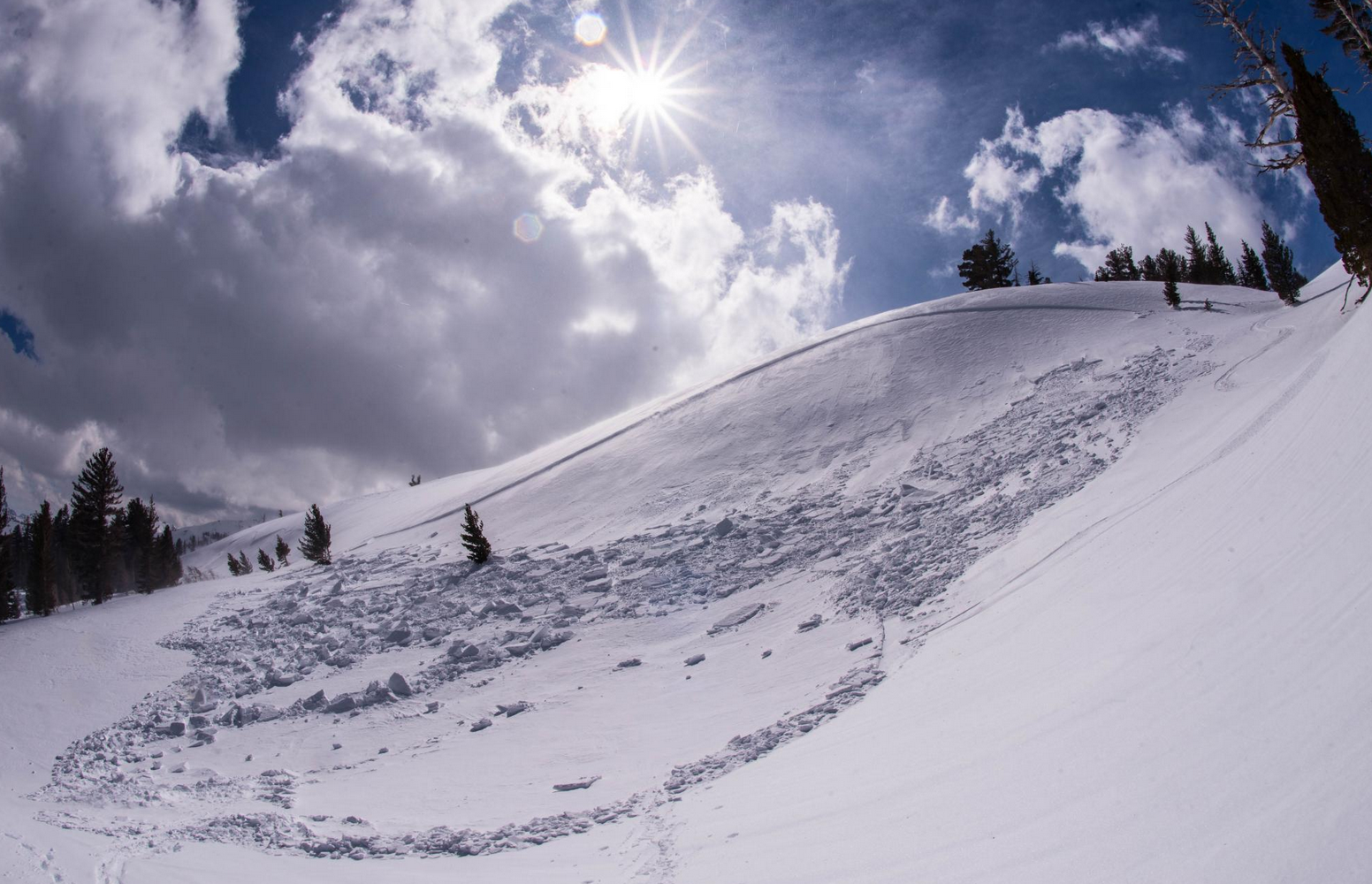
Snow debris from the March 3 avalanche at Elephant’s Back. Photo/SAC

Publisher’s report: This is a report posted by an unknown person to the Sierra Avalanche Center.

By Sierra Avalanche Center

Around noon March 3, my partner and I descended the northeast side of Elephant’s Back in the Carson Pass area. We parked at Red Lake, skinned up along the old road to the pass, then descended on the northeast side of Elephant’s Back, north of the steep chutes coming off the summit.

We observed partly cloudy skies, high winds generally from the southwest and significant wind transport. On the first pitch of our descent, we observed no signs of instabilities in the snowpack — shooting cracks, whoomphing, other avalanches in the area, etc. Prior to starting our tour, we drove to the pass, scoped out the terrain and conditions.

After dropping our first pitch with no issues, we trended east into a drainage south of Elephant’s hump where my partner — who had skied the area a few times — said there would be some great northeast facing aspects that might not have the wind-textured sastrugi and suncrust mix of the higher elevations. We traversed around until we found a nice pitch to descend.

We stopped atop a rollover, discussed a strategy. I would descend the rollover, then stop midway down to shoot some photos of my partner. Due to the avi advisory and the stable conditions over the past week, I felt secure in stopping midslope on a northeast, loading aspect. We were below the area of my greatest concern and had seen nothing to indicate instability, except the wind transport.

I began my descent of the rollover making what I planned to be four turns. The snow was soft windboard. As I went to make my final right turn to set up for a shot, I felt a sense of vertigo. Much like an earthquake where the whole world moves and it takes a second to realize what is happening, I noticed a spray of snow, then realized that I was moving and the entire slope was cracking apart all around me. I shouted “avalanche! avalanche!” then took stock and just told myself to try and stay on top. After a few seconds, the avalanche stopped and I was still standing in the exact position that I had stopped after my final turn. I estimate that I slid a couple hundred feet downslope, close to 100 vertical feet.

It took a minute or so for my partner to appear at the top of the rollover to see what had happened. The high winds prevented him from hearing my shouts.

I sustained no injuries. My partner and I analyzed the situation, had lunch, then skied back to our car for a beer.

Analysis: My partner and I are fairly experienced back country skiers and locals. We’ve been skiing the Sierra for nearly 10 years and have avi certs. We tend to be conservative in our decision making. This morning we awoke, checked and discussed the advisory and changed our objective from Stevens Peak to Elephant’s Back in hopes of avoiding a day of wind and blowing snow on ridgetops.

This turned out to be the right call on the skin up and first pitch of the descent down. The entire day, we were impressed with the winds and spiraling snow devils marching down the lee snowfields of the crest.

After our first descent of the area that most raised concern–just beneath Elephant’s Back–I let my guard down for areas of concern, despite the loading. We traversed out and right, east, until we reached a nice, steep pitch. We communicated my plans for shooting a photo and also the terrain and conditions, agreeing to pitch it out.

However, as I descended, I lost sight of my partner atop the rollover. After the incident, he never heard me shout and didn’t realized that I triggered the slide until we convened below after everything had happened. My partner only saw me after he approached the rollover after some time without hearing my calls to descend so I could shoot and spot.

I feel like we communicated well, checked in with available information prior to our tour and adjusted our plan based on conditions. We skied in a safe, pitched out manner.

We should have never lost sight of each other, even on a small, apparently innocuous feature. My partner and I also agree that we should have also given more credence to the loading that was happening all around us. As we observed the slide path after the incident, we noticed that the crown had all but disappeared after an hour. Rapid loading was occurring on all lee slopes, both above and near treeline in the Carson Pass region.

Be safe out there. This was an amazing learning experience that turned our right. Don’t get complacent as that did factor into the incident. I turned off my more critical brain after skiing the initial areas of concern because I felt like I was familiar with the area, the weather conditions and the situation. I was wrong.




Snippets about Lake Tahoe

·      Barton Health is offering discounts to patients needing a CT scan. The discount is 40 percent for insured patients and 75 percent for self-pay patients if paid in full at or before the time of service. These discounts are also applicable to CTAs, MRIs, MRAs, and any contrast materials used during these procedures.

·      Genoa Cowboy Festival is April 28-30.

·      The Truckee Public Arts Commission has partnered with the Nevada County Arts Council to present Image Nation. A free opening reception will be on March 10 from 5-7pm at the Truckee Community Recreation Center.

·      Help complete a giant 3,000-piece puzzle at Zephyr Cove Library. A puzzle table will be set up in the library on March 11 from 9am-5pm.

·      Sandra Taylor has joined Barton General Surgery. She is a general and trauma surgeon.


LTUSD calls another snow day

As the snow stops to fall on the South Shore, the Lake Tahoe Unified School District has decided to call another snow day more than 12 hours before the decision is usually made

No school on March 6. The district says it is because of the blizzard.


International travelers rethinking visits to U.S.

By Rebekah Sager, Fox News
 
President Trump’s proposed travel ban of citizens from seven majority-Muslim countries is weighing heavily on the tourism industry. Whether it’s individuals who want to see the U.S. or companies planning travel for corporate events, many in the industry are expecting fewer people to visit America in the foreseeable future.

Ally Bolour, a Los Angeles-based attorney who immigrated to the U.S. from Iran as a child in the 1970s, said he has friends overseas who now say they won’t come for a visit.

He added that he is advising his clients not to travel to the U.S. unless they absolutely must.

Read the whole story


Hight takes second in halfpipe at U.S. Open

By Matthew Vanatta, Grind TV
 After an exciting day of competition in the men’s and women’s slopestyle finals of the U.S. Burton Open in Vail on Friday, Saturday looked to be even more exciting with the men’s and women’s halfpipe finals taking center stage.

The pipe was looking pristine Saturday morning for the kickoff of the women’s finals, and the women took full advantage.

Chloe Kim, the 16-year-old super phenom, was the rider to beat rolling into Saturday, but coming in hot on her heels was Elana Hight of South Lake Tahoe. Hight a veteran in the field was coming off of a recent X Games Gold Medal win, making her the most likely competitor to best Kim on finals day.

Hannah Teter of Meyers did not qualify for the finals.

Read the whole story


Study: Humans cause 84% of U.S. wildfires

By Amanda Hoover, Christian Science Monitor

Over the past two decades, humans triggered 84 percent of all wildfires and tripled the length of the fire season, making it a nearly year-round phenomenon under drier, warmer conditions, according to a new study.  

The findings come from a team of researchers at the University of Colorado and University of Massachusetts who examined wildfire data from 1992 to 2012 to conclude that humans had started 1.5 million fires during that period, expanding blazes into new and larger territories. The rest, researchers say, were sparked naturally by lightning.

And even as climate change makes conditions ripe for fostering blazes, the actions of humans in drier, warmer climates are mostly to blame for starting the fires.

Read the whole story


Blizzard conditions impacting Tahoe travelers

Visibility on Highway 28 on March 5 is less than optimal. Photo/LTN

Update: 1:58pm:

Interstate 80 is expected to open at 2pm Sunday to passenger vehicles. There is no estimated time for trucks to be allowed through.

—–

Whiteout conditions are making travel in the greater Lake Tahoe area difficult.

Interstate 80 is closed in both directions because of the lack of visibility. Highway 89 around Emerald Bay is closed. The Carson Pass and Carson Spur are also closed. Mount Rose Highway in Nevada is closed. There is no estimated time when any of these highways will reopen.

Traffic is super slow and congested from the Stateline casinos through South Lake Tahoe. The city of South Lake Tahoe as of 1pm is warning people it is taking four hours to get from the Y to Meyers.

Expect it to be a long drive over Echo Summit, especially when Caltrans holds traffic for avalanche control.

Liberty Utilities has been contending with outages around the region on March 5. Several people on the South Shore were out about 5:40am, and hundreds in the Dollar Point area were affected starting about 4:30am. Both of those issues have been resolved.

Avalanche danger in the Alpine Meadows area is preventing crews from getting to that location to help restore service to the 130 customers affected.

A winter storm warning remains in effect through 4pm March 5.

People on both ends of the lake were shoveling more than a foot of snow on Sunday morning.

The avalanche danger is at the considerable level Sunday.

— Lake Tahoe News staff report


Trauma support group for adults in SLT

Live Violence Free is offering a free adult trauma support group for people who are survivors of sexual assault, domestic violence, child abuse, or other forms of sexual abuse.

The support group offers a confidential space to receive education and support on healing from trauma caused by previous abuse.

The goal of the group is to provide support, psycho-education, coping skills and promote healing after a traumatic experience.

There is no need to sign up for the group—it is confidential and no-cost.

The group meets at Live Violence Free (2941 Lake Tahoe Blvd., South Lake Tahoe) on Wednesdays from 11am-noon.


Grow a high yield veggie garden this season

By Melinda Myers

Spend less time and money while growing a bounty of flavorful vegetables this growing season. Increase your harvest, even in small garden spaces, with proper planning and easy care, high yielding vegetables.

A productive garden starts with a plan, but choosing the best vegetables to grow and where to plant them can be overwhelming.

You can break out the graph paper and pencils to design your garden or turn to technology for help. Many websites and apps provide ready-to-use garden plans or planning guidelines. Places like Gardener’s Supply offers free pre-planned gardens that do the planning for you. 

This plan enables gardeners to grow more than 50 pounds of produce in 18 square feet of space. Photo/Gardener’s Supply Company 

These and other intensively planted gardens require proper soil preparation to maximize productivity. Invest time up front to reduce ongoing maintenance and increase your harvest. Dig several inches of compost or other organic matter into the top 8 to 12 inches of the soil. This improves drainage in heavy soil and increases the water holding ability in fast draining soils. Incorporate a slow release organic fertilizer at the same time. This provides needed nutrients throughout the growing season. Check the label and your plants to determine if a mid-season application is needed.

Maximize your planting budget by starting your plants from seeds. Many gardeners like to start long season plants like tomatoes and broccoli from seeds indoors. This keeps their green thumb warmed up for the season and provides the greatest selection of vegetable varieties. Others buy these plants from their local garden center. Start seeds of shorter season crops like greens, radishes, and squash directly in the garden when the growing season begins. Check the seed packet for specific directions on when and how to plant these seeds indoors and out.

When shopping for seeds, select varieties suited to your climate and known for their disease resistance and high yield. Most vegetables produce best when grown in full sun. Greens and root crops are a bit more shade tolerant.

Once planted, cover the soil surrounding the seeded rows and transplants with a thin layer of shredded leaves, herbicide-free grass clippings or evergreen needles. This mulch helps conserve moisture and suppress weeds. Plus, it improves the soil as it breaks down. You’ll save time and improve your plants’ health and productivity with this one task.

After it’s planted and mulched, you’ll spend minimal time maintaining your garden. But be sure to plan a bit of time to enjoy the big, flavorful harvest your high yield garden is sure to provide.

Melinda Myers has written more than 20 gardening books, including “Small Space Gardening”. 


Talk to center on yellow-legged frogs

Roland Knapp will talk about how 90 percent of the mountain yellow-legged frogs have been disappearing, the ambitious and promising effort under way to recover these frogs, and how this approach may be applied to conserving other threatened amphibians globally. 

Knapp works for the UC Santa Barbara Marine Science Institute based in Mammoth.

The April 6 lecture starts at 6pm at Sierra Nevada College in Incline Village.

Cost is $5.