Tahoe entrepreneur headlines SNC speaker series

Jen Gurecki, CEO and founder of the ski and snowboard company Coalition Snow and the nonprofit social enterprise Zawadisha, will give a talk at Sierra Nevada College in Incline Village on March 22.

Gurecki focuses on bottom-up social change by building resilient communities and cultivating female leadership. Zawadisha provides small loans to rural Kenyan women to help finance their livelihoods, access renewable energy and water products such as solar lamps, rain water tanks, and clean cook stoves, and provide financial literacy, micro-enterprise, and leadership training to their communities as peer educators.

Coalition Snow is the world’s first all-women’s ski and snowboard company, proud maker of “women’s gear that doesn’t suck.”

Gurecki also served as the executive director of the UC Berkeley Adventure Risk Challenge literacy and leadership program, integrating outdoor and academic education for underserved youth.

The free talk starts at 11:45am.


The corporatization of Tahoe’s ski resorts

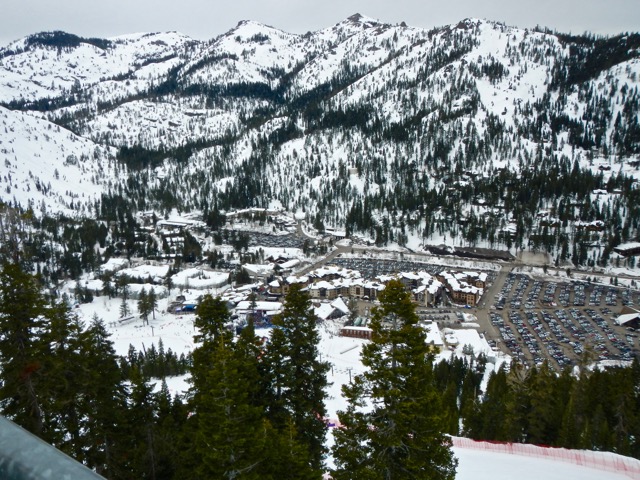
Squaw Valley is now part of the KSL group after being owned by the Cushing family for years. Photo/Kathryn Reed

By Sage Sauerbrey, Moonshine Ink

Ski communities seem to have an especially strong inclination for nostalgia. I grew up with my parents’ tales of my home mountain during the ’80s when the powder stayed fresh for days and getting duct-taped to the local bar was a common occurrence. Lift tickets were less than $50, and almost every resort was independently owned and operated, giving them all a unique flavor. Some might say the golden age of ski culture has long passed, while others claim that the new cheap season passes and resort collective deals have saved skiing, but the simple fact is that these aren’t your parents’ ski resorts any more.

“If you were to take a pic from 30,000 feet looking down, it hasn’t changed a hell of a lot, but on the ground, it is a different world than it was pre-1990, and it is constantly in transition,” said Michael Berry, president of the National Ski Areas Association (NSAA).

“Back then, nobody owned two resorts. Every single resort around the lake was privately owned, and it was independently owned,” said Tim Cohee, owner of China Peak Mountain Resorts in Lakeshore and ski business and resort management program director at Sierra Nevada College. “What everyone has seen is a business that has become largely dominated by corporations. It’s probably at least 40 percent of the national skier attendance that is being seen by probably five or six companies.”

Here in Tahoe the change began about 15 years ago, when Vail purchased Heavenly Mountain Resort and proved just how lucrative the business of skiing can be.

Read the whole story


Douglas County against recreational pot sales

Douglas County is on a path to not allow recreational marijuana.

Planning commissioners on March 14 ruled that retail dispensaries, cultivation, testing, product manufacturing and distribution facilities will not be allowed.

This does not affect the use of marijuana.

Nevada voters last fall approved recreational marijuana. However, Douglas voters were against it. The measure allowed the county to have two dispensaries if it so chose to.

Bob Fehskens of Zephyr Cove, co-owner of High Sierra Cannabis, had hoped for a different outcome because he and his partners had planned to open a shop in Stateline. He was the lone speaker Tuesday supporting recreational pot shops in the county.

Ultimately it will be up to the Board of Commissioners to decide the fate of the sale and production of recreational marijuana in Douglas County.

— Lake Tahoe News staff report


Winter storms unearthing gold in California

By Joe Vazquez, KPIX-TV
 
Weeks of rainy weather across Northern California and the storm runoff through the hills of gold country have triggered a new gold rush.

“Miner Gary” Thomas said he always finds at least a little gold here on his property near Jamestown in Tuolumne County, but this year, there’s so much more runoff than normal and it’s shaking the gold from these hills.

Thomas said it could provide a “Eureka” moment for those inclined to come up here and look for it. “(The runoff) kind of ‘etch-a-sketches’ everything,” said Thomas. “Eveything I had dug up and now my dig spots are all gone.”

Read the whole story


Snippets about Lake Tahoe

·      Sierra Avalanche Center has applied for a grant from the California OHV Division to support avalanche forecasting, education and safety in Lake Tahoe. Public comments may be made online.

·      Zephyr Cove Library will be having an Alice in Wonderland Tea Party on April 15 from 2-4pm for ages 4-10.

·      On March 16, Amazon will donate 5 percent (10 times the usual donation rate) of the price of eligible products customers purchase to Tahoe Coalition for the Homeless.

·      The Humboldt-Toiyabe National Forest wants to see and share your #SpringFlower photos. Help #TracktheBloom by posting wildflower photos from U.S. Forest Service system lands on social media and tagging the agency.

·      The Baked Bear ice cream shop opened this month in Heavenly Village in South Lake Tahoe.


Idyllic SLT bed and breakfast changes hands

By Kathryn Reed

Cooking for two instead of 20 – that’s what Jerry Birdwell is looking forward to. Learning to cook for 20 is something Rachel Carlson is going to have to figure out soon.

Carlson and her husband, Greg, as of March 15 are the owners of the Black Bear Inn in South Lake Tahoe. It will reopen April 14.

It was on March 5, 1999, that Birdwell and Kevin Chandler opened the inn. The couple moved from Texas with no prior bed and breakfast experience. One was a lawyer, the other in the computer industry. What they created was an iconic lodging establishment that this reporter believes served the best breakfast anywhere on the South Shore. The only problem, as it were, was you had to be a guest of the inn in order to dine there.

Just like the original owners, the new ones also come without lodging or kitchen experience.

“I don’t think anyone can cook breakfast as well as Jerry did,” Carlson said. She said they are researching options for breakfast. Her specialty is baking.

The Black Bear Inn in South Lake Tahoe has new owners. Photo/LTN

Carlson’s background is marketing. Friday will be her last day at Heavenly Mountain Resort. Greg Carlson will continue to work for Kirkwood Mountain Resort in the human resources department.

For now, the changes they plan to make include new linens – all white. The early evening wine and cheese will no longer be offered. The website and logo will be updated soon.

Most of the furnishings are still there – which include antiques and rustic items that in some ways give the Black Bear an old Tahoe feel in an upscale way. The inn has five rooms in the main lodge-type building, with three cabins in the back – one being a duplex.

“One of the things we know that is special about the place is the charm and character. We really want to make sure we keep the heart and soul of the place,” Carlson told Lake Tahoe News.

But they also want do more contemporary things like pop up and wine dinners. The plan is to bring chefs in from Reno, Sacramento and the Bay Area, and winemakers from Sonoma and Napa to offer guests and Tahoe residents a culinary treat.

During the Birdwell-Chandler regime, “The Bachelor” was twice filmed at Black Bear Inn. Photo shoots were common. Dinners were a brief offering for guests and locals.

Being community oriented is the Carlsons’ goal. They want the Black Bear Inn to not just be for people who are spending the night.

For Chandler and Birdwell, they will now be spending much of their time at their ranch in Sutter Creek that they bought a few years ago. They also plan to buy a cabin in town, so they aren’t really leaving Tahoe for good.

For the Carlsons, the Black Bear Inn is now their home and their job.

In many ways the two couples share similar goals for the inn. Birdwell was the co-founder of the Ski Run Business Improvement district that was able to get the sidewalk, lamp posts, curb and gutters in on the street.

The Carlsons want to expand on the vibe to make Ski Run a true destination for locals and tourists.

“I will say that knowing the people on Ski Run who are living and working and planning for the future of the street, and having heard what is in the pipeline, I’m very excited for the future of Ski Run. Big things are ahead,” Chandler told Lake Tahoe News.

The guys hosted multiple political fundraisers and weddings for friends.

Expanding the inn as a wedding venue is a goal of the new owners.

In the end, it’s all about the guests. Both couples know that.

“We have guests who got engaged at the inn, and others who chose BBI as their wedding venue. We helped them create life memories, and that is very rewarding,” Chandler said. Some of the guests have become friends.

Carlson is already looking forward to meeting the people who are booked for this spring.

“Something we are really excited about is connecting with people from all over the world and sharing our knowledge of the area,” Carlson said.


Opinion: Time for real college assessment

By James R. Pomerantz and Daniel Oppenheimer

How do we know how much we learn in college?

If you search for an answer to this question, prepare to be disappointed. Popular college rankings such as U.S. News &World Report’s are based on subjective judgments of schools’ reputations and on the difficulty of gaining admission. Rarely, if ever, are rankings based on direct, value-added assessments comparing how well students perform when they graduate college with how they performed when they first enrolled.

It may seem odd that our colleges and universities—which study complex topics ranging from subatomic particles to the Big Bang—would have so little data with which to assess their own effectiveness. What might cause these institutions to be so reluctant to pursue information that would help them understand their own impact on students?

Some colleges may fear that the results will prove to be embarrassing. Some may argue that college skills such as writing proficiency cannot be measured accurately even though schools assign their students grade point averages with three digits of numerical precision.

But the biggest reason why college effectiveness doesn’t get measured is that schools, policy makers, parents, and students take for granted that undergraduates’ skills improve during college. This assumption of improvement may seem intuitive, but it is not backed up by much in the way of evidence. In studies described in the book “Academically Adrift,” more than 45 percent of college students showed no improvement in critical thinking during their time in college.

It’s time for a wakeup call. If schools aren’t measuring student learning, we cannot know whether students are actually learning.

Along with colleagues, we recently published the results of a nine-year study designed to answer whether students finishing college write any better than they did when they first enrolled. There is more to college than writing, but we studied writing because it is one skill that students, schools, and employers see as critically important. We selected a small private university in the Southwest as our test case, and randomly sampled students for testing. We modelled our study as closely as possible on randomized clinical trials, the same standards used to determine whether new medicines have their intended health benefits. We tested students both cross-sectionally (comparing first-year through fourth-year students on a single day) and longitudinally (tracking specific students over the course of their undergraduate years).

There was good news. We found that students improved their writing scores, as judged by expert assessors of writing who were blind to the identities of the students and to the purpose of the study. That improvement was approximately 7 percent from the first to the fourth year of college, a statistically significant increase. The same degree of improvement was found in persuasive and expository writing, for the cross-sectional and longitudinal data, for male and female students, and for humanities/social science majors and engineering/natural science majors.

Our findings also suggest an opportunity for improvement: Now that we have a benchmark, we can test new instructional interventions to see how much they improve upon (or prove worse than) the status quo. While 7 percent improvement is not trivial, we would hope for better. Schools need to engage in value-added assessment of their students. Without such testing, we will be navigating blind.

For college administrators who believe that studies such as ours are too expensive and time-consuming, we encourage them to think again. Universities spend countless hours and resources developing curricular requirements, establishing tutoring centers, and otherwise attempting to improve undergraduate instruction. But they typically fail to establish a formal assessment system to determine whether those interventions are effective.

Studies like ours are simple and inexpensive compared with other common initiatives on campus. And such studies are the only way we can know whether schools are accomplishing their goals.

We hope that universities will begin testing their entering students, not just on their writing skills but on other critical skills as well, so that four years down the road they can see whether their teaching has made a difference. When you bother to collect the data, before-and-after-college comparisons are not that hard to make, and they can make a big difference.

James R. Pomerantz is a professor of psychology at Rice University and Daniel Oppenheimer is a professor of psychology and management at UCLA.


Poor leaving Calif., wealthy moving in

By Phillip Reese, Sacramento Bee

California exports more than commodities such as movies, new technologies and produce. It also exports truck drivers, cooks and cashiers.

Every year from 2000 through 2015, more people left California than moved in from other states. This migration was not spread evenly across all income groups, a Sacramento Bee review of U.S. Census Bureau data found. The people leaving tend to be relatively poor, and many lack college degrees. Move higher up the income spectrum, and slightly more people are coming than going.

About 2.5 million people living close to the official poverty line left California for other states from 2005 through 2015, while 1.7 million people at that income level moved in from other states – for a net loss of 800,000. During the same period, the state experienced a net gain of about 20,000 residents earning at least five times the poverty rate – or $100,000 for a family of three.

Read the whole story


ICE arrests 61 immigrants in Nevada

By Marcella Corona, Reno Gazette-Journal

Federal agents arrested 25 people in Reno during a week-long operation that targeted illegal immigrants.

In total, 61 foreigners from six countries were arrested. Of that total, 55 people had criminal histories. That includes prior convictions for sex crimes, drug offenses and domestic violence, according to U.S. Immigration and Customs Enforcement.

Of the 55 arrested, 18 were previously convicted of driving under the influence. Eight people also had prior drug offenses, and seven were convicted of fraud or identity theft.

Read the whole story


Calif. climate change goals require lifestyle changes

By Liam Dillon, Los Angeles Times
 
To meet the bold new climate change goals put in place last year, California will work to put millions of electric cars on the road, revolutionize its dairy industry and generate half of all power from solar panels and other renewable sources.

But those efforts will come up short, warn state regulators, without dramatic changes to how Californians live and travel.

The state has pledged to reduce its greenhouse gas emissions to 40 percent below 1990 levels by 2030.

Californians will have to walk, bike and use mass transit much more frequently than they do now. By 2030, residents will have to travel by foot four times more frequently than they did in 2012, alongside a nine-fold increase in bicycling over the same time, and a substantial boost in bus and rail ridership, climate officials say.

Read the whole story