Ultraviolet light to be used to kill Tahoe weeds

By Kathryn Reed

TAHOE CITY – Killing aquatic invasive weeds in Lake Tahoe with ultraviolet C light will be tried for the first time this summer.

The California Tahoe Conservancy board on March 16 agreed to spend $260,128 on the pilot project in South Lake Tahoe. The money was awarded to the Tahoe Resource Conservation District, which has been integral in working on ways to eradicate various invasive species from Lake Tahoe.

John J. Paoluccio of Inventive Resources Inc. has developed a system in which the plants are killed – almost like getting a lethal sun burn. The light damages the DNA and cell structure of the aquatic invasive weeds. This stops reproduction and eliminates the weed in a few days.

The CTC staff report says, “The project will help the Tahoe RCD determine the optimum intensity and duration of treatment necessary for eradication of AIS plants.”

Milfoil is choking about 20 locations in Lake Tahoe. Photo/LTN file

An area inside Lakeside Marina and then along its shore in South Lake Tahoe will be tested this summer. About one-quarter of an acre will be treated.

The light can be applied either by dropping a box like device that resembles how an umbrella works over the infested area or using a mat. The latter would be good to reach under docks.

Eurasian watermilfoil and Curlyleaf pond weed will be the targeted weeds. Leaving native plants alone is the other goal, as is protecting fish.

“What we are doing is pioneering,” Paoluccio told Lake Tahoe News.

While Paoluccio has been building the necessary apparatuses for this project at his home in the Central Valley, he also has a house in South Lake Tahoe. He has been watching the proliferation of the invasive weeds through the years and knows all too well the negative impacts they have on recreation, navigation and the ecosystem.

Tests have been conducted in his lab using Tahoe water and the two targeted weed species. A video at the CTC meeting on Thursday showed in a controlled environment the rapid decimation of the weeds.

Paoluccio wants to start the program at Lakeside when the water warms up a bit and plants are still young; probably in June. Pre- and post-treatment monitoring are covered in the costs. Data will be collected on how many plants are killed, if a second treatment is required, different durations for the application to see what works best, conditions of the lake when applied, and any other details about the two treatment locations. The entire process is expected to be completed in November 2018.

If it’s successful, the plan would be to use this method in a larger area.

Paoluccio built an 8-foot-by-16-foot boat just for this process. He has two units ready to kill the weeds. The devices can go to a depth of about 20 feet.

Eurasian milfoil first started to take hold in the warm canals of the Tahoe Keys in South Lake Tahoe in the 1970s. It has since spread to various parts of the lake. The Keys has tried a variety of methods to rid its waters, with the next step being an herbicide. The homeowners’ association is looking to use chemicals starting in 2018.  The Lahontan Regional Water Quality Control Board needs to approve this first. In December 2011 the state agency said on a case-by-case basis chemicals could be used in the lake.

The Keys also needs the money for the project. Ballots for a special assessment were mailed to Tahoe Keys Property Owners Association members this week.


Opinion: Betrayal by EDC Board of Supervisors

By Larry Weitzman

El Dorado County has two main priorities. No. 1 is public safety and No. 2 is maintaining the 1,000 or so miles of county roads. Everything else is a distant third.

For several recent years, the county would put about $2 million a year from the General Fund to road maintenance. In fact, about 15 years ago, voters passed Measure H which allocated about $4 million to road maintenance from a portion of one-half of vehicle registration fees. But after a few years, through legislative machinations, Sacramento took away the 60 percent voter approved Measure H. But the Board of Supervisors still continued to fund road maintenance from the General Fund as described above. All General Fund road maintenance stopped with carpetbagger CAO Larry Combs when he recommended to the Board of Supervisors that we stop doing that in order to balance the budget.

Larry Weitzman

And then it rained. It poured. And it hasn’t stopped for about two months. I pictured Governor Moonbeam sailing away from the capital in an ark with a bullhorn yelling we are still in a drought. Placerville’s total rainfall is already over 57 inches where the annual average is 38 inches. And now our roads are literally failing apart from lack of maintenance and ditch and culvert cleaning.

As reported in the Mountain Democrat on Feb. 24, Grizzly Flats residents showed up in force to plead their case for fixing their “deplorable” roads at the Feb. 7 and Feb. 14 board meetings. The board’s response was equally deplorable.

Board Chair Shiva Frentzen said straight out during the Feb. 7 meeting, “We don’t have money for Grizzly Flat or other roads.”

At the Feb. 14 meeting Frentzen tried to mollify the Grizzly Flat residents by saying, “One million dollars is earmarked for Grizzly Flat, but we need to find a source for that funding” meaning what she said in her first statement, “We don’t have the money.”

No one asked the big one-word question, “Why?”

First EDC has the money, it’s in the annual contingency fund which has millions of dollars and in other places. This is a public emergency. People need roads for police, fire, food, emergency, ambulance and so on. It is a public safety issue. This problem should be fixed forthwith and if CDA can’t do it, hire an outside contractor who would probably do it faster and cheaper.

Second, while our roads decay, EDC is spending $12 million or more fixing their own digs. The occupants, EDC employees — including Board of Supervisors — were complaining about the HVAC system, not enough heat or maybe a poor A/C system. Grizzly Flat may have no heat during this winter as propane trucks can’t service their areas. Why isn’t there a road repair emergency fund? And it’s not just Grizzly Flat, it’s all over EDC from El Dorado Hills to South Lake Tahoe.

The answer to the above question “Why?” You can blame it on this and prior boards starting with CAO Terri Daly who recommended the county give its miscellaneous employees a 15 percent raise, which has cost EDC over $60 million over the last 3½ years. And then there is the pension contribution problem growing into an out of control nightmare, but it’s not a dream, it’s real. There has also been an expansion of the employee base. EDC is currently in negotiation for a new contract. Any raise given will only exacerbate EDC’s out of control employee spending, which now accounts for 79 percent of the net county cost. It doesn’t take a rocket scientist to understand where to cut spending. Wait a minute, there is a rocket scientist on the board.

The problem is not revenue; that has grown every year. The problem is spending. CAO Don Ashton needs to continuing to make cuts, like he did in eliminating two highly paid positions in the CDA a couple of weeks ago. But that is not the board’s solution. As with most governments, the allegedly conservative board wants to raise taxes, increase in the transit occupancy tax, the waste franchise fees which will raise costs to the end user and finally increase in the sales tax. Cutting spending doesn’t have a chance. Board members are looking to raise our taxes because they already squandered the taxpayers’ money and they know where and how to get more.

The board thought they found a pot of money on Sept. 27 when they voted to increase General Fund road maintenance by stealing money from the MC&FP. My column shortly afterward said they couldn’t. The county counsel at that same September meeting said the board could get the $2 million. County counsel was wrong, but that didn’t stop the board from giving him an $8,500 raise. It is almost funny how the board rewards incompetence and mediocrity.

Last March 2, the El Dorado County Transportation Commission (EDCTC) met to support a change to the California Constitution through Senate California Constitution Amendment 6 which would reduce the threshold from 66.7 percent to 55 percent (making passage easier) which would allow cities, counties and special districts to raise revenues for transportation projects. In other words, the transportation commission voted to support making it easier to raise taxes just as the EDC board originally voted to support the state Legislature in raising gasoline taxes. At a recent county taxpayer’s association meeting, board member Michael “I never met a tax I didn’t like” Ranalli when accused of voting for five new taxes actually responded with political double talk by saying “we only voted to explore” the possibility of new taxes and we only voted to “study” the idea. He is really saying, “I am just coveting your wallet, but I haven’t stolen it yet.” Ranalli is up for re-election next year.

The EDCTC is comprised of four EDC Board of Supervisors, John Hidahl, Ranalli, Brian Veerkamp, and Frentzen and three Placerville City Council persons. Only Frentzen voted no, but our three other EDC board members voted to make it easier to raise taxes. Hidahl might be understandable for his vote, he’s a Democrat, but Ranalli and Veerkamp tell us they are conservative Republicans. Yeah sure, our board is loaded with a majority of tax and spend liberals and RINOs. And you thought they were conservatives.

EDCTC member Hidahl, the rocket scientist, said it should be 55 percent as we are a democracy. So much for being a rocket scientist as I advised Hidahl the USA is not a democracy where majority rules but a representative republic and the two-thirds rule is part of California’s Constitution wherein, our state legislature requires a two-thirds vote to increase taxes and there are many situations where supermajorities are required for certain legislation or overriding a governor or presidential veto requires a two-thirds majority. The two-thirds majority requirement is for the protection of the public, but when it comes to new taxes, the tax and spend Hidahl, Veerkamp and Ranalli it’s damn the taxpayers, full speed ahead. They will have more money to waste. They have certainly done a great job of that so far.

Larry Weitzman is a resident of Rescue.


One city’s answer to bad roads — gravel

By Mitch Smith, New York Times

OMAHA — After living more than 40 years along a road plagued by potholes, Jo Anne Amoura was excited to see city crews shred her block of Leavenworth Street into gravel.

“I thought, ‘Oh my gosh, this is great. We’re going to get a new street,’” Ms. Amoura recalled. “And then we waited and waited and waited.”

Fresh pavement never arrived. Only after the asphalt had been ripped out almost three years ago did Ms. Amoura and her neighbors learn that their street had been “reclaimed,” Omaha City Hall’s euphemism for unpaving a road.

Read the whole story


STHS swimmers start season on high note

STHS is starting its season in pool strong. Photo/Fabienne Ebner

South Tahoe High School’s girls’ and boys’ swim teams hosted four other schools at home March 14.

(The team uses the South Lake Tahoe Recreation Center pool.)

The five Division 1 teams participating were – STHS, Fernley High School, Reno High School, Spanish Springs High School and McQueen High School.

Although the Vikings held their own and were competitive with each school, the scoring for the head-to-head team match up for South Tahoe was with Fernely. The Viking boys won 142-42, and the girls won 157-74.

STHS swimmers Louis Marin (back stroke), Temugen Enkhbayar (breast stroke), and Tristan Klasko (butterfly) placed overall first in their individual events. Maia Smith finished overall fifthth in the breast stroke, and Alex Otomo finished thirrd in butterfly and fourth in the 500 freestyle.

Coach William Davenport said, “Our swimmers demonstrated midseason form with good endurance and strong finishes. Veteran swimmers posted fast times, while our young swimmers gained valuable experience; many of them competing in their first meet.”

Here are the complete results.

The next swim meet will be hosted by Truckee on March 18. 

— Provided to Lake Tahoe News


Snippets about Lake Tahoe

·      Truckee’s draft Railyard Mixed Use Development Parking Management Plan will be discussed at the March 21 Planning Commission meeting. It starts at 6pm at the airport.

·      Pequeños Day Care is having an open house March 18 from noon-5pm at its new location, 3336 Sandy Way in South Lake Tahoe.

·      Nevada Builders Alliance announced Shaheen Beauchamp Builders LLC is the recipient of the Golden Hammer Award for its contribution to Northern Nevada’s economic development for the 2016 expansion of Top Notch Distributors Inc.’s Carson City distribution center.

·      North Tahoe Business Association had a partnership with Alibi Ale Works, a Tahoe craft brewery, to be exclusively served at NTBA’s summer events in Kings Beach.


Runoff should have Tahoe reaching capacity

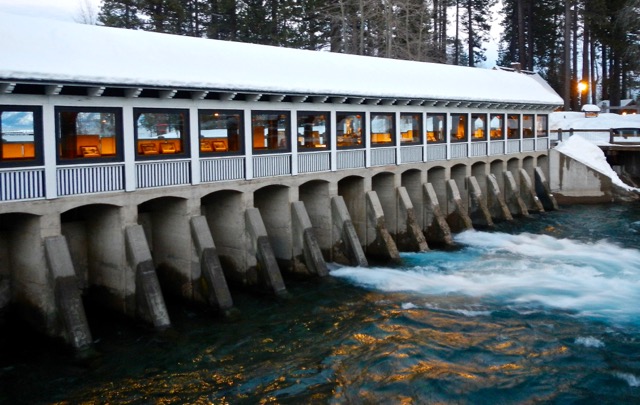
Water is flowing from Lake Tahoe through the dam in Tahoe into the Truckee River. Photo/LTN

By Amy Graff, San Francisco Chronicle

The depressing scene of boat docks sitting high and dry on wide beaches around Lake Tahoe will likely be a fleeting memory this summer.

Winter’s unrelenting storms built up a substantial Sierra snowpack and are expected to fill the lake for the first time in 11 years.

Lake Tahoe’s natural rim is at 6,223 feet above sea level. The lake can store an additional 6.1 feet in its reservoir and climbs up to 6,229 feet at full capacity, its legal maximum limit. Tahoe’s water level reached 6,226.84 feet on Wednesday; the lake needs about 88 billion gallons of water to jump up the 2.26 feet required to be completely full.

Read the whole story


Star Guide: Plan for summer’s total eclipse

By Tony Berendsen

There hasn’t been a total solar eclipse visible from the contiguous United States since 1979, but on Aug. 21, 2017, from sea to shining sea the long wait will be over, the “Great American eclipse” is coming soon.

Many of us have witnessed a partial solar eclipse, fewer have experienced a total eclipse. Don’t confuse the experience because there is no comparison. Partial eclipses are more common and really fun to experience (especially with the right equipment and I’ll get to that later in the article) but they are nothing like the experience of a total solar eclipse.

It has been nearly 30 years since a full eclipse of the sun could be seen in the United State. Photo/NASA

So, what’s the difference? In a partial solar eclipse the Earth is in the outer shadow of the moon called the penumbra. The moon is blocking only part of the sun so its light is diminished, but still too bright to look at directly. During a total solar eclipse the Earth is in the full shadow of the moon called the umbra. The moon is blocking the full disk of the sun so light from the disk of the sun is completely blocked and safe to look at directly.

During the eclipse this summer all of the United States will experience a partial eclipse of the sun, except for the path of totality stretching from Oregon to South Carolina. If you are within this 70-mile wide path on Aug. 21 and at the correct time you will experience one of the most amazing wonders of your life.

Years ago in 1997, off the coast of Barbados, while on a Sky and Telescope astronomy tour, I experienced my first total eclipse of the sun. I love to tell the story. “I live in Reno, a Burning Man town, and have never attended, but the day of the eclipse was the closest I’ve ever come to taking all my clothes off and painting my body.”

My wife and I were on the top deck of the Holland American Ryndam about 100 miles off shore. About 11am a roar of amazement went up from the 1,500 or so passengers with us as we saw the moon’s shadow approach in the distance, the sky darkened, the air cooled, the sun disappeared behind the moon, and the corona appeared along with three planets and some bright stars.

The eclipse experience was amazingly primal to behold. I say that because some part of my being, a relic of my human history hard wired within me, was touched by the eclipse somehow, remembering experiences of night during day in the past.

Whether you are planning to stay home and experience a partial eclipse, or travel to the path of totally start planning now. The eclipse shadow will be traveling across the U.S. from west to east so the time of the total and partial phases will be different depending on your location. Here is a link to information about the eclipse times.

This eclipse will be very popular, so plan out your trip to the path of totality carefully, many rooms are already taken, and campsites will be full. Don’t forget to bring along safe solar viewing equipment too.

Celestron has developed a line of solar viewing products that can be found a www.celestron.com appropriately called EclipSmart. Remember, do not to look at the sun directly unless it is in full eclipse. In the next Star Guide I’ll give some tips on what to look for during the eclipse and how to view a partial eclipse, and do some solar imaging.

Tony Berendsen runs Tahoe Star Tours. He may be reached at 775.232.0844 or tony@tahoestartours.com.


Cops looking for intoxicated drivers

During the next two weeks, Douglas County, Lyon County, Churchill County, Carson City and Reno residents can expect to see additional law enforcement on the roads.

Nevada Highway Patrol has joined forces with local agencies throughout the state to concentrate on impaired driving.

If you are going to drink, don’t drive is the message.

In efforts to achieve zero fatalities this St. Patrick’s Day, drivers and riders are encouraged to abide by the following guidelines:

·      designate a sober driver before drinking;

·      use a taxi, call a sober friend or family member or use public transportation if impaired;

·      take advantage of local sober ride programs;

·      call 911 if an impaired driver is spotted on the road;

·      take the keys or assist in making other arrangements for someone who is about to drive or ride while impaired.


Nevada installing redesigned welcome signs

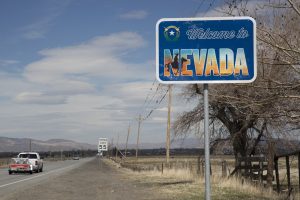
The Nevada Department of Transportation has begun installation of new “Welcome to Nevada” signs designed by Nevada art students.

The first welcome sign was installed March 15 at the Nevada-California border on Highway 88 south of Minden.

Signs will be installed at approximately 25 other border locations statewide over the coming months.

Instead of the welcome signs, select border crossings such as Highwy 28 in Crystal Bay and Highway 395 near Bordertown will receive gateway monuments.

The existing welcome signs, including iconic signs depicting a lone prospector, have stood at many interstate and freeway entrances into Nevada for approximately 25 years. The signs are being replaced by signs designed by Nevada high school graphic artists through a contest organized by the Nevada Department of Tourism and Cultural Affairs in partnership with the Nevada Department of Education and NDOT.


U.S. budget cuts would be widely felt across Calif.

By Evan Halper and Sarah D. Wire, Tribune Washington Bureau
 
President Trump’s budget would deliver a painful financial blow to California, with the potential to push a state that has struggled for years to keep its books balanced back into the kind of red ink that consumed it after the housing market collapse a decade ago.

The only solace state and local officials are taking out of a White House budget plan that would cut most federal departments by about 10 percent to 12 percent is that even Republicans in Congress probably will find all the cuts on the table too hard to stomach.

The president’s blueprint would disrupt almost everything California does, in some cases quite brutally.

Read the whole story