The West is moving away from coal

By Daniel Rothberg, Las Vegas Sun

Southern Nevada’s last coal plant closed March 16. That same day, a New Mexico power company said a plant on Navajo land might be next to shutter. And in a somewhat unexpected decision the month before, regional utilities announced the early shutdown of the West’s largest coal plant, also on the Navajo Nation. President Trump might have pledged to invigorate the industry, but most economists agree on one trend: Western coal is unraveling.

The outlook was different in 2010, when the Sierra Club launched its Beyond Coal campaign. It deployed lawyers, mobilized supporters and lobbied state legislatures to shut down coal-fired power plants across the U.S. in an effort to curb carbon emissions. Then something changed. The argument against coal expanded from one about the environmental costs to one that cited economics.

“The economics of power generation don’t support replacing coal-fired generation,” said Robert Godby, who directs the Center for Energy Economics and Public Policy at the University of Wyoming.

That’s a primary reason why utilities across the West are retiring old coal plants instead of building new facilities or investing in modern infrastructure.

Read the whole story


Snippets about Lake Tahoe

·      To enroll in the South Tahoe Refuse bear box loan program, call 530.541.5105. Homeowners may apply for a loan up to $1,200 for a metal bear box. The loan payments will cover five years and be included in the STR bill.

·      In a sign the Knights Inn project in South Lake Tahoe is moving forward, on the April 3 Placer County supervisors’ agenda is an item to buy the tourist accommodation units associated with the property.

·      The indoor tennis court at the Ridge is set to reopen April 3. It’s the only indoor court in the Tahoe basin. Storms brought it down; it had to be completely surfaced after most of the lights fell when the bubble collapsed, and the heat from them melted into the court.

·      Here is the Sierra roadwork schedule for this week from Caltrans.

·      Tahoe Truckee Earth Day is April 22, 11am-5pm at the Village at Squaw Valley. For more info, go online.


State grant to help rid toxins in SLT groundwater

The State Water Resources Board is giving South Tahoe Public Utility District $294,270 to help resolve the groundwater contamination issue near the Y.

The money will be used to conduct an engineering feasibility study of alternatives to remove Tetrachloroethylene or PCE from the groundwater. Tahoe Keys Water Company and Lukins Brothers Water Company are partners with STPUD in this process because their wells have been contaminated.

Chemicals once used in the dry cleaning business have been known to be contaminating the ground water in South Lake Tahoe since 1989, mostly at the Y where a dry cleaner used to operate. While different remediation measures have been tried, the plume is still detectable.

“Removal of PCE is necessary in order to both supply clean drinking water to customers in the area as well as preventing the further spread of the contaminant plume through the drinking water aquifer,” Richard Solbrig, general manager of South Tahoe PUD, told Lake Tahoe News.

The money is part of a $20 million allocation by the state to cleanup or prevent the spread of groundwater contamination to aquifers that serve as a source of drinking water. This is bond money from Proposition 1 that voters approved in November 2014.

— Lake Tahoe News staff report


From the trenches to retirement for SLT doc

By Linda Fine Conaboy

You might not expect a vascular surgeon to be dressed in a plaid, flannel shirt, with shirt sleeves rolled to the elbow and a bill cap hugging his head at a jaunty angle. But Irwin Berman isn’t your regular surgeon.

And you probably wouldn’t expect the good doctor to call MontBleu casino home either. But Berman, like we said, isn’t just a regular guy and MontBleu is a temporary residence, at least he’s hoping so.

At 87, Berman is now retired. And in late December he was firmly ensconced in his South Lake Tahoe home in Trout Creek Meadows, waiting for his kids to arrive from Southern California to spend Christmas with him.

Unfortunately, just before the holiday (and his children) arrived, the sewer system arrived too, backing up into Berman’s home and eventually forcing him out of the house and into the Stateline hotel-casino.
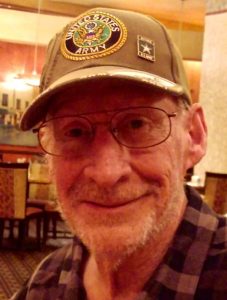
Irwin Berman of South Lake Tahoe has watched the field of medicine evolve. Photo/Provided

For one armed with a seemingly unassuming ans soft-spoken disposition, Berman’s life so far has been one of bumping into and making the most of golden opportunity.

He and his twin brother, Stanley, a thoracic surgeon, were born in 1929 to immigrant parents in the small west Texas town of Colorado City—that’s Colorado with a long A, about 70 miles from Abilene.

His father, from Lithuania, and his mother, from London, met and married in the early 1900s.

“The reason I’m from Texas,” he related somewhat incredulously and still with a discernible Texas drawl, “is that my dad’s ship from Lithuania landed in Texas. I found the ship’s log where the captain had written that dad’s family was on board, all the way from Lithuania, with less than one dollar to their names.” His mom, he said, landed at Ellis Island.

Although his parents didn’t have a particularly long life, the Berman boys have; there is an older brother, Harold, who at age 90 is still a practicing attorney in Dallas.

According to Berman, while at the University of Texas where both twins studied medicine, they were drafted into the Korean War; however, with the dean running interference, the duo was deferred from active military service until after graduation.

Irwin entered the Navy as a lieutenant (junior grade) and was stationed at the Naval Medical Center in Bethesda, Md.; at the same time, Stanley, also a lieutenant, joined the Army and was stationed at Walther Reed Army Medical Center. Because of the close proximity of the two health centers, they saw each other often.

After their tours in Maryland, Irwin became a flight surgeon and moved on to the Alameda Naval Air Station, while Stanley was assigned to a MASH-like unit, which was not nearly as hilarious as the unit portrayed on the TV show. “Not at all,” Berman laughed.

During his two-year stint in Alameda, Berman said if the injuries troops sustained during the Korean conflict were serious, they were flown to the States, but if not, transportation by ship was the order of the day (the General Mann, a troop transport that served in WWII, the Korean War and the Vietnam War). It was on this ship that Berman spent his time tending to the injured on the return trip from Korea.

While on active duty, both brothers, unbeknownst to each other, applied and were accepted to the residency program at the Mayo Clinic in Rochester, Minn., a grueling program that included 36 hours on duty and 12 hours off.

“We got $150 a month, but the GI Bill supported us for four years at Mayo. My brother and I went to Houston to work with Dr. Michael DeBakey and Dr. (Denton) Cooley, both pioneers in heart and vascular surgery,” he said.

Cooley is well-known for the first heart transplant and DeBakey for inventing the roller pump, a central component of the heart-lung machine.

Although he was a genius and becoming well-known for his amazing skills, DeBakey was not a man who inspired a companionable feeling within his students. “He was terrible to work with,” Berman said. “He was an excellent surgeon, but just not a people person. He stood behind us and would literally kick us, while calling us names.”

Additionally, Berman and his brother trained in surgery with Charles Mayo, the son of the founder of the Mayo Clinic.

With families to think about now, the Berman brothers concluded it was time to settle somewhere they loved and open their joint practice. In tandem, they selected California as their landing place—Santa Cruz.

In the seaside town the twins happily practiced surgery for 10 years; Irwin working in his specialty and Stanley in his. But when the Cuban missile crisis became a looming and frightening threat in 1961-62, Irwin, who was still in the naval reserves, decided it was time to make his exit from military life.

Sending a resignation letter to his superiors prompted a return missive from President Lyndon Johnson congratulating him on his promotion to commander in the Navy. It seemed that Irwin was not to become a civilian after all.

While he was still in the naval reserves, and still practicing in Santa Cruz, surprisingly, the Army came calling, seeking him out and asking if he would become an Army surgeon stationed in Europe for three years.

“I thought this was the biggest joke,” he said. However, the Army was serious in its bid to pre-empt this Navy family, and the Bermans, now including two children, packed up and moved to Nuremberg, Germany, where he remained as chief of surgery in a military hospital for three years.

“My wife and kids liked it in Germany,” he said. “Dad was home more.”

From Germany he went to Fort Huachuca in Arizona, where Berman decided to move from the Army reserve to the regular Army, leading to his promotion to a full colonel.

Taking it all in stride and continuing to practice medicine, the colonel and his wife took another post in Seoul, Korea, where he was named chief of surgery in 1989. By this time, the peripatetic doctor was beyond the Army’s mandatory retirement age of 60. Not a problem, he said, the Army simply extended him beyond retirement age.

Three years later, at age 63, Berman finally returned stateside, retiring from the Army at Fort Hood, Texas.

Fast forward to his life as a full-time resident of South Lake Tahoe, which began while the family still resided in Santa Cruz with the building of a summer home at Tahoe. During those busy years, with his wife and kids ensconced in their Tahoe home, Berman established his regular summer-time commute between the lake home and his seaside residence.

Unfortunately, divorce upended Berman’s retirement plans to spend the winter in Arizona and warmer months at Tahoe where he planned to assist other practicing Lake Tahoe surgeons.

“Come to find out, at South Lake Tahoe, where I had become a full-time resident, I had to carry full malpractice insurance, which in 1994-95 was $100,000 and which [the local hospital] refused to cover. So I went to a Harveys casino job fair, where I was hired and for eight months to work the 2-10am shift when the high rollers were there.”

It may seem surprising that a renowned surgeon, a retired Naval commander and a retired Army colonel would wind up at Harveys, but listening to him talk, Berman has no regrets about his job as a keeper of statistics at a local casino.

Although he said now he’s doing exactly what he wants to do, he intimated that he would have liked to keep the casino job, but not on a full-time basis, which would have been a requirement.

Nevertheless, now, after a couple of surgeries that require him to walk with a cane, Berman is a happy man with time to feed his growing interest in geology, fostered by his life in the desert at Fort Huachuca.

“I’ve taken all the courses in geology that Lake Tahoe Community College offers,” he said, with perhaps a longing for warmer climes. “The least thing I like about Lake Tahoe is the winter and the cold and snow. But the best things are the beautiful scenery, the clean air and the small town atmosphere. I’ll leave this place when I die.”

And what does he think about the state of medicine today?

“In Santa Cruz there was no Medicare. I thought when the government got into medicine, it would ruin it. I think this has proved true. I don’t blame the young doctors for putting in their hours and not being on call like I was,” Berman said. “Now there are so many government regulations”

However, he quickly added, “Technically, healthcare has advanced far more than I anticipated, but I think that perhaps doctors don’t care about medicine as much as we did.”


Opinion: EDC Republicans taking action

By Terry Gherardi

The newly seated El Dorado County Republican Central Committee (RCC) began the year by taking positions on proposed legislation and/or actions by local and state elected officials. Or, that which effects county residents and their families.

The first action from the RCC was in response to the Board of Supervisors’ vote to send a letter in support for two state bills: SB1 and AB1, increasing vehicle registration fees and also, tax increases for gasoline and diesel fuels. In their letter, the RCC asked that supervisors rescind their support for the two bills that “particularly harm rural counties, the most, like El Dorado, because our residents have to drive more miles compared to that of a typical urban California family.”

On the Feb. 7 BOS agenda Supervisor Michael Ranalli raised the matter as a recommendation for the board to reconsider its Jan. 24 letters of support to Assemblyman Jim Frazier and state Sen. Jim Beall, authors of the bills. By a unanimous vote, the supervisors asked county CAO Don Ashton to take a “watch” position,as the two bills move through the legislative process; to be reviewed by the board at a later date.

On March 8, after receiving letters from Sheriff John D’Agostini, El Dorado County RCC and Assemblyman Kevin Kiley, the El Dorado County Office of Education Board unanimously voted to approve Roseville-based John Adams Academy’s request to locate a K-12 campus in El Dorado County. Months earlier the Buckeye Union School District denied a charter petition request for the campus even though John Adams Academy was widely supported by families in the area and is in compliance with state education code.

John Adams was founded in 2010 and is fully accredited by the School Commissions of the Western Association of Schools and Colleges. It is the only classical education, tuition free TK-12 school in Northern California.

Recently, the RCC was joined by the El Dorado County unit of the California Republican Assembly signing a letter to Supervisor Ranalli, requesting the BOS support a resolution declaring that El Dorado County complies with federal immigration laws and does not constitute a sanctuary jurisdiction.

A similar request by the county Republican’s was sent to the Placerville City Council, but this time requesting that the council oppose state Sen. Kevin DeLeon’s SB54 to declare California a sanctuary state. Decisions or actions by both the BOS and City Council are expected in the next couple of weeks.

At their meeting on March 13, RCC members unanimously voted to state their positions on several issues, including approval of letters to BOS Chairman Shiva Frentzen and Patti Borelli, chairwoman for the El Dorado County Transportation Commission, encouraging both county supervisors and transportation commissioners to support AB496, proposed by Assemblyman Vince Fong and co-authors Assemblymen Kevin Kiley and Frank Bigelow, both who represent El Dorado County. AB496 is for transportation funding in the state of California. RCC Chairman Todd White noted that “this plan ensures billions of dollars for California roads and infrastructure without raising taxes on hardworking California families. AB496 also ensures that money collected for transportation goes towards infrastructure, instead of being directed to the state’s General Fund.”

In the same letter to the EDC Transportation Commission Chairwoman Patti Borelli the RCC expressed their opposition to the EDCTC’s recent support of Senate constitutional Amendment 6, by state Sen. Scott Wiener. In their letter the RCC stated, “We believe that by lowering the threshold for raising taxes proposes a dangerous precedence.” Adding, “In a state already plagued by out-of-control irresponsible spending, making it easier to raise taxes is not an appropriate and/or sustainable solution for hardworking El Dorado County citizens.” SCA6 proposes to lower voter approval for new taxes from 66 percent to 55 percent.

The last letter approved by the RCC was addressed to Gov. Jerry Brown, expressing the committees support of Proposition 66, and their opposition to Briggs and Van De Kamp vs. Brown lawsuit filed to block the implementation of Proposition 66, stating, “The RCC feels compelled to have their committees perspective with the governor on the lawsuit, since one of the plaintiffs is Ron Briggs, a former elected official and resident of El Dorado County.”

Voters approved Proposition 66 in 2016, and according to McGregor Scott, former U.S. Attorney for the Eastern District of California and co-chair of the “yes” on 66 campaign, “Proposition 66 was passed by the voters because they are sick of lawyers who oppose the death penalty, constantly undermining the system with lawsuit after lawsuit.” He added, “It is not at all ironic, and, is in fact a slap in the face to the voters, that their response to the passage of Proposition 66 was to file another lawsuit trying to thwart the voters.”

Adding to the irony by the action of former County Supervisor Ron Briggs, is that his father, former state Sen. John Briggs, sponsored the State Death Penalty Law as a 1978 ballot measure.

In a final action at their March meeting, the RCC voted unanimously to authorize Chairman Todd White and District 1 member/delegate Joy Knight to sign a resolution to support House Joint Resolution (H.J. Res. 61), referred to as the Flag Amendment, which would amend the Constitution to provide: “The Congress shall have power to prohibit the physical desecration of the flag of the United States.”

Additionally, the RCC resolved to support the effort of the Citizens Flag Alliance, a coalition of veterans, civic, businesses and fraternal organizations, to achieve adoption of the Flag Amendment, H.J. Res. 61 in the 115th Congress.

The El Dorado County Republican Central Committee is an elected body of the California Republican Party. Each of the county supervisor districts has anywhere from two to six elected or appointed representatives who serve Republican’s in their district. More information is available on the county party’s website.

Terry Gherardi is with the El Dorado County Republican Central Committee.


Traffic stop leads to arrest on drug charges

Two people were arrested this week in Truckee after a traffic stop revealed heroin in their vehicle, according to officers.

Dylan Tanner Robert Surrock, 25, of Kings Beach faces charges of possession of a narcotic for sale and sale or transport of a controlled substance. Abbigail Starr Baker, 27, of Bremerton, Wash., was arrested on charges of possession of a controlled substance paraphernalia.

A vehicle code violation was the initial reason for the stop March 28 on Highway 89, according to the California Highway Patrol. A K-9 alerted officers that a search of the vehicle was warranted. Officers said more than an ounce of heroin was found.

— Lake Tahoe News staff report


Weather conducive to prescribed fires in Tahoe

Weather and conditions permitting, Tahoe Douglas Fire Protection District, California State Parks and the U.S. Forest Service may continue prescribed fire operations beginning April 3. 

Operations may take place near Tahoe City, Glenbrook, Round Hill, Kingsbury Grade, and Meyers.  Operations may continue over the next several weeks, as conditions allow. 

To receive prescribed fire notifications, send an email to pa_ltbmu@fs.fed.us. 

Each prescribed fire operation follows a prescribed fire burn plan, which considers temperature, humidity, wind, moisture of the vegetation, and conditions for the dispersal of smoke. This information is used to decide when and where to burn.


Police arrests plummet across California

By James Queally, Kate Mather and Cindy Chang, Los Angeles Times
 
In 2013, something changed on the streets of Los Angeles. Police officers began making fewer arrests. The following year, the Los Angeles Police Department’s arrest numbers dipped even lower and continued to fall, dropping by 25 percent from 2013 to 2015.

The statewide numbers are just as striking: Police recorded the lowest number of arrests in nearly 50 years, according to the California attorney general’s office, with about 1.1 million arrests in 2015 compared with 1.5 million in 2006.

It is unclear why officers are making fewer arrests. Some in law enforcement cite diminished manpower and changes in deployment strategies. Others say officers have lost motivation in the face of increased scrutiny — from the public as well as their supervisors.

Read the whole story


Barton ER doc recognized by colleagues

Lance Orr has been named Barton Health’s doctor of the year.

Lance Orr

Orr is a board-certified emergency physician and medical director at Barton Hospital’s Emergency Department. Barton officials say he is considered a “physician of all trades.” He is also Barton Health’s interim chief medical officer.

Doctor of the year is determined by Barton’s staff and physicians. Colleagues described Orr as “one of the most fair-minded, dedicated, and compassionate doctors,” “excellent and compassionate emergency physician” and “his skills as a physician in caring for patients are second to none.”

This is Orr’s 11th year as an emergency physician for Barton Health.


Letter: Grateful for Ernie’s generosity

To the community,

A big thank you to the Ernie’s Coffee Shop for hosting the Aktion Club fundraiser on March 22.

Staff at Ernie’s were flipping hundreds of burgers throughout the evening as orders where being taken by the skilled waitresses. Kiwanis of Tahoe Sierra and Aktion Club members greeted and seated everyone throughout the evening.

We wish to thank Nathan Bergner, Kent Baer, the wonderful staff at Ernie’s and Kiwanis members for volunteering their time to make this a successful event. Again, thanks to everyone who help make this such a fun and successful event.

Proceeds from this event will go towards a leadership conference and to local community organizations.

Carmen Delgado, Kiwanis