Huge winter, hostile politics headline climate forum

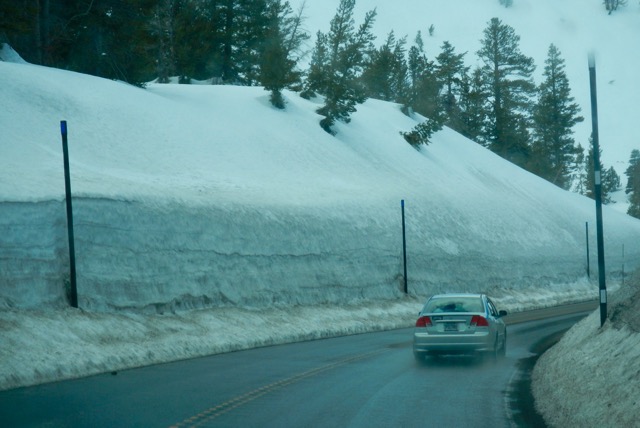
Several feet of snow still line the Mt. Rose Highway. Photo/LTN

By Benjamin Spillman, Reno Gazette-Journal 

The mountain snowpack is fat but funding to unravel what it means for western communities and the environment is thin.

That’s the dynamic facing scientists who study climate, snow and water in California and Nevada.

They gathered Thursday for the fifth Great Basin Climate Forum at the Desert Research Institute in Reno to watch presentations about the drought-busting winter season.

They also talked about how hostility from President Trump and a Republican-controlled Congress could undermine scientific research into climate, water and fire behavior that shape the environment of the western United States.

Read the whole story


Ranger led hike at Spooner for dogs, people

Spooner Lake is going to the dogs, with rangers leading an easy two-mile guided hike for social dogs with people at the end of their leash.

People should wear sturdy shoes or hiking boots, and bring water for themselves as well as their dogs.

Sign up for the April 16 event by emailing spooner.ranger@gmail.com or call 775.831.0494. It will be from 9-10:30am.

Meet in the upper section of the parking lot.

The event is free, but park entrance fees apply. Entry is $10 per vehicle, Nevada residents receive a $2 discount.                                                              


Tahoe’s past droughts subject of talk

John Kleppe, UNR professor emeritus, will be on the South Shore on April 25 to discuss Ancient Mega Droughts in the Lake Tahoe Basin and Beyond.

Kleppe fished Fallen Leaf Lake for 15 years before discovering it contained a preserved medieval forest in its depths. Intrigued by his fishing hooks getting caught on a mysterious underwater object, Kleppe sent down a diver. Kleppe discovered a 200-year-old medieval tree, still standing upright at over 100 feet tall, rooted on the bottom of the lake. Using carbon dating he determined it had drowned in 1215AD. He has since found more than 100 more trees.

Attendees will be taught about Fallen Leaf Lake’s role as an important microcosm of Lake Tahoe and how it is a “real world” working model that can be effectively used to develop concepts, methods, instrumentation, monitoring approaches, and complex models essential to the understanding and solving of problems throughout the Lake Tahoe Basin.

The talk is free for Lake Tahoe Historical Society members, $3 for nonmembers. It will be at 7pm at the Camp Richardson Lodge.


LTUSD kindergarten registration to begin

Registration for kindergarten and transitional kindergarten in Lake Tahoe Unified School District for next school year begins in May.

For kindergarten, children must be 5 before Sept. 1, 2017, and the transitional program they must turn 5 between Sept. 2-Dec. 2, 2017. The transitional program is two years at Tahoe Valley Elementary School.

California law requires the following information:

  • Child’s birth certificate
  • Proof of immunizations, which includes the Varicella (chicken pox), Hepatitis B and for most children, the last booster shot.  Children will not be enrolled in school without presenting an up-to-date immunization record.
  • Health examination upon entry to school (schedule with your family physician).
  • Oral health examination upon entry to school (dental examinations that have occurred in the last 12 months meet this requirement).
  • Proof of California residency (lease agreement, mortgage statement, utility statement, etc.).

Call the school to make an appointment for May 1-12:

Bijou Community School 530.543.2337

Sierra House Elementary 530.543.2327

Tahoe Valley Elementary 530.543.2350.


Truckee flowing faster to make room for snow melt

By Cassie Wilson, KRNV-TV

The water flows of the Truckee River are currently 3.5 times the average rate, thanks to early snow melt as well as precaution.

Crews have been releasing water from Lake Tahoe and other upstream reservoirs since the end of February to make room for snow melt still to come.

Lake Tahoe has gained nearly 4 feet of water since Jan. 1, and it is well above its natural rim. So water is now flowing at a controlled rate out of Tahoe City and into the river.

Read the whole story


California’s public pensions breaking the bank

By Judy Lin, Los Angeles Times

More than 20 times in the last 15 years, political leaders looking to control California’s fast-growing public pension costs have tried to put reform initiatives before the voters.

None of the proposals has made it onto the ballot.

Often, advocates could not raise enough money for signature gathering, advertising and other costs of an initiative campaign. Some of the most promising efforts, however, ran into a different kind of obstacle: an official summary, written by the state attorney general, that described the initiative in terms likely to alienate voters. Facing bleak prospects at the polls, the sponsors abandoned the campaigns.

Taxpayer advocates contend that the attorneys general — Democrats elected with robust support from organized labor — put a finger on the scale, distilling the initiatives in language that echoed labor’s rhetoric. Labor leaders say the summaries were neutral and accurate, and that the problem lay with the initiatives — which, they contend, would have diluted benefits already promised to public employees.

Read the whole story


Prescribed fires scheduled on South Shore

If conditions are favorable, the Tahoe Douglas Fire Protection District, California State Parks and the U.S. Forest Service may continue prescribed fire operations on April 10. 

Operations may take place near Tahoe City, Glenbrook, Round Hill, Lower Kingsbury Grade, South Lake Tahoe, and Meyers. Weather permitting, operations may continue over the next several weeks. 

To receive prescribed fire notifications, send an email to pa_ltbmu@fs.fed.us.   

Each prescribed fire operation follows a prescribed fire burn plan, which considers temperature, humidity, wind, moisture of the vegetation, and conditions for the dispersal of smoke.

Smoke from prescribed fire operations is normal and may continue for several days after an ignition depending on the project size and environmental conditions.


Star Guide: Plan, plan, plan … totality is coming

By Tony Berendsen

The total solar eclipse of 2017 is coming to the United States on Aug. 21. Now is the time to start planning your eclipse experience.

There are only 4½ months left before eclipse time and the Lake Tahoe area will only see a partial, so to experience totality you will have to travel north. You will not be alone because millions of people excited to see this spectacle will flock to see it with you.

Plan your trip carefully. With so many people traveling to the eclipse path, I recommend arriving a day or two early, otherwise you might get stuck in traffic and miss the event. Also, camping sites, motels, and hotels will be sold out, so don’t wait too late to decide on your location.

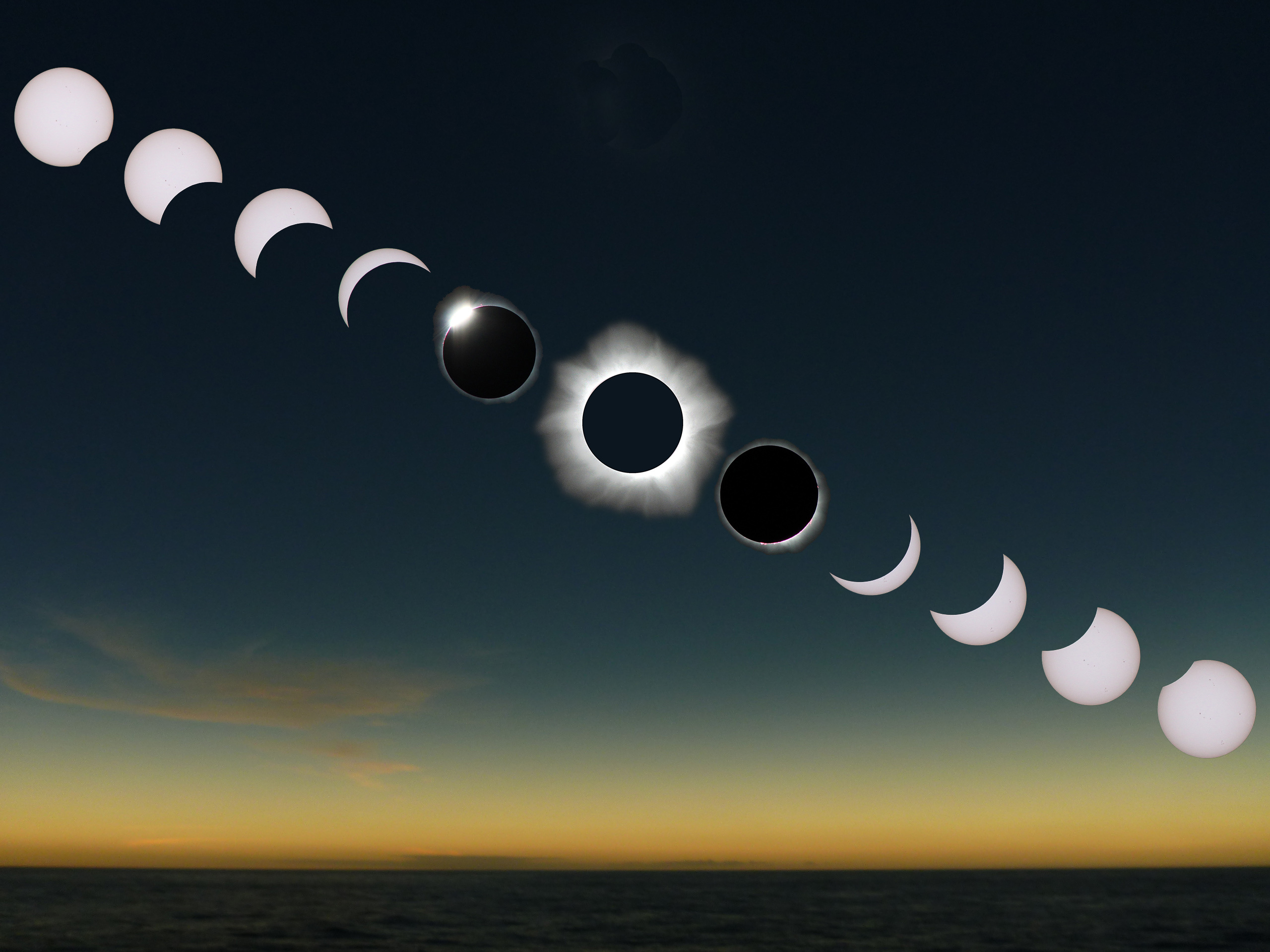
Image showing the phases of the eclipse. Photo/Rick Fienberg

Of course wherever you live in the States you will be treated to at least a partial eclipse on the 21st, so one option is to stay home. Partial eclipses are fun to view and there is a good chance the weather will be clear in our area at 9am when the moon begins its path across the sun. From Lake Tahoe the moon will cover most of the sun, but it will not be safe to look at without eye protection. I highly recommend that you purchase eye protection now before the supplies run out.

Decide how you are going to view the eclipse, and remember you don’t need eye protection to see the total eclipse phase, but you cannot look directly at the sun during any of the partial phases without proper eye protection. Viewing can be as simple as building a pinhole camera (trees with leaves are natural pin hole cameras, just look at the ground during a partial eclipse and see hundreds of eclipse images) or as complex as taking images with a camera.

Whether you are planning to view a partial or total eclipse Celestron has put together some affordable solar viewing packages as part of the Eclipsmart product line. Two of my favorites are 2X power glasses, and the Deluxe 3-piece Sun observing kit, which includes wrap around viewing glasses, observing guide, and a solar filter that can be used with a DSLR or cell phone camera. 

For those of you interested using a solar telescope, and don’t have one, Celestron’s Eclipsmart Travel Scope 50 is a great option  ,and if you already have a telescope and need a solar filter I recommend Thousand Oaks Optical.

If you are planning to go to the path of totality, I highly recommend taking an image as a remembrance of the event. Totality will only last about two minutes for this one, so it will go by fast. That being said, you don’t want to spend all of your time looking through the camera lens because you will be missing one of the most amazing personal experiences of your lifetime. Plan and rehearse your image ahead of time so you can maximize your personal viewing time and still get an image to take home. You will need a solar filter for your camera for the partial phases of the eclipse.

There is a lot of information available on imaging an eclipse, so I suggest spending some time learning about the different phases of the eclipse, what to look for and when, also how to prepare your camera to take the image of a lifetime. The American Astronomical Society is a great place to start doing research and has some great tips on imaging .

I hope all of you can get a chance to see the total solar eclipse in August. It’s a great opportunity, since this one is in our own back yard. I guarantee you will not regret doing some homework and plan, plan, plan … totality is coming.

Tony Berendsen runs Tahoe Star Tours. He may be reached at 775.232.0844 or tony@tahoestartours.com.


Truckee woman making her mark with family wine

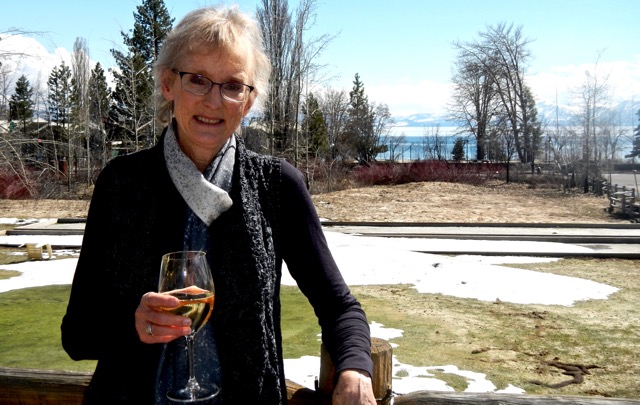
Lori Barra of Truckee is bringing her family’s Mendocino County wine — Mia Bea — to the greater Lake Tahoe area. Photo/Kathryn Reed

By Susan Wood

Family traditions mean the world to Lori Barra, a Truckee woman who’s pouring her heart into her family’s wine business.

When she’s not helping travelers fly the friendly skies at the United Airlines ticket counter at the Reno-Tahoe International Airport, Barra, 61, is marketing her family’s Mia Bea varietals.

Created from a small vineyard on 60 acres, Mia Bea gets its name as a tribute from Barra’s father, Pete, to her mother, Beatriz, who died in 2012. Pete Barra is the 89-year-old son of an Italian farmer-grape grower who turned his love for his wife and decadeslong work growing premium wine grapes at the headwaters of the Russian River in Mendocino County into a lasting legacy for his children and their children.
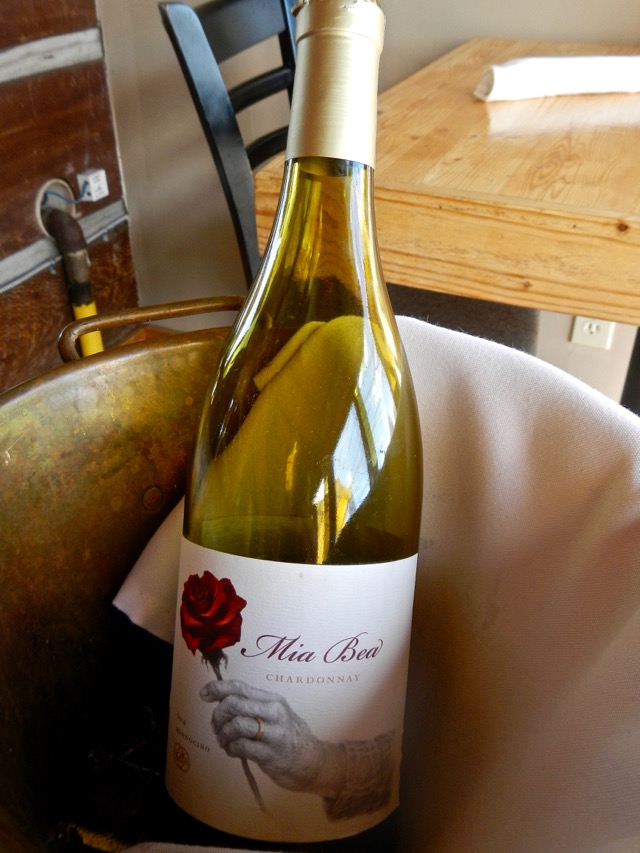
Mia Bea Chardonnay is crisp and a bit fruity. Photo/Kathryn Reed
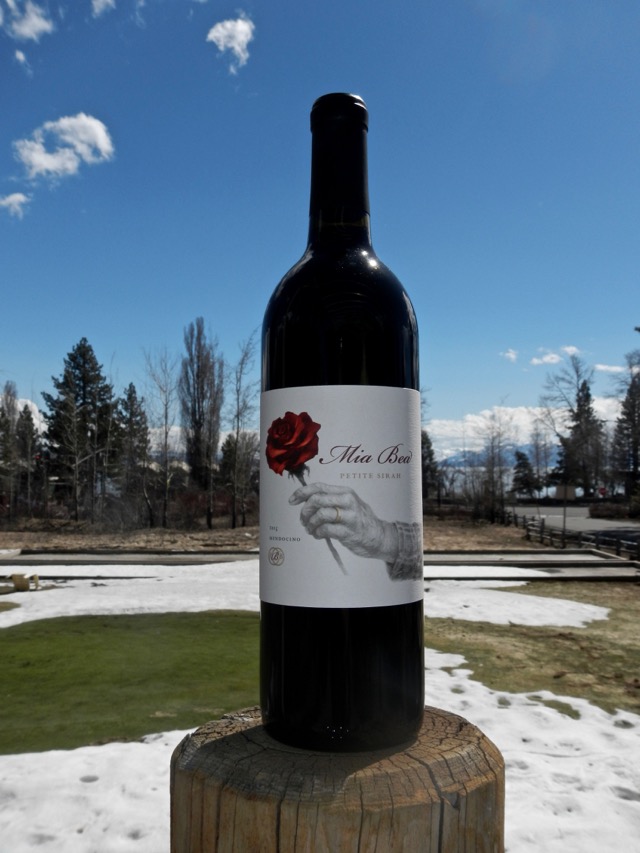
Mia Bea’s Petit Syrah is winning awards. Photo/Kathryn Reed

An image of a red rose dominates the Mia Bea label, signifying the romantic flower Pete often gave to Beatriz.

“He always had a thing for roses,” Barra said of her sentimental father. Now when she visits the farm in Calpella near Ukiah, her father puts a rose in her room as an extended gesture of her Dutch mother’s presence.

The tender loving care of the actual winemaking is paying off with accolades. The 2014 Chardonnay has raked in six awards in six competitions, including a silver medal at the Grand Harvest Challenge Wine Competition in Sonoma County in 2016. Last year, it won bronze under the unoaked category at the 2017 San Francisco Chronicle Wine Competition.

A recommendation of Barra’s winemaker, the unoaked nature of the Chardonnay rolls off the tongue with more of an earthy, slightly fruity richness not found in traditional, buttery, oak-barreled Chardonnays.

“I’m over it,” Barra said of the trendy buttery Chards.

She likes her Chardonnay with spicy food, especially Asian dishes. (This reporter discovered it pairs wells with Mahi Mahi tacos.)
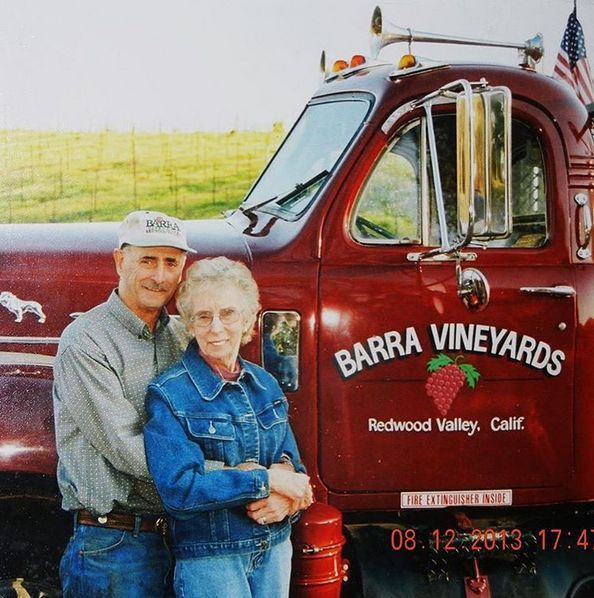
Pete and Beatriz Barra’s love continues to shine through Mia Bea wines. Photo/Provided

Barra said friends who don’t usually like Chardonnay have been transformed by trying Mia Bea. For Barra, that’s the satisfaction of her work. She enjoys the pleasure of introducing the wine to people she knows and meets.

Nonetheless, she also realizes the wine business needs to grow and extend its reach from the small operation run by her father, the winemaker and her two sisters. Mia Bea has averaged between 200 and 250 cases in each of its two years in existence, with plans to somewhat expand without losing its small vineyard appeal.

While the family has been in the grape growing business for decades, the actual wine making side is a new endeavor. No tasting room exists – yet, but Mia Bea wines are available through a couple of wine clubs.
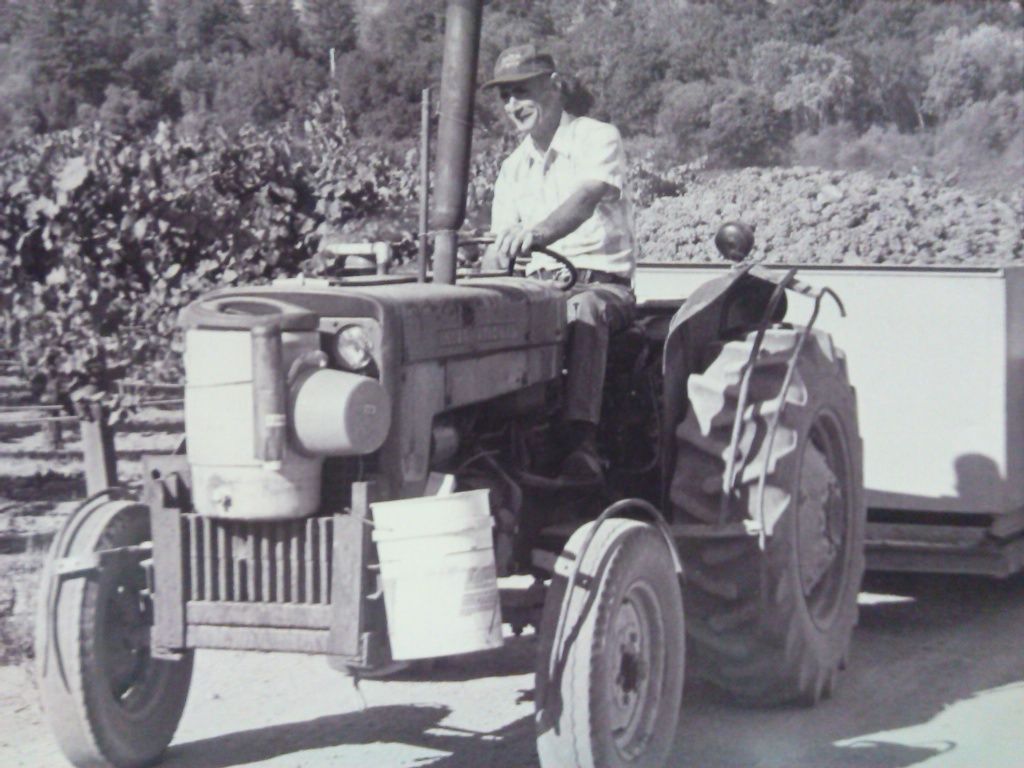
Pete Barra is happiest when he is working in the vineyard. Photo/Provided

Beyond its white wine, Mia Bea’s Petit Syrah is also gaining its own acclaim, winning the same awards in the same competitions under the estate grown certified organic fruit designation. Barra admitted that her father – who doesn’t use chemicals – was eco-friendly in his vineyards before it was cliché.

Forging ahead, the family and its winemaker are experimenting with a Pinot Noir, which often thrives in the moist coastal ranges.

The family patriarch has shown little sign of wanting to slow down, content that his children are chipping into a business that essentially got its roots in Italy over multiple generations.

“My sisters and I are committed to keeping the business going,” Barra said, realizing that her father is aging.

The U.S. Barra clan went back to Europe to research and trace the extended family history. The elder Barra found his relatives and shortly thereafter returned for a large family reunion in Italy. It was pure joy for him to receive that type of validation to 60 years of his life’s work in the United States.

“He would rather be in the vineyard than anywhere else,” Barra said.

The life of the grapes and the process involved is something Barra grew up with and never tires from.

“I like seeing how wine complements food and how we always had big family gatherings to celebrate that. As an adult, I enjoy seeing other people enjoying the wine,” she said of the most amazing thing about running a wine business. 
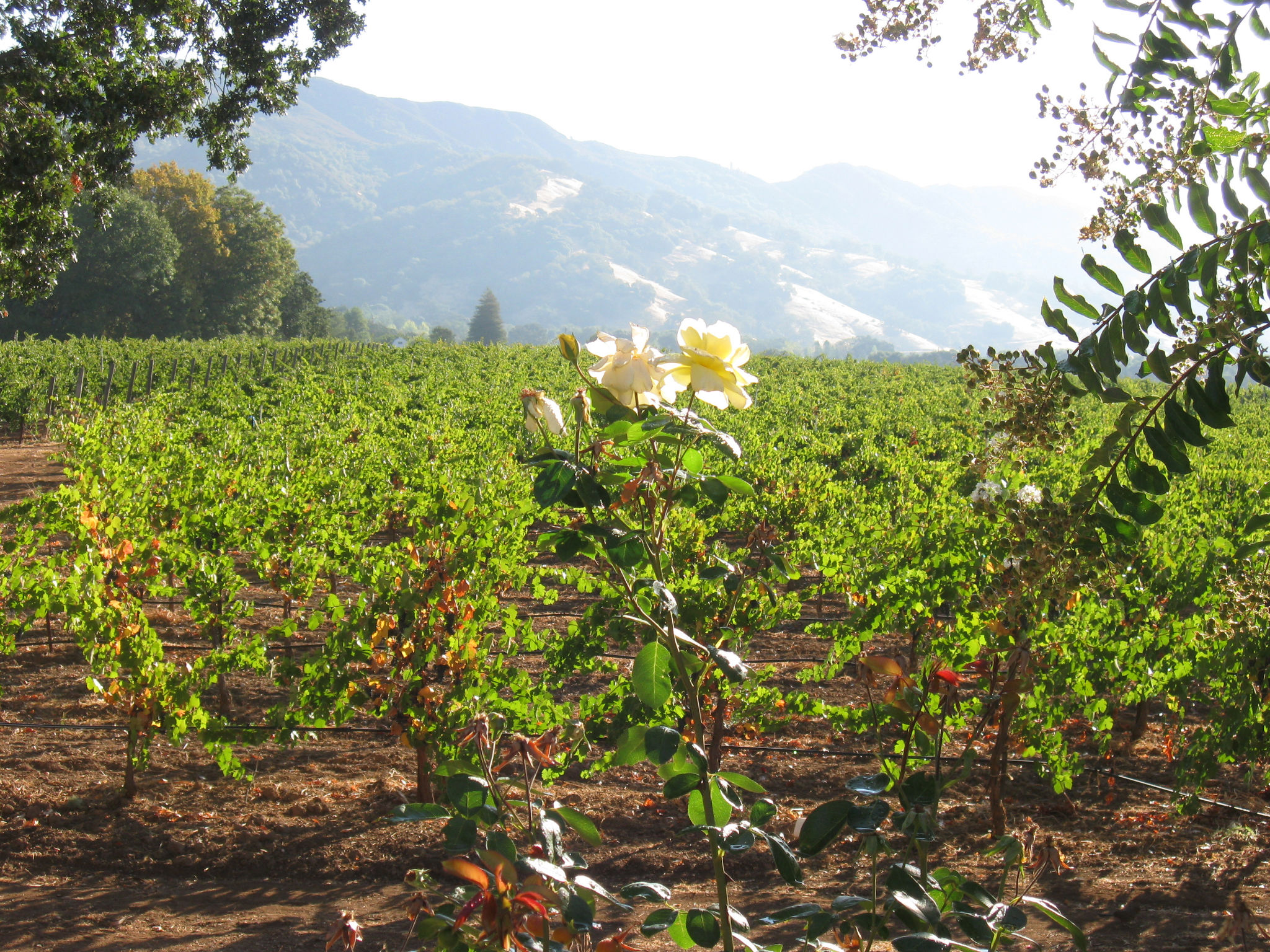
The morning light shines on the Barras’ vineyards. Photo/Provided

How Barra ended up in Truckee is a familiar tale. After leaving the farm and attending college, she came to Tahoe “to ski for a winter and fell in love with the area,” she explained. That was 30 years ago.

The settling down in a mountain town represented quite a departure from Mendocino County, where she grew up knowing the Fetzer family “just down the road,” she said.

In charge of sales, Barra would like to do expand its market in the Lake Tahoe area. 

“We’re feeling confident about the wine. But the challenge we face right now is since it’s not familiar, how can we get people to pick it off the menu?” Barra said since the wine received award titles.

Currently, the Barra family has nine accounts carrying Mia Bea wine – three markets and two restaurants. In the Tahoe basin, Spindleshanks at the Brockway Golf Course in Kings Beach where her son lives and the River Ranch in Tahoe City have the Chardonnay. With the marketing help of her daughter in San Diego, she hopes to find new locations. Both restaurants have expressed interest in selling the Syrah.

So far, Spindleshanks manager Steve Marks who buys the wine for the restaurant likes what he sees from the Chardonnay.

“It’s a crowd pleaser – fruity and easy drinking. It stands on its own,” Marks said. He added the appeal is with a certain patron that likes an unoaked variety.


Opinion: Gen X — the forgotten generation

By Lauren Sveen, Denver Post

I spend a lot of time discussing generational differences (which are, by definition, broad characterizations of groups of similarly aged people) and how best to handle them in the workplace.

Over the last couple years, most of the conversation has centered around millennials — the burgeoning, often hard to understand and newest generation of workers. I often receive a great deal of feedback on articles about millennials, particularly from baby boomer readers struggling to find common ground. But the conversation rarely lands on the smaller generation squeezed between boomers and millennials – generation X.

There are 65 million Gen Xers — generally defined as people born between 1965 and 1980 — in the workforce, increasingly poised to inherit key leadership roles from retiring boomers. In fact, Gen Xers already are leading some of the nation’s top Fortune 500 companies, including Google, Dell and Sprint.

Read the whole story