Golden State has its wettest-ever year

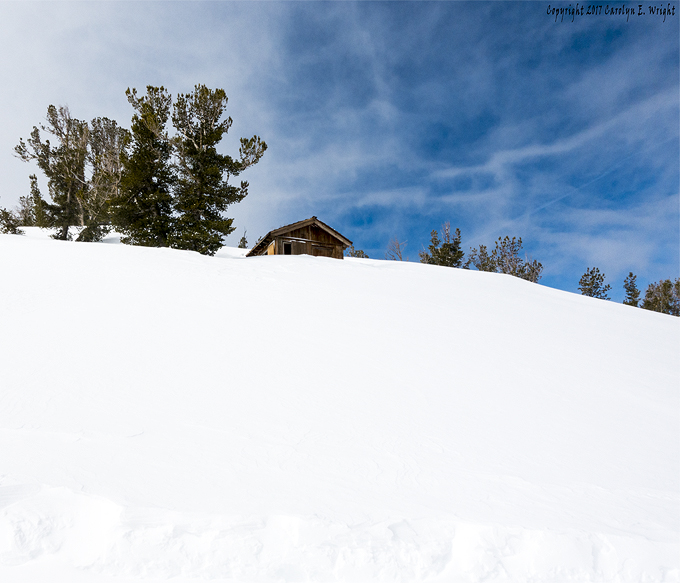
The abundance of snow has made for a great ski season. Photo Copyright 2017 Carolyn E. Wright

By Patrick May, Bay Area News Group

We did it!

With one more soaking-wet storm front dumping its stuff special-delivery over Wednesday night, California woke up on Thursday to a new all-time record for rainfall, as measured in the all-important “Northern Sierra eight-station index,” a catchment area that pretty much defines the Golden State’s water-level health.

“We didn’t just beat the record,” said meteorologist Craig Shoemaker with the National Weather Service in Sacramento. “We shattered it.”

Read the whole story


Neighborhood cleanup day set for May

Clean Tahoe is organizing a clean up effort for May 6.

South Tahoe residents will be cleaning up roadside and neighborhood litter that’s quickly becoming visible from the melting snow.

After the 9am-noon cleanup there will be a free lunch for all volunteers at Lakeview Commons in South Lake Tahoe.

Sign up to volunteer by filling out this form. For more info, call  530.544.4210.


Volunteer drivers needed for senior food program

The El Dorado County Senior Nutrition Program is looking for volunteers for the home delivered meal program.

Each volunteer generally works one a week on an assigned route, delivering meals between 10:30am and noon.

Volunteers who cannot provide a weekly commitment may serve as back-up drivers.

Orientation sessions for new volunteer drivers will be:

  • May 8, 1-2 pm at the Placerville Senior Center, 937 Spring St., Placerville.
  • May 23, 10:30-11:30am at the South Lake Tahoe Senior Center, 3050 Lake Tahoe Blvd., South Lake Tahoe.

For more information, call 530.621.6160.


40 acres of Martis meadow to be rehabbed

By Michael Rohm

Beth Christman, director of Restoration for the Truckee River Watershed Council, knows exactly how small 40 acres is. Compared to the 90,000 acres of degraded watershed within the greater Sierra Nevada region, 30,000 of which are slated to be restored by 2030, 40 acres is a drop in the bucket.

But this is a bucket that has been jostled, kicked and repeatedly drained by 150 years of harmful human impact. Every drop counts.

“We’re doing our part,” she said of her seven-member team at work to maintain and improve watersheds within the Tahoe region. “It all adds up.”

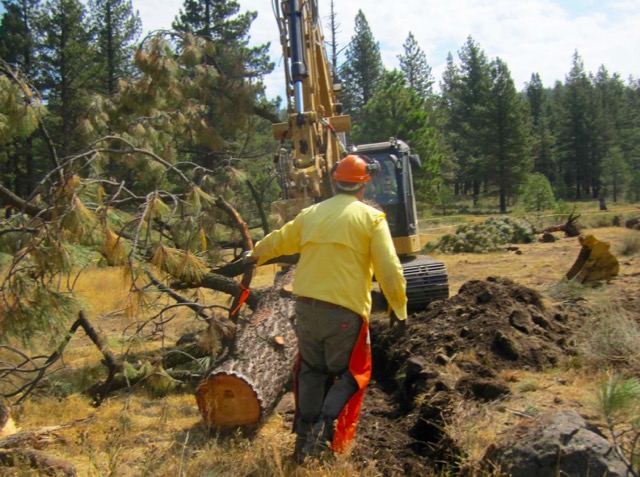
Crews work to restore meadows throughout the Sierra Nevada. Photo/Beth Christman

Christman and her team are one of about two dozen natural resource groups within the greater Sierra Nevada region who have joined forces to create the Sierra Meadows Partnership, a multi-agency initiative to restore 30,000 acres in 15 years. Spearheaded by California Trout, this mixed-bag group of nonprofits, government agencies, universities and funding institutions have come together to restore crucial watersheds that account for more than 60 percent of the developed water supply in California.

For the Truckee River Watershed Council, that restoration began with a crucial 40 acres in the Martis Valley where Highway 267 meets the Middle Martis Creek. This watershed northwest of Lake Tahoe is a salient example of what environmentalists call legacy impacts: the actions of previous generations that affect us today. When the road that would become Highway 267 was first constructed in the 1860s, Martis Creek was channeled to the opposite side of the road, effectively bisecting the floodplain. Subsequent erosion destroyed 40 acres of meadow and contributed to frequent flooding across the highway.

“The infrastructure in that area is not going anywhere,” Christman said. “So we had to get creative to work around the legacy impacts.”

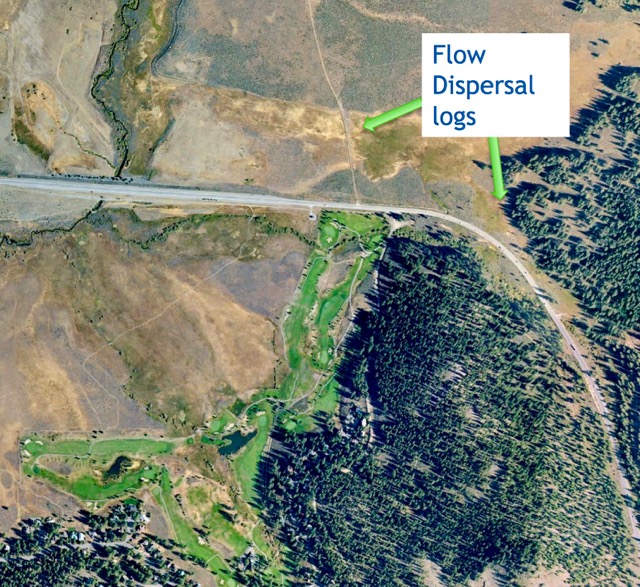
Creative action for Christman and the Truckee River Watershed Council involved efforts to recreate floodplain functions that had been damaged or destroyed by human impact, such as flow dispersal logs and beaver dams, manmade solutions that successfully mimic natural ones. Additionally, the creek at an existing culvert north of the highway was divided to allow the flow of water to continue on both sides of the road, rather than through the sole, and often overwhelmed, outlet. These actions restored the forty acres that had been lost to legacy impacts while preventing additional flood damage to human infrastructure.

This shows where logs will be placed in Middle Martis Creek off Highway 267. Photo/Beth Christman

“It may not seem like much,” Christman said, “but we’re doing our part to restore these important watersheds.”

Also doing their part for Tahoe is the local chapter of American Rivers. With his four-person team based in Nevada City, Luke Hunt, director of Headwaters Conservation, focuses on headwaters restoration, a broad title for the holistic maintenance of meadows, forests, and forest roads as they pertain to water health.

“There are occasional blowouts, but most of this degradation can’t be seen until years later,” Hunt said of the damaged Tahoe ecosystem. “But the damage is definitely happening and it’s only getting worse.”

Nothing illustrates this quite like then-and-now photography, pictures of the same location separated by time. “You can see how there has been a network of erosion that continues to draw water out of the meadow,” Hunt said, highlighting the post-1950s streams and channels that have leaked out of the meadow like holes in a water balloon. “These days it’s either flooding or it’s dry. A watershed is not supposed to do that. You want the rainfall to slowly go in and out of the creek.”

This degradation of key watersheds explains a phenomenon that is especially relevant to California lately: the cycles of flooding and drought that result in water, or lack thereof, at entirely the wrong times.

Despite these environmental disasters, Hunt is hopeful. “I think there’s a great opportunity, especially right now, to restore the meadows,” he said.

And with so many local agencies coming together to address the issue of watershed management, the future looks restored. “We’re making a lot of progress,” Luke said. “These forests and meadows are part of California’s supply of clean water, and we’re working together to take care of them.”

Exact costs of all of the restoration work has not been determined. Until funding is secured, which could be in a phased approach, a time line for completion has not been set.


Opinion: Where’s the laid-back kids’ summer vacations?

By David Gershwin

My grade school summer vacations seemed to last forever, pairing well with the Beach Boys’ “Endless Summer” double album I wore out on the record changer.

During those hot and humid Northern Virginia summers, I headed each weekday to the summer camp held in my elementary school’s nearly-abandoned cafeteria. It was a low-key affair—ping pong and table hockey on the cafeteria lunch tables, kickball and football on the playground, key chains and macramé in arts and crafts—while mix tapes with Gerry Rafferty’s “Baker Street” in heavy rotation played over the school’s PA system. And in what must have been one of the greatest bargains of the 1970s, camp tuition was $20 for the entire summer.

Today, such an easy-going camp would be trashed on Yelp, despite its unbeatable price, for failing to deliver any quasi-academic or super-creative purpose. Imagine my camp competing with today’s Computer Camp, Robotics Camp, Animation Camp, and (my personal favorite) New York Film Academy Camp, which is in, of all places, Burbank.

Kids’ summer camps in Los Angeles enter parents’ collective consciousness around Jan. 15, just after the three-weeklong Los Angeles Unified School District winter break, which was the dream of the teachers’ union (which also negotiated an entire week off for Thanksgiving) and the owners of, yes, winter camps. The most popular summer camps are said to fill up by mid-February, so the camp arms race begins before one even has a chance to plan a basic family vacation.

Our daughter, now 8, is already enrolled in four camps (with a fifth still possible) so that we, her two professional working parents, can earn a living and thus afford said camps. We’re signed up for a weeklong, overnight, all-girls sleepaway camp at Griffith Park, an arts camp at a synagogue three blocks away, a swimming/all-around recreation camp at Valley College, and Beach Camp, which, for our fair-skinned daughter, requires bulk purchases of SPF 50 sunscreen.

There’s also the matter that plenty of LAUSD families simply can’t afford private summer camp at all, since absolutely none of them can be found at the bargain, 1970s price of $20. Half of all LAUSD families qualify for free lunch programs, meaning their household income is just over or below the federal poverty line. Some summer camps offer scholarships on a very limited basis, but that just means families in need must compete for these coveted slots and complete additional administrative paperwork.

Mind you, this is on top of the dizzying registration process that often involves web sites crashing after anxious parents overwhelm the system immediately after the online enrollment period opens.

For lower-income families, the availability of formal and informal municipal resources – public swimming pools, kids’ day camps at city parks, and air-conditioned public libraries – is critical. For tens of thousands of Los Angeles-area kids, poverty doesn’t take a summer vacation.

The LAUSD academic calendar also plays a role in making summer a tough sprint for families. The long winter break is offset by making the summer break short, just over two months long, with school ending June 9 and starting up again Aug. 15. So while the fabled and possibly archaic family summer vacation is possible for those with means, it’s the hottest, priciest, and most crowded time of year for travelling.

It’s taken our family three years of practice to finally figure out how to make this unconventional school schedule work for us. We did this by giving up on a conventional week of summer vacation; we might get a long weekend or two if we’re lucky. Instead, we opt for vacation during the tail end of winter break, after the holidays, when most other school districts are back in session and airfares and hotel prices drop significantly.

But our coping strategy is under fire. The LAUSD board, in their infinite wisdom, has considered changing the academic calendar as the solution to several of their administrative woes. You see, other school districts start at a far more conventional time: after Labor Day. Not only do some board members observe other school districts with a jealous eye, but they are also under the impression that a later start will result in lower air conditioning usage and, hence, lower energy costs district-wide. This past fall, it looked like a move toward a more traditional start, one week later in 2017 and an additional week later in 2018, was going to pass.

In December, however, forces far greater than Computer Camp took hold, shocking the school board into reversing their position—and reverting (for now) to the calendar with the two-month summer break and the three-week winter break. Why? For two big reasons. First, the teacher’s union likes the status quo. Second, changing to a calendar with a shorter winter break would result in more student absences, since a considerable number of parents would still yank their kids out of school for a few days for holiday-time visits to relatives and winter vacation destinations. These additional absences would result in LAUSD losing some of its funding from the state of California, which allocates resources based on average daily attendance.

But the scheduling issue remains white-hot. The board’s decision on the calendar was so divisive that the board President abstained—yes, abstained—when the academic calendar issue came before them. So while the calendar is set for the school year beginning this coming August, the board has yet to decide on the calendars for the 2018-19 school year and beyond.

I wonder if this lack of leadership, leading to unnecessary uncertainty for parents, would even matter if we had the informal, cheap, carefree, drop-in nature of the summer camp I remember. But I recognize that in our current era of instant access and gratification, kids like our daughter might not know what to do with the unstructured fun I had when I was a kid. None of today’s summer camp options offer any time for being lazy or hazy—there’s only a short break before your next camp activity starts at 10:10am.

What memories will she have? What sport will she remember playing that didn’t come with rules or equipment? And with her day’s activities lined up on a scheduling grid, will she even have the time to reflect on her summer music soundtrack?

As for me, Gerry Rafferty’s sax solo will always remind me of those slow and easy summers, with the click-clack of a table hockey puck adding some percussion. Just don’t tell the Beach Boys.

David Gershwin is a Los Angeles-based public affairs consultant, Zócalo Public Square board member, and teaching fellow at UCLA Anderson School of Management.

Montana law would target out-of-state cyclists

By David Ferry, Outside

Montana state legislators are considering a bill this week that will add a $25 fee on all out-of-state bikers entering Montana. And to add insult to injury, the proposal—which has already raised the ire of cyclists across the country—was tacked onto a bill about invasive species management.

The amendment was penned by Scott Sales, a Republican from Bozeman, who last month killed a bill that would have mandated drivers going 35 mph to give bikers at least three feet of leeway when passing.

Sales, who is the president of the Montana State Senate, called cyclists “some of the rudest people I’ve ever—I hate to say it, but I’m just going to be bold—they’re some of the most self-centered people navigating on highways, or on county roads I’ve ever seen,” according to the Missoula Current. “They won’t move over,” he added. “You can honk at them; they think they own the highway.”

Read the whole story


SLT senior center meeting postponed 1 week

South Lake Tahoe and El Dorado County elected officials have rescheduled the April 13 senior center meeting.

It will now be April 20 at 1:30pm at the senior center in South Lake Tahoe.

The meeting is being billed as an opportunity to identify the future needs of the senior center.


House severely damaged after roof collapses in SLT

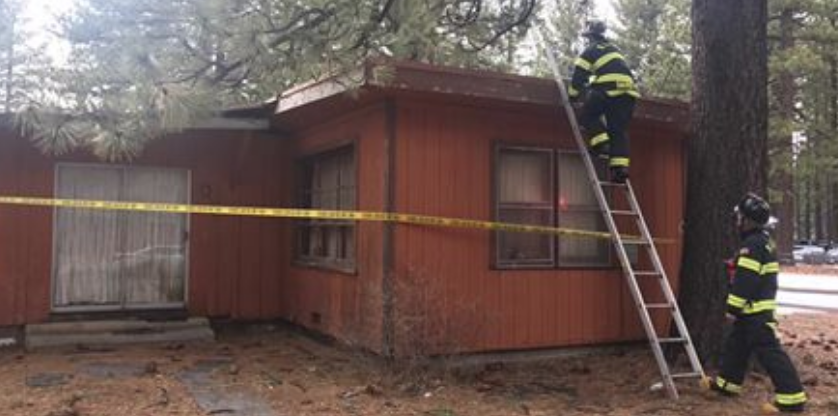
Firefighters on April 11 assess the roof damage. Photo/SLTFD

A roof collapsed in South Lake Tahoe on Tuesday night causing significant damage to the structure.

No one was injured.

The house is at the corner of South and Third streets.

According to firefighters, it caved in April 11 partially because of lack of maintenance as well as snow/rain load.

Even though snow may be off roofs, the long winter could have caused damage that is not evident from street level.

Looking in the attic space to see if wood is rotting or if there is mold is recommended, along with a close-up inspection of roofs.

— Lake Tahoe News staff report


USFS beginning to open Tahoe sites for the season

The U.S. Forest Service Lake Tahoe Basin Management Unit will soon begin opening recreational facilities in the Lake Tahoe Basin. 

Weather and snow conditions permitting, Inspiration Point will be the first site to open on April 15. The Taylor Creek Visitor Center opens May 19, and will be staffed weekends only until Memorial Day weekend. The Tallac Historic Site parking area opens May 1, and will be staffed beginning May 27. 

The following is a list of opening dates, weather and snow conditions permitting:

Campgrounds

·         William Kent, Kaspian, Meeks Bay, Bayview, Fallen Leaf, and Nevada Beach campgrounds open May 12.

·         Luther Pass Campground opens May 2.

·         Blackwood Canyon and Watson Lake campgrounds open June 1.   

Day-use areas

·         Inspiration Point – April 15

·         Baldwin and Nevada beaches – April 29

·         Kiva Picnic Area, Chimney Beach, Secret Harbor, and Big Meadow Trailhead – May 1

·         Sandpit Off-Highway Vehicle (OHV) Area – May 10

·         Sawmill Pond and Tallac Point* – May 15

·         Eagle Falls restrooms – May 19

·         Pope Beach and McKinney Rubicon OHV Area restrooms – May 26

*The water in the marsh at Taylor Creek is much higher than previous years, which has moved the waterfowl nesting habitat closer to the edge of the marsh near Tallac Point.  The Tallac Point parking lot will remain closed until May 15, and the public is asked not to allow their dogs in that area. This will give the waterfowl the opportunity to complete their nesting period without disruption. The Kiva Picnic Area parking lot will open on May 1 to accommodate visitors while the Tallac Point parking lot is closed.

Until sites officially open, there is no parking, trash removal or restroom facilities available.


California’s drought-to-deluge cycle getting worse

Ski resort infrastructure has been buried this ski season. Photo Copyright 2017 Carolyn E. Wright

By Rong-Gong Lin II and Paige St. John, Los Angeles Times
 
California’s climate has long been dominated by cycles of intense dry conditions followed by heavy rain and snow.

But never before in recorded history has the state seen such an extreme drought-to-deluge swing.

Experts and state water officials say California is seeing more of these intense weather swings as temperatures warm, which has profound implications for the droughts and floods the state may face in the generations to come.

The extreme cycles of dry and wet weather appear to have been intensifying over the last three decades.

Read the whole story