Short workouts have lasting benefits

By Kyler Crouse

Don’t have time to exercise? According to recent research, a four-minute workout might be better than 30 minutes on the treadmill. Sounds almost too good to be true, but according to fitness researchers, it’s not.

Regular exercise improves your physical and mental health. Unfortunately, many adults do not make time for their weekly 150 minutes of moderate or intense activity recommended by the Centers for Disease Control.

Kyler Crouse

In a study published in the Journal of Applied Physiology, Nutrition, and Metabolism, researchers compared the fitness benefits of different workout strategies. Twenty-two women were assigned to one of three groups. Group A did 30 minutes of treadmill running at 85 percent of their maximum heart rate. Group B participants completed eight, 20-second rounds of a single exercise (burpees, jumping jacks, mountain climbers, or squat thrusts) with 10 seconds of rest between rounds. The control group, Group C, did not do any exercise.

The groups completed their workout routines four times a week for a month. Before and after their training, the researchers measured the three groups’ aerobic fitness levels and attitudes about exercise.

Following the monthlong study, both active groups saw an increase in their aerobic fitness levels by the same amount, 7 to 8 percent. However, only group B, the group with the short bodyweight workout, saw an increase in muscle endurance, ranging from 40 to 207 percent. In other words, Group B not only improved physical endurance, but significantly improved muscle endurance as well.

On top of that, Group B participants had a better attitude about the bodyweight workout. They expressed more interest in continuing the training program than their treadmill counterparts.

This study points out the value of quick workouts and total body movement. Total body movement should be the foundation for any fitness program, whether it is for losing weight, improving fitness, or gaining strength. This is why Tahoe Fit has added 30 minute fitness classes at lunch. These fun and effective workouts are great for people with busy schedules and taught by certified fitness professionals.

Kyler Crouse is a fitness instructor for Tahoe Fit by Barton Health.


Expect delays on Highway 28 next week

The Nevada Department of Transportation is advising motorists to anticipate travel delays as Highway 28 will be restriped April 24-27.

Reduced speed limits and travel delays of up to 30 minutes should be anticipated between 8:30am and 2:30pm daily. The mobile road striping operation is scheduled to begin at the Highway 28/Spooner junction on Monday and move west to Nevada-California state line over the following days.

Drivers are reminded to drive safely and not illegally pass in road work zones. 


Recycling is in trouble — and it might be your fault

By Paul Singer, USA Today

ELKRIDGE, Md. — If you are recycling at home, you are probably doing it wrong.

That is why a worker lunged to grab a garden hose off the conveyor belt at a Waste Management recycling facility here Wednesday before it got caught in a giant sorting machine. Such tangles frequently require the plant to stop the waste processing line and clean out the jaws by hand.

“Our contamination changes by the season,” said Mike Taylor, the company’s director of recycling operations here. Since it’s spring, the facility is getting a lot of garden hoses. Around the holidays, they get broken strands of Christmas lights, another choking hazard for the sorting line. And all day every day there are plastic shopping bags (recyclable at a grocery store but not from a household), chunks of styrofoam, diapers, syringes, food-contaminated containers … a nearly endless litany of things that residents throw into their curbside recycling carts figuring they are or ought to be recyclable. One worker grabs the remnants of a screen door off the sorting line while another snags a wire rack from a DIY shelving unit.

Many cities around the country will celebrate the 47th Earth Day on Saturday by highlighting their recycling programs, but the industry is grappling with a dual threat: The value of recovered waste products has plummeted over the past five years, and the amount of effort required to extract them has risen.

Read the whole story


Yacht club putting on chili cook-off, bingo

South Lake Tahoe Yacht Club members are hosting a night of chili and bingo on April 28.

The event will be at the SLTYC’s Clubhouse located in the Tahoe Keys Marina at 2435 Venice Drive, South Lake Tahoe. It’s on the second floor above the harbor master’s office. The no host bar with appetizers opens at 5:30pm. The chili tasting and dinner begins at 6:30pm. Bingo and dessert follows. 

The cost is $15.

The SLTYC is a social organization which holds events throughout the year, enjoys the lake. The club does not require boat ownership to join. Members have power boats, sail boats, kayaks and paddleboards. 

For more information and to RSVP for the chili cook-off, contact Carol Gerard at sltycvicecommodore@gmail.com by April 25.


Warning: Leave young wildlife alone

With late spring and early summer being the peak time for wildlife to bear their young, the California Department of Fish and Wildlife  is issuing this reminder: If you find a seemingly abandoned young wild animal, leave it alone.

Even though it may be hard to resist picking up a young wild animal that appears to be abandoned, intervention may cause more harm than good. Young animals that are removed from their natural environment typically do not survive. Those that do may not develop wilderness survival skills, making them unsuitable for release back into their natural habitat.

“It is a common mistake to believe a young animal has been abandoned when it is found alone, even if the mother has not been observed in the area for a long period of time,” Nicole Carion, CDFW’s statewide wildlife rehabilitation coordinator, said in a statement “Chances are the mother is off seeking food, or she could be nearby, waiting for you to leave.”

This behavior is common across many species. For example, adult female deer often stash their fawns in tall grass or brush for many hours while they are out foraging for food. A female mountain lion may spend as much as 50 percent of her time away from her kittens.

If a young animal is in distress, or you are unsure, contact a wildlife rehabilitation facility.

It is important to note that wild animals – even young ones – can cause serious injury with their sharp claws, hooves and teeth, especially when injured and scared. They may also carry ticks, fleas and lice, and can transmit diseases to humans, including rabies and tularemia.


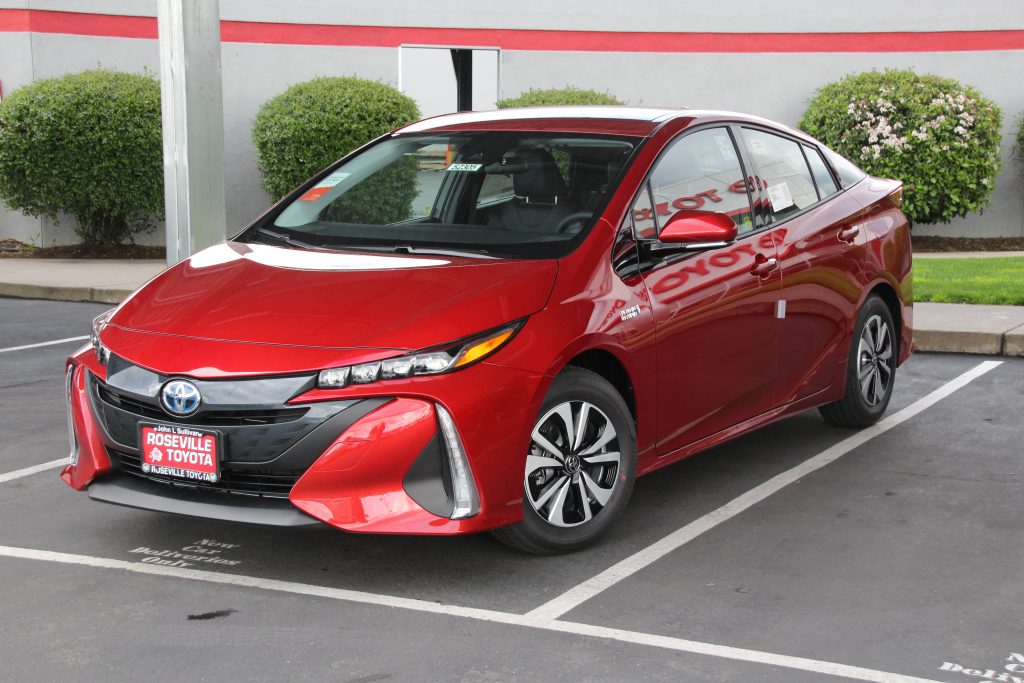
Road Beat: Toyota’s Prius Prime is plugged in

Prius Prime will have people rethinking a hybrid’s performance — in a good way. Photo/Larry Weitzman

By Larry Weitzman

Prius Hybrid has been around the United States since 1999 and as complex a vehicle as it is, it is one of the most reliable and fail-safe vehicles ever sold in the United States.

Even the batteries are almost bullet-proof, with failures even after 10 years being an extremely rare occurrence. Part of that is due to the strict control of the battery software. In 2006, Toyota had tested the batteries for 150,000 cycles with no significant loss of efficiency. Amazing.

New for 2017 is a plug-in version of the Prius, called the Prius Prime. Instead of about a 1 kWh Nickel-Metal Hydride battery, the new Prime gets an 8.8 kWh Lithium-ion battery that can give the Prime a real-world EV range of about 22 miles, according to some reports. While the combined power output from the 1.8L Atkinson cycle inline four and the Prius’ two electric motors is limited to 121 hp, Toyota has not released the standard hp available from the battery that powers the electric motors. Subtracting the 95 hp of the gas engine from the total combined output, it leaves just 26 hp as an EV vehicle. But from its performance as a pure EV and its EV top speed of 84 mph, I suspect this number to be higher, but with a co-efficient of drag of 0.25, 84 mph on 26 hp is possible.

Because the EV portion of the car is fairly low hp, it is possible to get engine assistance even though the battery is in a high state of charge as in pure EV mode, performance is a bit lethargic. But with the gas engine available it performs like a conventional Prius hybrid, but pure EV mode is more readily available and for long periods of time.

In my prior Prius tests I longed for more battery. With this plug-in, that wish has been answered. With judicious modulation of the throttle in normal mode, you can EV the Plug-in Prius to your hearts content, knowing that you are still driving a Prius Hybrid that has an EPA rating of 133 MPGe (equivalent) in pure electric. MPGe/hybrid MPG is rated at 55/53/54 city/highway/combined. And with its relatively large 11.3-gallon fuel tank, 600 miles might be easy.

During my short 10-mile excursion starting a zero mpg, the Prius was up to 42 mpg on the trip computer and climbing and that included some use of the gas engine during some full throttle runs. I estimate a 0-60 mph time of about 10 seconds, both engines working. And there is little if any guilt when you stomp the throttle.

In my test drive around Roseville and without a full charge I was still able to EV quite handily accelerating to 45-50 mph on pure electric. But this Prius is so smooth and quiet, about the only way you know if the engine is helping or running is to look at the systems operational depiction on the IP. Otherwise you just don’t know. The starting and stopping of the engine is also imperceptible, it’s that smooth of an integration.

Ride quality is obviously extremely quiet and it is almost cushy. It’s certainly not a car for the track, but you could create a new kind of racing, one that requires both speed and fuel economy, sort of an endurance race. Now that could be interesting. We could call it “hypermiling with speed.”

Even with its 265-pound battery, Prius Prime tips the scale at a modest 3,375 pounds. Prime is only 183 inches long, but it is classified as a mid-size car by the EPA. Prius Prime has a spacey look to it, futuristic, if you like. It will be polarizing. Starting at a shade below $29,000 for a Prime Plus to about $34,000 for a loaded Prime Advanced, the Prime is well priced considering that a loaded Prius hybrid stickers for about as much. But then again, a “conventional” Prius does have EPA mileage numbers in the 50 mpg range which the Road Beat easily averaged (54 mpg overall) in our recent test.

Larry Weitzman has been into cars since he was 5 years old. At 8 he could recite from memory the hp of every car made in the U.S. He has put in thousands of laps on racetracks all over the Western United States.


Court sides with EDC residents, against chain store

This is a rendering of the Dollar General that would have faced Main Street in Georgetown, though there is no entrance here.

By Joann Eisenbrandt

The anti-Dollar General store advocates in El Dorado County won in court.

El Dorado County Superior Court Judge Warren Curt Stracener on April 14 ruled in favor of the Georgetown Preservation Society to stop construction of a 9,100-square-foot Dollar General store on Main Street in the historic mining town of Georgetown.

Stracener’s ruling requires the county to vacate its earlier approval of the project and its environmental documents, and take the steps needed to prepare a detailed environmental impact report. This is the latest development in a protracted David vs. Goliath battle playing out on the county’s West Slope since late 2015.

Dollar General is a well-known national chain of stores that offers a variety of discounted merchandise and grocery items. They frequently choose locations in smaller towns with lower-income and senior residents who need to travel relatively long distances to shop at box store retailers.

Georgetown is a former Gold Rush mining town on the county’s West Slope west of Placerville. The proposed site for the Dollar General store is on three parcels at the end of the central Main Street historic district. These parcels are zoned commercial but have been vacant for some time. In October 2015, the county approved the project put forth by Simon CRE Abbie, a commercial real estate company that applied on behalf of Dollar General and property owners Denton and Carolyn Beam.

Under the requirements of the California Environmental Quality Act (CEQA), the county prepared an initial study and issued a mitigated negative declaration (MND) identifying and providing mitigations for potential environmental impacts. An MND is at the lower end of possible environmental reviews under CEQA and says basically that any environmental impacts of the project are small and can be totally mitigated. This approval was appealed to the El Dorado County Planning Commission by Georgetown resident Dennis Smith. The Planning Commission denied the appeal and the issue was then appealed to the Board of Supervisors.

The April 5, 2016, board meeting brought out not only concerns from Georgetown-area residents about potential environmental issues, but made it clear that beyond that it was clearly a “quality of life” issue. The chamber was packed with visibly upset residents who had traveled from Georgetown to Placerville to show the depth of their concern by their large physical presence. 

Some did speak about environmental concerns, including impacts on the wetlands and biological resources on the properties, traffic, circulation and safety concerns, problems with the proposed septic system, water quality and the fact that an abandoned mine still remained underneath a portion of the proposed site. But the preponderance of comments focused on the impacts the out-of-proportion Dollar General store would have on the aesthetic and historical qualities of the small town. Some were very angry. Others were in tears. The board denied the appeal with Supervisor Shiva Frentzen dissenting.

On May 6, 2016, the Georgetown Preservation Society filed a lawsuit to force Dollar General and the county to do an EIR before proceeding further.

Of the court’s decision, Ron Sheckler of the Georgetown Preservation Society told Lake Tahoe News, “What was very obvious to me was that weight was given to the people who were not necessarily demonstrated experts. This is groundbreaking in that the judge took into consideration what many people who have lived there for their entire lives see and feel and love about Georgetown. He gave that the weight it was worthy of.”

Don Mooney, attorney for the Georgetown Preservation Society, agreed. “We are pleased with the ruling. It sends the message to Dollar General that you have to take into consideration and do an EIR if there is a real conflict (of the project) with the aesthetic values of these historic communities.”

From the beginning, the issue of the appropriateness of a single large building in an area of Georgetown comprised mainly of older historic buildings with Gold Rush era architecture, an historic bed and breakfast and residential properties was a key area of disagreement. The county’s own Historic Design Guidelines say that new buildings constructed in such areas need to “generally conform” to the types of architecture prevalent in California mining towns of the 1850s through 1910.

Interpreting those guidelines for this specific project proved challenging. In approving the project, the county found it did conform. When residents expressed concerns, project proponents made a number of design changes which they believed made it meet the intentions of the Historic Design Guidelines. For many Georgetown residents, nothing would make a Dollar General store on Main Street fit in. Sheckler put it simply when he pointed to the lyrics in the Joni Mitchell song, “Big Yellow Taxi” — “They paved paradise. And put up a parking lot.”

In his decision, Stracener referenced many similar comments made by residents at Planning Commission and Board of Supervisors meetings, and in a petition against the Dollar General store that many had signed.

“A resident on Main Street living across from the proposed store commented: the proposed 9,100 square foot, 26 foot high chain store is inappropriate for the historic downtown district.” Others noted that what would front on Main Street was not a period-compatible entrance but a blank stucco wall and a loading dock. It would have “no congruity” with the remainder of Main Street where each building had its own personal gold rush era character. The judge noted the project proponent’s very different view, “Respondents argue that the above cited comments are merely unsubstantiated opinions lacking any factual basis made by persons who are not experts in historic architecture.”

In CEQA-based lawsuits, the court’s decision is based on whether the petitioners have presented enough evidence in the record to conclude that there is a “fair argument” that the project will have significant effects on the environment that have not been adequately addressed and that the lead agency, in this case the county, had “abused their discretion” in approving the project. The Georgetown Preservation Society argued the county’s approval of the mitigated negative declaration was an “abuse of discretion” because it did not fully identify all potential environmental impacts or show how they could be successfully mitigated. They asked the court to require preparation of the more-detailed EIR.

The court concluded that, “the fact that the persons who commented did not set forth in the record a foundation of expertise in historic architecture does not bar the court from considering their comments ….”  “In summary,” the decision continues, “the court finds there is substantial evidence to support a fair argument that the project may have significant aesthetic and historic quality environmental impacts that have not been mitigated.” The petitioner’s other claim that the traffic and circulation issues had not been fully addressed was not found to be supported by the record.

During the April 5, 2016, board meeting, District 4 Supervisor Michael Ranalli, in whose district Georgetown is located, asked the proponent’s attorney if they would be willing to prepare an EIR to help diffuse the controversy. “No, we won’t voluntarily do one,” was the response.  Ranalli also asked Deputy County Counsel David Livingston if the county could require them to move the project to another location. The project, Livingston responded, was consistent with the county’s General Plan. It was a commercial building going on a commercially zoned site so they had the right to build it there.

Some Georgetown residents had indicated they were not necessarily opposed to Dollar General itself, but to the location, and would be happy if it were just moved outside the town’s historic central district.

In a conversation with Lake Tahoe News following the court’s recent decision, Ranalli said, “I was surprised by the judge’s ruling and felt the applicant had met their burden. The property was commercially zoned in a commercial district. But now I have some unsettled questions.”

One of these, he explained, was what would happen if the project site were actually moved.  Once they were outside the historic district, he noted, they would not have to follow those guidelines. He pointed to the fact that the applicant had, “already made about six revisions to the building design … I fear they would not invest that much in the style of the building if it were outside the historic district. There wouldn’t be any incentive for them to not just put up the concrete block building you see everywhere else.”

Ranalli also expressed concern at what other options there would be for the site that would fit in with existing buildings and “benefit the long-term health of the Georgetown community.” He pointed to the concerns raised by residents themselves about the “perc rate” of the soil on the parcels. The percolation rate is a test of how well water drains through soil. It is important in regard to septic system leach fields and could be a problem for site uses that included large restroom facilities.

This same question had been raised by Supervisor Ron Mikulaco at the April 5, 2016, board meeting. Sheckler told Lake Tahoe News that he believes the best use of that area would be as open space. “That particular property is not suitable for any type of development. It’s a wetland. It has a Swiss cheese of mines underneath it.” What he’d prefer seeing is, “horseshoe pit, a wetland and a nice open space in Georgetown where people can come and enjoy being in downtown.”

The other big unanswered question is what will the project proponents do following the court’s ruling. Will they appeal the court’s decision, agree to complete an EIR for the current location, look for another location in the Georgetown area, just give up, or even sue the county?

Attorney Don Mooney explained that they have 60 days from the date of the decision to appeal. The Georgetown Preservation Society will prepare, circulate and present to the court within 20 days of the decision a writ for the court’s signature outlining the steps now required of the project proponents.

While very pleased with the court’s decision, Sheckler told Lake Tahoe News that, “It’s very important to note that the war isn’t over. We may have won this battle, but until it is determined that the Dollar General store won’t be built there we haven’t won the war.”

The attorneys for the project proponents were contacted for comment but did not respond.



Opinion: Every day should be Earth Day at Tahoe

By Joanne Marchetta

As we celebrate Earth Day this April, let’s remember how important environmental stewardship is to the health of Lake Tahoe, and how important our individual actions are.

Over the last two decades, public, private, and nonprofit partners have made significant progress conserving and restoring Lake Tahoe’s environment through the Environmental Improvement Program.

Joanne Marchetta

What started in 1997 as an idea for better collaboration among agencies working on restoration projects, in the year of the first presidential summit at Lake Tahoe, has grown into one of the nation’s most ambitious and successful environmental restoration programs.

Over the last 20 years, Environmental Improvement Program partners have completed more than 500 projects. Those projects have built or improved 153 miles of bike and pedestrian paths and upgraded transit facilities to provide transportation options and improve air quality. They have upgraded 750 miles of roadway to reduce stormwater pollution and protect Lake Tahoe’s water clarity, restored 17,278 acres of wildlife habitat, opened 3,195 feet of shoreline for public access, and treated 69,554 acres of forest to reduce hazardous fuels and wildfire risk. They have treated 47 acres of the lake to remove invasive clams and plants, and keep invasive species from spreading and damaging Lake Tahoe’s environment and the recreation opportunities it supports.

It’s not only the public projects that make a difference for the lake and our communities. It’s also what all of us can do as private citizens that can add up to change for the better.

Over the last few years, we have all seen pictures of discouraging amounts of trash on Lake Tahoe’s sandy beaches after the July 4 holiday. Fortunately, our communities have no shortage of dedicated people willing to volunteer their time to clean up messes that others have left behind.

Every year, TRPA presents Lake Spirit Awards to people who show a tireless dedication to protecting the lake and its environment. Past award winners have cleaned up litter, built and maintained bike trails, created programs to educate students about Lake Tahoe’s environment, and created composting programs for schools.

We can’t lose sight of the incredible impact that individuals can have at Lake Tahoe. The Environmental Improvement Program encourages some easy ways that each of us can help protect the lake.

Don’t litter, and pick up trash: Cigarette butts, paper, and plastic can all be picked up by wind or water and carried into the lake.

Bike, walk, or catch the bus: Less driving means less air pollution and less traffic congestion.

Pick up after your pet: Dog waste can be harmful to other dogs, wildlife, and water quality. Many trails at Tahoe have stations offering free biodegradable bags for pet waste. Please pick up after your dog and dispose of its waste properly.

Choose native plants for your yard: Gardening with native plants means less water, fertilizers, and pesticides.

Install and maintain best management practices: Installing measures on your property to stop erosion and infiltrate stormwater helps improve Lake Tahoe’s famous water clarity.

Get defensive: Create defensible space and properly maintain the vegetation around your home to significantly reduce wildfire risk.

Replace old woodstoves: Newer EPA-certified woodstoves use half the wood to generate the same amount of heat as an old stove, so you’ll save money and reduce air pollution. The EPA estimates that removing one old woodstove is equivalent to taking five old diesel buses off the road. Plus, there are rebates available to help cover the cost of replacement.

Become a Tahoe Keeper: Learn how to inspect and clean your canoe, kayak, or paddleboard to help stop the spread of aquatic invasive species.

Volunteer: There are many ways to get involved. Help with beach cleanups, report aquatic invasive species infestations, and help monitor storm water pollution.

These are just a few of the things each of us can do to help protect Lake Tahoe. Other ideas, as well as catchy campaign signs and messages to help spread awareness about the importance of environmental stewardship at Lake Tahoe, are available through the Take Care campaign. You, too, can help us spread the word.

Millions of people travel to Lake Tahoe each year to enjoy its unparalleled outdoor recreation opportunities. Everyone’s actions have an impact, and each of us plays an important part in leaving this beautiful place that we all love in better shape than we found it for future generations to enjoy. No one individual or agency can protect Lake Tahoe on their own. That takes all of us working together.

Joanne Marchetta is executive director of the Tahoe Regional Planning Agency.


Canadian provinces introduce housing tax to cool market

By Rob Gillies, AP

Foreign nationals who don’t live in Toronto and its surrounding communities will pay an additional 15 percent tax on homes under legislation proposed by the Ontario government.

Ontario Premier Kathleen Wynne made the announcement Thursday in an effort to cool a hot housing market in Canada’s largest city.

It matches the 15 percent tax the Pacific coast city of Vancouver has implemented. Wynne said the tax is not about targeting immigrants.

Read the whole story


Opinion: Our electricity is greener than you know

By Bonnie Turnbull

As you read this on an electronic device, think of it this way. Every fourth word you read, is powered by solar energy.

On Tuesday, our community pledged to 100 percent clean energy.

On Wednesday, Liberty Utilities celebrated the completion of the 50 MW Luning Solar Energy Center. 

Liberty celebrates its new solar plant on April 19. Photo/Bonnie Turnbull

Twenty-five percent of Liberty Utilities’ electricity—25 percent of the electricity that’s powering your home right now–comes from this clean energy produced three hours away.

Solar is becoming a large part of Liberty’s portfolio. Photo/Bonnie Turnbull

At night the solar panels are “parked” horizontally, but at sunrise 350 acres of panels tip toward the rising sun and follow its pathway across the sky.

Hydraulic pistons adjust banks of panels about every five minutes. Photo/Bonnie Turnbull

The Energy Center is on BLM land outside Luning near Hawthorne. You’ll find it on Google Earth at the junction of highways 95 and 361. The adjacent Table Mountain substation provides an immediate and cheap connection to the grid.

Nevada is becoming a leader in solar. Photo/Bonnie Turnbull

The center is about a mile long by about half a mile wide, but it almost disappears into the desert.

How much will this clean energy cost us?

For the next five years, customers will pay down the cost of construction, so the charge will be about 6 cents per kWh. Currently, electricity generated by natural gas costs about 4-5 cents per kWh. But with solar’s cheap operational expenses, our kilowatt hour costs will drop below those from natural gas for the next 25 years.

Travis Johnson, Liberty’s vice president for operations, talks about the solar project. Photo/Bonnie Turnbull

Many U.S. jobs were created during the construction. However, most parts were manufactured overseas—the panels in China and the power converters in Germany–in countries well-positioned to benefit from this energy transformation. 

With our commitment to clean energy, we help foster the economic climate here in the United States for more investment in the green energy sector.

Bonnie Turnbull is a resident of South Lake Tahoe and member of Tahoe Climate Change Action Network.