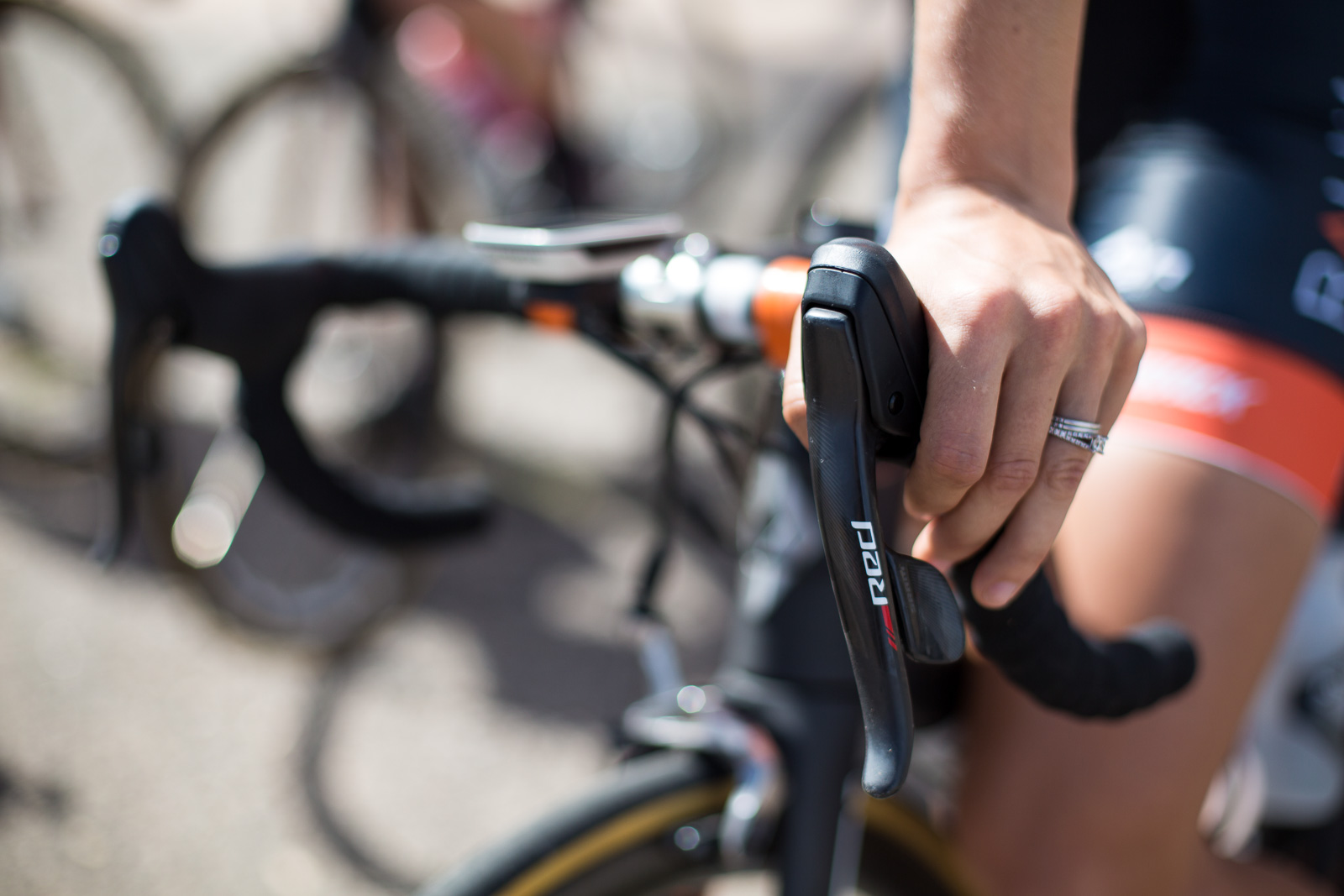
The width of handlebars is one thing that differentiates women’s and men’s bikes. Photo/Provided
By Susan Wood
One could say Canadian professional rider and Amgen competitor Kirsti Lay has kept pace with the evolution of the bicycle.
That’s because the Montreal cyclist has diversified her lifelong riding habits through the years. Though subtle in geometry and operation, a bicycle’s materials have changed quite a bit in the century-plus it’s been around.
And in her mere 29 years, Lay has made a point of trying out different variations. Her latest version will be featured competitively in the Amgen Breakaway from Heart Disease women’s race slated to start in South Lake Tahoe on May 11-12 and finish in the Sacramento area the following two days.
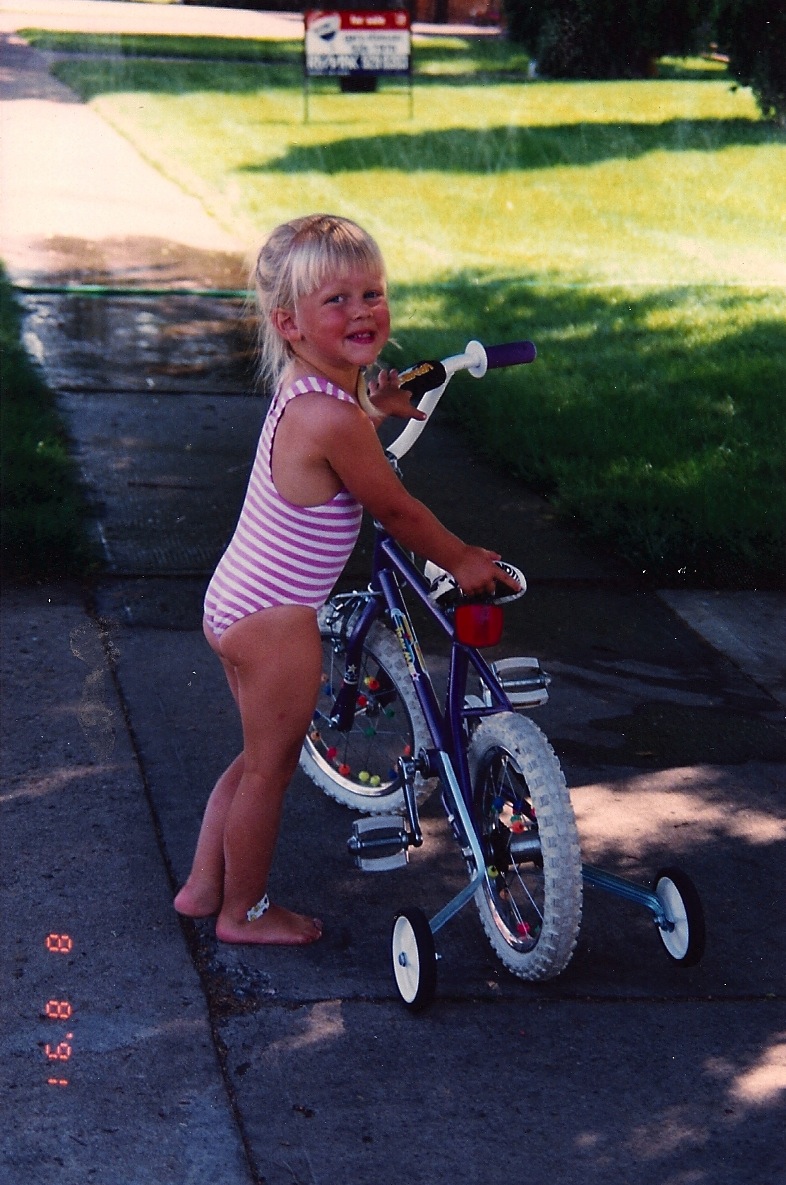
Kirsti Lay has come along day since her training wheel days. Photo/Provided
“I’m excited. The Tour of California (aka Amgen) is the No. 1 race on the calendar. It’s the biggest race in the United States, especially for women,” Lay told Lake Tahoe News.
This year’s ride for the women is Lay’s third – which holds the distinction of having the highest summit in race history at 7,740 when the 300-plus riders crest Luther Pass. Moreover, climbing Daggett Pass over Kingsbury Grade represents no slouching either.
Lay crashed last year on Stage 2 in Folsom, sustaining a back injury. So, she hopes to make a big showing this year when she slings out of the pack from drafting to lead in the finish.
“It’s so beautiful, but it’s not like you’re really looking. You have to pay attention,” she said of the Tahoe legs, in a remark that resembles what a mountain biker says about the Flume Trail.
“I like that it’s a little bit of everything. You have the altitude, making it a hard race. You can’t really hide. You have to race smart, especially when the lactic acid puts you in the pain cave with its super intensity and you need oxygen. You just have to recover.”
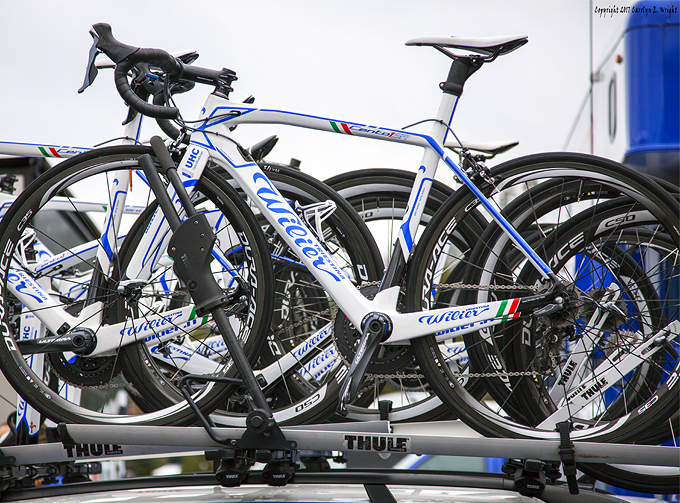
The weight of professional bikes continues to decline. Photo Copyright 2017 Carolyn E. Wright
That’s when those 22 speeds running off an 11-ring sprocket on two chain rings that racers now traditionally use will help Lay, who is laying down her strategy with her Diamondback provided to her Rally Cycling Team by SRAM, her sponsor.
Not bad for a little girl known for routinely roaming her small-town neighborhood in Medicine Hat, Alberta. Lay has been on one of her many bikes for as long as she can remember, leaving training wheels at age 3. She spent most of her childhood on her “purple” bike – the proverbial 10-speed most serious enthusiasts used up through the 1980s.
She enjoyed being out on her bike so much as an adolescent, her mother had to corral her to get her to the dinner table.
Move over computerized gadgets that occupy today’s youth. This fascination would come later to her as an adult with a power meter on her competitive bike to mark one of the biggest differences in bike technology.
Lay deviated from cycling between the ages of 10 and 24 by taking on speed skating on a track. She got so good at it she earned an Olympic bronze medal for Team Pursuit at the 2016 Rio de Janeiro Games.
When a debilitating ankle injury sidelined her speed skating career, she traded in her blades for wheels and elevated her passion for cycling. The Cycling Canada Federation recruited her for track racing, in which she came to excel in the no-holds-barred pursuit of the Velodrome for National Team Track Cycling. Talk about a different type of bicycle – one gear, no brakes.
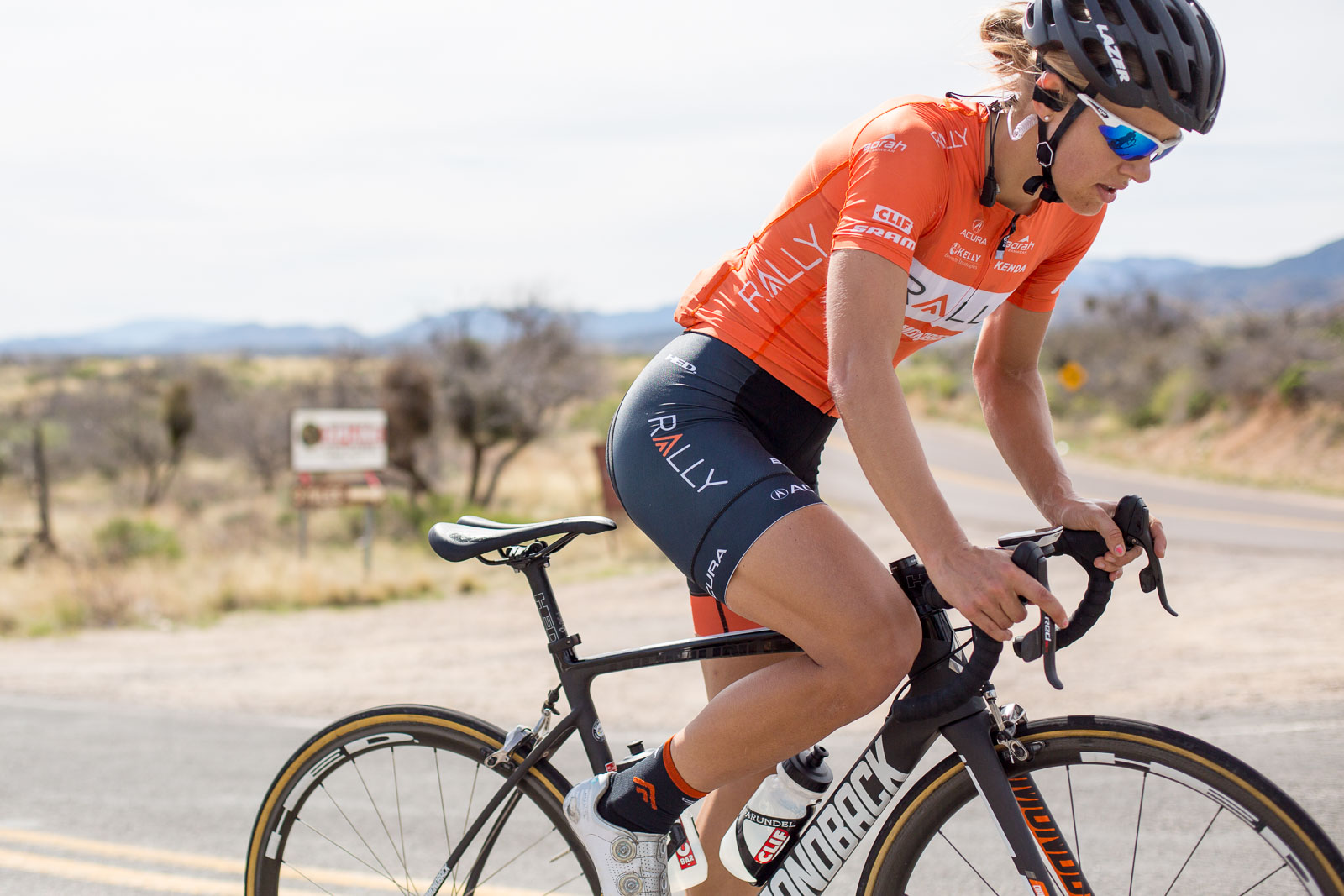
Kirsti Lay is motivated to do well in this year’s Amgen bike race that starts May 11. Photo/Provided
In the summer, Lay would take to the road, racing competitively for more than three years. With that, she even met her hubby, Mathieu Girous. Roadies in competition run in close-knit circles.
“Cycling ended up being more fun,” she said, comparing it to speed skating. For one thing, competitors don’t have to always turn left. “It was better on my body.”
She also improved her bicycle components along the way.
Racing bikes have evolved quite a bit from her training wheels and steel “purple” bike and the 1970s Norco 10-speed her parents loaned her to take to college.
“I used it because no one would steal it,” Lay joked about its age. Then, there were the snowy spring conditions it had to endure. “It was pretty indestructible.”
Now people have asked to buy the family bike because it’s a collector’s item.
For racing, Lay found herself riding on what would be considered “men’s bikes” – even though those in the industry consider the gender differences slight.
Size makes for the most significant difference between how a man’s versus woman’s bike operates. Men have wider shoulders, so the handlebars tend to be a few centimeters wider. Women have wider hips, so the seats may be a little larger.
“There’s not a lot of difference, but the companies may sell them that way,” she said.
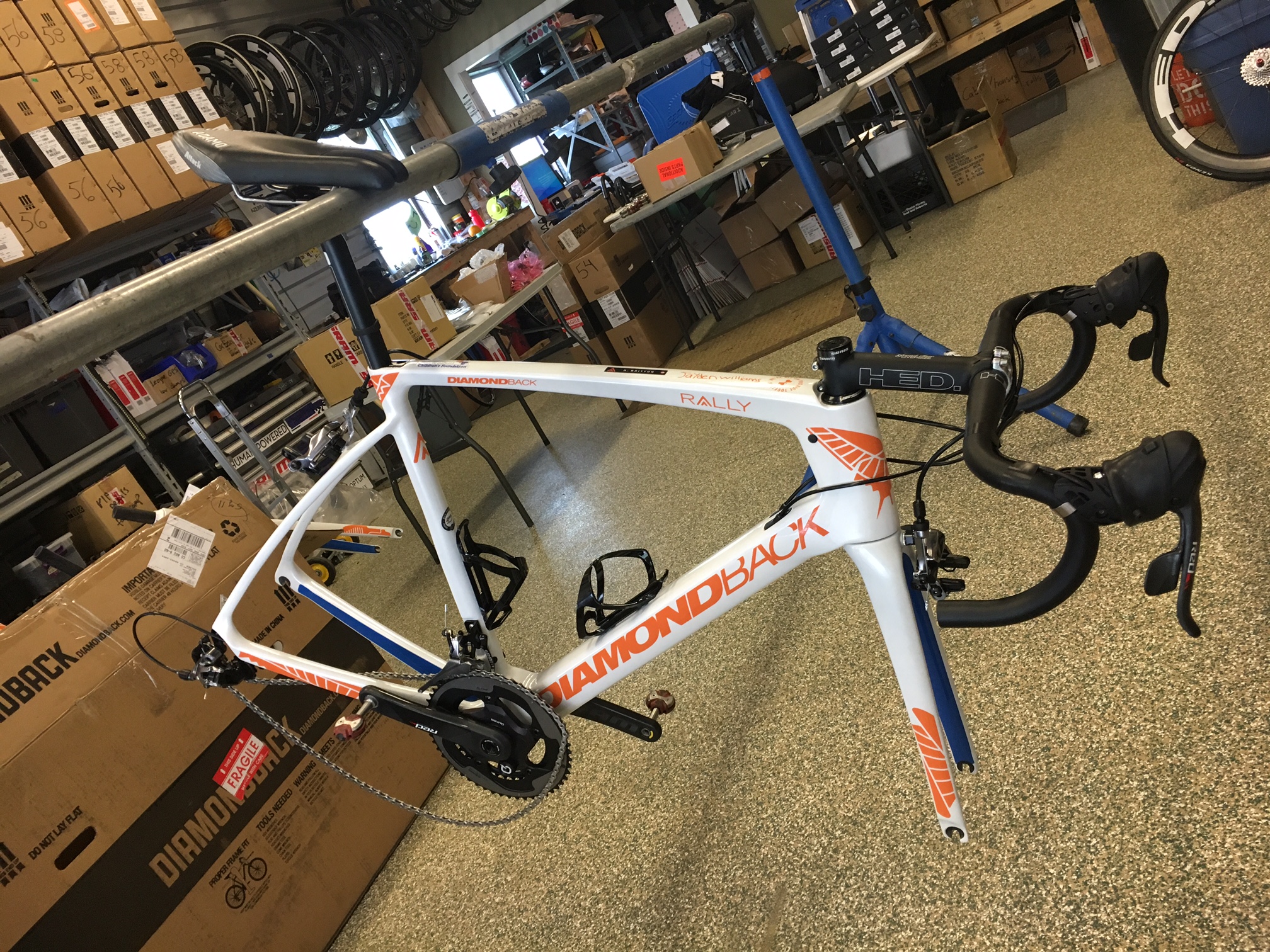
Frame technology has changed the most through the years. Photo/Bob Gregorio
Laying the framework
Her first racing bikes were designed for men, but she admitted to “liking the colors,” she joked. But when she moved to a smaller version of racing, it didn’t feel as bulky.
“I felt like I was driving a school bus,” Lay said. “When you’re fit properly, you know the difference.”
The biggest difference in the evolution of bicycles is the frame, which moved from steel to aluminum to carbon fiber – the latter becoming the choice of many serious cyclists. The latter two materials are lighter, with the carbon variety installed as a single part instead of the steel tubes welded together.
In some cases carbon bikes weigh as much as 10 pounds lighter than even a light steel. Carbon also withstands vibration better than aluminum, as Lay discovered and the experts attest to.
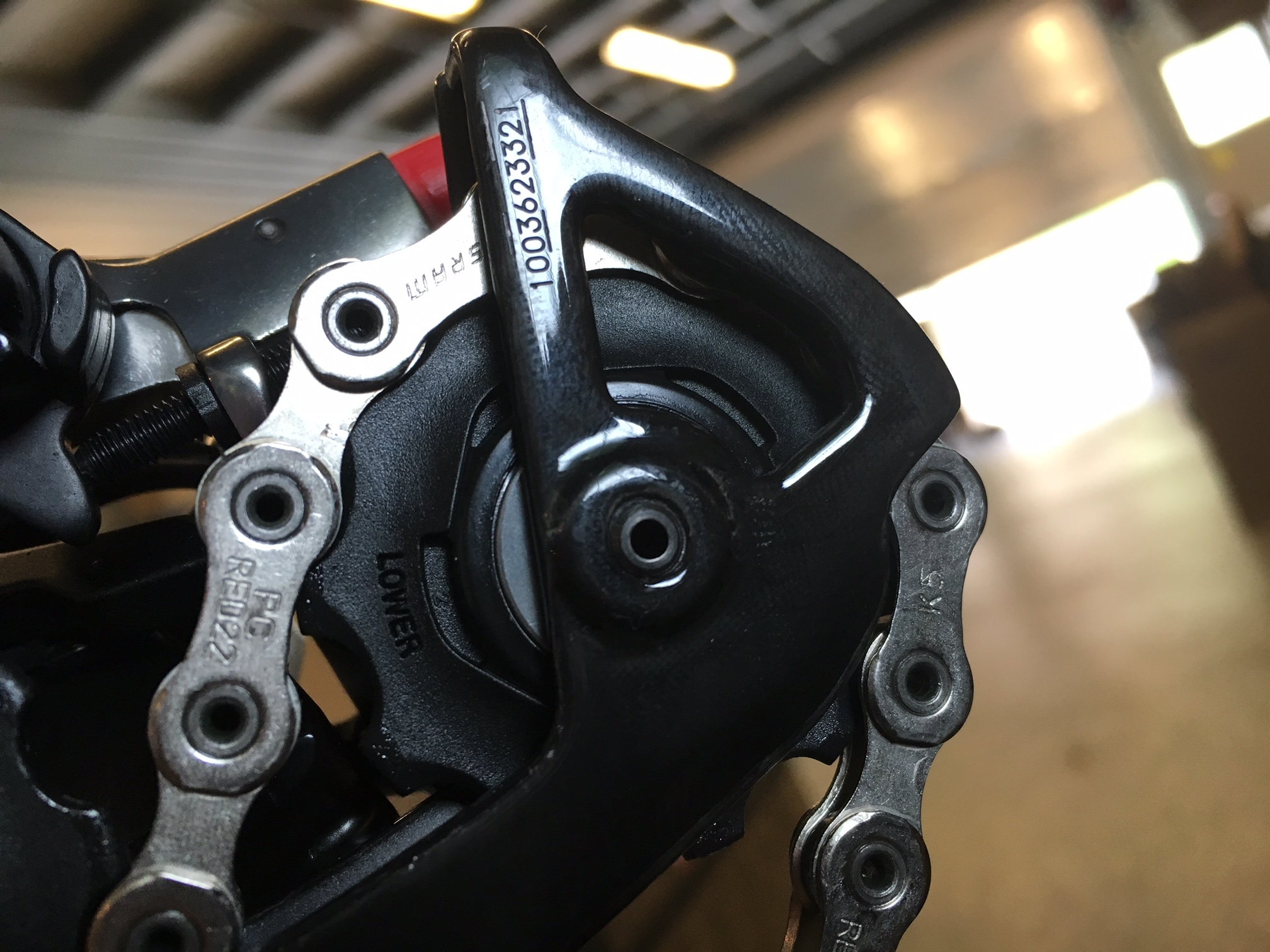
Bike components keep evolving. Photo/Bob Gregorio
Lay’s teammate on the men’s side, Evan Huffman, pointed out how his race training Diamondback bike lets him soar up the hills – a necessity to prepare for the taxing Amgen race. Lake Tahoe enthusiasts may witness the men’s legs of the race in the Sacramento area with the women on the same weekend. The men finish in Pasadena on May 20.
“I feel I can climb anything with this gearing,” Huffman told Lake Tahoe News while out on a ride in Folsom. At 27, the El Dorado Hills resident recalled how his evolution into cycling also aligned with the changes to bike technologies. He likes what he sees now.
He rode seriously as a child, competing in triathlons as early as 10 years old. Moving from aluminum to carbon fiber frames elevated his status in the cycling world.
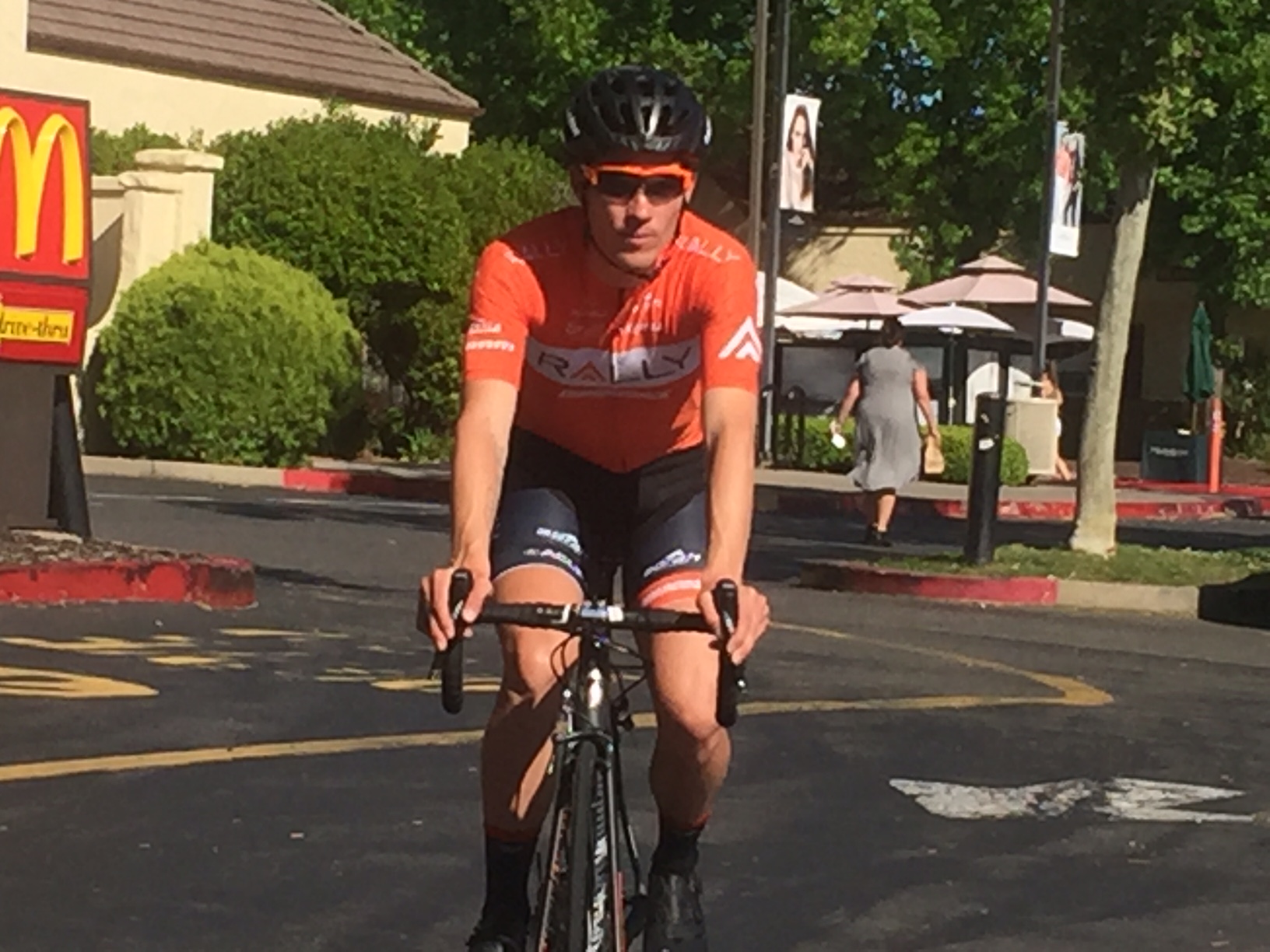
Evan Huffman embraces the changes in bike components. Photo/Susan Wood
Shifting gears for the next generation
The shifting components may be an area of change to come. The shifters have already moved from the drop tube on the frame to the handlebars. Huffman anticipates the mechanical gear shifting with its full cable to move to more electronic with a short cable where a touch of a button will sense and signal what gear to be in for the terrain. All the manufacturers including Shimano, SRAM and the old European favorite Campagnolo “Campi” are making electronic versions, but some in the industry agree the technology is prone to be temperamental in moisture.
Then, there’s wireless – which would come with no cable of course.
The computer technology would match one of the other monumental changes to the evolution of bicycles aside from the frame and the shifting system.
Racers insist on power meters planted as a small sensor on the bike, much like a heart monitor used at the gym.
“At the elite level, competitive cyclists choose to monitor their power with this valuable training device. You can see how you’re doing from week to week, while mapping out a ride,” said Bob Gregorio, a top-notch racing mechanic who’s an inventory cycling parts specialist for Circuit Global Sports Management in Golden, Colo. “And with GPS expanded, you can measure how much wattage you put into the crank and how hard you’re pushing. Then, you can download and see it later at some point in the day.”
For pedals, Lay and Huffman ride on the lollipop-shaped Speedplays because they’re light, allow for more power with a push and pull action and are easy to get in and out of with their dual sides. Weekend warriors doing triathlons tend to use these pedals similar to ski bindings.
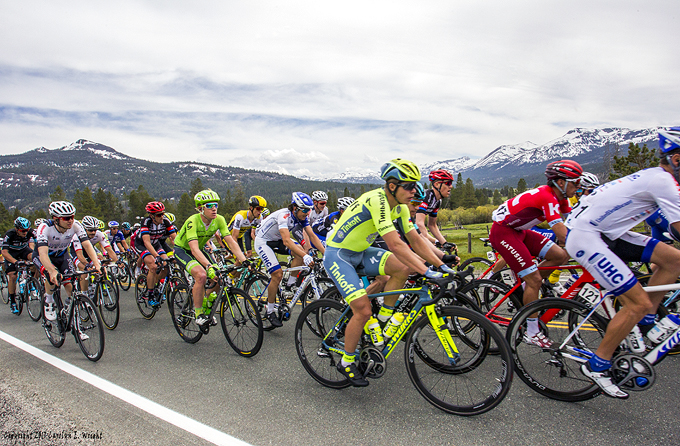
Few differences separate the various bikes at the top level of racing. Photo Copyright 2017 Carolyn E. Wright
Sprockets, chains, derailleurs, cranks and clips — Gregorio makes it his business to keep up with the latest bike technology. He defines steel bikes as fine for the weekend warrior with their durable yet heavier material, but the material is unheard of now for racers who have graduated from aluminum and titanium to carbon fiber.
Technology exists for disc brakes, but it’s seldom used and not at all in elite racing.
“They’re banned because they’re dangerous. There were too many crashes. Then you have a sharp piece of metal. It could be a thing of the future, but they’ll have to make them safer,” Gregorio told Lake Tahoe News.
Hydraulic brakes have become more common with mountain bikes, but the change for roadies hasn’t been “driven by the marketplace,” Gregorio insisted.
An area of noticeable change with bicycles is simply in the price of them.
As a youngster in the mid-1960s, Gregorio used to visit his local Schwinn shop as he had “already been bitten by the cycling bug.”
“I entered one day to get a part for my coaster brake hub, and there on the wall was hanging a Schwinn Paramount with full Campagnolo Nuovo Record components and silk tubular racing tires,” he said as though seeing a gorgeous girl. “It only weighed 21 pounds. It was the most beautiful bicycle I’d ever seen – a highly functional piece of artwork. But it’s price tag was outlandish to me at the time — $350.”
Now road bikes for the consistent rider can run $1,000 to $7,000. At the pro level, high-end bicycles cost $7,000 to $10,000.
One can see these high-quality machines in action when the women take to Lake Tahoe’s South Shore roads. The Amgen Stage 1 race starts at Heavenly Mountain Resort’s California Base Lodge for the ride around the lake. Stage 2 features the climbs on this 67.1-mile route, running through Meyers, over Luther Pass into Hope Valley along the Carson River around the Washoe Reservation before heading west onto Foothill Road in the Carson Valley and up Kingsbury Grade. The latter represents an 8-mile climb that gains 2,700 feet.
Both stages finish up Ski Run Boulevard to Heavenly. It’s recommended that spectators hoping to vie for position and enjoy the bike expo at Heavenly to get there at least by 10am.
 Knight, the founder of Nike, in 2016 published his memoir “Shoe Dog” (Simon and Schuster).