Amgen women riders deal with sexism, inequities

By Blair Anthony Robertson, Sacramento Bee
 
When the Amgen Tour of California takes off Thursday in South Lake Tahoe, the speeding peloton will feature some of the most accomplished women in the sport, their heads down and hands gripping low on the bars as they race to the finish line.

These pros train long, grueling hours on the bike and, much like their male professional counterparts, put on an exciting and inspiring show for the fans. But the similarities end when you begin to dig into the details.

Women are paid less, get far less media attention, and, when invited to participate in high-profile events like the Tour of California, often don’t get to race on the same challenging routes as the men.

Read the whole story


Workshops focus on growing veggies in Tahoe

UCCE Master Gardeners of Lake Tahoe is hosting free workshops to teach people how to grow food at the lake.

These spring workshops will be focused on strawberries, asparagus and tomatoes.

May 13: Kahle Community Center, (1-3pm)—Strawberries
May 20: South Lake Tahoe Library, (10am-noon) — Asparagus
May 30: South Lake Tahoe Library, (6-8pm) — Tomatoes

Participants receive instruction on cultivation techniques, history and background on the plants being highlighted. Everyone will leave with free plants for their gardens. These are family friendly workshops, with hands-on opportunities to get acquainted with growing vegetables.


Barton accepting applications for grants

The Barton Foundation is giving $40,000 in grants to improve community health. Local nonprofits, health organizations, schools, and public agencies may apply for funding.

The grants provide funds for programs and organizations that positively impact the health of the South Tahoe community. In this grant cycle, projects and programs that address mental health, substance abuse, and access to healthcare services will be considered. These three issues were identified as the most pressing health needs in South Lake Tahoe’s 2015 Community Health Needs Assessment.

Grant proposals will be accepted until May 31. Priority will be given to programs that benefit underserved populations and people under age 25. Some of the other grant criteria include the educational benefit, long-term impact, and emphasis on collaboration.

Additional grant criteria and the application are available online.


Money Matters: Benefits of tax diversification

By Rick Gross

Taxes are an often-overlooked aspect of retirement planning. While many Americans are saving diligently and focused on accumulating the biggest nest egg possible, many investors may not be fully considering the impact that taxes will have on their monthly income in retirement. This is an important dynamic to understand and will prevent any unnecessary surprises when you enter your hard-earned retirement.

Know your retirement plans

Rick Gross

IRAs, 401(k)s, or other workplace plans are great ways to save and invest for retirement. Your contributions are generally made with pre-tax dollars, and you don’t pay taxes until you withdraw money. If you have access to a workplace retirement plan or an IRA, take the time to evaluate how your savings may be taxed in retirement. It’s important to factor this into your retirement income planning.

One way to potentially minimize the impact of taxes in retirement is to accumulate savings in an account that gives you access to tax-free withdrawals. To achieve this, many people choose a Roth IRA. Strategic planning and dedicated saving in a Roth IRA during your pre-retirement years may give you more options to manage your retirement income stream in a tax-efficient manner.

In general, a Roth IRA may make sense for investors who anticipate being in a higher income tax bracket later in life (examples include marriage, progressing in your career or annual raises), or who prioritize having tax-free retirement assets. Direct contributions to Roth IRAs are only available to those who meet specified income limits (check with your financial advisor or tax professional for details). You invest after-tax dollars into a Roth IRA, but if certain requirements are met, all withdrawals can qualify for tax-free treatment. This is a unique advantage that few other vehicles offer. Your employer’s plan may also offer a Roth option, which is a way to save even more money that benefits from this distinctive tax treatment.

You can also convert dollars from a traditional IRA or workplace plan into a Roth IRA. This allows you to put a larger sum into the tax-free category for retirement. A Roth conversion can also create a sizable tax liability in the year the conversion is made, so you need to determine if this strategy is suitable for you. If you want to use this strategy, you’ll need to have enough money available outside of the IRA to pay the taxes incurred. Always consult with your tax professional before moving forward with this strategy.

Tax-smart retirement spending

Generally, it’s a best practice to allow money with more favorable tax treatment to stay invested for as long as possible to extend those tax benefits. The advantage of owning a tax-diversified mix of assets once you reach retirement is that it helps you manage your tax burden on a year-to-year basis, per your personal circumstances. In any given year, your strategy may include:

·       Withdrawals from a workplace retirement plan or IRA funded with pre-tax contributions that are fully taxable

·       Distributions from a traditional IRA where a portion is taxable

·       The sale of taxable investments where tax may or may not be due

·       Withdrawals from a Roth IRA that are not subject to tax and don’t add to your taxable income

Managing income levels effectively in a particular year can help limit the amount of taxes due in that year. Depending on your income level, a portion of Social Security benefits may be subject to federal income tax.

Tax decisions should be one consideration in your retirement income strategy. Putting yourself in position to have options as you draw income requires planning in advance. Investing with tax diversification in mind may help you access income with different types of tax treatments in retirement. As you craft your strategy, be sure to discuss the potential tax treatment of your investments with your tax advisor.

Rick Gross is a financial advisor and private wealth advisor with Ameriprise Financial Services in South Lake Tahoe.


USFS to study Meeks Bay’s future; marina closed

Meeks Bay Marina is closed indefinitely. Photo/LTN file

By Kathryn Reed

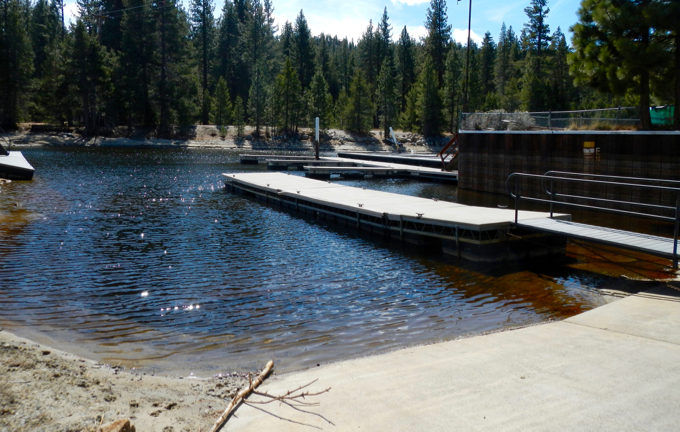
It’s possible Meeks Bay Marina will never see another boat launched there.

The rest of the operations at the resort remain open. But what the area will look like in eight years remains to be seen.

A settlement agreement is expected to be approved Wednesday by the Lahontan Regional Water Quality Control Board. The state agency went after the U.S. Forest Service – the landowner; Washoe Tribe – which has a 20-year contract that expires in two years to run all of the operations; and Action Water Sports owner Bob Hassett, the marina operator.

It has been an ongoing dilemma that finally has a resolution that includes long-term planning. Multiple citations had been issued and nothing changed. A dirt parking lot was dumping fine sediment into Lake Tahoe at a rapid rate.

Last year the marina was shut down. The Forest Service has removed it from the special use permit. Its future will likely be studied in forthcoming environmental and planning documents.

“It’s unfortunate the marina is at the mouth of the creek. I’m not sure if they have an opportunity to put the ramp somewhere else,” Cathe Pool, senior engineer with the water board, told Lake Tahoe News.

Heather Noel with the Lake Tahoe Basin Management Unit said, “I don’t have an idea of when it could open until we are through the planning process and a decision on the use and restoration of the marina is determined.”

No one from the tribe returned a call.

The Forest Service this summer intends to issue a notice of preparation, which is the prelude to environmental documents being initiated.

“We are looking forward to finalizing the proposed action this summer to get the public’s weigh-in on what they would prefer to see at Meeks Marina,” Noel told Lake Tahoe News. “The Forest Service developed a proposal using our existing appropriations budget, however we will need to identify the path forward on paying for planning and improvements.”

By November the feds are supposed to present to Lahontan “a first phase assessment for the project identifying expected environmental benefits, multi-benefit success criteria, and a five-year monitoring plan.”

Lahontan wants whatever the project is to be completed by 2025.

“I feel like we are getting more benefit to water quality than if they just paved the parking lot,” Pool said. That is what was initially asked of the USFS by Lahontan. Ultimately a more diverse project with enhanced environmental gains will be developed.

Temporary erosion control measures are in place, and according to Pool, held up well through this winter.

—–

Notes:

·      The Lahontan board meeting is May 10 at 7pm, 971 Silver Dollar Ave., South Lake Tahoe.


Letter: Trying to understand Liberty Utilities

Publisher’s note: The following letter is from the North Tahoe Citizens Action Alliance to the California Public Utilities Commission. It is published with permission.

Dear Commissioner [Carla] Peterman,

We welcome you to your new assignment to preside over the administration of the decision. As citizens and ratepayers we understand the Commission is our ally for affordable and fair costs of any regulated utility monopoly. NTCAA intervened on behalf of residential and small commercial ratepayers and the Office of Ratepayer Advocates was not able (due to limited staff and funding) to intervene. As a group of ratepayers in a very small electric utility service area we could only hire a technical consultant. We are not presenting our side moderated by attorneys or their paid consultants contriving evidence to suit a particular argument for their client. Our concern has always been the technical realities; i.e. the scientific and economic facts used as the basis and rationale for the proposed expenditure.

Due to the most recent submission of Advice Letter filings we noticed how Liberty Utilities insists repeatedly that the 89MW peak load has validity per the decision. NTCAA finds this position a consistent and predictable pattern due to their zeal for the Phases 2 & 3 despite the lack of technical support. The numbers used in the Decision (e.g., 89MW for Phase 2) were derived from discredited technical data – the model inputs were flawed and constantly manipulated with every iteration of their studies (four iterations to date). The most recent iteration completely excludes the essential diesel power plant (recently upgraded), so that LU’s consultant could try to show support for the 89MW number.

We do not understand why the completely discredited number was mentioned in the decision other than as a tentative example of triggers from prior technical studies. If the triggers were valid in the eyes of the presiding ALJ and the commissioner then there would have been no reason for the decision to explicitly condemn the studies for fatal flaws incapable of technical support and have specific language calling for a new network study.

But Liberty Utilities continues to spend ratepayer funds repeating the 89MW trigger as if it has any technical support. The decision calls for a new load study to establish technically supported triggers for Phase 2, and even more importantly for Phase 3 which is the most controversial power line expansion through the Lake Tahoe Basin. These two phases are a $50 million investment for Liberty shareholders at with a return paid for by 46,000 ratepayers of about $10 million per year.

Why is Liberty Utilities pushing so hard for the 89MW number? We can see a few reasons.

1) They are getting a very substantial return on rate base net of depreciation, taxes, insurance, and increased maintenance. So whether LU spends $5 million or $ 50 million is the same generous level of return on cash spent. Unchecked this can lead to “Cadillac” upgrades that only benefit investment groups.

2) They are completing the transmission network upgrade as envisioned and designed by NVEnergy (Sierra Pacific Power Company) in 1996. But the fact that NVEnergy retained assets that will significantly benefit from this regional upgrade does not matter for LU because they get the financial return anyway. Whether this obligation for LU to complete NVEnergy’s Application from 2010 was a part of the sale we do not know. But LU’s legal team has always been pushing it hard from the beginning as if there was some other motive behind being the surrogate for NV Energy.

LU attorneys have submitted two Advice Letters (both pending) trying to push, or more precisely lobby, the Energy Division into granting Phases 2 and 3. The Energy Division is apparently working to implement the Decision as written to conduct a new network study using valid, technically supported, and consistent assumptions including the diesel power plant.

3) Once they have latched on to a number, especially a number from NV Energy, the legal strategy seems to be just dig in and repeat it over and over again, hoping people will eventually believe it. NTCAA is asking that you and the new ALJ Robert Haga, and any staff involved in the proceeding do not submit to this pressure by LU attorneys and their biased consultants. In LU’s Advice letter filings the 89MW is mentioned several times referencing the Decision, but as usual it is taken out of context without any mention of the numerous references that the technical studies are flawed so deeply that number is unsupported, and therefore this led to the Decision’s explicit language for a new network study to determine trigger points for Phase 2 and 3. The fabrication of a minor equipment failure as reason to approve Phase 2 is simply further evidence of LU advocacy on behalf of NV Energy.

NTCAA believes that LU is pushing a project originally conceived in NV Energy’s 1996 study (under the name Sierra Pacific Power Company) was called the North Tahoe Capacity Plan covering the entire region (including Nevada’s Incline Village and the Truckee Donner PUD) because SPP (NV Energy) owned all the substations in that region. Then SPP sold a slice of their system (just the California customers) and a few substations while retaining the key substations, some distribution lines, and half of the diesel generator output. A map of current system ownership is an attachment to NTCAA’s Motion to Compel in the record.

The 1996 design was to accommodate growth that never happened. In fact, the loop that is to be upgraded experienced peak loads of about 61MW in 1996 and about 61MW in 2015. There was no net load growth because of technical efficiencies and restrictive growth controls in the Lake Tahoe Basin.

The key to understanding this issue is that the loop upgrade was SPP’s 1996 plan to accomplish two system benefits: First, is to enhance the existing backup source for Incline Village since the Kings Beach substation currently feeds the Knotty substation in Incline Village, Nevada, and second, is to move the current loop source from the Truckee Substation (60kV) to the North Truckee substation (120kV). Under the 1996 Plan SPP was prepared to spend $15,000,000 to make the same improvements on behalf of the regional system. But today it is LU customers only that would pay for the system’s improvements.

The Truckee 60kV substation is being pushed to capacity by steady new net loads in Truckee. If NV Energy moves the source of the 61MW loop to its North Truckee 120kV substation, then they can increase revenues by serving continued load growth in Truckee. The regional improvements benefit NV Energy’s substations in Truckee and Incline Village. With 120kV lines serving an upgraded Kings Beach substation which include additional 14.4kV feeder capabilities to NV Energy customers in Incline Village, their backup needs are paid for.

And of course this planning (1996) was all before the sale to LU of its California customer base. Now LU is pushing the same regional upgrades with huge benefits to what are now NV Energy assets on the backs of a narrow and very small LU customer base. This is unjustified from the LU ratepayers’ perspective as the costs are not correlated to the beneficiaries, and at best are not proportional. NV Energy should be paying for at least half of the Kings Beach substation upgrade portion ($ 9 million) and all the cost of moving the source line to the North Truckee substation ($6 million). Instead, LU is using their attorneys and biased consultants to suppress information, manipulate the technical studies, and divert the arguments to procedural issues.

NTCAA urges you to allow the Energy Division to continue its work in implementing the Decision without falling victim to carefully crafted legal jargon that is a smokescreen for the technical realities on the ground.

Sincerely,

David McClure, president NTCAA



USDA secretary halting school nutrition standards

By Weston Williams, Christian Science Monitor

U.S. Department of Agriculture Secretary Sonny Perdue has had a busy first week. Only six days after his appointment to the new position, Perdue announced he would roll back Obama-era school nutrition standards, a move that has prompted criticism from a number of nutrition experts around the country.

Perdue called for a relaxation of the standards in the Healthy, Hunger-Free Kids Act introduced in 2010, which had been championed by former President Barack Obama and former first lady Michelle Obama.

The rollback would reduce whole-grain requirements, allow higher levels of sodium entrees, and restore higher-fat and sweetened milk to school cafeterias nationwide.

Read the whole story


Movie review: ‘Guardians Vol. 2’ out of this world

By Howie Nave

I’ll say it from the start: not quite as good as the first one but still a galactic roller coaster. And c’mon, it’s tough to follow the unexpected hit from something so out there as the first one did.

Like the first sci-fi, pop culture fantasy, “Guardians of the Galaxy Vol. 2” follows a similar formula of the first, but amps things up with its mix of pop-rock hits of the 1970s and over-the-galaxy use of CGI special effects.

This sequel boasts an impressive cast of newcomers (along with the original cast) with some pretty impressive folks making cameos in this outing. Marvel Comics (with a little help from the Disney folks) seems to have it down going from comic book to the big screen pretty easily without sacrificing the core of the characters one has grown used to seeing in print format. But it’s the lunacy of the dialogue and attitude that floats this space odyssey.

Back to bring justice to the universe are Chris Pratt as the heart-of-gold, wisecracking Peter Quill/Star-Lord, his love interest in the way of green heroin, Gamora (played by Zoe Saldana), Dave Bautista as the nonstop laughing and somewhat dim-witted Drax, the best role model for raccoons everywhere, Rocket (voiced by Bradley Cooper) and the latest, youngest (and smallest) regular cast member, Baby Groot (voiced by Vin Diesel).

The villains are top notch and run the gamut of alien personalities from the golden-skinned, High Priestess warrior princess Ayesha (Elizabeth Debicki), who leads an army of followers who suck at video games pursuing the “Guardians of the Galaxy” because Rocket stole some batteries (that keep these golden-skinned aliens active) after they were hired to protect them to the blue-skinned Yondu (played brilliantly by Michael Rooker) a pirate of sorts with a red mohawk looking device on his head and sporting British teeth. Closer to family we have Gamora’s sister, Nebula (Karen Gillan) who takes the definition of dysfunctional to a whole different level wanting to kill her sister. Speaking of dysfunctional family members (and kicking off the movie) is Kurt Russell as Quinn’s long lost father with a few god-complex issues living on (or more like he is) Ego the Living Planet. Yeah, it’s a trip and even though he’s no Darth Vader there are more than enough serious attachment issues that makes Peter wanting to ask more questions than receive answers.

I’ve often said that I love my family the farther away they live, but some of the family members here? Not even another galaxy is far enough for our principle characters here. 

I saw “Guardians 2” in 3D and whoa! If you get an opportunity, you must try the 3D version because you feel as if you’re adrift in space and some of the scenes will have you grabbing your seat to make sure you don’t drift too far away from whatever spaceship you might be in. I actually felt my head get that same sensation drinking an ice cold margarita too fast in a hot temperature environment with the effects of 3D. What a rush! Co-writer-director James Gunn it seems was given a lot of creative leeway with this sci-fi, pop-culture of a flick that includes references to actor (and he’s big in Germany) David Hasselhoff, “Cheers” and “Mary Poppins.” 

The beginning kicks butt after the introduction of a young Kurt Russell (the effects are amazing how they can shed years off a familiar face) in 1980 then fast forward 34 years later with Quinn announcing “Showtime A-holes!” There’s a bit of a lag in the 2nd act but more than makes up for it in the final act. “Guardians of the Galaxy Vol. 2” is rated PG-13 and clocks in at 2 hours, 15 minutes. 

Howie Nave is host/emcee/manager of The Improv at Harveys. You can hear him Monday-Friday 6 to 10am on KRLT FM-93.9. He has been reviewing movies for years. They may be heard on four other stations each week where he does “A Jew Doing a Movie Review,” and he occasionally writes reviews for Lake Tahoe News.


U.S. plan to improve firefighter shelters falters

By Keith Ridler, AP

Crews who battle wildfires will have to wait at least another year before getting better fire shelters than those that failed to save 19 firefighters trapped by flames in Arizona four years ago, officials told The Associated Press on Thursday.

The deaths pushed the U.S. Forest Service to speed up work to get an upgraded shelter in place this year, but the effort has been delayed a year after prototypes could not outperform the shelter developed in 2002.

It comes as firefighters are facing more destructive wildfires and the struggle to protect more homes being built in or near remote areas.

Read the whole story


Heed warnings when exercising at altitude

By Sammy Caiola, Sacramento Bee

The thin dirt road to Round Top Peak lurched up toward the distant ridge line, teasing me with the promise of alpine lake views as I climbed the mountain’s face one heavy step at a time. I was physically fit – or so I thought – and I had lugged my 40-pound backpack up and down plenty of mountains. So why did I feel so utterly exhausted?

Altitude sickness, as I found out, can be a roadblock even for the most confident hikers. Having grown up at sea level and hiked mostly in the Sierra foothills, my only elevated fitness experiences involved gliding down the slopes of Lake Tahoe ski resorts. So when I set my eyes on the 10,400-foot Round Top Peak in the Carson Pass Management Area last spring, I didn’t know I’d be feeling light-headed and gasping for air like a dry fish just a few miles into the trip.

Fortunately I stopped my ascent before the point of collapse, but plenty of adventurers have paid the price for exercising above their limits. Altitude illness affects 25 percent to 85 percent of travelers to high altitudes, depending on their rate of ascent, home altitude and other risk factors, according to the American Academy of Family Physicians. Severe cases of altitude sickness can result in death.

Read the whole story