Opinion: Expanding Memorial Day’s definition

By Kathryn Reed

Someone is missing. That’s what Memorial Day is all about; remembering those in the military who have died.

This year I’m broadening the definition of Memorial Day. I’m mourning the loss of my 32-year-old cousin who died last month, and whose services will be in June.

She was an alcoholic.

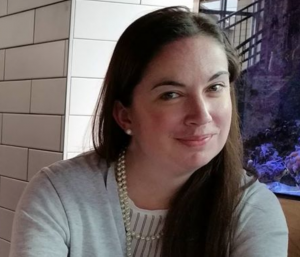
Christina Reed

No one knew this until it was too late. She was admitted to a Denver hospital on a Tuesday and died that Friday. It was in that brief time that the truth, or at least a small amount of it, spilled forth.

Answers to so many questions are buried with her. So many whys. Why did she start drinking? – Was it her mom’s death nearly five years ago? Why didn’t she tell anyone about her pain? – Did she feel embarrassed? Why didn’t she ask for help? — Or did she and no one heard her? Why wasn’t her life enough to make her happy? Why? Why? Why?

From what I have learned in these few weeks, she had to have been drinking an incredible amount of liquor. It may have started a handful of years ago, maybe it was going on in college.

Christina was so bright and funny; she graduated from Wellesley College, was an attorney for the Bureau of Land Management, a beautiful skier who gracefully schussed down even the most difficult runs at Vail Mountain.

She was loved. Her dad, cousins, aunt and uncle all lived nearby. She had a cadre of friends at work and throughout the country.

No one, though, knew about what turned out to be a lethal secret.

She was a functioning alcoholic. But at the same Christina created a web of lies that only now are starting to unravel. It proves that even those who seem to have their lives together are fighting demons we don’t know about.

I last saw Christina in January 2011. I had the opportunity to ski with her at Vail, to spend some time getting to know my youngest cousin just a tiny bit. We were never close; age and distance were the big obstacles. But she was family and we had a bond that even in death cannot be broken.

I ache mostly for my relatives in Denver who are left sorting through the fragments for answers that may never come. The “what ifs?” that linger; that eat away at you, making you believe you could have saved this troubled soul.

Life isn’t easy – for anyone. Perhaps a death like Christina’s is a reminder to really check in with people who mean something to you. Don’t let canceled get-togethers become the norm without real probing; don’t let questionable answers about health issues be easily dismissed; check in on the person where they live; stop the judgment as much as possible; and start listening – sometimes all it takes is being in a safe place to open up. But also know you can’t always solve someone else’s problems – and that is what can be so painful.


Woman survives boat prop injury; cyclist hurt

South Tahoe firefighters were busy on Sunday with non-fire calls.

A 22-year-old woman was hit by a boat prop on the South Shore. She was brought to Lighthouse Shores in the Tahoe Keys on the afternoon of May 28. South Lake Tahoe’s police boat was first on the scene. South Tahoe fire paramedics arrived and then took her to Barton Memorial Hospital.A 9-year-old visiting South Lake Tahoe was hit by a vehicle at Martin and Fountain avenues. He broke his wrist and is missing a few teeth.— Lake Tahoe News staff report


Caltrans adopts statewide bike-pedestrian plan

By Alexa Renee, KXTV

California is officially moving toward an active transportation system.

Caltrans announced Tuesday the decision to adopt the first statewide bicycle and pedestrian plan, Toward an Active California.

The Golden State has seen a double increase in active transportation over the last decade, according to Caltrans.

Now the state is working to further encourage Californians to hop on a bike or put on their walking shoes to get around on a daily basis.

Read the whole story


Struggle for women to enter the military

By Elizabeth Cobbs

In 1917, U.S. Secretary of War Newton Baker disliked the idea of female workers on Army bases so intensely that he didn’t even want to build toilets for them. They might tarry. Females did not belong in the Army, Baker thought, though the more forward-thinking Navy already had welcomed women into its ranks to replace men in landlubber assignments.

Many adventurous and patriotic young women longed to defend their country during the Great War. They discovered that if they wanted to serve in uniform, they could not merely perform as well as the young men in the American Expeditionary Forces, who sailed to Europe in 1917 to help the Allies defeat the Germans. Women, still denied the vote, would have to perform better. They would have to do something the men could not. America’s ongoing Industrial Revolution gave the “Hello Girls,” as the first female recruits came to be known, their opportunity to serve the nation and earn full rights as citizens.

In May 1917, the month after Congress declared war on Germany, Gen. John Pershing sailed for France. He stuffed his ship’s hold with the newest technologies: Military tackle had undergone a revolution since Pershing served in the Indian wars of the 1880s. Planes had replaced horses. Trucks had overtaken mule trains. Telephone wires had outrun flares and semaphore flags.

Invented in the United States, American telephones reached farther, conveyed more messages on the wire, and reproduced sound with greater fidelity than telephones anywhere else in the world. They were the only military technology in which America enjoyed superiority over both allies and enemies. When the British commanding officer in World War I used an American-built line to place a call from France to England, he exclaimed, “Would you believe it? They actually recognized my voice in London before I told them who I was!”

Commands to advance or retreat, and to fire or stand down, were relayed by phone during the Great War. If America was going to position its immense armies quickly and effectively, it needed experts to handle this critical technology. “The importance of intercommunication in warfare cannot well be exaggerated,” wrote Brig. Gen. George Squier, chief signal officer for the U.S. Army Signal Corps. Without communications for even an hour, “the whole military machine would collapse.”

At home, telephone operating was sex-segregated. Callers rang female operators, who connected nearly every call made. Their job was demanding. With hands darting like hummingbirds, operators connected hundreds of impatient callers each hour. Diligent and quick, they talked with customers while manipulating plugs in a constantly changing pattern.

When Pershing arrived in France, he found male recruits ill-suited for this work. They were inefficient, and prone to frustration when dealing with rude callers. Few doughboys possessed the foreign language skills necessary to cooperate with French telephone operators when making long-distance connections. Necessity required innovation, so Pershing—an innovative thinker who had been nicknamed “Black Jack” after he commanded an African-American regiment on the frontier—departed from precedent, law, and the wishes of the Army itself to recruit women. Before most doughboys arrived, and well after they left, bilingual women served in France. They withstood submarine warfare, cannon fire, influenza, aerial bombardment, and petty-minded bureaucrats to send the word, over there.

Most worked behind the lines in safer regions of France. But one small group, led by Grace Banker, a 25-year-old graduate of Barnard College, followed Pershing from the short but intense Battle of St. Mihiel to the desperately extended Meuse-Argonne Offensive, lasting 47 days. The women ran switchboards 24 hours a day within range of artillery fire that lit up the horizon and shook their equipment. Enemy planes buzzed overhead. A German prisoner of war overturned an oil stove and burned their barracks to the ground. Yet the indomitable women embraced every challenge. The highest aspiration of nearly every female Signal Corps member was to serve as near the battle as possible.

Their efforts, along with those of female Army nurses and private volunteers, helped shape another great debate: whether or not to grant women the vote. World War I altered expectations about citizenship globally. Not only did the Russian, Ottoman, Austro-Hungarian, and German Empires fragment into a dozen new nations, but cracks also ran under the British, French, and Dutch Empires as diverse peoples claimed a right to popular sovereignty. Within older democracies, groups who never had much voice raised theirs with new conviction.

Women, in particular, leveraged the conflict for suffrage. By war’s end, Australia, Canada, Denmark, Finland, Germany, Great Britain, New Zealand, Norway, Russia, Sweden, and 10 other countries had enfranchised females. Not surprisingly, the nation latest to the war was also late to the vote. Accustomed to congratulating itself as the vanguard of democracy, the United States brought up the rear. Its suffrage movement had struggled for 70 years without producing victory. Founders like Susan B. Anthony and Elizabeth Cady Stanton died without seeing their life’s work fulfilled.

But the war—and female recruits’ efforts in battle—changed the mind of one crucial U.S. leader: President Woodrow Wilson. Prior to his election in 1912, he told an aide that he was “definitely and irreconcilably opposed to woman suffrage; woman’s place was in the home, and the type of woman who took an active part in the suffrage agitation was totally abhorrent to him.”

Six years later, at the height of American fighting in France, Wilson told the U.S. Senate that the women’s vote was vital to the “realization of the objects for which the war is being fought.” He hoped America might eventually organize an enduring democratic peace, guaranteed by a League of Nations. But how could the United States lead the free world if it was behind everyone else? Once women’s suffrage was entangled with Wilson’s foreign policy goals, it became necessary, not discretionary. The president made two arguments: The United States could not hold itself aloof from world opinion, and women had amply earned the privileges of citizenship.

“Are we alone to refuse to learn the lesson?” he asked the conservative Senate. Wilson made scant reference to suffragists in his speeches to Congress. Militant activists continued to irk him. But he had come to admire female citizens doing their duty “upon the very skirts and edges of the battle itself.” The war could not be fought without them. “Are we alone to ask and take the utmost women can give—service and sacrifice of every kind—and still say that we do not see what title that gives them?” the president asked. “Shall we admit them only to a partnership of sacrifice and suffering and toil and not to a partnership of privilege and of right?”

When the war ended on November 11, 1918, Grace Banker received the Distinguished Service Medal for assuring “the success of the telephone service during the operations of the First Army against the St. Mihiel salient and the operations to the north of Verdun.” Only 18 out of 16,000 eligible Signal Corps officers received the medal. Grace Banker was one of them. Thirty other women received citations for “exceptionally meritorious and conspicuous services” in the war zone.

Sadly, such recognition was transitory. Once operators returned home in 1919 (two died in France), the Army denied them veterans’ bonuses, victory medals, hospitalization for disabilities, and even a flag on their coffins. As a result, the Hello Girls commenced a new struggle for recognition as veterans that eventually caught the second wave of feminism. In 1979, assisted by the National Organization for Women, thirty-one survivors received their World War I Victory Medals at last.

Yet, every Hello Girl had the satisfaction of knowing she had demonstrated women’s willingness to fulfill the hardest duty of citizenship. As testimony in the Congressional Record for 1918 and 1919 shows, the men who helped pass the Susan B. Anthony Amendment—which finally gave women the right to vote—understood this, too.

“Women have performed more than their part in this great struggle for democracy, freedom, and liberty,” Sen. William Thompson said, echoing many others. In the United States, France, and England, female citizens had produced food, guns, ammunition, planes, and trains. They loaded baggage, drove trucks, operated switchboards, and were ready, “if necessary, to shoulder the gun and march to the front themselves.” Thompson had traveled throughout the war zone. Women, he found, were praised everywhere.

Women’s activism laid the basis for women’s suffrage. World War I secured it. The Hello Girls fought on both fronts.

Author of “The Hello Girls: America’s First Women Soldiers,” Elizabeth Cobbs is the Melbern Glasscock chair at Texas A&M and is a research fellow at Stanford’s Hoover Institution.


Auditions for ‘Nightfall with Edgar Allan Poe’

Proscenium Players Inc. of Carson City is having open auditions for the fall production of “Nightfall with Edgar Allan Poe” by Eric Coble.

Male casting is for four men between the ages of 45-50, two men in their 60s, and one man between 20-30. Female casting is for one woman (or male) 18-30 and 1 woman between 45-50.

Auditions will be cold reading on May 31 at 6:30pm, and June 3 at 11am if necessary.

This production is scheduled for eight shows at the Brewery Arts Center. Performance dates are Sept. 15-17, Sept. 22-24 and Sept. 29-30.

All cast and crew members are required to become PPI members before the first performance.

For more information, to online.


Workshop about importance of employee recognition

Daniel Shore, a doctoral candidate in the industrial-organizational psychology program at Virginia’s George Mason University, is coming to Stateline to share his research on the importance of boosting employee motivation and morale through the use of various types of recognition programs.

Fundamentally, when employees and their work are valued, their satisfaction and productivity rises and they are motivated to maintain or improve their good work.

The workshop will be June 1, noon to 1:30pm in conference room at the Lake Tahoe South Shore Chamber of Commerce.

Attendees are encouraged to bring a lunch. The cost is $10 for members and $20 for others. To register for the workshop, go online.


Letter: Maloff donation benefits women’s fund

To the community,

Ms. Lisa Maloff continues to impact the South Shore in a remarkable way. On May 18, Ms. Maloff gave a remarkable gift to the Tahoe Women’s Community Fund. During the spring gala, which focused on the theme of impact, Ms. Maloff was able to experience the loving warmth in the room after her surprise gift of $100,000 was announced.

The standing ovation that she received was only a small symbol of the gratitude that was felt by the membership. The night was filled with immense hope for the future of South Lake Tahoe. During the night, Ms. Maloff shared with me that she received her BA in education and that Mr. Maloff had his master’s in social work. These educational pathways are evident in their giving and as residents of South Lake Tahoe; we are immensely grateful.

Ms. Maloff has changed this organization forever. Her gift will allow the members to vote and grant more than ever before. The growth and success of the Tahoe Women’s Community Fund, in just two short years, is unprecedented. To date, the Tahoe Women’s Community Fund has awarded $51,000 to South Shore nonprofits. As the first collective giving fund in South Lake Tahoe, we are eager to see what the future holds.

Ms. Maloff, thank you for believing in the Tahoe Women Community Fund’s mission. We couldn’t be more proud to stand by you in making the South Shore better than ever.

Sara Pierce and the TWCF cabinet


Vandals keep defacing Tahoe with bad graffiti

By Laura Anthony, KGO-TV

Lake Tahoe residents are fighting back against those who would desecrate the beautiful landscape.

It’s a war against graffiti that’s increasingly popping up in places known for natural beauty.

A team of volunteers, brushes in hand, have spent many hours scrubbing rocks at Lake Tahoe, natural scenery that’s been defaced by vandals.

Read the whole story


Barton providing physicals for local student athletes

Barton Family Medicine and Barton Community Health Center will provide local student athletes a free sports physical on June 5 at South Tahoe High School.

All high school, middle school, and Pop Warner athletes from the South Tahoe area are eligible to attend the event. Physicals are scheduled at 5:30pm for South Tahoe athletes, 6pm for Pop Warner football players, and 6:30pm for Whittell athletes.  

Students should dress in gym attire and bring their completed (and signed) medical history forms. Forms may be picked up in each school’s front office or through the student’s Pop Warner football coach. A parent or guardian must be present at the physical.

Contact Sue McLaughlin at 530.543.5615 for more information.

The free sports physical does not replace an annual preventative exam. To schedule an annual preventative exam and sports physical, call Barton Family Medicine at 530.543.5660 or Barton Community Health Center at 530.543.5623. Most insurances are accepted and the annual preventative exam may have a copay. 


Tahoe embracing Wildfire Awareness Month

Several activities are planned in June for Wildfire Awareness Month in the Lake Tahoe Basin.

Community events include:

  • North Tahoe Fire Protection District’s 2nd annual Fire Safe Bar-B-Que on June 10 from 11am-3pm at 222 Fairway Drive in Tahoe City. For more information, contact Beth Kenna at 530.583.6911, ext. 714.
  • South Lake Tahoe Fire Rescue’s 4th Annual Wildfire Safety Expo on June 17 from noon-3pm at the TJ Maxx parking lot. For more information, contact Al Martinez at 530.542.6161.
  • Lake Valley Fire Protection District is conducting a Meyers Community Gathering on June 25 from 11am-3pm at Tahoe Paradise Park. The event will mark the 10-year anniversary of the Angora Fire by focusing on the community’s healing and resiliency. For more information about this event, contact Perry Quinn at 530.559.4813. As part of the day’s activities, the Tahoe Network of Fire Adapted Communities has organized a workshop including an Angora Fire time series photo display and formal presentation by UNR Professor Peter Goin, as well as a series of 15-minute talks about a variety of relevant topics such as fire adapted communities, defensible space landscaping, and evacuation planning. 

Here are tips to prepare for a wildfire:

  • Create defensible space by removing dead vegetation, leaves and pine needles that are located next to a home, on the roof or in rain gutters.
  • Trim low tree branches to a height of at least 10 feet.
  • Move firewood stacks to a location at least 30 feet from the home.
  • Develop a personal and family evacuation plan.
  • Put out campfires before leaving the campsite, and only have campfires in designated fire rings where they are allowed.
  • Avoid the use of charcoal when barbecuing.
  • Use an approved spark arrestor when off-roading.
  • Don’t light fireworks; they are illegal in the basin.