Publisher’s note: Lake Tahoe News this month will be running several stories leading up to the 10th anniversary of the Angora Fire on June 24, 2007.
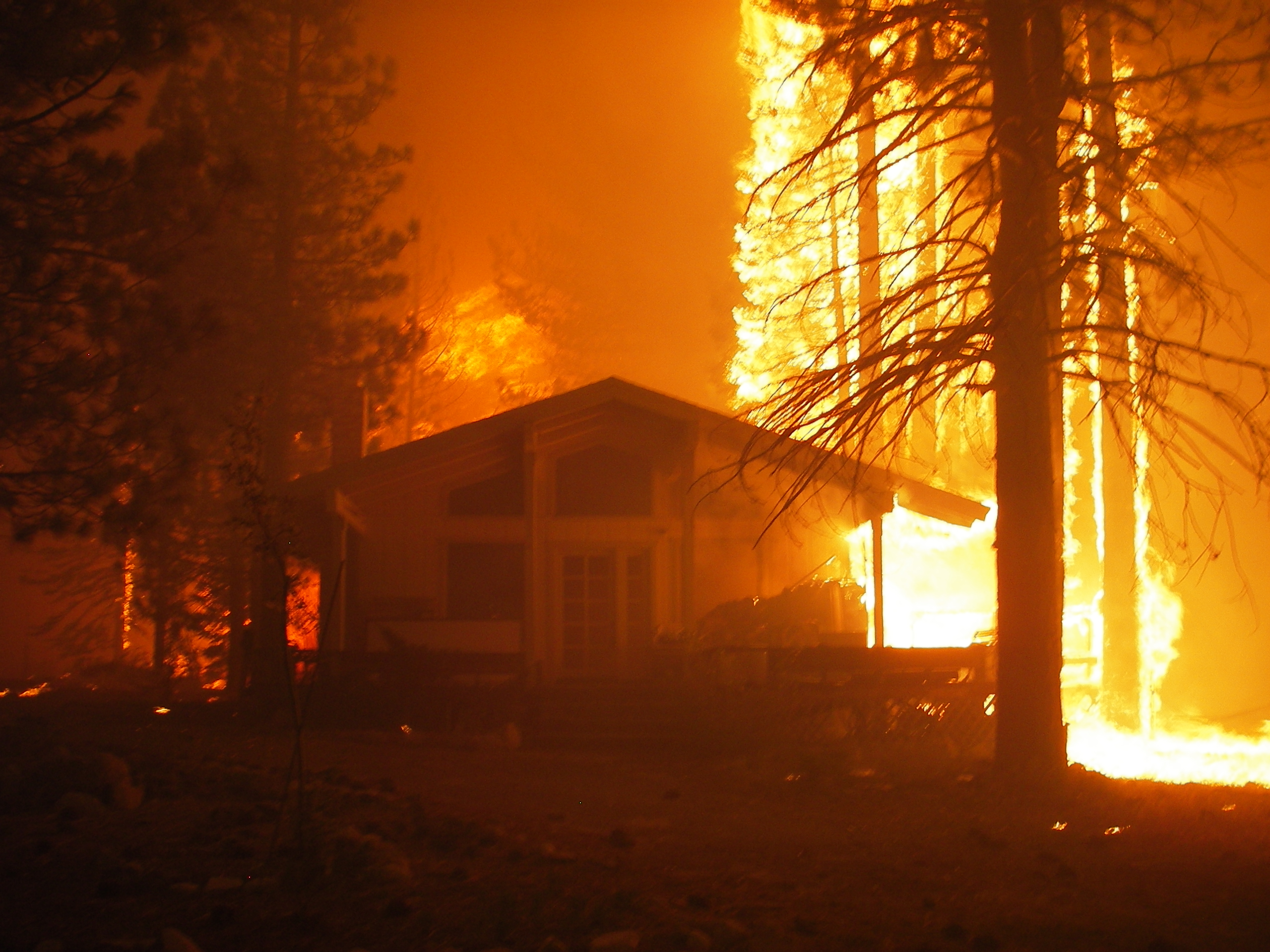
Ultimately 254 houses burned to the ground in the Angora fire. Photo/LVFPD
By Susan Wood
A Lake Tahoe Unified School District teacher overcame a critical test of resilience with her husband while confronting the loss of her trees, her roots and her neighborhood.
A dispatch supervisor essentially camped out at police headquarters and turned losing her home and her parents’ into a way for the neighborhood to heal.
A businesswoman raced home like a NASCAR driver only to later find out she and her husband would need to postpone their retirement.
A longtime newspaper advertising representative didn’t realize at the time that he and his wife were preparing for a barbecue at their house that would have been their last one.
A South Lake Tahoe mayor, who was thrust into the spotlight at ground zero of a catastrophic local disaster, channeled her husband’s grace-under-pressure public safety skills while he was far away in the woods.
An LTUSD school board member, who is now the county supervisor, wondered if the high school would be lost in one direction or if the swirling wind would consume her home in Christmas Valley.
A newly elected El Dorado County supervisor, now former, had just walked the region to talk about “living with fire,” then made it her mission to help those rebuild from it.
These are just some snapshots of the lives affected by the Angora Fire, one of the most disastrous events to hit the Lake Tahoe region in modern times.
The fire, which erupted from an illegal campfire near Seneca Pond at 1:13pm on June 24, 2007, swallowed 3,100 acres, burned 254 homes, cost $23 million to fight and caused more than $150 million in damage.
Remarkably, no one was seriously injured.
However, the blaze whipped by huge gusty winds that Sunday afternoon left an indelible scar on the landscape of a predominantly local’s area as well as the emotional well-being of citizens in and out of the neighborhood who saw their lives turned upside down.
With all the varying stories, one thing remains certain: We will never be the same after the Angora Fire.
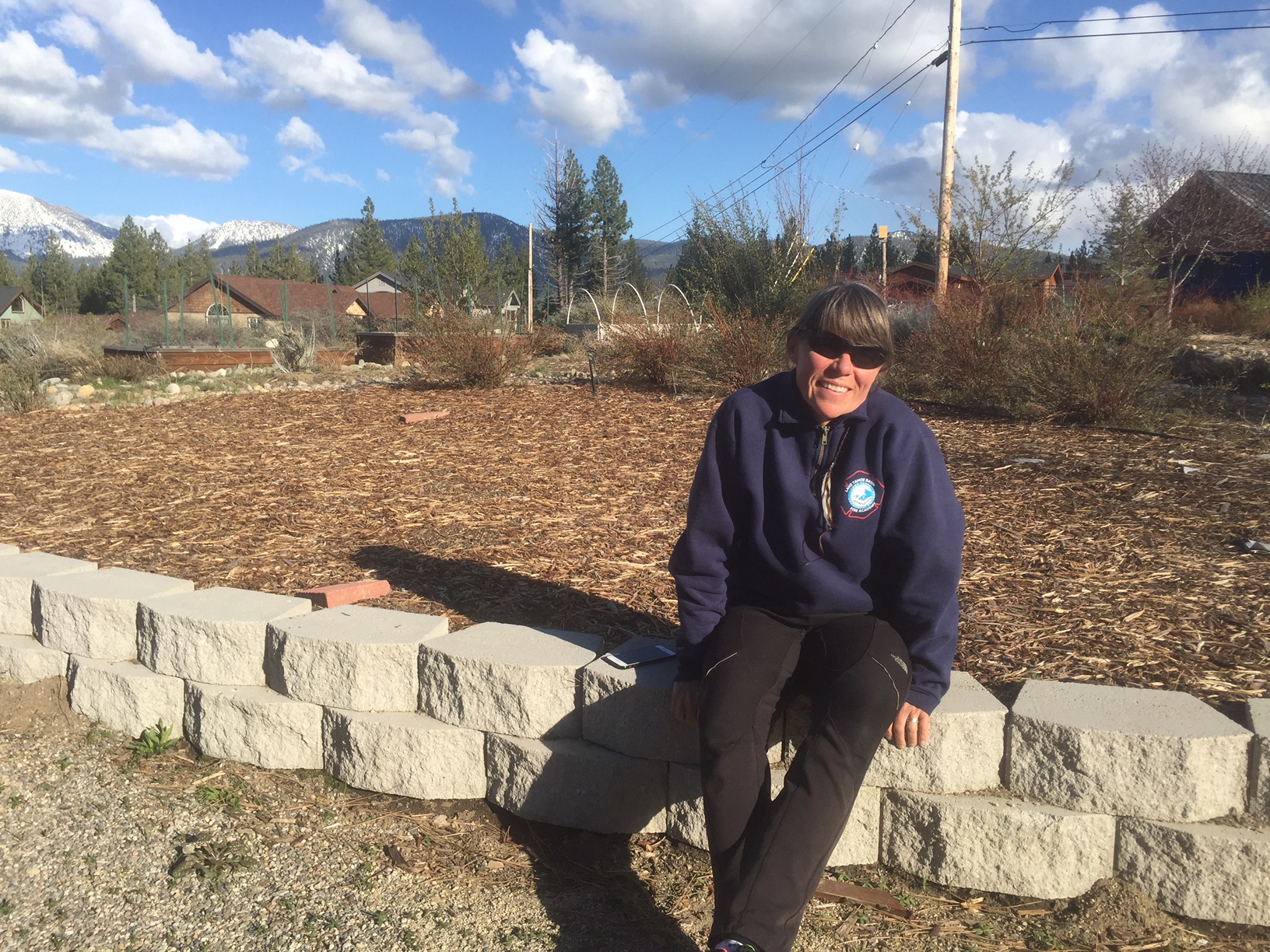
Leona Allen at her parents’ property, which is now a garden in the burn area. Photo/Susan Wood
Leona Allen: A dispatcher dealing with her own crisis
“The first call came in at 1:13pm,” Allen recalled as if it were yesterday.
She had decided to come in to work despite taking a vacation day and as supervisor told the other two dispatchers to go home because “it was dead.”
“My famous last words,” she said sarcastically.
The resident on Grizzly Mountain who called had seen a plume of smoke on the ridgeline.
“I knew immediately it was bad,” she said. (Veteran dispatchers can sense the severity of an incident in just a tone of voice.)
Then, the calls wouldn’t stop. She had dispatched units immediately. She told Lake Tahoe News her voice must have sounded “a little edgy.” (This reporter can attest to that being true; as being the one listening to the police scanner that day and beating the law enforcement barricade at Sawmill Pond as the first reporter on the chaotic, devastating scene.)
Embers were blowing everywhere, residents were throwing valuables in open vehicles, people were running east for their lives. In a moment of altruism, a motorcycle rider stopped to stomp out a small blaze as he descended from the ridge. An eerie roar accompanied a wall of fire that quickly crowned in the massive pine trees, only to be regenerated by brush serving as ladder fuels and slash piles that were once due to be burned. The temperature in the fire zone resembled a hot summer day in Palm Springs or Las Vegas.
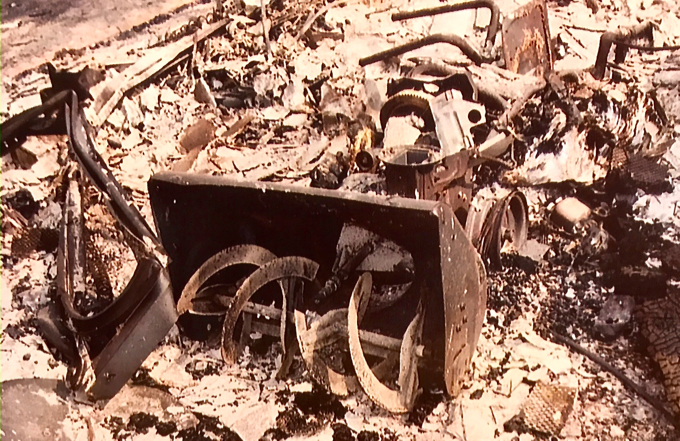
Remains of a snowblower belonging to the Allens. Photo/Leona Allen
Mass evacuations were ordered in the North Upper Truckee and Tahoe Mountain areas – where the hot, fast fire swirled in different directions tornado style and shot up the ridge burning many homes on Mule Deer Road, Coyote Ridge Circle, Mount Rainier Drive, Clear View Drive on up to Uplands Way from Boulder and Granite Mountain Circle. All but two homes burned down on Pyramid Circle. Most of the damage happened in the first eight hours.
“Firefighters started calling out addresses of houses up in flames,” Allen said. Then, her two dispatchers returned to work to help out despite being evacuated themselves.
“Their trucks (in the police headquarters parking lot) looked like the Beverly Hillbillies,” she said describing their belongings thrown into the vehicles.
No one had enough time.
The Emergency Operations Center opened at the Lake Tahoe Airport. Allen used a sleeping bag at police headquarters to man 12-hour shifts. Even South Lake Tahoe city staff answered phone calls from frantic residents. Fire academy graduates were showing up to try to help.
Allen rigged a television in the dispatch center, sensing the magnitude of the crisis she was handling and knowing the television news crews would be on the scene.
“I couldn’t visualize the massive amount of flames,” she said, sighing.
“I’ve got your dad.” Allen recalled the sense of relief when her police officer husband Mark gave her this news. Her elderly father, Owen Evans, lived at 1383 Mount Olympia, a focal point of fire destruction.
Evans’ home was reduced to ash. But like a Phoenix, the half-acre of land was later donated by him as a community garden.
“It was his idea,” Allen said in a sentimental, poignant moment sitting there on a recent quiet evening.
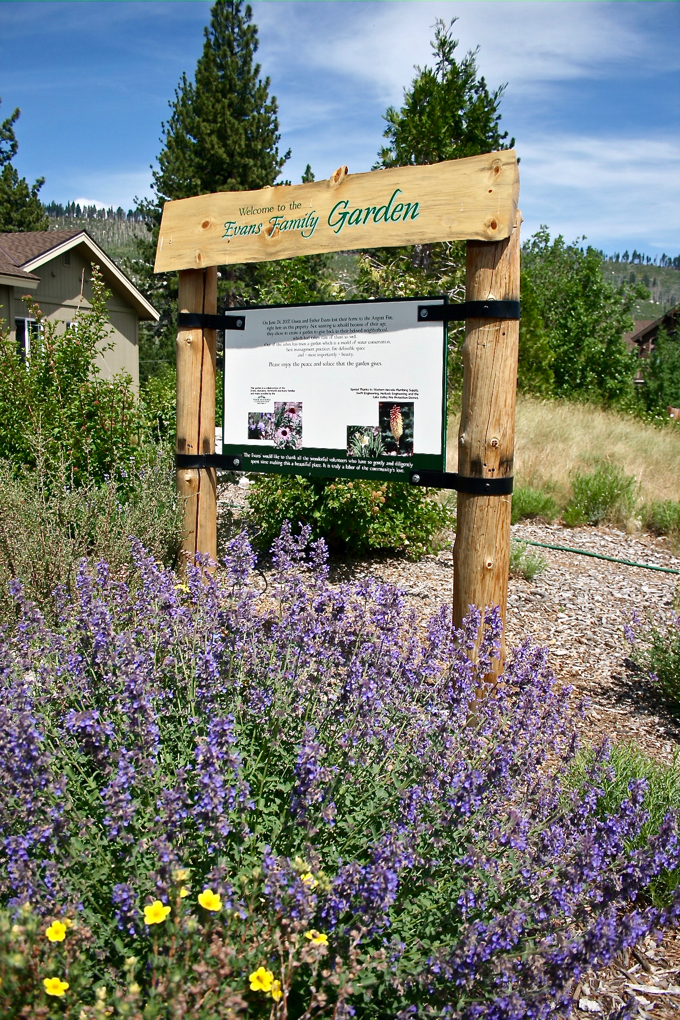
The Evans’ lot is now a demonstration garden. Photo/Leona Allen
She ended up moving into a home with her 90-year-old father off North Upper Truckee Road, after having gone through a rare shopping spree for furnishings given the insurance company’s deadline.
“Dad was well-insured,” she said.
A little more than a week after the fire he got a check and a mandate to spend almost $1 million in six months.
“It was horrible. We had a week left and had to spend $6,000 on antiques that of course under normal circumstances wouldn’t be a problem,” said Allen, who grew up with a modest upbringing.
She regrets her father lost his photo slides of the wilderness region that he was going to donate to the Lake Tahoe Historical Society.
“He cried when he realized the pictures were gone,” she said.
Her father spent the next few days with the clothes on his back and his wallet, riding around in a police squad car with his son-in-law.
“I think it was a good distraction for him,” she said.
Allen was emotional upon running in the fire area about a week later and stopping to focus on the simplicity of the spring bubbling up in what little grass was left. Her recreational paradise had changed forever.
“It was the biggest event of my lifetime,” the 57-year-old lifelong Tahoe resident said. “It has to be defined individually.”
But when asked how the fire had changed her, she thought of the community.
“It’s made me have a strong desire to be a better community member – to be more involved, more caring, more watchful. I want to take care of the people who took care of my parents and who were doing so much for each other. I felt selfish before. Now I want to give back,” Allen said, pointing out the togetherness of the community far outside the fire zone.
A large community fund to help fire victims was established after the fire, and benefit events became the gatherings for citizens of the South Shore.
People from all over opened their hearts and wallets, despite bouts of depression many experienced. Allen referred to it as CIS. “Critical Incident Stress,” while others left with a standing home expressed survivors guilt.
“I celebrate the resilience of the Meyers community,” she said, as her eyes glazed over. The residents still put on a July 4 parade, a patriotic gesture that also marks two days after the fire was fully contained.
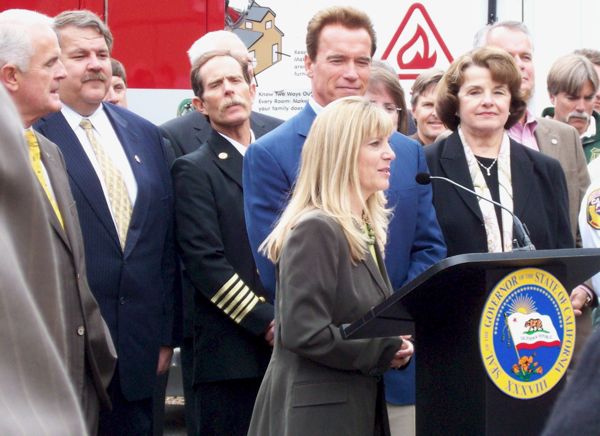
The day after the holiday of that year, a bi-state Blue Ribbon Commission was formed to review forest management practices in the Lake Tahoe Basin. It was led by California and Nevada Govs. Arnold Schwarzenegger and Jim Gibbons, who used the Lake Valley Fire Station in Meyers as a backdrop.
“This event defined us,” she said. “But my fear now is at the 10th anniversary we’re forgetting what we went through. Yes, it’s nice to have snow in the mountains this year. But it’s dry down here.”
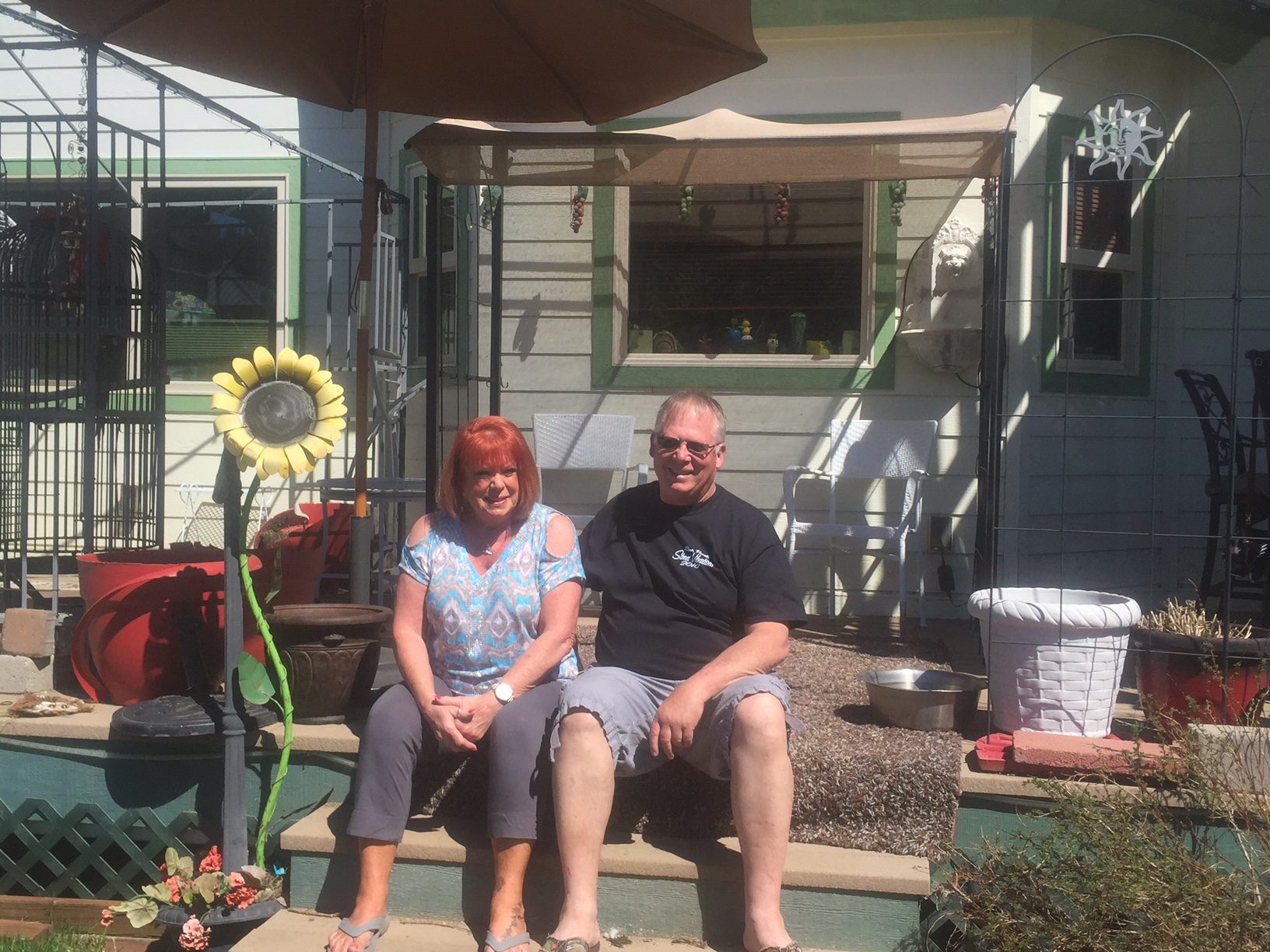
Tara Brennan and Tony Colombo are still dealing with the aftermath of the fire. Photo/Susan Wood
Tony Colombo and Tara Brennan: ‘If we had known then, what we know now…’
The duo on Mount Olympia has always been two hard-working business people who have rolled with the punches – he with his burger joint, she with her clothing store. But nothing could have prepared them for the emotional turmoil that occurred the day of the Angora Fire – and long after in dealing with the aftermath.
Brennan headed to San Francisco to buy merchandise for her store that morning, and Colombo decided to tag along to knock off an item on his bucket list. It was Gay Pride weekend. In Vacaville, they stopped on the way home for a bite to eat and at mid-afternoon called Sara, a family friend, who looked after their home.
“Tony, you got 20 minutes. There’s a big fire. The whole neighborhood’s going up,” Colombo recalled her saying on the telephone. Sara lived close by, so she had her own issues.
“I told her: ‘Take my truck and get all the animals you can’,” he said. The couple had four exotic birds, three cats and two dogs. One dog was with them. One cat, Chinchi, didn’t make it.
A teary-eyed Brennan recounted how she drove faster than anyone would ever want to up the windy mountain road to South Lake Tahoe. She had figured it seemed she got from Vacaville to home in about an hour, inconceivable since it’s 134 miles.
Still, the miracle was that other vehicles sensed the driver’s distress and parted like the sea as she approached. And there was not a highway patrolman in sight.
“There was so much cell phone activity you couldn’t get through,” he said.
Their friend, Keith Cooney, got through and asked what they wanted out of the house. Brennan tried to explain rare flatware that resembled “sparkly stuff.” She had accumulated beautiful furnishings since living on the street for 40 years.
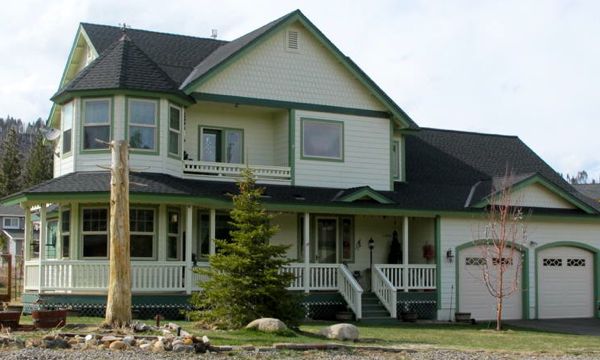
Tony Colombo and Tara Brennan rebuilt on Mount Olympia Circle. Photo/Linda Fine Conaboy
As she was approaching, she noticed residents with refrigerators and mattresses in their trucks going the opposite direction.
“I thought what is wrong with these people,” she said.
They were stopped by the public safety barricade at Highway 50 and North Upper Truckee.
They stayed in a motel close by. Colombo drank away his reality at the Turn 3 bar, but Brennan couldn’t because of the adrenaline rush of the catastrophe.
“I couldn’t sleep either,” she said. “I kept watching the television coverage until I saw our house burn. I knew it was ours because of a (distinctive) shed we had,” she said.
“A lot of it was a blur,” he said.
On that Monday, they went to the American Red Cross center at Lake Tahoe Community College where a large community bulletin board outlined home damage.
“That’s when it hit me. We had nothing but the clothes on our back,” Brennan said. To this day, tears well up in her eyes discussing it.
It was almost too much to bear.
She even recalled having a breakdown and collapsing to the floor in the store buying replacement clothes.
“I am not buying Kmart underwear,” Brennan recalled belting out to a friend.
“We didn’t see it coming,” she said.
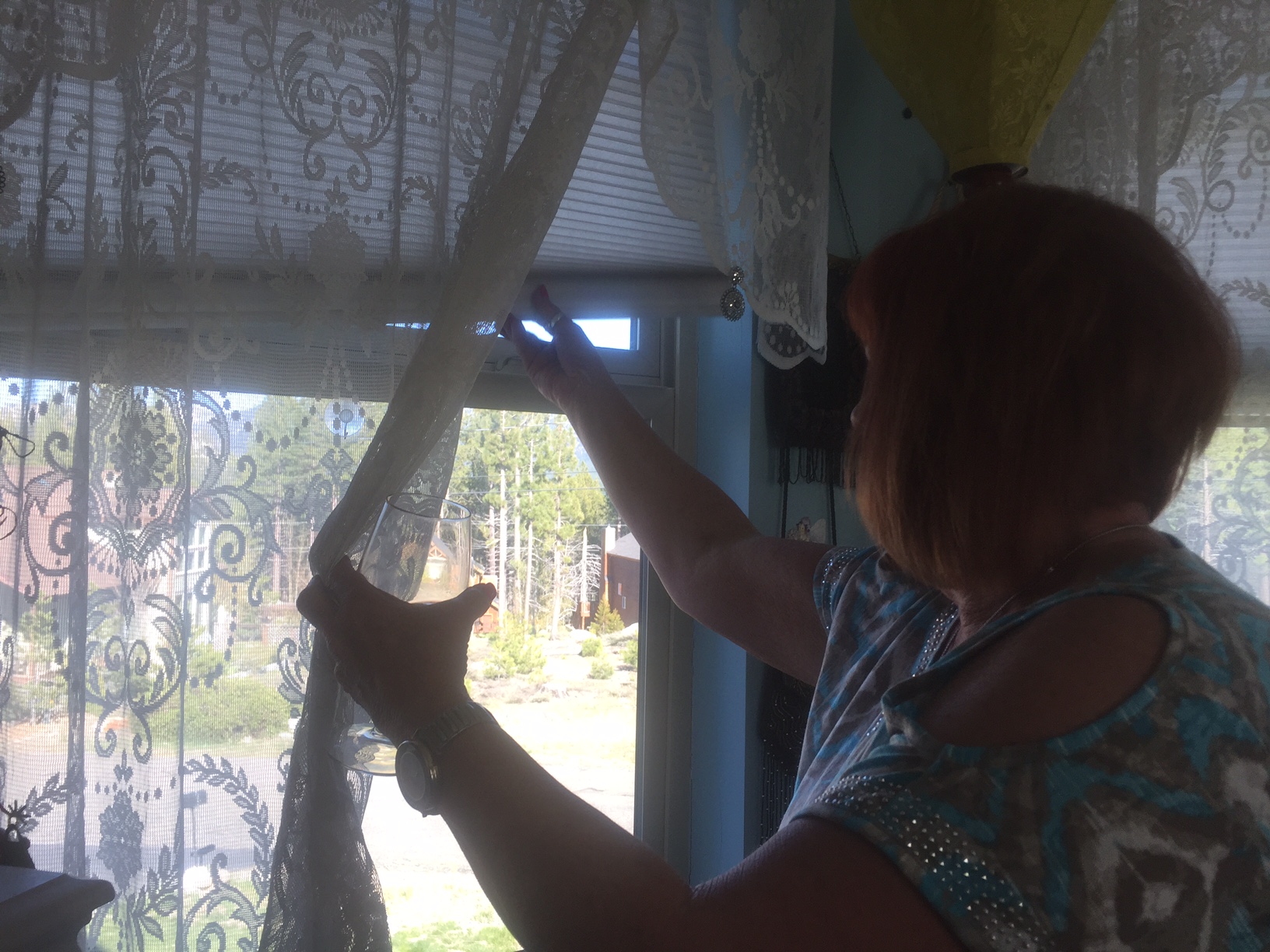
Tara Brennan looks through windows that have been damaged by the intense sun. Photo/Suans Wood
Yet in some respects, she could. She recalled dreaming about a fire earlier that week
And then the nightmare continued. They learned they were underinsured and ended up fighting their insurance company for two years. They not only lost personal belongings and the structure, but she figured she stored about $75,000 worth of merchandise in their home for her Pandora’s Closet store.
“Not a day goes by I don’t think of something I lost,” she said. “The house is the embodiment of your soul.”
Then, when they rebuilt, the housing market collapsed and they soon became upside down financially.
“We were a prisoner in our own home,” Brennan said.
They should’ve been retired by now. But that idea went down the drain with the home and its expenses.
Today’s battle is with Mother Nature on many fronts. There are voles, severe wind, a high water table and intense sun.
The fire changed the whole environment of where they live. The voles burrow through the sod they planted creating undulating waves through the grass. Already the “e-windows” thought to be environmentally better need to be replaced because the sun’s rays are so severe the seals are cracked. You can even get a sunburn if you’re standing close to them. The water runoff from the barren ridge behind their house has made landscaping more difficult especially following a severe winter like this last one. Their trees tilt, and $60,000 worth of shrubs need replacing. The wind is so strong in the area it broke off the top of a weather vane she bought from a company in Maine.
To think the salesman laughed and said: “Lady, this weather vane can survive nor’easters,” she recalled while holding up the broken part. She admits the whole experience has darkened her sense of humor.
“If we had known then what we know now, we probably wouldn’t have rebuilt,” Colombo said, while looking out the back deck into the yard.
The two toyed with the idea of living in a recreational vehicle, but the desire to have a home base was too strong.
Despite all the hardships associated with the fire, the views are outstanding now since many of the trees are gone.
The two have jobs and are learning to live with their fate and their surroundings.
“I live here. People spend thousands to come here. Why would I leave? Where would we go and start over. We’re going to die here,” the 67-year-old Brennan said. Colombo, at age 62, nodded in agreement.
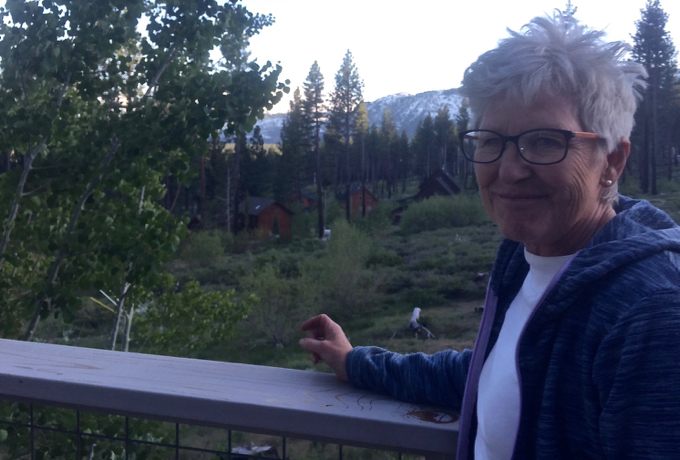
Renee Gorevin and husband Mark are happy to have the neighborhoods rebuild. Photo/Susan Wood
Mark and Renee Gorevin: They can survive anything
To the Gorevins, their home goes well beyond the walls of the structure.
When the Angora Fire raged up Tahoe Mountain, their house miraculously survived – but the landscaping was decimated.
A call from their daughter alerted Renee to the potential danger that afternoon.
“I remember her saying: ‘Go outside Mom,’ (to look essentially,)” Gorevin said.
By the time she got home, a large tree just outside was engulfed with flames. They lost about a dozen trees in the aftermath.
“The wind was whipping in circles. I had never experienced wind like that before,” she said.
Her son had just come down from the ridge because he was watching it with a friend. She grabbed a computer and documents. Her husband was stopped in his vehicle at the Sawmill Pond barricade but ran up Tahoe Mountain Road to the house.
“I yelled: ‘What are you doing? We’re leaving’,” she said.
He needed to see their home. He needed closure.
“It was pretty overwhelming,” Mark said.
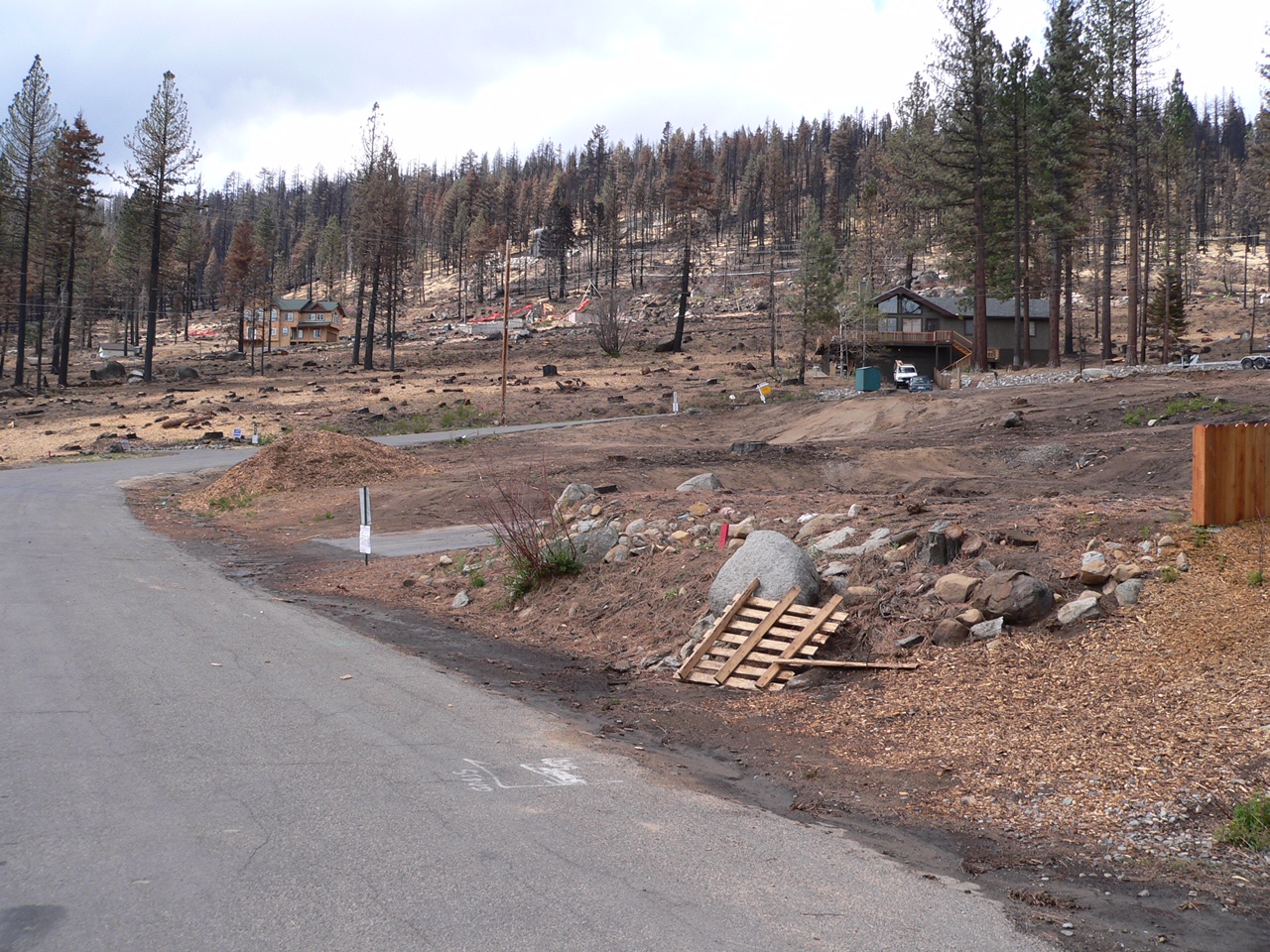
The Gorevins’ house stands among the cleared lots. Photo/Renee Gorevin
It’s funny how the little things can pop into one’s head. Renee remembered seeing a neighbor with the sprinklers turned on and thought: “I should have done that.”
It was shortly after 2:30pm when the couple left the house. By 6pm, the neighborhood was gone.
They stayed with friends that week, attended community meetings and thankfully found out at the Red Cross center their house survived.
They were one of the lucky ones.
Theirs was one of two houses on their Granite Mountain street that remained standing.
“I looked around (afterward). It should have burned,” Renee said.
The fire was so hot it bubbled the paint on the walls, but there was no smoke damage. They were able to get everything clean through a restoration company and resumed their remodeling efforts planned before the fire.
“There were burn holes the size of a quarter on the deck,” she said. A wheelbarrow sitting inches from the house burned completely.
Still, the grief was consistent – even with their house still standing.
“I came back and remembered sitting on the stool looking at the emptiness and cried,” she said. “It was the loneliest, quietest winter.”
Those tears of sadness turned to tears of joy when she drove up her street and saw homes being rebuilt.
“I miss having the trees around, but I was really missing the people. It’s nice to have the community again. I have a greater appreciation for our neighbors,” Renee said, adding: “We have roots.”
Acceptance is a virtue to the Gorevins, especially with her having survived cancer within this last trying decade.
“It was a trial we aced again. We did what we had to do,” Mark said.
The Gorevins planned a get together to celebrate their remodel – on June 24.
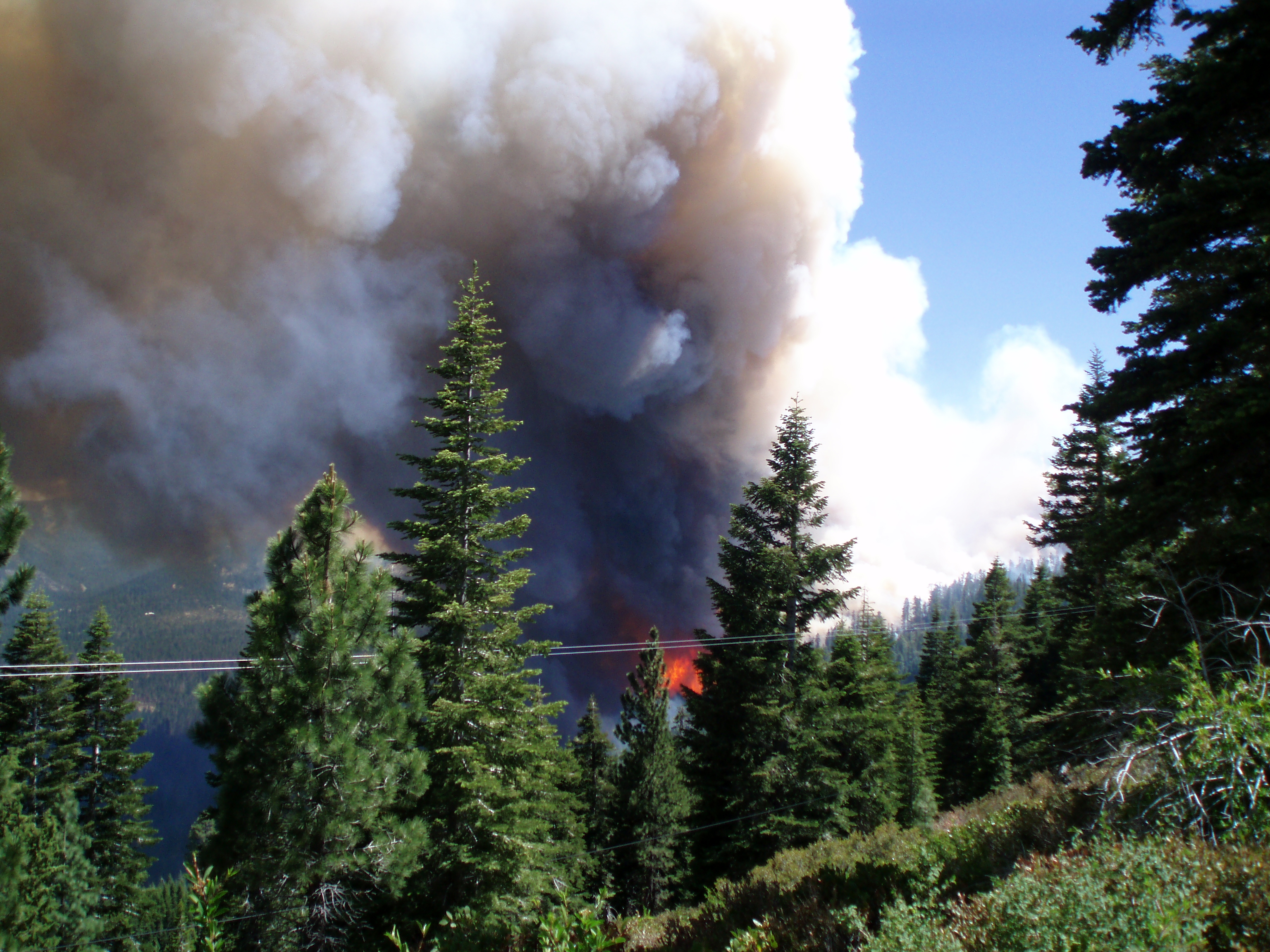
Flames from the Angora Fire could be seen miles away. Photo/LVFPD
John and Louise Simon: Moving on with their lives
John vividly remembers working on his boat at the marina when his wife called him on his friend’s cell phone.
“She said: ‘There’s a fire. Come home’,” he said at their new home in Tahoe Paradise.
Little did he know, it would be the last time he would be at the house.
“I remember thinking we were going to have a barbecue, but they’ll put it out. We’ll leave, then we’ll come back and have the barbecue,” he said.
They spent the night at the friend’s house, then camped out at the Station House Inn near Stateline.
“There were so many uncertainties. Did my house burn? But I always knew it was a major fire area,” he said, further admitting to having a bag of pictures packed for such an unfortunate occasion. At least their insurance company didn’t drag on the misfortune.
Their home and most of their belongings not thrown in the car in 10 minutes were reduced to ash, with the most emotional treasure being Louise’s wedding ring. She had removed it the night before.
The couple wept and held onto each other upon seeing their land for the first time after it had burned down to thick soot. She rummaged through the debris and figured out where the nightstand would have been. They found the ring.
The cleaned up land on Clear View Circle remains for their son to rebuild there.
“He grew up there,” John explained.
“It was an experience. You always see on TV people having to go through fires and hurricanes, and it’s always somewhere else. This just reinforces the belief it can happen to you,” he said.
Kathay Lovell as mayor of South Lake Tahoe was a visible leader during the fire. Photo/Kevin Chandler
Then South Lake Tahoe Mayor Kathay Lovell: Taking the reins of emergency response
“It can’t be 10 years,” Lovell said upon the initial interview.
The mayor turned her office into overdrive during the Angora Fire.
“My phone was ringing off the hook. I felt the city needed to step in,” she said, even though the fire was on El Dorado County land, not city property.
Nonetheless, the Emergency Operations Center was in full swing at the city airport, especially with aircraft flying in and out to fight the fire.
“We all knew a fire like this would happen someday,” she said.
What the former mayor didn’t know is it would happen when her husband, then county sheriff’s Lt. Les Lovell would be out of state and in the wilderness – unable to be reached at a fishing lodge in Alaska.
The lodge owner fired up the generator each night to check the Internet after a long day out.
“He asked Les: ‘Aren’t you from Lake Tahoe? The town’s on fire’,” she recalled Les telling her.
When he could call by phone, he got the update from county Undersheriff Fred Kohler. Unbeknownst to the sheriff’s veteran, his wife had taken charge of much of the emergency response protocols and coordination.
“Every day and night, we worked that EOC,” Lovell said. “I’m proud of how all the public safety personnel stepped up.”
She was grateful the California governor’s office was so forthcoming. When asked what the state could do to help, Lovell declared the region was open for business since the news footage at the time portrayed an entire region untouchable because of fire. After all, it was the Fourth of July holiday two days after the fire was fully contained.
Word went out that businesses were open. Visitation was a little better than expected.
Lovell also mentioned being proud of the resilience of the community, despite a few raw moments at community meetings such as one in particular at the South Tahoe Middle School. People were sad, angry and confused – some taking it out on environmental watchdog agencies like the Tahoe Regional Planning Agency.
“This was a turning point for environmental agencies in respect to fire. That’s the good that came out of a bad situation,” Lovell said. “Hopefully, we’ve come a long way in forest health. It’s not perfect, but better.”
For example, TRPA once outlawed the cutting of trees less than 6 inches in diameter without special approval. Now that measurement has increased to 14 inches.
The fire spurned an entire multi-agency fuels reduction program.

Helicopters from outside the area fight the Angora Fire. Photo/LVFPD
Then El Dorado County Supervisor Norma Santiago: The work had only begun
A newly elected Santiago knew something was wrong when she attended a barbecue and saw the huge plume of smoke in the Angora region.
“I gotta go,” she recalled saying.
She went home and rifled through her papers to find telephone numbers of emergency response personnel, but most of the information was in her office in Placerville.
A major fire was always in the back of officials’ and stakeholders’ minds. For Santiago, it was as recent as a photo op that morning at a home on Angora Creek. Earlier that month, it was a defensible space talk on Boulder Mountain. Two weeks before the fire broke out, she was handing out leaflets on “Living with Fire” in the Angora neighborhood.
What Santiago didn’t realize is the amount of work awaiting her when it came to cleaning up from the devastating blaze.
“There wasn’t time to feel overwhelmed by it. A lot of people were needing help,” she said.
Besides a monumental cleanup effort that removed more than 50 tons of debris, there were insurance plights, construction scams and trespassers to deal with.
At times, it was not a pretty scene in many ways.
But from tragedy there can be triumph. The Angora Fire spawned a model program called the Angora Protocol that more than anything accelerated the cleanup efforts.
Residents wanting to rebuild had 1½ years to take out a construction permit and the costs would be deferred. Almost two-thirds of the residents took advantage of this.
Overall, 191 permits to rebuild in the last decade have been applied for from El Dorado County out of the 254 homes that burned down.
As a comparison, Lake County reports only 399 permits applied for of the 1,281 homes lost in 2015 from the devastating Valley Fire. Lake County CAO Carol Huchingson attributes much of that to long delays associated with the cleanup and recovery, toxic land problems and major insurance issues. “Twenty-eight percent weren’t insured,” she said.
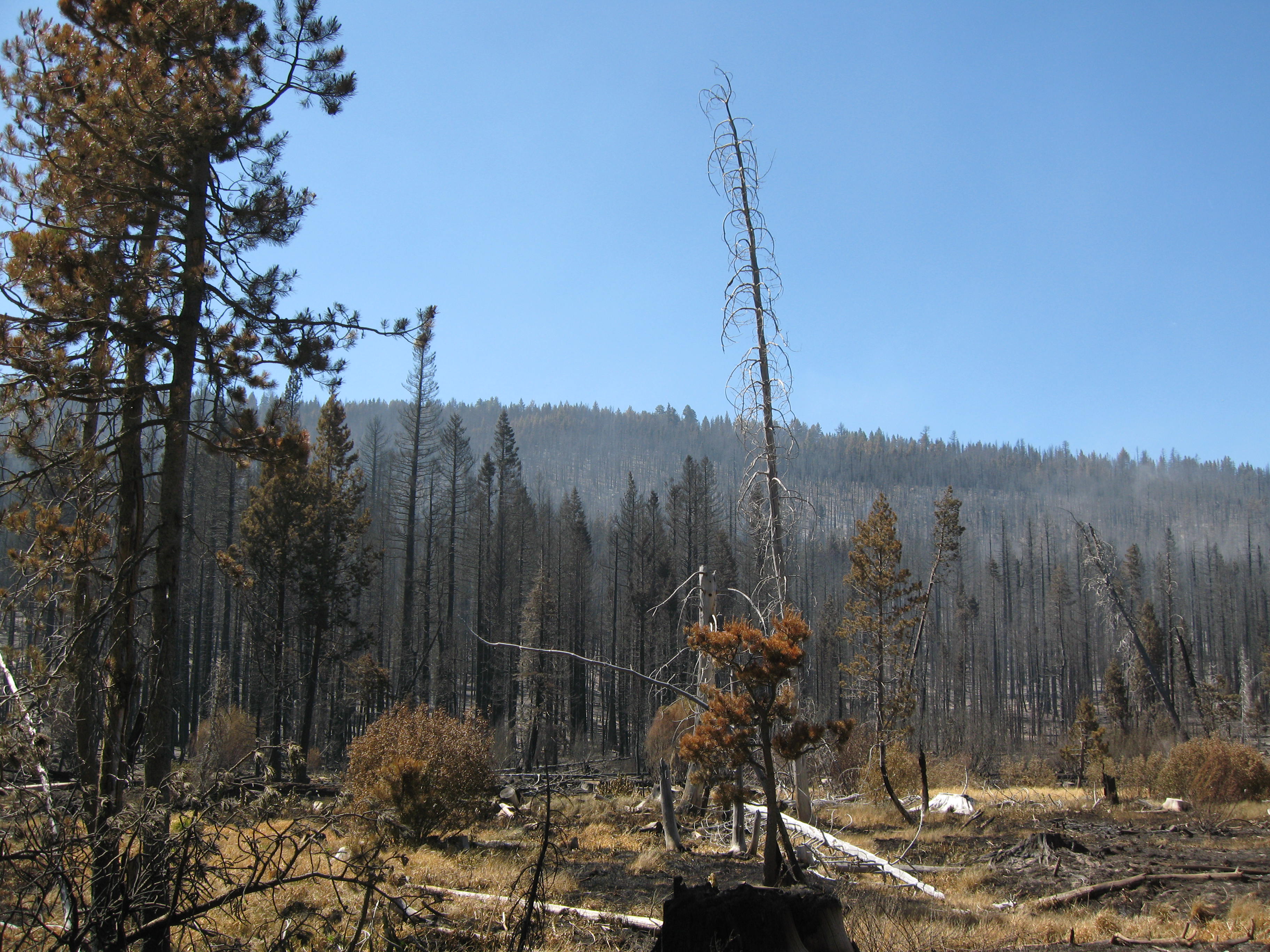
The forest has forever been changed by the Angora Fire. Photo/LVFPD
El Dorado County Supervisor and former LTUSD board member Sue Novasel: There’s simple math and reasoning behind the stats
Novasel attributes much of the difference between major fires in Lake versus El Dorado counties to a desirability equation.
“It could be the area itself. Even though homes were destroyed, in general, you’re still up in Lake Tahoe where people want to live,” she said.
The supervisor also noted that for some communities it takes years to rebuild, whether residents are fighting with government agencies, insurance companies or simply just trying to decide as a household.
Like others, Novasel has witnessed the pain among people she knows. At the time of the fire, she knew at least 10 school district personnel who lost their homes.
A longtime Christmas Valley resident, she recalled hopping on her bicycle and heading to Washoe Meadows. She heard propane tanks exploding when she evacuated her 80-year-old mother, grabbed the cat hiding under the bed by the scruff of the neck and left.
“I knew we needed to get out of there,” she said.
She later watched the fire from the Lira’s market parking lot with a big Meyers crowd as it raged toward South Tahoe High School.
“But I knew we had a firefighter who graduated from there who said: ‘We are going to save this school’,” she said.
And they did.