Opinion: Learning from fire

By Garry Bowen

We have now commemorated the Angora Fire of June 24, 2007, rightly honoring those who both endured and suffered through the destruction and aftermath of the trauma.

Many have written about their thoughts, along with the anguish at determining whose fault it was, revealing what they thought was problematic with various municipal policies, as if that would mollify the pain gone through.

Garry Bowen

As a longtime Tahoe person, my take will offer another perspective, as you’ll see, as it is the conditions of our forests that require the most deliberation, given the possibilities of their uncertain and dangerous fate.

Noted by others on that typical Tahoe summer day as to their whereabouts, mine were with my son (with grandchildren in the backseat) on Pioneer Trail nearing the 7-Eleven on the way to Stateline, when going in the opposite direction was a small USFS pickup suddenly switching on the rooftop emergency lights. Something was up. As that happened, I turned my head as it passed by, catching the first glimpse of smoke from the southwest above the buildings. It gave me a chill, as it also inspired a lesson to my son, who did not know of my work with DRI on fire ecology, or even what that was.

It was the color of the smoke in those first moments that caught my attention: it was a smoky beige with orange streaks within; it was not water (evoking steam and white); it was not dark grey or black befitting an oil-based fire – it was the color of a wood fire, and the orange defined sparks within. I told my son within that minute that this would be a disaster in the making, as those sparks were in the wind that had developed very quickly.

Those comments were the first inklings of what we now know as the Angora Fire.

I have been working on reducing catastrophic fire for a long time, notably via a more preventive mode of converting biomass into energy, via work done with the Department of Energy’s Renewable Energy Laboratory in Golden, Colo. The Energy Department is one that Tahoe does not ordinarily do much with, as the focus here is about natural resource agencies, which do not think of energy as necessarily part of their repertoire.

A few months before Angora, in January of that year, I was invited by the Washington, D.C., office of the Forest Service to a “ceremony” in Lake Arrowhead, with the National Fire Plan, along with nine out of 10 regional foresters (there are only 10 regions in the USFS). The 10th, considered the crown jewel of all 10 is Alaska, with its three temperate zones. The regional forester was not at Arrowhead, as he was fighting a 750,000-acre fire there: Denny Bschor, who I met at NREL on the same issues mentioned above, made a strategic error in trying to mollify both sides of an ongoing issue: half-a-project for timber, the other half for environmentalists. Of course, neither side was satisfied; the conditions were then ripe for a large fire.

Also at Arrowhead was Dale Bosworth, the USFS chief at that time, with whom I met. The occasion was marked by the introduction of a 30kW gasification unit used to convert biomass into energy, thought to be a direction they were to take, having ordered a future 50 kW unit for the USFS visitor center there.

As someone else brought up the local meeting at South Tahoe Middle School, I was conflicted, as I could not diminish the pain of my city, as I had already seen incredible a d extensive damage done by fire (750,000 acres, 3,500 homes lost), but it was obviously easy for me to empathize with all those open wounds.

My interest in reducing catastrophic fire increased, as they say, it was getting that much “closer to home.” Several times here I have used the word “conditions” as it is a relatively obscure idea, among all the staff and people devoted to either forestry or to the fighting of fires that occur, meaning that, for simplicity, the conditions are in the domain of systemic, generally lost in our fascination for specialties.

A healthy forest is characterized by functioning across many scientific disciplines, and the only discipline that includes most is that of an ecologist, because sort of by definition involves an entire system.

The only outliers to this are: (1) agronomy (soil science), and (2) the climate, which is not under “ground control.” Tahoe’s “take care” program only begins to address the attention actually needed to become proper stewards to living in the forest, as we do in the Lake Tahoe Basin.

With Tahoe’s cachet, of course both state governors convened a Blue Ribbon panel, itself a process interrupted by yet another six-figure acreage fire down south (about the same size as the one reviewed in Arrowhead).

Noting that the big tree forests are all in the 10 Western states (including B.C.), all 10 Western governors have a seriously vested interest in reducing catastrophic fire, regardless of party affiliation; it is thus the conditions that need to be addressed, on levels still inadequate to imminent threats.

At the time, the Angora Fire reminded me of the Hayman Fire in Colorado: they had the first of 13,000 acres circumscribing the shoreline of Denver’s largest water reserve (for 800,000 people), followed by a second one just a few years later of 153,000 acres, the Hayman. This suggested (with regards to Tahoe’s hallowed clarity efforts) that the Denver Water Co. was most likely a good source of water quality testing, so a reminder of that was made to the equally hallowed Blue Ribbon, as both California and Colorado are part of that 10 Western state coalition.

Whether Arrowhead, Angora, or anywhere in the west, the issues leading to Angora are still viable, and attempts to be politically-correct about whether we are in any anthropocentric (man-made) dilemma will fall short. The climate is only partially responsible for the current fuel aridity (dryness) state of affairs, we all, as either shepherds or stewards of our surroundings, need to pay rapt attention to what is going on in our misaligned world.

That will be our best salvation, and most comfortable way to live and love in a future – take care and pay more attention.

Garry Bowen has more than a 50-year connection to the South Shore, with an immediate past devoted to global sustainability, on most of its current fronts: green building, energy and water efficiencies, and public health.



Study: French fries linked to higher risk of death

By CNN

How your spuds are cooked is key to your health. People who eat fried potatoes two or more times a week double their risk of an early death compared to those who avoid them, a recent study published in the American Journal of Clinical Nutrition found.
Eating potatoes that have not been fried was not linked to a similar early mortality risk, the researchers noted.
 
“Fried potatoes consumption is increasing worldwide,” warned Nicola Veronese, lead author of the study and a scientist at the National Research Council in Padova, Italy.
 
In 2014, Americans consumed 112.1 pounds of potatoes per person, according to the National Potato Council. Of that total, 33.5 pounds were fresh potatoes, the remaining 78.5 pounds were processed. According to the U.S. Department of Agriculture, the majority of processed potatoes Americans eat are French fries.

Read the whole story


Gas prices cheap for holiday week

By Nathan Bomey, USA Today

Americans won’t just celebrate the Fourth of July this week, but cheap gas too.

Some 37.5 million motorists will hit the road, up 2.9 percent from last year, in a driving marathon that should make it the most traveled Fourth of July holiday weekend ever, AAA says.

It helps that the holiday falls on Tuesday, making it a four-day affair.

Read the whole story


Calif. reservoirs replenished after drought

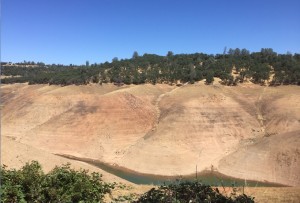
An arm of Lake Orville on June 22, 2015, is nearly depleted. Photo/LTN file

By Amy Graff, San Francisco Chronicle

California’s reservoirs are brimming after a winter of relentless storms and a late-spring heatwave that thawed the a big chunk of the snowpack.

The Golden State’s system of 154 major reservoirs is holding 34,464,000 acre-feet according to the most recent June 12 state report with data pulled from an array of entities that own and manage these bodies of water, including the Department of Water Resources, the Bureau of Reclamation, the Army Corps of Engineers and several city water departments.  

The state’s reservoirs held 25,628,000 acre-feet on the same date last year, when El Niño was expected to bring extraordinary weather systems, but instead hit us with weak storms dropping average precipitation.

Read the whole story


Snippets about Lake Tahoe

·      It is illegal to possess or use fireworks and/or pyrotechnics within the Truckee Meadows and North Lake Tahoe Fire Districts, which includes the unincorporated areas of Washoe County.

·      Participants in the annual Wildfire Awareness Multi-hour Trail Event in Washoe County raised more than $4,000 for the Wildland Firefighter Foundation.

·      NAMI El Dorado County has launched a new website. NAMI, which stands for the National Alliance on Mental Illness, is dedicated to mental health awareness and improving the quality of life for people with mental illness and their families through support, education, and advocacy.     

·      Lake Tahoe boaters are encouraged to visit this website to know the rules.

·      Orthopedic surgeon Zachary Child has joined Barton Health’s Tahoe Center for Orthopedics. Child’s background is in adult and child orthopedic spine surgery and musculoskeletal oncology. 


Letter: Cruise company helps at B&B

To the community,

Shane and Diondra Colquhoun, Tahoe Tastings’ owners, brought their wine cruise adventure hosting skills to their Bread & Broth Adopt A Day dinner on June 19. This dynamic couple normally is providing afternoon and sunset cruises and wine tasting on the Golden Rose, but at their Monday dinner, they and their energetic sponsor crew members served up a tasty dinner and provided TLC to the evening’s dinner guests.

Making up the rest of the sponsor crew team were friends Lauren Lindley and Lyndsay and Steve Bryant. This really enthusiastic crew did everything to help out at the evening dinner. They packed food giveaway bags, setup the dessert table, served drinks, manned the serving line and even helped with the dish drying and cleanup. For a first time sponsorship, they were an excellent crew.

“We really enjoyed the opportunity to serve the South Lake Tahoe community,” said Diondra Colquhoun. “As business owners, we believe it’s important to give back any time we can and we look forward to support Bread & Broth in the future.”    

B&B would like to thank and commend Tahoe Tastings’ and their crew for their spirit of service and wonderful energy they brought to the evening meal.

Carol Gerard, Bread & Broth


Olson wants more time to delay Bijou foreclosure

Patty Olson

Updated July 3, 2:08pm:

Patty Olson’s attorneys are doing what they can to allow one of South Lake Tahoe’s pioneers to hang onto her property in the Bijou area.

Last week documents were filed with the U.S. Bankruptcy Court in Reno asking for the stay to be extended until her appeal is decided.

Olson owns the retail center where the lone medical marijuana facility in the city exists. She also has a house nearby. Only the commercial property is threatened by foreclosure.

She filed for bankruptcy, which stopped the foreclosure process. The problem is the judge last month tossed the case because of federal law not recognizing medicinal marijuana. Olson for years has been receiving rent from Tahoe Wellness Cooperative owner Cody Bass. Rent today is $10,200/month.

The bankruptcy judge in May put a 60-day stay on the foreclosure process to give Olson time to decide if she wanted to appeal his decision. She is appealing. But the appeal will not be resolved before the 60 days is up.

— Lake Tahoe News staff report


Placer-NLTRA trying to work out differences

Placer County and North Lake Tahoe Resort Association extended their contract one month to allow the two entities to continue discussing how their partnership goes forward.

The county this spring proposed a drastically different arrangement than the tourist agency wanted. Continuing its investment in the infrastructure and marketing of eastern Placer County and North Lake Tahoe, 

It’s likely in July the supervisors will be presented with a six-month transitional contract outlining each agency’s responsibilities.

Each year, transient occupancy tax is collected from area guests and is used to fund the marketing of North Lake Tahoe, and transportation and infrastructure projects.

Key next steps in that process will be streamlining the transit planning process, creating a partnership in the approach to recommending infrastructure investment, reviewing implementation of the Tourism Master Plan and developing marketing performance measures.

The board this week also approved three agreements for North Lake Tahoe area projects, each of them among the 14 projects recommended by the resort association and approved by the board in February.

Placer County will invest TOT funds to provide a total of $1,464,879 under an agreement with the Tahoe City Public Utility District to restore the Truckee River Trail between 64-Acres Park in Tahoe City and the entrance to Squaw Valley. The board also approved a $209,152 agreement with Tahoe Public Art to create and install artwork in the two new roundabouts in Kings Beach. Both projects should be completed by Dec. 31, 2018. The third agreement, with the Tahoe Maritime Museum, will provide $60,700 to help renovate and upgrade the museum’s welcome center.

— Lake Tahoe News staff report


Lots of water, little beach area in Tahoe

By Amy Graff, San Francisco Chronicle

Even packed on a Monday: The beach at Sand Harbor, Lake Tahoe Nevada State Park, is packed on June 19. In the summer, even Mondays are busy at this popular beach.
 
The parking lot at Sand Harbor, the most popular beach on Lake Tahoe, filled up every day over the past two weeks.

That means 3,000 to 3,500 people were looking for real estate to spread towels and set up chairs on the crescent of sand.

Read the whole story


Fire danger forces shooting ban in Carson district

Due to the risk of wildfires, the Carson Ranger District is banning all shooting until Sept. 30 or conditions change.

The Carson Ranger District encompasses more than 400,000 acres on the Humboldt-Toiyabe National Forest in Nevada (136,232 acres) and California (270,208 acres).

The extremely wet winter led to higher-than-normal grass growth. In addition, the current stretch of hot weather has increased the fire danger by drying the grasses and elevating the risk for human-caused fires.

In May and June, there were nine fires that has burned more than 500 acres (seven fires in Washoe and one in Church Hill counties in Nevada and one in Alpine County) that were human caused and currently under investigation where target shooting has become the focus as the cause: two on private lands; four on Nevada Bureau of Land Management lands; and three on Humboldt-Toiyabe National Forest lands. The amount of shooting-related fires are above the average number for this time of year.

Violating the temporary shooting restriction is punishable by a fine up to $5,000 and/or six months in jail. In addition, anyone found responsible for starting a wildfire will be held civilly and criminally liable. 

To report illegal shooting, call 775.688.1331 or 775.688.1332.