Letter: Bread & Broth appreciative of help

To the community,

“The opportunity to be a helping hand to my community makes my heart smile,” wrote Valerie Soeters-Huse of S&H Holdings. “Thanks for giving us the opportunity to support others.” 

Soeters-Huse, along with her son, Spencer Huse, and the Watt family of Incline Village hosted Bread & Broth’s meal on July 3 through their donation of $250 to sponsor a dinner through B&B’s Adopt A Day of Nourishment program.

Valerie and Spencer were joined at their dinner by their fellow sponsor crew members and friends, Kali Chandler and Elizabeth Tuoto. The group enjoyed helping the B&B volunteers with all of the necessary steps to provide food giveaway bags and then dish out heaping servings of taco casserole, spicy beans, sautéed zucchini and green salad on the trays of the dinner guests as they proceeded through the serving line.  

“The B&B volunteers are awesome, especially Lenny! Laid back help and love to work in an unstressful environment!” added Valerie.  “What you all do is great!”  

B&B is very grateful for Valerie’s kinds words, but more importantly, B&B really appreciates the financial support and wonderful crew that showed up to help at July 3 dinner and make possible the food and the team work needed to serve the appreciative guests at their sponsorship dinner. 

Carol Gerard, Bread & Broth


Torrid pace of wildfires likely to linger

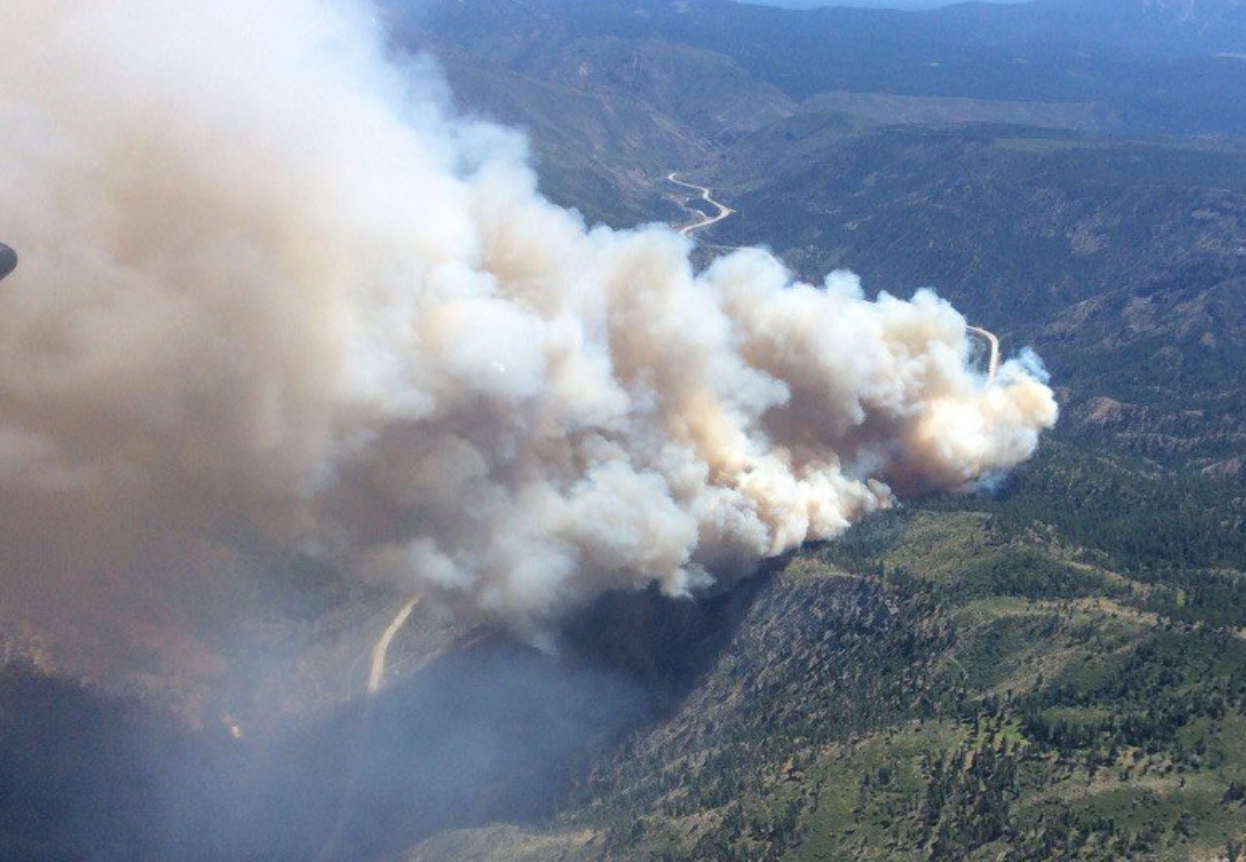
The Farad Fire in Northern California started July 10 near the state line. Photo/USFS

By Kevin Fagan and Filipa Ioannou, San Francisco Chronicle

After a hot weekend that saw wind-fanned wildfires lurch out of control and gobble up thousands of acres of trees and dozens of homes from Santa Barbara to Butte County, Monday’s respite in the weather was just that — a respite.

California is now far ahead of last year’s pace for forest and grassland fires, and conditions are ripe for it to stay nasty all summer long, said CalFire Chief Ken Pimlott.

Much of Northern Nevada is burning as well.

Last year’s downpours may have ended the five-year drought and eased its tinder-dry conditions a bit, but the heavy grasses sprouted by the rain now present frightening fuel, he said. So which condition is worse — drought or heavy new brush?

Read the whole story


Cantina restaurant in SLT for sale

The Cantina restaurant in South Lake Tahoe is almost an institution. But it might not be around much longer.

A for sale sign has been placed on the corner of this Emerald Bay Road establishment.

“After 20 stressful years of operating two restaurants, we are trying to scale back in preparation for an approaching retirement, as Candice and I are both in our 60s now. Evan’s has been open for nearly 30 years and will be continuing to operate under our direction for the indefinite future,” Evan Williams told Lake Tahoe News.

Evan and Candice Williams own the Cantina and Evan’s restaurants.

Philip Fagan, who is a partner in the business, owns the property where Cantina sits. He is open to leasing the building.

— Lake Tahoe News staff report


Train rolls out old and new at Tahoe concert

Pat Monahan, lead singer for Train, takes a selfie for a fan. Photo/Kathryn Reed

By Susan Wood

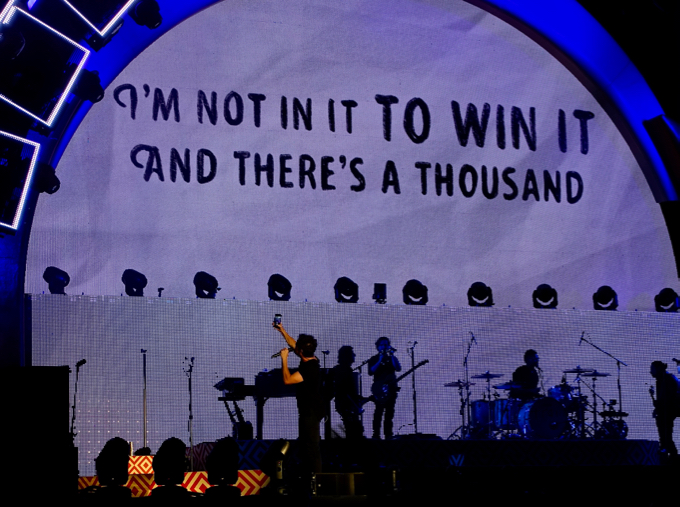
STATELINE – Train’s lead singer Pat Monahan and company continued its special connection with Lake Tahoe Sunday night, adding the Harveys Outdoor Summer Concert Series on its latest tour – A Girl, A Bottle and A Boat.

With Natasha Bedingfield and O.A.R. opening on the warm summer night, this was one of the last stops on a tour named after the Grammy award-winning band’s 10th album written to exemplify life on a boat with your favorite person and a bottle of wine. The ensemble showed the seven-member Americana group hasn’t lost its touch with a packed and engaged audience.

“Lake Tahoe, you look amazing,” Monahan screamed out to the dedicated, adoring fans on July 9.

The San Francisco-based band has somewhat transformed from its earlier days with former front-man guitarist Jimmy Stafford, but its music’s catchy style lives on. Most recently, the sentimental “Play That Song” had the crowd belting out the words set to the melody of the 1938 classic “Heart and Soul.” The accomplishment speaks volumes for a rock band that stands the test of time and reaches generation after generation.

People were standing and dancing as Train played hit after hit on July 9. Photo/Kathryn Reed

Anna Denis from Alaska turned a visit to see her daughter Rachael in Reno into a mother-daughter Train excursion.

“I love Pat Monahan, especially his (vocal) range,” the mother said.

Amber Little of Carson City rocked out with both her daughters and fiancé while most of the night on her feet like the majority of concertgoers.

“I thought this would be a good concert as their first concert,” she said of her two teenage girls.

Monahan has always maintained a unique appeal with fans young and old. Following “50 Ways to Say Goodbye,” the third number of the night – “If It’s Love” – prompted about a dozen fans to toss their cellular phones up on stage for Monahan to take selfies with the fans in the background.

Even though the band is on tour with new material, the older smash hits are what got the audience swaying, bobbing, punching beach balls and dancing all night.

“Tahoe, how do you like it so far?” Monahan yelled out to check in with “Angel in Blue Jeans” from 2014’s “Bulletproof Picasso” album.

For Train’s 2009 signature hit “Save Me, San Francisco,” the entire capacity crowd joined in on the lyrics.

The love fest continued with its 2003 blockbuster tune “Calling All Angels,” which the audience dominated with its high-energy singalong.

“Think of all the people who need our love right now,” Monahan told the crowd, as he placed his clenched fist at his chest.

The heartfelt tribute to humanity carried on when he brought Bedingfield back on stage to join the band in “Bruises,” a tune off the 2012 album “California 37” – which was named after the popular North Bay highway that runs west of Vallejo.

Bedingfield, an English singer known for her mega hit “Pocketful of Sunshine,” represented a fitting opening act in terms of engaging the audience.

She was followed by O.A.R. (which stands for “Of A Revolution”). The Maryland-based rock band is known for and also delivered on its Top 40 number “Shattered” and most recently its touching tune “Peace.” The latter tribute to choosing love versus arguments prompted many to raise their hands with peace signs.

In turn, Monahan sat down with his solo guitar to vocally caress the audience with his own song about relationships, “Marry Me” – a popular wedding song.

“That’s what I like,” Vernon Sallaz of San Luis Obispo said. “My wife and I got married here in Tahoe 35 years ago.”

The connection between Monahan, his band and the Tahoe audience was unmistakable – even if the younger set barely remembers the old tunes.

“Does anybody even remember this song?” Monahan said, interrupting his 1996 early hit “Meet Virginia.” The crowd reciprocated with a roar, and that notion was put to rest.

Pat Monahan has a way with connecting with the audience. Photo/Kathryn Reed

Off the new album, Train backed up “Working Girl” with video images of superstar icons such as tennis greats Serena and Venus Williams with Billie Jean King as well as television personalities Oprah Winfrey, Ellen Degeneres and Tina Fey.

Most of the concert was spent honoring and playing the old, recognizable favorites – from the ever-jumpy “Drive By” and sing-along tune “Hey, Soul Sister” to two encores. One was a perfect rendition of Queen’s top hit with David Bowie’s “Under Pressure,” which featured a video clip in the background of Queen lead man Freddie Mercury.

The last segment represented the most inner poignant tribute to Monahan’s mother who died of cancer – “Drops of Jupiter,” which came to the singer in a dream.

Genuine and versatile, Monahan showed his songwriting prowess on several occasions including during “When I Look to the Sky,” a tribute for anyone who has ever lost someone they love. He sat down on the stage with his band during this acoustical number for a moment of tranquility and togetherness.

Monahan even brought out O.A.R. with lead singer Marc Roberge in a white dinner jacket to help out with Paul Simon’s hit “You Can Call Me Al.” Simon opened the concert series a few weeks ago.

The Harveys concerts continue with Lenny Kravitz taking the stage on July 14, July 16 with Third Eye Blind; July 28 and 29 with Jack Johnson; Aug. 4 with Slightly Stoopid; Aug. 16 with The Who; Sept. 1 with Linkin Park; and Sept. 2 and 3 with Eric Church.


Opinion: Was Wounded Knee a battle for religious freedom?

By Louis Warren

The Wounded Knee Massacre of 1890 appears in many history textbooks as the “end of the Indian Wars” and a signal moment in the closing of the Western frontier. The atrocity had many causes, but its immediate one was the U.S. government’s effort to ban a religion: The Ghost Dance, a new Indian faith that had swept Western reservations over the previous year.

The history of this episode—in which the U.S. Army opened fire on a mostly unarmed village of Minneconjou Lakotas, or Western Sioux, on the Pine Ridge Reservation in South Dakota—teaches us about the moral perils of abandoning religious freedom. Although the First Amendment guarantees freedom of conscience, only in recent decades did that protection extend to American Indian ceremony and belief.

For most of U.S. history, the federal government sought to assimilate native peoples by eradicating their religious ceremonies and belief systems. These efforts increased with all-out campaigns to turn Indians into Protestant, English-speaking farmers in the closing years of the 19th century. Under government regulations that took effect in 1883, the Department of Interior banned “heathenish” (meaning virtually all) Indian dances, in an effort to force conversion to Christianity.

Thus, customary ceremonies that once brought spiritual relief to Lakotas, such as the Sun Dance, became illegal. At the same time, reservations grew dramatically poorer. Congress’ 1889 decision to reduce food rations to Lakota Sioux, bringing many to the point of starvation, and to strip Indians of most of their reservation lands, increased native peoples’ sense of desperation. On other reservations, among Arapahos and Cheyennes, for example, similar pressures also contributed to a growing feeling of crisis.

It was at this point, in the fall of 1889, that, the new teachings of what became known as the Ghost Dance religion began to energize believers among Lakotas and in other Indian communities, especially on the Great Plains. Many greeted its teachings with joy. This was no violent uprising: Armed resistance to U.S. authority had ended in 1877. For well over a decade, Lakotas had peacefully occupied reservations in South Dakota and North Dakota. Other peoples who took up the Ghost Dance, such as Arapahos and Cheyennes, had lived on reservations in Montana, Oklahoma, and elsewhere for even longer.

None of these peoples was threatening hostility. What they sought was redemption from their suffering, and the new religion promised it. Tribal members passed along rumors of an Indian messiah who would come in the spring, bringing a new earth, on which believers would find no white people, but abundant buffalo and horses. For this wondrous event to transpire, said the evangelists, believers must adopt a new ceremony: a sacred dance in which participants held hands and turned in a large circle. Among Lakotas, the circle turned at an ever faster pace until some dancers collapsed into trances. On awaking, many recounted visions of the afterworld and encounters with spirits of their departed kin and friends.

At its peak, perhaps one in three Lakotas joined the dance circle, and the exuberance of believers was spectacular, with hundreds dancing at any moment and dozens falling into visions. But to U.S. government officials responsible for administering the reservations, the excitement could only mean trouble. “The dance is indecent, demoralizing, and disgusting,” wrote one. “I think,” wrote another, “steps should be taken to stop it.”

Why did the dancing elicit such strong condemnation? The wave of Ghost Dance enthusiasm had run headlong into the government’s policy of assimilation, the ongoing effort to force Indians to look and behave like Protestant white people. While most officials recognized Ghost Dancers were peaceful, they were nonetheless perturbed by the sudden appearance of the large circles of ecstatic dancers. The rhythmic movement of bodies proved to white observers that Indians were refusing to assimilate, to abandon old religions and embrace Christianity. The Ghost Dance looked like dangerous backsliding toward “paganism.”

And yet, to many Indians and even a few white defenders, the Ghost Dance religion also looked a lot like Christianity. Some white observers compared the dance to evangelical camp meetings, and one urged officials to let Ghost Dancers “worship God as they please.” The religion, after all, promised the coming of a messiah, who some adherents called “Christ,” and some of its teachings were not that different from those of Christianity.

The prophet of the Ghost Dance was a Northern Paiute named Wovoka, or Jack Wilson, who hailed from Nevada. By 1889, Northern Paiutes had long since entered the Nevada workforce as teamsters, road graders, builders, domestic servants, and general rural laborers. Wovoka himself was a well-regarded ranch hand. According to multiple accounts from the period, he instructed his followers not only to dance, but to love one another, keep the peace, and tell the truth. He also told Ghost Dancers to take up wage labor, or as he put it, “work for white men.” They should send children to school, attend Christian churches (“all these churches are mine,” Wovoka counseled), and become farmers. Such teachings were transmitted to distant followers on the Plains. Lakota evangelists, too, instructed their followers, “Send your children to school and get farms to live on.”

The Ghost Dance religion was no militant rejection of American authority, but an effort to graft Indian culture on to new ways of living, and to the new economy of wage work, farming, and education that the reservation era demanded. But to government officials, the dancing was a sign of religious dissent, and had to be stopped.

When Ghost Dancing continued throughout 1890, President Benjamin Harrison sent in the Army. On Dec. 28, about 500 heavily-armed cavalry accepted the surrender of a village of 300 elderly Minneconjous, women, children, and some lightly-armed men. The next morning, as troops were carrying out orders to disarm their prisoners, a gun fired, probably by accident. Nobody was hurt, but an impulsive commanding officer ordered his troops to open fire. By the time the shooting stopped, about 200 Lakotas lay dead and dying. In the aftermath, a brief shooting war finally erupted, with skirmishes taking the lives of dozens of Indians and a handful of soldiers before Lakotas once more surrendered their arms.

To this day, the pain of Wounded Knee is still deeply felt within the Pine Ridge community and by descendants of the victims. The stain of the Wounded Knee Massacre remains on the Army and the U.S.  government.

But efforts to suppress the Ghost Dance religion had the opposite effect. Army violence convinced many believers that its prophecies must be true, and that the government was trying to stop them from being fulfilled. Why would the government want to stop prayers to the Messiah, unless white people knew the Messiah was real? Clearly, said believers, the government knew the Messiah was coming.

After a brief period, secret Ghost Dances returned to South Dakota. Elsewhere, dances among Southern Arapahos and Southern Cheyennes took on renewed energy. Among some peoples, Ghost Dances were held regularly through the 1920s. Across many different Indian reservations, the ceremony and its teachings endure to this day.

Only in the late 20th century would Indian people begin to secure limited rights to observe their own religions. As they have done so, our memories of assimilation campaigns and their tragic consequences have faded. But as Americans still debate the merits of religious freedom, the Ghost Dancers of Wounded Knee remind us of the terrible price of suppressing belief.

Louis S. Warren is W. Turrentine Jackson professor of Western U.S. History at UC Davis, and the author most recently of “God’s Red Son: The Ghost Dance Religion and the Making of Modern America” (Basic, 2017).


Climate change could threaten Calif. water supply

By Dale Kasler and Ryan Sabalow, Sacramento Bee

When it comes to California and climate change, the predictions are staggering: coastal airports besieged by floodwaters, entire beaches disappearing as sea levels rise.

Another disturbing scenario is brewing inland, in the sleepy backwaters of the Sacramento-San Joaquin Delta. It’s a threat to the Delta’s ecosystem that could swallow up a significant portion of California’s water supply.

Scientists from government and academia say rising sea levels caused by climate change will bring more salt water into the Delta, the hub of California’s water-delivery network. As a result, millions of gallons of fresh water will have to be flushed through the Delta, and out into the ocean, to keep salinity from inundating the massive pumping stations near Tracy. That will leave less water available for San Joaquin Valley farmers and the 19 million Southern Californians and Bay Area residents who depend on Delta water – eventually as much as 475,000 acre-feet of water each year, enough to fill Folsom Lake halfway, according to one study by the Public Policy Institute of California.

Read the whole story


Snippets about Lake Tahoe

·      The South Lake Tahoe Library will host magician Brian Scott on July 14. The free outdoor show starts at 2pm at 1000 Rufus Allen Blvd. in South Lake Tahoe. Scott combines magic, comedy and fun.

·      The fifth annual Lake Tahoe Dance Festival is July 26-28 at the Gatekeepers Museum in Tahoe City and at the Truckee Amphitheater. For details, go online.

·      There will be a blood drive July 17 from 9am to 1pm at South Lake Tahoe Fire Rescue Station, No. 3 located at 2101 Lake Tahoe Blvd. To register, go online and enter sponsor code SLTF.

·      Here is the El Dorado-Tahoe roadwork schedule from Caltrans for the week.

·      For those looking to upgrade, a compound in Crystal Bay recently went on the market for $75 million.


Sandoval to chair National Governors Association

By Ben Botkin, Las Vegas Review-Journal

Gov. Brian Sandoval will help put Nevada’s technology-driven economy on the national stage when he becomes chairman of the National Governors Association.

Sandoval starts his one-year term as chairman this week at the association’s summer meeting in Providence, R.I. Sandoval will use the three-day event that starts Thursday to look at technology tied to energy and transportation, including energy storage, renewable energy, drones, electric vehicles and autonomous vehicles.

“We’re on the ground floor of some of these big, disruptive and new technologies,” Sandoval said in an interview with the Review-Journal.

Read the whole story


Intensity of wildfires a challenge to officials

By Joshua Emerson Smith, San Diego Union-Tribune
 
Wildfire season is getting longer and more intense, and both scientific and forestry experts foresee hotter and drier conditions that would significantly exacerbate the situation.

State and local officials have in the last decade updated efforts to keep people and property safe from out-of-control conflagrations. This includes everything from updated building codes, requirements on defensible space around homes and various forest management techniques.

However, many fear these tactics won’t be enough to keep pace with the worst consequences of powerful blazes, which have ripped through the state’s forests with growing frequency and size over the last few decades.

Read the whole story


Truckee contending with smoke from I-80 fire

Updated 10:12pm:

The Farad Fire is at 600 acres and 5 percent containment. Firefighters will continue to construct control lines in preparation for Tuesday’s late afternoon winds that are expected to be 20 mph.

There are no evacuation orders in effect, but patrols will monitor the seven identified threatened structures in the Gold Ranch and Verdi Peak area. Interstate 80 has reopened with two lanes east and one lane west.

—–

Smoke from the Farad Fire is blowing into the Truckee area.

The fire has closed Interstate 80 in both directions near the California-Nevada state line.

It was first reported July 10 at 1pm along the interstate just west of Verdi.

Authorities are asking people to avoid this area. 

It has burned at least 500 acres. The fire is moving northeast toward Verdi, about 12 miles from Truckee. No structures are threatened.

The National Weather Service in Reno had issued a red flag warning for gusty winds and low humidity for Monday from 11am-11pm for this area.

— Lake Tahoe News staff report