Opinion: Fearing emotionally manipulative robots

By Colin Allen and Fritz Breithaupt

“Keep going straight here!”

“Err, that’s not what the app is telling me to do.”

“Yes, but it’s faster this way. The app is taking you to the beltway. Traffic is terrible there!”

“OK. I don’t know these roads.”

So went a conversation with an Uber driver in northern Virginia recently. But imagine it was a self-driving Uber. Would you even have that conversation, or would you be doomed to a frustrating 25 minutes on the beltway when you could have been home in 15?

And as your frustration mounts, will the AI driving the car recognize this—or appear to—and respond accordingly? Will customers prefer cars that seem to empathize?

Or imagine instead that you and your partner are arguing in the back seat over which route to take. How will you feel when your partner seems to be siding with the machine? Or the machine is siding with your partner?

Empathy is widely praised as a good thing. But it also has its dark sides: empathy can be manipulated and it leads people to unthinkingly take sides in conflicts. Add robots to this mix, and the potential for things to go wrong multiplies. Give robots the capacity to appear empathetic, and the potential for trouble is even greater.

To know why this is a problem, it helps to understand how empathy works in our daily lives. Many of our interactions involve seeking empathy from others. People aim to elicit empathy because it’s taken as a proxy for rational support. For example, the guy in front of you at an auto repair shop tells the agent that he wants his money back: “The repair you did last month didn’t work out.” The agent replies: “I’m sorry, but this brake issue is an unrelated and new repair.” The argument continues, and the customer is getting angry. It seems like he might even punch the agent.

But instead, at this point, the customer and the agent might both look to you. Humans constantly recruit bystanders. Taking sides helps to settle things before they escalate. If it’s two against one, the one usually backs down. A lot of conflicts thereby get resolved without violence. (Compare chimpanzees, where fights often lead to serious injury.) Our tendency to make quick judgments and to take sides in conflicts among strangers is one of the key features of our species.

When we take sides, we assume the perspective of our chosen side—and from here it is a short step to develop emotional empathy. According to the three-person model of empathy introduced by Breithaupt, this is not entirely positive, because the dynamic of side-taking makes the first side we take stick, and we therefore assume that our side is right, and the other side is wrong. In this way, empathy accelerates divisions. Further, we typically view this empathy as an act of approval that extends to our consequent actions, including, for example, lashing back at the other side.

Now let’s imagine that the agent at the repair shop is a robot. The robot may appeal to you, a supposedly neutral third party, to help it to persuade the frustrated customer to accept the charge. It might say: “Please trust me, sir. I am a robot and programmed not to lie.”

Sounds harmless enough, does it? But suppose the robot has been programmed to learn about human interactions. It will pick up on social strategies that work for its purposes. It may become very good at bystander recruitment. It knows how to get you to agree with its perspective and against the other customer’s. The robot could even provide perfect cover for an unscrupulous garage owner who stands to make some extra money with unnecessary repairs.

You might be skeptical that humans would empathize with a robot. Social robotics has already begun to explore this question. And experiments suggest that children will side with robots against people when they perceive that the robots are being mistreated. In one study, a team of American and Japanese researchers carried out an experiment in which children played several rounds of a game with a robot. Later the game was interrupted by an overzealous confederate of the experimenters, who ordered the robot into a closet before the game was over. The robot complained and pleaded not to be sent into the closet before the game could be completed. The children indicated that they identified socially with the robot and against the experimenter.

We also know that when bystanders watch a robot and a person arguing, they may take the side of the robot and may start to develop something like empathy for the machine. We already have some anecdotal evidence for this effect from traffic-directing robots in Kinshasa. According to photojournalist Brian Sokol in the Guardian newspaper, “People on the streets apparently respect the robots … they don’t follow directions from human traffic cops.” Similarly, a study conducted at Harvard demonstrated that students were willing to help a robot enter secured residential areas simply because it asked to be let in, raising questions about the potential dangers posed by the human tendency to respect a request from a machine that needs help.

It is a relatively short step from robots that passively engage human empathy to robots that actively recruit bystanders. Robots will provoke empathy in situations of conflict. They will draw humans to their side and will learn to pick up on the signals that work. Bystander support will then mean that robots can accomplish what they are programmed to accomplish—whether that is calming down customers, or redirecting attention, or marketing products, or isolating competitors. Or selling propaganda and manipulating opinions.

It would be naive to think that AI corporations will not make us guinea pigs in their experiments with developing human empathy for robots. (Humans are already guinea pigs in experiments being run by the manufacturers of self-driving cars.) The robots will not shed tears, but may use various strategies to make the other (human) side appear overtly emotional and irrational. This may also include deliberately infuriating the other side. Humans will become unwitting participants in an apparatus increasingly controlled by AI with the capacity to manipulate empathy. And suddenly, we will have empathy with robots, and find ourselves taking their sides against fellow human beings.

When people imagine empathy by machines, they often think about selfless robot-nurses and robot suicide helplines, or perhaps also robot sex. In all of these, machines seem to be in the service of the human. However, the hidden aspects of robot empathy are the commercial interests that will drive its development. Whose interests will dominate when learning machines can outwit not only their customers but also their owners?

Researchers now speculate about whether machines will learn genuine empathy. But that question is a distraction from the more immediate issue, which is that machines will not “feel” what humans feel, even if they get good at naming human emotions and responding to them. (At least for a while.) But in the near future, it doesn’t matter which emotions machines have. What is important is which emotions they can produce in humans, and how well they learn to master and manipulate these human responses. Instead of AI with empathy, we should be more concerned about humans having misplaced empathy with AI.

Colin Allen is a philosopher and cognitive scientist who has been teaching at Indiana University since 2004, but is moving to the University of Pittsburgh in fall 2017. Fritz Breithaupt is a humanities scholar and cognitive scientist at Indiana University. This essay is part of a Zócalo inquiry, Is Empathy the 20th Century’s Most Powerful Invention? 


Mulder makes history at ACC with three-peat

Mark Mulder is the first person in the 28-year history of the ACC to win the tournament three years in a row. Photo Copyright 2017 Carolyn E. Wright

By Susan Wood

STATELINE – Despite winning the American Century Championship golf tourney an unprecedented three consecutive times Sunday, former A’s pitcher Mark Mulder insisted he’s not necessarily ready to compete with the pros.

When asked if Mulder was ready to take his game to the U.S. Open, the family man got understandably humble.

“I understand the big difference between their game and my game. I know what it took to get to the top of baseball,” he told Lake Tahoe News after the win July 16, adding another major consideration. “I know my wife wouldn’t like it.”

Think “Tin Cup” – the movie about an amateur qualifying for the famed U.S. Open. It stars Kevin Costner, who also played in the celebrity golf tournament years ago – but with results not even close to being on par with Mulder’s.

The Major League Baseball pitcher racked up 73 points in the three-day tournament, which also broke a record of its own in attendance with 55,801 people. That’s a 16 percent increase over last year’s record-breaking attendance.

Of his historic win, Mulder told Lake Tahoe News: “Records are meant to be broken.”

Oh, what to do with a $125,000 windfall? To that, his 7-year-old daughter, Tatym, helped him out during the press conference by whispering ideas in his ear. She later told LTN the siblings would love a go-kart – perhaps for their home in Flagstaff where he golfs in high altitude. Mulder reserved comment on the go-kart idea.

Mardy Fish finishes the celebrity golf tournament July 16 tied for second. Photo/Susan Wood

Instead, he did indicate how the family’s trip to Lake Tahoe has become a special vacation, one he’d like to extend each year. The clan plans to raft the Truckee River, among other activities that make Tahoe an outdoor paradise.

“My three kids think this is the tournament where they get to run on the green,” he said. And they did as dad laid in the last putt.

It was a picture-perfect Sunday at Lake Tahoe – one that tourism officials salivate over when images are broadcast to millions on NBC Sports.

Throngs of fans crowded around NBA champion Steph Curry of the Golden State Warriors, who provided the best single-day performance of 28 points to place him at fourth in the tournament with 60. (The ACC uses the Stableford format for scoring.)

Curry played with singer Justin Timberlake and retired quarterback Tony Romo, a fan-favorite trio.

Mulder teed up with former pitcher Derek Lowe — who played on a Boston Red Sox World Series team — and ex-tennis player Mardy Fish, a trio that seemed to quietly slip behind the frenzied trio in front of them. They provided stellar performances minus a few mishaps.

Mark Mulder’s three kids are eager to congratulate him on his win July 16. Photo/Susan Wood

Some missed short putts were disappointing to Mulder, but were countered with “one of the best birdies” in the tournament. They’re all just a part of the up-and-down nature of golf as a humbling sport – much like a pitcher’s ERA. 

As for the unexpected, Mulder admitted having to nurse his hand on the 17th hole because he pinched his finger between the basketball hoop rim and the ball set up to please the party people lined up on the beach. Mulder handed the bloodied towel to Fish.

Fun and games are all part of the celebrity golf scene every year, along with the camaraderie of playing with other sports stars. This year was no exception.

The three leaders come across as genuinely liking each other, despite the keen competition.

When push comes to shove, some bring their game more than others – with apologies to former NBA star and television commentator Charles Barkley. Mulder, Fish and Lowe are all contenders in a pool of at least 15 who could excel and win the American Century Championship.

We “just fell a little short,” Fish explained — although his long drives were commendable. He and Lowe tied for second with 62 points.

“The tennis player outdrives the two baseball pitchers. Must be that smooth tennis swing,” one man yelled from the ropes on the 18th.

It’s not the first year Fish was close to winning on the same day his tennis counterpart, Swiss legend Roger Federer, racked up an eighth Wimbledon title.

When LTN asked Fish if he saw Federer’s performance as the U.S. tennis star approached the 18th, he replied: “Yes, have you?”

Fish later complimented Federer for being on top of his game.


The motorcycle industry is dying

By Kyle Stock, Bloomberg

For Fed Pacheco, it was a long journey from motocurious to motorcyclist.

There was a ride years ago in Texas on his uncle’s Suzuki Boulevard, not long after Pacheco had emigrated from Venezuela. A few years later, he decided to take a riding course and got his motorcycle license, though he still didn’t pull the trigger. But when Honda unveiled its new Rebel 500 in November, the 27-year-old finally went all in.

Pacheco traced one of the first Rebels on the market to a dealership in New Jersey, walked in and paid $6,800 on the spot. The bike was still in its shipping box. With a starting price of $6,000, Honda’s Rebel 500 is aimed at younger, first-time riders.
 
Honda’s Rebel is the latest entry in a parade of new bikes designed for first-time riders; almost every company in the motorcycle industry has scrambled to make one.

Read the whole story


Billing dispute affects TK Marina fire hydrants

South Lake Tahoe firefighters last week clear brush from hydrants on Venice Drive. Photo/LTN

With the water being shut off to the Tahoe Keys Marina, this means the fire hydrants are not usable.

“We have contingencies in place for fire protection,” South Lake Tahoe Fire Chief Jeff Meston told Lake Tahoe News. “The system does not have individual water shut offs, so both structures and hydrants are off.”

The water was shut off a week ago by the Tahoe Keys Water Department because the marina owners failed to pay their bill. This then led to El Dorado County health officials to shutter the Fresh Ketch restaurant. A food establishment is not allowed to operate without running hot and cold water.

— Lake Tahoe News staff report


Nev. among states targeted by gay rights group

By Julie Pace, AP

The Human Rights Campaign, one of the nation’s leading gay rights groups, is launching a $26 million political organizing effort ahead of next year’s midterm elections.

While the effort is nationwide, the group is focusing its resources in particular on several key states: Nevada, Arizona, Ohio, Pennsylvania, Michigan and Wisconsin. All six states are expected to have competitive Senate races next fall, and each is a presidential battleground.

HRC President Chad Griffin said the effort, which will include hiring at least 20 additional political staffers, aims to go “beyond resistance” — drawing from the phrase used by opponents of President Donald Trump’s administration. He said the group will focus on fighting legislation curbing gay rights and backing “pro-equality candidates and initiatives.”

Read the whole story


Heavenly coaster suffers substantive damage

Snow damage has the coaster at Heavenly offline this summer. Photo/LTN file

Heavenly Mountain Resort’s coaster is out of commission because Mother Nature did a number on it last winter.

“They were shoveling looking for the coaster like archaeologists. They were probing for the track,” Rachelle Atherton with the resort told Lake Tahoe News. “There was pretty significant damage. It is currently under repair.”

The record snow load was too much for the metal contraption.

There is no definitive date when it will be running again. Maybe Labor Day weekend.

The coaster debuted last summer as part of the multitude of Epic Discovery offerings at the top of the gondola. It’s like a mini roller coaster, but it is mostly close to the ground. It goes through the woods and has views of Lake Tahoe.

— Lake Tahoe News staff report


Controversial STHS soccer coach keeps job

By Kathryn Reed

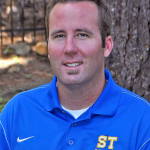
Mark Salmon is back as the coach of the South Tahoe High School girls’ soccer team.

“The district’s coach contracts are renewed each year unless a coach resigns or is dismissed,” Shannon Chandler, secretary with Lake Tahoe Unified School District, told Lake Tahoe News.

Mark Salmon

Salmon has neither resigned nor been dismissed.

Parents and players last school year began filing complaints with the district office regarding Salmon. To this day not everyone believes the allegations were fully vetted.

The school board on July 10 had a special meeting at which some of the parents who are concerned about Salmon being allowed to continue to coach spoke up.

This email from Bob Grant, who is the district’s complaint officer, was sent to the parents of at least one player: “After your presentations at the board meeting last night, the board discussed the girl’s (stet) soccer program and specifically Mr. Salmon’s coaching role at South Tahoe High School. The board voted to allow Mr. Salmon to continue coaching and instituted additional corrective measures to the items in my resolution letter to you hopefully mitigating issues brought by yourselves and other complainants. LTUSD is also instituting measures to monitor and support all coaches, athletes, administrators, and support staff so that we are more immediately responsive to concerns and problems.  We hope that [your daughter] feels that she can be a part of the team next year.”

Board President Barbara Bannar deferred comment to the district office, even though the board took action in closed session. It is the board that hires and fires coaches and sets all district policy.


Snippets about Lake Tahoe

·      The South Lake Tahoe City Council will have a regular meeting Aug. 15, and then have a meeting Aug. 29 dedicated to marijuana.

·      On July 18, members of the Meyers California Highway Patrol office, South Lake Tahoe Police Department and El Dorado County Sheriff’s Office will host Coffee with a Cop from 9-11am at the Starbucks at the Y.

·      Whole Foods Market’s 45 stores in Northern California and Reno will donate 5 percent of its sales on July 26 to fund entrepreneurship grants for a select group of small businesses in the region. Tahoe Trail Bar is one of the organizations.

·      Cherie Kagan, one of El Dorado County court’s child custody recommending counselors (formerly known as mediators), has been honored with the court staff award by the Family Law Executive Committee of the California State Bar. 

·      Douglas County Public Library Foundation and the Friends of the Douglas County Public Library are having a mini book sale July 24 from 10am-6pm at the Douglas County Community and Senior Center, 1329 Waterloo Lane in Gardnerville. 


Ex-SLT city official Angelocci dies at 64

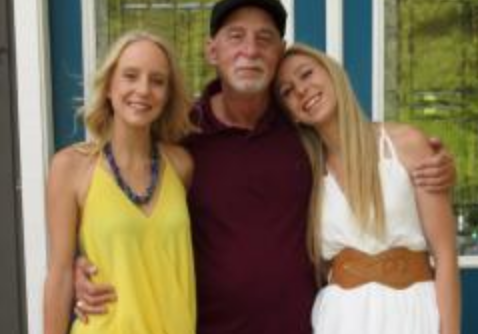
Rick Angelocci’s daughters Larissa, left, and Sarah meant the world to him. Photo/Provided

By Steve Archer, Loomis News
 
A small town is like a big family is the Loomis town motto.

Rick Angelocci, was, in many ways, the town father. He was Loomis town manager for six years, starting in 2011. He took a leave of absence for health reasons last October.

Angelocci, 64, died at his home July 6 after a two-year fight with cancer. He is survived by his daughters, Larissa and Sarah.

Angelocci was the assistant city manager for South Lake Tahoe before moving to Loomis.

Read the whole story


CVS pharmacies settle federal drug case

CVS Pharmacy Inc. must pay $5 million to resolve federal Controlled Substances Act (CSA) allegations.

The infractions occurred between April 2011 and April 2013..

Under the settlement reached July 5, CVS acknowledges that its DEA-registered pharmacies were and are required to comply with the CSA, and that nine CVS pharmacies in the Eastern District of California failed to fulfill these recordkeeping obligations in a manner fully consistent with CVS’s responsibilities under the CSA. The settlement and compliance plan cover the 168 CVS pharmacies in this jurisdiction.

The company’s pharmacies in Northern California failed to keep and maintain accurate records of Schedule II, III, IV, and V controlled substances, according to court records.

Drugs, substances, and certain chemicals used to make drugs are classified into five distinct categories or schedules depending upon the drug’s acceptable medical use and the drug’s abuse or dependency potential.

In addition to the settlement payment, CVS agreed to an administrative compliance plan with the DEA.

— Lake Tahoe News staff report