Musician giving back to Tahoe nonprofits

For most musicians their tours are all about making money. Not for Jack Johnson.

The singer-songwriter who will be playing two sold-out shows in Stateline on Friday and Saturday nights as part of the Harveys Outdoor Concert Series is giving away thousands of dollars to local nonprofits.

Johnson plans to match donations up to $2,500 to the League to Save Lake Tahoe, Tahoe Rim Trail Association, Sugar Pine Foundation and Sierra Watershed Education Partnerships.

Since 2008, Johnson and his wife, Kim, have donated $4 million to environmental, arts and music organizations through their Johnson Ohana Foundation.

— Lake Tahoe News staff report


Firefighters gaining on Ranch Fire in EDC

Firefighters made significant progress on the fire burning in rural El Dorado County.

Forward progress has been stopped on the Ranch Fire burning near Mount Aukum on the border of Amador County.

Officials said firefighters are battling steep, difficult terrain and are strengthening containment lines.  

Mandatory evacuations have been lifted, though voluntary ones are still in place. All roads are open.

The fire has consumed 140 acres and is 40 percent contained. It started just before 2pm July 26. No cause has been reported.

— Lake Tahoe News staff report


Rules being devised for Tahoe’s shore line

By Kathryn Reed

Bringing harmony to divergent interests involving the shore line of Lake Tahoe is the goal. Time will tell if the next document will have the same outcome as the last – being shelved because of litigation.

Competing parties have been working on a bi-state plan for more than year. The 26 meetings amounted to hundreds of hours of negotiations.

Now the Tahoe Regional Planning Agency is figuring out what exactly will be analyzed in the environmental impact study. On July 26, the bi-state agency’s Governing Board got a brief overview of what is being recommended.

The last time the TRPA board approved a shoreline plan was in 2008. Legal action ended its viability. It’s taken until now to come up with another attempt. The 1987 Regional Plan is what governs the shore zone today.

The latest plan calls for 10 new public piers and 128 private piers. They will have to be spread out to meet scenic regulations. The goal is to have people share the private piers. This number will mean some lakefront property owners will not have a private dock. To do so would have meant allowing about 700 new piers.

Another 1,430 buoys would be granted.

Today there are about 760 piers and 4,000 buoys on Lake Tahoe.

One of the eight speakers at Wednesday’s meeting in Kings Beach said it would be great if the illegal buoys were removed before any new ones were permitted.

Much consideration was given to drought conditions. Moveable docks will be preferred. This will allow them to be used in all conditions instead of standing over dry land as was the case for a few years until this past winter.

Being able to move a buoy to deeper water will also be permissible.

The environmental analysis will study water quality, scenic resources, the recreation experience, noise, air quality, soil conservation, vegetation and fisheries. Alternatives will also be studied.

There was talk of how to eliminate the conflict between users because motorized watercraft have a habit of violating the 600-foot rule – as in, they are supposed to be that far from shore. Education and enforcement were talked about, as well as the need to clearly define who should be doing what.

The 2008 plan didn’t even consider recreation.

This 2017 plan covers: boating/lake access structures, marinas, motorized boating, non-motorized boating, streamlined permitting, low lake level adaptation, green infrastructure, enforcement, tolerance districts and permissible uses, concessions operations, dredging, and environmental improvement.

The EIS should be released in the winter.

—–

Notes:

·      The TRPA Advisory Planning Commission will discuss the scoping document on Aug. 9 at 9:30am at the agency’s Stateline office.

·      The comment period ends at 5pm, Aug. 16. Send comments to rcremeen@trpa.org.


Opinion: Is Calif. an incubator or a bubble?

By Joe Mathews

California, are you an incubator for great ideas—or a bubble that shuts them out?

That’s the question Californians must ask as we confront big challenges, from climate change to our housing shortage to the threats from the Trump administration. The bubble-or-incubator question is also the best way to understand the fights being waged in the legislature this summer.

Joe Mathews

The debate over the recent extension of California’s cap-and-trade system is a classic incubator-or-bubble question. Can our system for controlling greenhouse gases be adopted around the world? Or is California pursuing a foolish one-state war on climate change that will land us in a bubble of economy-destroying regulations?

The state’s debate over its housing crisis offers a different spin on the question. Can California devise ways to incubate new and more affordable housing? Or will it allow local governments to keep housing out of their bubble-like cities?

The controversy over legislation to make ours a “sanctuary state” by limiting cooperation between California governments and federal immigration authorities poses another bubble-or-incubator quandary.

Lawmakers understandably want to make sanctuary protections as strong as possible, given the importance of the undocumented to California and its communities, and Trump’s ugly attempts at mass deportation. But the determination to extend protections even to undocumented criminals has alienated law enforcement officials even in progressive cities. Is an uncompromising sanctuary policy likely to isolate California politically? Or would legislation that preserves law enforcement flexibility be more likely to be adopted as a model in other states, thereby offering more protection to more immigrants nationwide?

Policy change is never easy here. In other contexts, the state, by failing to update itself, has become an anachronistic bubble. Take higher education. Once a model, the state’s master plan for three distinct university systems—UC, Cal State, and community colleges—has become a straitjacket that prevents the universities from building partnerships and online programs to produce the greater numbers of college graduates California needs. Free speech on campus is another bubble-or-incubator question. Should universities be insular safe spaces that protect students, or incubators that encourage collisions between people and ideas, even those that offend?

Incubation can be overdone. In the Bay Area, there are so many incubators (or, if you prefer, combinators or accelerators) that they comprise their own sector. Nearly every startup, nonprofit or regional agency in California has some convoluted explanation of why it’s a “model” of something-or-other. But there’s more to being a good disseminator of ideas that simply claiming they’re “new” to generate buzz and investment.

The state’s obsession with incubating new models has made it common for protectors of bubbles to pass themselves off as incubators. Consider the new “California model” that the state school board touts to track the progress of schools. Sounds new, but it’s really a fiendishly complicated system that makes it harder for parents and communities to hold campuses,  teachers and their unions accountable.

In health care, the controversial Senate Bill 562 is similarly fraudulent. Its backers pitched it as a single-payer system that would incubate change across the nation; in fact, the bill failed to include the basics of such a system—like controls on spending or utilization of medical care, or ways to cover its $400 billion costs.

At its worst, California is a bubble of distinctive and convoluted regulations and laws, which are hard to unwind, especially in a state with so many lawyers. Right now, it’s not helping matters that the new attorney general, Xavier Becerra, is a veritable bubble machine. Some of that’s good: He’s filing lawsuits to protect our state’s policy priorities from the Trump administration.

But he’s also responsible for the most foolish bubble-expanding policy of the year: expanding enforcement of a new California law that bans paid travel by state employees to states that have discriminatory laws on the books. Becerra has now listed eight states (Texas was among the recent adds) under this travel ban. Opposing discrimination is the state’s goal, but this ban is counterproductive. How are Californians to spread our more inclusive cultural values—and all the great ideas we’re hatching—to such places if our government representatives can’t visit them?

It’s hard work being an incubator. You have to engage with people you don’t like. You have to address not only your own problems, but also other people’s. But what is the point of a place as rich and lucky as California if it’s only going to be for itself? Incubators birth new things. And bubbles tend to pop.

Joe Mathews writes the Connecting California column for Zócalo Public Square.


Openly transgender Nev. guardsman unsure what’s next

By Mike Higdon, Reno Gazette-Journal

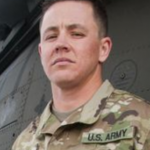
Sam Hunt

About a month ago, the Nevada Army National Guard published an article exploring the life of Sgt. Sam Hunt, who began his military career in 2009 as a woman and started to transition to a man in 2015.

Once the Department of Defense lifted the ban stopping openly transgender people from serving in the military last summer, Hunt began working toward officially changing his gender.

“People referred to me as a man before my military career and throughout much of my early service before the transgender ban was lifted,” Hunt wrote in a provided statement on Wednesday. “When President Obama removed the ban last year, I felt I could openly serve as a man.”

That plan was put into question on Wednesday when President Trump wrote on Twitter that he wants to ban transgender people from serving in the military in any way — affecting the lives of an estimated 6,000 service members like Hunt.

Read the whole story


SLT Whole Foods project commences

While there were several hiccups in the process, the development and redevelopment in the area of the corner of Highway 50 and Ski Run Boulevard in South Lake Tahoe is under way.

Escrow has closed on the property. Halferty Development of Southern California has full control over the site.

The company owns the undeveloped corner parcel and where the now closed Knights Inn is.

Abatement has begun. Demolition of the old hotel should begin the first week of August. A ribbon cutting-celebration of sorts will take place next month, too.

The plan is for a Whole Foods 365 to be built there along with other commercial entities. The grocery store is projected to open next year. Stream restoration and other environmental improvements are also part of the overall project.

— Lake Tahoe News staff report


Report projects fewer Nevadans to vote in 2018

By Colton Lochhead, Las Vegas Review-Journal
 
Nearly 420,000 Nevadans could skip next year’s midterm elections, and Democrats and Republicans alike are prepping for what such a decrease in voters could mean in 2018.

Democrats want to avoid a repeat of 2014, when a weak ballot and low turnout saw the GOP take control of state politics for the first time in decades. Republicans see a potential drop nearly equal to Nevada’s second-most populous county as an opportunity to pounce once again.

The projected dip in turnout comes from a report from the Voter Participation Center, a nonprofit that advocates for more voting access and easier registration.

Read the whole story


Wildfire burning in rural El Dorado County

Evacuations are in effect for part of El Dorado County’s wine region.

The Ranch Fire has burned 80 acres and is 15 percent contained. It started about 2pm July 26. The cause is unknown.

Pioneer Park in Somerset is now an evacuation center for the people on Derby Lane, Derby Court, Coyote Ridge, Mystic Road, Floral Avenue, Rosewood Lane, Johnson Mine Road and North Mine Road who have been told to leave. The county fairgrounds is taking large animals.

Mount Aukum Road is closed between Omo Ranch Road and Fair Play Road.

— Lake Tahoe News staff report


Caesars shareholders take steps to emerge from bankruptcy

By Richard N. Velotta Las Vegas Review-Journal

Caesars Entertainment Corp., parent company to 47 hotels and casinos in six countries, including nine properties in Las Vegas, is one step closer to emerging from Chapter 11 bankruptcy protection.

The company announced Tuesday that shareholders of two operating companies — Caesars Entertainment Corp. and Caesars Acquisition Co. — voted to approve a merger that would place 18 resorts nationwide, including four in Nevada, under a newly formed company that would be called Caesars Entertainment Operating Co. The rest of the properties aren’t a part of the bankruptcy and are operated by separate subsidiaries.

Caesars Entertainment is the parent company of Harrah’s Lake Tahoe and Harveys in Stateline.

Read the whole story


Crash victim deploys emergency beacon, prompting rescue

By Bill Lindelof, Sacramento Bee

A motorcyclist who damaged his knee when he hit a tree used a satellite emergency beacon to summon CHP rescuers who hoisted him into a hovering helicopter.

Daniel Thalhuber, 21, of San Jose, was on a motorcycle trip alone to trace the Pacific Coast Trail using rural roads and trails, according to the California Highway Patrol. However, his trip came to a halt on his first full day of riding about 6:30pm Sunday when he hit a tree in an off-road crash in the Cody Lake area of El Dorado County.

Read the whole story